
You Wrote a Book (Draft). Now What?
How to approach your book after spending time away from it
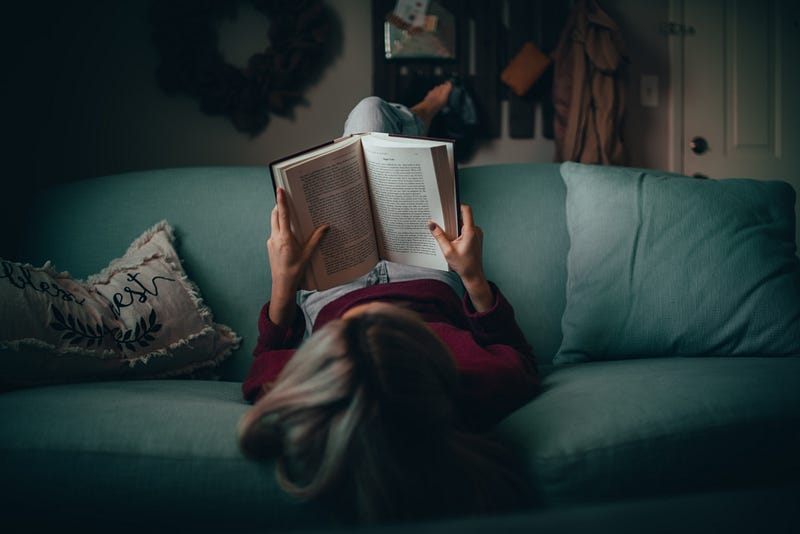
One common piece of advice when writing a book is to set it aside after you’ve finished a draft. Whether it’s for a few weeks or a few months or more, when you come back, you’re going to have fresh eyes when you read it. The goal in setting it aside is to forget you wrote it. Then come back, read it through (ideally on a device like a Kindle so you can’t make changes), and then decide what needs to happen.
Most likely, especially if this is your first time through the process, it’s going to be eye-opening. You’re going to read things you had no idea you’d written — sentences you find stunning. You’re also going to read things you can’t believe you’ve written — mistakes, errors, poor word choice, plot holes. Also, if you spent time away consuming story in any form, whether books, movies, TV shows, or video games, you’re probably already a better writer than when you finished.
A lot of articles gloss over this first step like it’s easy. I want to spend some time here. What do you do if you read your work and you’re disappointed with it? Where do you start?
This is, of course, going to be a question that varies for everyone, but I want to give you some ideas, because a common thing I see is paralysis at this stage. “There’s so much more work to be done!” “It’s a mess! This doesn’t look like a real book!” “Where do I even start?”
And then, sometimes, back in the drawer it goes.
But you can do this. Is it daunting? Yes. Are you capable? For sure. Will it make you a better writer? Absolutely.
The Temptation: Start with the Easy Fixes
The first time I wrote a book, I didn’t know about deeper levels of edits. Not really. When I went back to my draft, I wanted to fix typos and update sentence structure, and make the first chapter sing, not tear apart the structure and rethink the worldbuilding. (Spoiler: what I really needed to do was tear apart the structure and rethink the worldbuilding.)
I implore you not to give in to this temptation, at least not fully. Fix typos when you see them, but at this point, the goal isn’t to fix sentences. Pretty sentences only make it more difficult to address the layers underneath. I’ve compared writing to drawing a lot. In this case, fixing the sentences early on is like carefully shading the eye when the face proportions are still all wrong. Maybe you got the shading right, but you’ll have to move it on the page anyway.
Fix the sketch first. But how?
Method 1: The Brain Dump
This is part of my method when I read through my first drafts. I take notes while I read of everything, structurally, I’m unhappy with. Inconsistent characters, a thread that gets dropped, a subplot that starts too late, contradictions, timeline issues, clunky dialogue, plots that feel deus ex machina instead of organic, any of it. I write it all down when I’m reading.
If this is your first time, you might want to read it first, treat it like a book — that can be a delight in itself — before you return with an editing hat on. Soak in the good, then go back and read it again to take notes.
Once I’ve taken my notes, I sort them into “Problems for Me” and “Problems for Future Me.” Clunky dialogue, for instance, is not a problem for me yet because maybe the dialogue is clunky because the scene is wrong and needs to be entirely changed.
Here’s a lesson I struggled with a lot (and still do sometimes): making the scene work doesn’t necessarily make the story work.
Anyway. Making the list of big-picture problems is kind of the easy part. You’re a better writer and storyteller now than you were when you finished writing. But how do you implement them?
I usually sit with my list of problems for at least another week, sometimes intentionally journaling about ways that I can solve them. What I’m looking for isn’t just any old solution. I have an amorphous list of questions I’m hoping to answer:
- Does this solution solve more than one problem?
- Does it solve more problems than it creates?
- Does it resonate with me and feel right for the story I’m trying to tell?
I’ve found the best solutions do all three of these things. If it misses one, it’s the first question. If it misses two, it’s the first two. I never let it miss question three.
I have an Enchantress solution I’m working on right now. It’s making problems of scenes I thought were already done, and meaning I need to rework a lot. But it feels right. And everyone I’ve told my idea to agrees that it feels right. So I’m changing it.
Once I have a general plan for each of the Current Me problems, I try to figure out how they will work together. Rather than going scene by scene or problem by problem, I first think through the book on a synopsis level. How will this change what comes after? What will I need to do throughout the book to make these changes?
Then, once I’ve rebuilt a synopsis in a way that addresses each of the changes, I can think through what each scene needs. I do tend to work in order at this point, addressing all of the Current Me problems as I go — sometimes revising a scene twice to hit them all before moving on.
Method 2: For the Unfinished Novel
Sometimes when we stop working on a book, it isn’t finished yet. I’ve walked away from every project I’ve written somewhere between halfway and three-quarters through because my original plan wasn’t working anymore. (Remember, planning is necessary and planning will never work out.) I walked away from my NaNoWriMo 2022 book on 30 November and am only just now thinking I might return to it.
When I come back, it’s usually with ideas for how I need to update what I’ve already written in addition to what I need to do moving forward. Often, the Right Thing to Happen Next isn’t set up right, and that’s part of what stalled out writing in the first place. Therefore, for a lot of people, the temptation for addressing an unfinished book is to start at the beginning, make the changes you need, and then keep moving forward when they’re done.
I know at least one author I respect who works this way, so I won’t knock it if it’s what you want to try. But here’s my alternative:
Once you’ve read what you’ve written so far and made notes about changes you want to make, instead of “begin as you mean to go on,” go on as you meant to begin. That is, if you want to add a subplot with the best friend in which you’ll have three scenes in the first half, make a note of them. Leave a comment on the manuscript where you want to insert them, and maybe summarize what will happen there.
Then go to where you left off, and keep writing as if the change is made.
This can be applied to so many things: combining characters, adding a subplot, changing a name (although find/replace is easy enough you might just take care of this), adding worldbuilding. “This setting is going to get described in detail in chapter two,” as a comment, then keep going as if you’ve already described it.
I find this advice immensely useful for perfectionists who know they’d write a better voice for their character now, or understand her deeper and want to inject that understanding into what they’ve already written, but might get to the end of these revisions only to find more changes they want to make from the beginning. Rinse and repeat.
For me — a perfectionist — I do as little to the previously written work as I can to in order to have the foundation I need to reach “the end.” Which means the second half is usually cleaner and needs less work than the first half, because I went on as I meant to begin.
What methods do you have for revising when you’re a better writer than you were?

If you like my work and would like to read more of it, consider joining Medium with my referral link to get full access to every article on Medium. Using my referral link doesn’t cost you anything, but half of the fee goes directly to supporting me each month.