
Writing a Novel Is Not Like Painting by Numbers
Books aren’t written word by word in order — so where do you start?
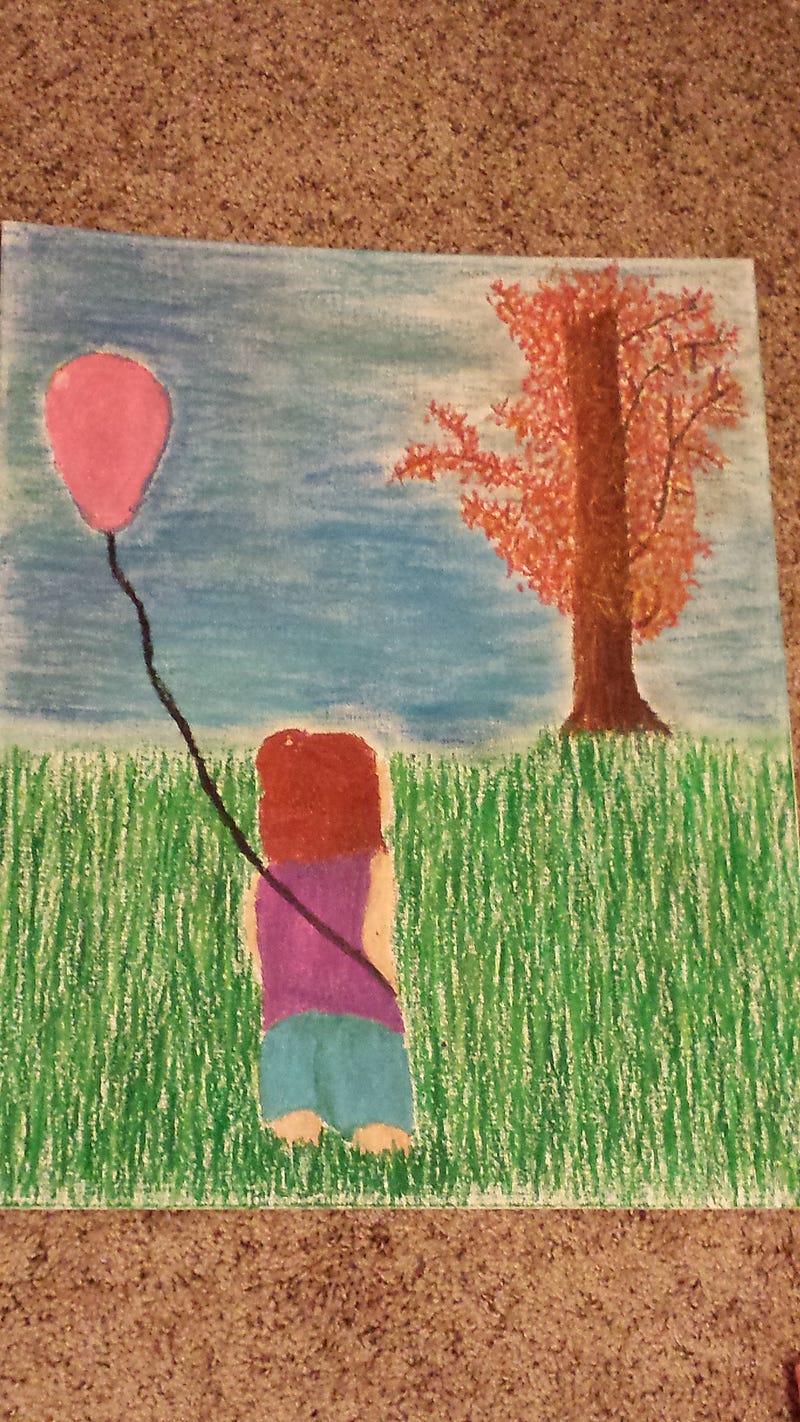
When I first started drawing, I would look at finished pieces and painstakingly copy them. Tree by tree, limb by limb, the curve of the forearm and each separate finger. I saw a finished work and figured since it’s possible to trace these lines, that was the way the artwork should be — and was — created.
It can be easy to think of book writing in the same way. It’s possible to transcribe a book, so that must be the way it was written, right? But watch an artist at work. Look at the first things that go down when moving from sketch/study to the final canvas. You’ll see measurements and boundaries for portraits, washes for watercolors, general shapes for landscapes. Getting started on a piece of beautiful art isn’t a matter of copying each finished line, but of giving yourself boundaries within which to work.
That said, there is a way to make a finished painting that is, essentially, this work of copying shape by shape. My guess is that most people have tried it in some form: painting by numbers.

However, as, Ben Horowitz writes, “painting by numbers [is] strictly for amateurs.” The way I see it, painting by numbers is accessible to novices in a way that true painting is not. It’s a matter of finding the color and painting over the corresponding number on the canvas. It has a low barrier to entry.
But once you’ve put in the work to learn how, creating a painting in layers, rather than painstakingly applying colors into small pre-defined areas, is actually easier. Given the choice, a painter will work in layers instead of a method that’s more accessible not just because of the results but because of the process.
Just as paintings are not created with colors dabbed beside each other, books are not written sentence by sentence in order. No matter how an individual author works, no one’s process involves approaching a blank page like the first thing that goes down will be visible in the finished work. And what’s interesting is, these early layers of building a novel? They look pretty amateur.
Even once it’s time to write “actual words,” many authors first focus on removing the blank page. Those initial words are the watercolor wash behind the painting; they are thick, one-dimensional rectangles that are tree-shaped enough to know where to work in more detail later.
Initial foundations in paintings involve working out color schemes, proportions, and the general layout, transferring the idea from the initial sketch to loose, broad, redefinable lines on the canvas. Maybe an author’s first brush on the canvas is a synopsis, which is a series of “And then this happened”s all strung together. There may even be parts of that synopsis that say, “And then, for reasons I don’t yet understand but will definitely make sense in the end…” and move on. Others create scene screenplays — all dialogue and short blocks of action, without looking for the right words. Some play with clinical scene structure for their foundation, noting the goal, conflict, action, reaction, dilemma, and decision that will come up.
Next is a “Zero Draft” (what Anne Lamott calls the Sh!tty First Draft), which involves working out character motivations and dynamics, the way the plots go, how things might fit together. It starts to look like a book at this point — paragraphs, dialogue, characters, and whatnot — but it still is only a rough estimation of what it will be.
This is the oval marking a head, the guidelines for where to draw facial features, the sketches of potential poses laid one on top of another. The best way to make sure that a novel gets built in layers that work well together is to be willing to hold these beginning layers loosely. They’re guidelines. They help you determine what the book is and is not. They’ll change.
It can be tempting at this stage to compare what you have to the published novels on your shelves. Then all you might see is how unfinished the project is, how rough, how amateur. I’ve found newer authors do one of a few things at this stage.
Some decide it’s because this idea isn’t going to make a decent finished project and tackle a shiny new idea instead. I’ve seen others give up on writing entirely because they’ve decided they suck at it. Finally, I’ve seen authors — and this is a trap I’ve fallen into — get so attached to this foundational layer that they refuse to change it even as further information is revealed in newer layers.
As tempting as it can be, as much as it looks like “the right way” to write, don’t treat stories like paint by numbers. Don’t draw like my example. All you need to do when you’re learning to write a book is build a foundation. It doesn’t have to look anything like the final version, either.
The most important thing the foundational layer can do is exist. From there? It’s a matter of building the rest, one layer at a time.
If you like my work and would like to read more of it, consider joining Medium with my referral link to get full access to every article on Medium. Using my referral link doesn’t cost you anything, but half of the fee goes directly to supporting me each month.