
Wondering How To Achieve 100% Read Ratio?
Between views and reads are different games we have to play. Have you cracked the code yet?
It started with checking the statistics of my stories published recently. I was fascinated by the gap between “views” and “reads”. Sometimes there is a huge gap. Sometimes there isn’t. I wonder if it is the same for you?
The question is — What is classified as “views”, and what gets counted into “reads”? I will answer the question of conversion from “views” to “reads” in the second half of this story.
For now, I will focus on the “why” of this story. It began with the statistics that I see.
Some of my stories have a relatively low “Read ratio”, such as “How To Effectively and Creatively Monetise Medium’s Short Form Feature.”. Naturally, I was bothered because readership defines the earnings I generate from Medium.
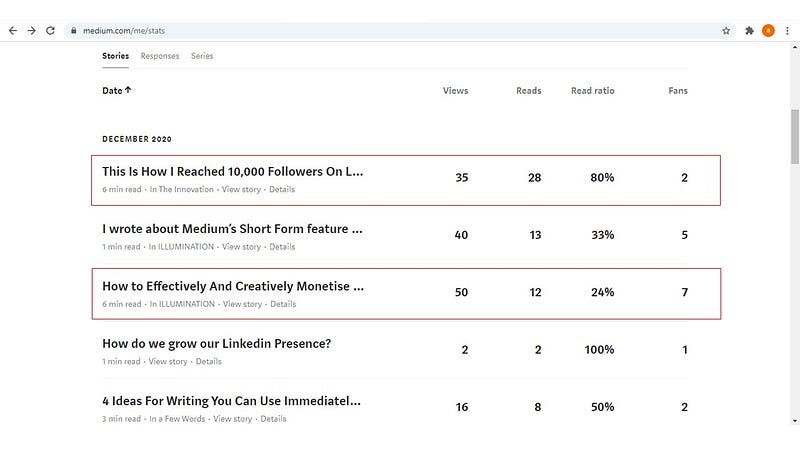
The question quickly evolved and become “What is the definition of readership?”. How does Medium identify and then classify readership from viewership?
I was walking around the park this morning when the questions popped into my head, so I decided to use the “Help” function within the Medium Mobile application.
It was a hilarious exchange between the Medium IOS Bot Helper and me. Screenshots below.
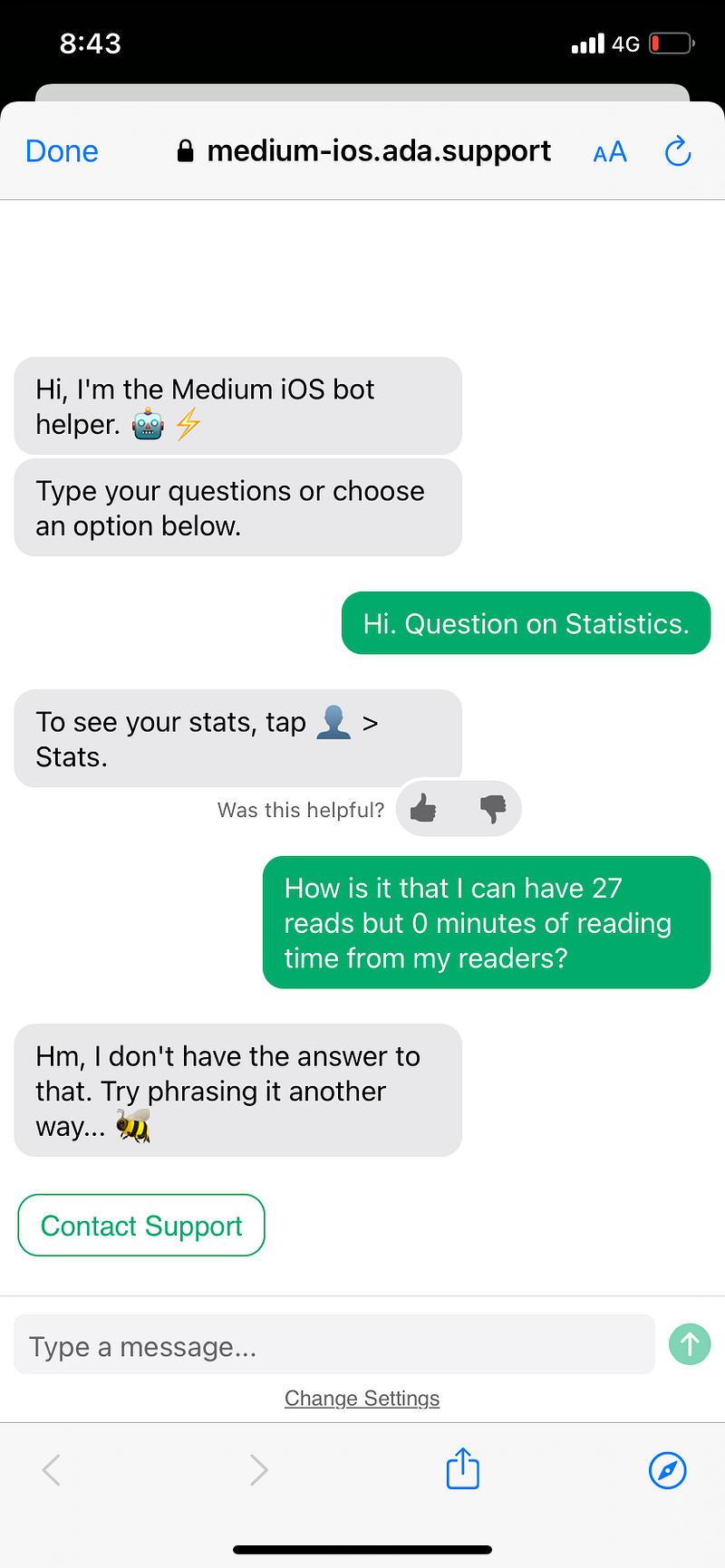
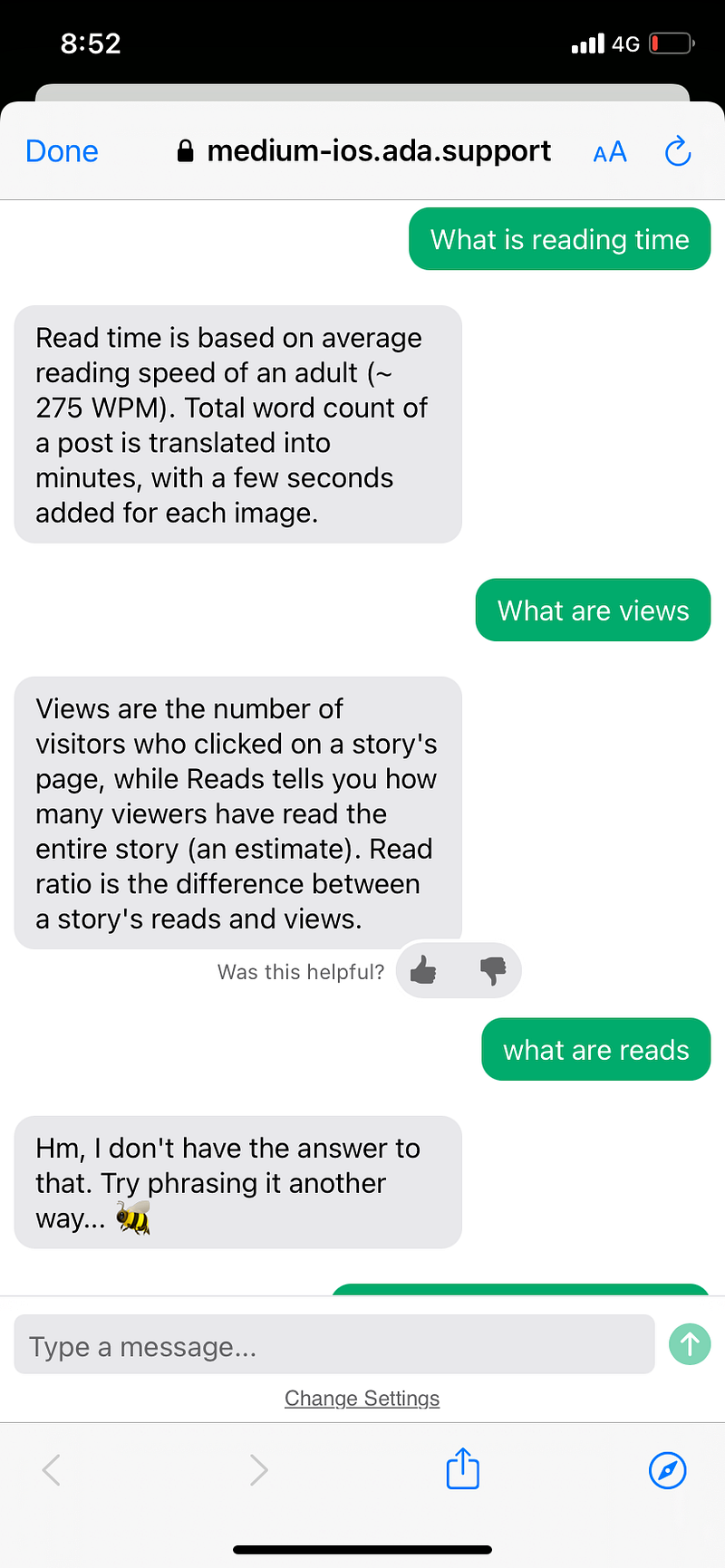
I laughed. And I got annoyed pretty quickly. It didn’t answer my question the way I asked, and that means I have to keep fine-tuning the questions such that the Medium IOS Bot Helper could identify the question and then finally answer me.
One tip. Don’t use complex questions. “What is/What are …” questions work best. If the Medium IOS Bot Helper doesn’t have an answer for you, it means there is no answer.
Based on the Bot’s helpful response, it says the following: -
“Views are the number of visitors who clicked on a story’s page, while Reads tells you how many viewers have read the entire story (an estimate). Read ratio is the difference between a story’s reads and views.” — Medium IOS Bot Helper.
While I was engaging in a chicken-and-duck conversation with the Medium IOS Bot Helper, this response finally gave me a glimpse of the difference. 2 keywords are important here, “clicked” and “entire”.
I am close to getting the answer that I seek. Still, I felt something was amiss. Did “entire” mean that the readers have to scroll to the bottom of the story?
I decided that human assistance is necessary at this point.
I went to search within Medium for stories written precisely to address the differences. I chanced upon one of Jack Preston King’s responses that articulate this brilliantly. Please see the image below.
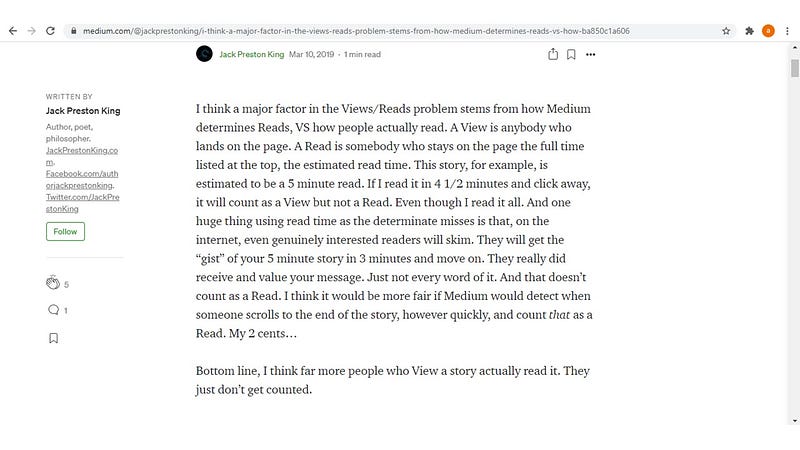
Bingo, right on point. He answered the queries in my head. “Entire” meant the story has to be viewed from top to bottom. That is the only way to explain it because smart devices and laptops are designed for top-down reading.
When I read his response, I realized there is more to views, reads, and earnings from Medium.
Thus, we need a different game plan for viewership and readership. I explain the “why” and “how” below.
Game Plan for Viewership.
Viewership is based on clicks. It is a volume game. That means getting people to arrive on the story page is important. I started taking a look at the story page, trying to understand it.
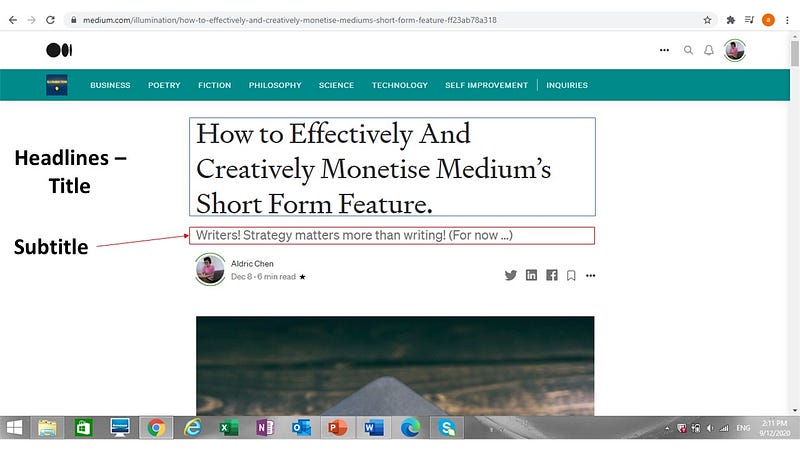
This is the laptop view of my story.
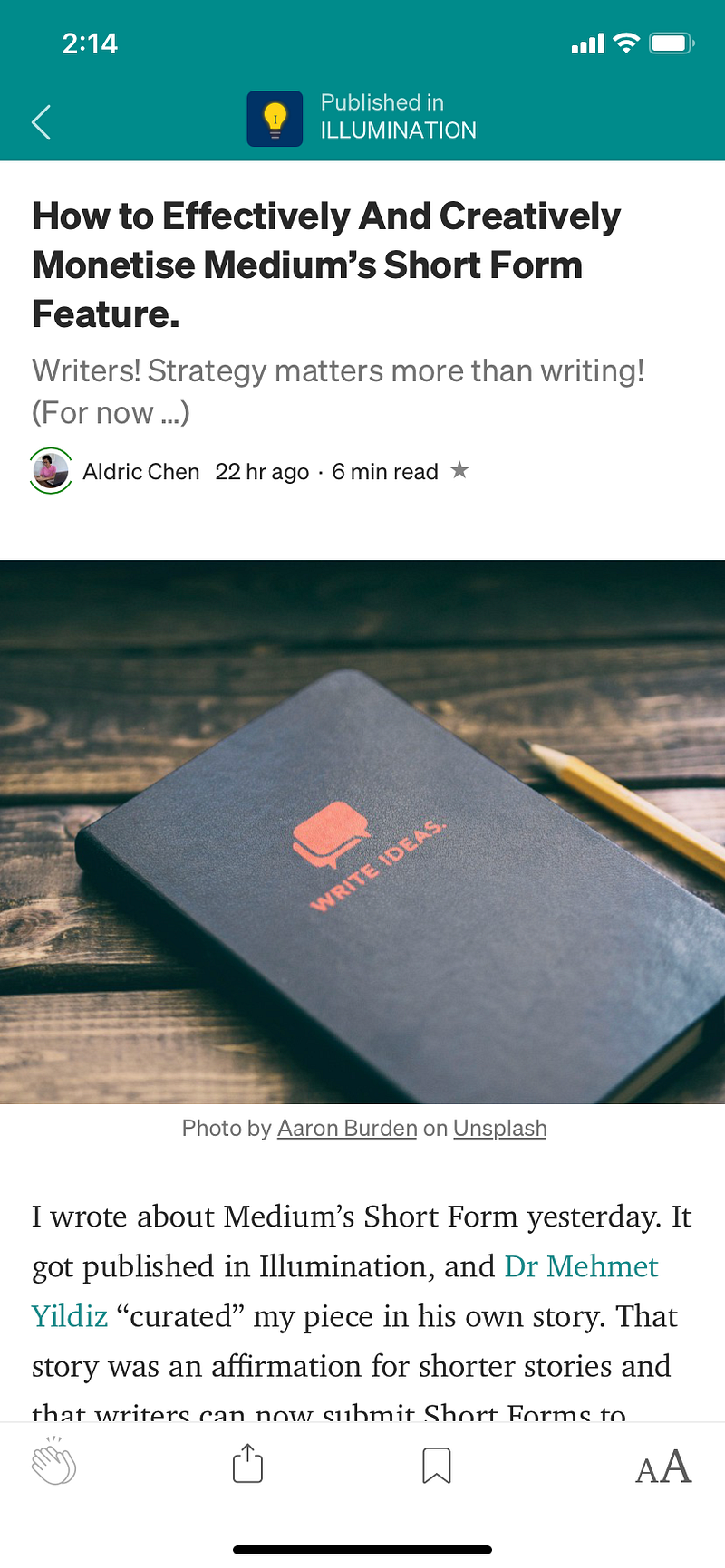
This is my story viewed on mobile.
Thor’s hammer hit me. I realized that the bulk of the stories written for “Good Practice” for writing addresses viewership and not readership. The use of attention-grabbing headlines and providing good answers to questions on google does exactly that.
Henceforth, if we are struggling with getting eyeballs to our stories, tackle the viewership issue. Focus on: -
- Deadly headlines that deliver a punch.
- Hashtags that people are focusing on.
- Searches on google.
I am attaching a story I wrote about generating deadly headlines here. There are a ton of stories written on points 2 and 3, so I will leave that to your research. Maybe I will write on those topics one day when I have enough ammunition to present it.
That resolves the viewership part of the Medium Earnings equation. Now, on to readership.
Game Plan for Readership.
We can find answers for increasing readership in my last 2 screenshots. I will re-attach the images into this segment and make the relevant explanations using them.
Bear in mind, the keyword here is “entire”.
This is the image of my story viewed from my laptop. I started thinking. How can I get readers to scroll down from the default landing page view? Viewing from my laptop, it became clear to me that the only shot I have is the subtitles.
That is because the readers have landed on my story page through the headlines. That drives the viewership. To move from viewership to readership, there must be SOMETHING apart from the headlines.
That is the “Subtitle”.
Then I went to check my story when viewed from the Medium mobile application. It shows me this.
The default story landing page on my mobile shows the following: -
- Headlines.
- Subtitles.
- Opening Paragraph.
I finally got to the full picture of readership.
To convert from viewership to readership, remember, the viewers have to scroll to the bottom. That will fulfill the criteria of the “entire” story. The question we need to figure out is how to get viewers to scroll?
Answer — Subtitles, and then 1st Paragraph.
Subtitles matters more because it is present in the default story landing page for the presentation of our story on laptop and mobile. Akin to a deadly headline, we have to design a compelling subtitle that brings the eyes of our viewers to the 1st paragraph.
The 1st paragraph — more commonly referred to as the “Introduction” — catches the impression from the subtitles, facilitates the flow of concepts, and ease of reading.
Quality writing needs to be contextual. For readership, it means that the story is water-tight right from the beginning. It starts from the Headlines to the Subtitles to the Introduction.
This is the way to have viewers to start scrolling and move to the bottom of the story. That will fulfill the criteria of the “entire” story.
Sidenote — I know images matter. I suspect it actually matters more for attracting eyeballs (views) rather than readership. I think so.
And I Have Lingering Questions.
Question 1.
What happens when the reader scrolls up-and-down across segments or between different paragraphs to facilitate clarity in reading AND never made it to the bottom of the page?
That matters to me because I am still learning on the go. Since my earnings on Medium is generated through “readership”, where the “entire” story has to be read — Shorter duration stories actually work to my benefit. Longer stories do not.
Question 2.
All of us have boilerplate statements at the bottom of our stories. What happens if the viewer has read the “entire” story and exited the story page without going through my boilerplate statement (which is “About Me”) copied below my story? Is it still counted as “Read”?
Okay, I think we have our guesses for this. I think that the better approach is to reduce the length of our boilerplate statements to prioritize readership. After all, this impacts earnings.
In Parting.
I genuinely hope this story is helpful for all viewers and readers, especially when it comes to converting your viewers to potential readers.
We are on this journey together.
Have a brilliant day writing and converting.
Of Viewership, Readership, and Medium Earnings.
Aldric
Related Stories from the Author.
About the Author:
As a content contributor, I write my observations from daily life and my business exposure.
Because our life experience is the bedrock of our unique perspectives.
As a Consultant by training, I believe in making the complex simple.
Because simplicity adds value.
And with clarity — We grow.
Follow me for my stories on Medium!
This is more “About Me”.
Do reach out and say hi on Linkedin!


