avatarStella Fidem

Free AI web copilot to create summaries, insights and extended knowledge, download it at here

7796

Abstract

arketing-to-attract-retain-gamblers/">50% more playing time</a> when a pleasant smell is introduced.</li><li>Another study found that changing the shampoo’s fragrance <i>and nothing else</i>, can cause consumers to report ‘better foaming, easier rinse and more shine in their hair’ ⁷.</li></ul><p id="ff33">Scent is processed with no conscious awareness. Given that it targets an area of the brain involved in emotion and decision making, it will hack the way you’re processing information and will help encode memories faster.</p><p id="2bf4"><i>If I stay Hollister, I bet you can just smell the place.</i></p><h2 id="b54b">The role of music</h2><p id="d6ee">This experiment was conducted in a wineshop⁸.</p><p id="4c5a">On the day French music was playing, French wine outsold the other wines by several multiples. The same thing happened when German music was playing, and German wines outsold the others.</p><p id="c8b1">Musical stimuli can result in different brainwave activities. <i>Betta</i> and <i>Gamma</i> wave activities significantly differed in the first and second wine tasting rounds. Music can be so subtle that listeners might not even be aware the music is playing.</p><p id="9b23">Slow tempo <a href="https://en.wikipedia.org/wiki/Muzak">Muzak</a> played in department stores lead to 18% longer shopping time at 17% more purchase per buyer. The same slow tempo in grocery stores results in 38% more purchases.</p><p id="2672">In fast-food restaurants, the background music is fast tempo Muzak, which encourages a quicker chewing rate⁹.</p><h2 id="293a">Anchoring</h2><p id="7f5a">The first piece of information if the most important in decision-making.</p><figure id="652b"><img src="https://cdn-images-1.readmedium.com/v2/resize:fit:800/1*iJD8dnU28scE9bvmiYFXgg.png"><figcaption>Source: <a href="https://www.voxpol.eu/a-tribal-call-to-arms-propaganda-and-what-pve-can-learn-from-anthropology-psychology-and-neuroscience/orbitofrontal-cortex/">voxpol.eu</a></figcaption></figure><p id="6842">Neuroscientists have concluded that humans don’t reach a decision based on something’s intrinsic worth. Instead, it’s the relative worth (compared to other options) that drives our behavior</p><p id="7b77">Work by <a href="https://www.nature.com/articles/nature04676">Harvard neuroscientists</a> found that neurons in the orbitofrontal cortex are essential for value assignment underlying economic choice.</p><p id="257d">More interestingly: If a monkey prefers grapefruit juice, it will select orange juice if there was sufficiently more orange juice offered.</p><p id="198e">Neuromarketers are now taking advantage of the “anchoring effect” by triggering emotions. You are more likely to choose a hotel room that offers free breakfast when other choices have the same price but don’t provide free breakfast without researching the quality of the room.</p><h2 id="050e">Hidden responses</h2><p id="c91e">When Cheetos ran a focus group to analyze the success of their ad, most people reported a dislike.</p><p id="cc83">Cheetos Ad. <a href="https://www.youtube.com/watch?v=glEEK1hNovk">Source</a></p><p id="4cd1">They then proceeded to an EEG of all participants, and the results were surprisingly positive; they were reluctant to reveal they liked the video because of the negative social judgment.</p><p id="6c36">In fact, shock and surprise can be a powerful marketing tactic. Our brains are always trying to predict what will happen, and our attention tends to wander. When an element of surprise is introduced, our focus is suddenly more focused on that object.</p><h2 id="94f0">Price</h2><p id="3533">2.99 or 3? Rounded figures work well when emotions are involved, while more complex figures have more impact on the logical brain. Depending on the product, the context, and even the target demography, one process will be put forward more than the other¹².</p><figure id="1586"><img src="https://cdn-images-1.readmedium.com/v2/resize:fit:800/0*7bWKYGwaLyU2Ffpd.png"><figcaption>Source:<a href="https://www.neurosciencemarketing.com/blog/articles/round-pricing.htm">neurosciencemarketing.com</a></figcaption></figure><p id="6356">Another question: Should the price go first or last? This phenomenon is called <a href="https://www.newneuromarketing.com/product-or-price-first-how-order-increases-sales">price primacy</a>.</p><p id="0093">“You walk into a clothing store, and the first thing you see is a rack of jeans clearly labeled “49.99”.</p><p id="6467">Now a different scenario: you walk past a display where you see a pair of jeans. When you take a closer look, you see that it says “49.99”.</p><p id="38a2">In both cases, the jeans and the price are the same. But will you make the same decision?”</p><p id="337f">A study using fMRI found that product vs. price primacy engages different brain networks.</p><p id="d59b">Seeing a product first makes you think of its basic features (product-conscious) while seeing a price first makes you wonder whether the product is worth its price (cost-conscious)¹³.</p><p id="f3b2">For bargain-priced everyday products, price primacy works best. For more complicated products, putting forward experience and discovery of features has more impact.</p><h2 id="f575">Reward and punishment</h2><figure id="edb6"><img src="https://cdn-images-1.readmedium.com/v2/resize:fit:800/0*vMZZyIciP7Q5k1tF.jpg"><figcaption></figcaption></figure><p id="5ba5">Tobacco warnings were initially introduced to frighten smokers and reduce consumption.</p><p id="6dc5">What happened instead? fMRI investigations revealed that the labels stimulate craving in smokers by activating the <a href="https://human-memory.net/nucleus-accumbens/">nucleus accumbens</a>. The same results were observed when consumers are exposed to gruesome pictures. The cigarette market saw a 13% increase following the addition of the messages⁶.</p><p id="6bed">This counterintuitive reaction involves an adaptative mechanism, an example of <a href="https://www.britannica.com/science/conditioning">conditioning</a>.</p><p id="05a0">I can’t write an article about the human brain without mentioning the <a href="https://en.wikipedia.org/wiki/Mesolimbic_pathway">mesolimbic pathway</a>, the super-powerful reward system inside our heads. Neuromarketing wants to tap into the system to elicit an addictive behavior.</p><figure id="829d"><img src="https://cdn-images-1.readmedium.com/v2/resize:fit:800/1*AcjeK6b9hftLH0WNdCuYfQ.png"><figcaption></figcaption></figure><p id="418e">A good example would be the gaming industry. The products are designed around reward to create a pleasurable experience and increase attachment¹¹.</p><h2 id="ea20">Eye gaze</h2><p id="9295">An object’s weight attracts the gaze. Eye-tracking technology can create a heatmap of a page to give information about what attracts most of the consumer’s eye.</p><p id="eca2">A study by <a href="http://techwyse.com">techwyse</a> showed how inefficient weight distribution could impact a call to action:</p><figure id="9e38"><img src="https://cdn-images-1.readmedium.com/v2/resize:fit:800/1*i3IHNvmTEzALIbBIKwFOQQ.png"><figcaption>Source: <a href="https://neilpatel.com/blog/eye-tracking-studies/">neilpatel.com/blog/eye-tracking-studies</a></figcaption></figure><p id="61b4">The elements that pop-out should be the ones that matter.</p><p id="3686">Researchers also found that having the face of a baby on ads concentrates most of the weight. However, having the infant’s gaze directed towards the product creates a more even distribution of this weight³.</p><figure id="2fb0"><img src="https://cdn-images-1.readmedium.com/v2/resize:fit:800/1*QgJnQJQovozdBkJqRJjRgw.png"><figcaption>Source: <a href="https://www.neurosciencemarketing.com/blog/articles/baby-heat-maps.htm">neurosciencemarketing.com/blog/arti

Options

cles/baby-heat-maps.htm</a></figcaption></figure><p id="c09a">A face will attract attention, but the face should be looking at the product. These are just <a href="https://neilpatel.com/blog/eye-tracking-studies/">a few of the tricks</a> revealed by eye-gazing analysis.</p><h2 id="811b">Ads</h2><p id="7d50">Scientists used fMRI to compare advertising strategies before releasing them to the public.</p><p id="8dbb">The National Cancer Institute performed an example of such studies.</p><p id="559e">Neural activity in a medial prefrontal region (involved in drug-seeking and behavioral change) predicted the population response, and self-report judgments did not⁴. The higher the activation, the more calls the hotline would receive. Information provided from the activity of specific brain areas is impossible to get otherwise.</p><figure id="9708"><img src="https://cdn-images-1.readmedium.com/v2/resize:fit:800/0*PH4CT0sSszENbDL6.jpg"><figcaption>The medial prefrontal cortex (green) and effectiveness of an anti-smoking campaign. Source:<a href="https://www.ncbi.nlm.nih.gov/pmc/articles/PMC3725133/">ncbi.nlm.nih.gov/pmc/articles/PMC3725133/</a></figcaption></figure><h2 id="2a9d">Colors</h2><p id="021e">Marketing or not, neuroscientists already know that colors have an impact on the brain and influence emotions.</p><p id="c529">A study using EEG brainwave recordings showed that red might be eliciting a state of anxiety, leading to a higher level of brain activity in the areas of perception and attention compared to the blue color⁵.</p><figure id="8f68"><img src="https://cdn-images-1.readmedium.com/v2/resize:fit:800/1*-PXws1fKFp7DMXfS903IJg.png"><figcaption></figcaption></figure><p id="771c"><a href="https://www.creativebloq.com/branding/amazing-uses-colour-6133196/2">Color experts</a> have subgrouped colors as a guide to their target demographics. Blues are commonly used to target professionals, yellows are an eye-catching strategy, greens appeal to the wealthy, browns evoke simplicity and honesty.</p><p id="4701" type="7">“The oldest and strongest emotion of mankind is fear.” — H.P. Lovecraft</p><p id="b296">So, what is the most powerful advertising technique? The answer is <b>FEAR</b>.</p><p id="4a57">Pinpoint a problem, create anxiety around it, sell the cure.</p><p id="c4ae">Fear sells more than sex. Remember the subconscious values; security was at the top of the list. Fear makes us more clingy to a product, anxiety triggers brainwave activity, and enough of it can even lead to proper conditioning.</p><p id="bd79">Today’s best example? The panic craze of shoppers when the worldwide lockdown started.</p><p id="bbfa">Neuromarketing scans our brains to uncover our subconscious fears, dreams, vulnerabilities, and desires. And then they use them to guide 95% of our unconscious choices as consumers.</p><p id="9acf">With neuromarketing, free will is a delusion…unless you become aware of your options.</p><p id="09dd"><i>Adriana</i></p><p id="34bb"><i>Thank you for taking the time to read.</i></p><p id="95b2"><a href="https://forms.gle/P5V4hvCQPm5cD3EL9"><b>Sign up to <i>BrainChronicles</i></b></a><i> & </i>stay updated with trending neuroscience and psychology news and research.</p><p id="0241">For more interesting facts and information about the human brain.</p><div id="67b4" class="link-block"> <a href="https://readmedium.com/8-easy-things-you-did-not-know-your-brain-needs-44a1aff51d60"> <div> <div> <h2>8 Easy Things You Did Not Know Your Brain Needs</h2> <div><h3>It’s not: sleep, meditation, and exercise.</h3></div> <div><p>medium.com</p></div> </div> <div> <div style="background-image: url(https://miro.readmedium.com/v2/resize:fit:320/1*AZV_lXz3K5FnxMq4eIF9mA.jpeg)"></div> </div> </div> </a> </div><div id="efce" class="link-block"> <a href="https://readmedium.com/your-brain-is-not-an-indestructible-punching-bag-1326eccb0edc"> <div> <div> <h2>Your Brain Is Not an Indestructible Punching Bag</h2> <div><h3>7 ‘feel-good’ habits that are harming your brain</h3></div> <div><p>medium.com</p></div> </div> <div> <div style="background-image: url(https://miro.readmedium.com/v2/resize:fit:320/1*1rys-pSSjGQ5tP9m3bEVkw.jpeg)"></div> </div> </div> </a> </div><div id="2fea" class="link-block"> <a href="https://readmedium.com/what-happens-to-your-brain-when-you-try-to-multitask-ad699fe66500"> <div> <div> <h2>What Happens to Your Brain When You Try to Multitask</h2> <div><h3>The misunderstood science behind task-switching</h3></div> <div><p>medium.com</p></div> </div> <div> <div style="background-image: url(https://miro.readmedium.com/v2/resize:fit:320/1*Xo56bXXBQJ-MJkvSLYRMOg.jpeg)"></div> </div> </div> </a> </div><p id="ecc1"><i>Sources: ¹<a href="https://hbr.org/2019/01/neuromarketing-what-you-need-to-know"></a></i><a href="https://hbr.org/2019/01/neuromarketing-what-you-need-to-know">https://hbr.org/2019/01/neuromarketing-what-you-need-to-know</a> ²<a href="https://www.eurekalert.org/pub_releases/2004-10/cp-cvp101204.php">https://www.eurekalert.org/pub_releases/2004-10/cp-cvp101204.php</a> ³<a href="https://www.neurosciencemarketing.com/blog/articles/baby-heat-maps.htm">https://www.neurosciencemarketing.com/blog/articles/baby-heat-maps.htm</a><a href="https://www.ncbi.nlm.nih.gov/pmc/articles/PMC3725133/">https://www.ncbi.nlm.nih.gov/pmc/articles/PMC3725133/</a><a href="https://www.researchgate.net/publication/6198060_Effects_of_Object_Color_Stimuli_on_Human_Brain_Activities_in_Perception_and_Attention_Referred_to_EEG_Alpha_Band_Response">https://www.researchgate.net/publication/6198060_Effects_of_Object_Color_Stimuli_on_Human_Brain_Activities_in_Perception_and_Attention_Referred_to_EEG_Alpha_Band_Response</a><a href="https://www.neurosciencemarketing.com/blog/articles/tobacco-warnings.htm">https://www.neurosciencemarketing.com/blog/articles/tobacco-warnings.htm</a><a href="https://www.amazon.co.uk/Brainfluence-Persuade-Convince-Consumers-Neuromarketing/dp/1118113365">https://www.amazon.co.uk/Brainfluence-Persuade-Convince-Consumers-Neuromarketing/dp/1118113365</a><a href="https://www.emerald.com/insight/content/doi/10.1108/BFJ-06-2019-0434/full/html">https://www.emerald.com/insight/content/doi/10.1108/BFJ-06-2019-0434/full/html</a><a href="https://www.amazon.com/Coercion-Why-Listen-What-They/dp/157322829X">https://www.amazon.com/Coercion-Why-Listen-What-They/dp/157322829X</a> ¹⁰<a href="https://www.nytimes.com/2010/02/27/your-money/27shortcuts.html?_r=0%20">https://www.nytimes.com/2010/02/27/your-money/27shortcuts.html?_r=0%20</a> ¹¹<a href="https://www.gamasutra.com/blogs/BenLewisEvans/20130827/198975/Dopamine_and_games__Liking_learning_or_wanting_to_play.php">https://www.gamasutra.com/blogs/BenLewisEvans/20130827/198975/Dopamine_and_games__Liking_learning_or_wanting_to_play.php</a> ¹²<a href="https://www.neurosciencemarketing.com/blog/articles/round-pricing.htm">https://www.neurosciencemarketing.com/blog/articles/round-pricing.htm</a> ¹³<a href="https://dash.harvard.edu/bitstream/handle/1/28548032/karmarkar%2Cshiv%2Cknutson_cost-conscious_working-paper.pdf?sequence=1&amp;isAllowed=y">https://dash.harvard.edu/bitstream/handle/1/28548032/karmarkar%2Cshiv%2Cknutson_cost-conscious_working-paper.pdf?sequence=1&amp;isAllowed=y</a></p></article></body>

With Neuromarketing, Free Will Is a Delusion

Exposing the neurological underpinnings of consumerism

Photo by Nathan Dumlao on Unsplash

What is the most powerful advertising technique? I’ll let you find an answer to this question alone.

It’s scary how tapping into the human brain is an unconscious constant reality. Everywhere around us, stimuli are trying to hack our minds. We talk about our subconscious, but most of us don’t even know what it means. We are unaware of its powers and importance.

We love having options, and we think we do. The average American makes 35,000 decisions every day. However, we’re not aware of most of them. 95% of purchases are made while we’re on autopilot, meaning we don’t consciously choose our choice.

If you think that your values are finding meaning to your life, tracing your path, and maximizing the good around you, think again. These are just your higher-order conscious values, the factors influencing short-term decisions. Your subconscious values are very different: Security, sexuality, beliefs, and traditions. They’re instinctive, they’re hard-wired in your brain, and when the situation requires, they’re the default option.

Eerily enough, neuromarketing understands this concept. It uses brain imaging technology to measure responses to products or marketing strategies.

It doesn’t matter what you say, or what you think you’re thinking; that’s not what you’re actually thinking. But they know what you’re thinking, even when you don’t.

By understanding how stimuli influence subconscious reactions and decision-making, marketing strategies can maximize impact; they just need to trigger the correct emotional response.

Neuromarketing is a relatively new concept. It emerged as a subdisciplinary marketing field in the 1990s and only took-off in the mid-2000s. The term neuromarketing was coined in 2002 by Dutch marketing professor Ale Smidts.

Advertisers can now look directly into the consumer’s brain, using a wide variety of techniques and understand a person’s cognitive, emotional, and sensory-motor response to marketing stimuli.

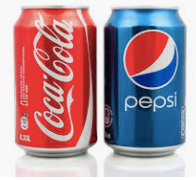
In 2004 researchers at Emory University used fMRI to measure brain activity when subjects were served Coca-Cola or Pepsi ². Unidentified drinks showed a consistent neural response. When subjects could see the brand, the brain’s limbic structure went crazy. This is the region associated with emotions, memories, and unconscious processing. Knowledge of the brand alters the experience.

The techniques¹

fMRI (functional magnetic resonance imaging)
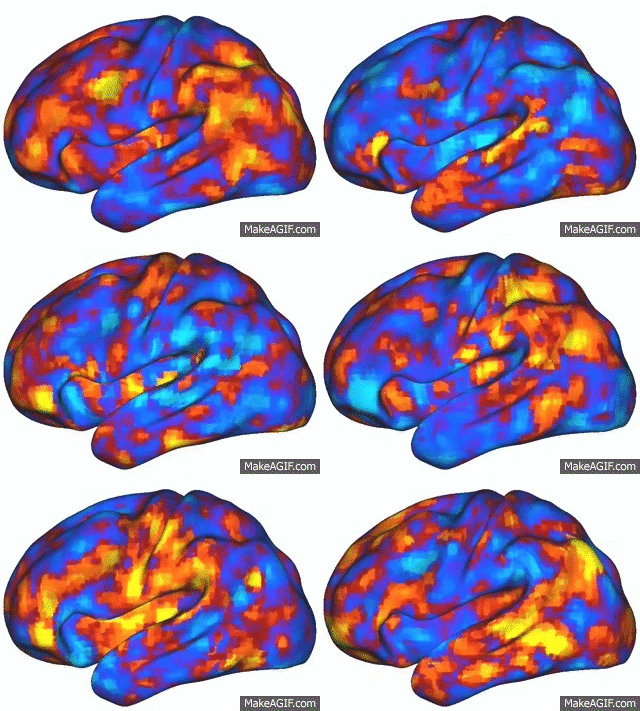
Spontaneous brain activation can be measured using fMRI. Source:Makeagif.com

fMRI detects real-time brain activation through blood flow and increased neural activity, revealing detailed emotional responses, the level of engagement, and the recall (elicit a brand name from memory when subjected to a cue).

fMRI is used to set prices and improve branding but is the most expensive method and can only be performed in a lab.

EEG (electro-encephalogram)

EEG can record brainwaves and electrical signals on the scalp. It can reveal the level of engagement and the recall of brands or products.

EEG is mainly used to improve ads and branding but is less precise than fMRI. It can be performed (to a certain extent) outside of the lab.

Eye-tracking (gaze or pupilometry)

The 2 methods can detect the direction of the gaze or the dilation of the pupils.
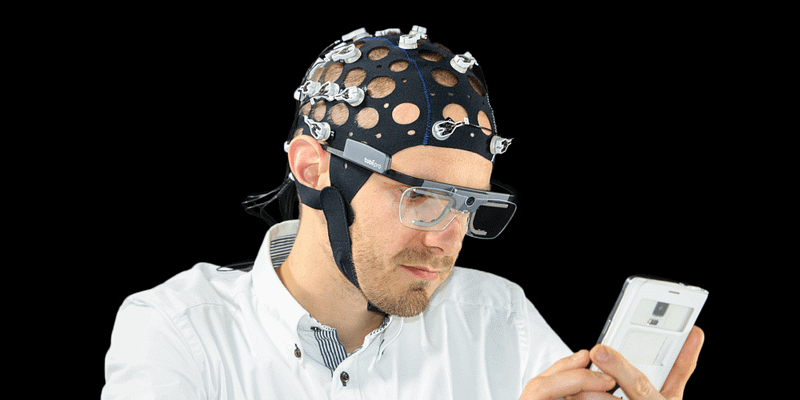
Man wearing an EEG cap and eye-tracking device. Source:tobiipro.com

Eyes-tracking measures can, therefore, estimate attention grabbers, confusion, speed of recognition, and level of engagement. They’re used for improving designs of websites, ads, and packaging.

Compared to the methods above, they’re inexpensive and easy to carry out and add value to biometric measures. The only con is that eye-tracking tests do not reveal emotions.

Biometrics Facial coding

Biometrics measure heart-rate, respiration, and skin-conductance while facial coding decodes expressions.

They can reveal the level of engagement and the overall emotional response to a cue. They’re mainly used to improve ad content. They’re usually inexpensive and can be used complementary to other methods.

10 tricks revealed by neuromarketing

To round-up; Neuromarketing is used for testing ads, optimizing designs, choosing colors, and improving packaging and display.

Satisfaction

Emotion Response Analysis (ERA) uses EEG recordings to identify the emotional response of a person to a cue (advertisement, products, etc..)

If we categorize emotions into 4 basic groups, we have:

  • Happiness: makes us want to share
  • Fear/Surprise: makes us want to cling to safety
  • Sadness: makes us connect and empathize
  • Anger/Disgust: makes us stubborn

The consumer’s level of engagement and emotional arousal is invaluable to the advertiser, and a self-reporting questionnaire isn’t enough.

Remember my question: What is the most powerful advertising technique? The answer lies here.

The role of smell

Scent can strongly affect response and behavior; it’s one of the most potent senses because of its association with memory.

With every other sense (hearing, sight, touch, or taste), the first relay of information is to an area of the brain called the thalamus. But not smell! Scents bypass the thalamus and go straight to the brain’s olfactory lobe, which is connected to the amygdala and the hippocampus. The two structures are part of the limbic system, involved in memory, motivation, and emotion coding.
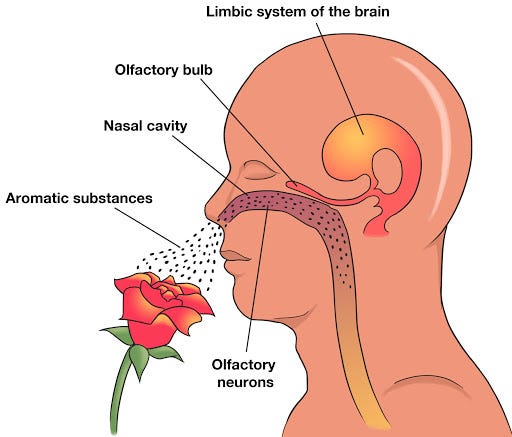
Source: sites.psu.edu/siowfa15/2015/10/22/scent-and-memory-2
  • Casinos use scents to attract gamblers and make them spend more money. Guests can spend up to 50% more playing time when a pleasant smell is introduced.
  • Another study found that changing the shampoo’s fragrance and nothing else, can cause consumers to report ‘better foaming, easier rinse and more shine in their hair’ ⁷.

Scent is processed with no conscious awareness. Given that it targets an area of the brain involved in emotion and decision making, it will hack the way you’re processing information and will help encode memories faster.

If I stay Hollister, I bet you can just smell the place.

The role of music

This experiment was conducted in a wineshop⁸.

On the day French music was playing, French wine outsold the other wines by several multiples. The same thing happened when German music was playing, and German wines outsold the others.

Musical stimuli can result in different brainwave activities. Betta and Gamma wave activities significantly differed in the first and second wine tasting rounds. Music can be so subtle that listeners might not even be aware the music is playing.

Slow tempo Muzak played in department stores lead to 18% longer shopping time at 17% more purchase per buyer. The same slow tempo in grocery stores results in 38% more purchases.

In fast-food restaurants, the background music is fast tempo Muzak, which encourages a quicker chewing rate⁹.

Anchoring

The first piece of information if the most important in decision-making.
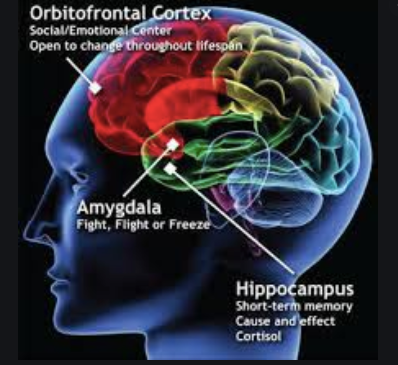
Source: voxpol.eu

Neuroscientists have concluded that humans don’t reach a decision based on something’s intrinsic worth. Instead, it’s the relative worth (compared to other options) that drives our behavior

Work by Harvard neuroscientists found that neurons in the orbitofrontal cortex are essential for value assignment underlying economic choice.

More interestingly: If a monkey prefers grapefruit juice, it will select orange juice if there was sufficiently more orange juice offered.

Neuromarketers are now taking advantage of the “anchoring effect” by triggering emotions. You are more likely to choose a hotel room that offers free breakfast when other choices have the same price but don’t provide free breakfast without researching the quality of the room.

Hidden responses

When Cheetos ran a focus group to analyze the success of their ad, most people reported a dislike.

Cheetos Ad. Source

They then proceeded to an EEG of all participants, and the results were surprisingly positive; they were reluctant to reveal they liked the video because of the negative social judgment.

In fact, shock and surprise can be a powerful marketing tactic. Our brains are always trying to predict what will happen, and our attention tends to wander. When an element of surprise is introduced, our focus is suddenly more focused on that object.

Price

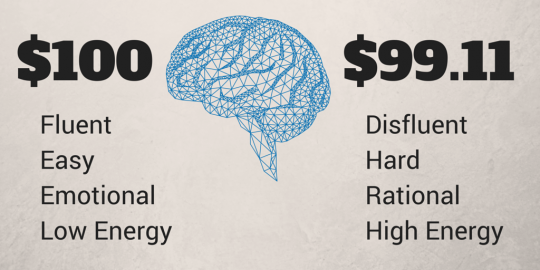
2.99$ or 3$? Rounded figures work well when emotions are involved, while more complex figures have more impact on the logical brain. Depending on the product, the context, and even the target demography, one process will be put forward more than the other¹².
Source:neurosciencemarketing.com

Another question: Should the price go first or last? This phenomenon is called price primacy.

“You walk into a clothing store, and the first thing you see is a rack of jeans clearly labeled “$49.99”.

Now a different scenario: you walk past a display where you see a pair of jeans. When you take a closer look, you see that it says “$49.99”.

In both cases, the jeans and the price are the same. But will you make the same decision?”

A study using fMRI found that product vs. price primacy engages different brain networks.

Seeing a product first makes you think of its basic features (product-conscious) while seeing a price first makes you wonder whether the product is worth its price (cost-conscious)¹³.

For bargain-priced everyday products, price primacy works best. For more complicated products, putting forward experience and discovery of features has more impact.

Reward and punishment
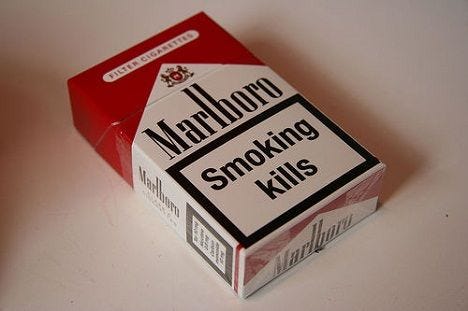
Tobacco warnings were initially introduced to frighten smokers and reduce consumption.

What happened instead? fMRI investigations revealed that the labels stimulate craving in smokers by activating the nucleus accumbens. The same results were observed when consumers are exposed to gruesome pictures. The cigarette market saw a 13% increase following the addition of the messages⁶.

This counterintuitive reaction involves an adaptative mechanism, an example of conditioning.

I can’t write an article about the human brain without mentioning the mesolimbic pathway, the super-powerful reward system inside our heads. Neuromarketing wants to tap into the system to elicit an addictive behavior.

A good example would be the gaming industry. The products are designed around reward to create a pleasurable experience and increase attachment¹¹.

Eye gaze

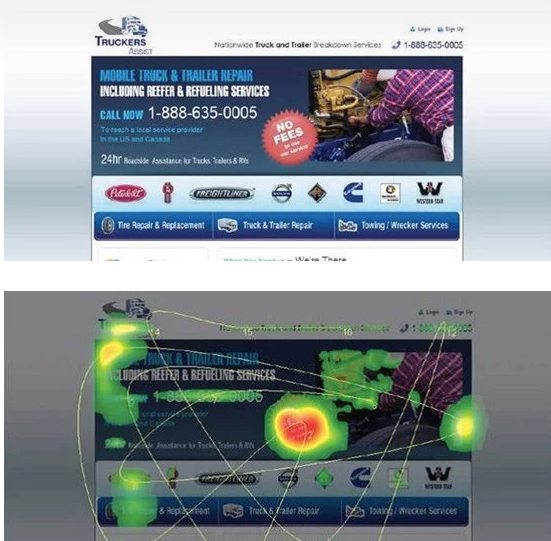
An object’s weight attracts the gaze. Eye-tracking technology can create a heatmap of a page to give information about what attracts most of the consumer’s eye.

A study by techwyse showed how inefficient weight distribution could impact a call to action:
Source: neilpatel.com/blog/eye-tracking-studies

The elements that pop-out should be the ones that matter.

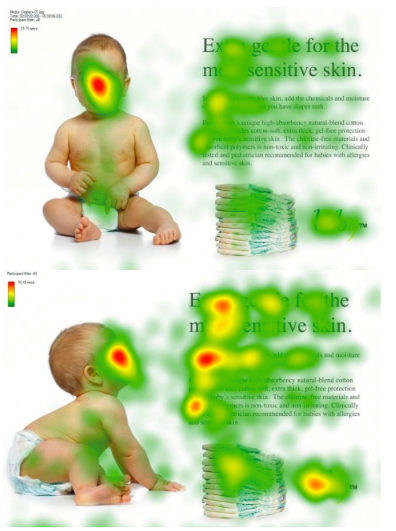
Researchers also found that having the face of a baby on ads concentrates most of the weight. However, having the infant’s gaze directed towards the product creates a more even distribution of this weight³.
Source: neurosciencemarketing.com/blog/articles/baby-heat-maps.htm

A face will attract attention, but the face should be looking at the product. These are just a few of the tricks revealed by eye-gazing analysis.

Ads

Scientists used fMRI to compare advertising strategies before releasing them to the public.

The National Cancer Institute performed an example of such studies.

Neural activity in a medial prefrontal region (involved in drug-seeking and behavioral change) predicted the population response, and self-report judgments did not⁴. The higher the activation, the more calls the hotline would receive. Information provided from the activity of specific brain areas is impossible to get otherwise.
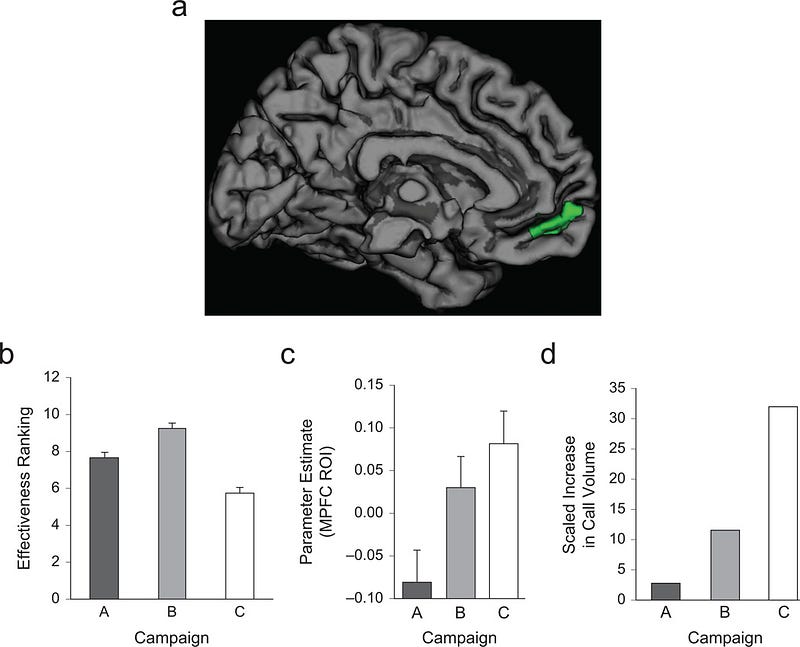
The medial prefrontal cortex (green) and effectiveness of an anti-smoking campaign. Source:ncbi.nlm.nih.gov/pmc/articles/PMC3725133/

Colors

Marketing or not, neuroscientists already know that colors have an impact on the brain and influence emotions.

A study using EEG brainwave recordings showed that red might be eliciting a state of anxiety, leading to a higher level of brain activity in the areas of perception and attention compared to the blue color⁵.
Color experts have subgrouped colors as a guide to their target demographics. Blues are commonly used to target professionals, yellows are an eye-catching strategy, greens appeal to the wealthy, browns evoke simplicity and honesty.

“The oldest and strongest emotion of mankind is fear.” — H.P. Lovecraft

So, what is the most powerful advertising technique? The answer is FEAR.

Pinpoint a problem, create anxiety around it, sell the cure.

Fear sells more than sex. Remember the subconscious values; security was at the top of the list. Fear makes us more clingy to a product, anxiety triggers brainwave activity, and enough of it can even lead to proper conditioning.

Today’s best example? The panic craze of shoppers when the worldwide lockdown started.

Neuromarketing scans our brains to uncover our subconscious fears, dreams, vulnerabilities, and desires. And then they use them to guide 95% of our unconscious choices as consumers.

With neuromarketing, free will is a delusion…unless you become aware of your options.

~Adriana~

Thank you for taking the time to read.

Sign up to BrainChronicles & stay updated with trending neuroscience and psychology news and research.

For more interesting facts and information about the human brain.

Sources: ¹https://hbr.org/2019/01/neuromarketing-what-you-need-to-know ²https://www.eurekalert.org/pub_releases/2004-10/cp-cvp101204.php ³https://www.neurosciencemarketing.com/blog/articles/baby-heat-maps.htmhttps://www.ncbi.nlm.nih.gov/pmc/articles/PMC3725133/https://www.researchgate.net/publication/6198060_Effects_of_Object_Color_Stimuli_on_Human_Brain_Activities_in_Perception_and_Attention_Referred_to_EEG_Alpha_Band_Responsehttps://www.neurosciencemarketing.com/blog/articles/tobacco-warnings.htmhttps://www.amazon.co.uk/Brainfluence-Persuade-Convince-Consumers-Neuromarketing/dp/1118113365https://www.emerald.com/insight/content/doi/10.1108/BFJ-06-2019-0434/full/htmlhttps://www.amazon.com/Coercion-Why-Listen-What-They/dp/157322829X ¹⁰https://www.nytimes.com/2010/02/27/your-money/27shortcuts.html?_r=0%20 ¹¹https://www.gamasutra.com/blogs/BenLewisEvans/20130827/198975/Dopamine_and_games__Liking_learning_or_wanting_to_play.php ¹²https://www.neurosciencemarketing.com/blog/articles/round-pricing.htm ¹³https://dash.harvard.edu/bitstream/handle/1/28548032/karmarkar%2Cshiv%2Cknutson_cost-conscious_working-paper.pdf?sequence=1&isAllowed=y

Psychology
Science
Neuroscience
Marketing
Biotechnology
Recommended from ReadMedium