avatarStella Fidem

Free AI web copilot to create summaries, insights and extended knowledge, download it at here

7617

Abstract

<p id="95be"><a href="https://www.quora.com/What-processes-are-taking-place-in-our-brains-when-we-learn-new-things"><b>Neuroplasticity</b></a><b>.</b> We can talk about it for years, so here’s a crash-course.</p><figure id="1f9a"><img src="https://cdn-images-1.readmedium.com/v2/resize:fit:800/0*hAy-hmpp1nFe3tRV.gif"><figcaption>Neurons firing. Source: <a href="https://giphy.com/">giphy.com</a></figcaption></figure><p id="4fe7">Your brain is a connection network of billions of neurons, each of it is a small (but complex) machine. Neurons communicate and influence each other through their connections (the axons which form the white matter tracts), and the synapses at the end of the connection. Synapses transform electrical signals to chemical signals then back to electrical signals.</p><p id="b7cf">The brain is a network of all these neurons which are in constant communication with each other. A system with 10,000 neurons can have 100 million connections, each one with a different weight or influence power. This type of network is what computational <a href="https://en.wikipedia.org/wiki/Artificial_neural_network">artificial neural networks </a>set up by engineers, and computational scientists try to emulate.</p><p id="470f">The synaptic connections that lead to a successful event are reinforced, and the unproductive connections are weakened. In essence, this means more weight is attributed to essential and useful connections, and useless synapses are “pruned”, or removed.</p><p id="d151">Scientists once thought that the adult brain couldn’t generate new synaptic connections, but we now know this is not true. In some parts of the brain, new connections (<i>synaptogenesis)</i> can be born.</p><figure id="654d"><img src="https://cdn-images-1.readmedium.com/v2/resize:fit:800/0*o7boSjmoKbQs4JBh.jpg"><figcaption>The process of synaptogenesis; or building new connections. Source:<a href="https://www.neuroskills.com/brain-injury/neuroplasticity/synaptogenesis/">https://www.neuroskills.com/brain-injury/neuroplasticity/synaptogenesis/</a></figcaption></figure><p id="6abb"><b>How?

</b>Through practice and repetition.<b> </b>Practice leads to a successful event, which in turn leads to <i>activation of the reward system, </i>which further reinforces the downstream firing of the neurons. In the long-term, this creates newly strengthened connectivity.</p><p id="d82b">This is how babies learn to move, talk, and understand. This is how athletes develop skills or how we learn new languages.</p><figure id="2ad4"><img src="https://cdn-images-1.readmedium.com/v2/resize:fit:800/1*z7jug1M0WH1elXaUNu6d5A.png"><figcaption>Author’s image</figcaption></figure><h1 id="f9e3">Binaural beats</h1><p id="6516">Binaural beats combine two different sound frequencies, at the same time, with one frequency in each ear. Although your ears hear a single tone, your brain can perceive the difference between the two sounds and <i>tune</i> to the new frequency.</p><p id="3a3c">If your left ear is receiving a frequency of 290 Hz and your right one receives 300Hz, your brain will somehow absorb the 10Hz (which is too low to be heard by the human ear).</p><figure id="52b6"><img src="https://cdn-images-1.readmedium.com/v2/resize:fit:800/0*NPIWDkIBXCmEkQyf.png"><figcaption>Source:<a href="https://en.wikipedia.org/wiki/Frequency">https://en.wikipedia.org/wiki/Frequency</a></figcaption></figure><p id="29e4">Here is how and why sound frequencies can affect the brain.</p><p id="c8c3">The electrical activity in the brain creates brain waves (which can be measured using EEG recordings). They’re associated with everything we do and feel. The 4 major types of brain waves are:</p><ul><li><b>Beta</b> (15–40 Hz): Alertness and arousal. Higher levels of Beta waves are associated with anxiety.</li><li><b>Alpha</b> (9–14 Hz): Wakeful relaxation, calm alertness, and creativity.</li><li><b>Theta </b>(5–8 Hz): Deep relaxation and light stages of sleep.</li><li><b>Delta</b> (1.5–4 Hz): Slow, low-frequency, usually associated with sleep.</li></ul><p id="bf84">The higher the frequency, the more awake and aroused you are.</p><figure id="a884"><img src="https://cdn-images-1.readmedium.com/v2/resize:fit:800/0*ws6JJbncJxa1BUj5.jpg"><figcaption>Source: <a href="https://cancercelltreatment.com/2018/08/13/binaural-beats-the-power-of-sound/">https://cancercelltreatment.com/2018/08/13/binaural-beats-the-power-of-sound/</a></figcaption></figure><p id="9ed2">When exposed to specific sound waves, the brainwaves pattern starts tuning in and adjusts to that particular frequency⁹. This is how we think binaural beats work.</p><p id="b251">By helping the brainwaves adjust to sleep frequency, binaural beats might <a href="https://www.frontiersin.org/articles/10.3389/fnhum.2018.00387/full">promote better sleep</a>. Another study also showed that exposure to binaural beats modulates the levels of 3 important hormones: increase DHEA (helps regulate hormone production), decrease cortisol (stress and arousal), increase melatonin (promotes and regulates sleep).</p><p id="e1d9"><a href="https://www.psychologytoday.com/gb/blog/sleep-newzzz/201810/how-can-binaural-beats-help-you-sleep-better">Preliminary scientific insights</a> also hint at possible decreased anxiety and enhanced cognition and creativity.</p><p id="df4a"><i>Caution advised for people with a history of seizure or epilepsy.</i></p><figure id="e3e5"><img src="https://cdn-images-1.readmedium.com/v2/resize:fit:800/1*9Ym3nqIil8L-X6ct2n6raw.png"><figcaption>Author’s image</figcaption></figure><h1 id="37e3">Sunlight</h1><p id="38d4">According to a <a href="https://www.cell.com/cell/fulltext/S0092-8674(18)30507-5?_returnURL=https%3A%2F%2Flinkinghub.elsevier.com%2Fretrieve%2Fpii%2FS0092867418305075%3Fshowall%3Dtrue">Chinese study</a> from 2018, exposure to sunlight correlates with improved memory and mood.</p><p id="fda0">An <a href="https://www.ncbi.nlm.nih.gov/pmc/articles/PMC2728098/">earlier study</a> had also found an association between decreased exposure to sunlight and a higher probability of cognitive decline, especially in people with depression.</p><p id="6d18">Sunlight sends signals to your brain about your sleeping pattern and your state of wakefulness (<a href="https://en.wikipedia.org/wiki/Circadian_rhythm">C</a><a href="https://en.wikipedia.org/wiki/Circadian_rhythm">ircadian Rythm</a>). It’s a natural internal process that repeats itself over a 24hrs period and is adjusted by environmental cues.</p><figure id="d440"><img src="https://cdn-images-1.readmedium.com/v2/resize:fit:800/0*YAyL0poUIBgLjO2F.png"><figcaption>Circadian Rythm. Source: <a href="https://en.wikipedia.org/wiki/Circadian_rhythm">https://en.wikipedia.org/wiki/Circadian_rhythm</a></figcaption></figure><p id="de6f">Sunlight and darkness trigger the release of hormones in the brain. Sunlight increases levels of serotonin, while darker lighting increases levels of melatonin.</p><p id="d317">Serotonin is associated with better mood, calm, and focus, while melatonin is the sleep-promoing hormone.</p><figure id="0b43"><img src="https://cdn-images-1.readmedium.com/v2/resize:fit:800/1*HXWtvbKIsLe9IekBU9JbjQ.png"><figcaption>Author’s image</figcaption></figure><h1 id="da71">Polyphenols</h1><p id="0c76"><a href="https://www.healthline.com/nutrition/polyphenols">Polyphenols</a> are naturally found in fruits, vegetables, herbs, spices, tea, dark chocolate, and wine.</p><p id="d552">They act as antioxidants and can reduce inflammation. They are usually categorized into 4 groups.</p><p id="c2ac"><b>Flavonoids</b>. Most common polyphenols, usua

Options

lly found in apples, dark chocolate, or onions.</p><p id="a91a"><b>Phenolic acid.</b> In fruits, vegetables, and grains.</p><p id="de1d"><b>Polyphenolic amides. </b>In chili pepper and oats.</p><p id="7414"><b>Other polyphenols</b>. In red wines, berries, turmeric, some seeds, and whole grains.</p><p id="624e">Scientific evidence suggests that flavonoids from dark chocolate can have a complex and significant impact on the brain¹⁰:</p><p id="2e50">a) via direct interactions with cellular cascades promoting neurogenesis, neuronal function, and brain connectivity.</p><p id="30c0">(b) via blood-flow improvement and angiogenesis in the brain</p><p id="e2f1">Flavonoids <a href="https://www.healthline.com/nutrition/11-brain-foods#section7">were also shown</a> to improve working memory performance, attention, and even slow down the <a href="https://readmedium.com/why-you-and-your-brain-are-growing-years-apart-77d003daa97">brain aging</a> process.</p><p id="e289">According to the research (and years of personal experience), dark chocolate can also be a mood booster.</p><figure id="5dc8"><img src="https://cdn-images-1.readmedium.com/v2/resize:fit:800/1*Z-NE53srg2PlZOKUIdiYeA.png"><figcaption>Author’s image</figcaption></figure><h1 id="191c">Omega-3s</h1><p id="2a04"><a href="https://en.wikipedia.org/wiki/Omega-3_fatty_acid">Omega-3</a> are fatty acids found in fish oil, fish, flax seeds, chia seeds, walnuts, soybeans, etc…</p><p id="31d6">They’re known for their effect on heart health and their powerful anti-inflammatory powers.</p><p id="1bfb">Omega-3 fatty acids are also essential for the brain’s health. In pregnancy studies, the consumption of fatty acids correlated with higher cognitive scores in infants¹¹.</p><p id="99dd">They also preserve the integrity of the cell membranes and allow better neuronal communication¹².</p><p id="0764">In brain aging studies, low levels of omega-3 in the blood were correlated with smaller brain volumes (i.e., accelerated aging). Evidence also suggests their preventative role in Alzheimer’s disease, which makes sense given that Alzheimer’s diseases and brain volume loss have a high association.</p><figure id="e7d3"><img src="https://cdn-images-1.readmedium.com/v2/resize:fit:800/0*1Z8WVAEYtcocTqLv.png"><figcaption>MRI scans of healthy control an Alzheimer’s patient (with reduced brain volume). Source:<a href="https://www.omegapds.com/mri-can-help-diagnose-alzheimers-disease/">https://www.omegapds.com/mri-can-help-diagnose-alzheimers-disease/</a></figcaption></figure><p id="2e48">The <a href="https://www.healthline.com/nutrition/17-health-benefits-of-omega-3#section1">neurological effects</a> of Omega-3 are endless. There is evidence of decreased anxiety and depression, reduced symptoms of ADHD, better sleep, and anti-inflammatory effects. Omega-3 might also play an important role in psychiatric disorders and violent behavior.</p><figure id="8149"><img src="https://cdn-images-1.readmedium.com/v2/resize:fit:800/1*YSqcCQADmjAn-L2OI3V4HQ.png"><figcaption>Author’s image</figcaption></figure><p id="f1cc">You might not be a sapiosexual (yet… I’m working on it), but why not replace your cigarette with a piece of dark chocolate or your passive phone game with a tutorial video on how to knit? You’ll be making more than a scarf!</p><p id="4420">Sometimes the solutions to still unseen and undeveloped problems are right under our nose. I don’t know about you, but I’m terrified of reaching an age of regret.</p><p id="cd61">As I always say, before taking care of your skin, make sure you take care of your brain. The wrinkles up there are more important, believe me.</p><p id="643f" type="7">“What good is speed if the brain has oozed out on the way” — St. Jerome</p><p id="e616"><i>Adriana</i></p><p id="fff7"><i>Thank you for taking the time to read.</i></p><p id="920c"><b>Stay updated </b>with my future stories & recommend your topic of interest through<b> <a href="https://bit.ly/2MYN67H">my AudRec page</a>.</b></p><p id="9e8a">For more interesting facts and information about the human brain.</p><div id="7f23" class="link-block"> <a href="https://readmedium.com/your-brain-is-not-an-indestructible-punching-bag-1326eccb0edc"> <div> <div> <h2>Your Brain Is Not an Indestructible Punching Bag</h2> <div><h3>7 ‘feel-good’ habits that are harming your brain</h3></div> <div><p>medium.com</p></div> </div> <div> <div style="background-image: url(https://miro.readmedium.com/v2/resize:fit:320/1*1rys-pSSjGQ5tP9m3bEVkw.jpeg)"></div> </div> </div> </a> </div><div id="f097" class="link-block"> <a href="https://readmedium.com/why-you-and-your-brain-are-growing-years-apart-77d003daa97"> <div> <div> <h2>Why You and Your Brain Are Growing Years Apart</h2> <div><h3>9 astonishing facts about your brain’s age</h3></div> <div><p>medium.com</p></div> </div> <div> <div style="background-image: url(https://miro.readmedium.com/v2/resize:fit:320/1*ceDCQvRpZcgU7TmGHeBvBw.jpeg)"></div> </div> </div> </a> </div><div id="b0a5" class="link-block"> <a href="https://readmedium.com/what-happens-to-your-brain-when-you-try-to-multitask-ad699fe66500"> <div> <div> <h2>What Happens to Your Brain When You Try to Multitask</h2> <div><h3>The misunderstood science behind task-switching</h3></div> <div><p>medium.com</p></div> </div> <div> <div style="background-image: url(https://miro.readmedium.com/v2/resize:fit:320/1*Xo56bXXBQJ-MJkvSLYRMOg.jpeg)"></div> </div> </div> </a> </div><p id="d83c"><i>Sources: </i>¹<a href="https://www.ncbi.nlm.nih.gov/pubmed/20053034">https://www.ncbi.nlm.nih.gov/pubmed/20053034</a> ²<a href="https://www.ncbi.nlm.nih.gov/pubmed/21228167">https://www.ncbi.nlm.nih.gov/pubmed/21228167</a> ³<a href="https://www.sciencedaily.com/releases/1998/10/981005073941.htm">https://www.sciencedaily.com/releases/1998/10/981005073941.htm</a><a href="https://journals.plos.org/plosbiology/article?id=10.1371/journal.pbio.0040056">https://journals.plos.org/plosbiology/article?id=10.1371/journal.pbio.0040056</a><a href="http://www.jcr-admin.org/files/pressreleases/021114073838_ZhuRelease.pdf">http://www.jcr-admin.org/files/pressreleases/021114073838_ZhuRelease.pdf</a><a href="https://lifehacker.com/buzz-author-stephen-braun-on-programming-your-brain-for-5585840">https://lifehacker.com/buzz-author-stephen-braun-on-programming-your-brain-for-5585840</a><a href="https://www.sciencedirect.com/science/article/pii/S2090506816301944">https://www.sciencedirect.com/science/article/pii/S2090506816301944</a><a href="https://www.ncbi.nlm.nih.gov/pubmed/10979248">https://www.ncbi.nlm.nih.gov/pubmed/10979248</a><a href="https://www.ncbi.nlm.nih.gov/pmc/articles/PMC6130927/">https://www.ncbi.nlm.nih.gov/pmc/articles/PMC6130927/</a> ¹⁰<a href="https://www.ncbi.nlm.nih.gov/pubmed/23810791">https://www.ncbi.nlm.nih.gov/pubmed/23810791</a> ¹¹<a href="https://www.ncbi.nlm.nih.gov/pmc/articles/PMC1281283/">https://www.ncbi.nlm.nih.gov/pmc/articles/PMC1281283/</a> ¹²<a href="https://www.ncbi.nlm.nih.gov/pmc/articles/PMC4404917/">https://www.ncbi.nlm.nih.gov/pmc/articles/PMC4404917/</a></p></article></body>

8 Easy Things You Did Not Know Your Brain Needs

It’s not: sleep, meditation, and exercise.

Photo by Jazmin Quaynor on Unsplash

It’s not easy to love or appreciate what can’t be seen.

I doubt the answer to What’s your most flattering body part?or What do you find most attractive in another person?is ever “The wrinkly oddly looking organ inside their heads.”

But it should be.

If we all cared for our brains the way we do with our hair, waistline, or skin, the world would be a much better place.

Your brain is freaking sexy and absolutely amazing, and it’s time you start taking better care of it; it’s reasonably easy.

Here are some everyday tips you might not realize are under your fingertips:

A decluttered space

Cluttered space = cluttered brain. Is this a myth? Not if you believe in experimental science.

There are many neurological reasons why being in a messy space can affect your mental wellbeing. This is what happens to your brain when your environment is cluttered.
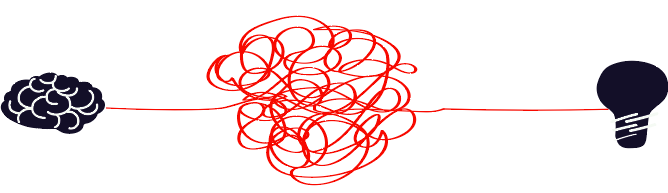
Author’s image
  • Stimulus overload. In an earlier article, I explained how proper focus comes from limited stimuli from the environment. Excess stimulation of unnecessary senses (visual, olfactory, tactile), is overwhelming.
  • High stress. A study found that women tend to have higher cortisol levels than average when living among clutter¹. Cortisol is the stress hormone. Its levels drop at night when we’re asleep, but the study also revealed that levels remain high throughout the night. Cortisol also affects their moods and that of their partners.
  • Need to multitask. Because it’s overly stimulated, your brain is pulled in different directions at once. When the brain is exposed to too much, the visual cortex can no longer sort through²; a 1998 study by the NIH found that the brain’s sensory response becomes weaker when it’s overloaded, leading to stimuli suppressing each other³.
  • Unreliable judgment. “Visual clutter causes high-magnitude errors”. In this 2006 study, researchers reported higher error rates in participants surrounded by clutter, but also high response-confidence⁴.
  • Higher impulsivity. If your space is messy, chances are you’ll do more online shopping⁵. This is probably related to poor decision-making and unreliable judgment, but it adds a layer which is worse impulse-control.

“The eyes look but the brain sees”.

Keep your space neat and clean, and your brain will be clear, focused, reliable, and stress-free!

Caffeine

“Too much of anything is bad”, but I ignore the wise words when it comes to the things I like. And then I got addicted to coffee; it made me miserable, so I decided to cut back. I know this love/hate relationship with caffeine is a common one, so let me give you a middle-ground.

Caffeine affects different processes in our bodies, and can, in excess, develop an addiction as a real drug would. It’s the most commonly used psychoactive drug.

However, when consumed in moderation, caffeine can hijack the brain, mimicking adenosine molecules and blocking its receptors, which disables us from feeling tired.

Adenosine is an inhibitory neurotransmitter: it acts on the nervous system as a depressant. It binds to specific receptors on the brain to promote sleep and suppress arousal.
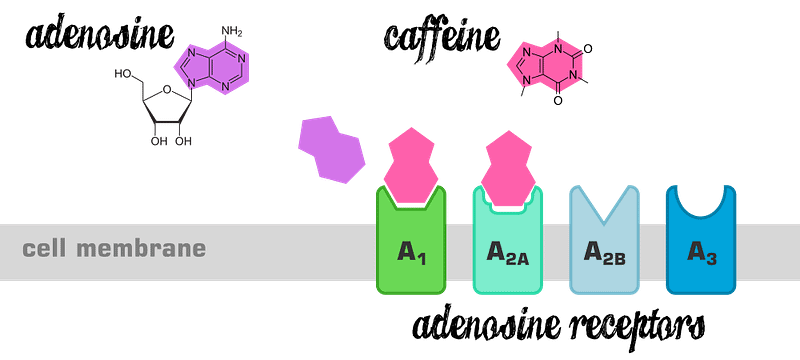
How caffeine molecules bind to adenosine receptors in the brain. Source:https://silverberrygenomix.com

Moderate amounts of caffeine will block the adenosine transmitters and push the molecule out of the way. Throughout the day, however, the effect of caffeine will fade, and the adenosine normally produced by the brain will come back and take its natural place, promoting sleep again.

The main message here is moderation. If your brain realizes there are no available receptors for adenosine, it will make new receptors, and you will need more caffeine for the same effect.

Caffeine can also improve your mood⁶. When you have less adenosine available, some other neurotransmitters, such as dopamine and glutamine, can go wild. These are stimulant molecules that boost the mood and make you more alert.

If you dislike coffee, caffeine can also be found in other beverages such as black or green teas.
Author’s image

Essential oils

Essential oils have a range of benefits on the body; most of them are apparent or instantaneous.

What is less known is the neurological effect that essential oils can possess.

Researches found that rosemary oils can significantly increase the numerical short term memory (or numerical working memory)⁷.

Another study looked at brain waves activity (using EEG recording)following inhalation of lavender, eugenol, and chamomile oil. Comfortable and relaxing smell increase Alpha brain waves (8–10 Hz), which are responsible for wakeful relaxation, meditation, calmness, and alertness⁸.
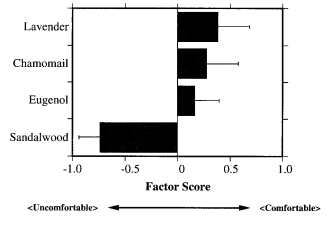
Comfortable feeling scores in factor analysis by inhalation of essential oils. Source:https://www.jstage.jst.go.jp/article/jpa/19/1/19_1_35/_pdf/-char/en

Learning

I say it every time: the multi-billion $ cognitive training and brain games industry won’t save your brain, regardless of what the marketing says; learning and discovering new things will.

Many processes are taking place in your brain when you’re learning something new. With a very basic understanding of science, this means one thing: your brain is dynamic when you learn.

Just like you need to move your body to keep it healthy, the same goes for this powerful organ. If you want to keep it healthy, get it moving.

Neuroplasticity. We can talk about it for years, so here’s a crash-course.
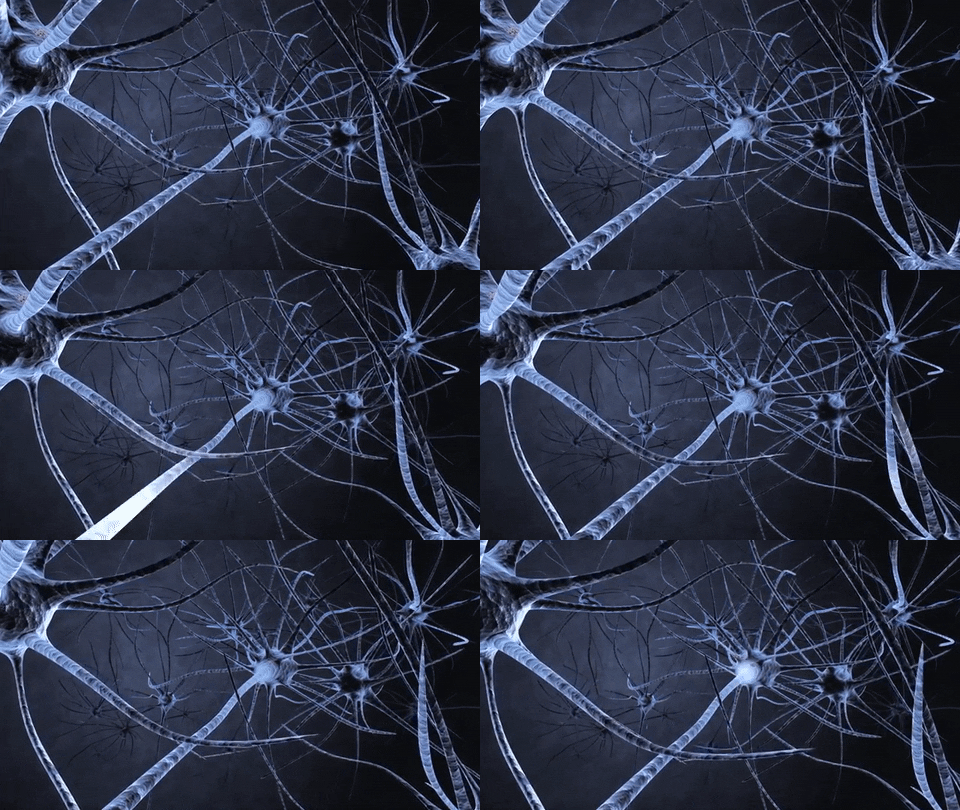
Neurons firing. Source: giphy.com

Your brain is a connection network of billions of neurons, each of it is a small (but complex) machine. Neurons communicate and influence each other through their connections (the axons which form the white matter tracts), and the synapses at the end of the connection. Synapses transform electrical signals to chemical signals then back to electrical signals.

The brain is a network of all these neurons which are in constant communication with each other. A system with 10,000 neurons can have 100 million connections, each one with a different weight or influence power. This type of network is what computational artificial neural networks set up by engineers, and computational scientists try to emulate.

The synaptic connections that lead to a successful event are reinforced, and the unproductive connections are weakened. In essence, this means more weight is attributed to essential and useful connections, and useless synapses are “pruned”, or removed.

Scientists once thought that the adult brain couldn’t generate new synaptic connections, but we now know this is not true. In some parts of the brain, new connections (synaptogenesis) can be born.
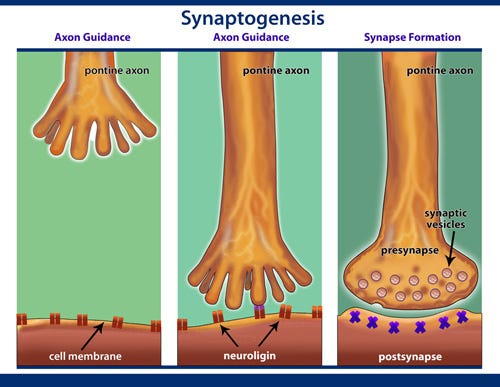
The process of synaptogenesis; or building new connections. Source:https://www.neuroskills.com/brain-injury/neuroplasticity/synaptogenesis/

How? Through practice and repetition. Practice leads to a successful event, which in turn leads to activation of the reward system, which further reinforces the downstream firing of the neurons. In the long-term, this creates newly strengthened connectivity.

This is how babies learn to move, talk, and understand. This is how athletes develop skills or how we learn new languages.
Author’s image

Binaural beats

Binaural beats combine two different sound frequencies, at the same time, with one frequency in each ear. Although your ears hear a single tone, your brain can perceive the difference between the two sounds and tune to the new frequency.

If your left ear is receiving a frequency of 290 Hz and your right one receives 300Hz, your brain will somehow absorb the 10Hz (which is too low to be heard by the human ear).
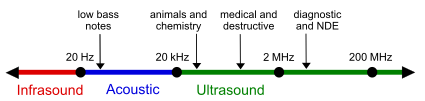
Source:https://en.wikipedia.org/wiki/Frequency

Here is how and why sound frequencies can affect the brain.

The electrical activity in the brain creates brain waves (which can be measured using EEG recordings). They’re associated with everything we do and feel. The 4 major types of brain waves are:

  • Beta (15–40 Hz): Alertness and arousal. Higher levels of Beta waves are associated with anxiety.
  • Alpha (9–14 Hz): Wakeful relaxation, calm alertness, and creativity.
  • Theta (5–8 Hz): Deep relaxation and light stages of sleep.
  • Delta (1.5–4 Hz): Slow, low-frequency, usually associated with sleep.

The higher the frequency, the more awake and aroused you are.
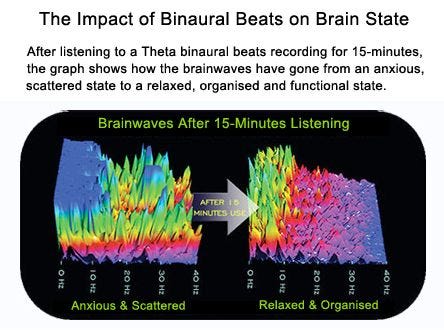
Source: https://cancercelltreatment.com/2018/08/13/binaural-beats-the-power-of-sound/

When exposed to specific sound waves, the brainwaves pattern starts tuning in and adjusts to that particular frequency⁹. This is how we think binaural beats work.

By helping the brainwaves adjust to sleep frequency, binaural beats might promote better sleep. Another study also showed that exposure to binaural beats modulates the levels of 3 important hormones: increase DHEA (helps regulate hormone production), decrease cortisol (stress and arousal), increase melatonin (promotes and regulates sleep).

Preliminary scientific insights also hint at possible decreased anxiety and enhanced cognition and creativity.

Caution advised for people with a history of seizure or epilepsy.
Author’s image

Sunlight

According to a Chinese study from 2018, exposure to sunlight correlates with improved memory and mood.

An earlier study had also found an association between decreased exposure to sunlight and a higher probability of cognitive decline, especially in people with depression.

Sunlight sends signals to your brain about your sleeping pattern and your state of wakefulness (Circadian Rythm). It’s a natural internal process that repeats itself over a 24hrs period and is adjusted by environmental cues.
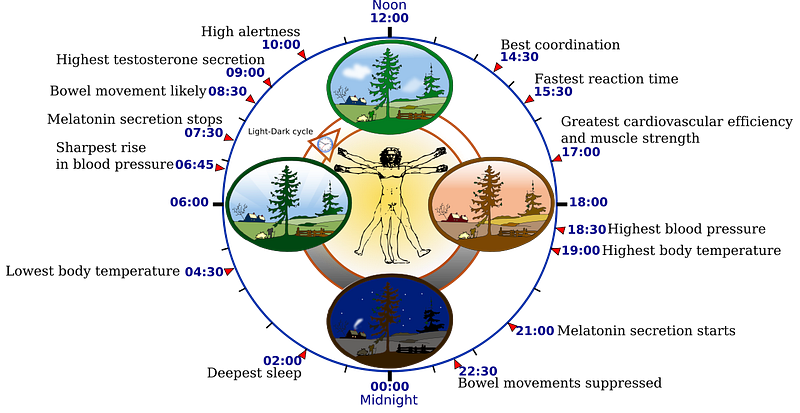
Circadian Rythm. Source: https://en.wikipedia.org/wiki/Circadian_rhythm

Sunlight and darkness trigger the release of hormones in the brain. Sunlight increases levels of serotonin, while darker lighting increases levels of melatonin.

Serotonin is associated with better mood, calm, and focus, while melatonin is the sleep-promoing hormone.
Author’s image

Polyphenols

Polyphenols are naturally found in fruits, vegetables, herbs, spices, tea, dark chocolate, and wine.

They act as antioxidants and can reduce inflammation. They are usually categorized into 4 groups.

Flavonoids. Most common polyphenols, usually found in apples, dark chocolate, or onions.

Phenolic acid. In fruits, vegetables, and grains.

Polyphenolic amides. In chili pepper and oats.

Other polyphenols. In red wines, berries, turmeric, some seeds, and whole grains.

Scientific evidence suggests that flavonoids from dark chocolate can have a complex and significant impact on the brain¹⁰:

a) via direct interactions with cellular cascades promoting neurogenesis, neuronal function, and brain connectivity.

(b) via blood-flow improvement and angiogenesis in the brain

Flavonoids were also shown to improve working memory performance, attention, and even slow down the brain aging process.

According to the research (and years of personal experience), dark chocolate can also be a mood booster.
Author’s image

Omega-3s

Omega-3 are fatty acids found in fish oil, fish, flax seeds, chia seeds, walnuts, soybeans, etc…

They’re known for their effect on heart health and their powerful anti-inflammatory powers.

Omega-3 fatty acids are also essential for the brain’s health. In pregnancy studies, the consumption of fatty acids correlated with higher cognitive scores in infants¹¹.

They also preserve the integrity of the cell membranes and allow better neuronal communication¹².

In brain aging studies, low levels of omega-3 in the blood were correlated with smaller brain volumes (i.e., accelerated aging). Evidence also suggests their preventative role in Alzheimer’s disease, which makes sense given that Alzheimer’s diseases and brain volume loss have a high association.
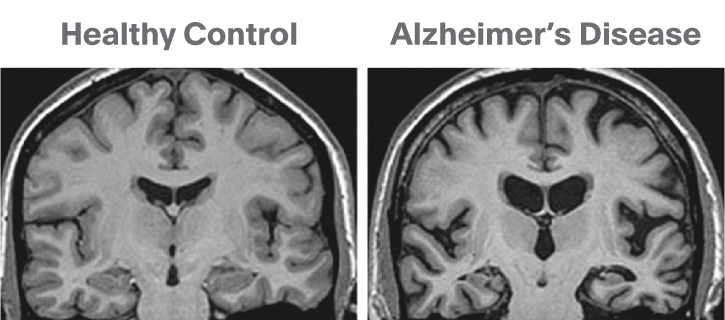
MRI scans of healthy control an Alzheimer’s patient (with reduced brain volume). Source:https://www.omegapds.com/mri-can-help-diagnose-alzheimers-disease/

The neurological effects of Omega-3 are endless. There is evidence of decreased anxiety and depression, reduced symptoms of ADHD, better sleep, and anti-inflammatory effects. Omega-3 might also play an important role in psychiatric disorders and violent behavior.
Author’s image

You might not be a sapiosexual (yet… I’m working on it), but why not replace your cigarette with a piece of dark chocolate or your passive phone game with a tutorial video on how to knit? You’ll be making more than a scarf!

Sometimes the solutions to still unseen and undeveloped problems are right under our nose. I don’t know about you, but I’m terrified of reaching an age of regret.

As I always say, before taking care of your skin, make sure you take care of your brain. The wrinkles up there are more important, believe me.

“What good is speed if the brain has oozed out on the way” — St. Jerome

~Adriana~

Thank you for taking the time to read.

Stay updated with my future stories & recommend your topic of interest through my AudRec page.

For more interesting facts and information about the human brain.

Sources: ¹https://www.ncbi.nlm.nih.gov/pubmed/20053034 ²https://www.ncbi.nlm.nih.gov/pubmed/21228167 ³https://www.sciencedaily.com/releases/1998/10/981005073941.htmhttps://journals.plos.org/plosbiology/article?id=10.1371/journal.pbio.0040056http://www.jcr-admin.org/files/pressreleases/021114073838_ZhuRelease.pdfhttps://lifehacker.com/buzz-author-stephen-braun-on-programming-your-brain-for-5585840https://www.sciencedirect.com/science/article/pii/S2090506816301944https://www.ncbi.nlm.nih.gov/pubmed/10979248https://www.ncbi.nlm.nih.gov/pmc/articles/PMC6130927/ ¹⁰https://www.ncbi.nlm.nih.gov/pubmed/23810791 ¹¹https://www.ncbi.nlm.nih.gov/pmc/articles/PMC1281283/ ¹²https://www.ncbi.nlm.nih.gov/pmc/articles/PMC4404917/

Health
Science
Mental Health
Psychology
Neuroscience
Recommended from ReadMedium