
Your Brain Is Not an Indestructible Punching Bag
7 ‘feel-good’ habits that are harming your brain

Aristotle said: we are what we repeatedly do.
He was talking about excellence. But could he have known that we literally are — or rather become — what we repeatedly do?
Our brain is the central unit of control of the body, and it’s always changing, adapting, trying to keep up with us.
I am what I repeatedly do… That’s probably why I started having a cat attitude. That’s also why I can’t function without my cup of coffee. Or why I wake up at the same hour every single day without my alarm clock set.
Psychology says: “Habits are behaviours which are performed automatically because they have been performed frequently in the past.”
Neuroscience says: Those same habits are leading to biological and physiological changes in you, and those changes, in turn, sustain the automatic performance of habits.
Now, there are good habits, the ones with a positive impact on your brain. And there are the seemingly harmless and widespread habits, that we might not know are harming us more than helping us.
The sugar cravings
Have you ever tried cutting sugar from your diet entirely? Check Soleil’s story and Neslihan’s 32 days no-sugar diet to get an idea.
I tried cutting sugar, and I loved it. For 1 simple reason:
The less sugar you eat, the less you’ll want to eat sugar.
And there’s a validated neurological reason for this effect: Sugar activates the brain’s reward pathway and creates an addictive behaviour: The more you eat sugar, the more you’ll need to eat sugar to satisfy the same cravings.
Sugar acts on the dopaminergic system. Dopamine is released in response to a ‘rewarding’ event. This system is activated at the anticipation of feelings of pleasure.
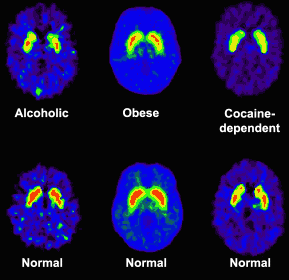
Drugs such as cocaine, amphetamine, and nicotine act on the same pathway. The activation of this system leads to reward feelings that, in turn, can result in cravings and addiction¹.
Repeated activation of the reward system, causes an adaptation to the stimulation: we need more to get the same response. Dopamine receptors are in ‘down-regulation.’
Sudden quitting of sugar intake results in withdrawal symptoms in the earliest stages².
But don’t worry; your dopamine reward system will soon readjust, and you won’t even have the cravings anymore.
The recurring happy hours
Drinking alone or drinking with people, overdoing it is shrinking your brain, literally.
When I drink, I stop at 1 or 2 glasses. Not because I’m a wise woman, and you should listen to me, far from that. I stop because I don’t like not having control over myself. I also stop because I’m afraid.
From the behaviour of drunk people, you can infer something is happening to their brains.
Alcoholism affects both brain and behaviour in different ways, with multiple factors influencing these effects.
Scientists still don’t have the full picture.
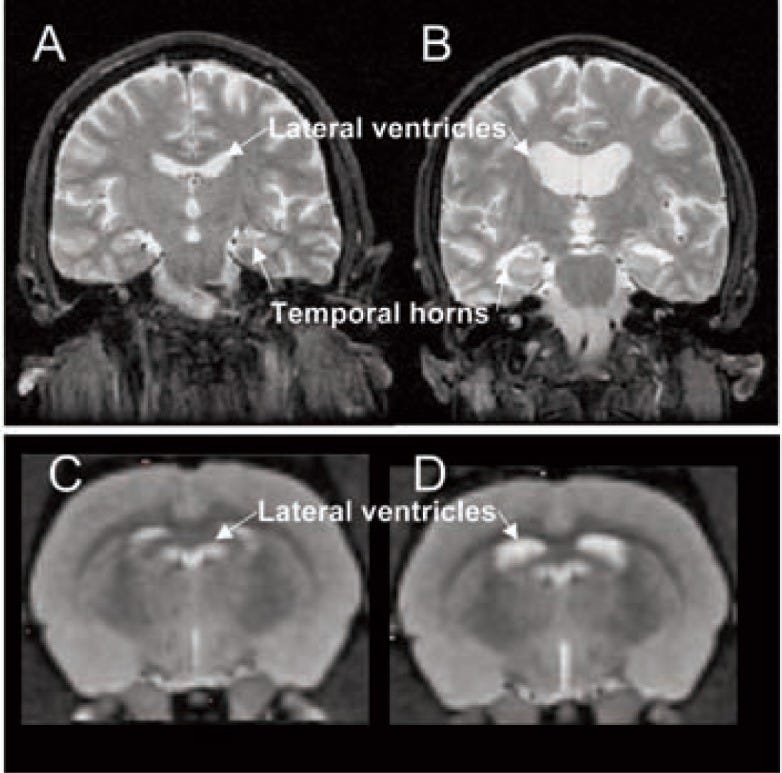
What we do know for sure is the following:
In both human and animal neuroimaging studies, repeated and prolonged alcoholism leads to a decrease in brain tissue volumes³.
This happens mainly in the prefrontal cortex, which is implicated in planning, personality, decision making, and moderating behaviour⁴.
You see where I’m going…
But alcoholism alters the density of both the grey matter and white matter of specific brain regions.
This fact supports the assumption that dependence is associated with both local dysfunction and altered connectivity between brain regions, as well as a constant activation of the reward pathway⁵.
On a positive note, some of the damage of alcohol on the brain seems to be reversible.
A few studies have shown that some brain structures can increase in volume in response to long-term abstinence⁶.
The loud music
I’m guilty of this one too. Loud noises, including loud music, can hurt our brain.
Prolonged exposure to loud noise might be altering the way our brain processes speech. This alteration is a direct consequence of the noise-induced hearing loss.
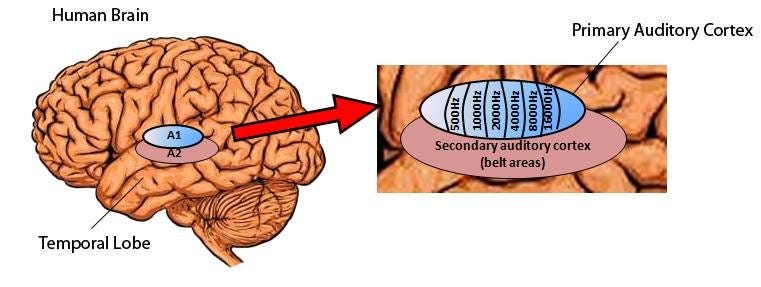
The auditory cortex, one of the significant brain regions processing sounds, is organized on a fine-tuned scale, comparable to a piano. Different sets of neurons respond to different sound frequencies.
Partial hearing degradation is associated with grey and white matter volume changes in the brain areas involved in the comprehension of speech⁷.
New evidence now shows that “reorganization” of the brain’s connectivity might be occurring following a hearing impairment as a neuroplasticity mechanism (the brain’s ability to change and adapt)⁸.
The study showed that areas of the brain usually involved in other senses adapt to take over the region, which generally processes hearing, a way to ‘compensate’ for the loss of one of the senses.
Although this can be perceived as a positive outcome, it can also have detrimental effects on brain function.
The deterioration of the brain area responsible for sound processing leads to problems understanding language and speech.
Other evidence also associates these changes with the acceleration of dementia onset and symptoms⁹.
The cigarette
I don’t like cigarettes, but that’s because when I was younger, I kissed a guy who had a smoke, and it was just disgusting.

There are more reasons, however, to ditch the ‘feel-good’ smoke.
Of course, there are all the increased risks of cancer, which are already enough to give up smoking, but we don’t talk enough about the dangers of nicotine dependence on the brain.
First, there’s the dependence itself (see image above in the sugar section).
Then, there’s the rest. Researchers found a direct link between smoking and brain damage. Smoking causes white blood cells (immunity cells) in the central nervous system to attack healthy brain cells, leading in turn to severe nerve cell damage¹⁰.
And this is just one of the problems. Smoking also: Causes cognitive decline, increases the risks of dementia, accelerates your brain’s aging, intensifies the risks of stroke.
Again, ending on a good note, quitting tobacco can, in the long term, lead to positive structural changes to the brain.
The never-ending alone time
Loneliness is this century’s epidemy.
10% of young people between the ages of 16 and 24 are “often lonely.”
Whether we like it or not, we’re social beings. We’re engineered and wired for social interactions.
Of course, being alone sometimes is crucial. But when this becomes a constant solitude, then we should start worrying — and I’m currently concerned for myself.

A study on multiple generations of a community of mice showed that a sudden change from a complex society to complete isolation induces changes in the brain.
The size of neurons shrunk by about 20% following a month of isolation and held steady throughout the isolation period ¹¹.
The evidence also suggests that the brain tries to “save itself” by attempting to make more neural connections, but fails.
Chronic social isolation can also trigger stress and anxiety, which in turn leads to inflammatory diseases. Even without the presence of isolation, loneliness itself seems to have a similar effect on the brain. Social isolation has also been found to impact cognition in older adults¹².
The slacking
Sedentarism: a lifestyle that includes little to no physical activity.
Sedentary people do everything else: socialize, read, work, go out with friends (everything really). But there is no time allocated to sports.
Guilty? If so, I’ve got some bad news.
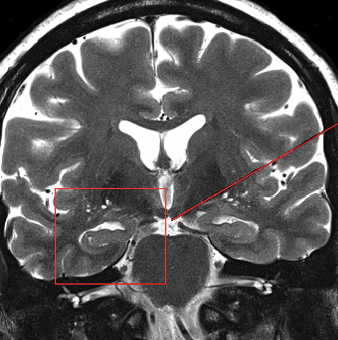
Sedentarism, and in the case of this study, long hours sitting, is associated with a thinning of the cortex. That’s it.
This brain area is called the medial temporal lobe. It plays a role in cognitive and emotional functions.
What this means is that prolonged hours sitting can be a precursor to cognitive decline and dementia.
On the other hand, regular physical activity improves memory and thinking skills¹³.
The sleeping position
2 main messages here:
1. Side sleeping position is better than the back or belly sleeping position
Sleep is critical to clean the brain of toxic waste through the glymphatic system. The link between sleep deprivation and Alzheimer’s disease has already been established.
A new study, however, found that sleeping on your side is more effective at activating the glymphatic system than sleeping on your stomach or your back.
The research has only been conducted in mice but might be promising, given that lateral sleeping position is the most common in humans and animals. And nature always wins.
2. Sleeping with your head under the covers is very unhealthy
The brain consumes 18.4% of the oxygen, a close second with the liver (20.4%).
Sleeping with the head under the covers reduces the amount of oxygen we breathe, and by consequence, the amount of oxygen delivered to the brain.
Chronic oxygen deprivation leads to cell death due to increased acidity in the tissues of the brain. 23% of people who sleep their head covered, end up developing symptoms of dementia. That’s 23%!
But the worst of our bad sleeping habits remains sleep deprivation.
You can’t pick up bad habits that make you feel good, thinking your most sensitive and ever-changing organ won’t be affected.
Everything we do affect our brains. Either positively or negatively, the choice is personal.
These are just 7 seemingly harmless habits, but the list can go on:
Social media, excess TV, googling everything, skipping breakfast, eating too much or too little, and even chewing gum, they’re all somewhat harmful.
So be careful; your brain is not a punching bag.
A.
Thank you for taking the time to read.
If you enjoyed this story, I suggest you check two other articles for interesting facts and information about the human brain.
Why You and Your Brain Are Growing Years Apart
9 astonishing facts about your brain’s age
medium.com
Sources: ¹https://theconversation.com/explainer-what-is-dopamine-and-is-it-to-blame-for-our-addictions-51268 ² https://www.ncbi.nlm.nih.gov/pubmed/12055324 ³https://www.ncbi.nlm.nih.gov/pmc/articles/PMC3625995/ ⁴ https://www.hazeldenbettyford.org/education/bcr/addiction-research/alcohol-effects-brain-ru-515 ⁵https://www.ncbi.nlm.nih.gov/pmc/articles/PMC2077939/ ⁶https://www.ncbi.nlm.nih.gov/pmc/articles/PMC5513685/ ⁷https://www.ncbi.nlm.nih.gov/pmc/articles/PMC3951583/ ⁸http://www.hearingreview.com/2015/05/researchers-discover-brain-reorganizes-hearing-loss/ ⁹https://www.beltone.com/en/hearing-loss/types-and-causes-of-hearing-loss/alzheimers-and-hearing-loss ¹⁰https://onlinelibrary.wiley.com/doi/full/10.1111/j.1471-4159.2009.06203.x ¹¹ https://www.abstractsonline.com/pp8/#!/4649/presentation/20940 ¹²https://www.ncbi.nlm.nih.gov/pmc/articles/PMC4369164/ ¹³ https://www.health.harvard.edu/blog/regular-exercise-changes-brain-improve-memory-thinking-skills-201404097110


