
What Happens to Your Brain When You Try to Multitask
The misunderstood science behind task-switching

You might not want to believe this, but remember, science doesn’t lie.
Multitasking doesn’t exist; it’s a misnomer. The perception of productive multitasking is biased and wrong.
Let me explain and demonstrate.
Perception is a funny thing. Here, count the black dots in this image:
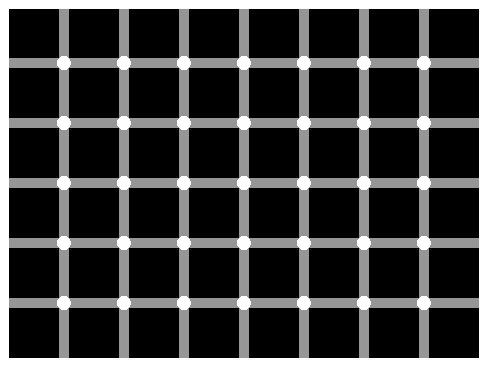
The ability to sense, capture, process, and understand information is what cognitive scientists call perception.
Humans can receive information via 5 different senses: sight, smell, touch, taste, and hearing. Every one of the senses is activated throughout the day. Each one is activated by continuous stimuli.
But we learn only to hear what we need to hear or see what we need to see. This cognitive control is essential for our lives, or else, we would be overloaded with useless information, and we wouldn’t be able to understand our surroundings and what is vital to carry out our daily activities.
Perception is not a one-off experience; It’s an active process that continually happens in our brain. It’s a complex system that only starts with one of 5 senses detecting a stimulus.
The stimulus is then selected. Your brain decides the bang you heard outside is essential. So it organizes the other stimuli that you just perceived to give the noise a context and a meaning. You become alert to the sound of the car alarms, the sudden light, and the weird smell in the air. You even go to the window to gather more information. All your senses are now focused on the incident; It takes up your whole attention. Once you have enough information; you can then interpret the situation:
It was just random fireworks.
This is a big and obvious example, and it doesn’t happen often. But your perception is continuously active.
We can talk about perception for hours. It’s what keeps us alive and makes us do our jobs and daily tasks. Disorders of perception are common, and like every physiological process, we understand it through pathological processes.
Remember when I said: “All your senses are now focused on the incident; it takes up your whole attention”?
So let’s zoom into attention now.
From Perception to Attention
Attention is a state hard to define. Advanced imaging of the brain gave scientists a new window into complex behavioural and cognitive systems.
Attention is a selective concentration during a state of arousal.
Philosophers, before psychologists and biologists, were the first ones to define and study attention.
In 1879, Wilhelm Wundt established the first laboratory for psychological research and introduced the study of attention to the field.
Over 140 years later, we’re still trying to understand the neural basis of attention.
In the 1990s, scientists started using Positron Emission Tomography (PET) and later functional MRI (fMRI) to image the brain in action.
The earliest studies using PET imaging focused on visual attention. Researchers found that a shift of visual attention requires at least two steps: disengaging the attention from one spot and bringing it to another one. The parietal lobe is important in the first step (disengagement), and the midbrain is more active in the second (refocus).
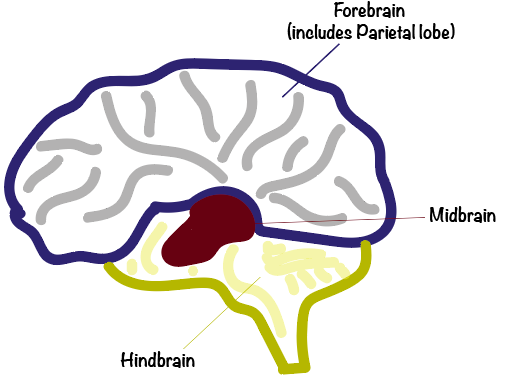
The brain’s system for vision is the best understood out of the five sensory systems because it is easy to test and experiment in both humans and primates.
Other than the 5 primary senses, the human brain has other systems for understanding stimuli and regulating the ability to function. However, they’re often integrated from our other senses. An example is a visual-spatial perception, which enables you to get around in your space.
The takeaway message of this overview:
- Attention is limited. To stay on task, our perceptions should be focused on a given source, without being overloaded with every stimulus around us. This depends on interest and need, but also on the ‘distractors’. Attention is limited in duration and capacity. This limitation is called “attention span” and can vary from person to person.
Test yourself on this open-source experiment.
- Attention is selective. Because it is limited, it needs to be selective to function properly at its maximum capacity. Most of the time, filtering and focusing are unconscious.
Test yourself on this open-source experiment.
- Attention is an integrative cognitive process. Attention is an innate reflex and is not limited to humans². It is a process that enables our survival. In newborns, attention is clear in rooting reflexes when babies turn their faces towards the source of the stimulus ³.
Task — switching
As mentioned earlier, attention is hard to define and is even harder to study and understand.
One way scientists are trying to deconstruct the neural basis of this process is by studying attention shifting: when you disengage from one task and refocus on another, going back and forth between them ⁴.
Attention shift is more commonly known as multitasking.
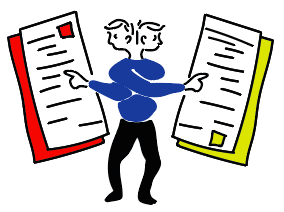
Multitasking gives us the impression of improved productivity, but this is a misconception. Switching your attention between tasks decreases efficiency by slowing down reaction speeds.
Let me explain and demonstrate why.
Demonstration
- While timing yourself, count from 1 to 26. Note down your time.
- While timing yourself, recite the alphabet from A to Z. Note down your time.
- While timing yourself, alternate between numbers and letter: 1-A-2-B… Note down your time.
A teacher timed her 27 students. Here are the results ⁵:
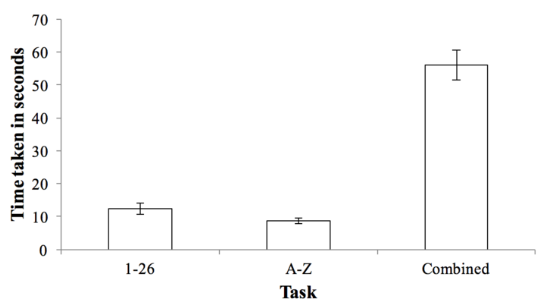
Average time to count from 1 to 26: 12 seconds Average time for alphabet A to Z: 9 seconds Combined average: 58 seconds Switching Cost: 58 — (12 + 9) = 37 seconds (176% of the time)
Time cost and errors
Using the first task-switching paradigm in 1927, Jersild investigated the ability to shift attention and action ⁶.
While using this paradigm, researchers demonstrated that performance on tasks is disrupted when switching is required, leading to slower performance and decreased accuracy.
The difference in performance between task repetition A-A and task switching A-B is known as the switching cost. And this is just when the person is working on 2 projects. In modern business, we are doing more than 2 things at once, and every interruption costs time and accuracy.
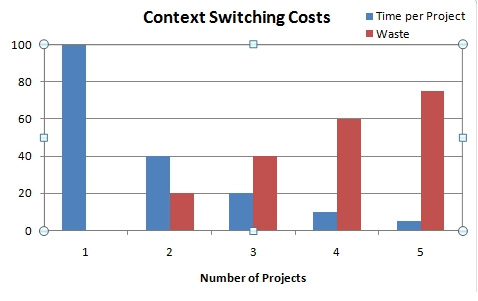
Task switching is expensive in terms of time and errors. The more complex the task, the higher the cost of time and mistakes. Cumulatively, task switching can waste up to 40% of your productivity in a day ⁷.
When your brain tries to disengage and re-engage
Task switching involves many parts of the brain. Researchers imaged brain function while asking participants to perform task-switching exercises.
Task switching involves 4 major areas ⁸:
- The pre-frontal cortex: attention shift and task selection.
- The posterior parietal lobe: understand rules.
- The anterior cingulate gyrus: error recognition.
- The pre-motor cortex: the anticipation of required movement.
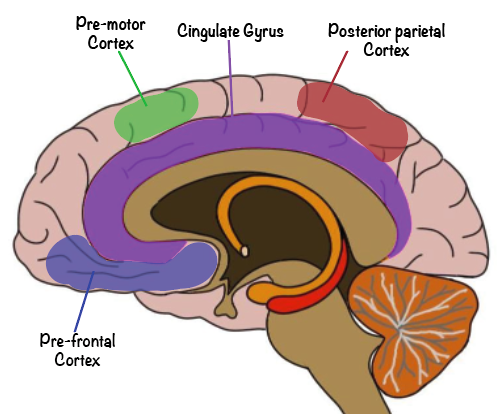
Research showed that people could only attend to one cognitive task at a time.
According to Meyer, Evans, and Rubinstein⁸, human “executive control” has two distinct, complementary stages: goal shifting & rule activation. We’re not aware of this decision, and the neural process can take fractions of milliseconds: even when you think you’re both reading and listening, you’re stopping one to attend to the other.
The problem is, the more complex the tasks, the more resources it needs (setting goals and understanding rules become more demanding), which introduces switching costs.
Multitasking doesn’t exist
You can see by now that we can only really do one thing at a time.
You think there are exceptions, like cooking and listening to a podcast, or driving and singing. Think again.
Habitual motor tasks do not have the same neural substrates as goal-directed motor tasks; they engage differential parts of the brain ⁹.
A study showed that people who talk on their phones while walking run into people more often. They also don’t notice what is going on around them. The study titled “Did you see the unicycling clown? Inattentional blindness while walking and talking on a cell phone” had someone in a clown suit ride a unicycle. People who were on their phones while walking did not notice or remember seeing the clown¹⁰.
Alternative tricks for efficiency
Psychology Today provides excellent tips to overcome constant task-switching in our professional lives.
Yes, we have a lot of input at the same time throughout the day, but we’re still in control, and we decide how to allocate our mental resources.
- The 80/20 rule. Also known as Pareto’s Principle, 20% of the work gives 80% of the results. Spending more time on something doesn’t mean being more productive. In fact, the more time we spend on something, the more chances we have of being distracted. The adult’s average attention span is 10 to 20 min. Identify the 20% task that will maximize your efficiency and give it your undivided attention.
- Work in batches. It’s very easy to be sucked into one task endlessly, often in those that require least mental input. When you work in batches, you allocate certain times of the day for specific tasks (like checking emails, making plans, booking your gym classes).
- Prioritize Always start with your most important tasks first. Your attention span gets shorter as the day goes by, and the allocated cognitive resources decrease with fatigue.
- Build focus and concentration It’s precisely the opposite of multitasking. If multitasking is not efficient, then the contrasting behaviour should be. Instead of being alert to every stimulus around you, and instead of having your senses ready for anything thrown your way, try narrowing this entire focus on a single task. Concentration requires practice. Start small and isolate yourself from distractions (sensory deprivation). It might seem hard at first, but you build endurance with time.
- Schedule downtime Your mental processes, just like your physical ones, need time to rest and refresh. The pre-frontal cortex that puts ideas together can only be allocated to a single task at a time. Task switching overloads the pre-frontal cortex, and problem-solving abilities decrease dramatically. Stop thinking about a problem, and it might be solved. Apart from blank spaces during the day, going off-grid also helps. Cherish your vacation time; they’re part of your productivity.
Below are two task-switching paradigms available to play online. They are similar to those used by scientists while scanning a person’s brain.
I’ve tested my cognitive abilities; My worst ones are always attention and focus.
I used to brag to my boyfriend that I can multitask, and he can’t. The reality is, he can focus profoundly, while I can’t.
“The bad news is time flies. The good news is you’re the pilot.”- Michael Altshuler
~Adriana~
Thank you for taking the time to read.
If you enjoyed this story, I suggest you check other articles for interesting facts and information about the human brain.
Why You and Your Brain Are Growing Years Apart
9 astonishing facts about your brain’s age
medium.com
Sources ¹https://www.pnas.org/content/95/3/763 ²https://link.springer.com/article/10.1007/s002130050668 ³https://www.medicinenet.com/script/main/art.asp?articlekey=5392 ⁴https://www.ncbi.nlm.nih.gov/pubmed/11006903 ⁵https://www.learningscientists.org/blog/2017/7/28-1 ⁶https://openlibrary.org/books/OL23627732M/Mental_set_and_shift ⁷https://www.psychologytoday.com/us/blog/brain-wise/201209/the-true-cost-multi-tasking ⁸https://www.ncbi.nlm.nih.gov/pubmed/11006903 ⁹https://www.ncbi.nlm.nih.gov/pmc/articles/PMC3972190/ ¹⁰https://onlinelibrary.wiley.com/doi/abs/10.1002/acp.1638


