avatarStella Fidem

Free AI web copilot to create summaries, insights and extended knowledge, download it at here

5380

Abstract

f="https://www.inner-light-in.com/2015/12/how-to-increase-prefrontal-cortex-activity/">https://www.inner-light-in.com/2015/12/how-to-increase-prefrontal-cortex-activity/</a></figcaption></figure><p id="b86b">The ancient saying “love is blind” might have a neurobiological explanation; our critical assessment of a person shuts down.</p><p id="aa31">The prefrontal cortex is essential for decision making, reasoning, behavioral, and planning in a highly organized advanced system.</p><p id="baac">Love throws this tightly organized structure overboard.</p><p id="173f">This brain area, along with some parts of the cortex, is inactive when we are in love. Critical judgment of others becomes inactive — and the experience is the same for a mother and her child³.</p><p id="43a3">It’s therefore fair to say that love is irrational and blind, at least from a neurobiological point of view.</p><figure id="cd73"><img src="https://cdn-images-1.readmedium.com/v2/resize:fit:800/0*4jbut1Zz-OTmZW6m.jpg"><figcaption>Cortical deactivations when subject view pictures of loved one. Source:<a href="https://febs.onlinelibrary.wiley.com/doi/full/10.1016/j.febslet.2007.03.094">https://febs.onlinelibrary.wiley.com/doi/full/10.1016/j.febslet.2007.03.094</a></figcaption></figure><h1 id="9bf6">Love is a drug and an addiction</h1><p id="2abc">In a <a href="https://readmedium.com/your-brain-is-not-an-indestructible-punching-bag-1326eccb0edc?source=---------2------------------">previous story</a>, I explained how alcohol, sugar, and cigarettes have similar neural pathways to cocaine, which leads to a biological addiction.</p><p id="0eb9"><b>Surprise, surprise: Love has the same effect.</b></p><p id="a242">The substances mentioned above act on the dopaminergic pathway (the one involved in reward).</p><figure id="a187"><img src="https://cdn-images-1.readmedium.com/v2/resize:fit:800/0*2bm3xWwmbyxND08-.gif"><figcaption>PET scans of obese, alcoholic, and cocaine-addicted brains. The red highlights in the healthy brains are the dopamine, which can be replaced by sugar, alcohol, and cocaine. Source:<a href="https://thebrain.mcgill.ca/flash/d/d_03/d_03_cr/d_03_cr_par/d_03_cr_par.html">https://thebrain.mcgill.ca/flash/d/d_03/d_03_cr/d_03_cr_par/d_03_cr_par.html</a></figcaption></figure><p id="bc36">More stimulus = more dopamine release. More dopamine release = repeated activation of the pathway. Repeated activation of the pathway = downregulation and lesser sensitivity to the same amount of dopamine.</p><p id="ebec">Conclusion: You need more to satisfy the same need and stopping the activation leads to <a href="https://psychcentral.com/blog/the-process-of-love-addiction-withdrawal/">withdrawal symptoms</a>.</p><p id="9939">And a sudden detachment has the same nasty withdrawal effects ⁴.</p><figure id="ac3e"><img src="https://cdn-images-1.readmedium.com/v2/resize:fit:800/1*TEiob8ufvKib6KNgI76PJg.jpeg"><figcaption>Photo by <a href="https://unsplash.com/@christiana?utm_source=unsplash&amp;utm_medium=referral&amp;utm_content=creditCopyText">Christiana Rivers</a> on <a href="https://unsplash.com/s/photos/hug?utm_source=unsplash&amp;utm_medium=referral&amp;utm_content=creditCopyText">Unsplash</a></figcaption></figure><p id="475b">But another reason love is a drug is the pain-killing effect it can have on us.</p><p id="0489" type="7">“Love takes up where pain leaves off. ” ⁵</p><p id="f32e">The study claims that the feelings of relief are similar to the strongest known pain-killers from a biological standpoint. The same areas are active when exposed to both passionate love and drugs.</p><h1 id="1ca8">Love is chemistry</h1><figure id="59e1"><img src="https://cdn-images-1.readmedium.com/v2/resize:fit:800/0*-nz_Br5hTmn0cTVg.gif"><figcaption>Source:<a href="https://giphy.com/gifs/2wRLDz95iZ3YhSn9pK">https://giphy.com/gifs/2wRLDz95iZ3YhSn9pK</a></figcaption></figure><p id="65e2">A small science interruption for a story:</p><p id="faaa"><i>We had been friends for a few years, but the first time he held me close and kissed my forehead, my whole body shivered. I felt dizzy, and I could barely speak. It was a frigid night, almost 7 years ago. The memory is still vivid. Today, the shivers have calmed down, but my partner became a part of me in a weird physiological way, and every goodbye is a few days of physical pain as if someone had taken a piece of me away.</i></p><p id="e6d0">So let’s deconstruct my love life:</p><h2 id="5d65">Love is an initial contact</h2><p id="cc7d">When we fall in love, at the early stages of the adventure, the reward circuit floods our brain.</p><p id="913e">But other than this initial rush of pleasure, we also experience stress and fear. The stress hormone, <a href="https://en.wikipedia.org/wiki/Cortisol"><b>cortisol</b></a><b>,</b> increases during the first few months (up to 6 months) ⁶. The body perceives the intense neurobiological reactions happening to us as a “crisis.”</p><p id="d0b4">Higher levels of cortisol hormone lead to lower levels of <a href="https://en.wikipedia.org/wiki/Serotonin">serotonin</a>, a neurotransmitter associated with happiness and well-being amongst other critical cognitive functions.</p><p id="5f74">Low serotonin levels create a sense of “intrusive, maddeningly preoccupying thoughts, hopes, terrors of early love,” says neuroscientist <a href="https://neuro.hms.harvard.edu/harvard-m

Options

ahoney-neuroscience-institute/brain-newsletter/and-brain/love-and-brain">Richard Schwartz</a>.</p><h2 id="27da">The butterflies in your belly</h2><p id="d5b0">There is a close <a href="https://www.ncbi.nlm.nih.gov/pmc/articles/PMC3845678/">relationship</a> between the brain and the gut. In fact, some scientists go as far as calling it a <i>second brain</i>.</p><figure id="9cf3"><img src="https://cdn-images-1.readmedium.com/v2/resize:fit:800/1*RgPpE9IpZeTAcXUfVnjsWw.jpeg"><figcaption>Photo by <a href="https://unsplash.com/@kqpho?utm_source=unsplash&amp;utm_medium=referral&amp;utm_content=creditCopyText">Kourosh Qaffari</a> on <a href="https://unsplash.com/s/photos/butterflies?utm_source=unsplash&amp;utm_medium=referral&amp;utm_content=creditCopyText">Unsplash</a></figcaption></figure><p id="544f">Activation of specific brain networks can cause a body-wide activation of the <a href="https://www.psychologytoday.com/gb/basics/neuroscience">nervous system</a>.</p><p id="e991">Butterflies in your belly are not the only signs of attraction; racing heart, clammy hands, tight appetite are often present.</p><p id="710d">The <a href="https://www.livescience.com/65446-sympathetic-nervous-system.html">sympathetic nervous system</a> is responsible for the flight-or-fight response.</p><p id="31af"><b>The body releases adrenaline, a hormone that can increase the heart rate</b> and increase the blood flow to the extremities, away from central organs such as the guts to prepare for the fight. This sudden drop in blood flow activates the vagus nerve that runs from the brain to your gut.</p><p id="7f1e">The phenomenon I just described is what we romantically refer to as “butterflies in the belly.”</p><h2 id="2657">Love can be long-lasting</h2><p id="5399">My favorite neurotransmitter (yes, I’m a nerd who has a favorite neurotransmitter) has to be <a href="https://www.livescience.com/42198-what-is-oxytocin.html"><b>Oxytocin</b></a>.</p><p id="0359"><b>Oxytocin plays a role in bonding, orgasm and sexual behavior, childbirth, lactation, and the bonding between the mother and the child after birth.</b></p><p id="1d02">If you’ve been with a partner for a long time, you know the exciting phase eventually cools down and is replaced by deep bonding and attachment.</p><p id="77e4">But long-lasting love has a chemistry of its own. In later stages of love, serotonin increases, which is why we are happy and comfortable with the other person.</p><p id="5ff9">The constant <a href="https://www.scientificamerican.com/article/be-mine-forever-oxytocin/">release of Oxytocin</a> from exposure to our loved one through sexual relationships, cuddles, and skin-to-skin contact makes us more sympathetic, empathetic, supportive, and open with our feelings, thus building a strong bond and attachment.</p><p id="9b96">Oxytocin comes hand in hand with Vasopressin, a hormone linked to monogamous behavior.</p><blockquote id="70aa"><p>An extra mind-blowing fact of long-term relationships:</p></blockquote><blockquote id="6392"><p>The brain reorganizes itself in very specific networks that become common between the two partners, which explains similar behaviors and ways of thinking⁷.</p></blockquote><p id="2e82" type="7">Knowing how love shakes us and changes us from the inside renders it even more magical. I hope you agree.</p><h2 id="a1b0">The Love Competition</h2><p id="2b13">To better understand the magic of brain science, I leave you with this heartwarming video.</p><p id="7c95">7 contestants had 5 minutes to neurochemically <b>love</b> someone as much as they can, while inside the scanner.</p><p id="7cb4">A.</p> <figure id="0f1c"> <div> <div> <img class="ratio" src="http://placehold.it/16x9"> <iframe class="" src="https://cdn.embedly.com/widgets/media.html?src=https%3A%2F%2Fwww.youtube.com%2Fembed%2Fsk81dG9t4qo%3Ffeature%3Doembed&amp;display_name=YouTube&amp;url=https%3A%2F%2Fwww.youtube.com%2Fwatch%3Fv%3Dsk81dG9t4qo&amp;image=https%3A%2F%2Fi.ytimg.com%2Fvi%2Fsk81dG9t4qo%2Fhqdefault.jpg&amp;key=d04bfffea46d4aeda930ec88cc64b87c&amp;type=text%2Fhtml&amp;schema=youtube" allowfullscreen="" frameborder="0" height="480" width="854"> </div> </div> </figure></iframe></div></div></figure><p id="11ee"><i>Sources </i>¹<a href="https://www.ncbi.nlm.nih.gov/pubmed/16255001">https://www.ncbi.nlm.nih.gov/pubmed/16255001</a> ²<a href="https://www.ncbi.nlm.nih.gov/pubmed/15361811">https://www.ncbi.nlm.nih.gov/pubmed/15361811</a> ³<a href="https://www.inner-light-in.com/2015/12/how-to-increase-prefrontal-cortex-activity/">https://www.inner-light-in.com/2015/12/how-to-increase-prefrontal-cortex-activity/</a><a href="https://www.researchgate.net/publication/275526687_Imaging_the_Passionate_Stage_of_Romantic_Love_by_Dopamine_Dynamics">https://www.researchgate.net/publication/275526687_Imaging_the_Passionate_Stage_of_Romantic_Love_by_Dopamine_Dynamics </a><a href="https://journals.plos.org/plosone/article?id=10.1371/journal.pone.0013309">https://journals.plos.org/plosone/article?id=10.1371/journal.pone.0013309 </a><a href="https://www.medicalnewstoday.com/articles/324459">https://www.medicalnewstoday.com/articles/324459</a><a href="https://www.ncbi.nlm.nih.gov/pubmed/31129301">https://www.ncbi.nlm.nih.gov/pubmed/31129301</a></p></article></body>

Yes, Love Can Be Measured, and This Is How

Leave it to neuroscientists to quantify the unquantifiable
Scientists at Stanford University ran a Love Competition.

The winner would be the one who loves most… with their brain.

Around the world, across cultures, in every language, on every continent, people love. Anthropologists have never found a society that did not have love.

We wrote it, watched it, sang it, acted it. We lived for it, died for it, killed for it, cried for it.

Romantic love is one of the most — if not the most — powerful feelings on earth.

“To love or have loved, that is enough. Ask nothing further. There is no other pearl to be found in the dark folds of life.” ― Victor Hugo, Les Misérables

I like to believe in love as cosmically pure and beyond our reach, a personal and all-consuming experience. Something different from person to person, unique and indescribable.

I believe we love from our hearts; we love from our souls; we love from all our being. We find the other person and recognize in them everything we ever wanted.

But I also believe love is in our heads. We love with our brains and with our whole body, literally.

So what is love?

Let’s strip it down to its most basic definition and talk about love as a romantic sentiment for another person, an emotional bond and sensory stimulations awakening desires.

Love is a reward

Pleasure as we know it is a ‘subjective’ experience. It arises from the satisfaction of a particular need.

In neurobiology, however, pleasure is a quantitative experience.

The pleasure center of the brain is the ventral tegmental area (VTA).
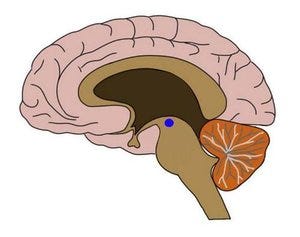
VTA represented by a blue dot. Source:https://www.neuroscientificallychallenged.com/blog/know-your-brain-ventral-tegmental-area

The VTA contains different types of neurons; one of them is the dopaminergic neurons; they release the neurotransmitter dopamine.

Dopamine is part of the reward-system pathway — or the mesolimbic pathway.

It runs from the VTA to other structures of the brain mainly the nucleus accumbens (regulation), prefrontal cortex (process information and determines behavior), amygdala (is the experience pleasurable or aversive?), and hippocampus (memories of experience).

The regions involved in the mesolimbic pathway are responsible for higher cognitive processes such as reward, motivation, emotional regulation, learning, and memory.
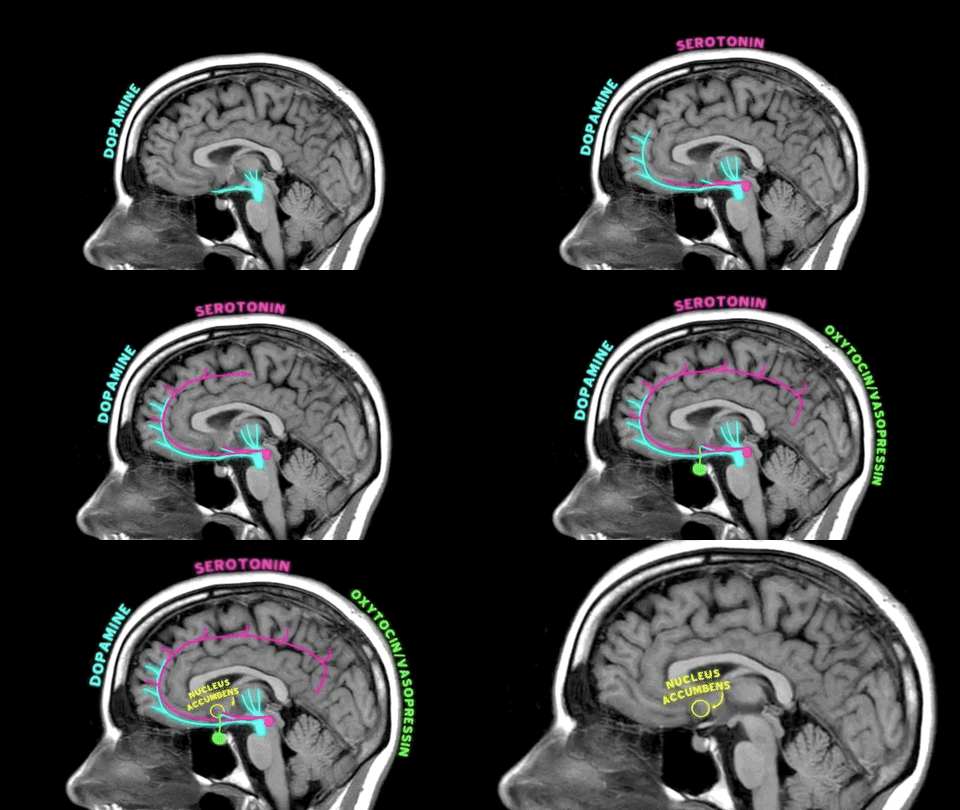
Source:https://giphy.com/explore/serotonin

An early functional MRI (fMRI) study looked at the brain of 2,500 college students. Their brains were scanned while they looked at pictures of their loved ones, and then pictures of acquaintances¹.

The areas that light up when exposed to pictures of a loved one are the VTA and the caudate nucleus.
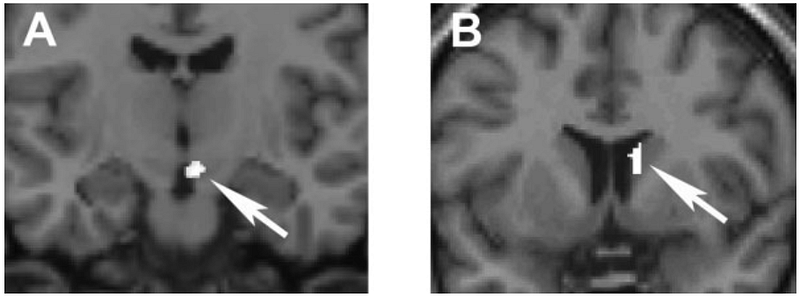
Brain area activated while looking at pictures of loved ones compared to acquaintances. A) VTA and B) caudate nucleus. Source:https://onlinelibrary-wiley-com.iclibezp1.cc.ic.ac.uk/doi/epdf/10.1002/cne.20772

The caudate nucleus is responsible for reward detection/anticipation and the integration of sensory experiences into social behavior.

The VTA plays a role in pleasure, focused attention, and motivation to reach rewards.

The mesolimbic pathway is an old primitive but highly effective system involved in motivation and goal-targeted behavior².

The same rewarding behaviors come from other stimuli such as food, sex, or pleasurable social interactions.

Levels of dopamine affect the reward experience and strengthen it.

Love is blind

Besides positive reinforcement such as reward and motivation, love deactivates the neural pathway involved in fear and social judgment.
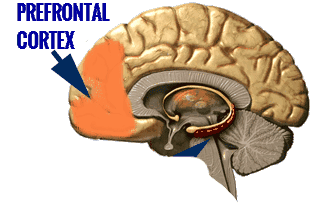
Source: https://www.inner-light-in.com/2015/12/how-to-increase-prefrontal-cortex-activity/

The ancient saying “love is blind” might have a neurobiological explanation; our critical assessment of a person shuts down.

The prefrontal cortex is essential for decision making, reasoning, behavioral, and planning in a highly organized advanced system.

Love throws this tightly organized structure overboard.

This brain area, along with some parts of the cortex, is inactive when we are in love. Critical judgment of others becomes inactive — and the experience is the same for a mother and her child³.

It’s therefore fair to say that love is irrational and blind, at least from a neurobiological point of view.
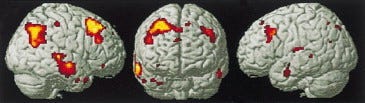
Cortical deactivations when subject view pictures of loved one. Source:https://febs.onlinelibrary.wiley.com/doi/full/10.1016/j.febslet.2007.03.094

Love is a drug and an addiction

In a previous story, I explained how alcohol, sugar, and cigarettes have similar neural pathways to cocaine, which leads to a biological addiction.

Surprise, surprise: Love has the same effect.

The substances mentioned above act on the dopaminergic pathway (the one involved in reward).
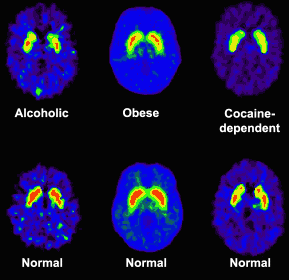
PET scans of obese, alcoholic, and cocaine-addicted brains. The red highlights in the healthy brains are the dopamine, which can be replaced by sugar, alcohol, and cocaine. Source:https://thebrain.mcgill.ca/flash/d/d_03/d_03_cr/d_03_cr_par/d_03_cr_par.html

More stimulus = more dopamine release. More dopamine release = repeated activation of the pathway. Repeated activation of the pathway = downregulation and lesser sensitivity to the same amount of dopamine.

Conclusion: You need more to satisfy the same need and stopping the activation leads to withdrawal symptoms.

And a sudden detachment has the same nasty withdrawal effects ⁴.

Photo by Christiana Rivers on Unsplash

But another reason love is a drug is the pain-killing effect it can have on us.

“Love takes up where pain leaves off. ” ⁵

The study claims that the feelings of relief are similar to the strongest known pain-killers from a biological standpoint. The same areas are active when exposed to both passionate love and drugs.

Love is chemistry
Source:https://giphy.com/gifs/2wRLDz95iZ3YhSn9pK

A small science interruption for a story:

We had been friends for a few years, but the first time he held me close and kissed my forehead, my whole body shivered. I felt dizzy, and I could barely speak. It was a frigid night, almost 7 years ago. The memory is still vivid. Today, the shivers have calmed down, but my partner became a part of me in a weird physiological way, and every goodbye is a few days of physical pain as if someone had taken a piece of me away.

So let’s deconstruct my love life:

Love is an initial contact

When we fall in love, at the early stages of the adventure, the reward circuit floods our brain.

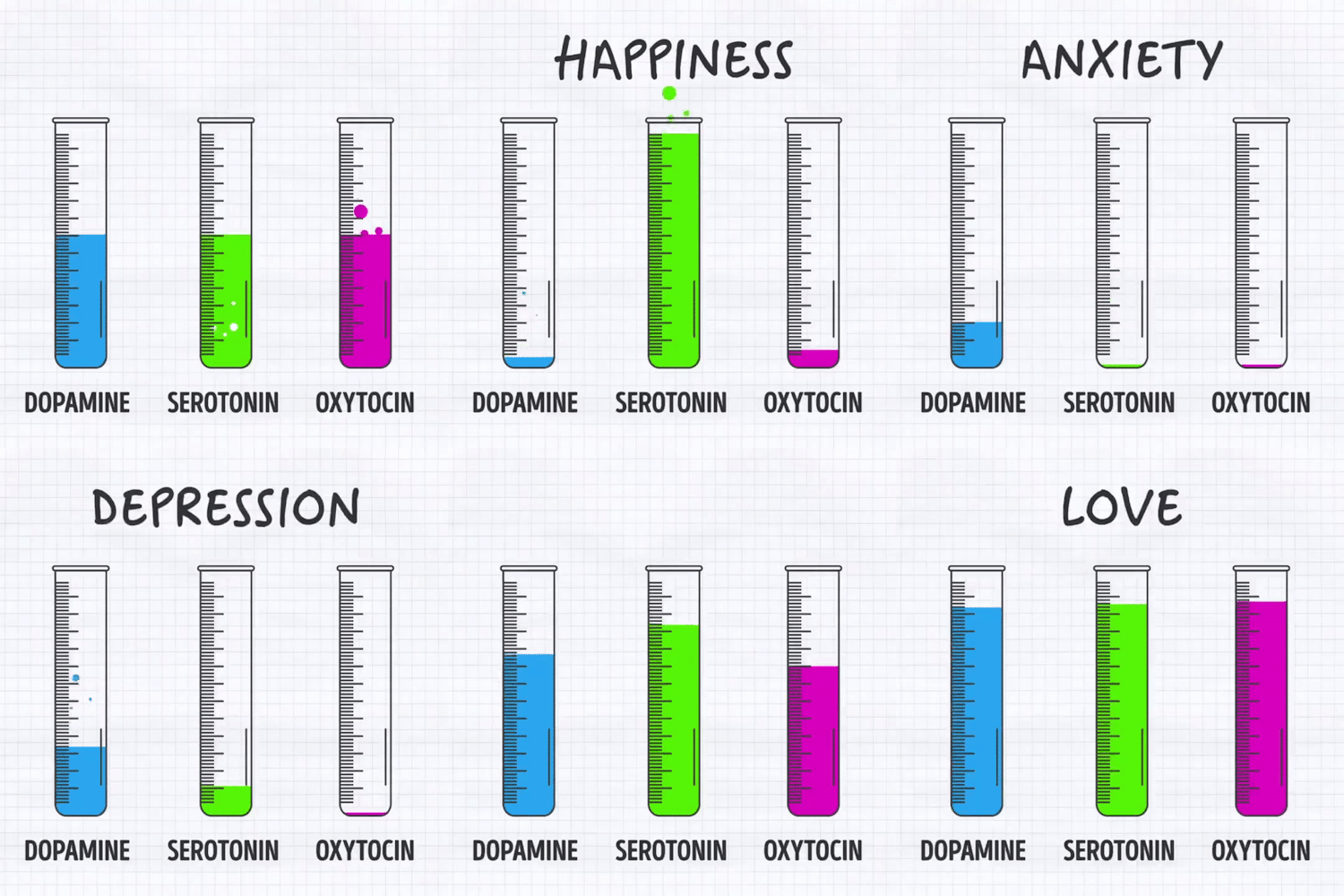
But other than this initial rush of pleasure, we also experience stress and fear. The stress hormone, cortisol, increases during the first few months (up to 6 months) ⁶. The body perceives the intense neurobiological reactions happening to us as a “crisis.”

Higher levels of cortisol hormone lead to lower levels of serotonin, a neurotransmitter associated with happiness and well-being amongst other critical cognitive functions.

Low serotonin levels create a sense of “intrusive, maddeningly preoccupying thoughts, hopes, terrors of early love,” says neuroscientist Richard Schwartz.

The butterflies in your belly

There is a close relationship between the brain and the gut. In fact, some scientists go as far as calling it a second brain.
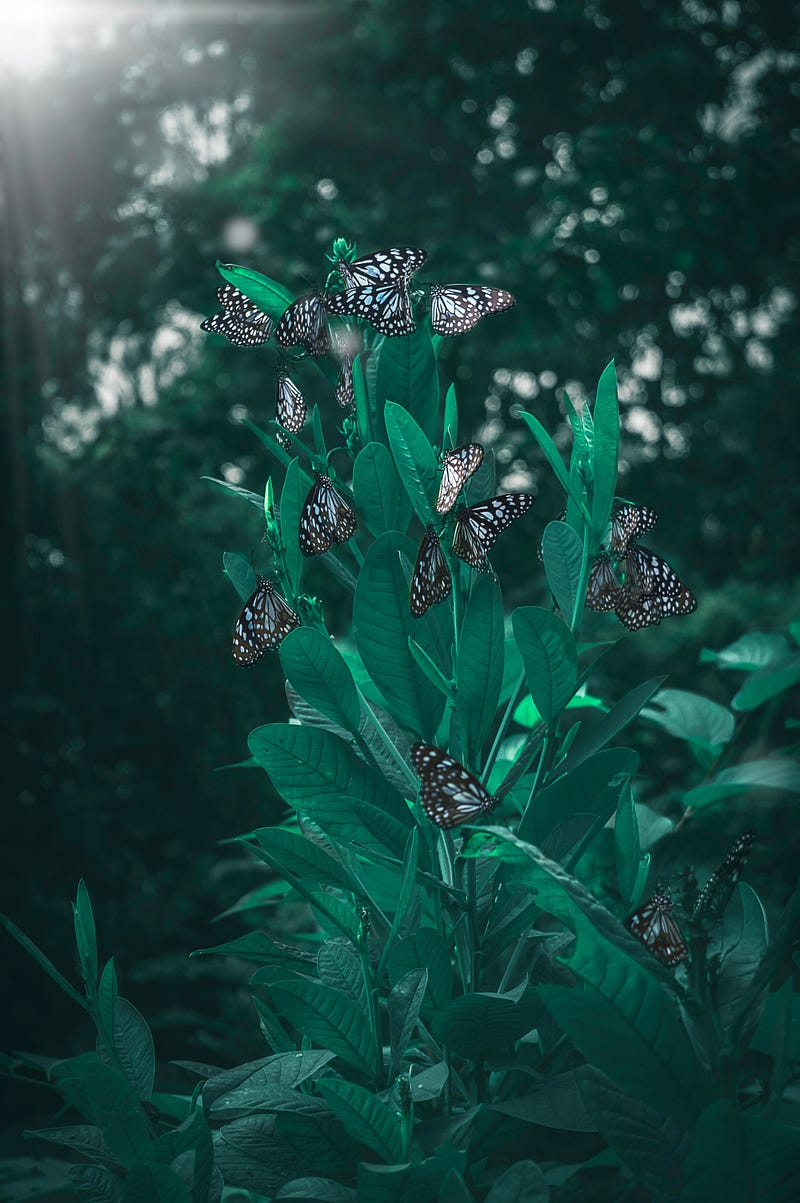
Photo by Kourosh Qaffari on Unsplash

Activation of specific brain networks can cause a body-wide activation of the nervous system.

Butterflies in your belly are not the only signs of attraction; racing heart, clammy hands, tight appetite are often present.

The sympathetic nervous system is responsible for the flight-or-fight response.

The body releases adrenaline, a hormone that can increase the heart rate and increase the blood flow to the extremities, away from central organs such as the guts to prepare for the fight. This sudden drop in blood flow activates the vagus nerve that runs from the brain to your gut.

The phenomenon I just described is what we romantically refer to as “butterflies in the belly.”

Love can be long-lasting

My favorite neurotransmitter (yes, I’m a nerd who has a favorite neurotransmitter) has to be Oxytocin.

Oxytocin plays a role in bonding, orgasm and sexual behavior, childbirth, lactation, and the bonding between the mother and the child after birth.

If you’ve been with a partner for a long time, you know the exciting phase eventually cools down and is replaced by deep bonding and attachment.

But long-lasting love has a chemistry of its own. In later stages of love, serotonin increases, which is why we are happy and comfortable with the other person.

The constant release of Oxytocin from exposure to our loved one through sexual relationships, cuddles, and skin-to-skin contact makes us more sympathetic, empathetic, supportive, and open with our feelings, thus building a strong bond and attachment.

Oxytocin comes hand in hand with Vasopressin, a hormone linked to monogamous behavior.

An extra mind-blowing fact of long-term relationships:

The brain reorganizes itself in very specific networks that become common between the two partners, which explains similar behaviors and ways of thinking⁷.

Knowing how love shakes us and changes us from the inside renders it even more magical. I hope you agree.

The Love Competition

To better understand the magic of brain science, I leave you with this heartwarming video.

7 contestants had 5 minutes to neurochemically love someone as much as they can, while inside the scanner.

A.

Sources ¹https://www.ncbi.nlm.nih.gov/pubmed/16255001 ²https://www.ncbi.nlm.nih.gov/pubmed/15361811 ³https://www.inner-light-in.com/2015/12/how-to-increase-prefrontal-cortex-activity/https://www.researchgate.net/publication/275526687_Imaging_the_Passionate_Stage_of_Romantic_Love_by_Dopamine_Dynamics https://journals.plos.org/plosone/article?id=10.1371/journal.pone.0013309 https://www.medicalnewstoday.com/articles/324459https://www.ncbi.nlm.nih.gov/pubmed/31129301

Psychology
Neuroscience
Self
Relationships
Science
Recommended from ReadMedium