Art
Why Yes, Generative Art IS Actually Art! Please Stop Criticizing It!
Haters gonna hate, though…
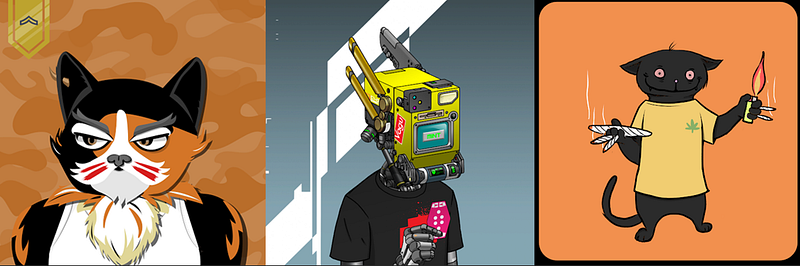
After publishing recent pieces on generative NFT programming (a service I offer), I’ve been in touch with perhaps 15 or 20 artists and/or teams in the midst of generative NFT projects. Just so we’re all on the same page, a generative art project is one in which the final artwork is generated by code.
Typically, these projects have a central focus — usually some sort of character or animal — and varying traits (e.g., different noses, mouths, eyes, clothes, accessories, etc.). Once you have a certain number of traits and variations, it would be impractical and impossibly time-consuming for a human to render a giant set of unique combinations of these things.
So, we enlist a computer for help. And that’s generative programming, which results in the generative artwork that serve as NFTs.
If you take a look at the generative art NFT landscape, you’ll come by many well-known names like the CryptoPunks, Stoner Cats, Gutter Cats, the Bored Ape Yacht Club, Cool Cats, the Galactic Secret Agency, and so many more — Barn Owlz, Lonely Aliens, Cunning Foxes … the list goes on and on!
As you may know from my writings on NFT marketing, I’m fairly active in many online boards and groups, out there daily trying to drum up momentum for my own generative project, NFTuxedoCats. One thing that surprises me — and this is something that has happened on multiple occasions — is seeing traditional artists on these boards dissing and/or dismissing generative art.
What we’re seeing when this happens is basic jealousy, of course. They trash-talk generative NFTs because it seems somehow wrong to them that an artist or team suddenly has 10,000 items for sale, and that a computer did all of the work. So, they regard this as unfair to them (people who do one-off artworks).
But, for anyone who really looks at most generative projects, and who really studies them, the takeaway is actually the opposite: These are serious, often incredible works of digital art!
It’s easy to forget that, although a computer generated 10,000 apes or cats or aliens or whatever, some digital artist (or team of artists) had to create those characters in the first place. And not only that, they had to work out the ways in which all of the traits and variations will come together once a computer gets hold of everything.
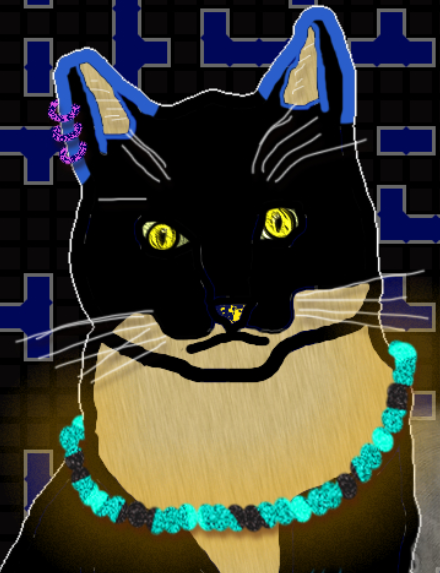
I think many dismiss the effort here as minimal when, in reality, it takes a serious level of detailed planning, just like any artist would traditionally do on a serious art project. And that goes for everything from the most pixelated punks to the most photo-realistic cats.
And, indeed, from an artistic perspective, generative art is nothing short of fascinating. As I wrote in an earlier piece about making my NFTuxedoCats, “bulk art-generation scripting presents interesting philosophical considerations — challenging existing notions we have about what art is and what the creative artistic experience means (e.g., esp. in terms of what decisions artists make when creating). What if you, as an artist, could see and/or even pursue ALL possibilities for a given work instead of having to follow just one direction? Or, to spin it into even more far-out terms: Such projects *compact* the multi-verse of timelines created by each decision-point and allow the viewer, and indeed the artist, to experience all wide-ranging directions simultaneously.” (Ha, so I quoted myself there … lol. But I think it’s a good point here, too!).
So, if anything should be dismissed in the art world, it’s those who dismiss generative art as worthless. It’s quite the opposite. Now if only my NFTuxedoCats would take off, I could buy myself a few items from the collections mentioned above!
Thanks for reading! If you enjoyed this, please consider supporting my NFT project NFTuxedoCats on OpenSea. Plenty of NFTuxedoCats are available at 0.01 ETH or less (still some available at 0.005!).