
Why We Need Police To Be Neighborly and 3 Ways To Achieve It
We don’t need you to be our savior. Be in community with us, and know us.
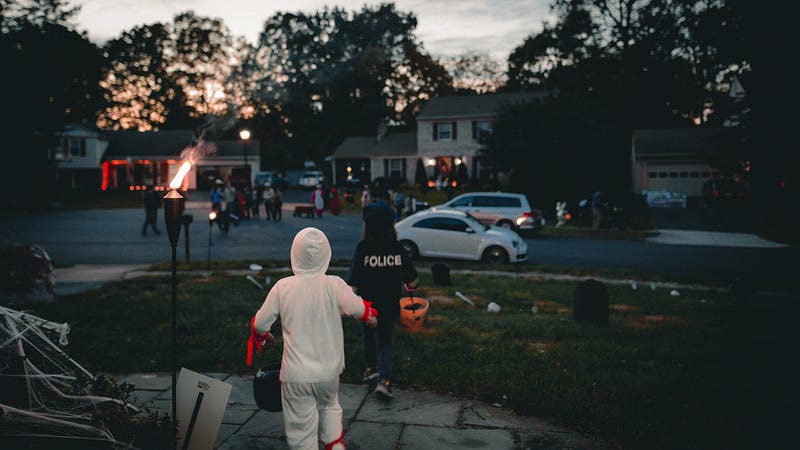
The state of law enforcement isn’t so black and white. There’s a middle-ground that is taken for granted.
Our nation’s police don’t represent our racial, cultural, or communal makeup. For that reason, we continue to see predominantly black men shot and killed at the hand of trained officers. So what does that say about the training they receive, the oath they uphold, and the people carrying a badge?
We don’t need to defund police, but we do need to alter their role in and around our communities. They need to be neighbors we’d kick it with.
Nothing I have to say on this matter is unique, unfortunately. In fact, some may adamantly argue against the points I make. But I need you to hear it. We need the white moderates, conservatives, and liberals to understand.
This is about our well-being, not a political statement.
Why We Don’t Currently Trust Cops
I became keenly aware of the role racial injustice plays while interacting with law enforcement at a young age. When I watched my mom beaten by her boyfriend at the age of 5, and she chose not to call the police, it spoke volumes to me. Or maybe it was the time I got into a fight with two older black boys at the age of 10. That officer sure did enjoy visiting my school to report to me he had found the two “kids from juvie” — as if I were supposed to be impressed.
When the cop brought me that news, he thought he was doing a service — believing that somehow he was protecting me. In reality, it was a trade-off on who he could punish. And sadly, the other kids from my neighborhood had darker skin than me.
When used as a verb, the term “police” literally translates to “have the duty to maintain law and order in a specific area.” That’s a problem.
In other words, they are not asked to live among, converse with, or help improve the lives of those civilians. They are not required to help us understand. The police have no obligation beyond attempting to keep things stable.
In short, the bar is not set very high.
At best, they are middle-men acting as a peacekeeper. More often than not, police and communities are pitted against each other. The same rule applies to officers of color as well — they are not exempt from harming the communities they serve.
Tamar Manasseh, founder of MASK (Mothers Against Senseless Killings Chicago), said it best:
“They need to live amongst the people they patrol, and all the sensitivity training in the world isn’t going to do anything for you” ~
The Proof Is In The Pudding
Law enforcement is its own community, and people of color feel that divide more than ever before.
According to a local study, roughly 12% of Seattle Police Officers live within city limits. The two cops I used to call friends live in Maple Valley — a suburb 30 minutes away. They can afford gated, upscale living in a tight-knit community. All paid for by the minimum rookie earnings of $83,640. Six months under their holster nets them an annual salary of $89,700. And both have been on duty for more than four years which places them in the six-figure range.
By comparison, the average Seattle teacher makes $64,581 a year.
In cities across the United States, you have police officers who commute into areas they don’t live in. At the end of an average day, they can drive home and wipe their hands clean of any immediate effect they had on communities of color.
They don’t realize how inferior that made that black man feel. And they can’t measure what went through the little brown boy’s mind as he saw his “tough” dad crying.
When a police officer patrols an area she doesn’t live, she’s prone to see herself as a savior. They are levels above their subjects. And saviors are almost always faultless. They live outside the limitations applied to their inferiors.
That’s why it’s so rare for a cop to “check” or correct another officer — even in highly escalated situations.
Don’t Knock Something Until You Try It
I remain hopeful that society can correct course and do right by communities of color. While the playbook for this correction hasn’t been published, here are the three ways police departments can lead the process:
- Ammend Oaths and Mottos
Before any actual movement can happen, local police must adjust their mindset. And yes, the responsibility is placed on them as authority figures. Most current oaths need an update. And mottos such as “protect and serve” do not resonate with communities of color.
This change has to begin with the belief statements of every local police department. They need genuine rebranding — thoughtful vision statements that equally guide the relationship in every community.
“To protect and give back”
2. Require and Incentivize Police To Live Closer
So-called experts would argue that this approach has not worked. They would say, “there’s not recent or robust evidence to support this notion.”
The appropriate response to those critics is, “I need empirical evidence to prove it will not work.”
If used as a stand-alone effort, it will fail. Tensions already run high between communities of color and police. Tossing everyone in together would be harmful, especially to the community.
But no doubt, our communities need improved response times. And when they arrive, it’s in everyone’s best interest for those cops to be familiar and understanding of what they’re walking into.
We need them to patrol the areas they partake in when they’re out of uniform. They’re less likely to go out of their way to destroy the family living two doors down — whether intentionally or purposely.
What a wonderful world it would be when police officers are actually comfortable living near someone they’ve interacted with while on duty.
And we pray that the death of Botham Jean can serve as continued learning for police everywhere.
3. Recruit & Maintain a Diverse Police Force
We don’t just need them to live near us; we need them to look more like us.
Departments across the country have attempted to do this and have failed miserably. Most of the struggle is due to strained community relationships. Nonetheless, this has to remain a continual effort.
More officers of color will apply to the force when they believe in the mission of their local police department. That belief will rise when the first two recommendations are taken seriously.
In the Words of Kendrick Lamar
“The one in front of the gun lives forever”
Merriam-Webster’s Dictionary defines a neighbor as one living or located near another. But according to God, being neighborly is more important. The biggest difference between the two words is that you can be a neighbor and not be neighborly.
For my son, I believe that can and should change.
Like your children, he is bountifully optimistic and simple. He thinks police officers are heroes. At the age of two, I speak with him honestly, but I don’t attempt to sway his opinion. I will not train him to be fearful of an entire group of people.
Statistically speaking, he is bound to interact with the cops at some point in his life. I pray that police at that point see him as their neighbor. I want them to treat him with grace and respect. He doesn't deserve to become a martyr. No one does.
He’ll keep his head high. He’ll treat that cop appropriately. And I hope they’ll be equipped to do the same.
When will we see each other as friendly neighbors?
If you want to connect or read my previously published articles, I’d also love to hear your story.
You can follow me on Medium and Instagram or email me at [email protected] for business inquiries. My official website will be up and running soon!
I can’t wait to hear from you!