
Why the Rent Freeze Just Isn’t Good Enough For Black Families
Exploring the alternatives
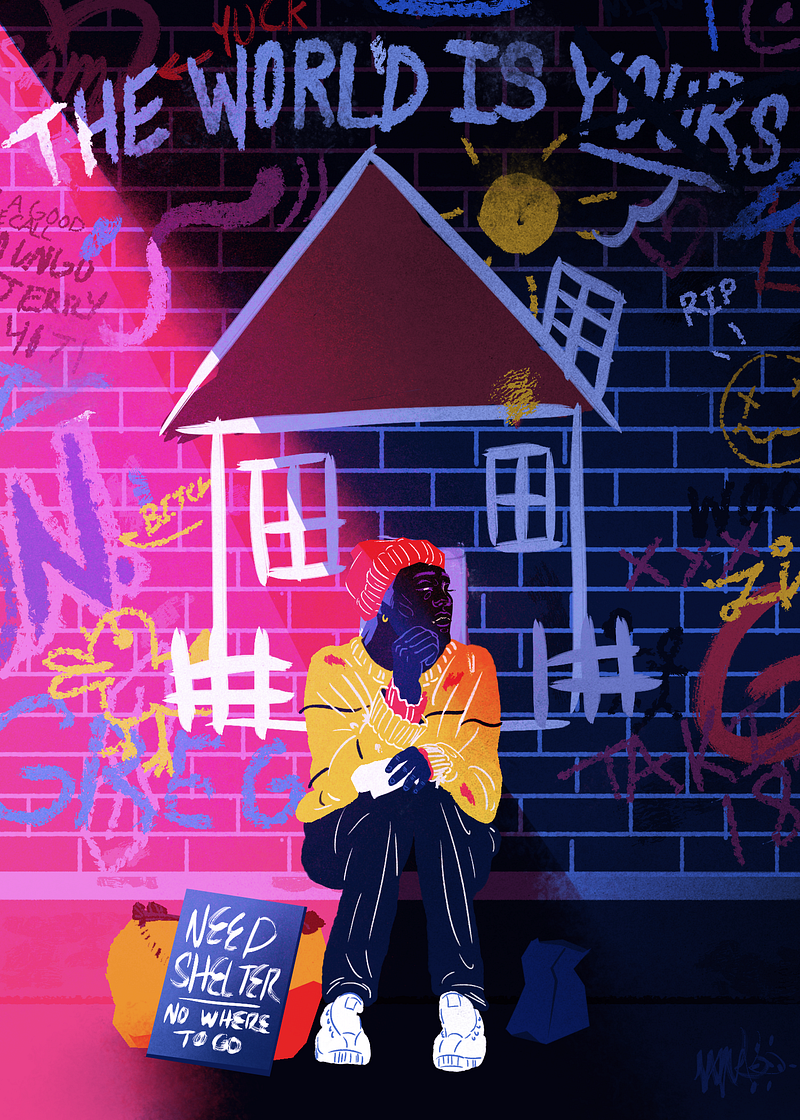
As many Americans bid good riddance to a long year of quarantines, social distancing, and record job losses, many face a long road to recovery. The pandemic exposed a widening racial wealth gap caused by generations of discriminatory practices. More than any group of Americans, Black families face housing insecurity. While lawmakers extended The National Eviction Ban until the end of January, many hard-working blue-collar Black families will still be at risk of losing their homes in 2021.
The rent-freeze is nothing more than a ticking time bomb. This measure only prevents families from eviction during this short period; however, it does not cover back-pay. Families who faced temporary or permanent layoffs in 2020 do not have several months of rent stacked away. Unless they receive raises or financial assistance, they won’t have the tools to recover. Sadly, many families will be thrown out without further intervention when the immediate healthcare crisis is over.
According to the freeze, landlords must give these families six months to pay what they owe after the Eviction Moratorium ends. However, this policy assumes that renters will be able to afford months of back-pay rent. Black families facing housing insecurity are low-income families; families can’t catch up while living from check to check. As it stands, the Eviction Moratorium is the first domino to fall. When the last one takes a plunge, many Black men, women, and children will face homelessness for the first time in their lives. These families need rent-forgiveness, not rent postponement.
Opponents to rent-forgiveness are trying to squeeze lemon juice out of a dried-out lemon. Wealthy people and fiscal conservatives seem out of touch with the reality on the ground. Since the beginning of the coronavirus outbreak, 63% of Americans say they live from check to check. Most Americans lacked the funds to manage the unmitigated COVID disaster. This pandemic hurt Black families, and they will feel the impacts for years to come.
Martin Luther King Jr. understood the absurdity of asking a bootless man to pull himself up by the bootstraps. I wish more people understood how unethical it is to blame impoverished Black people for their poverty. Contrary to popularized conservative rhetoric, most poor people work full-time jobs. They are not lazy; they are underpaid. Currently, America has a minimum wage of $7.25 an hour. Mind you; they still pay federal and state taxes out of that. Also, they pay sales tax on groceries, goods, and services within their community. Even if someone works 40 hours a week, their check will be $290 each week. Does that sound like something most people can sustain a family of one, two, or three? In this climate, Black families are struggling, and there is no end in sight. Oh, and according to Policy Link, Latino families are the most likely to be considered “working-poor.” Many find themselves in the same boat as low-income Black families.
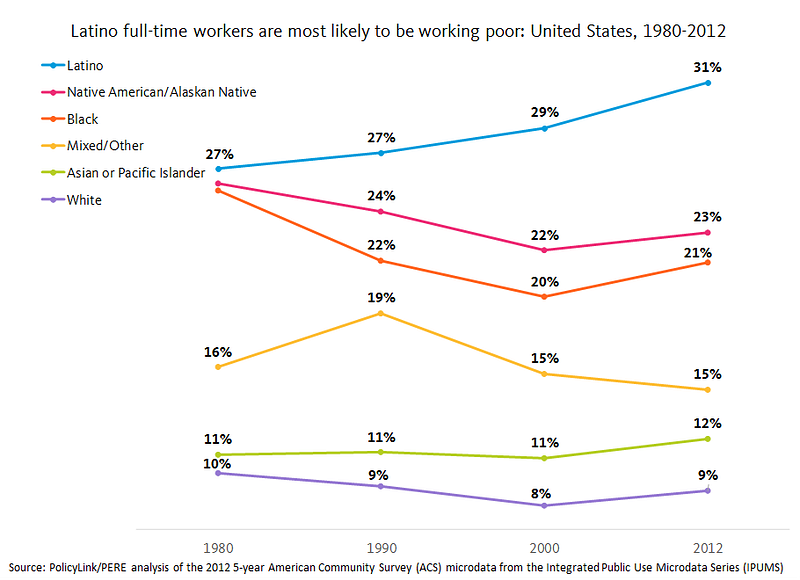
As an American, I often hear foreigners talk about how privileged Americans are, but unless they talk about white people, these generalizations are misleading and dangerous. They feed into a narrative that America treats people equally, that most people prosper when the country does, and that we are exceptional. In reality, America has a caste system that consistently places Black and brown families at the very bottom.
This year pushed Americans to the breaking point and then gave another shove. Families who live from check to check face housing insecurity after missing one weeks’ work. After months out of work or decreased wages, how could these families possibly come up with extra money for months of back-pay rent? Financially, these families feel maxed out. This rent freeze will not save many Black families from homelessness.
Also, the rent freeze did not save all Americans from becoming homeless in the first place. Greed kicked down the door and took everything they had. Many landlords found loopholes in the Eviction Moratorium to still evict families in the middle of the pandemic. After all, in a purely capitalistic system, only profits matter. While many people want to protect landlords’ right to profit, they fail to realize we have alternative options — like a bailout. Americans seem to have cognitive dissonance when it comes to connecting policies with their impact on people. The rent-freeze ticking time bomb continues; Tick tock, tick- tock. Many Black families wonder what will happen when the clock stops.
Tenant advocates and legal experts said the recourse functions as a loophole for landlords seeking to evict during the public health crisis, which has entered a new phase of surging case counts, hospitalizations and deaths. It underscores the disparate economic outcomes imposed by the forces of the pandemic, which has disproportionately impacted low and middle-class workers — especially Black women with children, who are more likely to be behind on rent payments than any other group, according to a study published Dec. 16 by the National Women’s Law Center (Miller, 2020).
The rent freeze is not enough for Black families because it won’t stop the impending disparities. These landlords will soon slip a piece of paper on their tenants’ door that condemns them to homelessness even though most are able-bodied and willing to earn an honest living. According to an economic analysis by The Washington Post, the black-white economic divide is as wide as in 1968. Under this climate, Black families never had a fair chance at economic prosperity, and the pandemic further exposed this trend in the community. The rent freeze is not good enough because it fails to address systemic racism. Black families are getting evicted in the middle of the pandemic, and they need help as soon as possible.
This fall, her landlord slipped a notice under her door: Either pay thousands in back rent or risk eviction, it said — despite a national moratorium prohibiting evictions for non-payment of rent (Ramirez, Taddeo, & Cusaac-Smith, 2020).
While many want Americans to unify after a long, divisive political slugfest, it is essential to unify around shared values. Ensuring that America’s Black working families have a roof over their heads is not too much to ask for — especially from the group whose ancestors toiled as slaves, freely building the American economy. To understand the inadequacies of the rent freeze, we should examine the current racial wealth gap.
The racial wealth gap
The historical data reveals that no progress has been made in reducing income and wealth inequalities between black and white households over the past 70 years,” wrote economists Moritz Kuhn, Moritz Schularick, and Ulrike I. Steins in their analysis of U.S. incomes and wealth since World War II (Long & Dam, 2020).
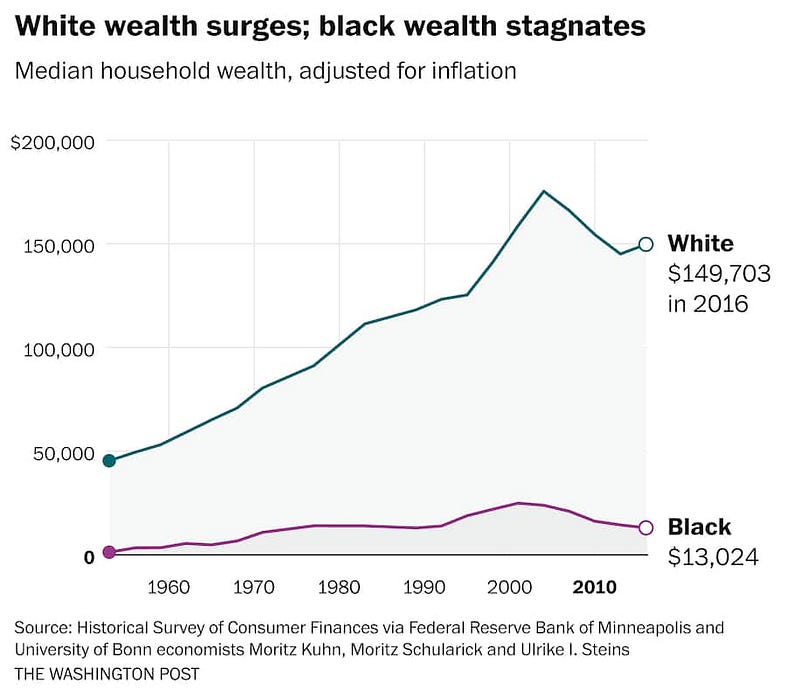
The Civil Rights Movement provided a framework for addressing structural inequality. However, this movement failed to address the racial wealth gap in America. Before Martin Luther King Jr’s assassination, he spoke at length about his dream for socioeconomic equality. If allowed to continue, his work would have attempted to address the disparities we see in the Black community. Ironically, the black-white racial divide stayed the same as it was during his lifetime. The racial wealth gap paints a picture of America; it isn’t a pretty one. His era was transformative. Nevertheless, in the aftermath, Black Americans experienced unproductive attempts at advancement.
Because of the racial wealth gap, many Black families will never have access to the American Dream of homeownership or financial stability. Many struggle to stay in their homes or even pay rent during this pandemic. While Civil Rights Advocates defeated Jim Crow legislation, redlining practices ensured that neighborhoods remained racially segregated into the modern era. Many white Americans grew tired of talking about racism. They successfully turned down the volume, but it continued to play in the background, robbing Black families of prosperity opportunities, which most white families enjoy. Among homeownership, the progress has been nonexistent.
The homeownership gap between blacks and whites is larger today than it was in 1934 (Lerner, 2020).
To become a homeowner, an American needs good credit, a downpayment, and a steady income stream. These things seem so simple until we understand how race, sex, and class impact someone’s ability to possess all three. The racial wealth gap is too far for many Black families to jump across. Under these conditions, Black homeownership will remain to stagnate. Many white people will enjoy the privilege of a swift recovery while Black families fight to stay in their homes.
Undoing centuries of discriminatory practices will take a concerted effort by the government, the real estate industry, financial institutions and nonprofit organizations to close the homeownership gap, Williams says (Lerner, 2020).
Black families also pay more for rent, especially in predominately white neighborhoods. No matter how we slice it, the racial wealth gap is just as bad as during my grandparents’ generation, with no strategy for relief in sight. When Black people bring up reparations or liberals bring up universal income, conservatives and moderates accuse divisiveness. However, is it more divisive to keep Black families disadvantaged or to speak about ways to address this disparity?
As Americans consider the recovery, they should consider that administering the vaccine and ending the lockdowns are only part of the long chain of events that must occur to ensure Black families have a place to call home. While my great grandmother lived through the Great Depression, I am living through this. America is facing a magnitude of problems similar to the ones she had to overcome in her lifetime.
We’re facing potentially the worst housing and homelessness crisis in our country’s history,” said Diane Yentel, CEO and president of the National Low Income Housing Coalition in Washington, D.C. (Ramirez, Taddeo, & Cusaac-Smith, 2020).
As many Black families face housing insecurity, it is essential to consider alternative options. Incrementalism will not save these families from the hardships that lay ahead. It is past time for America to live up to its hype by using innovation to aid America’s working-poor families. The rent freeze is insufficient to address the past disparities, kneecapping Black people’s financial future.
Where do we go from here?
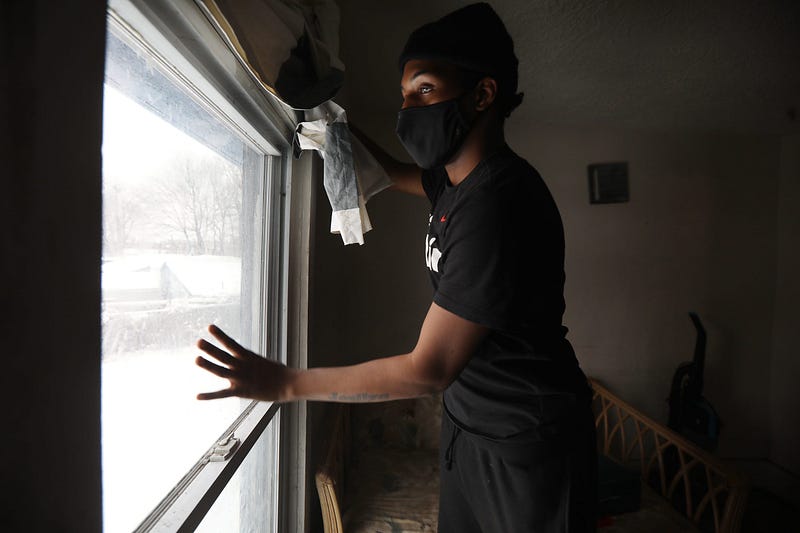
More than 14 million American households are currently at risk of eviction and have amassed an estimated $25 billion in rental debt, according to a report by Stout, a global investment bank and advisory firm (Yancey-Bragg, 2020).
As Americans put a cap on the end of an exhausting year, we should consider that returning to normal is an impossibility for many Black and low-income families. Millions face eviction in the new year. Many will contemplate their dwindling options to fend off homelessness in the new year as people around the world pop champagne.
These Black families need clemency. Now, more than ever, these families need legislators to provide alternative solutions to the problems we face. If legislators fail to address housing insecurity, many Black families will become homeless. The rent freeze is not good enough for Black families because it fails to acknowledge the implausibility of paying back months of rental debt. When the ticking time bomb stops, will Black families have a fighting chance? Only time can tell.
“The clearinghouse lawhelp.org offers a state-by-state search engine for legal help and do it yourself legal forms. Benfer’s team at the Eviction Lab has also created a list of housing groups including nonprofits that families can turn too for resources,” (Yancey-Bragg, 2020).
Curated Articles about Race, Equality, Women, & History:
References:
Lerner, M. (2020, July 23). One home, a lifetime of impact. Retrieved December 31, 2020, from https://www.washingtonpost.com/business/2020/07/23/black-homeownership-gap/?arc404=true
Long, H., & Dam, A. V. (2020, June 05). Analysis | The black-white economic divide is as wide as it was in 1968. Retrieved December 31, 2020, from https://www.washingtonpost.com/business/2020/06/04/economic-divide-black-households/
Miller, H. (2020, December 30). During Maryland rent moratorium, more landlords using legal ‘loophole’ as means to evict. Retrieved December 31, 2020, from https://www.baltimoresun.com/business/real-estate/bs-bz-maryland-tenant-holding-over-20201230-ji4gzcz7qbe2hcks5spifdi3dq-story.html
Ramirez, M., Taddeo, S., & Cusaac-Smith, T. (2020, December 24). The federal eviction moratorium expires in January. It could leave 40 million Americans homeless. Retrieved December 30, 2020, from https://www.usatoday.com/story/news/nation/2020/12/24/covid-eviction-moratoriums-could-eventually-leave-americans-homeless/4018226001/
Yancey-Bragg, N. (2020, December 17). Millions of Americans could be facing eviction after the holidays. Here’s how you can help. Retrieved December 30, 2020, from https://www.usatoday.com/story/news/nation/2020/12/16/million-could-face-eviction-after-holidays-heres-how-help/3821743001/
The author Allison Gaines is the founder of Justice Can’t Wait: