
Why Revolutionary Martin Luther King Jr. Never Believed in Capitalism
Countering the revisionist history and reclaiming his legacy
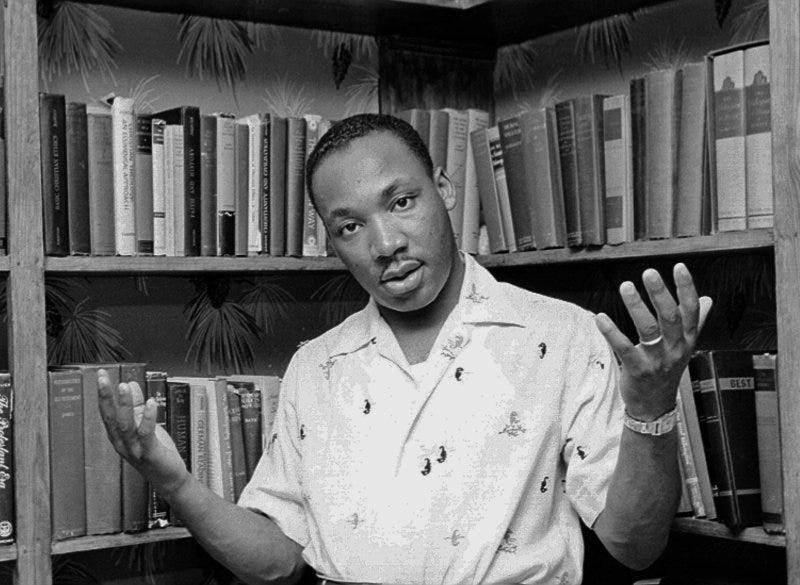
The colored American lives on a lonely island of poverty in the midst of a vast ocean of material prosperity (King, 1963).
On August 28, 1963, Martin Luther King Jr addressed the nation, sharing his dream. He spoke eloquently about racial equality, believing in American potential rather than American exceptionalism. King drew a direct line between the chattel slavery system and the socioeconomic status of African Americans. While most characterized America as a prosperous nation, he highlighted its inability to distribute that wealth within Black communities. He rebuked the purely capitalistic system that placed profits over people.
King understood racial equality couldn’t be achieved within the constraints of capitalism (Thompson, 2019).
Martin Luther King Jr. organized marches to protest police brutality, protect voting rights, and oppose the Jim Crow system. Unfortunately, he could not continue his march towards equality. In his absence, many tried to dilute his legacy, particularly his outlook on the economy.
Many pundits, politicians, and some historians emphasized his peaceful rhetoric, omitting his emphasis on constructing a more equitable society. While MLK Jr promoted a non-violent approach to social advocacy, he never encouraged passivity in the face of injustice. In my article, Why Your Perception of Martin Luther King Jr. is Smoke and Mirrors, I discussed their efforts to distort his message.
Many Americans felt more comfortable portraying him as a consensus builder. Their revisionist history obscures that seventy-five percent of Americans disapproved of his racial equality movement at the time of his death. This statistic reveals how unpopular his campaign for equality was during his lifetime. Nevertheless, Martin Luther King Jr.’s dream could not wait until most white Americans believed in racial equality. He showed conviction in his beliefs and continued to advocate against all odds. He never traded consensus for the principles of the movement he fostered. His campaign threatened the status quo, appealing to Americans from all walks of life.
A straightforward call for an active biracial coalition of have-nots was just as terrifying to white ruling elites, be they on Peachtree Street or Wall Street, as it had been when raised by the Populists in the 1890s (Cobb, 2018).
While most white Americans disliked King, he was beloved within the Black community throughout the diaspora. In the aftermath of his death, many felt despair about the direction of the civil rights movement. Pundits seized upon this despair. They wanted to ensure that anyone who admired him would only value aspects of him that white people found palatable.
Despite their efforts at misleading younger generations, modern civil rights activists attempt to continue his efforts. Fifty-seven years after he made his famous speech at the Lincoln Memorial, Black activists continue to fight against police brutality; They campaign to restore voting protections and support policies that counter systemic racism.
While advocates achieved widespread consensus on criminal justice reform, advocates remain split on an economic platform. The concepts of socialism and capitalism remain contentious issues within American society. Many Americans remain unaware of King’s ideas about socioeconomic equality.
For more than two centuries our forebears labored in this country without wages; they made cotton king; they built the homes of their masters while suffering gross injustice and shameful humiliation-and yet out of a bottomless vitality they continued to thrive and develop. If the inexpressible cruelties of slavery could not stop us, the opposition we now face will surely fail (King, 1963).
While many white Americans view freedom as liberation from physical bondage, King understood slavery as a system that bound Black people physically and socioeconomically. Even after physical bondage ended, the United States failed to address the race-wealth gap initiated by slavery. The Federal Government paid reparations to slave owners instead of the slaves.
On April 16, 1862, President Abraham Lincoln signed a bill emancipating enslaved people in Washington, the end of a long struggle. But to ease slaveowners’ pain, the District of Columbia Emancipation Act paid those loyal to the Union up to $300 for every enslaved person freed. That’s right, slaveowners got reparations. Enslaved African-Americans got nothing for their generations of stolen bodies, snatched children and expropriated labor other than their mere release from legal bondage (Hunter, 2019).
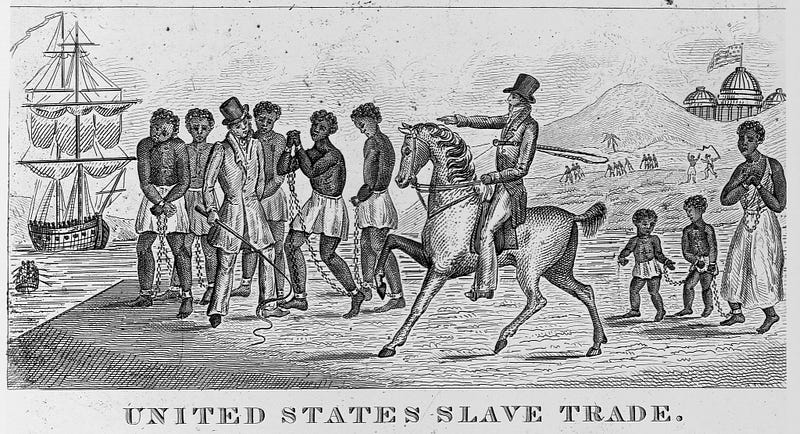
The injustice of this circumstance is still plaguing the country. The Southerners engaged in brutal warfare with the Northerners, resulting in the death of many Americans. In the end, the slaveowners received compensation. Yet, no one called them lazy or in search of a handout. The government willingly paid for each slave freed.
This massive redistribution of wealth left out newly freed African Americans, and since then, white people have always held more wealth, land, and political power. The Union wanted to end the slavery system but never successfully addressed the social injustices resulting from the system. White backlash after the failed Confederacy continued throughout American history.
Initially, the Union made efforts to compensate African Americans. Union General William T. Sherman’s Special Field Order №15 attempted to secure land for the formerly enslaved Africans. They planned to provide land using several Southern states. However, white Southerners felt determined at depriving Black people of this land or any form of compensation.
Andrew Johnson, Lincoln’s successor and a sympathizer with the South, overturned the Order in the fall of 1865, and, as Barton Myers sadly concludes, “returned the land along the South Carolina, Georgia and Florida coasts to the planters who had originally owned it” — to the very people who had declared war on the United States of America (Gates, 2013)
Martin Luther King Jr understood that addressing America’s original sin would be met with fierce resistance. Nevertheless, he persisted because he knew that his dream would never come true as long as America avoided responsibility for African Americans’ economic despair. His advocacy focused on the concept of radical transformation. While modern activists should chart their path forward independently, it helps consider Martin Luther King Jr.’s economic justice plans.
His ideas are particularly attractive in today’s context as progressive candidates offer different approaches to the day’s social problems. Liberal American politicians like Alexandria Ocasio Cortez and Bernie Sanders advocate for policies that incorporate social programs into the existing capitalist system. Their movement echos some of MLK Jr’s ideas about economic justice.
We must recognize that we can’t solve our problem now until there is a radical redistribution of economic and political power… this means a revolution of values and other things. We must see now that the evils of racism, economic exploitation and militarism are all tied together… you can’t really get rid of one without getting rid of the others… the whole structure of American life must be changed. America is a hypocritical nation and [we] must put [our] own house in order Report to SCLC Staff, May 1967 — Martin Luther King Jr (Halper, 2019).
Throughout his report made to the Southern Christian Leadership Conference, King emphasized the intersectionality of race, economic prosperity, and militarism. In its current form, America would continue to perpetuate racial animus because its apathy towards Black people stemmed from the financial system. As long as it was unprofitable to make amends with Black people, white Americans felt uninspired to participate in restorative justice. The same problem resonates today.
When Black people talk about restorative justice, white people accuse them of wanting a handout. In doing so, they ignore the fact that today’s race-wealth gap ties directly to the chattel slavery system. Were it not for enslaved Africans, America’s capitalist system would never have achieved this level of gravitas. The forced labor of Africans produced the same power that America uses on the world stage.
In King’s version of America, people would feel united under a system that allowed them to thrive. Although this may break some hearts, people should know that Martin Luther King Jr. considered himself somewhere between a socialist and capitalist. While it is easy for people to claim they support his dream in the modern era, most Americans still oppose his revolutionary perspective.
Capitalism forgets that life is social. And the kingdom of brotherhood is found neither in the thesis of communism nor the antithesis of Capitalism, but in a higher synthesis.” –Speech to Southern Christian Leadership Conference Atlanta, Georgia, August 16, 1967 — Martin Luther King Jr (Halper, 2019).
MLK always viewed America as a hypocritical state for its treatment of Black Americans and poor Americans of all shade. He believed in the potential of its citizenry to correct the system. However, he understood that America needed structural as opposed to superficial change. In line with King’s ideology, he wanted these changes to create a system that valued people over profits.
Throughout King’s life, he advocated for strengthening voting protections for Black people, resulting in the passing of The Voting Rights Act of 1965, demonstrating his support for a democratic system. He opposed a purely capitalistic system and took issue with a socialist state, controlled by a few’s hands.
Many people assume that if someone takes issue with capitalism, they also oppose democracy. However, King’s advocacy for the passing of The Voting Rights Act of 1965 demonstrated this theory’s fallacy. He believed in American democracy. Yet he did not have faith in a system that collected taxes but refused to address poverty. Like slavery, he thought that Americans should abolish poverty through progressive legislation.
While King took issue with the capitalist system, he did not support a purely socialist system that placed power in the hands of a few. Instead, he believed Americans should create a more equitable system based on shared values.
While we often view these issues from a political lens, it is essential to step back from preconceived notions about either economic system. Since most Americans claim to admire King now, we should now consider his perspective on addressing socioeconomic injustice, which still plagues our communities in the modern era.
American capitalism comes from slavery
In order to understand the brutality of American capitalism, you have to start on the plantation (Desmond, 2019).
Through the system of slavery, cotton became King of the South. Without paying for labor, slave owners gained massive amounts of wealth over the centuries. When abolitionists complained about this cruel system, they viewed it as an attack on their way of life and their ability to maintain the wealth they acquired through the system. The one Civil War that America experienced was due to the design of slavery, and thus, no one can separate the concept of race and Capitalism.
While many attempts to undermine this system’s pervasiveness, it produced more wealth for the United States than any other industry. The massive profits made many plantation owners hold onto their wealth and land long after the fighting had ended. When Southerners fly their Confederate Flag, it is a reminder of how hard they fought to maintain a system that dehumanized African people.
The combined value of enslaved people exceeded that of all the railroads and factories in the nation (Desmond, 2019).
Although America could not exist in its current form without enslaved Africans’ hard work, many white people oppose reparations of any rate descendants of slavery. They want so desperately to separate the economic stability Americans enjoy today with the system of chattel slavery. Sadly, the two are intertwined, a concept that Martin Luther King Jr. understood all too well.
Given the choice between modernity and barbarism, prosperity and poverty, lawfulness and cruelty, democracy and totalitarianism, America chose all of the above (Desmond, 2019).
King rose as a formidable figure because he peddled the most valuable of commodities — hope. Despite the American government’s past failings to address Black people’s vast inequities, he believed in American potential. He knew that if impoverished people joined together to address socioeconomic injustice deriving from slavery, we could live in a more just society.
His problem was similar to the abolitionists in that he had to convince impoverished people to fight for massive wealth redistribution. Like the original American capitalistic slave owners, the elite class would not allow this to happen.
King campaigned for a Poor People’s Campaign
During the summer of 1968, King and his fellow advocates took on an ambitious platform called a Poor People’s Campaign. He spent his final days attempting to rally support for progressive policies. After successfully creating a biracial coalition, they advocated for full employment opportunities, guaranteed income (UBI), anti-poverty programs, and housing for every American. As his advocacy switched from social considerations to economic ones, many white Americans felt discontent with his plans to change America.
One of King’s most admirable aspects was his ability to put together a coalition of poor people of all races. Thus, his heart was in the right place. In his final days, he left Americans with food for thought. Just as the Boston Tea Party resulted from discontent over taxation, King’s movement echoed similar dissatisfaction. After all, America collected taxes regularly from its citizens. King considered asking the government to assist the poor was the least it could do.
While poor white people had more privileges within society, King valued those who would cast aside racism in favor of brotherhood. He wanted Americans to come together and address social inequities. When progressives in the modern era advocate for anti-poverty programs, they walk in his footsteps.
Call it democracy, or call it democratic socialism, but there must be a better distribution of wealth within this country for all God’s children.” Speech to the Negro American Labor Council, 1961. –Martin Luther King Jr. (Halper, 2019).
In recent years, many examples demonstrated a willingness of some lawmakers to take action on these issues. Representative Maxine Waters sponsored the Ending Homelessness Act of 2019. When running for the Democratic Presidential nomination, Andrew Yang ran on Universal Basic Income, which he called The Freedom Dividend. Senator Ron Wyden sponsored The Emergency Affordable Housing Act of 2020. These examples are just a few of the many ideas progressives have in tackling social ills through the Democratic system.
I am now convinced that the simplest approach will prove to be the most effective — the solution to poverty is to abolish it directly by a now widely discussed matter: the guaranteed income Where do We Go from Here? 1967 –Martin Luther King Jr. (Halper, 2019).
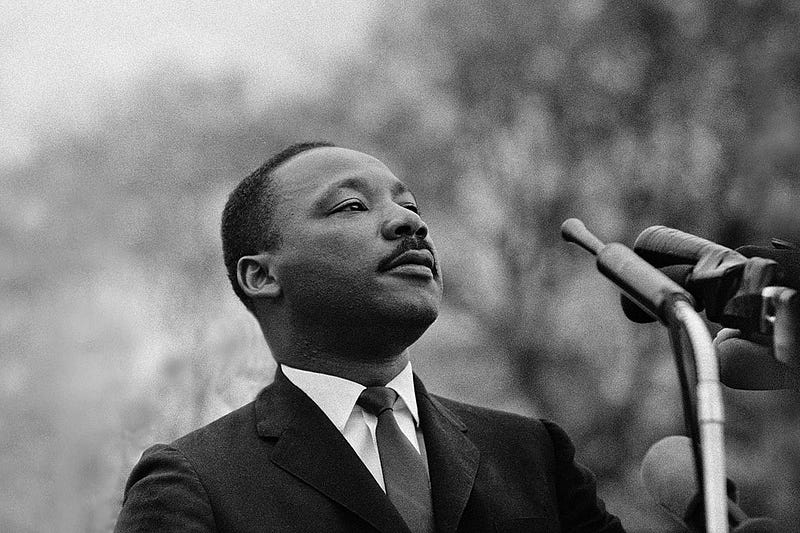
King knew that America possessed enough wealth to vanish poverty as a relic of a brutal past. When Yang campaigned for UBI, he promoted a policy that King would likely support. Decades earlier, King expressed his support to abolish poverty with the same absolution used to abolish slavery. He viewed poverty as a barbarous relic of the past.
While it is easy to get caught up in which legislation passed or failed, it is essential to consider Americans were unable to implement these policy initiatives. They failed because the public servants pushing these agendas do not have sufficient power. They need the House of Representatives’ support, the Senate, and a willing President to pass any bill into law. Still, the fight to create a more equitable America continues. These bills continue to reappear in different forms each year. No matter what, their efforts will continue.
Looking ahead
Martin Luther King Jr’s policies were revolutionary because he did not stay confined by the concept of American exceptionalism. While some claim this approach proves disdain for the country, I assert that loving America means seeing its blemishes. If we want to live in a country that treats each person equally, we must get our house in order.
His ideology did not fit into a cute, marketed box. Instead, it reflected the careful analysis of a revolutionary who loved his country. Africans came to the Americas as enslaved people. However, we have the autonomy to judge this system. The purely capitalistic system failed Black people and many poor people of different racial backgrounds.
Giving money to the wealthy does not end poverty. If that were the case, no one would suffer from poverty any longer. America is one of the wealthiest countries in the world. Yet, racism is plaguing the system. If America wants to truly represent a united country, it must stop making excuses for depriving poor people of the assistance they need. Martin Luther King Jr once noted how unjust it is to ask a bootless man to pick himself up from his bootstraps. In his absence, we are asking for the same acknowledgment.
While everyone is entitled to their opinion, Martin Luther King Jr expressed himself, so we know where he stood on the issue of socioeconomic equality. He was not moderate or middle of the road incrementalist. Throughout his life, he communicated ideas that countered the status quo. His goal was to solve problems, not tiptoe around them. The more I learn about MLK Jr, the more I admire his tenacity in the face of discrimination and systemic inequities. If he were alive, he could tell us more about his dream for America. However, he did leave much of his work behind. We can learn from him and other civil rights leaders.
Martin Luther King Jr. did not believe in Capitalism because it was built on free Black labor and failed this most formidable working group. He took issue with the systemic inequities but respected individuals’ rights to participate in the open market. Still, he felt that a country devoid of morals could not stand in its current form.
Curated Articles about Race, Equality, Women, and History:
References:
Cobb, J. C. (2018, April 04). Even Though He Is Revered Today, MLK Was Widely Disliked by the American Public When He Was Killed. Retrieved November 01, 2020, from https://www.smithsonianmag.com/history/why-martin-luther-king-had-75-percent-disapproval-rating-year-he-died-180968664/
Gates, H. L., Jr. (2013, September 18). The Truth Behind ’40 Acres and a Mule’. Retrieved November 05, 2020, from https://www.pbs.org/wnet/african-americans-many-rivers-to-cross/history/the-truth-behind-40-acres-and-a-mule/
George Washington Carver Quotes. (n.d.). BrainyQuote.com. Retrieved October 30, 2020, from BrainyQuote.com Web site: https://www.brainyquote.com/quotes/george_washington_carver_158551.
Desmond, M. (2019, August 14). American Capitalism Is Brutal. You Can Trace That to the Plantation. Retrieved November 06, 2020, from https://www.nytimes.com/interactive/2019/08/14/magazine/slavery-capitalism.html
King, M. L., Jr. (1963). Letter from a Birmingham Jail [King, Jr.]. Retrieved August 04, 2020, from https://www.africa.upenn.edu/Articles_Gen/Letter_Birmingham.html
King, M. L., Jr. (1963, August 28). Martin Luther King, Jr.: I Have a Dream Speech (1963). Retrieved November 05, 2020, from https://kr.usembassy.gov/education-culture/infopedia-usa/living-documents-american-history-democracy/martin-luther-king-jr-dream-speech-1963/
Halper, K. (2019, January 21). The 11 Most Anti-Capitalist Quotes from Martin Luther King Jr. Retrieved October 29, 2020, from https://www.commondreams.org/views/2019/01/21/11-most-anti-capitalist-quotes-martin-luther-king-jr
Hunter, T. (2019, April 16). When Slaveowners Got Reparations. Retrieved November 05, 2020, from https://www.nytimes.com/2019/04/16/opinion/when-slaveowners-got-reparations.html
Thompson, D. (2019, January 21). Perspective | Economic equality: Martin Luther King Jr.’s other dream. Retrieved November 05, 2020, from https://www.washingtonpost.com/outlook/2019/01/21/economic-equality-martin-luther-king-jrs-other-dream/


