
Why America’s Segregated Schools Show Racism Is Here to Stay
Exploring segregation after the Civil Rights era
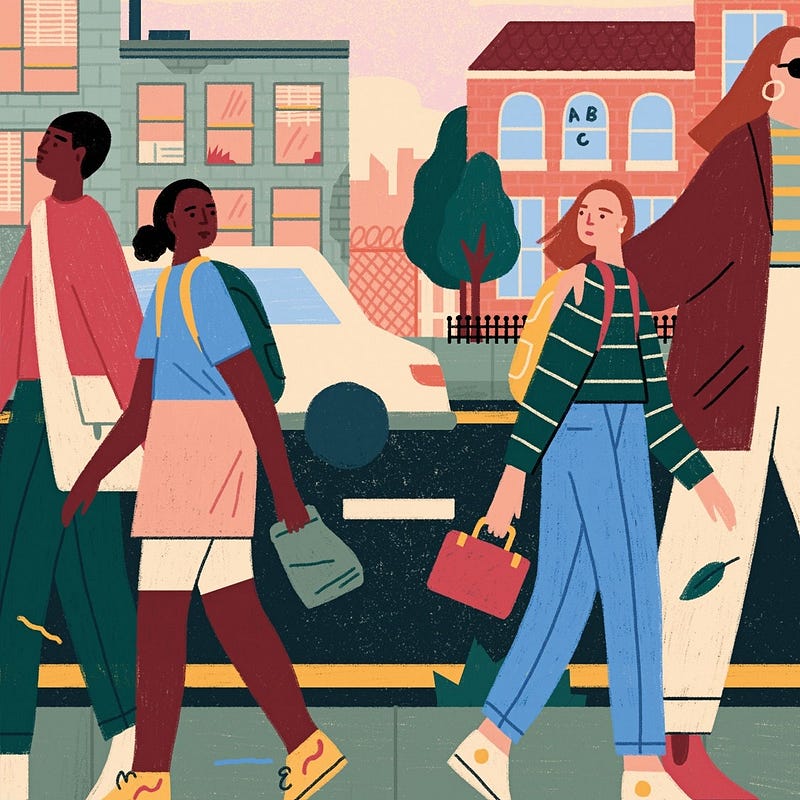
If your mother gave you five cookies and the same amount as your brother, you may consider her method equal. But what if you learned that she swept one set of cookies up after they fell on the floor while the others stayed in pristine condition. After learning that, would, you still think your mother treated you both equally?
I think the true measure of public education is how well it teaches students to function in a democratic, pluralistic society,’ she said. ‘Does it teach them to share power and resources and to create a society that is equitable and just? … I don’t believe that you can do that in a segregated system (Natividad, 2020)
Calling people equal and treating them equally are two different concepts, often conflated in American society. While many concede to the principle that we are all created equally, there is a gap between acknowledging this point and implementing policies, laws, and social norms that reflect equality. “Equality,” like “justice,” has become nothing more than a mere platitude to those living at the bottom of the social ladder.
While many Americans rejoiced after the passing of The Civil Rights Act of 1964, this revolutionary legislation did not eradicate racism. Black Americans still live in a country that remains mostly divided along racial and class lines. The founders built America on a shaky foundation, which failed to protect the rights of all Americans. Many hoped that in passing anti-discriminatory legislation, racism would recede into the depths.
Not to be outdone, segregationists evolved, learning when and how to attack without drawing err from the general public. Pundits and politicians softened their tone. Using coded language, they opposed the civil rights movement while clinging to neutrality as a safety net.
State and local governments attempted to desegregate schools in the aftermath of Brown v. Board of Education of Topeka in 1954. Sadly, changing policies cannot change hearts. Sixty-six years after a 7–1 Supreme Court victory against “separate but equal” schools, America’s schools remain largely segregated. Black students receive the cookies swept off the floor, and white students get to eat those kept in pristine condition.
It is easy to say that every person was born free and equal. However, society has not caught up to this romantic perspective. Over the years, the racial wealth gap has widened, reflecting racism’s systemic nature, which transcends personal grievances.
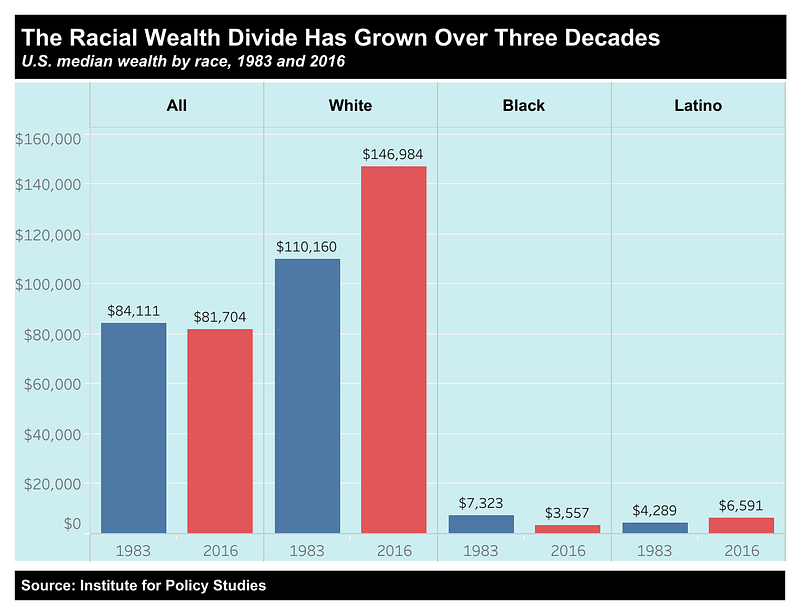
The median White family has 41 times more wealth than the median Black family and 22 times more wealth than the median Latino family (Inequality.org, 2020).
If racism planned on exiting the scene any time soon, the racial wealth gap would be shrinking; it’s expanding instead. Denial and avoidance stand in the way of restorative justice, and round and round, Americans go. To address systemic inequities, one must assess how society treats students. They will reflect the societal and familial influences in their lives. Even those on the nature end of the nature v nurture debate should concede that environments impact our ability to succeed. Americans should be hungry to discover why wide-sweeping anti-discriminatory legislation failed to desegregate this country’s schools. As it stands, racism seems to have the upper hand. He is an unwanted guest, committed to staying.
School Choice led to resegregation
They began to talk in terms of, ‘school choice,’ rather than saying they wanted to keep black children out of their white schools. Now, you hear the term when advocates want to boost the idea of charter schools as a matter of choice. Unfortunately, charter schools are worsening racial segregation of schools, with segregation itself being an unspoken goal of many charters (Taylor, 2020).
After Brown v. Board of Education, segregationists searched for a new way of keeping white students separated from Black students. They used the concept of “school choice” as a coded language to rally white supremacists. By implementing strict guidelines for entry, white school administrators could deny Black students access without mentioning race in their policies. For example, limiting admission to schools based on zip code can maintain segregation without uttering a word. As the justices determined in the landmark case, separate-and-equal are not substantial remedies to segregation. They understood that “separate” does not lead to “equality.” Instead, it perpetuates inequality.
Public and private schools compete for federal funding. That is the same as a wealthy man competing against a homeless man at the food line. Even though these schools have the money to fund their programs adequately, they still have their hands out. This competition takes away capital from Black schools and those in marginalized communities who cannot compete. Public schools are on the decline because of the rise of charter and private schools — this is by design. While many think that private schools reflect the epitome of American education, that is only because of the enormous amount of money they have to purchase resources and pay teachers a livable wage.
School segregation really lies at the epicenter of racial inequity in this country. Students in schools that are segregated by race and poverty have a much harder time graduating from high school and going to college, which makes it harder to get a job and to earn an income that allows them to support themselves and their family (Natividad, 2020).
Over the past summer, many conservatives expressed pure white-rage after hearing the phrase, “Defund the Police,” popularized throughout the racial justice movement. Ironically, these same conservatives failed to condemn “Defund the Public Schools,” which has been a long-standing silent campaign.
Opponents to the term often misrepresent what the slogan means, with many purposefully tainting the well. In reality, “defund the police” is not a rallying cry by abolitionists but by reformists. “Defund the police,” refers to the advocate’s desire for cities to redistribute funds away from police departments so they could invest in deeply impoverished communities. In other words, they understand that crime is the byproduct of poverty and disenfranchisement. However, those who view Black people as inherently criminal will always look at the problem and not the solution.
Treating community members with respect, expanding mental health professionals’ roles, decreasing racial profiling, “stops and frisks,” and declining violence are all part of defunding the police. They dared to want accountability, and conservatives effectively vilified the movement.
Advocates hoped to pressure departments to reconsider how they treat Black people in their communities and make city officials question how they allocate their city funding. Depending on the city, between 25% to 40% of a city’s budget goes to police departments. However, we will save the nuance of this argument for another day.
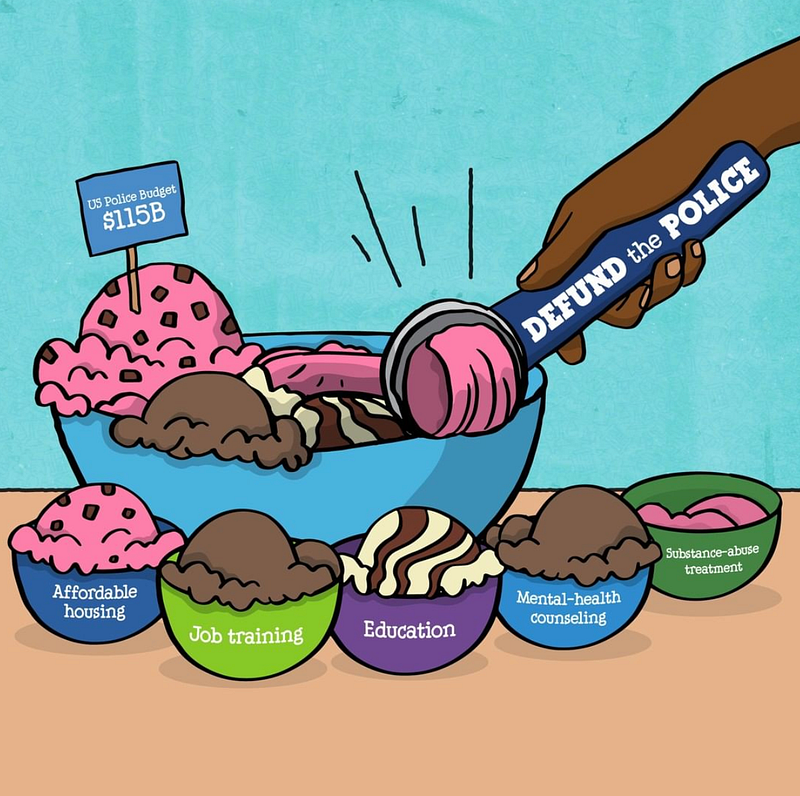
Modern segregationists overplayed their hand in their opposition to the “Defund the Police” slogan. See, their support for defunding public schools while increasing police presence in Black communities tells the true story about their intention. Racism is here to stay because equality would require redistribution of resources. It would take more than platitudes, and history shows America is more likely to talk a good game about equality than to follow through for Black people.
The Brown decision led to the closing of black schools, the firing of black educators and the assimilation of black children into white schools. Over time, white students departed from these schools while white teachers remained. The results of school integration have devastated black children. Black students are disproportionately disciplined, and the schools they attend are dilapidated and underfunded (Miller, 2020).
Integration, which seemed like a great idea, did not help Black students. Forcing white students to attend school with Black students led to massive defunding in public Black-run schools, and white parents asserted their right to select their school of choice. Americans have been living in denial about the negative impacts “school choice” has on Black students and their communities. America’s schools are separate and far from equal, and white parents’ “choice” often refers to their choice to separate their children from Black and brown ones.
While desegregating was a nice gesture, Black students need a higher quality of education, which could happen with better funding for public schools and teachers. Low teacher wages disincentivize their employment in public schools. Inequality is maintained by underfunding public schools while adequately funding private and charter schools. Taking children out of underfunded schools instead of advocating for increased funding has left Black and impoverished students behind, contrary to the “No Child Left Behind” policy.
Under this mantra, the federal government took an active role in determining each school’s educational value. They punished those who could not make improvements, ignoring the unequal legs of their academic tables. If I place a vase on a sturdy table, I can revel at my success, and if I put that same vase on a table with a wobbly leg, I will see the vase crash to the ground. However, it would be wrong for me to blame the rickety table. Instead, it would be my fault for ignoring the inequity.
Not every child can attend private or charter schools. The rise of these institutions pulls white students out of their public school districts, decreasing the likelihood of attending schools alongside their Black peers. These different conditions also further a racial divide, with white students seeing Black students as “the other” instead of equal community members. The separation amongst students causes an ongoing social rift. In the absence of Black students, white students often rely on harmful stereotypes to understand Black people. White parents want their children to attend “good schools,” and they do not care if this furthers segregation and deprives public schools of adequate funding. They would not want to trade their cookies. Schools desegregated, showing the persistence of racism in American society.
As Suitts states:
By failing to grasp the history of the struggles and tactics against Southern school desegregation, the nation has come to recognize segregation and racial superiority only in those private schools that are absolutely all-white. The looming danger lies in legitimizing and advancing a system of segregation and exclusion in education that is not called by its name (Taylor, 2020).
The limits of Brown v. Board of education
If racism were on the way out, wouldn’t Black and white students attend the same schools and receive equal access to educational opportunities?
Modern segregation shows racism is here to stay. Let’s face it. Black parents did not honestly want their students to experience blatant racism, forcing them to attend white schools. They wanted their children to receive equal opportunities to learn. When Black families tried to make this country united, most white families ran for the hills, registering their children in schools that Black students could not attend. After years of advocacy, the Supreme Court ruled in Brown v. Board of Education of Topeka (1954) that school districts could not maintain segregation even if the education quality were the same. Their ruling asserted that segregation in education was unconstitutional.
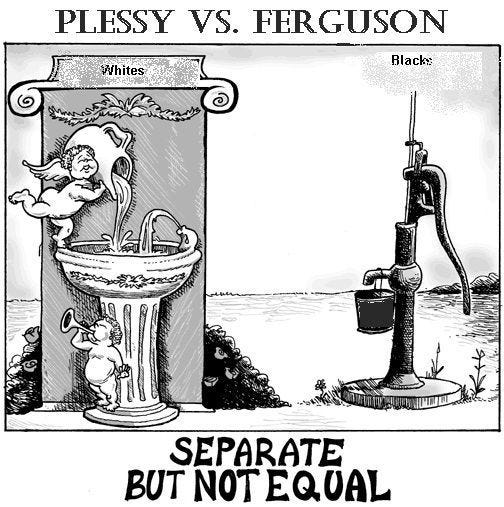
Brown v. Board of Education overruled the 1896 Plessy v. Ferguson case, which declared separate and equal was constitutional. However, Congress and courts could have done much more to protect Black students’ civil liberties. Instead of mandating schools to provide equal access to education resources, they limited the scope of their matter to integration.
There was an assumption that if Black students attended school with white students, their education would improve. The scope of Brown v. Board of Education prohibited segregation, not educational inequality. Americans must consider the difference between those cookies on the floor and those on the counter.
The 1974 United States Supreme Court case Milliken v. Bradley, limited the power of federal courts to order integration across school district boundaries. As a practical matter, the case made school desegregation in these areas very hard to achieve (Natividad, 2020).
The federal government does not have unchecked power. State and local governments play an essential role in determining which services their citizens receive and what quality. Historically, segregationists often used the states-rights mantra to insist advocates violate their freedom by pushing for equal treatment. In stark contrast, Black people and marginalized groups often benefited from the federal government stepping in, like in passing the Voting Rights Act of 1965. Black students need a law to protect their rights because the Supreme Court Cases’ limited scope does not scratch the problem’s surface.
Many people do not realize how Milliken v. Bradley undermined efforts to desegregate schools. ▽
The Court noted that desegregation, ‘in the sense of dismantling a dual school system,’ did not require ‘any particular racial balance in each ‘school, grade or classroom.’ The Court also emphasized the importance of local control over the operation of schools (Milliken v. Bradley, 1974).
The Supreme Court decided that schools did not have to create racial balance. That is the law as it stands today. By asserting that schools had no responsibility to create “racial balance,” school boards did not have to provide equal educational opportunities, as long as the schools did not blatantly deny access based on race. Since then, school districts weaponized zip codes to hurt Black students and their families. To them, cookies on the floor are equal to those untainted ones left on the counter. They found a way to acknowledge the ills of racism without condemning racial inequality, a nuanced view that hurts Black students in the modern era.
Although quite a few school districts in the South are still subject to federal oversight, many re-segregated after changes in the law made it easier for federal courts to release them from supervision (Natividad, 2020).
Segregation is the Result of Red-Lining
“The federal government and lenders would literally draw a red line on a map around the neighborhoods they would not invest in based on demographics alone. Black inner-city neighborhoods were most likely to be redlined.1 Investigation found that lenders would make loans to lower-income Whites but not to middle- or upper-income African Americans.2
Board of Governors of the Federal Reserve System. “Federal Reserve Bulletin: Volume 77, Number 11,” (Federal Reserve Bulletin, 1991)
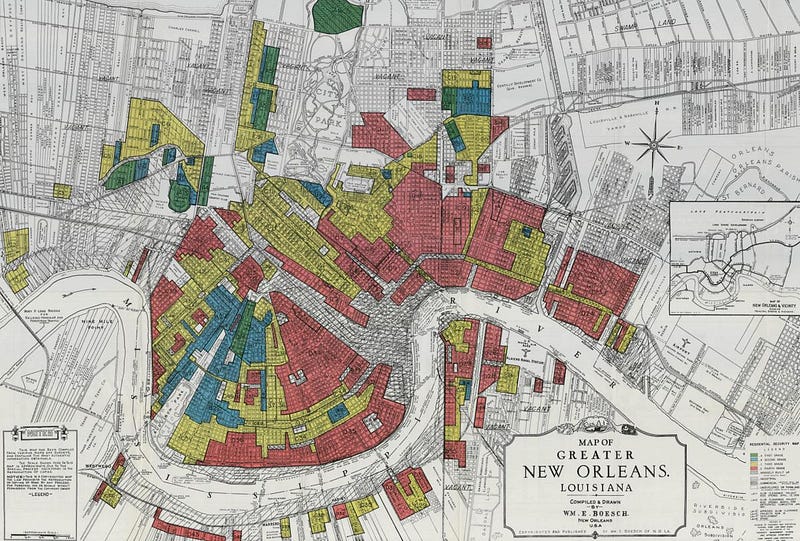
Redlining ensured neighborhoods remained largely segregated. These policies, authorized by federal, state, and local governments, created homogenous zones, centralizing Black people in impoverished communities. While many white people consider their parents to be hardworking, they may not consider that if they were Black, this same work ethic could not have bought them the homes they purchased, their jobs, and the freedoms they enjoyed.
Housing segregation is the “tell” that racism is here to stay. Local school boards will continue to give Black students cookies swept from the floor because this is how it has always been. School funding is contingent on the wealth of the surrounding neighborhood — generations of redlining created primarily segregated communities long after Jim Crow.
So, there is no way of increasing educational opportunities for Black students through integration alone. Historically, this caused massive displacement for Black students and unleashed white students’ potential to run for the hills once again. The solution is simple — Black communities need more money for public schools. However, Americans show a reluctance to invest in this way — racism remains a rain cloud.
Is this just how the cookie crumbles?
To make a change, Americans would have to do more than admit that inequities exist but commit to rectifying them. Segregated schools deprive equal opportunities to Black students and students of color. While previous generations tried to unfriend racism, he seems to feel right at home. As Black school children lack resources and access to opportunities, he’s kicked off his shoes, watching with a grimace. In America, is this just how the cookie crumbles?
“It was never America to me
O’ let my land be a land where Liberty
Is crowned with no false patriotic wreath
But opportunity is real, and life is free
Equality is in the air we breathe,”
— Langston Hughes (poet laureate) (1936) retrieved via (Wagner, 1973)
Curated Articles about Race, Equality, Women, and History:
References:
Inequality.org (Ed.). (2020, October 06). Racial Economic Inequality. Retrieved December 19, 2020, from https://inequality.org/facts/racial-inequality/
Federal Reserve Bulletin (Ed.). (, 1991). A Primer on the Settlement of Payments in the United States. Federal Reserve Bulletin, 77(11), 872. Retrieved July 29, 2020, from https://fraser.stlouisfed.org/files/docs/publications/FRB/1990s/frb_111991.pdf
Larson, S. (2020, August 31). “Nice White Parents,” “Fiasco,” and America’s Public-School Problem. Retrieved December 01, 2020, from https://www.newyorker.com/magazine/2020/09/07/nice-white-parents-fiasco-and-americas-public-school-problem
Miller, R. (2020, March 03). Why Charter Schools Are Failing Black Students. Retrieved December 21, 2020, from https://progressive.org/charter-schools-failed-black-students-miller-200303/
Milliken v. Bradley. (n.d.). Oyez. Retrieved December 21, 2020, from https://www.oyez.org/cases/1973/73-434
Natividad, I. (2020, September 10). Why are American public schools still segregated? Retrieved December 01, 2020, from https://news.berkeley.edu/2020/03/04/why-are-american-public-schools-still-segregated/
Taylor, D. (2020, March 31). Why ‘School Choice’ is Rooted in White Supremacy. Retrieved December 21, 2020, from https://progressive.org/public-school-shakedown/school-choice-rooted-white-supremacy-taylor-200331/
Wagner, J. (1973). Black Poets of the United States. Retrieved December 23, 2020, from https://books.google.com.pr/books?id=QGq0aNUC_mAC
The author Allison Gaines is the founder of Justice Can’t Wait:


