
Why Facial Features Matter in Your Dating and Professional Life
Exploring the impact of featurism
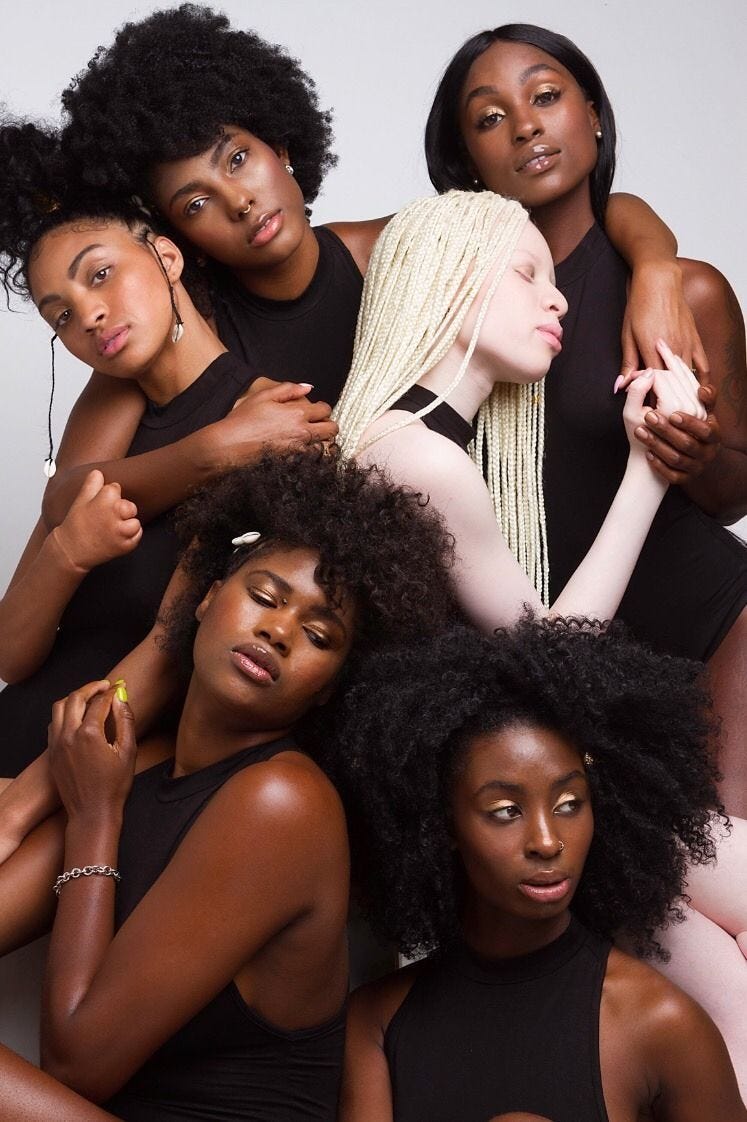
Characteristics like your skin tone, hair texture, and facial features reflect unique qualities. Perhaps your wide nose looks like your fathers’, and your kinky, brown hair reminds family members of your mother. People inherit these traits from their parents, but each person is one of a kind. Each face has a story to tell, reflecting a lifetime of experiences and heritage.
Despite natural variances, many white people claim they do not see race. They insist they would never judge someone based on their physical characteristics. However, modern research contradicts their feature-blind declaration. The human brain is hardwired to recognize facial features with very few exceptions.
Some people suffer from prosopagnosia because of damage to their temporal lobe. Unfortunately, this disorder prevents people from identifying facial features, a condition called face-blindness. Unless someone has this disorder or a visual impairment, they can tell the difference between a wide nose and a thin one.
Humans are naturally visually-oriented. More than 50 percent of the cortex processes visual information. First, people see. Then, people think about what they saw. Their brain attempts to make sense of the external world, shaping their sense of reality.
When someone claims they do not see race-defining characteristics like skin color or facial features, their statement contradicts everything we know about the human brain. Modern physiology shows that most humans visually identify facial features. Thus, society should move on to explore the notion of bias in response to these natural variations.
The results showed that both skin tone and facial features independently affected how negatively, as opposed to positively, whites felt toward Blacks using both implicit and explicit measures (Hagiwara, Kashy, & Cesario, 2012).
White people recognize Afrocentric features. Research shows that seeing a Black person elicits negative rather than positive emotions. While many white people want to believe they do not judge based on race, modern research shows most white people feel animosity, instead of love, at first sight.
No matter who a white person marries or votes for, their implicit bias shapes their world view. Facial features matter in professional and interpersonal settings because people develop feelings and make snap decisions based on their first look.
How implicit bias operates
Much of face processing is automatic, so people might not even realize they are looking at some groups differently, said Friesen. But awareness of these processes might encourage people to look more into the eyes of others and get a more accurate read on their emotions (American Psychological Association, 2019).
Most white people treat Black people differently without even noticing. Implicit bias operates in the subconscious of white minds, shaping their interactions with Black people. The denial and or unawareness of bias maintains racial inequality.
When a Black woman walks into a job interview or posts her picture on a dating website, she brings her facial features, skin color, and hair texture. Understanding that people view her negatively will not change her circumstances.
According to a poll conducted by the Kaiser Family Foundation, over 70% of Black adults say unconscious racial bias has negatively impacted their lives in the past year. Factors like historical wealth gaps, unconscious bias, individual acts of discrimination, and systemic racism produce disparities.
Black communities have limited access to healthcare, quality education, affordable housing, and career advancement. White people act as gatekeepers for economic and academic progress. Thus, implicit bias maintains discriminatory practices.
Anti-racist white people understand and acknowledge implicit bias. Unfortunately, they remain in the minority because they have to work against their initial responses to Afrocentric features. Subconscious behaviors are much easier to maintain; thus, most white people struggle to become faithful long-term allies.
White people often take part in racist behaviors and maintain systemic inequality without recognizing their actions as harmful. Anti-racism is not like a walk in the park. It is more like walking through a landmine. Creating an anti-racist social system requires self, historical, and modern societal reflection.
Many white people assume that racism requires a direct disdain for Black people. However, implicit bias can occur without overtly racist thoughts.
In doctors’ offices across America, doctors doubt the health concerns and pain Black women experience. White denial of implicit bias places Black women in danger. According to the Mary Beth Flanders-Stepans’ research, Black women experience maternal mortality at 2 to 6 times the rate white women do in America.
In my article, We Can Save the Lives of Black and Indigenous Mothers, I discussed how the majority of these deaths are preventable. These women need access to attentive, anti-racist medical professionals, ensuring they receive proper prenatal care.
Implicit bias is a silent assassin, waiting at a Black woman’s bedside. Unless more doctors and white professionals acknowledge their implicit bias, they will continue to discriminate against women with Afrocentric features.
Blacks vary on a constellation of phenotypes, including nose and lip width, eye color and hair type, as well as skin tone. Afrocentric features refer to all these phenotypes combined (Hagiwara, Kashy, & Cesario, 2011).
Implicit bias moves with stealth, hurting Black people at the realtor’s office, in courtrooms, at interviews, or on outings with friends. From “random checks” at travel spots to blatant “stops and frisks,” implicit bias negatively impacts Black people in intrusive ways. Black people will never enjoy liberty unless they escape biased eyes.
Black women endure discrimination, not just because of skin color or hair texture but also because of their unique facial features. Many women with Afrocentric features have a broad nose and or full lips. These features occur along with or independent of darker skin tones. Modern research suggests Afrocentric features are enough to produce negative responses from white people. Eurocentric beauty standards negatively impact the Black community, causing a ripple effect — colorism, featurism, and texturism.
Proximity to whiteness remains highly coveted within the Black community. Dark skinned women are the least likely to marry due to colorism. I am not suggesting that every woman should get married. However, Black men demonstrate a disturbing pattern of asking light-skinned women with Eurocentric features to marry instead of dark-skinned women with Afrocentric features. While each person deserves love and has the freedom to love who they want, this pattern shows that Black women suffer the most from having Afrocentric features.
There are two types of white people who claim they do not see race. Like Jane Elliot, the first type spreads the gospel that we are one race, the human race. While she is correct when she insists that race is a social construct, she is wrong in thinking that ignoring race is a remedy to racism. Pretending not to see our physical characteristics and experiences is problematic and maintains systemic inequality.
The second type of white person who claims not to see race is the full-blown bigoted type. This type of person does not want to admit that they dislike Black people because of social consequences; they refuse to engage in constructive self-analysis. To be clear, both of these types are dangerous because both uphold white supremacy.
Anti-racist people want to create a world where race does not matter, but they do not pretend we already live in that world.
Facial features matter because people initially react to someone’s appearance. The concept of feature-blindness is a standard deflection from those who do not want to take responsibility for their implicit bias.
White people struggle to recognize a genuine smile on Afrocentric faces
White people and non-Black minorities have a harder time telling the difference between genuine and fake smiles on Black faces than they do on white faces, a problem Black people don’t have, according to research (American Psychological Association, 2019).
Smiling is one of the most common, non-verbal ways someone can show care, joy, and interest. However, living as a Black woman means white people will often misinterpret and doubt your kindness. Research shows that Black people do not have the same problem when interpreting Eurocentric facial features.
Anti-Black implicit bias derives from white-dominated systems of governance. Within these systems, Afrocentric characteristics represent a threat, and thus white people react in kind.
While every group of people is capable of bias, many white people insist that every group exhibits racism. The myth of reverse-racism insists that any negative expressions based on race indicate bigotry. However, racism is different than prejudice or bias. Racism requires a system of power.
Prejudice is the perceived opinion or belief about a group not based on experience or logical reason, while racism uses prejudice to reproduce a systematic disadvantage of power based on race (Curry, 2020).

White bias is part of systemic racism because it allows those in power to exert their discriminatory values on Black people and people of color. This system cannot become reversed unless white people endured the same historical systemic disadvantages. Reverse racism is a myth because Black people do not have the power to oppress others.
Research shows that Black people do not struggle to identify genuine smiles on white faces. However, even if they did, it would reflect bias, not racism. Implicit anti-Black bias makes our facial features relevant when pursuing equal opportunities.
This inability to differentiate between real and false smiles could lead to serious misunderstandings and negative repercussions in interracial interactions, Friesen said (American Psychological Association, 2019).
Facial features impact your dating life
Many factors contribute to developing a successful dating life. Unfortunately, skin color and facial features impact your ability to find a successful match. Implicit bias helps determine who someone chooses to date, how they treat them throughout the relationship, and whether they marry a woman or keep things casual.
The lighter the shade, the higher the probability of marriage (McClinton, 2019).
In a qualitative study, researchers asked married Black men their opinions on why Black women are the least likely to marry. Their responses varied, but some common themes arose. 73% of the participants described Black women as having a misguided approach to dating, particularly failing to demonstrate ‘ladylike behavior.’ This study shows the bias that even Black men have towards Black women.
They attempt to hold Black women to the standards of white femininity, characterizing Black women negatively. Their description plays into the angry Black woman and strong Black woman tropes, which stereotype Black women in fictitious ways.
Every relationship requires willingness and reciprocity. Unfortunately, dark-skinned women with Afrocentric features remain least likely to marry because of their partners’ unwillingness. These beautiful women still have relationships but do not get offered the same level of commitment. This trend is disturbing because research shows men are much more likely to marry light-skinned women with Eurocentric features.
‘I want a white family.’ The words stick with me for the rest of the day, weighing me down like a bale of cotton. It brings tears to my eyes. I wonder: are dark-skinned women just the placeholders until they meet their desired match? Do all these men just want white families? (McClinton, 2019).
Some men do not want to marry Black women because they produce dark-skinned children. Thus, some say they want a white family, consciously showing aversion towards Afrocentric features in their potential offspring.
Black women will continue to be themselves and cannot change who likes them, loves them, or wants to marry them. Featurism within the Black community continues to place women with Afrocentric features at the bottom tier of the social hierarchy.
Our data suggest that Afrocentric features may be enough to produce an automatic, negative affective response toward individuals possessing this phenotype, regardless of their racial category (Ronquillo et al., 2007).
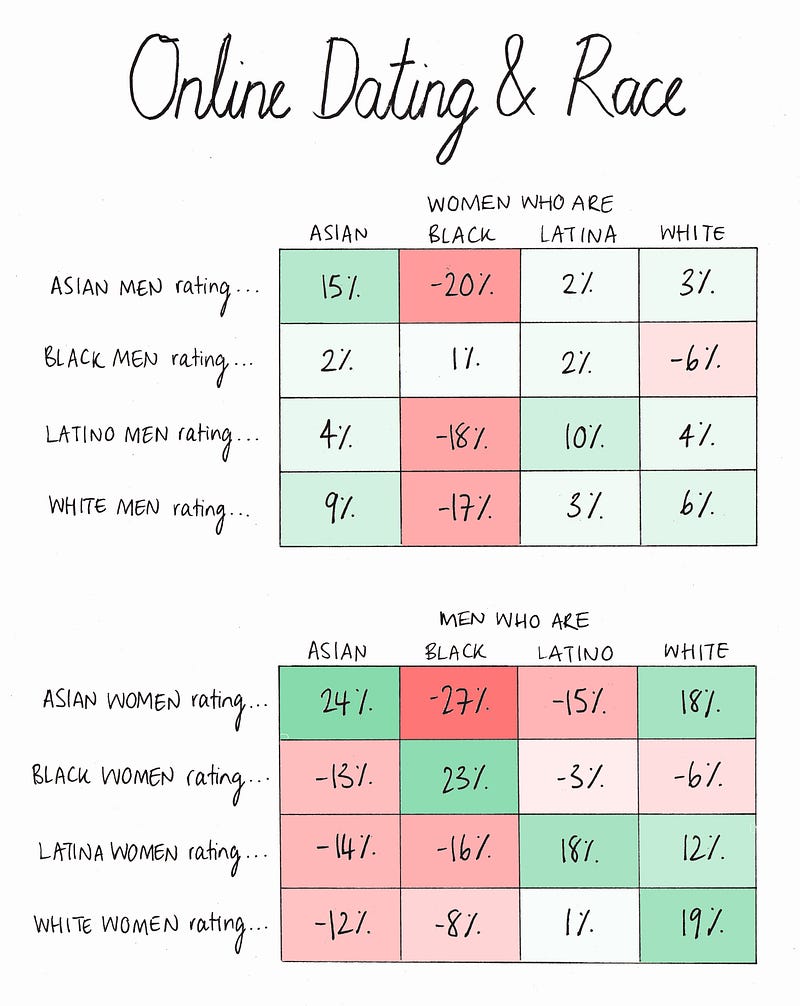
OkCupid asked participants how likely they were to date someone based on their race. The results show that Black women remain the least desirable group. These dating decisions reflect negative perceptions about Afrocentric phenotypes.
Your facial features impact your professional life
Whites reacted more negatively toward Blacks with darker skin tone and more prototypical facial features than toward Blacks with lighter skin tone and less prototypical facial features on the explicit measure may indicate that Whites are unaware of the negative effects that Blacks’ phenotypes can have on their racial attitudes (Hagiwara, Kashy, & Cesario, 2012).
While many Black people experience discrimination while seeking employment opportunities, employers are more likely to hire a Black person with less prominent Afrocentric features, with lighter skin.
Women receive fewer offers for upper management positions. However, Black women experience misogynoir, making them much less likely to receive higher-paying jobs with more authority. Facial features matter in the professional world since most hiring managers are white people. Black applicants face challenges because of how white people feel about Afrocentric features and how they interpret facial expressions.
Facial features matter in your professional life because they can determine which opportunities you receive and your potential for advancement. During an interview, a white employer may consider a Black woman’s smile disingenuous. Thus, the white interviewer may think she is trying too hard or unreliable or uninterested.
When employers look for candidates, they want someone they can trust and relate to, and white people struggle to see those qualities on Black faces. Until white people acknowledge this implicit bias, they will continue to discriminate based on facial features, skin color, and hair texture.
Where do we go from here?
Facial features matter in your dating and professional life because people do not treat each person equally. Instead, opportunities depend on someone’s initial perception of us. Black women with Afrocentric features remain at a disadvantage due to explicit and implicit bias.
It is important to raise people’s awareness about the effects that Blacks’ phenotypes can have on attitudes (Hagiwara, Kashy, & Cesario, 2012).
One of the best ways to counter phenotypical discrimination is to raise awareness about implicit bias. Many people hold negative views about Afrocentric features, expressing disdain in implicit and explicit ways.
One day, we may live in a society where the majority of people accept and value people with Afrocentric features. Until that day, your facial features will continue to color your romantic and professional experiences.
Curated articles about Race, Equality, Women, and History:
References:
American Psychological Association. (2019, January 7). Whites struggle to tell real from fake smiles on black faces: Key may be reluctant to make eye contact, study says. ScienceDaily. Retrieved December 1, 2020, from www.sciencedaily.com/releases/2019/01/190107131228.htm
Curry, M. (2020, July 15). Solved: The Myth of Reverse Racism. Retrieved December 05, 2020, from https://berkeleybeacon.com/solved-the-myth-of-reverse-racism/
Hagiwara, N., Kashy, D., & Cesario, J. (2012, February 10). The independent effects of skin tone and facial features on Whites’ affective reactions to Blacks. Retrieved December 02, 2020, from https://www.sciencedirect.com/science/article/abs/pii/S0022103112000133
McClinton, D. (2019, April 08). Why dark-skinned black girls like me aren’t getting married. Retrieved December 03, 2020, from https://www.theguardian.com/lifeandstyle/2019/apr/08/dark-skinned-black-girls-dont-get-married
Ronquillo, J., Denson, T., Lickel, B., Lu, Z., Nandy, A., & Maddox, K. (2007, March). The effects of skin tone on race-related amygdala activity: An fMRI investigation. Retrieved December 03, 2020, from https://www.ncbi.nlm.nih.gov/pmc/articles/PMC2555431/
Vadivel, S. (2020, July 30). What Asians Should Understand about Colorism — From a Darker-Skinned Asian. Retrieved December 02, 2020, from https://www.thaiyouthexpress.org/post/what-asians-should-understand-about-colorism-from-a-darker-skinned-asian
The author Allison Gaines is the founder of Justice Can’t Wait:


