avatarMichelle A. Cmarik

Free AI web copilot to create summaries, insights and extended knowledge, download it at here

3614

Abstract

no one has done it before. It’s why it’s so scary to people.”</p></blockquote><blockquote id="8ca6"><p>“Mom, what do you think is beyond the universe?”</p></blockquote><blockquote id="cf47"><p>“Mom, I’m glad that man with dark skin is wearing dark clothes so that he can hide tonight and the police won’t find him and hurt him too.”</p></blockquote><p id="80a9">After things got very bad this summer and we were left without childcare because no one was equipped to watch my son, we apprehensively joined waiting lists for several pediatric psychiatrists.</p><p id="13ba">We knew the option to medicate was always on the table. But it’s not an easy thing to experiment with drugs on your own child.</p><div id="ecbc" class="link-block"> <a href="https://readmedium.com/my-son-was-kicked-out-of-summer-camp-today-7da6d772d797"> <div> <div> <h2>My Son Was Kicked out of Summer Camp Today</h2> <div><h3>It’s not the first time, and I fear it won’t be the last.</h3></div> <div><p>medium.com</p></div> </div> <div> <div style="background-image: url(https://miro.readmedium.com/v2/resize:fit:320/1*jgU9bl2gBc60NQoE09lprw.jpeg)"></div> </div> </div> </a> </div><p id="f1aa">I work in a school and have seen plenty of children thrive with the help of medication. I take medication for depression myself, and so does my mother. I’m not at all afraid of medicine for mental health.</p><p id="9538">But this all feels different when it is about my son.</p><p id="48cf">When you’re a parent, your child’s body is precious. From the time they’re born you spend your minutes studying every detail of their perfect bodies — their tiny elbows and knees, that indent between their lips and their chins.</p><p id="9984">I have forever been in awe of my son’s growing body that somehow started from nothing inside my own.</p><p id="48b9">But this appreciation also comes with an inherent desire to protect that body at all costs, a mama tiger alertness for anything that could possibly harm him.</p><p id="0bd3">Talking with the psychiatrist about my son, I couldn’t help but feel that protectiveness kick in.</p><p id="59b7">He suggested we start him soon on 1 mg of Guanfacine, a non-stimulant treatment for ADHD that targets impulsivity. My son will have to learn how to swallow a pill first. Once he starts taking this medication, he may get dizzy easily. The doctor suggested we monitor him for dizziness to ensure it’s not so severe that he starts falling down easily.</p><p id="630c">And just like that, a one-hour consult and several hundred dollars later, we have a single bottle of pills on our kitchen counter that may change my son’s life forever.</p><figure id="0f9c"><img src="https://cdn-images-1.readmedium.com/v2/resize:fit:800/1*naPgTJIosIT7XO-RJNKsJg.jpeg"><figcaption>Photo by <a href="https://www.pexels.com/photo/a-person-reaching-for-a-bottle-of-medicine-11931275/">Towfiqu barbhuiya</a></figcaption></figure><p id="d09d">My son understands what this means. He has asked me why he can’t have a normal brain like his friends, why he has to take medication and they don’t.</p><p id="b8d2">I’ve explained that his brain is perfect and wonderful, and that sometimes brains need help slowing down. I shared with him that I’m on medication to help my brain too, and that many of the kids at his school are too.</p><p id="a77d">I’ve told him I wouldn’t exchange his brain for any other brain in the world.</p><p id="a7a5">He is apprehensive but

Options

excited about the prospect of having more control over his own impulses. He practices swallowing Tic Tacs each night and jumps in celebration when one makes it down his throat.</p><p id="926f">I have more apprehension than my son does.</p><p id="b524">I’ve been staring at that bottle of pills all week. My son still has more practicing to do with Tic Tacs before he’s ready to swallow these each night.</p><p id="3880">But I study these pills and imagine the path they’ll take inside my son’s body. These little white tablets will dissolve slowly in his stomach and make their way through his bloodstream to his brain. They will simulate receptors there that will reduce nerve impulses from the medulla oblongata of his brain.</p><p id="07e1">The hope is that this intentional stimulation in his brain will help him to control his impulses and live a calmer life.</p><p id="06d3">We hope it will stop him from ripping his entire notebook in half when he writes the letter “h” wrong in school.</p><p id="be67">We hope it will make it easier to get him out the door in the morning without a meltdown, and to allow him to play with other children on the playground without fist fights.</p><p id="0d6c">I’m in awe of these little tablets and the path they get to take inside my son’s body, the body I have loved so much that I too would love to travel inside it.</p><p id="0d3d">Perhaps I’m jealous of these little white pills and the journey they will take to help my son, as I’ve tried myself so many different ways these six years.</p><p id="71ae">I’m begging these little pills to protect my son in ways that I can’t. I’m begging them not to dull his brilliance.</p><p id="62be"><i>More stories from Michelle A. Cmarik…</i></p><div id="b290" class="link-block"> <a href="https://readmedium.com/these-are-the-times-ive-looked-up-long-enough-to-see-the-stars-c20c8eb2066d"> <div> <div> <h2>These Are the Times I’ve Looked Up Long Enough to See the Stars</h2> <div><h3>A timeline of space exploration</h3></div> <div><p>medium.com</p></div> </div> <div> <div style="background-image: url(https://miro.readmedium.com/v2/resize:fit:320/1*2ST6SGC1GXAXQ_C4QMli4w.jpeg)"></div> </div> </div> </a> </div><div id="1335" class="link-block"> <a href="https://readmedium.com/how-i-responded-when-my-son-made-this-racist-comment-in-the-car-dcf0512ac69"> <div> <div> <h2>How I Responded When My Son Made This Comment About Race</h2> <div><h3>Our children are always listening</h3></div> <div><p>medium.com</p></div> </div> <div> <div style="background-image: url(https://miro.readmedium.com/v2/resize:fit:320/1*eCilg0T6upHu1FZySo7ktw.jpeg)"></div> </div> </div> </a> </div><div id="646a" class="link-block"> <a href="https://readmedium.com/why-i-wont-get-mad-if-your-kid-hits-my-son-56b1eff1b16b"> <div> <div> <h2>Why I Won’t Get Mad If Your Kid Hits My Son</h2> <div><h3>The gift of feeling normal</h3></div> <div><p>medium.com</p></div> </div> <div> <div style="background-image: url(https://miro.readmedium.com/v2/resize:fit:320/1*pHgCu-yW38fMDSJRBLUzbw.jpeg)"></div> </div> </div> </a> </div></article></body>

Why I’ve Decided to Medicate My 6-year-old Son

Years of struggle have been reduced to a single pill bottle

Photo by Lukas Rychvalsky

My son’s challenges began early.

At 18 months, he was pushing other toddlers from playground equipment for no reason. At 2, he was kicked out of his first daycare.

At 3 he had his first evaluation, and he started receiving occupational therapy so that he could learn to jump on one foot and hold a pencil.

Then came the isolation of a global pandemic, endless fighting with his little brother, and his refusal to learn to read.

If you ran into him at the park now, you might think my son was just like any other energetic 6-year-old boy. He’s cheerful and talkative, and he loves asking other kids to play.

But then those kids might do something he didn’t like and you’d witness an explosion.

He might scream, hit, kick, or worse. He might hit his own head out of frustration and yell out that he hated himself.

Those kids might run to their mothers crying, and I’d be left attempting to put my son back together.

We are grateful to have more answers now. We have several diagnoses, including ADHD and Autism. He has an Individualized Education Plan (IEP) at school. He has supportive teachers and a whole team of professionals to help him.

But every day is still a struggle for him.

His body moves like a remote-controlled car with a jammed “on” button, the kind that bump up against walls and do flips over and over until you pick them up and turn them off.

Other children are starting to notice his differences, and he’s aware enough to see that they’re starting to avoid him.

Two days ago he covered his face in purple marker when his friend didn’t want to sit with him at lunch. This afternoon he had a meltdown because he was worried his brother might get one item more than he did at our trip to the Dollar Tree (he didn’t).

My son is brilliant. He can sit for three hours straight and assemble a LEGO designed for 12 year olds all on his own.

He initiates sophisticated conversations about the finality of death, the infiniteness of the universe, and racial injustice.

He says things out of the blue that bring me to my knees.

“Mom, the funny thing about death is that no one living now knows what it’s like, because no one has done it before. It’s why it’s so scary to people.”

“Mom, what do you think is beyond the universe?”

“Mom, I’m glad that man with dark skin is wearing dark clothes so that he can hide tonight and the police won’t find him and hurt him too.”

After things got very bad this summer and we were left without childcare because no one was equipped to watch my son, we apprehensively joined waiting lists for several pediatric psychiatrists.

We knew the option to medicate was always on the table. But it’s not an easy thing to experiment with drugs on your own child.

I work in a school and have seen plenty of children thrive with the help of medication. I take medication for depression myself, and so does my mother. I’m not at all afraid of medicine for mental health.

But this all feels different when it is about my son.

When you’re a parent, your child’s body is precious. From the time they’re born you spend your minutes studying every detail of their perfect bodies — their tiny elbows and knees, that indent between their lips and their chins.

I have forever been in awe of my son’s growing body that somehow started from nothing inside my own.

But this appreciation also comes with an inherent desire to protect that body at all costs, a mama tiger alertness for anything that could possibly harm him.

Talking with the psychiatrist about my son, I couldn’t help but feel that protectiveness kick in.

He suggested we start him soon on 1 mg of Guanfacine, a non-stimulant treatment for ADHD that targets impulsivity. My son will have to learn how to swallow a pill first. Once he starts taking this medication, he may get dizzy easily. The doctor suggested we monitor him for dizziness to ensure it’s not so severe that he starts falling down easily.

And just like that, a one-hour consult and several hundred dollars later, we have a single bottle of pills on our kitchen counter that may change my son’s life forever.
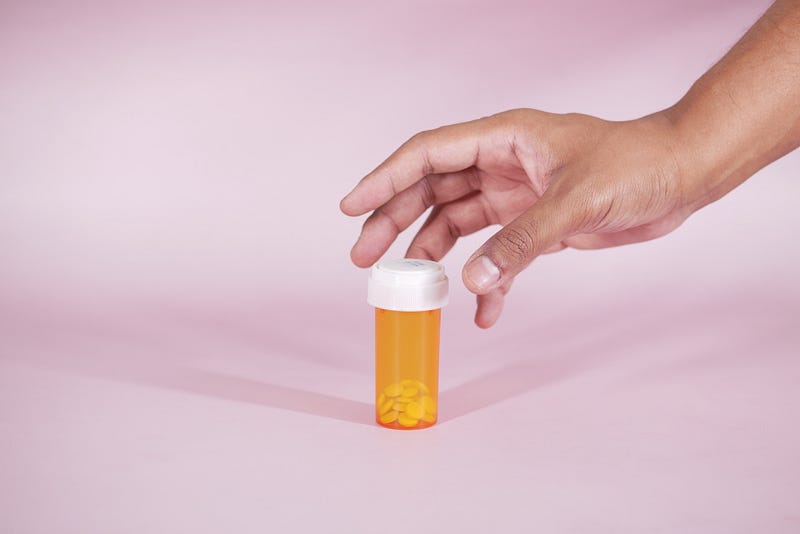
Photo by Towfiqu barbhuiya

My son understands what this means. He has asked me why he can’t have a normal brain like his friends, why he has to take medication and they don’t.

I’ve explained that his brain is perfect and wonderful, and that sometimes brains need help slowing down. I shared with him that I’m on medication to help my brain too, and that many of the kids at his school are too.

I’ve told him I wouldn’t exchange his brain for any other brain in the world.

He is apprehensive but excited about the prospect of having more control over his own impulses. He practices swallowing Tic Tacs each night and jumps in celebration when one makes it down his throat.

I have more apprehension than my son does.

I’ve been staring at that bottle of pills all week. My son still has more practicing to do with Tic Tacs before he’s ready to swallow these each night.

But I study these pills and imagine the path they’ll take inside my son’s body. These little white tablets will dissolve slowly in his stomach and make their way through his bloodstream to his brain. They will simulate receptors there that will reduce nerve impulses from the medulla oblongata of his brain.

The hope is that this intentional stimulation in his brain will help him to control his impulses and live a calmer life.

We hope it will stop him from ripping his entire notebook in half when he writes the letter “h” wrong in school.

We hope it will make it easier to get him out the door in the morning without a meltdown, and to allow him to play with other children on the playground without fist fights.

I’m in awe of these little tablets and the path they get to take inside my son’s body, the body I have loved so much that I too would love to travel inside it.

Perhaps I’m jealous of these little white pills and the journey they will take to help my son, as I’ve tried myself so many different ways these six years.

I’m begging these little pills to protect my son in ways that I can’t. I’m begging them not to dull his brilliance.

More stories from Michelle A. Cmarik…

Parenting
Adhd
Mental Health
Medicine
Nonfiction
Recommended from ReadMedium