
My Son Was Rejected by His Friend, and I Wish I Could Feel Less Bad About It
Parenting can feel emotionally crippling when we have no place to put our children’s pain
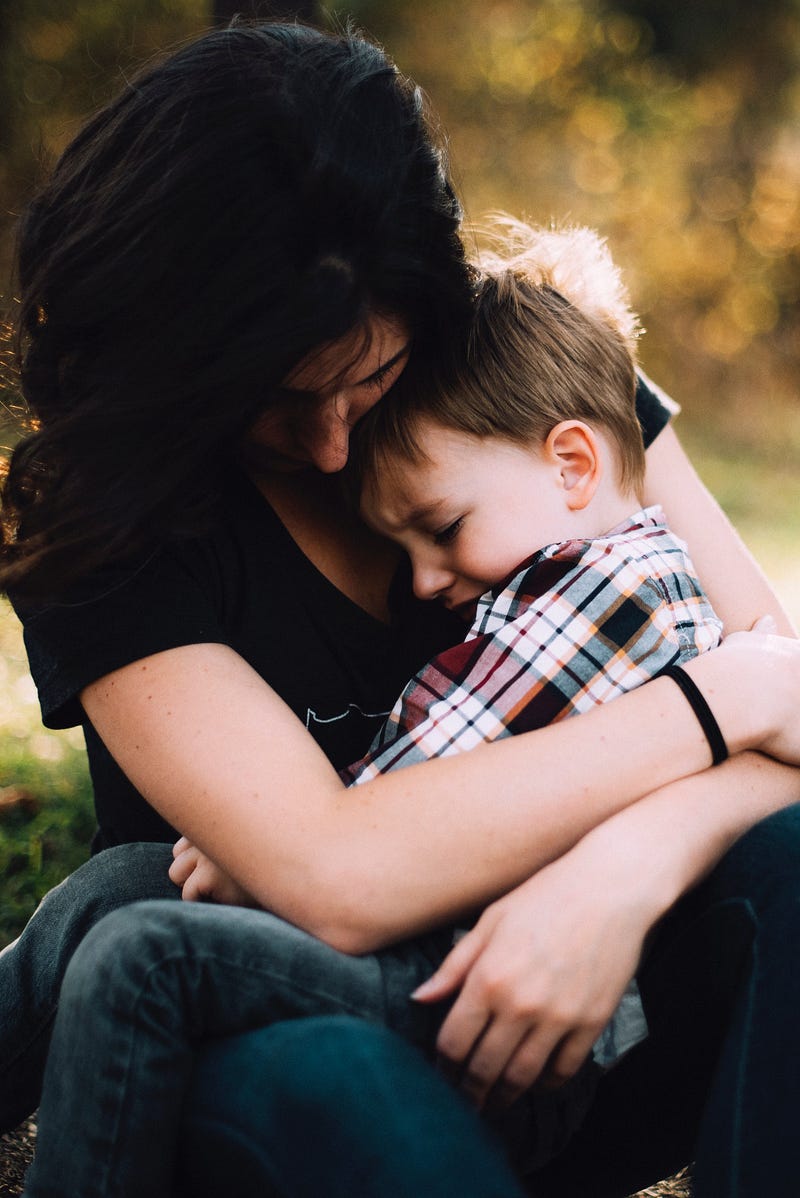
My son’s rejection
My 6-year-old son threw a toy dump truck against the wall and spit on the floor today. He was so upset that he scratched his own face and left red marks across his cheeks.
Outbursts like these are nothing that out of the ordinary in my household. My son has a diagnosis of ADHD and Autism, and he has always struggled to regulate his own behavior after even minor frustrations.
But today was a little different, and I feel a slow sense of dread taking over the space inside my ribcage.
Today was different, because my son was rejected by his only friends.
His two best friends are a set of twins who are in the first grade with him at his school. They became inseparable during the pandemic, as their mom graciously allowed my son to be dropped off at her house three days a week when our school was still in hybrid learning mode.
The year they spent together during that period was glorious for my son. He had never before felt a genuine attachment to another child his age, and the twins welcomed him so openly and fully.
He referred to them as his best friends. He made cards for them for no reason and insisted on picking out gifts to bring back for them when we went on vacations.
But some critical time has passed since those days. At seven, children are much less tolerant of the ADHD/Autism behaviors that make my son a unique playmate.
My son’s dear friends have continued to stick by him so far, but I feel unsettled now. I can sense things shifting for him.
Today while they were over for a playdate, my son’s controlling behavior annoyed them, and they asked him for space. His friend Julian told him he didn’t like playing with him and asked to be left alone in our basement playroom.
This broke my son’s heart into a million pieces. He ran to his room screaming and started breaking things. I had to put him in the restraint hold I’d learned at my school to help his body calm down.
Of course, for seven year olds these moments pass rather quickly. 15 minutes later, his friends seemed unfazed by his meltdown and were playing happily with him again.
Yet my own heart remained broken in a million pieces.

As parents, we often feel our children’s pain as if it were our own
One of the hardest lessons I’ve learned as a parent is how difficult it is to carry on as normal when we think our children are in pain.
It seems like a natural side effect of loving someone this fiercely to feel emotional when they feel bad. It would be strange if we didn’t.
I work in an elementary school, and I see this in full effect on the first day of school every year. Some three year olds need to be pulled kicking and screaming away from their parents on that first day. It is agony for even the sturdiest of parents.
These screaming kids are typically happy and smiling within ten minutes in their classrooms. Their parents, not so much. I often need to make midday calls to reassure parents that their child has been happily coloring for the past two hours. They’ll thank me and undoubtedly admit that they’ve been a total mess all morning.
When my sons are having a bad day at school, I also feel unsettled. When they feel left out or lonely, I wish I could step in and convince the other kids to play with them. When my son cries because he knows his brain works differently and he wants to feel like other kids, I hold him and wish that I could snap my fingers and change this for him.
The truth is, it can feel utterly crippling to be a parent.
I have scoured the internet for advice on this parenting dilemma, and I’m coming up short. There are many articles written about parenting and codependence — this isn’t quite that.
There are articles about building more attachment with your children by putting your phone away and spending special time with them. I’m sure I could do better at that.
I find plenty of articles on parenting styles and advice on getting kids to listen to you.
But I am not a codependent parent, and am not worried about our attachment style.
I am just looking for advice on how to feel a little less.
What we do with those feelings is what matters
Perhaps what I’m looking for isn’t out there because it can’t be done, not in the way I’m wishing for. Perhaps instead of feeling less, I should focus on what I do with these feelings.
I keep reminding myself of the times I felt pain as a child. I remember very vividly being left out at recess, or when my best friend broke up with me in 8th grade. I remember eating lunch alone in the bathroom in high school some days because I couldn’t face the social dynamics outside.
Those painful moments made me the person I am today, and I’m thankful for them.
I try to remember this when I think of my sons and the lives I hope for them. And when I think of these difficult moments as helpful, the pain I feel for them feels more manageable.
Maybe just like we needed that pain as children to grow to be stronger adults, we need to feel this pain as parents to do the same.
Maybe if we allow ourselves to feel this deeply we can prepare ourselves for the harder blows that are to come.
Maybe each difficult moment slowly builds up our immunity for the next.
I am still early in this parenting journey — I have not even come close to the heartache that is watching my children experience major life disappointments or leaving home completely.
For that, I will need some more practice and some hard-earned armor.
More from Michelle A. Cmarik…

Follow The Orange Journal so you don’t miss a post. Do you love to write about self-improvement and personal development? Learn how to be added as a writer here. 🍊


