
Why I Dislike The Term ‘Homophobia’
Calling something “homophobic” rarely tells the full story; the term “orientationism” would be a much more apt noun choice
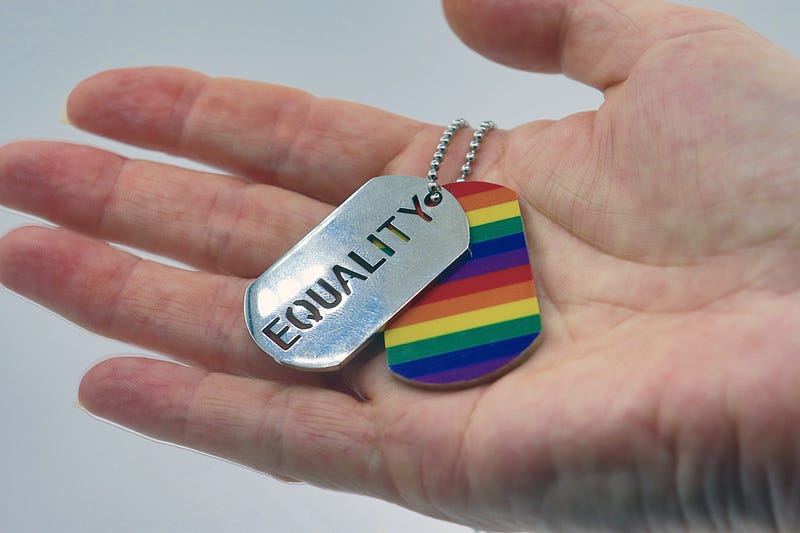
We often hear about so-called “homophobia.” Practically from birth, every Queer person has had to deal with some variation of this blandly-worded dynamic. At school, in church, during work hours, when watching TV or movies, listening to political candidates, while surfing the Internet…
It never ends.
As much as I’m a proponent of queer joy for our community — I think we’re going about this reference (“homophobia”) all wrong. We’re playing right into the hands of those who seek to marginalize and degrade us.
With that in mind, allow me to offer a modest proposal as to how we can begin framing this differently. How we can make it unavoidable for them to take responsibility for inflicting bigotry or discrimination upon someone based on their sexual orientation.
The Starting Point
Last month, David Saint Vincent authored an extremely thought-provoking piece. Entitled “‘Homophobia’ Is Not A Mental Illness, It Is Masterful Marketing,” his article explores the social evolution of the term “homophobia”:
Mr. Saint Vincent — who I, as a gay dude, would consider to be a heterosexual ally to LGBT+ people — recounts how gender-nonconforming men, and the Queer community in general, got tired of being subjected to sissy-shaming and internalized misandry. Thus, many of them began to frame such predatory behavior as a de facto “mental illness.”
In other words, they wielded it as a behavior-modification tactic; or, as Mr. Saint Vincent describes it, “attaching the brand name ‘homophobic’ to generic hatred of gay people.”
He goes on to observe how another part of that marketing was replacing the term “gay marriage” with “marriage equality.” This technique has helped a majority of people in society to realize that the legalization of same-sex marriage, in fact, won’t cause harm to anyone in opposite-sex marriages.
Mr. Saint Vincent also comments on how a majority of heterosexual comedians might make jokes about the LGBT+ community’s ever-changing alphabetic acronym…but they usually won’t say “faggot” or “fairy” onstage, out of fear of getting “canceled.”
In my August 2022 piece “We’re Running Out of Letters of the Alphabet,” I’d made a similar observation when acknowledging the truth behind Dave Chappelle’s comedic usage of the phrase “alphabet people” — even though it by no means excuses Chappelle’s other narcissistic instances of orientationism and genderism that he has exhibited toward LGBT+ folks:
Applying it Literally vs. Figuratively
Being a person with autism, I am very sensitive to word choices. This tends to rile up neurotypical people of all backgrounds — including some of those who would claim to be my comrades within our Queer family.
But I stand by my mindset, here. Let me quote Mr. Saint Vincent, who finds a more straightforward way to summarize what I mean:
And here is the catch: homophobia is not even real. Gay hate, however, is very real. But hating gay people is not a phobia. It is just being an insufferable asshole…Dr. George Weinberg invented the word in the late[-]60s, with the first appearance on record being in an article in Screw magazine on May 5, 1969. Dr. Weinberg was inspired to invent the term after he described the fearful conduct of some friends who had heard a lesbian [woman] had been invited to his dinner party, who were asking him to disinvite her. So he featured the concept of ‘homophobia’ in his 1972 book Society and the Healthy Homosexual.
He goes on to recount how, in the mid-aughts, people began weaponizing the term “homophobia” to criticize those who were trying to stigmatize same-sex relationships. It essentially became social justice propaganda deployed for good, rather than evil, intentions.
Aside from how I view the word “asshole” as a cop-out that generally lets bigots off the hook a little too easily — I agree with these assessments Mr. Saint Vincent makes.
The term “homophobia” implies fear in the offender, based on the -phobia part.
Doesn’t this run the risk of mischaracterizing them?
Yes, I’m sure there are straight people who are literally afraid of us.
The straight dude next to me in the locker room…who rushes to cover up once he suspects I’m gay. Because, apparently, the moment I catch a glimpse of his penis or bare butt, he thinks that will be a signal for me to lecherously pounce on him.
Or the conservative soccer mom who doesn’t want me around her kids because she assumes I have HIV — and wouldn’t want to run the risk of her darlings “contracting it” if one of them was to run over to me and give me a hug.
These are the nitwits who need a nice dressing-down from Julia Sugarbaker.
But it doesn’t stop there. If it was strictly a “phobia,” they would do nothing other than avoid us at all costs. They wouldn’t be openly antagonizing us…or actively attempting to legislate us into obscurity.
The Beauty of Context
Aside from being neurodiverse and plain-looking, I’m also an outcast amongst many of my LGBT+ peers because I have a rather centrist perspective on social justice.
I prefer the term “orientationism” rather than “homophobia.”
Why, you might ask?
Because people of all sexual orientations can — negatively and aggressively — discriminate against one another.
Yes, the systemic disparities related to sexual orientation are generally endured by LGBT+ people. However, Queer folks can inflict bigoted behavior against heterosexual people — or against fellow Queer people — in the cultural and social realms.
Every “-ism” works in this manner. If you’re still confused, check out my piece on the different subcategories of discrimination:
Some people would suggest using “heterosexism” as an alternative to “homophobia.” But even that fails to tell the full story.
Homosexual people can bully heterosexual or bisexual people. Bisexual people can bully homosexual or heterosexual people. Transgender people can target — and be targeted by — cisgender people regardless of one’s heterosexuality, homosexuality, or bisexuality.
Along with its semantic inaccuracy, there are two other main reasons why I find “orientationism” to be a superior usage of language than “homophobia.”
First, as a person who suffers from mental illness, I fear that reducing anti-LGBT+ hatred or toxicity to a so-called -phobia will end up unduly stigmatizing those of us who have actual phobias.
I’m legitimately afraid of many things: fire, slippery surfaces, falling from heights, sharp edges, venomous creatures, invasive surgery, and global/societal collapse.
These triggers of anxiety are very real for me. If you put them on par with the malevolent actions of someone who hopes to outlaw my ability to marry another man — that is, quite frankly, insulting to me.
It’s a wee bit ableist.
But secondly, the simplistic term of “homophobia” downplays their sin. It implies that orientationist bigots are mostly fragile, delicate little flowers who don’t know any better than to believe the myths about us that Anita Bryant pioneered.
In most cases, they aren’t innocent, brainless drones.
They know exactly what they’re doing.
They are trying to codify and elevate a heterosexual ideal. Their actions and beliefs indicate that they’re just fine with a merit-reward system that would enshrine heteronormativity within our social fabric for the rest of eternity.
Why are we letting them get away with that?
Is it fear…or is it hostility disguised as “morality”?
When it’s the latter, that wouldn’t be a -phobia. It’s just an outright desire to succeed in securing an authoritarian power grab.
Click here to subscribe to my stories.


