
We’re Running Out of Letters of the Alphabet!
Why I exclude the “Q” (and a majority of other letters) from the “LGBT” abbreviation
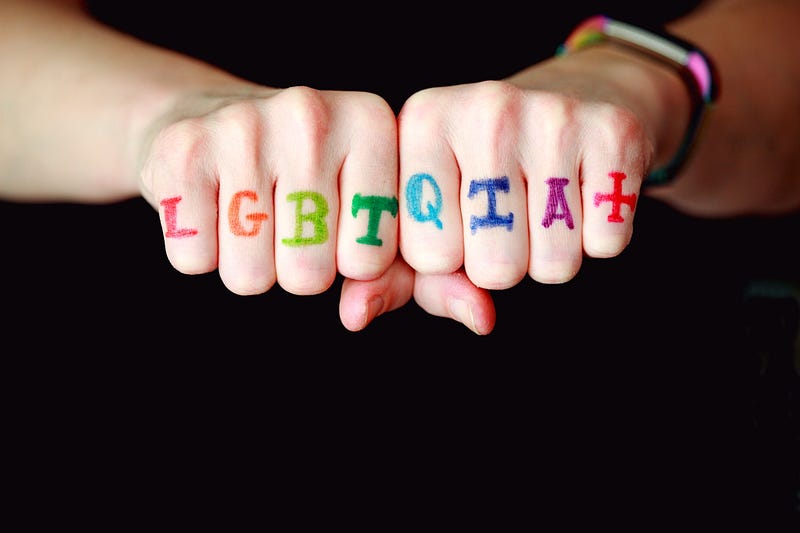
Most people who know me understand what passion I have for defending and protecting the LGBT+ community. Just read any of the pieces I’ve written about marriage equality, inclusive sex ed curriculums, or Queer unity:
But here’s the part some of you may not like…
I think our community’s acronym has racked up WAAAAAAAYYYY too many letters!
I’m not a fan of Dave Chappelle’s recent “comedic” self-pity…and I suspect he is grossly misinformed about what Queer people stand for and believe. But when he glibly referred to us, collectively, as “Alphabet People” in his recent comedy special (The Closer) — I instinctively knew what he meant.
At that moment, I think I got him (or, at least, what he was trying to say).
It’s utterly ridiculous that we keep tacking one letter after another onto what’s supposed to be a pithy abbreviation.
My straight friend Jenn (who has a lesbian daughter) recently confessed to me how she had only learned those first four letters (L, G, B, and T) before her daughter came out to her.
Then, all of a sudden, a “Q” was added to it.
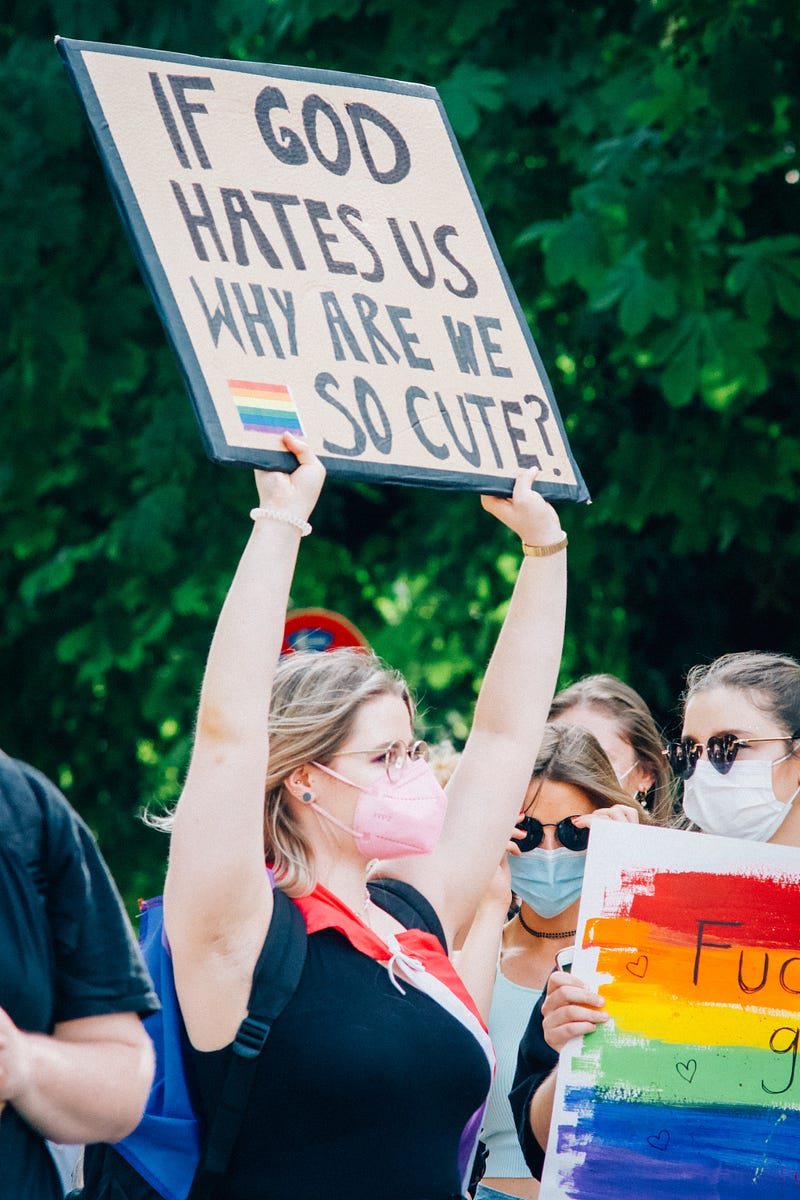
I want my community to be proud of our identities.
I want us to enjoy sexual freedom.
I want us to foster compassion and understanding by building bridges with the heterosexual and cisgender worlds.
But let’s stop for a moment and consider the significance of the “LGBT” moniker in the first place.
The descriptors of “lesbian,” “gay,” and “bisexual” collectively form an alternative to “straight.” This is a binary duality.
The descriptor of “transgender” serves as a counterpart to “cisgender.” This is also a binary duality.
Thus, “LGBT” really gets the job done, by itself.
When the “Q” was added to our acronym, the intent seemed to be that it could dually signify both “queer” or “questioning.”
Since I came out as a teenager, I’ve enjoyed the privilege of not having to “question” my sexuality for very long. I realize not everyone else is as fortunate.
But, eventually, no matter how long it takes, you’re going to figure out where you fall on the sexual spectrum. After that point, you’re no longer questioning.
“Queer” as an umbrella term obviously encompasses an array of more newly-coined sexual statuses. They might include:
Intersex — people born with a combination of male and female chromosomes, genitalia, and/or gonads
Pansexual — people who are attracted to other people regardless of their gender without really noticing it
Omnisexual — people who are attracted to other people regardless of their gender while still noticing those gender differences
Asexual — people who generally don’t experience sexual attraction
Two-spirit — people with an Indigenous background who possess dual feminine/masculine spirits
Nonbinary — people who have gender identities that are dichotomous (genderqueer), intensely multivariant (genderflux), fluctuating (genderfluid), complex (xenogender), or completely absent (agender)
Gender Nonconforming — people who, through their soulful energies, reject traditional notions of what it means to be “masculine” or “feminine”
Ecosexual — people who possess a sexual fetish for nature and environmentalism
Demisexual — people whose attraction to others is more emotional than hormonal
Sapiosexual — people whose attraction to others is based on intellectualism
Polyamorous — people who maintain relationships and/or sexual relations with more than one sexual partner at a time
Obviously, this is quite an extensive glossary. As someone who is cisgender, 100% homosexual, and binary in my gender identity, I’m still learning quite a bit about these different states of being. I fully admit I don’t understand all of them.
But I support everyone’s right to express their gender and sexuality openly, and to be valued for those differences amongst us. I also fall into the gender-nonconforming category, which would make me a “cis gay gender-nonconforming person.”
So why don’t I just use the “Q” in our community’s acronym?
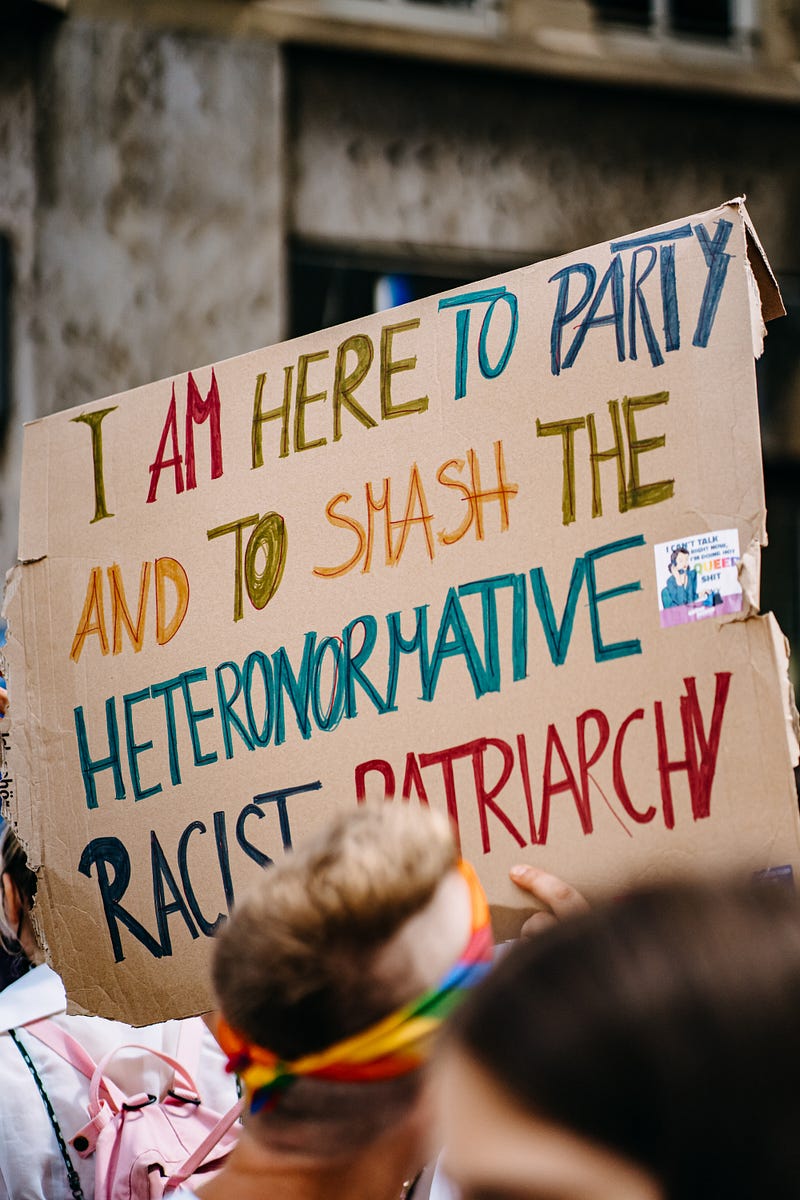
From my perspective, it’s redundant. If you’re questioning your sexual identity, eventually you’re going to figure out how you identify (and the rest of the world should learn to be supportive of you in that journey).
Or, if you prefer using the word “queer” as an umbrella term for our community as a whole — then wouldn’t the L, the G, the B, and the T each be redundant themselves? Why not just say “queer” and be done with it?
Therefore, I just say “LGBT+” (L-G-B-T-plus) aloud…and in written form.
It’s more efficient, and it’s an open invitation to explore any of the sexual and gender-based identities that can exist across the spectrum.
People who are pansexual, omnisexual, or nonbinary are usually going to be open to relations with people who identify as female or male of either cisgender or transgender backgrounds. Wouldn’t these be extrapolations of bisexuality?
Two-spirit, intersex, ecosexual, demisexual, sapiosexual, and gender nonconforming people can be attracted to those who identify as one cisgender binary sex — in which case the relationship is either straight, gay, or lesbian in nature — and/or be attracted to transgender and/or nonbinary people.
Asexual people might embrace binary sex and/or gender identification. Or, they may possess some iteration of nonbinary identity. Either way, any sexual relations that they do engage in will be cisgender or transgender. Ditto for polyamorous people.
We have such a beautiful, diverse community. I want those folks who are heteronormative in their own identities to grow to appreciate the richness of our metaphorical rainbow.
Sometimes, humans tend to get carried away with acronyms. It’s like piling way too many heaps of food onto multiple plates atop a tray while in the buffet line.
Maybe we should pump the brakes on all of these phonetically-awkward “faux-nouns”?
Why say “Latinx” when you can say “Latino,” “Latina,” “Latine,” “Hispanic,” “Chicano,” or “Chicana” (depending on the individual’s ancestry)?
Why say “AANHPI” when you can say “East Asian,” “South Asian,” “West Asian,” “MENA,” “Arabic,” “Polynesian,” “Melanesian,” “Micronesian,” or “Pacific Islander”?
When someone is a mix of globally-disparate ethnicities, why not just say “biracial” or “multiracial”?
Why say “GenZer” when you can, instead, say “Zoomer,” “Zillennial,” “Centennial,” “Alphacentennial,” “Coronazoom,” or “iGen”?
Instead of enunciating “CPTPP,” how about just calling it “TPP+” or “Trans-Pacific Plethora”?
Rather than uttering “PCMCIA,” couldn’t you just use the terms “PC Card,” “ExpressCard,” or “USB Forum”?
Too many letters can make us sound unduly pretentious. Not everything needs to be a convoluted mouthful.
Being inclusive doesn’t require us to overdo it on the lengthy abbreviations, or multisyllabic bungles.
If we’re LGBTQIA2SPDNOE+ today…then are we going to have to invent 27th and 28th letters, tomorrow?
Click here to subscribe to my stories.


