
Fitness for Aging
Why Calisthenics Became My Main Fitness Choice After 30s
Insight from my three decades of isometric training for health and fitness improvement at my convenience with minimal risk
Non-members can read this story via my friend link.
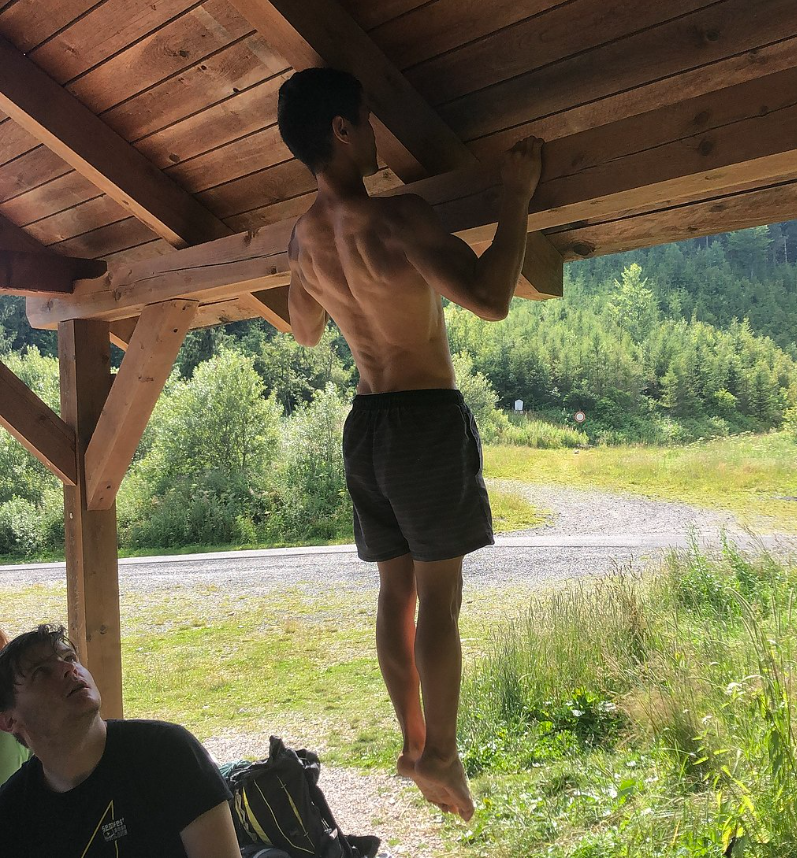
During my twenties, I was a long-distance runner with a deep passion for wrestling. Despite my enthusiasm for wrestling, I faced challenges due to weak muscles and abdominal obesity in a slender body, preventing me from actively participating. Instead, I found myself relegated to the role of a spectator, albeit with great admiration for the sport.
It wasn’t until I encountered a mentor who generously offered to coach me in both calisthenics and wrestling that my journey took a transformative turn. One weekend, I attended a wrestling competition for mature men. These elderly people in their 70s and 80s looked like in their 40s and 50s. The winner of the competition was an 87-year-old Conor from Ireland.
As I extended my hand to congratulate him, he enveloped me in a bear hug, radiating the unmistakable euphoria of victory, possibly with high dopamine in his brain. His warmth and approachability encouraged me to ask a few questions, even as he remained sweating from the exertion of the match.
Impressed by his defined body with prominent upper and lower body muscles, I asked him how often he goes to the gym and what type of weight training he does. He smiled at me and exclaimed NEVER. I repeated the word never in question format. He confirmed that he never used weightlifting in his life.
I asked him how he had shaped his body and maintained such an impressive look. He said calisthenics, which still needed to be added to my vocabulary. His cardio was barefoot walking, which I was familiar with as I did it a lot in my childhood, joyfully with my parents' encouragement and my friends' participation.
He explained calisthenics to me in 15 minutes while having a cup of strong expresso, which was my shot for his kindness. In this post, I will summarize what he told me and what I learned experimentally and from others in fitness clubs.
In short, he did an hour of walking on the beach and an hour of calisthenics at home almost daily. He looked in his early 50s, joining wrestling competitions and winning at them.
He volunteered to teach me once a week after my studies. When I started, I couldn’t bear his strength while wrestling in the first year. I was the same age as his grandson. But after learning and practicing calisthenics for five years, I managed to defeat him in his 90s.
He was still strong but gave it up after arriving at the age of 100. He lived a few more years before saying goodbye to this planet. However, he remained in my memories as an inspiring centenarian.
One of his legacies was encouraging me and many others to use the power of calisthenics for better health and fitness.
What is calisthenics?
Calisthenics is a form of physical exercise that consists of various movements, typically using only body weight for resistance. It is resistance training without lifting weights.
Calisthenics exercises include push-ups, pull-ups, planks, squats, lunge walks, leg raises, abdominal exercises, and jumping exercises, with precautions taken to protect joints, as I do jumping on a trampoline and using a soft floor for other movements to safeguard the knees.
Calisthenics routines improve strength, flexibility, and overall fitness without requiring specialized equipment. They can be adapted to different fitness levels and performed virtually anywhere, making them popular for beginners and advanced fitness enthusiasts.
Calisthenics, technically a form of isometric training, involves tightening specific muscle groups through contractions. In isometric exercises, the length of the muscle remains constant while tension is applied.
This type of training involves holding a static position against resistance. Isometric exercises can help improve muscle strength, endurance, and stability, making them valuable components of fitness routines.
Calisthenics workouts engage nearly every muscle group when performed with proper form, variety, and intensity, contributing to overall strength and development.
A 2011 randomized controlled trial compared calisthenics and pilates and found that calisthenic exercises are more likely to improve lower extremity coordination after 3 and 6 months of training than Pilates exercises. Thus, calisthenic exercises may be useful for individuals who require improved coordination.
Our muscle strength and coordination naturally decline as we age, so adopting habits that promote physical fitness and agility becomes imperative. Recognizing this, I chose to integrate calisthenics into my lifestyle as a proactive measure to combat muscle weakness and maintain coordination.
In the following sections, I will explain the reasons behind this choice and its transformative impact on my health, fitness, and well-being. Now, I want to briefly touch on the pros and cons to give you the full picture.
Pros and Cons of Calisthenics
Calisthenics offers several advantages. It is cost-effective and requires minimal or no equipment, making it accessible to many. Its convenience allows for workouts virtually anywhere, from home to parks or during travel, which was convenient for me in hotels with no gym.
Additionally, calisthenics enhances functional strength by replicating natural movements and aiding daily activities. It also promotes flexibility and mobility through its exercises, benefiting joint health.
Furthermore, its adaptable nature caters to people of all fitness levels, making it inclusive and versatile for various exercise needs and goals.
Calisthenics presents some limitations, notably regarding resistance, as it relies solely on body weight, which may not suffice for those seeking significant muscle mass. I don’t need it as I prefer lean muscles for health reasons.
Progression poses challenges, particularly for advanced athletes who have mastered basic exercises and require increased resistance for muscle growth. While generally low-impact, calisthenics carries risks of injury due to improper form or overexertion, particularly impacting joints and connective tissues.
Additionally, some people may experience plateauing in their fitness gains without adequate variation and progression, hindering continued improvement.
Moreover, the exercise variety in calisthenics, while diverse, may not match that of other training methods, potentially resulting in boredom or decreased motivation over time.
How I Made Calisthenics a Lifestyle Habit
After learning the basics from Conor, my competitive journey into calisthenics began when I joined a fitness group focused on push-up challenges, starting with a modest goal of 100 push-ups for beginners.
First Improving Pushups
Initially, I struggled to complete 20 push-ups in a row, but I gradually built up my strength and technique with consistent effort and encouragement from fellow members.
Over six months, I progressed to effortlessly completing 100 push-ups in a single set, following a method of incremental improvement and incorporating five-minute planks between sets.
The club's regimen also included squats, lunge walks, leg raises, and Pilates-inspired exercises to enhance core stability and muscle endurance.
With structured rest days for muscle recovery, I experienced tangible improvements in strength and motivation after each session.
Then, Gradually Improving Pullups
I assumed pull-ups would be as straightforward as push-ups, but I quickly realized otherwise. Despite managing 100 push-ups in one set, I struggled to complete even three full pull-ups initially, feeling my heart rate spike and my nervous system protesting after just a few repetitions.
Unlike push-ups, where we bear only half our body weight, pull-ups demand lifting the entire weight, necessitating significant growth and strengthening of the arm muscles.
Following a similar progressive regimen and support system as with push-ups, I gradually honed my pull-up technique over six months, eventually performing 20 pull-ups consecutively.
As I progressed to the 1,000 push-ups per day challenge, my pull-up count increased to 50, leading to noticeable growth in my upper body strength.
Moreover, mastering pull-ups enhanced my proficiency in rock climbing, complementing another favorite activity of mine.
I still do weight training at home or in the gym, but calisthenics is my main resistance training to keep my muscles lean as I age.
Nutritional and Time-Restricted Eating Focus for Better Metabolism
While undertaking the 100 push-up challenge, I didn’t find it necessary to modify my diet. However, upon joining the 1,000 push-ups a day club, I realized the importance of increasing my protein intake by 20% to aid muscle recovery and elevating my fat intake by 10% to sustain energy.
As my workout routine expanded to include 50 pull-ups in three sets, the daily 1,000 push-ups, 30 minutes of planks, and approximately 10,000 steps of barefoot walking, I further increased my protein and fat intake by 10%.
This adjustment became crucial as my metabolic rate surged, prompting me to consume 200 grams of healthy fats in my diet to meet my body's heightened energy and amino acid demands.
Despite a roughly 30% increase in calorie intake, I experienced no significant weight gain. My belly fat decreased while my weight remained stable. Being fat-adapted and performing workouts on an empty stomach allowed my body to primarily utilize visceral fats as its main energy source.
Maintaining consistent ketosis levels boosted my energy levels for physical activities and facilitated muscle growth while reducing visceral fat stores.
Consuming a single meal post-workout resulted in an insulin surge, directing calories toward muscle recovery while preserving insulin sensitivity despite the additional protein intake.
By adhering to a carbohydrate-free diet and practicing intermittent fasting with one meal a day, I deliberately activate insulin and mTOR once daily for health benefits.
Moreover, my glucose levels remained stable, a testament to the efficiency of fat adaptation in promoting gluconeogenesis and lipolysis processes.
Subjective and Objective Measurements
Upon completing my first 100 consecutive push-ups and 20 pull-ups, I experienced a sense of accomplishment similar to finishing a marathon, followed by a remarkable feeling of well-being.
Subsequent ketone checks revealed over six nmol of β-hydroxybutyrate in my bloodstream. I started enjoying rejuvenating and increased periods of deep sleep.
Encouraged by these initial results, I continued my calisthenics routine, which yielded significant long-term benefits. For example, after the first year, a DEXA scan showed a 40% improvement in muscle quality and a 3% reduction in body fat percentage, resulting in visible abdominal definition and the reduction of loose skin.
Year by year, these workouts enhanced my endurance, corrected my posture, and alleviated agitation from prolonged computer use until my 50s.
Having 5-minute breaks every hour to perform 100 push-ups in the office, I inspired colleagues to join in, nurturing a supportive and encouraging environment.
Motivated by tangible progress, sustained energy levels, and community support, my self-esteem and compassion flourished, prompting me to share my expertise with fellow calisthenics enthusiasts in health clubs starting their exciting journey.
I believe calisthenics will help us to prevent sarcopenia and osteoporosis, which are two key issues of the aging population.
Conclusions and Takeaways
Reflecting on this journey, I have learned that our bodies possess remarkable adaptability to stress. When approached methodically with adequate recovery, the body responds by building muscle, increasing strength, and reducing belly fat.
Muscles thrive on acute stress, just as the body burns fat in response to glycogen depletion. From my experience and observations within the community, calisthenics emerges as an exceptional workout regimen for healthy individuals.
While work and family commitments limited my participation in community events over time, I integrated calisthenics into my daily life, whether at home, during outdoor walks, or while traveling abroad. I never needed to go to the gym while traveling to stay fit.
Focusing on calisthenics after my 40s marked the end of my reliance on long-distance running, which, in hindsight, proved detrimental to muscle mass and overall health. When I stopped running and increasing calisthenics, I gained six-pack abs after my 50s.
It is always possible to start calisthenics at any age, and it suits any gender if people are healthy.
Integrating calisthenics as resistance training is seamless for people versed in Pilates and Yoga. Using post-workout practices like meditation, cold showers, and a 10-minute vibration on a machine further accelerated my recovery process, depicting the holistic benefits of calisthenics as a lifestyle habit.
However, calisthenics may not be suitable for everyone, so beginners or metabolically challenged people may need guidance from healthcare professionals before commencing such workouts.
The key takeaway is a progressive approach, passion, and consistency to reap its anabolic benefits and importance in preserving lean muscle mass as we age.
As I mentioned in my previous stories, sarcopenia and osteoporosis are two key issues of the aging population. Calisthenics can lower the risks of both conditions.
Thank you for reading my perspectives. I wish you a healthy and happy life.
To inform my new readers, I wrote numerous articles that might inform and inspire you. Some of my topics include brain, mental health, cognitive function, significant health conditions, longevity, nutrition/food, valuable nutrients, ketogenic lifestyle, self-healing, weight management, writing/reading, and humor, including 100+ Insightful Life Lessons from My Circles for the Last 50+ Years.
I publish my health and wellness stories on EUPHORIA. My posts do not include professional or health advice. I only document my reviews, observations, experiences, and perspectives to provide information and create awareness.
If you are a writer, you are welcome to join my publications by sending a request via this link. I support 27K+ writers who contribute to my publications on this platform. I also have another profile to write and curate tech stories.
Importance and Value of Medium Friendship for Writers and Readers


#/media/File:Horn%C3%AD_pozice_shybu_(cropped).jpg)