
Who Decided There Are Only Two Sides to an Issue?
Our News Media’s Obsession with Reporting “Both Sides”
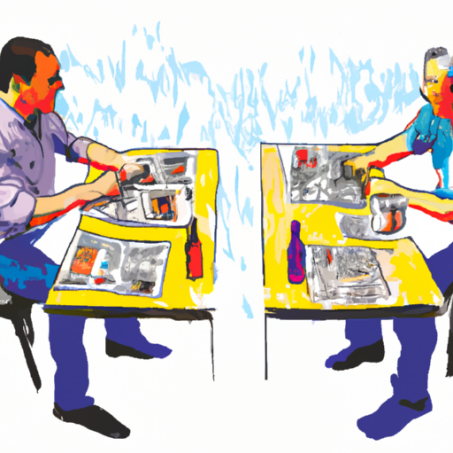
In recent years, the concept of reporting “both sides” has become increasingly popular in the media. This approach involves presenting two opposing viewpoints on a particular issue, with the aim of providing a balanced and impartial account of the situation. However, while this approach may seem fair and objective on the surface, it is not without its problems. Perhaps the most glaring difficulty is that there are almost never simply two sides to anything. To report two sides without giving context is to serve up a wonderful word salad with an apologetic “I hope you like it!” dressing, flavored by a Karen-like arrogance.
“Both sides” reporting usually creates a false equivalence between two apparently opposing viewpoints. We normally think about the two sides issue when we hear the reporter say the MAGAs are saying “ABC” but the other side is saying “XYZ.” But this is not two sides of anything. It is merely a reporter following the corporate guidelines of the organization with whom he or she is employed. This can be particularly problematic in situations where one side is promoting misinformation or propaganda, as we all have just seen in the case of Dominion v. Fox defamation case. Fox, it turns out, doesn’t report the news of the day; it instead proffers nearly comedic episodes of sensational soap opera-quality exhortations to support white folks. I don’t mind supporting white folks but why do I have to tan my testicals to do so? For example, if a news outlet were to present the views of climate change deniers alongside those of climate scientists, it could give the impression that there is a genuine debate about the reality of climate change. When in fact, the overwhelming scientific consensus is that it is a real event and pressing issue.
This false equivalence can also be harmful in situations where one side is promoting harmful or discriminatory views. One may wish to be mindful of the agenda of any given news organization. When George Floyd was killed, the news organizations reported on the event. Some decried the shame the police should suffer within themselves and others decried that some protesters tried to burn public buildings and looted stores. That is not an example of two sides of anything. The cops were wrong and the man died. Rotten no good folks used George’s death as an excuse to loot stores. It turned out to be good for rousing the people up to protest something. Nothing was changed because of the protests however. And all that really occurred was that each faction of the political rainbow got to say, “Hooray for our side.” This should have been a situation where the media realized its responsibility to promote social justice and equality. I think it would be fair to say the media kind of did its job, but then kinda just ain’t good enough.
Another problem with “both sides” reporting is that it can create a false sense of balance, where the media feels compelled to present both sides of an issue even when one side is clearly more important or urgent than the other. For example, I suspect any fairly reasonable person with a modicum of common sense can understand that the leading cause of death in children is gun related violence, which is an important issue which must be addressed. I don’t see how showing another pile of teddy bears and flowers at the scene of the tragedy is showing a side of anything at all anymore than showing the evening interview of another republican senator allowing that “guns don’t kill kids, people kill kids” is showing the opposing side of the morbidity of the American culture.
Yet another problem of “both sides” reporting is when there are situations where the media considers one side to be more powerful or influential than the other. This can create a situation where the media gives undue weight to the views of the perceived powerful side, even when they are less valid or supported by evidence than the views of the less powerful side. Let’s take Ronnie vs. Mickey Mouse as a most illustrative example. Ronnie thinks that he has the right to punish Mickey for the mere fact that Mickey’s world must be more inclusive than Ronnie’s world. But the media has an unfashionable need to report Ronnie’s vengeance as equal to Mickey’s outrage. Ronnie just does not have the right to punish Mickey Mouse for saying what he thinks. Only Minnie Mouse gets to tell Mickey what to think. For the media to report those two events as equal is just Goofy.
Another issue with “both sides” reporting is that it can create a false sense of neutrality, where the media feels compelled to present both sides of an issue even when they have a clear bias or agenda. This can lead to a situation where the media presents both sides of an issue as equally valid, even when one side is clearly promoting a particular agenda or ideology. The current example which we all must endure is the media reporting that Mikey and Dark Brandon having classified documents is the same as Big Orange having hundreds of classified documents and refusing to turn them over to the proper authorities. No one in the media is neutral on these issues. But it’s fairly rare to hear a news anchor come right out and say that they are appalled that Big had documents he could have and might very well have shared with unfriendly people.
Finally, “both sides” reporting can also be problematic in situations where there is a lack of consensus or agreement on an issue. This can create a situation where the media presents both sides of an issue as equally valid, even when there is little or no evidence to support one side or the other. This can be particularly problematic in situations where the media has a responsibility to promote accurate and evidence-based reporting.
How the media covered the 2020 election demonstrates this point fairly well. It was soon obvious that Big Orange had lost and that Dark Brandon had won. But the media continued to report that Big Orange was claiming fraud without any proof at all. How could responsible people permit Big to rant and rave about something that everyone knew was pure poppycock? One has to question if January 6 could have happened without the both sides reporting practice in the media.
“Both sides” reporting may seem like a fair and impartial approach to journalism, but it is not without its problems. From creating a false equivalence between two opposing viewpoints, to promoting harmful or discriminatory views, “both sides” reporting is flatly misleading in a number of ways. As such, we all hope the media is aware of these issues and will constantly strive for accuracy, impartiality and fairness in reporting. If they were to do so, they could perhaps promote a more informed and engaged public, and to contribute to a more just and equitable society. I think there are journalists who actually are aware and simply refuse to kowtow to corporate demands.
Forging Agreement’s newest on-demand workshop is available on Teachable now. Learn more about the ideas that John introduces in his blogs in the Program Theory On-Demand Workshop!
One way to think about how your mind works is to consider it as a biocomputer. It has an operating system and different types of applications and programs that run when called, in similar fashion to a regular computer. The results of this workshop will give you new ways to consider your own beliefs, emotions, feelings and logical thoughts and how you can choose to modify them to meet your own requirements.
The workshop combines a series of on-demand videos with group discussions. Program Theory is taught by John Worthington and Paul Grenci. Contact @forgingagreement on Facebook or Instagram or email [email protected] for more information!
The most recent online Reality Creation Through the Dyad Workshop has just wrapped up. The Dyad workshop is an exploration into the relationship that exists between two people- any two people. A Dyadic relationship can be with a spouse, significant other, business partner, co-workers, family members, etc. These relationships can be wonderful and challenging all at the same time, but that is the beauty of relationships; traversing the good, the bad and everything in between.
In this interactive workshop, couples/individuals are afforded the opportunity to examine ever so common problems and tried and true solutions that guarantee an ongoing relationship if one is warranted.
This workshop will be happening on a monthly basis and runs over 2 weeks of 4 consecutive evenings. Contact @forgingagreement on Facebook or Instagram or email [email protected] for more information!
If you would like to support John, please consider subscribing to Medium using his referral link. Due to Medium not supporting mobile-based referrals, please use a desktop browser to sign-up. This ensures that a portion of your commission goes straight to John to support his work on this blog. You will get unlimited access to all of John’s blogs, plus unlimited access to thousands of other writers. Thank you!


