
FEBRUARY MONTHLY CHALLENGE
Where Tropical Winds and Huge Waves are Crashing Onto Shore
A walk along the coastline of Mozambique
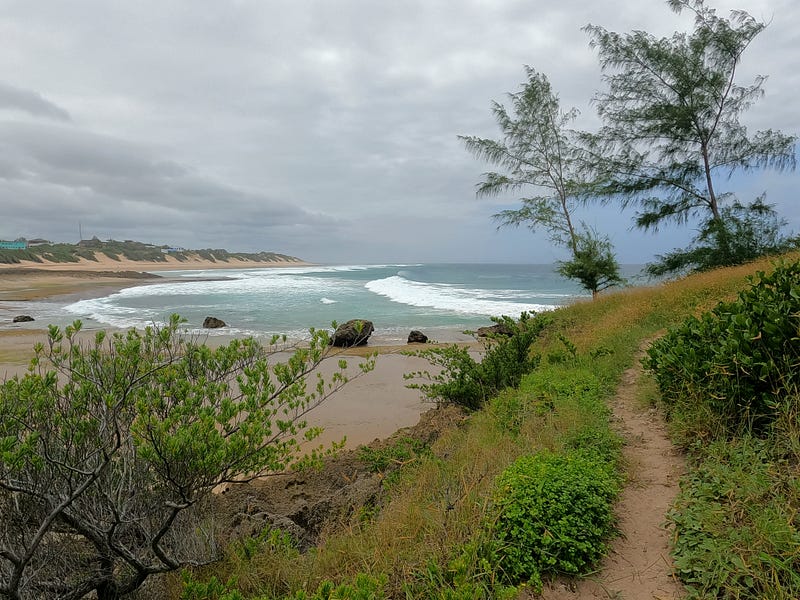
I’m walking along the rough and rugged coastline of Praia de Tofo. The wind is roaring in my ears and my legs are getting sandblasted. The beach is making a screaming and squeaking noise. It’s the wind that is creating a vibration between the sand corns.
We were 12 hours away from getting hit by Cyclone Freddy when I embarked on this journey to explore the fascinating coastline. Yes, the wind was strong but not strong enough to put me in danger from flying roofs or other objects.
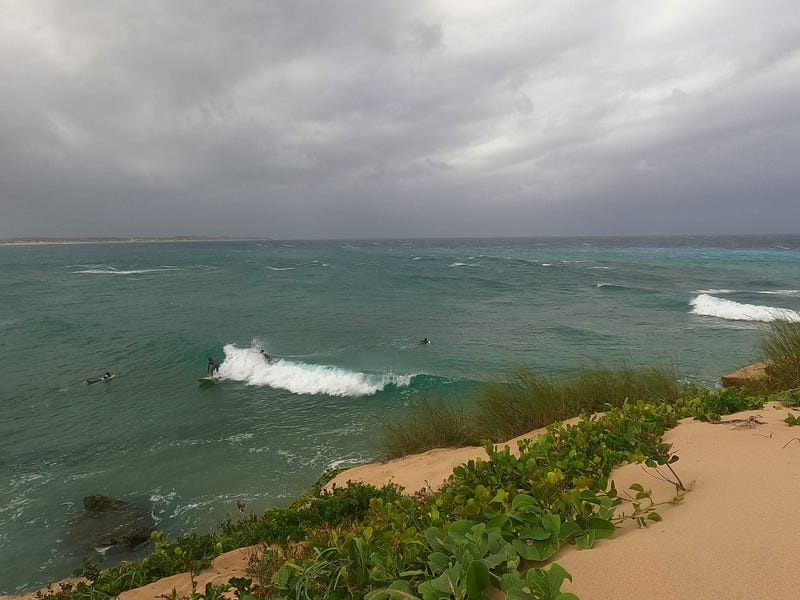
Yesterday, I walked down to the end of the beach together with David. The ocean was rather calm but a strong current could be spotted in the water.
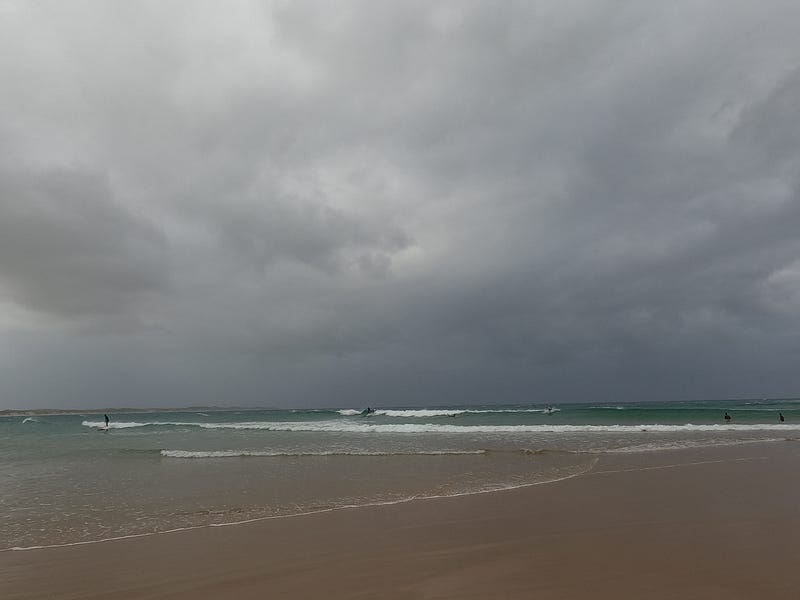
And to our surprise, the water was packed with local surfers. As we were approaching the surfing spot, more and more guys ran with their longboards in hand into the sea.
We made our way up the dune and watched the guys from atop. We counted 20 people in the water at some point. And to correct myself, there were some girls in the water too. Just one person had a wetsuit on and was far from the others. Must have been a tourist, I’m certain.
We wanted to go around the corner when I saw a sign in Portuguese saying “no bathing behind this point”. Or something similar. My French and Italian knowledge is enough to get me through in this Portuguese-speaking country.
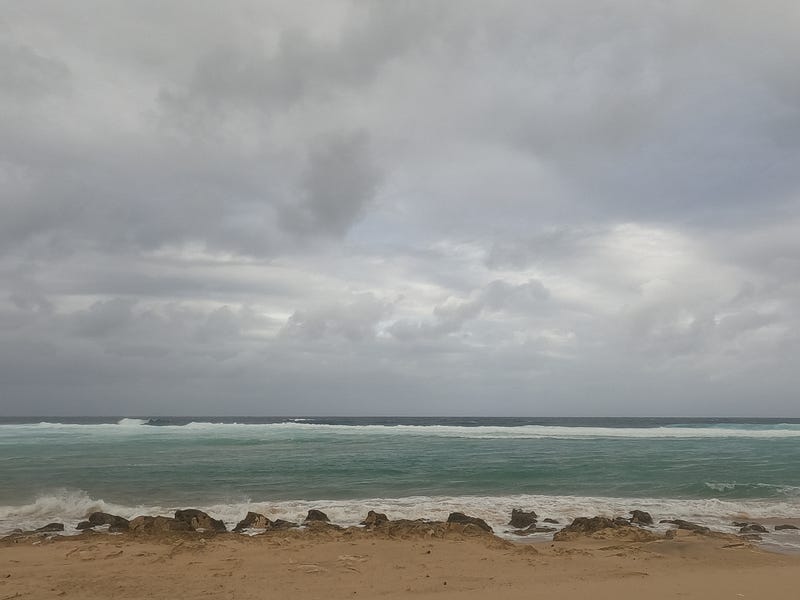
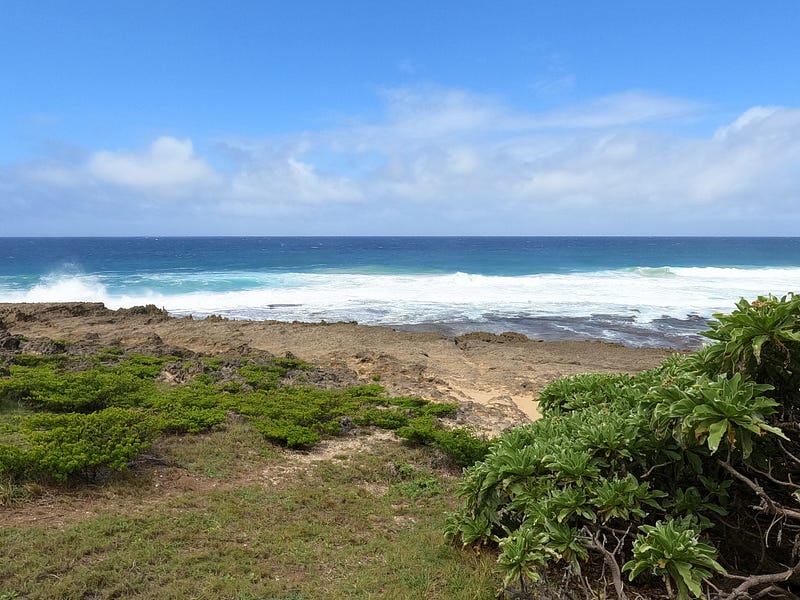
And once we walked past this point, we did understand why. Huge waves were breaking onto shore and the current was so strong, we could watch the water being pulled parallel to the beach.
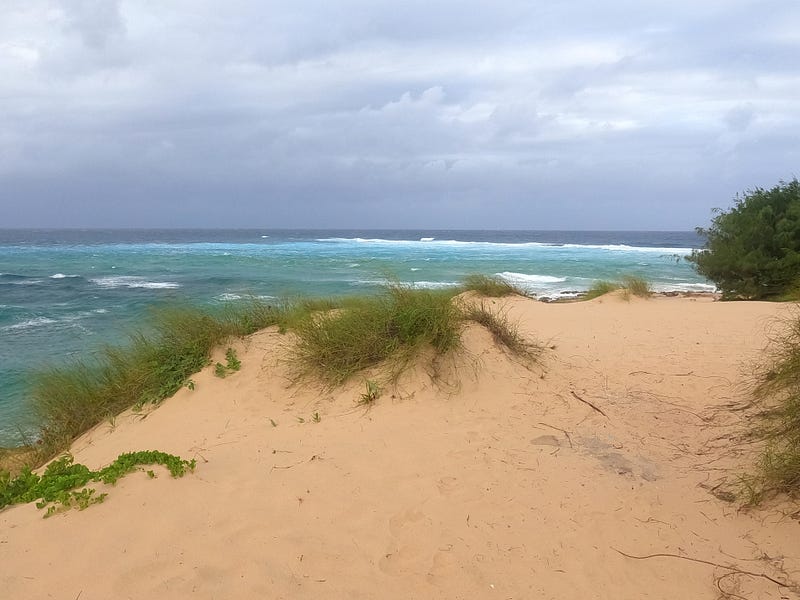
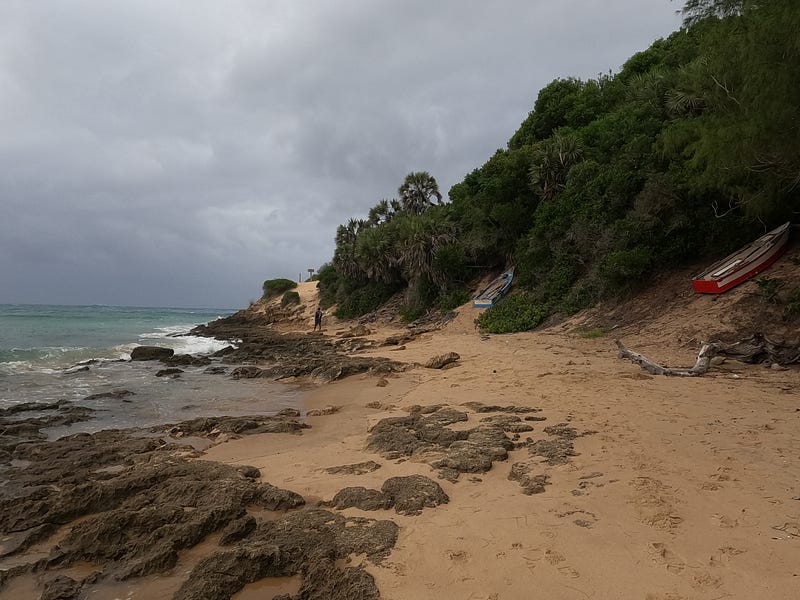
One day later, I found myself at the same spot again but this time the sea was far. Where previously the boys with their short boards were catching waves next to sharp rocks, I was now walking on sand. Yes, it was low tide.
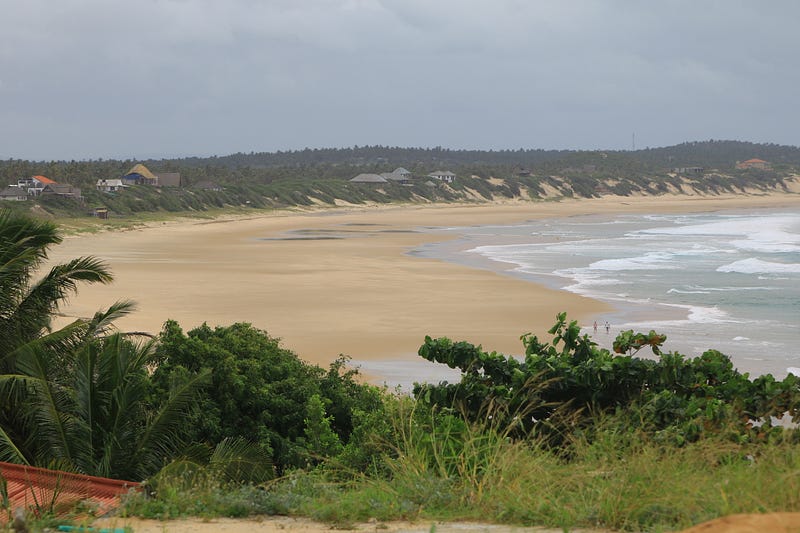
Initially, a flock of birds took my attention and drew me in this direction. Fascinated by the way the coastline had changed in between the tides, I was now hooked and decided to go further.
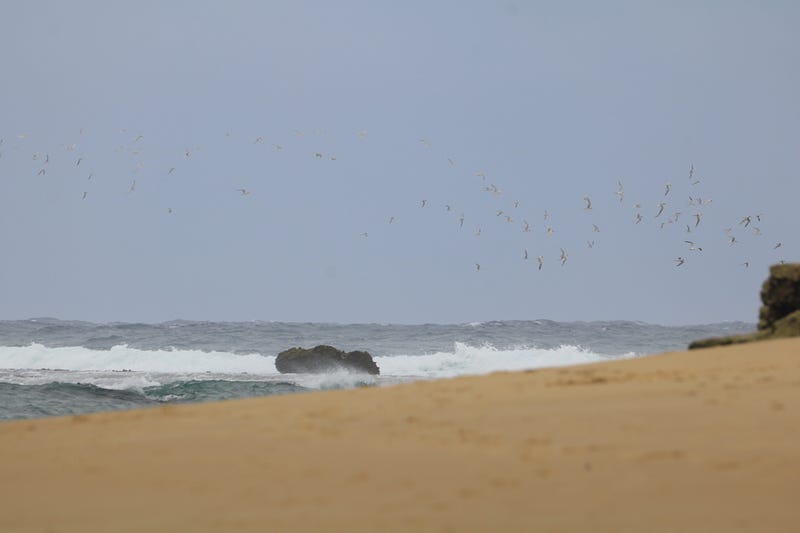
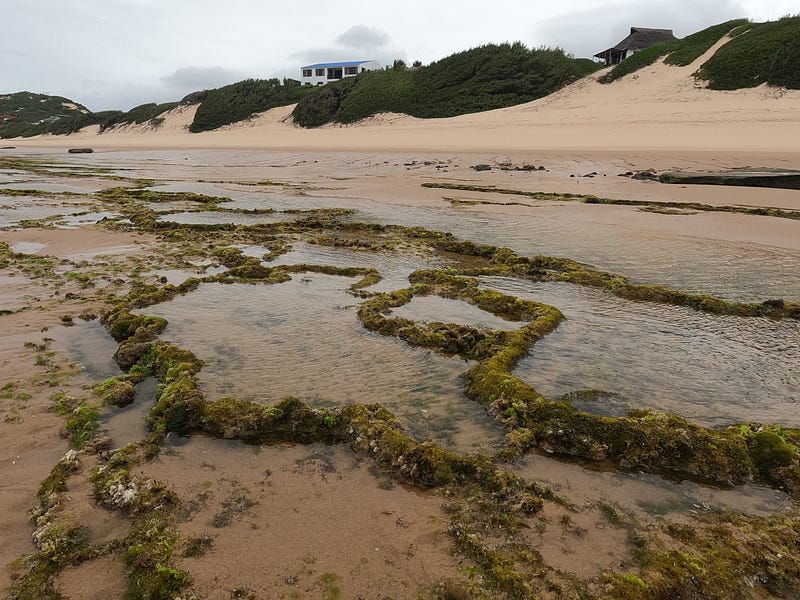
But before making a step around the corner, I took a moment and just watched the scene. Where the strong rip current had been flowing previously, just some shallow water was moving above the rocks. Birds were picking for crabs and other delicacies.
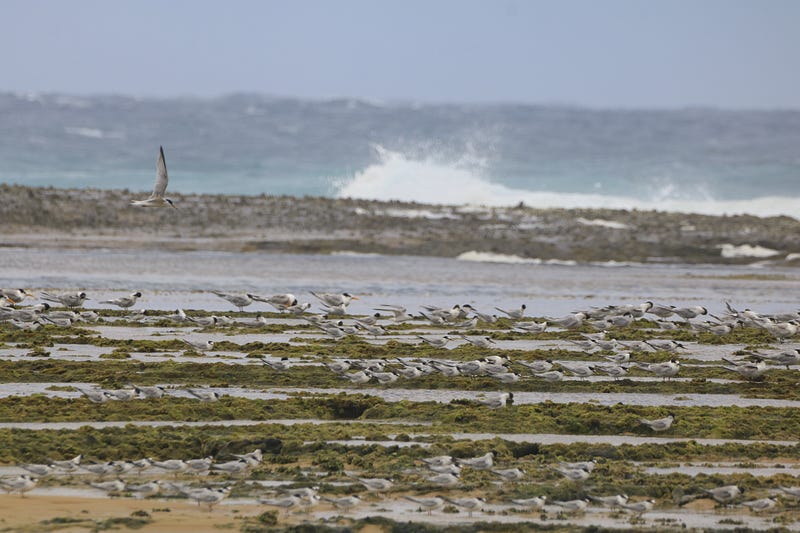
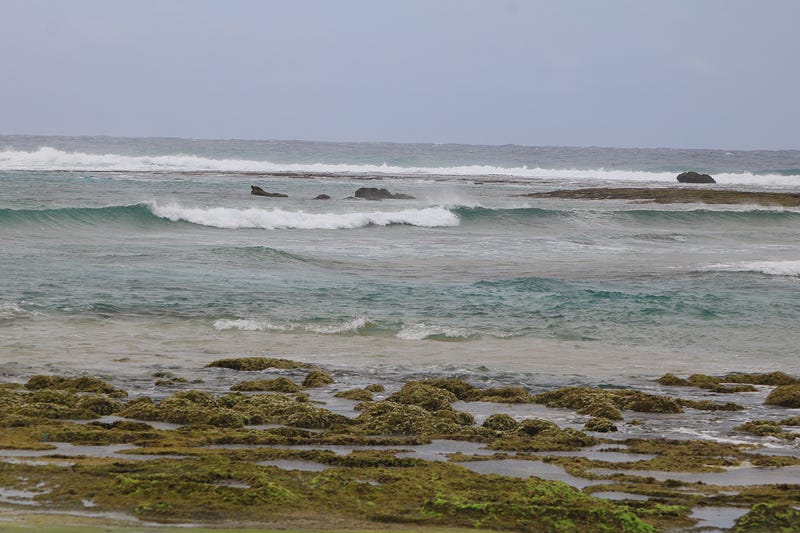
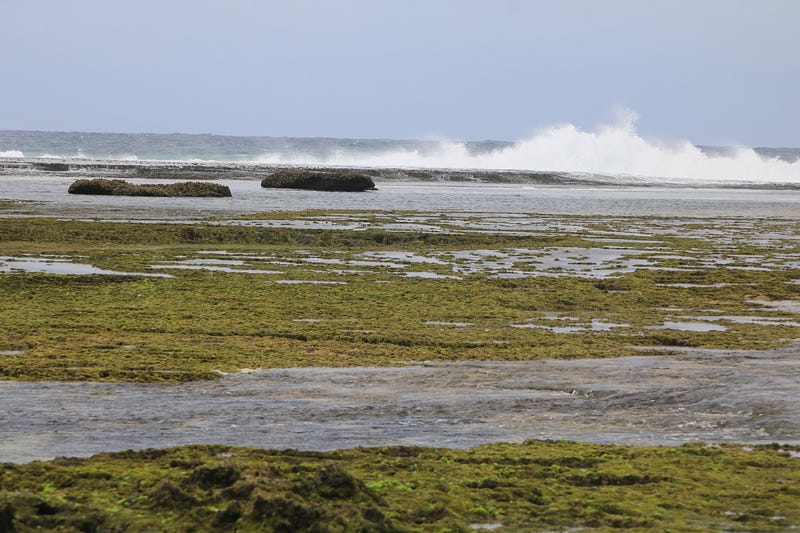
I didn’t just stop to embrace the beauty but to analyze the sea and safety of this place. I wanted to make sure it was safe for me to walk.
To my American readers and those of you who grew up with safety warnings and signs from your microwave to the small pond in the city’s park, this is a different terrain. This is Africa. Survival of the fittest doesn’t just count for animals but for humans too.
If you don’t walk around with open eyes and ears and use your common sense, you are quickly driven over, lost in the desert or ripped away by the floods or rough seas.
Warning signs like the one I saw yesterday are scarce in this part of the world. Some warnings are being transferred from mouth to mouth and if you missed them it’s on you to survive the day.
So, here I am, watching the massive waves breaking onto the beach while the wind is howling past me. Deciding I’ll be fine continuing to walk down the coastline as long as I keep my eyes open, I am now fascinated by the tide pools and shallow waters appearing at low tide.
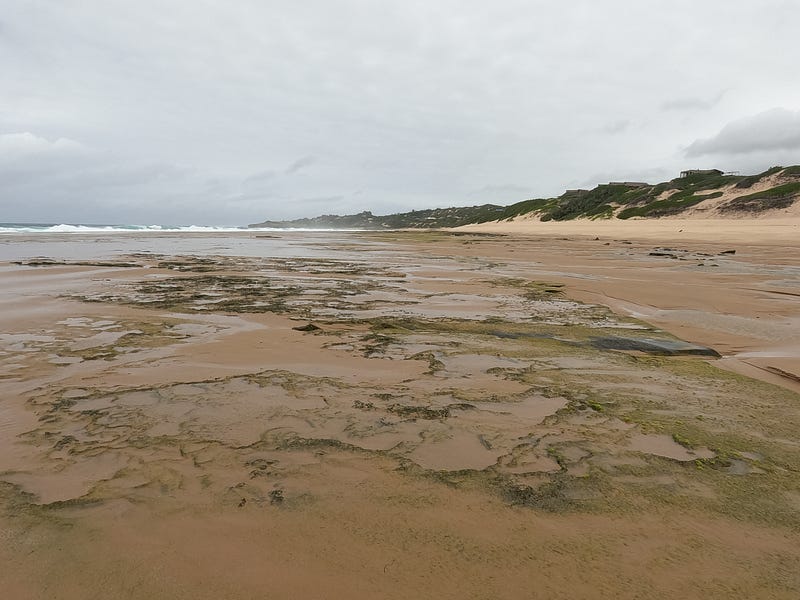
While I’d love to get closer to the birds, I do analyze the safest way to get there without drowning in the water with my expensive camera in hand.
The sand is hard at places and where just a little water is standing, I’m quickly sinking in up to my knees. Always having my eyes on the big beach breaks, I never let go of the feeling of being on alert.
Just like the birds. Approaching them upwind, they don’t only see me but smell me as well and take off in a huge swarm just to settle down a little further again.
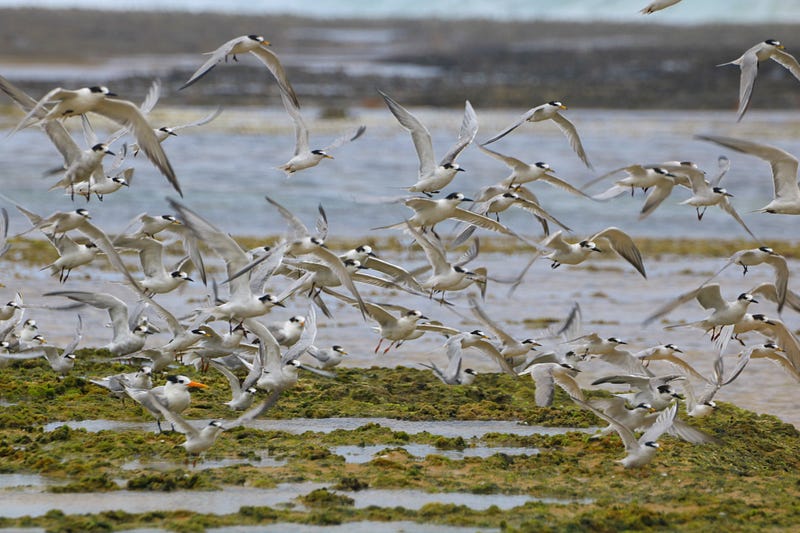
Not interested in disturbing their short feeding period during low tide, I decided to turn away and head further along this beach.
It’s when I start hearing the above-mentioned squeaking sound. It’s like when something is rubbing against each other and I can barely make it out with the roaring sound of the wind in my ears but it’s there. A vibration of the sand on the beach created by the strong winds. That is where this unique sound is coming from.
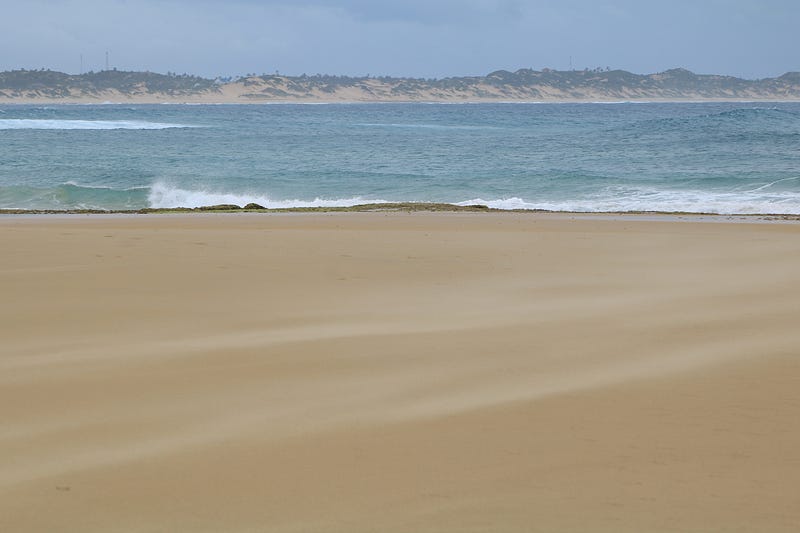
Praia de Tofo is a bustling tourist town on the coast of Mozambique during peak season. Now, it’s quiet and no more than a fishing village with vendors desperately trying to sell those few tourists in town anything from coconuts or cashews to fresh seafood and trips to the island.
The coastline is nothing but sand. Beach sand and dune sand. And where I’m walking now, a dune rises high to the right of me. Depending on how quickly the tide will come in, that will be my backup plan if I can’t walk on the ocean. It’s gonna be an exhausting one but climbing dunes in Namibia has taught me heaps about walking in sand.
With my camera in hand, I lift my eyes from the viewfinder every single time a wave comes crashing down onto the shore. Yes, I’m certainly alert. Looking down at my feet, I see suddenly lots of glass in the water. Wondering why and who would through glass bottles into the sea I quickly identify the shards of glass as vegetation.
Underwater vegetation.
There is plenty of it. Seaweed, coral, and something that looks like tiny bushes.
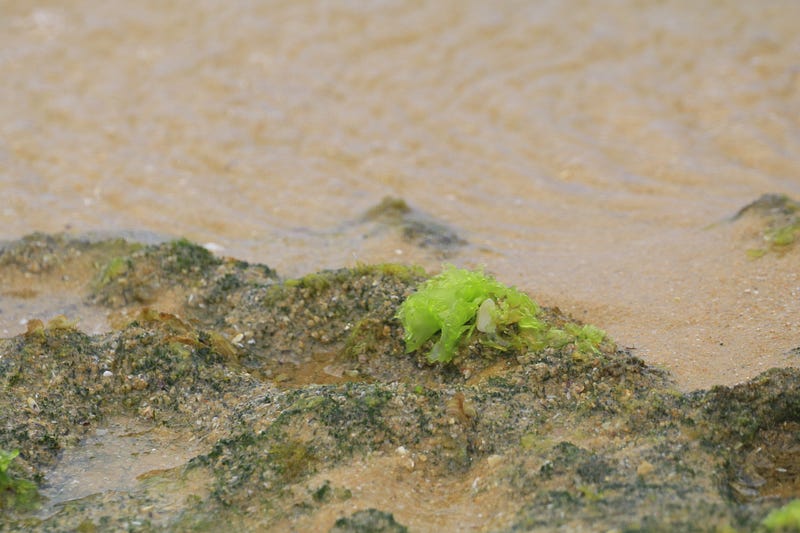
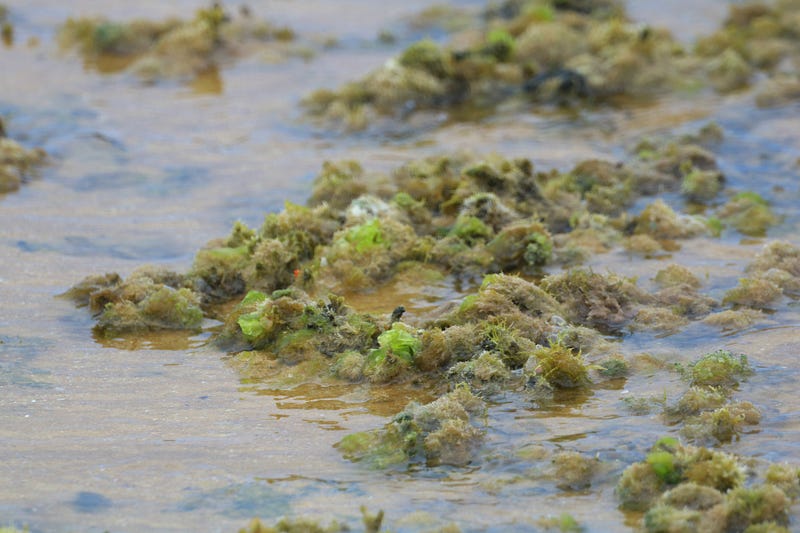
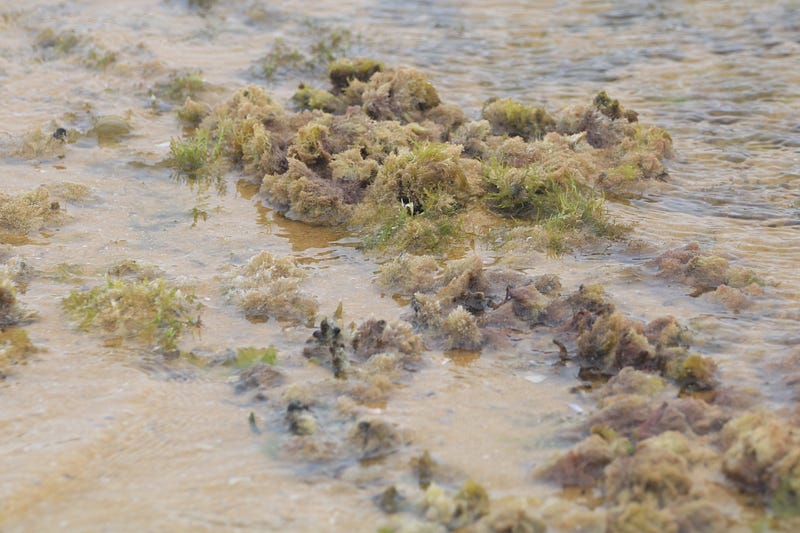
The low tide is revealing a lot of interesting and fascinating micro-terrains. Like these pools. Small tide pools surrounded by seaweed, mussels and coral.
One local guy with a shirt that has more holes than I can count is standing in the rough beach break searching for crabs in the water. The bare survival. Life is tough in Africa. These guys need to go out in any weather or there’s no food on the table tonight.
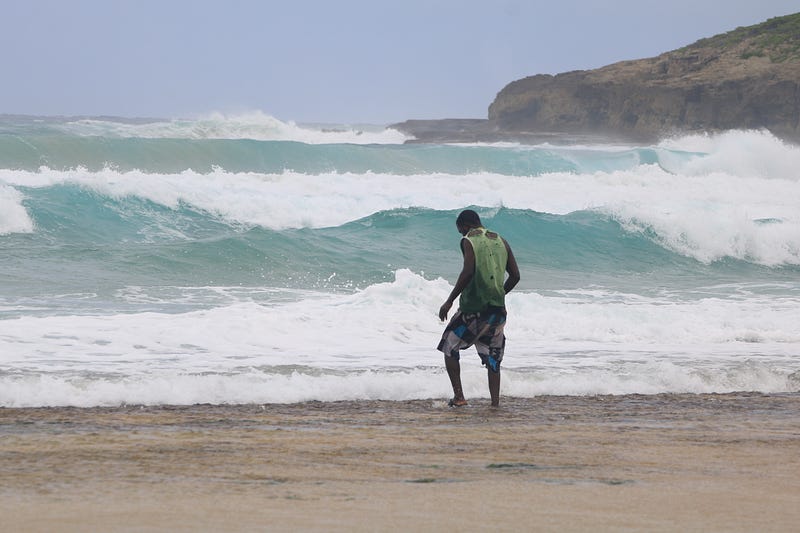
Meanwhile, I spot the first white person on the beach since embarking on this hike in the stormy weather. It must be a tourist as he’s going for a swim now in this incredibly dangerous corner of the beach. Within seconds he’s drifting 50 meters North.
I decide to move on as I’m not responsible for other people’s stupidity. And I’m certainly not risking my own life in these currents.
I now have to climb over some coral. A sign of how high the water level climbs during high tide. The coral is quite sharp and hurts on my feet but I’m too lazy to put on my flip-flops, doubting they would help at all.
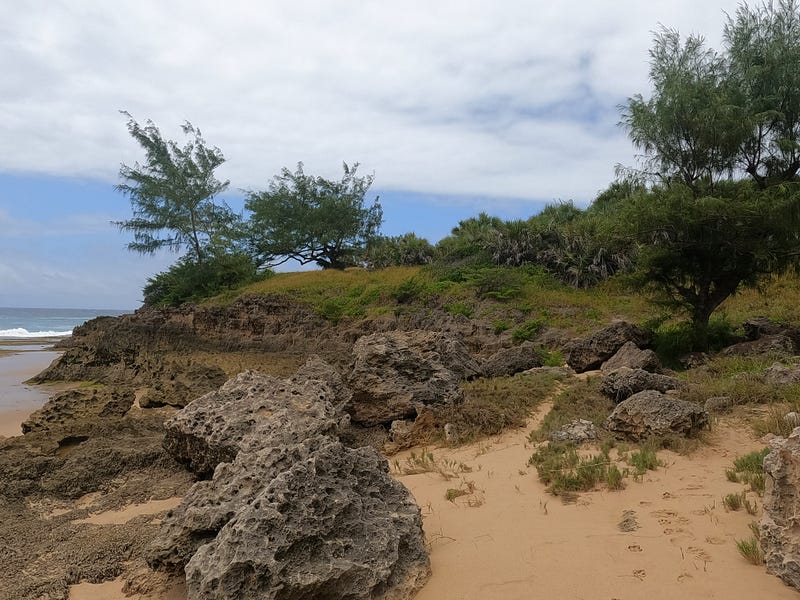
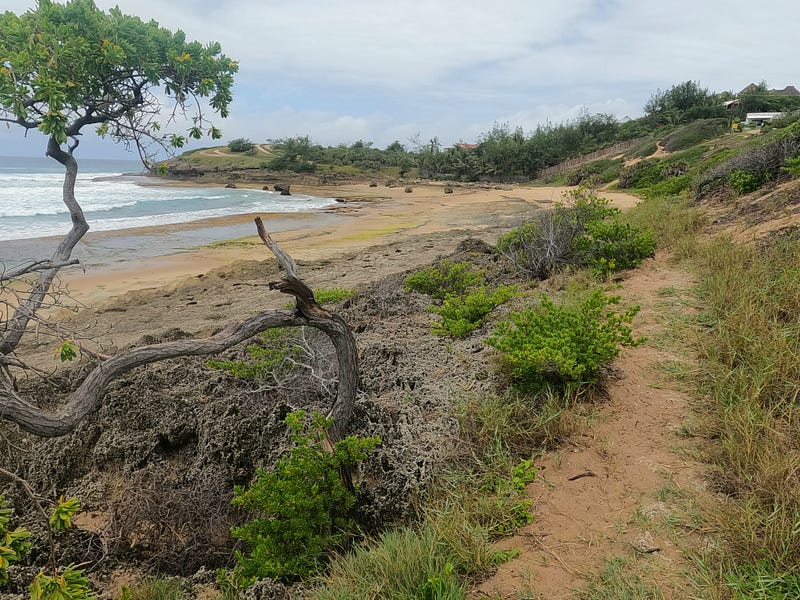
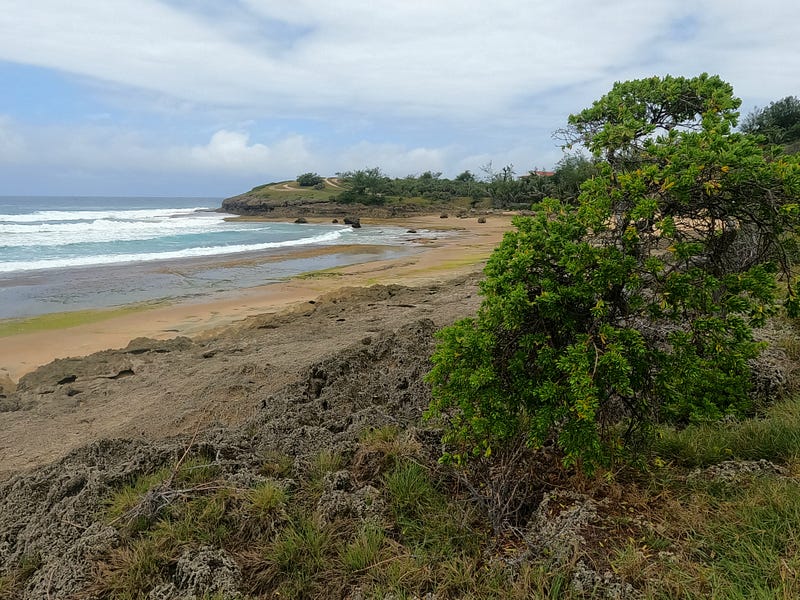
As I keep on walking, the weather gets better and better. Not that the wind is dying down but the sun’s out and the sky above my head is blue. I certainly did not expect that when leaving the cottage but once again I’m more than happy about applying sunscreen whenever I leave the camp.
After another short walk in the sand, I come to the point I had selected as my destination a while ago when I watched huge waves crashing down on the cliffs.
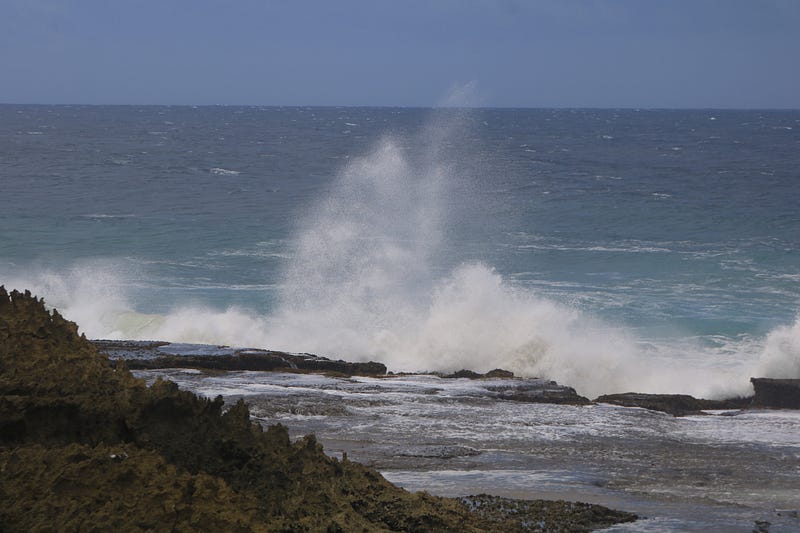
A small trail is leading up the hill covered in some vegetation. Time for me to put the flip-flops on now. Just around the bend, I do find some stairs hanging in the air, certainly leading into the water during high tide.
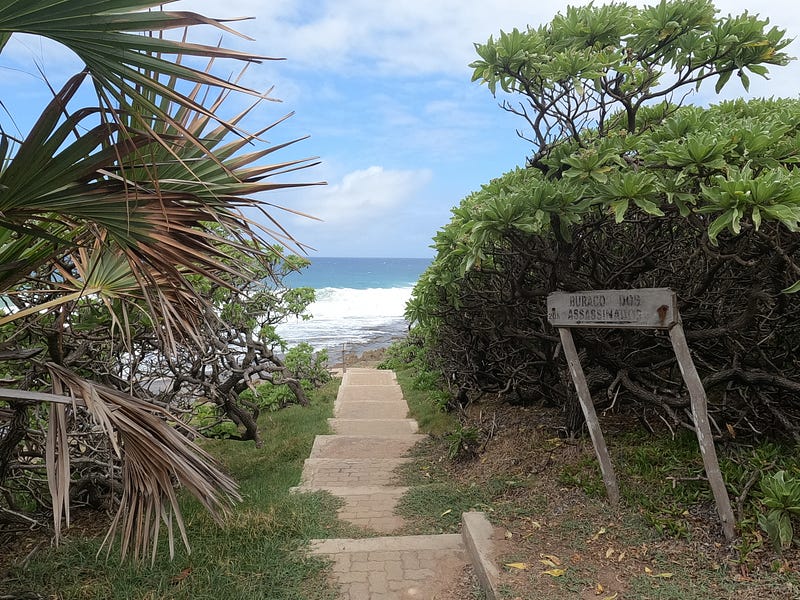
These stairs are the end of my walk and where I sit down for a while to watch the waves. The rocks are filled with trash and left-over skeletons of crabs. I guess locals come here to catch crabs and eat them on-site.
The waves are massive. Some of them carry glacier-blue water, some of them brown content. Those with sand are the ones breaking right on the beach.
And somewhere behind these waves, we had been in the water just a few days ago, swimming together with a whale shark. What a special corner of the world this is.
Spectacular, fascinating and dangerous.
If you're also fascinated by coastal terrains, please give Erika's article on Maui's hidden beaches and Michael's essay on coastal landscapes in the world a read.
This was a writing prompt response on Globetrotter's monthly challenge.
Terrains of the World.
Read the writing prompt and submission guidelines below:
Join my email list here if you would like to read more travel essays or sign up for the Medium membership to receive unlimited access to my and other writers’ stories out here (I will receive a commission fee in return).
WordPress | Shutterstock | Instagram | YouTube | Mailchimp | Amazon