
Travel, Photography
Where the Lava Meets the Sea
A hike along La Perouse Bay on Maui’s “Forbidden” coastline
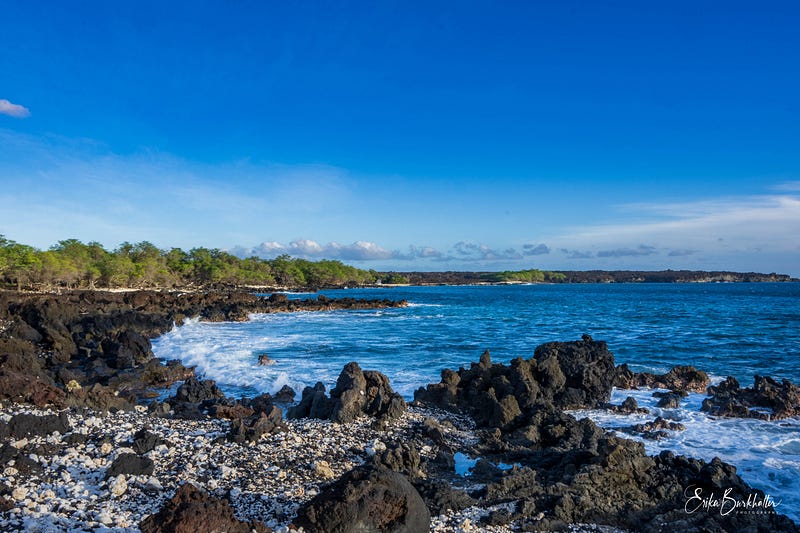
They sound like glass. And they can slice your feet with the slightest misstep. Forged from the bowels of the earth in Maui’s last volcanic eruption, in 1790, the “clinkers,” as the locals call them, dominate the coastline at the “end of the road” near Wailea, just past the world-famous Makena Beach, in Keoneʻōʻio (or La Perouse) Bay.
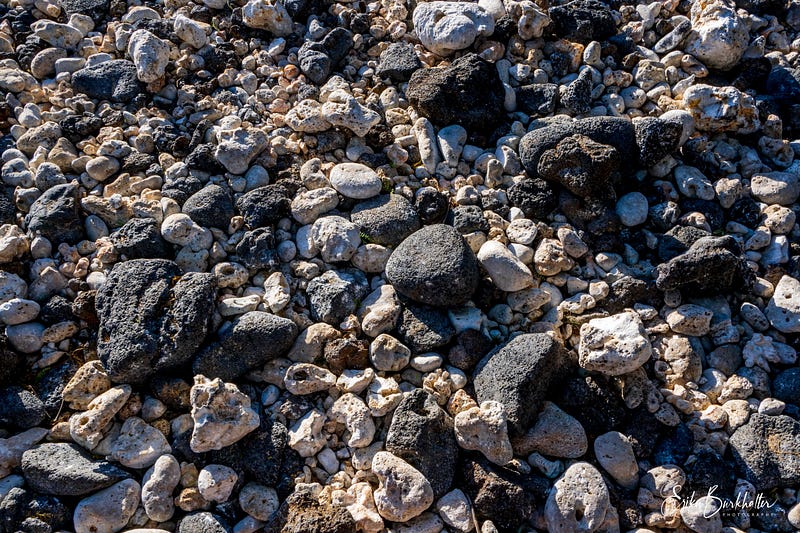
Scrambling over the porous fistfuls of cooled lava, we couldn’t help but hear the sonic difference between walking on crumbled coral, which the ocean has tossed up everywhere, versus the volcanic rock. One is chalk. And one sounds distinctly like shards of glass shifting and breaking beneath you. The melody of sounds is unique, and it lifts and blends with the constant crash of waves.
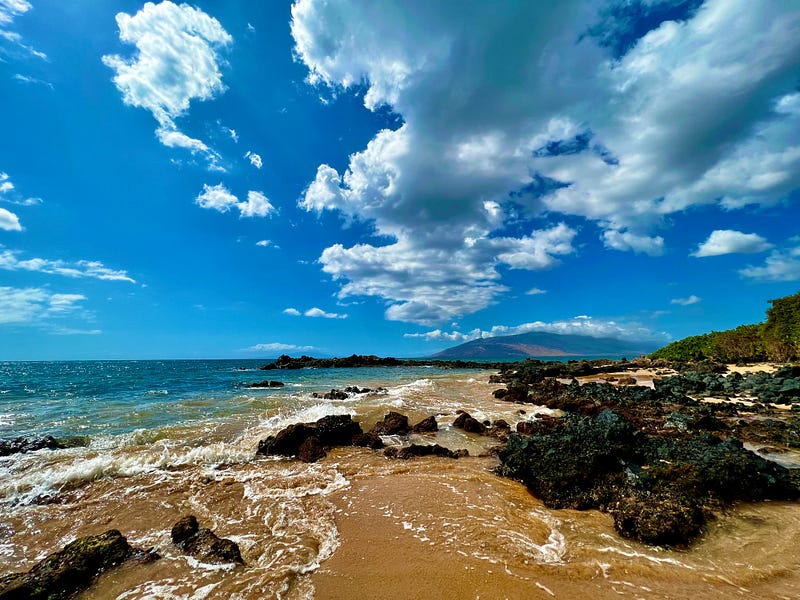
After a beach morning at our hotel, we had taken a picnic of our favorite fish tacos from Coconuts, in Kihei, just across the road to Kamaole Park II, which is also covered with porous hunks of lava. The call of the lifeguards warning people off of the lava flows is a constant background noise there — as is the constant defiance of the tourists, who all want to jump off of that spit of black rock (photo below) jutting out into the ocean.
But if you look at the photos, you can see the difference between the two beaches. One has sand and the other does not. One is swimmable. The other is much more treacherous.
After lunch, we hopped into the car and headed out of town, down Makena Alanui Road, which fairly quickly turns into a dirt road.
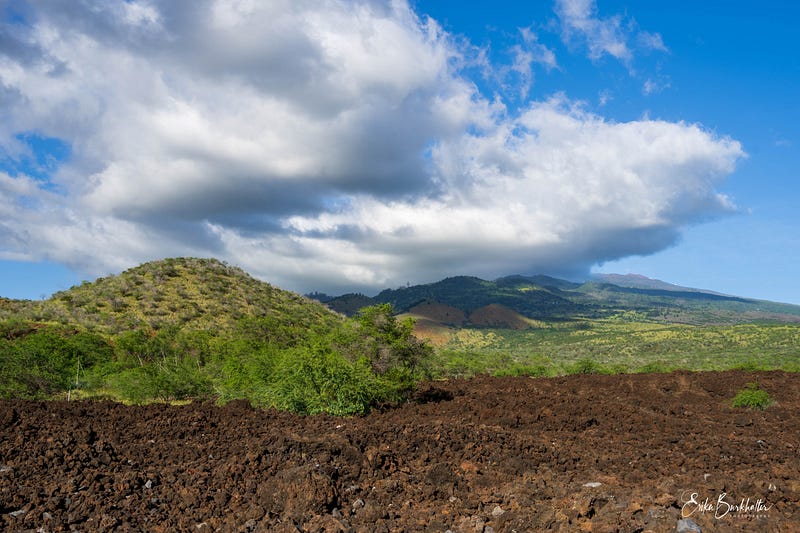
Just past mile marker 5.5, the landscape shifts from wind-tossed trees and idyllic homesites to wide open fields of lava. Here and there a patch of green clings to the inhospitable-looking terrain. It’s other-worldly.
At mile marker 7, there’s a small parking lot where the trailhead begins. The ocean glinted steely blue, and the afternoon showers had cleared, leaving in their wake an endless expanse of almost cloudless skies.
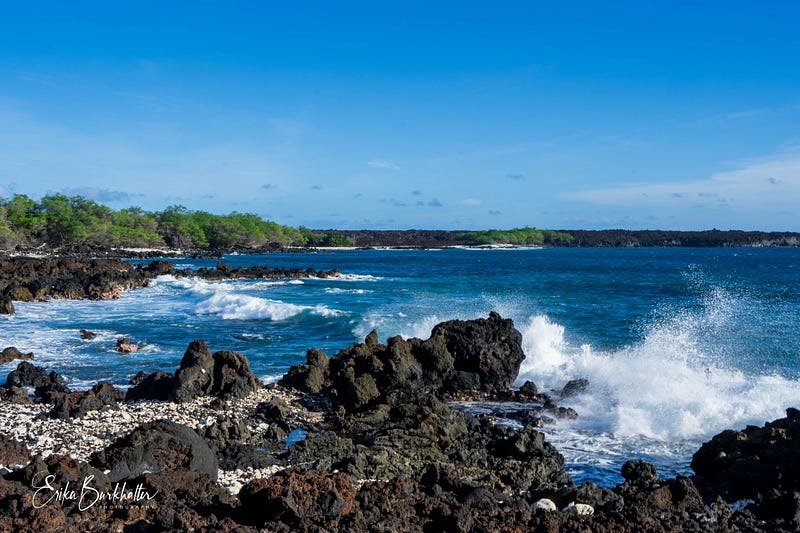
Here and there, the ocean tucks into the land and the water clears to glass.
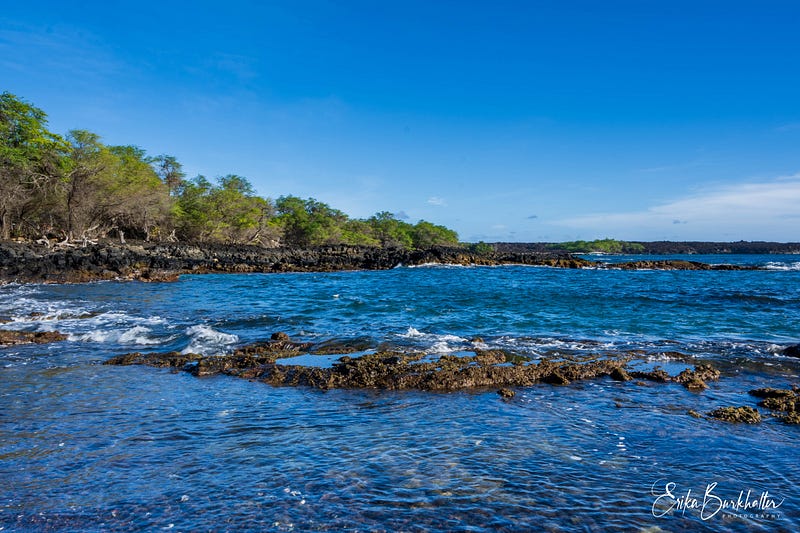
This type of lava is known as “a’a lava” and it is distinctly different from the pāhoehoe (or “unbroken”) lava which you can also find all over the Hawaiian Islands. A’a lava, a basaltic lava, gets it name from the Hawaiian word, which means “stony, rough lava” or “to burn or blaze.” In this type of flow, a dense core of pasty lava pushes the “clinkers” downhill and then buries them.
In contrast, the smooth, ropy-surfaced pāhoehoe lava flows form from a more viscous type of magma which congeals on the surface.
I had forgotten my hiking shoes at home, but I found a pair of thick-soled water shoes at a local shop and they ended up being perfect for this type of hike.
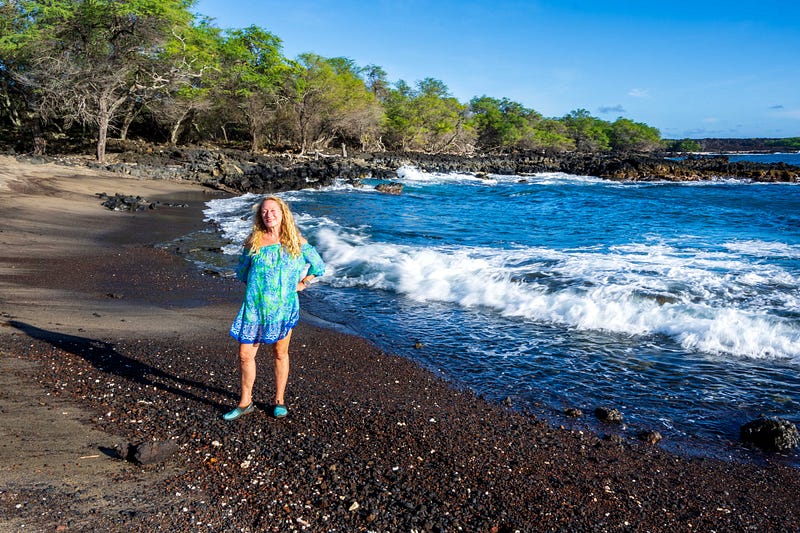
In the backs of those little bays, you can find a few black-sand beaches. The photographer in me just loved the etchings the waves left on the shore.
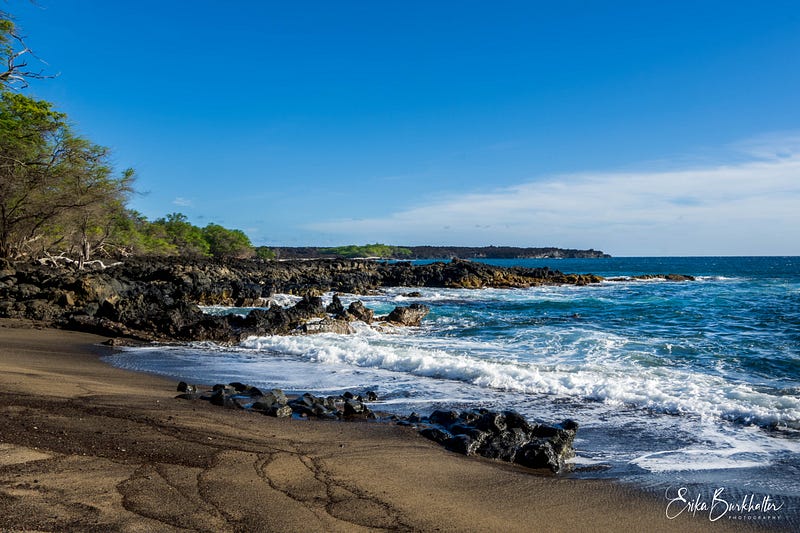
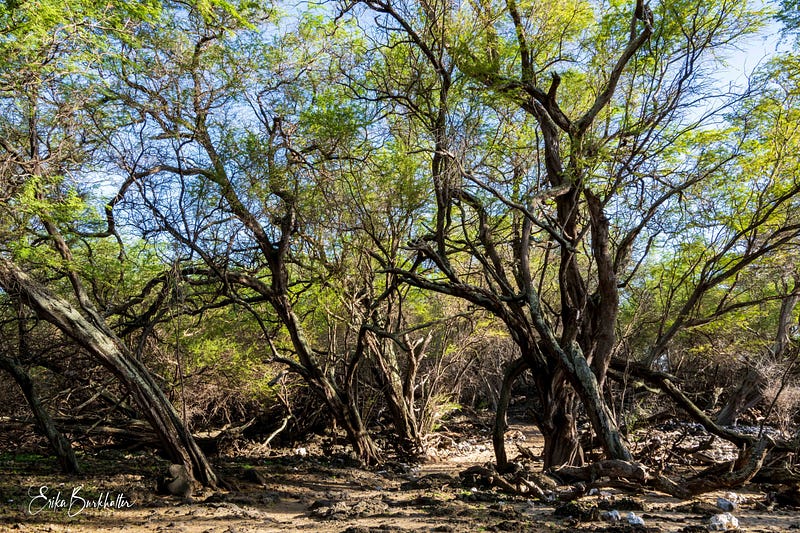
After a bit, the trail dips into an area forested with Kiawe trees, scraggly, twisted, barbed and wild kin to mesquite trees. Native to Peru, Bolivia, Ecuador and Chile, the first of these trees were brought to Hawaii in 1828 by Father Alexis Bachelot, who planted one in the heart of what is now Honolulu.
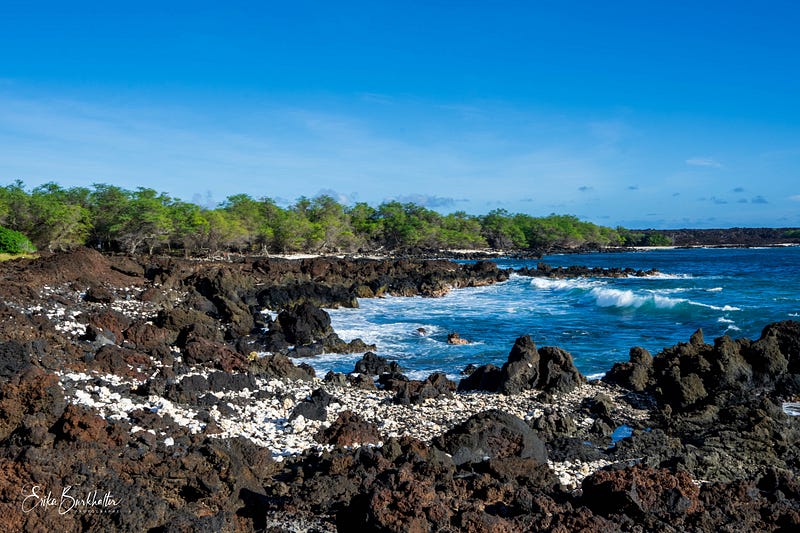
We rounded a corner on the trail and came across this jumbled pile of coral and lava rocks beneath a gnarled tree.
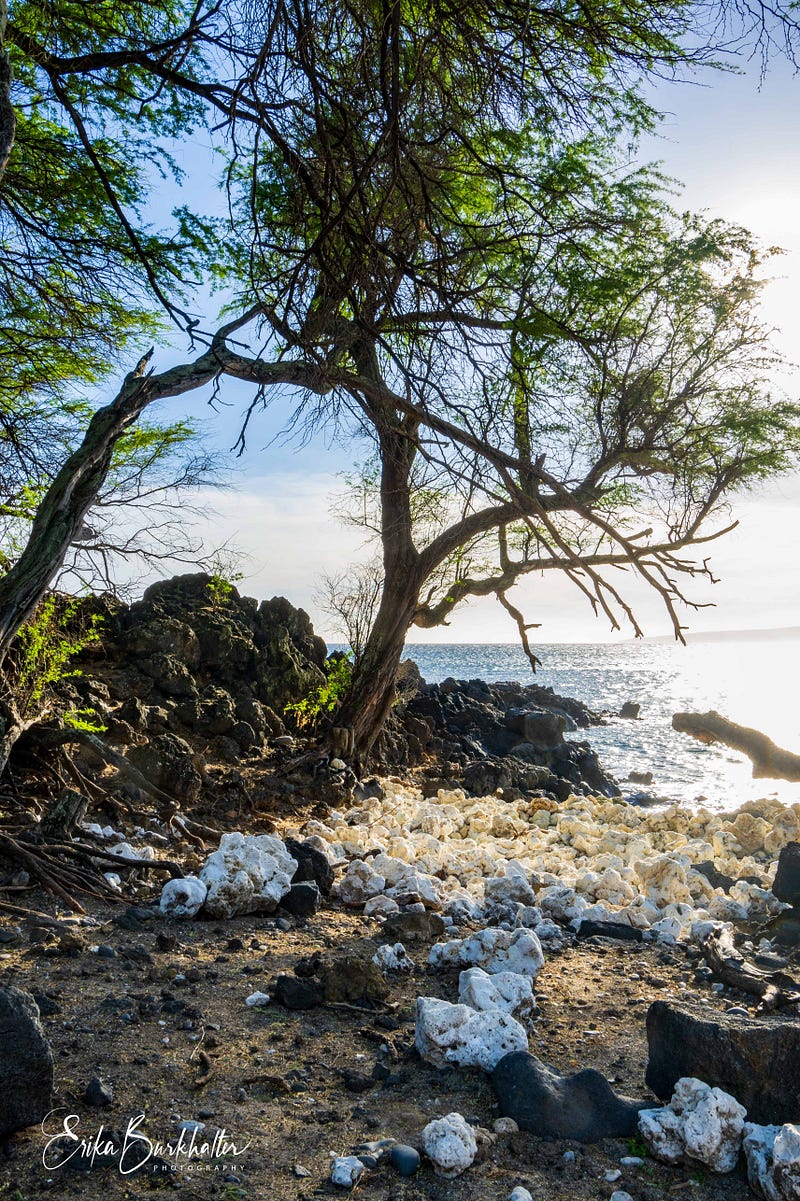
It’s such a pretty and stark combination — the white and black mingled together. And when you walk on it, you can really hear the different sounds that the two substances make.
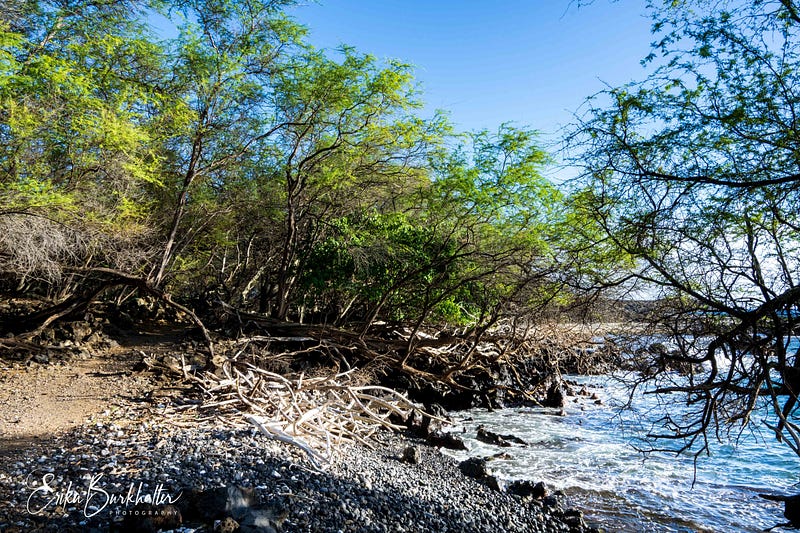
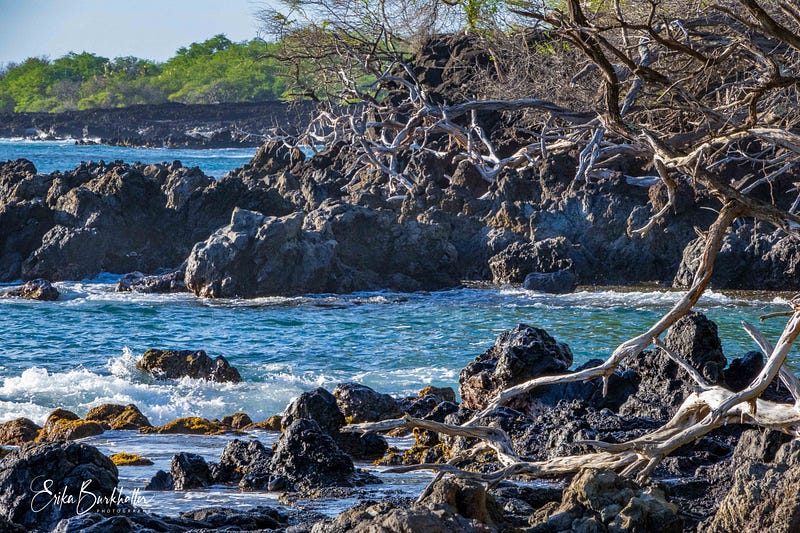
The trail winds along the coastline. Here and there, the skeletal remains of one of those Kiawe trees has been bleached by the sun and the waves.
In 1778, English explorer Captain James Cook became the first European to set foot on the Hawaiian Islands, although he did not make it to Maui. In 1785, King Louis XVI commissioned French naval officer and explorer Jean-Francois de Galaup Comte de Laperouse to finish work from James Cook’s work in discovering new lands and maritime routes, completing maps, establishing commercial trade, researching areas for potential territories, and collecting more scientific data. Jean-Francois brought with him soldiers, oceanographers, botanists, zoologists, geographers, artists and astronomers to aid in his findings.
When he arrived in this bay, he found four small villages, which he wrote about in his journals. After leaving Maui, he sailed to Alaska, California, China, Russian Kamchatka peninsula, the Philippines, Samoa, Tonga and Australia and then was never heard from again.
In 1790, the Haleakalā volcano erupted, and the coastline was decimated by the lava flow. Here and there, you can still see the remains of what look like footings for stone buildings.
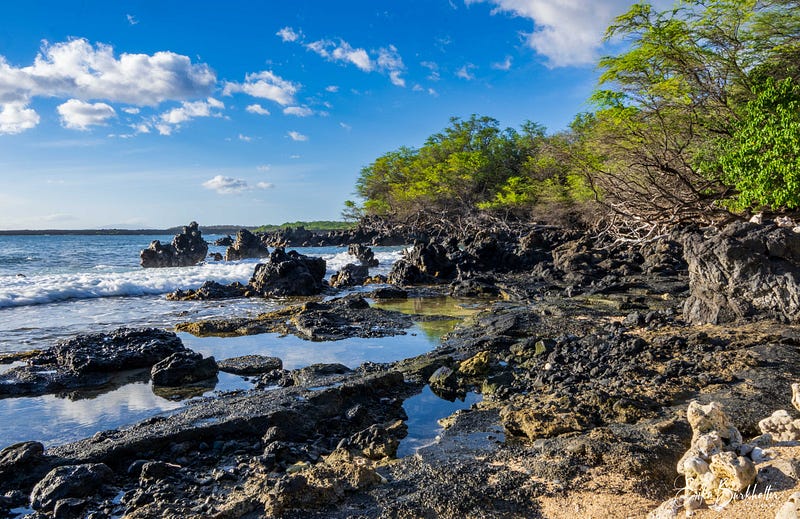
After a couple of miles, we reached a mostly white-sand beach. But the sharp volcanic rocks still punctuated the shoreline.
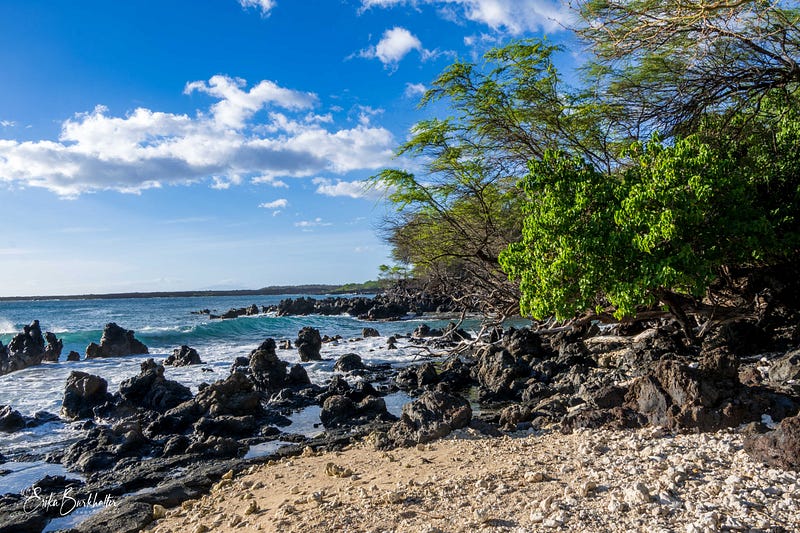
And you can see that the lava is right under the waves.
The sun had begun to sink and the backlighting on the waves turned them into tubes of turquise.
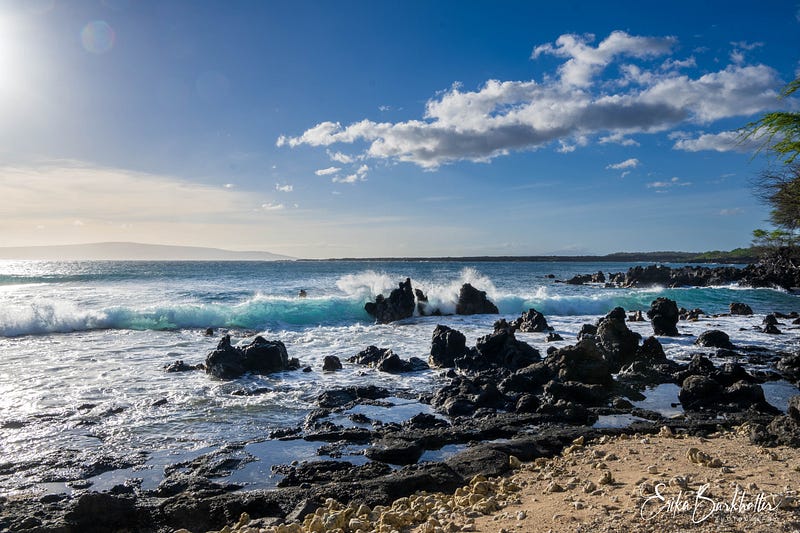
We decided that this was a good place to turn around. There was a bottle of wine and a nice sunset waiting for us back at the beach at our hotel and we didn’t want to get stuck out in the lava field after dark.
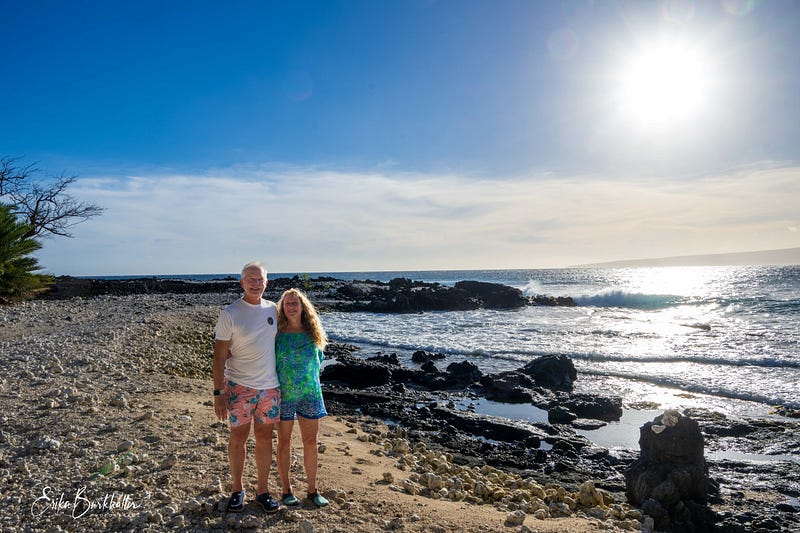
But first, I had to snap a few photos of this very photogenic spot.
I was amazed to see this lone monarch butterfly all the way out here. There are several of them on Maui and I do wonder about the treacherous journey they undertook to get here.
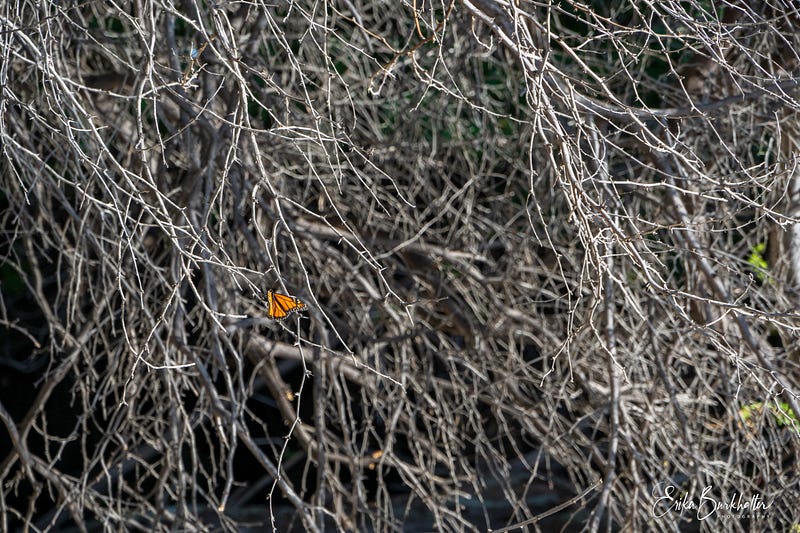
This little cove looked like someplace a mermaid might crawl out of.
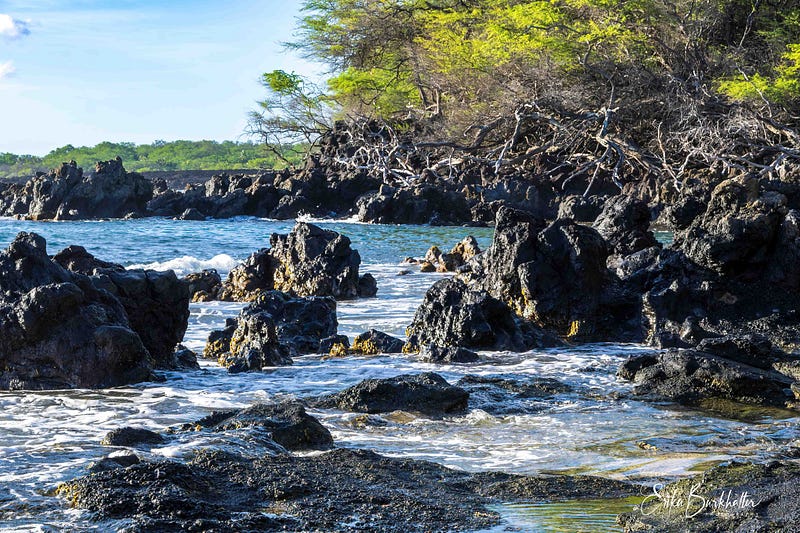
On the hike back, we paused at the same place we did on the way in. The shadows had gathered on the rocks already and the sea looked different than it did a couple of hours earlier, a bit more indigo.
And the clouds had begun to amass over the hills, as they do each evening.
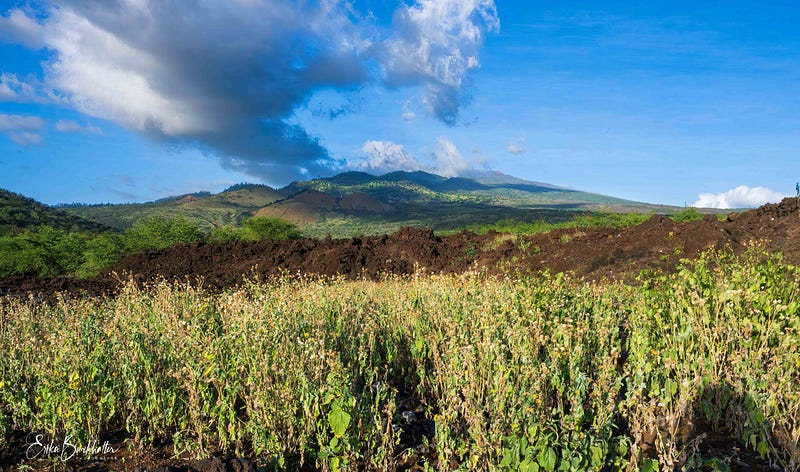
We thoroughly enjoyed our scramble over the volcanic fields back into Maui’s “Forbidden Coastline.” It felt like a little venture into a magical land, unseen by most. If you ever travel to these shores, it is well worth the drive to see it.
Thank you to the editors at Globetrotters (JoAnn Ryan, Anne Bonfert, Jillian Amatt - Artistic Voyages, Adrienne Beaumont, Michele Maize) for this month’s challenge on terrains of the world:
I have quite enjoyed reading some of the other stories from this challenge. In particular, I had so much fun revisiting Norway with Keith Kelley , who covered some of the same ground that we did when we were there. I think I am going to have to pull out some photos from our trip in 2019:
I also always enjoy Kim Baker’s articles:
And Ronald Smit always has such lovely photos to share:
Erika Burkhalter is a yogi, neurophilosopher, cat-mom, photographer, and lover of travel and nature, spreading her love and amazement for Mother Earth’s glories, one photo, poem or story at a time. (MS Neuropsychology, MA Yoga Studies).
You might also enjoy:
If you enjoyed this piece, you might consider subscribing to my stories. You’ll get an alert whenever a story gets published. While I do normally post my stories with free “friends” links on social media, if you enjoy reading on medium, you can help the many talented writers here by joining. It helps to support the arts and to keep us writing!
And, because I’ve had a few people asking lately, if you’re ever interested in purchasing a photo, just leave me a note.
Photos and story ©Erika Burkhalter. All rights reserved.


