
Where Have All the ‘Good Behaving’ Students Gone?
A look at alternative approaches (and free resources) to promoting good behavior among middle school students.
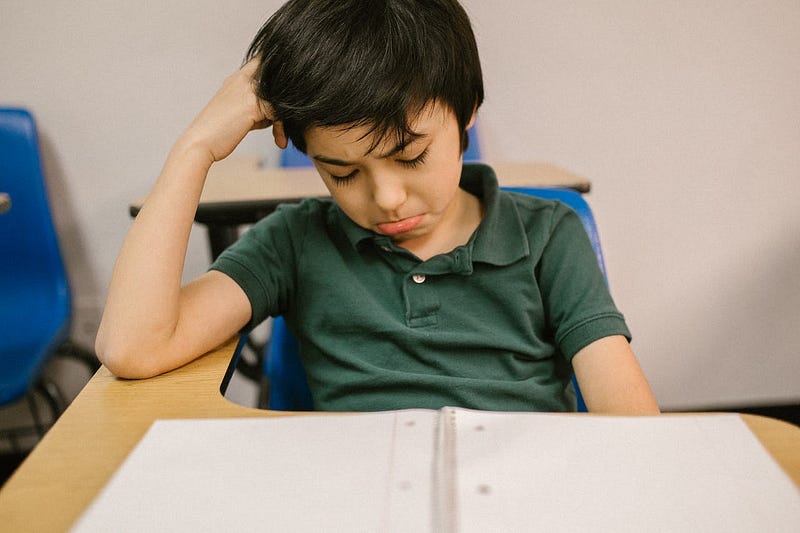
In the past, serve discipline measures, including certain forms of physical punishment existed to manage student behavior in the classroom.
Let me share my story.
I grew up in the age when physical punishment was allowed in schools in Canada.
I was in the second grade, so the year was 1983. During library circle time, our librarian was reading a book to the class, and I was chewing gum.
The librarian saw me, asked if I was chewing gum, and awaited my response.
I said no. She gave me ‘the raised eyebrow’ look, but carried on reading, and I carried on enjoying my gum.
After giving me a second glance, she paused reading to the class and asked again if I was chewing gum, this time with a harsher voice. Again, I said no…and then that’s when it happened.
She grabbed me by the hand, lifted me up, spun me around in front of everyone and proceeded to punish my bottom three times.
Then she told me to spit out the gum.
Needless to say, I never chewed gum in class ever again.
But, not to worry, I still love gum.
In most societies around the globe, teachers may no longer use physical punishment as part of behavior management in the classroom.
And that’s a good thing.
However, with any good must come bad, and the outcome of removing physical punishment is that some issues with respect, communication, and motivation between teachers and students may come to the surface.
In my years of teaching, I have taught on both sides of the Atlantic, and the issues related to behavior management, for me, and in today’s society, seem to have a greater impact in North America.
Therefore, throughout the rest of this article I address the issues facing teachers and students in North American classrooms.
Issues that Impact on Behavior Management
In the video below, I highlight issues that can impact behavior management in the classroom and drive good teachers from the classroom.
As I mentioned earlier, the issues that can impact behavior management are tied to respect, communication, and motivation among students and teachers in the classroom.
Now I offer my approaches and free resources to help with promoting good behavior in the classroom.
Note: the approaches I offer here are tied to classroom management that should be worked on from day one in the classroom. No viable approach is effective with students if it is not given context and time to mature.
1. Develop the Connection between Student Mental Health & Learning
In education today, mental health plays an important role in finding alternate methods to maintain positive behavior and in forming proper discipline strategies in the classroom.
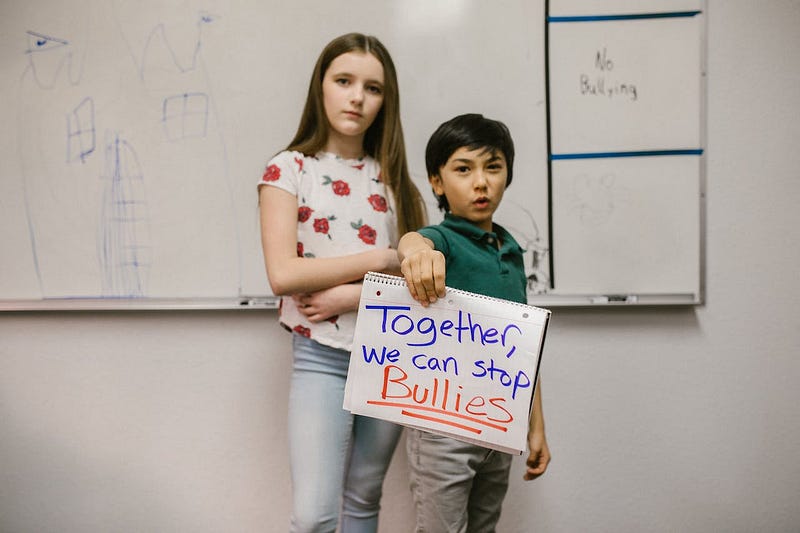
Discussions between teachers and students need to be productive and allowed in such a way so that students don’t feel embarrassed to discuss their emotions in the class.
Teachers should then consider using methods of differentiation to help students work at their own level when it comes to emotions.
2. Approach Sensitive Topics In Education the Right Way
Changes in behavior in education in recent times have become closely connected to changes in societal expectations.
Teachers are now finding themselves in the position of teaching in competition with what students are seeing in society through the medium of the Internet.
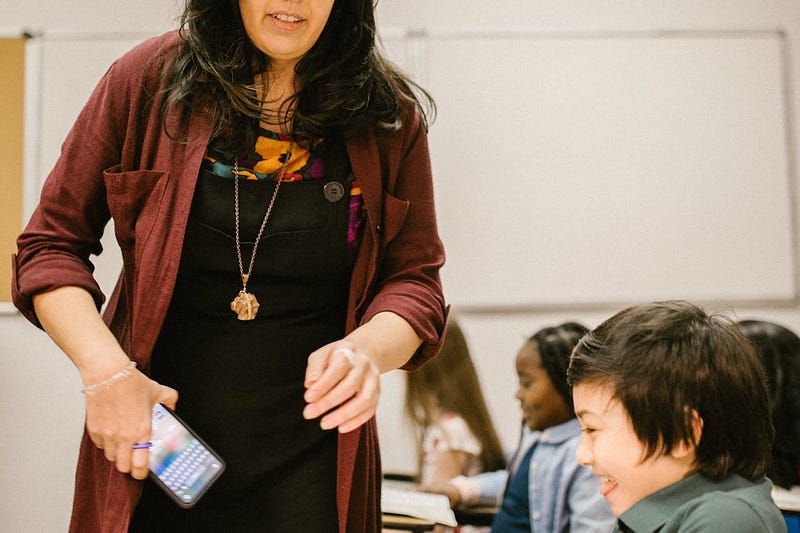
If the topic is sensitive in nature, or prone to cause embarrassment for the teacher or student or both, it is important to begin by stating that it is a sensitive issue and that sometimes it needs to be talked about or written about in order to overcome any problems it may bring to the classroom.
One big debate is whether mobile phones should be allowed in the classroom — a debate for another day!
3. Utilize the Connection between Teacher Intuition and Student Behavior
Teacher intuition plays an important role in creating good student behavior in the classroom.
Teachers who understand how to use their intuition for good in the classroom will have students who are generally well-behaved since they feel they are in the presence of a person who cares for them.
Intuition helps teachers stay proactive in the classroom, rather than having to be reactive when a negative situation arises in the classroom.
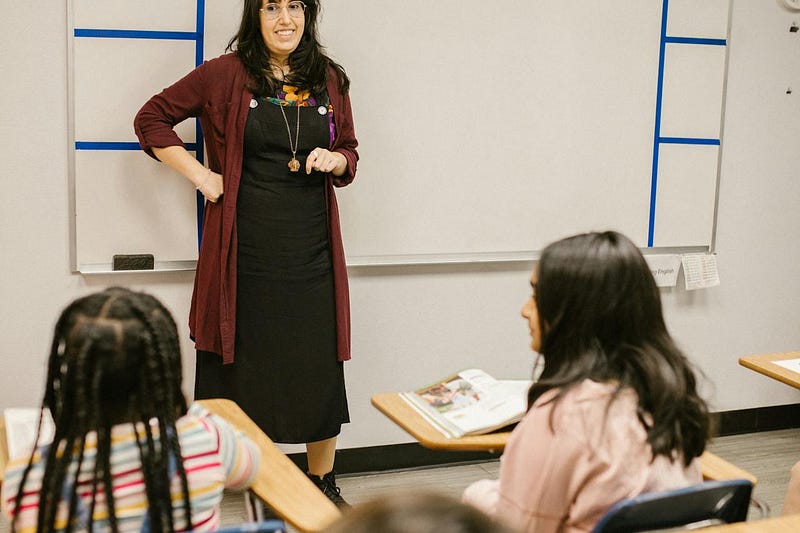
Witnessing students' behavior change in the classroom before it bubbles over, can help teachers diffuse the situation before it gets worse.
However, there may be times when, despite teachers’ best efforts, students may find comfort in expressing anger, and may not respect what the teacher has to say.
In this case, it is important teachers take the silent approach, deep breath, but stay firm with the students in reminding them to listen and reflect in order to get students’ back on their side.
It has to be said though, that if students feel that the teacher has been using their intuition since the beginning of the school year, then the student who experiences a need to get angry just needs to look at the teacher to have that teacher know that something isn’t right.
If teacher has been ignoring student emotions all year long, then that teacher’s intuition in one moment won’t change a thing.
4. Use Resources for Classroom Management
I provide free resources to help teachers deal with behavior issues in the classroom. The resource I offer below works best for students in grades 4 and older.
Download your free copy of my behavior reflection sheet and get a BONUS homework reflection sheet to use in the classroom.
4.1 Behavior Reflection Sheet
This sheet has students first recognize the wrong behavior that got them the sheet in the first place.
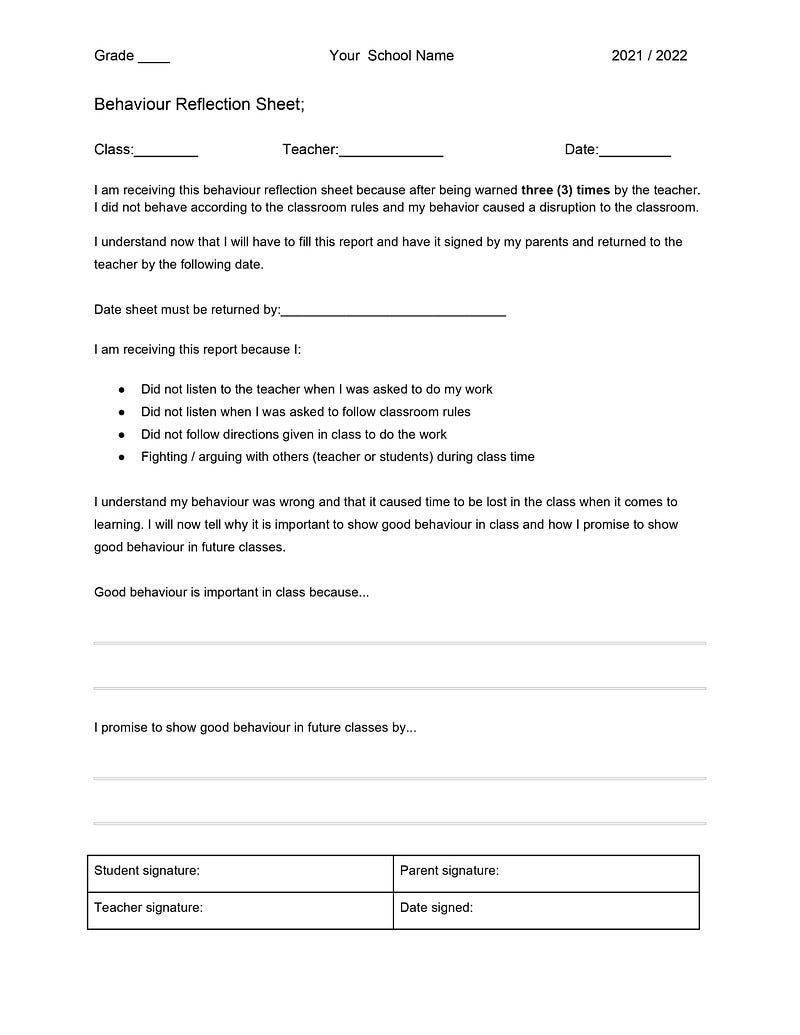
It then asks the student to reflect on why good behavior is important and how they will show good behavior moving forward.
Click here to download this sheet in our digital products shop!
4.2 Homework Reflection Sheet
This sheet has the student first explain their lack of responsibility that got them the sheet in the first place.
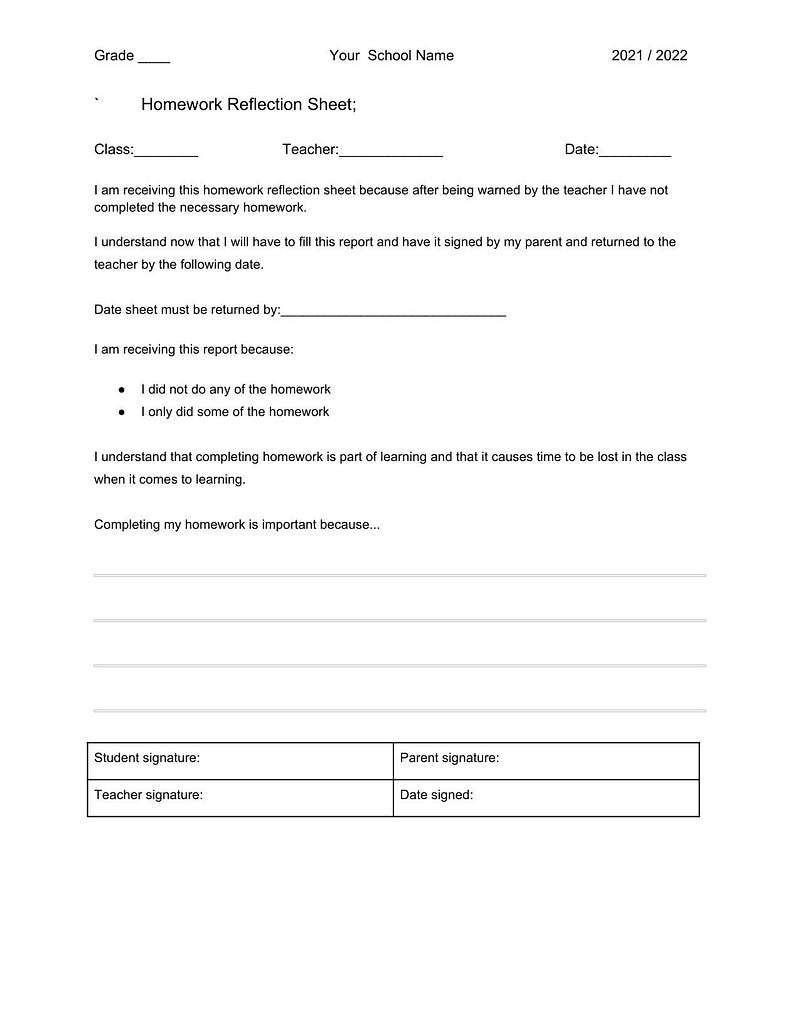
It then asks the student to reflect on why homework is important and how they will recognize their responsibility moving forward.
Click here to download this sheet in my TpT shop!
Final Thoughts…
Behavior and discipline strategies are really just ways teachers and students can form relationships that will be healthy and supportive during their time together.
Let us remember that we are all individuals with important things to offer each other in this life.
If we seek to find the best in others and not let others who seek to find fault in us win, then perhaps we can share in behaviors that are meant to keep problems away.
For more on the benefits to mental health through physical health in education, click here.
If you enjoyed reading this article, please consider reading my other articles on the connections between student mental health, discipline, and motivation.


