
What Is Responsible for Your State of Flow?
Your subconscious.
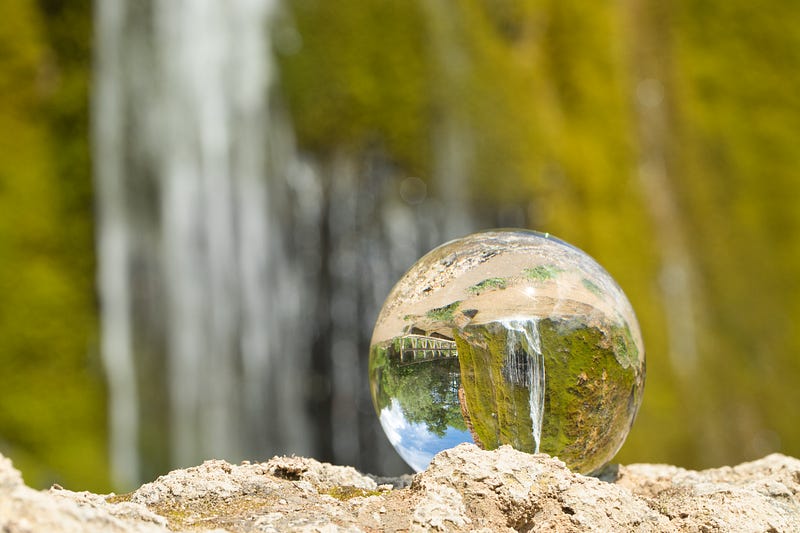
The flow and the subconscious
You probably have experienced the exciting state of flow.
“There is virtually nothing as engaging as this state of working at the very limits of your ability — or what both game designers and psychologists call ‘flow.’ When you are in a state of flow, you want to stay there: both quitting and winning are equally unsatisfying outcomes.” — Jane McGonigal, Reality is Broken: Why Games Make Us Better and How They Can Change the World
Jane McGonigal quotes in her best-selling book Reality is Broken: Why Games Make Us Better and How They Can Change the World the psychologist Mihály Csíkszentmihályi and reports him to define the term “flow” as the following:
“the satisfying, exhilarating feeling of creative accomplishment and heightened functioning.”
McGonigal also writes that Csíkszentmihályi found the state of flow first and foremost in games.
“His favorite examples of flow-inducing activities were chess, basketball, rock climbing, and partner dancing: all challenging endeavors with a clear goal, well-established rules for action, and the potential for increased difficulty and improvement over time. Most importantly, flow activities were done for pure enjoyment rather than for status, money, or obligation.” — Jane McGonigal, Reality is Broken: Why Games Make Us Better and How They Can Change the World
In games, we act intuitively, also because there is often a time limit, which is imposed either by the literal timer or countdown or by the impatient co-players waiting for you to make your draw. There is no time to formulate complex thoughts and philosophize on the next move. You simply go with your gut.
Thus, when you are in the state of flow, you tap into your subconscious, which is:
“the part of your mind that notices and remembers information when you are not actively trying to do so, and influences your behaviour even though you do not realize it.” — Cambridge Dictionary
How to tap into your subconscious
I discovered that turning our lives into fun games deliberately and treating whatever we are up to as games, of which we are both designers and players, can bring us into the flow even during the activities we never thought possible to enjoy.
Engaging into each moment with curiosity and being open to experience fun — but not to expect it — is the key.
Thank you for reading! If you enjoyed this article, then in addition to those quoted above, you might also enjoy these two:
P.S. To stay in touch, join my e-mail list, Optimist Writer.
About the author:
Victoria is a writer, instructor, and consultant with a background in semiconductor physics, electronic engineering (with a Ph.D.), information technology, and business development. While being a non-gamer, Victoria came up with the term Self-Gamification, a gameful and playful self-help approach bringing anthropology, kaizen, and gamification-based methods together to increase the quality of life. She approaches all areas of her life this way. Due to the fun she has, while turning everything in her life into games, she intends never to stop designing and playing them.