
How to Reward Yourself When You Turn Your Life into Fun Games
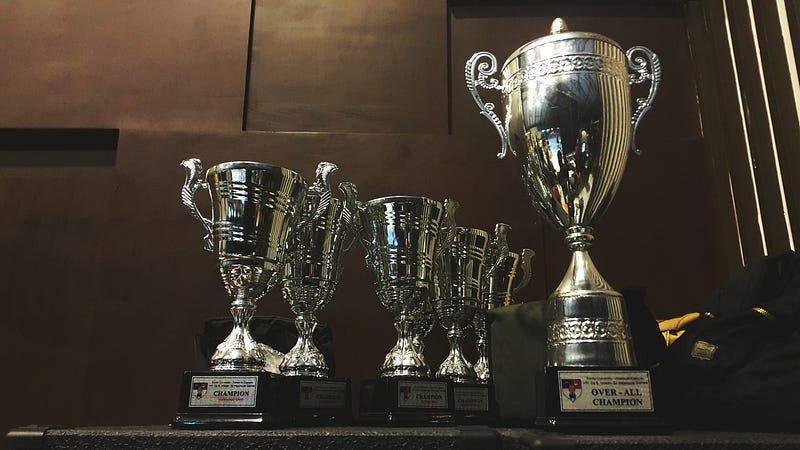
Rewards are one of the key components of a successful game activity; if there isn’t a quantifiable advantage to doing something, the brain will often discard it out of hand. — Raph Koster, Theory of Fun for Game Design
What is a reward?
Many consider success the reward for what they do in life. And if fun is a measuring tool for success, then you could see it not only as a prerequisite and a tool for your Self-Gamification but also as its reward.
Self-Gamification is the art of turning our own lives into games. It is the application of game design elements to our own lives. Self-Gamification is a self-help approach showing us how to be playful and gameful, and bringing anthropology, kaizen, and gamification-based methods together. In Self-Gamification, we are both the designers and the players of our self-motivational games. Self-Gamification is about creating uplifting emotions for ourselves and keeping ourselves “happily entertained” with whatever comes our way in our lives. Thus, Self-Gamification equals approaching life gamefully.
Let’s talk about rewards. It’s always fun to get rewards. Isn’t it?
Yes, but it depends on what the reward is. So what should it be?
According to Oxford Dictionaries, a reward is:
“A thing given in recognition of service, effort, or achievement.”
I don’t believe any person on earth is without yearning (or hasn’t in the past) for rewards — either material things or in the form of moral recognition and appreciation — for their efforts, both in real life and in games.
Why are points enough?
When I share with others the fact that I turn my life into games, people often ask me how I reward myself. When I tell them about the simple scoring system I use, they ask me “Is that all?”
The first time I was asked this question and looked confused in reply, my friend clarified and gave a few examples of what she does: such as eating a small piece of chocolate or buying herself something upon completion of a big task.
I’ve heard and read of similar scenarios many times. In “Chapter Six: Bestow Small Rewards,” of his book One Small Step Can Change Your Life: The Kaizen Way, Robert Maurer gives many examples of small rewards and experiences used by people who apply kaizen on a personal level.
After getting the question, “Why are points enough for you?”, I stopped and contemplated. Why were they? Why didn’t I see the occasional espresso I make for myself during the day as a reward for project work?
A direct answer was the fact that I considered this, and other similar “rewards,” as activities in themselves, for which I’d give myself additional points. I didn’t see them as indulgences as I had before turning my life into games. Instead, I saw them as games in themselves.
After more thought, I realized something else. Were I to reward myself with material things that cost money (like a trip to the Bahamas or the cinema), I would no longer regard my projects as a game I was playing for fun, but as something challenging that required effort.
The trick was to see what I was doing as a fun game, not something to prove I was worthwhile. If I thought the points were no longer enough and I needed a bigger reward, I would be adding drama to the task at hand, and it would stop being a game.
I realized that when we agree to play a board or online game, we don’t usually expect a material reward.
I am consciously omitting gambling here, since the stress factor excludes such games from the definitions I use for Self-Gamification, and makes them another type of game altogether. (Go to SuperBetter: How a Gameful Life Can Make You Stronger, Happier, Braver and More Resilient by Jane McGonigal on pp. 84–87 to find out more about differences between beneficial and harmful addiction effects of games, as well as origins of harmful addictions in general.)
So, when we agree to play a board game, for example, with our children or our partner or a friend, all we want to do is to score more or less than they do, depending on the aim of the game.
This helped me realize why points are enough for me as a reward — because I experience my day as if it was a game. It doesn’t mean that I don’t concentrate on the task at hand, but I increasingly lose the desire to just “get things done” and to think poorly of the assignments I have to address. The enjoyment starts to prevail and with that — as an unintended side effect — the rate at which I complete tasks goes up.
There are still moments of resentment, complaint, and even anger that something isn’t going as I’d like. But these are brief and become a part of my games. Passionate gamers might also get upset if they don’t manage a level or if the game doesn’t go the way they want. I witness this often with the gamers in my family. But I also observe how they leave those resentments aside and go back to their games. This is also an excellent approach to have in your self-motivational games.
Self-Motivational Game: A real-life project or activity that you adjust in such a way that it feels like a fun game, with which you are eager and happy to engage, both in terms of its design and the playing of it.
That is where voluntary participation comes in, which is necessary for our self-motivational games to be experienced as such. For such a game to be successful you must be willing to see what you do as a game, design the game, its rules, test the game, play it, follow the rules you have outlined, and through it all, be willing to have fun.
Please note, I don’t mean that you should expect to have fun. It is easy to take suggestions from others and test out whether they are fun for us, with the intention of proving it one way or the other. But what makes a game or any activity enjoyable is first and foremost the willingness to have fun.
So if you want to create a point or other non-material reward and feedback system for your game, then you will manage it with less than a pinch of effort and a delicious cocktail of curiosity, creativity, and fun.
Points help us to appreciate what we do
One of the most prominent authorities in gamification, with whom I had the honor of talking to online, Yu-kai Chou, often emphasizes — including in the title of his acclaimed book — that gamification is
“beyond points, badges, and leaderboards.” — Yu-kai Chou, Actionable Gamification: Beyond Points, Badges, and Leaderboards
Many gamification experts agree with him.
I do too. Very much. That is one of the reasons I start introducing Self-Gamification with awareness, then go on to kaizen and gamification, and only after that, I talk about rewards and points.
You probably sense a “but” here.
Here it comes. Allocating points (or badges, stars, leaderboards, and any other means of recording your score in a game), not the amount, but the process of recording them, is crucial in Self-Gamification, and I dare say in gamification as well.
Here’s why.
When you pause to give yourself points in your self-motivational games, you take a moment to appreciate what you’ve achieved.
Have you noticed that you are the last person you usually expect to appreciate what you do? Most of us hope for others to praise us before we allow ourselves to acknowledge all the effort we put into various projects and tasks; be it at work or at home. But if we take little steps and appreciate each of them, we will be less dependent on external praise, and blame others less for not praising us enough. We will appreciate life the mindful and kaizen way, moment by moment.
That is where Self-Gamification comes full circle. Using game design elements and recording scores in our games helps us to melt procrastination and lets us become more aware of what we do during the day.
The point system helped me to overcome my procrastination when I thought a task was too hard to do, and to avoid spending too long on other duties that were “cozy” to be with, while the more pressing projects waited their turn. Limiting available points to just one per project per day was a brilliant way of keeping a balance between preferred and less-favored projects.
By the way, as mentioned briefly above, I discovered that buying something for oneself could be part of a well-being game. I noticed that when I included shopping in my self-motivational games and did it intentionally (i.e. making it one of the tasks for the day and giving myself points for shopping), I enjoyed the process more. Besides that, I started experiencing the purchase of those things I thought I had to buy but didn’t like buying (for example groceries, or essential toiletries like shower gel), as a treat. I began to be more aware of and grateful for the simple things in life and to take less and less for granted.
Another positive byproduct was that I started buying fewer things I didn’t need. I realized that the things I needed were also the things I wanted. And those I thought I wanted but didn’t need were on the list (often in my head) because I had heard someone say, or read somewhere, that they were good for me, or because I wanted them in the past and therefore thought I still had to want them. But I didn’t really want them now. Self-Gamification, including non-judgmental seeing, helped me to become aware of this and to be more deliberate and intentional with my shopping.
The same goes for having a cup of espresso or tea. I consider it a treat (and part of my well-being games) and give myself points for having it. Having reached the points I wanted on that day for a specific activity, I move on to the next game, which could be a household chore or something else.
Recording points for various types of activities also made me aware that I was taking care of my family, my friends, and my health when I had thought I was doing none of it. Keeping score also helped me to see where I wanted to do more and to invest more time.
Bonus points made me proud of completing a task and delivering what I had promised to a customer, a partner in a project, a friend, or myself. A star showed me that I had reached one or more of the goals I had set for the day. And when I gathered all the stars I wanted to collect, I smiled like a winner for that day, which I was. Which I am today, too. And so are you.
So create a well-being game or a shopping game for yourself and record points there in a certain way: limiting points for some tasks (like browsing through a department store or perfumery) and increasing them for others (like saving money on certain products). A reminder: you don’t have to record all these points. Now you have the idea in your head, you might start observing yourself recalling it and smiling during your shopping trip, as soon as the thought of bonus points pops up in your mind.
Turning various activities into games and treating them like video or board games (including a lack of material rewards) can help you both take the drama out of these activities, and be more intentional about performing them.
Here is an inspiring story about a writer who struggled with writer’s block, and how a fellow writer from her writers’ group suggested rewards in the form of stars:
“Always mindful of our goal to be published, B.J. initiated her star program, offering stars to anyone who sent out a manuscript. I thought it was corny. After all, I wasn’t five. But my way wasn’t working. The truth was that the stars jumpstarted me. And I have to admit, I liked seeing them under my name. They were tangible proof that I was writing and submitting.”
— Tsgoyna Tanzman, “Turning Blocks into Stepping Stones,” a contribution to Inspiration for Writers: 101 Motivational Stories for Writers — Budding or Bestselling — from Books to Blogs in the series “Chicken Soup for the Soul” by Jack Canfield, Mark Victor Hansen, Amy Newmark, and Susan M. Heim
Give yourself a point and move on
So the points are important. But not so much as to dwell on them.
If you notice yourself discussing in your mind whether you deserve a point for something or not, then you are procrastinating about the next step, taking the whole thing too seriously, or both. Meaning you have stopped having fun and the whole “thing” ceases to be a game.
The whole point of Self-Gamification is to have fun with what you do. So just give yourself that point and move on.
Shortly before having this epiphany, I was procrastinating over cleaning our house and had to talk myself into cleaning one room after another. I asked myself whether I could give myself points for each cleaned room, and if so, how many. As soon as I asked myself this question, which sounded non-judgmental to me, I realized that eight points sounded great and would be motivating for me. Three of them as follows: one for dusting and tidying, one for vacuum cleaning, and one for the fact that I was moving and doing a kind of household workout. And the remaining five points were bonus points for finishing cleaning one of the rooms in our house. So I developed a scoring system for cleaning one room after another, which made it fun.
On other days I applied a different scoring system or started with the living room first, for example, rather than one of the children’s rooms as I usually did.
The clue was to see that if I, as the player, was not satisfied with the situation (i.e. with the game I was playing), then not judging myself for being unhappy with it, but quickly tweaking the design instead, would make the activity fun again.
Performing the task and then taking a moment to appreciate what I have managed, by giving myself points for the game, as well as for its successful design too, renders the design of self-motivational games a self-motivational game in itself. I can also continue to play the game design game by making notes on how to further improve the design of the project game.
So, record the points in a daily, weekly, or monthly progress sheet and observe how your score changes over time. But don’t take the score too seriously. Appreciate it for a moment (smile, do a little dance, or whatever else comes to mind) and move on to the next activity.
Observe yourself anthropologically (that is non-judgmentally) during the whole process.
Another possibility for when you see yourself fretting about the points in your project game (especially if you have only turned one project or activity, as I did at the beginning, into a game), is to gamify more of your projects and activities. So after recording the points for one project, turn the next project into a game.
Should the rewards always be “virtual”?
So we saw the benefit of sticking to non-material rewards like points, badges, and stars, etc, or those that don’t cost much, such as little semi-precious stones or star-stickers to mark your points or bonus points.
It is essential that the weight of the reward doesn’t add drama or effort to the project. The rewards are supposed to support us in seeing what we do as games.
But should the rewards always be “on paper” or ”virtual,” that is only in the form of points, badges, and stars?
Yes and no. Here is what I mean by it.
Do record the points, badges, and stars. But you can also give yourself other rewards every once in a while. Surprise yourself, but remember not to fret too much about it. And don’t make them too expensive. Appreciate everything you get or give yourself. I was inspired to read about the following practices in Japan:
“In Japan, the value of the average reward is $ 3.88 (as opposed to the American average of $ 458.00). For the best suggestion of the year, Toyota gives a reward called the Presidential Award, bestowed upon the recipient at a formal ceremony. This coveted reward isn’t a fancy watch, a new car, or a shopping spree. It’s a fountain pen. And it’s such an effective reward that Toyota chairman Eiji Toyoda boasts, ‘Our workers provide 1.5 million suggestions a year and 95 percent of them are put to practical use.’
“Japanese executives love small rewards not because they’re stingy (although kaizen does encourage us to value cost savings), but because they utilize a basic tenet of human nature: The larger the external rewards, the greater the risk of inhibiting or stunting the native drive for excellence.” — Robert Maurer, One Small Step Can Change Your Life: The Kaizen Way
I discovered that also about myself and people with whom I interact. Small rewards and gifts are more comfortable to both give and receive. As I just added Robert Maurer’s quote to this manuscript, I recalled how, many years ago, my colleagues and members of the team I was leading, appreciated the little gifts I gave them either as a thank you or on festive occasions. These personal gifts were in most cases a postcard with a few words of gratitude or congratulations. Sometimes I added an inspiring quote. When my contract with that organization ended, my colleagues mentioned these postcards as something they cherished.
There are also other types of rewards. One of my favorites these days is a change in activity. For example, I work most of the day at my computer, so standing up and doing housework for ten minutes with music playing in the background feels like a reward. Because I am moving and doing something useful, it is accompanied by a good mood. Or even just taking my work to another room can work wonders. I love editing my writing on paper while sitting on our sofa in the living room with my feet up. This work, which I used to despise, now feels like a holiday or a weekend activity. These are just some examples of my experience of the famous saying: “A change is as good as a rest.”
If you are learning a new skill just for fun, as Elizabeth Gilbert did at the beginning of her Eat, Pray, Love adventure by learning Italian, then you can consider acquiring this skill set as a reward.
It is always helpful to look for the fun factor in whatever you are doing in a given moment, rather than imagine what else you “should” or could do instead.
One more note on material rewards, because I often get questions on them. You can also receive a material reward or go out to dinner, to the movies, or similar.
But here is a reminder again. Don’t give these to yourself regularly, or for every finished project. Have them spontaneously. Otherwise, you will start expecting them, and there will be too much weight added to what you do. You don’t usually expect big prizes when playing a board or computer game. You may have a bet running with your friends and bet something small. But you won’t do that regularly, or at least not too seriously.
Thus keep those material rewards as small and as irregular as possible, and don’t take them too seriously. And treat all the material rewards or those that cost something (like a trip to the cinema) as your well-being and experience games, which you choose to do consciously, boldly (without a guilty thought, “I shouldn’t do it, but I will anyway.”).
Treat them as your power-ups and gather points for contributing to your happy state of mind. You can also add some rules when you can go and gather such a power-up. For example, you could roll a dice at the end of a month, and if you get a five, for example, then you can treat yourself with something special but not expensive like a new book, having a coffee and cake at your favorite cafe, or something else.
Take a closer look at your rewards
I invite you to consider the small but precious rewards in your life. Please answer the following questions:
Have you given or received a small gift that produced immense joy in the other person or yourself? What was that gift?
Another example for me: I used to do little drawings of my son’s Lego figurines and put them under his plate at mealtimes. He loved discovering them. A year or two passed, and he asked me to do it again. I did, and he liked that very much too. It’s fantastic to see that even if my children ask for new toys, they treasure these little signs of attention and effort as much or even more.
What are your memories worth rekindling? I’d love to read them in comments.
A note to this article: It is a modified excerpt from Self-Gamification Happiness Formula: How to Turn Your Life into Fun Games.
Thank you for reading this article! I hope you enjoyed it. To stay in touch, join my e-mail list, Optimist Writer.
About the author:
Victoria is a writer, instructor, and consultant with a background in semiconductor physics, electronic engineering (with a Ph.D.), information technology, and business development. While being a non-gamer, Victoria came up with the term Self-Gamification, a gameful and playful self-help approach bringing anthropology, kaizen, and gamification-based methods together to increase the quality of life. She approaches all areas of her life this way. Due to the fun she has, while turning everything in her life into games, she intends never to stop designing and playing them.


