
What Everyone Gets Wrong About Death
It doesn’t happen at the end of your life.
“This is our big mistake: to think we look forward to death. Most of death is already gone. Whatever time has passed is owned by death.”
— Seneca
Life is both long and short.
It is long enough to do what’s important to you, but it’s too short to waste time with meaningless distractions.
You can contribute to the world, start a business, become more educated, or build a house — but you’ll have to cut down on Netflix and get going.
75-or-so years are plenty of time to go after your dreams, create a meaningful life, and embark on all the adventures your brain can come up with.
But if you spend your 75-or-so years on empty pursuits, it’ll feel like you’ve done nothing and missed out on everything. Those who waste their time are the first ones to complain about its brevity.
The problem is spending your time lavishly is a creeping process. By default, we humans are lousy long-term thinkers. We treat our lives like we have an endless number of loops around the sun. When we wake up one day to realize we’re old and grey and don’t know what happened to all these years, we’re flabbergasted.
We realize all the adventures we meant to hurl ourselves into, all the items we meant to cross off our bucket list, and all the great accomplishments we wanted to be able to look back upon are nothing but dreams turned into regrets and I-wish-I-hads.
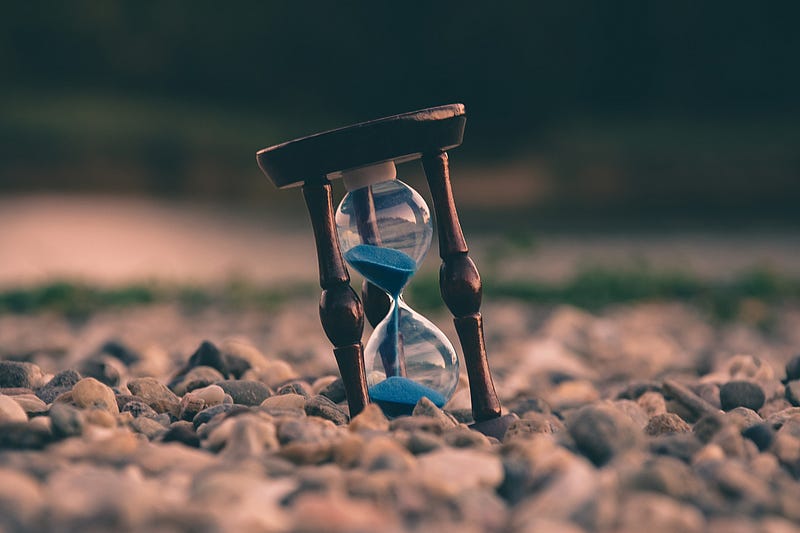
Life and death aren’t binary. Dying is a gradual process. The sand of time doesn’t get dumped on your grave all at once, but slowly flows through the tiny opening of the hourglass that encompasses life and death. With every day you live, you die a little more.
If this is a depressing thought for you, it’s a surefire sign you have to do something about the way you spend your time.
Alive Time or Dead Time?
Robert Greene, five times New York Times bestselling author of classics like 48 Laws of Power, says there are two distinctive types of time.
Alive time — you’re active, you’re learning, you’re utilizing every second and you’re enjoying the moment.
Dead time — you’re passive, waiting for something to be over, not engaging with the world around you, watching the clock tick.
You can choose if you actively live or passively exist. But how can you bring more alive time to the years you have on this planet? How can you live a meaningful life instead of having the world drag you along until it’s time to kick the bucket? By avoiding the things that turn your alive time into dead time.
Doing something you hate
“I have looked in the mirror every morning and asked myself: “If today were the last day of my life, would I want to do what I am about to do today?” And whenever the answer has been “No” for too many days in a row, I know I need to change something.”
— Steve Jobs
How much time do you spend on activities you detest and that drain your energy? A dead-end job, being stuck in traffic, meeting with negative and energy-sapping family members, living in a run-down place in a city you don’t feel at home in.
I get it. You have to pay the bills. They’re family. You can’t move because you’d have to look for a new job.
You tell yourself the same stories and excuses over and over again. Yes, change always takes effort and often causes pain, but not as much as you think. You just have to get going.
These temporary inconveniences are nothing compared to spending time every day with something you despise. Write applications. Tell the toxic people you’ll no longer talk to them. Take a weekend trip to another city and see what it’s like.
Would you rather dread your alarm clock every morning until you die? Or jump out of bed because you’re looking forward to yet another beautiful day in a meaningful life? Put in the effort, make it happen.
Mindless consumption
Any form of mindless and unconscious consumption is literally killing time. When was the last time you got some real joy out of scrolling through your Instagram feed? Heck, how much of what you see do you even remember?
I get it — sometimes you want to turn off your brain and kick back. That’s fine. But do so consciously. TV shows, video games, Netflix, drugs, or social media have the tendency to suck you into a rabbit hole that’s hard to climb out of. Before you start, make it clear to yourself you’re spending dead time for a while. Set an upper limit. One episode. 20 minutes of scrolling. An hour in front of the PlayStation. When the timer rings, stick to it. Get back to living.
Every day, I journal. I ask myself what made me happy and what made me laugh. In the last year, there wasn’t a single occasion in which I answered the question with something I consumed, apart from the occasional comedy movie.
Happiness and a fulfilled life from creating, accomplishing, and connecting with the people around you.
Ask yourself if the mindless consumption you engage in is adding any real value to your life, apart from short-term distraction. You don’t have to give it up altogether but make it a conscious decision instead of default behavior.
Always working towards something
“One day, it will all pay off.”
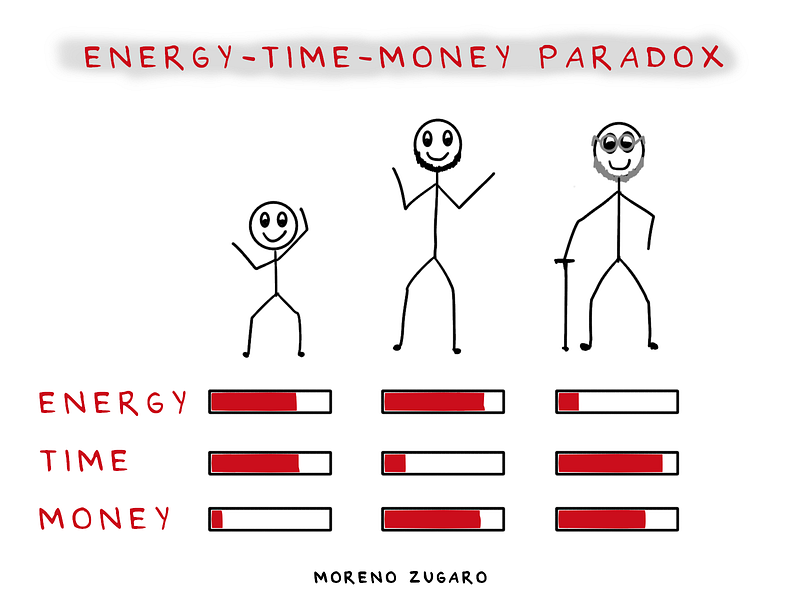
It’s easy to fall into this trap. You grow up in a system encouraging you to sacrifice the current moment and delay gratification further and further to an indefinite point in the future called retirement.
Study hard in school to get good grades, so you can go to university, so you can get a high-paying job, so you can work extra hours to make even more money, so you can save it all for retirement. Then, finally! You’ll retire and be able to enjoy the fruits of your labor.
It’s bullshit. It’s living to work instead of working to live. And if you don’t invest smartly, inflation will eat away at your savings. Even if you have the money, you’ll lack the energy you had in your best years.
You’re constantly looking forward to your life to finally begin until you realize you’ve been living all along, and your life is now near its end.
Delayed gratification on a small scale is key to beating procrastination and achieving your dreams. But it’s detrimental to the quality of your life if you forget to live and enjoy the current moment. Your money, your health, and your freedom can all be taken away from you. But the experiences you had, the life you lived, and the person you became through all that? They’re forever yours.
Take that vacation. Go traveling while you can. Spend time on your passions or with your friends and family. One day it will be too late for it, and no amount of money in the world will be able to bring back the time.
Chasing someone else’s dreams
If there was one piece of life advice I could give to people, it would be to be more authentic.
Being authentic means to know yourself, own yourself, and be yourself.
Growing up, you’re exposed to so many external influences that it’s hard to make up your own mind. People tell you their version of what a happy life looks like. You see your friends living out their dreams on social media. Society pressures you to believe that if you don’t get a university degree, you’ll flip burgers at McDonald’s for the rest of your life. Advertising has made an art form out of showing you what you lack and then — surprise! — providing you with a fitting solution to fill the very hole they just dug.
Don’t mistake other people’s dreams for your own. You won’t find fulfillment, happiness, and meaning by doing something just because others do it. Become more authentic and get clear on what you want, then act upon it regardless of what society tells you.
You’ll face resistance. Other people will tell you you’re making the wrong decision. You might even fall on your face a few times. So what? You’ll feel alive. You’ll be living a meaningful life and work on the dream you have chosen for yourself. And that’s what life is about. Alive time, not dead time.
Are You Afraid of Dying?
“Every man dies. Not every man lives.”
— Tony Robbins
It took me a long time to understand why some people are afraid of dying. Apart from the fact that it might be painful, there’s really nothing to fear. It’s a normal part of life. At one point, you’ll close your eyes and life as you know it will be over.
The underlying fear in us all is that when we die, we didn’t get around to live out our dreams and do something meaningful. We all dread lying on our deathbed saying I wish I had…
Dying without regrets comes down to bringing life into your years instead of years into your life.
The joy lies in the process, not in the result. It comes from every little moment you’ve consciously experienced and enjoyed, from every second of alive time you’ve spent and dead time you’ve avoided.
There are only two things given in life. You were born, and you’ll die. What you do in between is up to you.
When we’re old, we’ll regret what we didn’t do rather than what we did. Why, then, do we hesitate and refrain from doing what we want so often? Because our fears hold us back. Here’s how to overcome them and achieve your dreams.
Get The Authentic Man 5–3–1 Newsletter
5 minutes to read. 3 ideas, quotes, and questions to help you become a more Authentic Man. 1 biweekly challenge to get you closer to your dream life. Become the best version of your true self in under 5 minutes!


