avatarVictoria Ichizli-Bartels

Free AI web copilot to create summaries, insights and extended knowledge, download it at here

5744

Abstract

"><img src="https://cdn-images-1.readmedium.com/v2/resize:fit:800/0*pis-tBe64GZeV-p8"><figcaption>Photo by <a href="https://unsplash.com/@zane4004?utm_source=medium&amp;utm_medium=referral">Zane Lee</a> on <a href="https://unsplash.com?utm_source=medium&amp;utm_medium=referral">Unsplash</a></figcaption></figure><blockquote id="d926"><p>“A fractal is a never-ending pattern. Fractals are infinitely complex patterns that are self-similar across different scales. They are created by repeating a simple process over and over in an ongoing feedback loop. Driven by recursion, fractals are images of dynamic systems — the pictures of Chaos. Geometrically, they exist in between our familiar dimensions. Fractal patterns are extremely familiar, since nature is full of fractals. For instance: trees, rivers, coastlines, mountains, clouds, seashells, hurricanes, etc. Abstract fractals — such as the Mandelbrot Set — can be generated by a computer calculating a simple equation over and over.” — <a href="https://fractalfoundation.org/resources/what-are-fractals/">Fractal Foundation</a></p></blockquote><h1 id="4603">A connection between fractals and games</h1><p id="5e73">Have you noticed a parallel between games and fractals in the definition above?</p><p id="2da9">It’s the word “loop.” Games don’t exist without loops.</p><blockquote id="5876"><p>“A Gameplay Loop is a game design term that is used to describe the repetitive activities that a player will take while playing a game. It, essentially, defines what the player DOES while playing.” — <a href="http://engagedfamilygaming.com/parent-resources/video-game-definition-week-gameplay-loop/">Engaged Family Gaming</a></p></blockquote><p id="79da">How fun is it to discover that games, which is a concept created by humans, have the same “nature” as nature itself!?</p><h1 id="eaaf">Back to business</h1><p id="29ac">What does that all have to do with businesses, you might ask?</p><p id="bf00">Well, if <a href="https://readmedium.com/what-is-the-best-about-games-and-projects-6fc7ab5f2d28">any project or activity and their bits can be turned into larger or smaller games</a>, and if games are, in a way, fractals, then I see two types of questions appear:</p><ol><li>Can we extrapolate upwards from projects to businesses? In other words, do businesses also have a fractal feature to them?</li><li>Can a whole business be seen as a game?</li></ol><p id="127a">The answer to both is “yes.” But let’s develop on that.</p><h1 id="a987">Fractals, games, and businesses</h1><p id="a845">While I’m enormously proud to have come up with these questions and answers myself, I’m not the first one to put and give them. Neither for the connections between fractals and games nor to that one between fractals and businesses.</p><p id="251a">Here are just two of the examples.</p><h2 id="7e56">Fractals in game design</h2><p id="eafe"><a href="undefined">Caleb Compton</a> discusses how the game <a href="https://en.wikipedia.org/wiki/The_Legend_of_Zelda:_Link%27s_Awakening"><i>The Legend of Zelda: Link’s Awakening</i></a> has three various levels and is a fractal. He says,</p><blockquote id="f091"><p>“Each of these layers is different, but they strongly resemble one another because they share the same core gameplay. At every level — whether it be individual room, dungeon, or world map — the core loop of the gameplay is collecting new items, experimenting and learning how to use them, and then using those items to solve puzzles that allow you to move onto the next stage.” — <a href="https://readmedium.com/links-awakening-and-fractal-game-design-e3af668e6be9">Caleb Compton</a></p></blockquote><h2 id="335c">Fractals in business modeling</h2><p id="a5b3">The other of many revealing articles I found upon a quick search has a telling title “<a href="https://doi.org/10.1007/s10270-016-0554-9">A fractal enterprise model and its application for business development</a>.”</p><p id="9568">The authors of the article described how fractals had been used in many different ways for modeling business development. But all of them rely on the following feature of fractals. They are seen as an “abstract idea.” Here is what the authors say:</p><blockquote id="2db3"><p>“There is no accepted definition of what fractals mean with respect to the enterprise world. In essence, fractals are a high-level abstract idea of an infinite structure obtained by recursive application of the same pattern. Dependent on the perspective chosen for the modeling of a real life phenomenon, this pattern will be different for different modelers.” — <a href="https://doi.org/10.1007/s10270-016-0554-9">Bider, I., Perjons, E., Elias, M. <i>et al.</i> A fractal enterprise model and its application for business development. <i>Softw Syst Model</i> 16, 663–689 (2017)</a></p></blockquote><h1 id="62e2">Why does “fractal thinking” make sense for businesses?</h1><p id="4012">There is <i>game thinking,</i> and even a book titled that way: <i>Game Thinking</i> by Amy Jo Kim.</p><p id="a9d3">So, I think that the abstract idea of fractals provides us with a possibility of <i>fractal thinking</i>.</p><p id="318b">And again, being proud that I came up with the above conclusion myself, I have to admit that I’m not the first here either. If you Google “fractal thinking,” a long list of various posts and articles ranging from being quite “mathematical” to talking about creativity and innovation will come to view and selection.</p><p id="f791">Here are some of my thoughts on that.</p><p id="fe82">Fractal thinking is brilliant in terms of an <a href="https://readmedium.com/the-real-life-role-playing-games-fbb88df6208e">anthropological study</a> of your company’s culture and making progress in small and easi

Options

ly manageable steps.</p><p id="90c3">If your business is facing challenges, but you have a department or a project that even in critical times seems less to hiccup and flourishes instead, then you can learn from your project. You can learn from people in your company and implement their approach to the whole business, or at least to those parts that don’t work so well. In the spirit of <a href="https://en.wikipedia.org/wiki/Kaizen">kaizen</a> and sustainability, you use the resources you have and improve the situation considerably by moving one small step, a straightforward approach, a feature at a time.</p><p id="0341">Fractal thinking works both ways. You can replicate the successful approaches on all levels of your business. A fun open secret I discovered while reading and researching about fractals:</p><p id="4a08" type="7">Even the veins in the leaves of the trees carry a similar structure to the entire tree. — Caleb Compton</p><figure id="2850"><img src="https://cdn-images-1.readmedium.com/v2/resize:fit:800/0*TlyDNyTiytCryDnI"><figcaption>Photo by <a href="https://unsplash.com/@ashley_dcz?utm_source=medium&amp;utm_medium=referral">ASHLEY D’CRUZ</a> on <a href="https://unsplash.com?utm_source=medium&amp;utm_medium=referral">Unsplash</a></figcaption></figure><h1 id="27aa">Projects, Businesses, and Games</h1><p id="e000">If a project is a “business” inside a business (as also each department is), and <a href="https://readmedium.com/what-is-the-best-about-games-and-projects-6fc7ab5f2d28">projects are games and vice versa</a>, then the conclusion is easy to make that a business is also a game.</p><p id="cbf2">If you use a game attitude in a project and it works out wonderfully for you, then why not using it for the whole business? Here the fractal thinking can come to help again.</p><p id="a7a5">You might be already gamifying one or another policy, rule, or process in your business, such as your reporting systems, for example. At least you can choose to see them that way.</p><p id="8988">Using fractal thinking, you can consider how you can apply that gameful attitude, which you or your employees applied in a project, on the company or department level.</p><p id="afac">Anthropology, kaizen, and gamification (and all things playful and gameful) applied together don’t require additional resources or new personnel. What you need to succeed is to be aware, move in small steps, and be gameful and playful with what you have at hand and with the challenges you are facing.</p><p id="31e1">A quick reminder: being gameful and playful includes the will to have fun — not to expect to have fun but the will to <i>discover</i> it in whatever challenge you face, project you tackle, or activity you pursue.</p><p id="9438"><i>I hope this article served you as a fun and useful <a href="https://readmedium.com/how-to-conquer-the-information-overload-gamefully-f2070669d214">awareness booster</a> in your business game. Below, you can find more stories like this to help you <a href="https://readmedium.com/how-to-turn-something-or-anything-into-games-7bd8746e5958">turn something or anything in your work, and beyond, into fun games</a>.</i></p><div id="dfbe" class="link-block"> <a href="https://readmedium.com/what-does-turning-life-into-games-bring-during-times-of-crisis-a69fb4a33e18"> <div> <div> <h2>What Does Turning Life into Games Bring during Times of Crisis?</h2> <div><h3>The main reason to approach self-isolation during the COVID-19 pandemic gamefully</h3></div> <div><p>medium.com</p></div> </div> <div> <div style="background-image: url(https://miro.readmedium.com/v2/resize:fit:320/1*hjb2ZpFhXWdJl4W32H2IJg.jpeg)"></div> </div> </div> </a> </div><div id="45dd" class="link-block"> <a href="https://readmedium.com/how-to-turn-something-or-anything-into-games-7bd8746e5958"> <div> <div> <h2>How to Turn Something or Anything into Games</h2> <div><h3>Self-Gamification is a lifestyle</h3></div> <div><p>medium.com</p></div> </div> <div> <div style="background-image: url(https://miro.readmedium.com/v2/resize:fit:320/1*ZWAaslUyCWvn8EfA3xmU3g.jpeg)"></div> </div> </div> </a> </div><div id="29f8" class="link-block"> <a href="https://readmedium.com/how-to-conquer-the-information-overload-gamefully-f2070669d214"> <div> <div> <h2>How to Conquer the Information Overload Gamefully</h2> <div><h3>Identify and apply “awareness boosters” to power up your real-life games</h3></div> <div><p>medium.com</p></div> </div> <div> <div style="background-image: url(https://miro.readmedium.com/v2/resize:fit:320/1*AvZnJZTXeb6LNkodbXJbkA.jpeg)"></div> </div> </div> </a> </div><div id="49ed" class="link-block"> <a href="https://readmedium.com/what-is-the-best-about-games-and-projects-6fc7ab5f2d28"> <div> <div> <h2>What is the Best About Games and Projects?</h2> <div><h3>Every game is a project; every project is a game</h3></div> <div><p>medium.com</p></div> </div> <div> <div style="background-image: url(https://miro.readmedium.com/v2/resize:fit:320/0*8bPpCPb1IIkJvGPV)"></div> </div> </div> </a> </div></article></body>

What Businesses and Games Have to Do with Fractals

Photo by Hu Chen on Unsplash

The more I turn my projects and activities into games, the more I observe the following. Even a small part of my project, however tiny, could be considered as a separate game.

What defines a game are the goal, the rules, the feedback system, and voluntary participation. Everything else is an effort to reinforce and enhance these four core components. — Jane McGonigal, Reality Is Broken

Let’s take my ambition to create a library of content on how to live a Gameful Life. This project, or rather an enterprise, has:

  1. Goal: write books and articles about the multi-dimensional topic of turning our lives into fun games and earn money with it,
  2. Rules: write, edit, and publish or submit two to five articles (chapters, sections) a week and along with various topics,
  3. Feedback system: Word count, number of articles, chapters, sections, books written and published; all of them indicate the levels in my writing game,
  4. Voluntary participation: nobody forced me to join and test this “writing game”; I stay voluntarily and enjoy (however scary it sometimes feels); I can stop writing any time if I want to (I don’t; it’s too much fun, but I do take time off sometimes; I play other “games” then), and I can start playing — writing — any time again.

Writing about turning business aspects and work into fun games is a sub-project of my Gameful Life “enterprise” or “department of my writing business.” It has all four of the above components too. Some of them are the same or very similar to those of the parent project. Writing this article for you follows the same pattern, as well.

When I looked at games in their traditional sense, especially video games, they have many “games” or quests inside them too.

Games and projects

Here is an excerpt from my book Self-Gamification Happiness Formula, which reflects on this game-in-a-game parallel between games and projects:

“Taking into account the varying duration and design of projects, tasks and activities you have each day, it becomes evident that each day you play more than one game. In fact, you have a whole collection of project and management games.

You can’t treat all of them the same way since any activity you perform is different. And you are different in each moment. Thus, you can’t use the same framework for everything.

And even inside the same project games, you can imagine or invent mini-games.

Let’s get inspiration from famous games. Being inspired by many of my friends playing Candy Crush Saga, I decided to watch videos of people playing it to find out how the game functioned. I didn’t want to play it but I was curious about its game elements, partly because I was thinking of my project management game as “Project Crush.” I realized that Candy Crush Saga didn’t have only one type of move (sorting candies into rows), but each bigger step or phase of the game also had many mini-games in it. There were monsters to feed, treasure chests to open, boosters to collect, bombs to avoid, and much more.

The same will be true of your project and project management. Become aware of all the mini-games and game elements that already exist, and those you can invent to bring the fun factor to what you do. What are the treasure chests in the project, and the bombs to avoid? What about the monsters? Are there candies of the same type that you need to sort out?”

So while thinking of Self-Gamification — the anthropological, incremental, and gameful approach to turning anything into fun games — as a game, I realized that also here you have games inside another game. Such as the anthropologist’s role-playing game while investigating the Self-Gamification game setup.

I recently saw the famous candy-sorting game element of the Candy Crush Saga also in other games. Such as the interior design game I watched my five-year-old daughter playing. In the breaks between “helping the customer” rounds, you play the pattern sorting game. Thus, you can group games into bigger ones or take game elements, which in their essence are mini-games, and create a new game.

That reminded me of something I heard of while studying physics at the university and later when I was doing my Ph.D. studies on semiconductor physics and electronic engineering in the second half of the 1990s.

And that were fractals.

What is a fractal?

Photo by Zane Lee on Unsplash

“A fractal is a never-ending pattern. Fractals are infinitely complex patterns that are self-similar across different scales. They are created by repeating a simple process over and over in an ongoing feedback loop. Driven by recursion, fractals are images of dynamic systems — the pictures of Chaos. Geometrically, they exist in between our familiar dimensions. Fractal patterns are extremely familiar, since nature is full of fractals. For instance: trees, rivers, coastlines, mountains, clouds, seashells, hurricanes, etc. Abstract fractals — such as the Mandelbrot Set — can be generated by a computer calculating a simple equation over and over.” — Fractal Foundation

A connection between fractals and games

Have you noticed a parallel between games and fractals in the definition above?

It’s the word “loop.” Games don’t exist without loops.

“A Gameplay Loop is a game design term that is used to describe the repetitive activities that a player will take while playing a game. It, essentially, defines what the player DOES while playing.” — Engaged Family Gaming

How fun is it to discover that games, which is a concept created by humans, have the same “nature” as nature itself!?

Back to business

What does that all have to do with businesses, you might ask?

Well, if any project or activity and their bits can be turned into larger or smaller games, and if games are, in a way, fractals, then I see two types of questions appear:

  1. Can we extrapolate upwards from projects to businesses? In other words, do businesses also have a fractal feature to them?
  2. Can a whole business be seen as a game?

The answer to both is “yes.” But let’s develop on that.

Fractals, games, and businesses

While I’m enormously proud to have come up with these questions and answers myself, I’m not the first one to put and give them. Neither for the connections between fractals and games nor to that one between fractals and businesses.

Here are just two of the examples.

Fractals in game design

Caleb Compton discusses how the game The Legend of Zelda: Link’s Awakening has three various levels and is a fractal. He says,

“Each of these layers is different, but they strongly resemble one another because they share the same core gameplay. At every level — whether it be individual room, dungeon, or world map — the core loop of the gameplay is collecting new items, experimenting and learning how to use them, and then using those items to solve puzzles that allow you to move onto the next stage.” — Caleb Compton

Fractals in business modeling

The other of many revealing articles I found upon a quick search has a telling title “A fractal enterprise model and its application for business development.”

The authors of the article described how fractals had been used in many different ways for modeling business development. But all of them rely on the following feature of fractals. They are seen as an “abstract idea.” Here is what the authors say:

“There is no accepted definition of what fractals mean with respect to the enterprise world. In essence, fractals are a high-level abstract idea of an infinite structure obtained by recursive application of the same pattern. Dependent on the perspective chosen for the modeling of a real life phenomenon, this pattern will be different for different modelers.” — Bider, I., Perjons, E., Elias, M. et al. A fractal enterprise model and its application for business development. Softw Syst Model 16, 663–689 (2017)

Why does “fractal thinking” make sense for businesses?

There is game thinking, and even a book titled that way: Game Thinking by Amy Jo Kim.

So, I think that the abstract idea of fractals provides us with a possibility of fractal thinking.

And again, being proud that I came up with the above conclusion myself, I have to admit that I’m not the first here either. If you Google “fractal thinking,” a long list of various posts and articles ranging from being quite “mathematical” to talking about creativity and innovation will come to view and selection.

Here are some of my thoughts on that.

Fractal thinking is brilliant in terms of an anthropological study of your company’s culture and making progress in small and easily manageable steps.

If your business is facing challenges, but you have a department or a project that even in critical times seems less to hiccup and flourishes instead, then you can learn from your project. You can learn from people in your company and implement their approach to the whole business, or at least to those parts that don’t work so well. In the spirit of kaizen and sustainability, you use the resources you have and improve the situation considerably by moving one small step, a straightforward approach, a feature at a time.

Fractal thinking works both ways. You can replicate the successful approaches on all levels of your business. A fun open secret I discovered while reading and researching about fractals:

Even the veins in the leaves of the trees carry a similar structure to the entire tree. — Caleb Compton
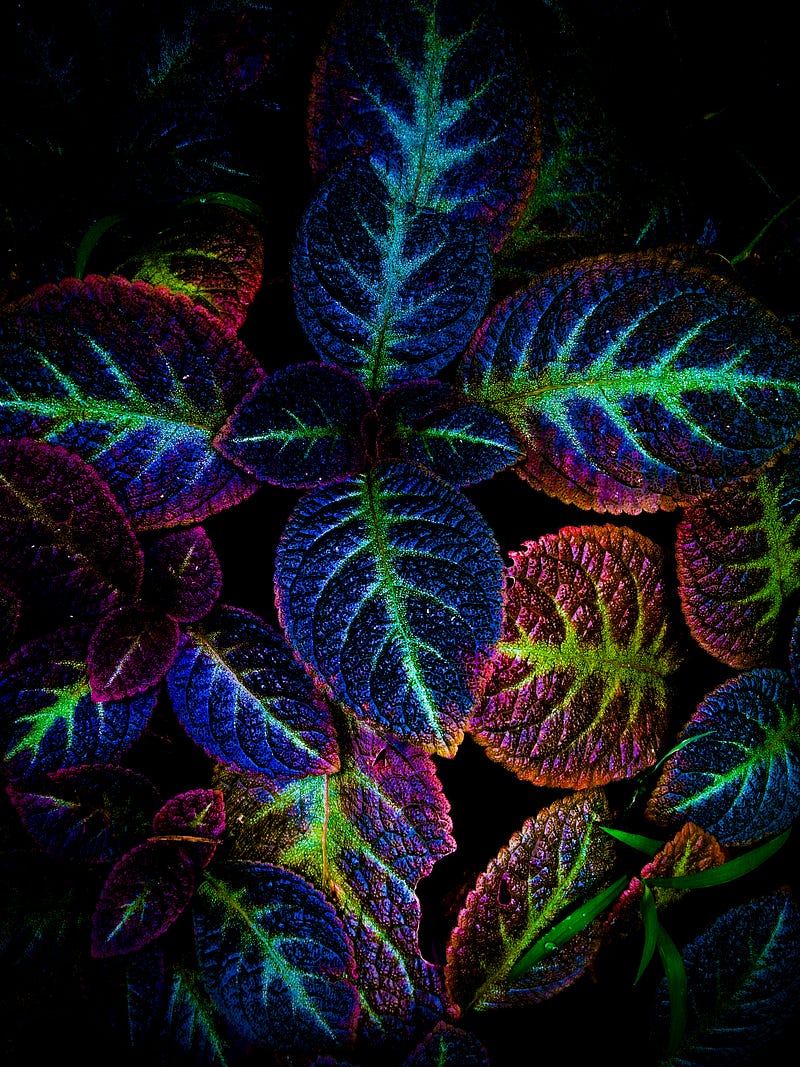
Photo by ASHLEY D’CRUZ on Unsplash

Projects, Businesses, and Games

If a project is a “business” inside a business (as also each department is), and projects are games and vice versa, then the conclusion is easy to make that a business is also a game.

If you use a game attitude in a project and it works out wonderfully for you, then why not using it for the whole business? Here the fractal thinking can come to help again.

You might be already gamifying one or another policy, rule, or process in your business, such as your reporting systems, for example. At least you can choose to see them that way.

Using fractal thinking, you can consider how you can apply that gameful attitude, which you or your employees applied in a project, on the company or department level.

Anthropology, kaizen, and gamification (and all things playful and gameful) applied together don’t require additional resources or new personnel. What you need to succeed is to be aware, move in small steps, and be gameful and playful with what you have at hand and with the challenges you are facing.

A quick reminder: being gameful and playful includes the will to have fun — not to expect to have fun but the will to discover it in whatever challenge you face, project you tackle, or activity you pursue.

I hope this article served you as a fun and useful awareness booster in your business game. Below, you can find more stories like this to help you turn something or anything in your work, and beyond, into fun games.

Business
Business Development
Gaming
Game Design
Productivity
Recommended from ReadMedium
avatarKenny McLachlan
2.5D Platformer-Wrap up

The Conclusion

2 min read