avatarJeremy Roberts

Free AI web copilot to create summaries, insights and extended knowledge, download it at here

9087

Abstract

Did it take awhile for them to get comfortable around you, and how would you characterize their respective personalities?</b></p><p id="d053">Not at all. All of them are pretty much the same — fun-loving, dedicated, and laid back.</p><p id="cfc4"><b>Who has the best sense of humor?</b></p><p id="4d7c">I’d have to say Hammond B-3 organist Bobby Emmons. He was a really funny guy with always something funny to say. I can’t recall any specific examples, mostly just little spurts of comic behavior.</p><figure id="fb65"><img src="https://cdn-images-1.readmedium.com/v2/resize:fit:800/1*aLhebpykKPlIa4yiNyBqgw.jpeg"><figcaption><b>The 45 cover of Elvis Presley’s “In the Ghetto” b/w “Any Day Now.” Produced by Chips Moman, recorded at American Sound Studio, and featuring the Memphis Boys on instrumentation, the single vaulted to No. 3 Pop on Billboard when released on April 14, 1969. <i>Image Credit: Sony Music Entertainment / Joel Whitburn’s Record Research</i></b></figcaption></figure><p id="67e3"><b>Are there any guitar licks that Reggie Young has taught you?</b></p><p id="07ed">Yes, many. Perhaps not directly, but over the years, I would sit and figure out how he would play certain things, like the intro to “In the Ghetto” and “Drift Away.” Very unique player, really smart.</p><p id="36ca"><b>From one piano player to another, how would you quantify Bobby Wood’s prowess?</b></p><p id="48b9">He is a fabulous “feel” player — more “feel” than technique — which I really like a lot.</p><p id="6477"><b>Have you witnessed any pre-show rituals or superstitions that the Memphis Boys follow?</b></p><p id="5f63">None.</p><p id="0c12"><b>Was improvisation encouraged during your sets with the Memphis Boys or did they prefer to play the songs exactly like the original records?</b></p><p id="e1ec">They liked to stick to the exact arrangements with no variation.</p><p id="c158"><b>Are there any songs that you have rehearsed with the Memphis Boys that for one reason or another haven’t been performed onstage?</b></p><p id="5825">No. Everything we rehearsed, we did perform on stage. I did suggest why they did not include “And the Grass Won’t Pay No Mind” [written by Neil Diamond and recorded by Presley for his first double album, <i>From Memphis to Vegas / From Vegas to Memphis</i>] a couple of times. They never really gave me a reason, and we never did rehearse or play it. I love that song.</p><p id="d995"><b>My first Memphis Boys concert occurred at Graceland during the 35th anniversary of Presley’s passing. One of my most special memories of that evening was hearing “Wearin’ That Loved on Look” performed live for the first time. Whose idea was it to feature this song as the show opener, and what do you admire about Presley and the Memphis Boys’ original rendition?</b></p><p id="5bfa">I love this question — it was my idea! I told Bobby Wood, who is in charge of dictating the setlists, a long time ago that it was such a great album opener — with that organ chord opening — that it would be nice to have that organ chord opening the show and just hold it longer before my vocal came in. We did it at that show in Belgium, and they loved it.</p><p id="562f">It’s one of my favorite recordings from those January-February 1969 sessions. I loved putting the <i>From Elvis in Memphis</i> album on for the first time and hearing “Wearin’ That Loved on Look” ignite the proceedings. It screamed, “Elvis Has Returned!”</p><figure id="3d35"><img src="https://cdn-images-1.readmedium.com/v2/resize:fit:800/1*hJFl877P97VkPaUxoIkM5w.jpeg"><figcaption><b>Elvis Presley, clutching a 1959 Fender Precision bass used by session ace Tommy Cogbill, and producer Chips Moman are seen inside American Sound Studios on January 13, 1969. Moman notched four seismic hits with Elvis — “In the Ghetto,” “Suspicious Minds,” “Don’t Cry Daddy,” and “Kentucky Rain.” <i>Photography by Dan Penn / For Elvis CD Collectors Forum</i></b></figcaption></figure><p id="209b"><b>Was it a mistake for Presley not to reunite with Chips Moman after the two legendary 1969 sessions?</b></p><p id="a078">I do think so. Chips was that rare creature who would push Elvis, tell him if he was singing flat and sharp, or tell him he could do a take a little better. I actually get the sense that Elvis wanted and <i>needed </i>that type of leadership in his sessions. But most people were afraid to take that step with Elvis.</p><p id="e465">Which is sad, because a lot of artists thrive on that type of help. They know they’re not perfect. Chips was a sharp thinker, innovative, and not afraid to say what he thought — to anyone. Elvis certainly knew what he wanted and was innovative as well, but sometimes even a superstar needs clear direction and motivation.</p><p id="a4db"><b>Tommy Cogbill, Bobby Emmons, Bobby Wood, and Reggie Young did reunite with Presley during his initial July 1973 session at Stax Studios. What songs from that Memphis session are particularly ripe for rediscovery?</b></p><p id="9b49">There are several, but in particular “Promised Land” and “My Boy.”</p><p id="300d"><b>Have you had any conversations with Moman that especially stick out in your mind?</b></p><p id="c837">Funny you should ask. Yes! When I played with the Memphis Boys in Belgium, <a href="https://youtu.be/gMPUEKKViE0?t=2m54s">Chips was there</a>, too, playing rhythm guitar with the group. He came up to me and said, “Man, you’re good. I wish I’d had the opportunity to produce you 25 years ago.” I quickly replied, “You <i>did</i> have the opportunity. You just don’t remember.” Now, I said this in a kind way.</p><p id="12b9">But the story is, around 1993 I did go his office in Nashville, introduced myself, told him I was a writer, singer, and currently was appearing on a Crook and Chase-hosted TNN television show called <i>Music City Tonight</i> and that he could catch me on there sometime. I was a regular on the series for about 18 months.</p><p id="8580">I left him a CD of some songs and I’d follow up every few weeks with a phone call or a visit, but he was always so wrapped up in so many other artists. He didn’t recall any of this, but that’s okay, he was always a very busy guy.</p><p id="741f"><b>Have you had the opportunity to record any songs with the Memphis Boys in the studio?</b></p><p id="b8e6">I have not, sad to say. I did have a songwriting session with Bobby Wood one time in Nashville, but we never came up with anything that either of us felt was worthy.</p><p id="df94"><b>What do you recall about your final conversation with Bobby Emmons? He seemed so full of vitality during the sold out August 13, 2014, Elvis Week show held at Graceland that it’s difficult to reconcile the fact that he was seriously ill.</b></p><p id="4ed3">I did know that he was sick. I’m really not exactly certain what type illness Bobby was suffering from, but I know it was blood-related. I tried not to be too nosy about it. He did talk to me himself about it, in terms of treatments, hospital stays, etc., but he never really nailed a “title” down for me, and I never asked. And that in itself was my last conversation with him [Emmons passed away in a Nashville hospital on February 23, 2015].</p><figure id="3c62"><img src="https://cdn-images-1.readmedium.com/v2/resize:fit:800/1*wbMEF5CgmAr6bh-VKA4hOQ.jpeg"><figcaption><b>Bobby Wood, Mike Leech, Tommy Cogbill, Gene Chrisman, Elvis Presley, Bobby Emmons, Reggie Young, American Sound engineer — harmonica player Ed Kollis, and songwriter Dan Penn pose together on January 13, 1969, inside American Sound Studio during the historic sessions that yielded Presley’s “Suspicious Minds” and “Kentucky Rain.” Photography possibly by Marty Lacker using Dan Penn’s Polaroid camera / For Elvis CD Collectors Forum</b></figcaption></figure><p id="4716"><b>If August 13, 2014, proves to be your final performance with the Memphis Boys, what stands out in your memory regarding that show?</b></p><p id="ee9e">Just a nice strong energy from everyone. I haven’t heard anything yet regarding discussions about them continuing on [<i>Author’s Note</i>: Wood and Chrisman have since played a handful of shows with the <a href="https://www.facebook.com/abandoflegends/timeline">Band of Legends</a>, a super group featuring members of Elvis’s TCB Band and the Muscle Shoals Rhythm Section].</p><p id="09dc"><b>Should the Memphis Boys be inducted into the Rock & Roll Hall of Fame?</b></p><p id="8d43">I’d say yes. Perhaps as a group together, rather than individually.</p><p id="2550"><b>Let’s say you’re in a conversation with somebody who knows absolutely nothing about the Memphis Boys’ vast oeuvre. What records would you suggest they investigate to gain further insight?</b></p><p id="d9f5">Wow, there are so many. But I would probably tell them Neil Diamond’s “Sweet Caroline,” B.J. Thomas’s “Hooked on a Feeling,” Dusty Springfield’s “Son of a Preacher Man,” “In the Ghetto,” or “Suspicious Minds.” And while never released as singles by Elvis, the forever cool “Wearin’ That Loved on Look,” “And the Grass Won’t Pay No Mind,” and “Without Love”

Options

deserve mention.</p><p id="f784"><b>Is there anything else that you would like to address pertaining to the Memphis Boys that I neglected to ask you?</b></p><p id="25f2">Yes — they struck me, from the beginning, as a bunch of smart musicians with an incredible history of hit-making that didn’t take themselves too seriously. None of them had an attitude of grandiose or “better than anyone else.” Just very down to earth.</p><p id="45d1">You can tell, then and now, that they just enjoy each other’s company and musicianship, very laid back and informal with a great respect for each other’s abilities and history. And they always treated me the same as themselves, very respectful and willing to work with me. It has always been a great honor to get to work with all of them.</p><h2 id="393c">DON’T GO ANYWHERE YET! IN PART TWO of the interview Jeffrey regales readers with seeing “Blue Hawaii” 17 times in one week, soundtrack atrocity “Queenie Wahine’s Papaya,” who he wishes he could have worked with in the Elvis world, doing a session with Scotty Moore swapping guitar for an engineer’s perch, cutting TCB Band bassist Jerry Scheff’s Jungle Room outtake “Fire Down Below,” the Memphis Boy he recently acknowledged from the stage, the “Elvis Now” track request that completely stumped him, and more.</h2><div id="9f86" class="link-block"> <a href="https://readmedium.com/scrapping-the-setlist-with-electrifying-elvis-crusader-terry-mike-jeffrey-df5ce450576e"> <div> <div> <h2>Scrapping the setlist with electrifying Elvis crusader Terry Mike Jeffrey [PART TWO OF THE INTERVIEW]</h2> <div><h3>Setlist stumpers, Scotty Moore, Bill Black, Jerry Scheff’s ‘Fire Down Below,’ ‘Blue Hawaii,’ soundtracks and more rule…</h3></div> <div><p>medium.com</p></div> </div> <div> <div style="background-image: url(https://miro.readmedium.com/v2/resize:fit:320/1*Rxp7nN0b1pPHB80SfPtHGw.jpeg)"></div> </div> </div> </a> </div><figure id="99ca"><img src="https://cdn-images-1.readmedium.com/v2/resize:fit:800/1*XUSI_pxR4L4bP9wR4CLLHw.jpeg"><figcaption><b>American Sound Studio, located at 827 Thomas Street before it was inexplicably demolished in 1990. Producer Chips Moman and the Memphis Boys session cats yielded career-defining hits for Elvis Presley, B.J. Thomas, Neil Diamond, Dusty Springfield and the Box Tops. <i>Image Credit: Elvis Presley Enterprises</i></b></figcaption></figure><figure id="c90f"><img src="https://cdn-images-1.readmedium.com/v2/resize:fit:800/1*giIbsPgZD3wpEPi8K2BmNQ.jpeg"><figcaption><b>Elvis tribute artist Terry Mike Jeffrey and the Memphis Boys during a show on June 25, 2011 at the Franklin Theater in Franklin, Tennessee. L to R are cellist Jenny Young (Reggie Young’s wife), organist Bobby Emmons, TMJ, guitarist Reggie Young, Ginger Holladay, and Mary Holladay. <i>Image Credit: Courtesy of Bobby Wood and Terry Mike Jeffrey</i></b></figcaption></figure><figure id="c418"><img src="https://cdn-images-1.readmedium.com/v2/resize:fit:800/1*MdEQVpc9WCLm6kJpTWOIAQ.jpeg"><figcaption><b>Memphis Boys Bobby Emmons, Bobby Wood, Reggie Young, Terry Mike Jeffrey, Gene Chrisman, Ginger Holladay, Mary Holladay, Box Tops guitarist Gary Talley, Jim Horn and an unidentified trombonist collide on June 25, 2011 at the Franklin Theater in Franklin, Tennessee. <i>Image Credit: Courtesy of Bobby Wood and Terry Mike Jeffrey</i></b></figcaption></figure> <figure id="0c67"> <div> <div> <img class="ratio" src="http://placehold.it/16x9"> <iframe class="" src="https://cdn.embedly.com/widgets/media.html?src=https%3A%2F%2Fwww.youtube.com%2Fembed%2FFfKPoHb6pJ8%3Ffeature%3Doembed&amp;url=http%3A%2F%2Fwww.youtube.com%2Fwatch%3Fv%3DFfKPoHb6pJ8&amp;image=https%3A%2F%2Fi.ytimg.com%2Fvi%2FFfKPoHb6pJ8%2Fhqdefault.jpg&amp;key=d04bfffea46d4aeda930ec88cc64b87c&amp;type=text%2Fhtml&amp;schema=youtube" allowfullscreen="" frameborder="0" height="480" width="640"> </div> </div> </figure></iframe></div></div></figure><div id="bb7c" class="link-block"> <a href="https://readmedium.com/raised-on-elvis-volume-5-revisiting-terry-mike-jeffrey-s-tribute-to-an-icon-23db5588c355"> <div> <div> <h2>‘Raised on Elvis — Volume 5:’ Revisiting Terry Mike Jeffrey’s tribute to an icon</h2> <div><h3>Terry Mike Jeffrey is an accomplished musician and devoted admirer of Elvis Presley hailing from Paducah, Kentucky…</h3></div> <div><p>medium.com</p></div> </div> <div> <div style="background-image: url(https://miro.readmedium.com/v2/resize:fit:320/1*L5wPEH2-LaHJEY4ma8kkpw.jpeg)"></div> </div> </div> </a> </div><div id="7618" class="link-block"> <a href="https://readmedium.com/straight-shooter-roben-jones-rights-an-unjustly-neglected-memphis-music-saga-7bc0ce733656"> <div> <div> <h2>Straight shooter Roben Jones rights an unjustly neglected Memphis music saga [PART TWO OF THE INTERVIEW]</h2> <div><h3>Chips Moman and American Sound Studio are the stars of a interview also covering Elvis Presley, Neil Diamond, the Box…</h3></div> <div><p>medium.com</p></div> </div> <div> <div style="background-image: url(https://miro.readmedium.com/v2/resize:fit:320/1*7zv-8RvIs-vp43-HXaQtlw.jpeg)"></div> </div> </div> </a> </div><div id="1d6d" class="link-block"> <a href="https://readmedium.com/a-beautiful-mess-with-memphis-boys-the-story-of-american-studios-wordsmith-roben-jones-6eca932b47f3"> <div> <div> <h2>A beautiful mess with ‘Memphis Boys: The Story of American Studios’ wordsmith Roben Jones [PART THREE, THE CONCLUSION, OF THE INTERVIEW]</h2> <div><h3>Chips Moman had to leave town for a little while: Refusing to play the game and Ringo Starr’s cursed sessions occupy a…</h3></div> <div><p>medium.com</p></div> </div> <div> <div style="background-image: url(https://miro.readmedium.com/v2/resize:fit:320/1*dodrsxI7LdZp4bv6gTmdzQ.jpeg)"></div> </div> </div> </a> </div><div id="2947" class="link-block"> <a href="https://readmedium.com/elvis-presley-the-truck-driver-who-dared-to-rock-4592f45df9b3"> <div> <div> <h2>Elvis Presley — The Truck Driver Who Dared to Rock</h2> <div><h3>Over 50 stories record Elvis’ relationships with musicians, costars, confidants and artists subsequently influenced by…</h3></div> <div><p>medium.com</p></div> </div> <div> <div style="background-image: url(https://miro.readmedium.com/v2/resize:fit:320/1*aqrEyqguxDG69n2hm6g2Bg.jpeg)"></div> </div> </div> </a> </div><div id="a4c5" class="link-block"> <a href="https://jeremylr.medium.com/bob-dylan-and-ringo-starrs-secret-memphis-collision-on-pseudo-protest-song-5c78ea565e64"> <div> <div> <h2>Bob Dylan and Ringo Starr’s secret Memphis collision on pseudo-protest song</h2> <div><h3>Professor Sam Shoup relays the long-buried 1987 session where the Beatle, the Bard, and “Suspicious Minds” producer…</h3></div> <div><p>jeremylr.medium.com</p></div> </div> <div> <div style="background-image: url(https://miro.readmedium.com/v2/resize:fit:320/1*qu_sqxpzVJiQl5tkw65a8A.jpeg)"></div> </div> </div> </a> </div><div id="6657" class="link-block"> <a href="https://readmedium.com/more-thunder-on-the-piano-ronnie-milsap-relives-memphis-days-with-elvis-presley-17803848f24b"> <div> <div> <h2>More thunder on the piano — Ronnie Milsap relives Memphis days with Elvis Presley</h2> <div><h3>Ronnie Milsap auspiciously bridged the gap between country and pop in the early ’80s, and his influence still permeates…</h3></div> <div><p>medium.com</p></div> </div> <div> <div style="background-image: url(https://miro.readmedium.com/v2/resize:fit:320/1*uK3PlQV_o_y4f-hzpyeQyw.jpeg)"></div> </div> </div> </a> </div><p id="6a82"><i>© Jeremy Roberts, 2015, 2018. All rights reserved. To touch base, email <a href="mailto:[email protected]"></a></i><a href="mailto:[email protected]">[email protected]<i></i></a><i> and mention which story led you my way. I appreciate it sincerely.</i></p></article></body>

‘Wearin’ That Loved on Look’ — Terry Mike Jeffrey salutes Elvis Presley, Chips Moman and the Memphis Boys
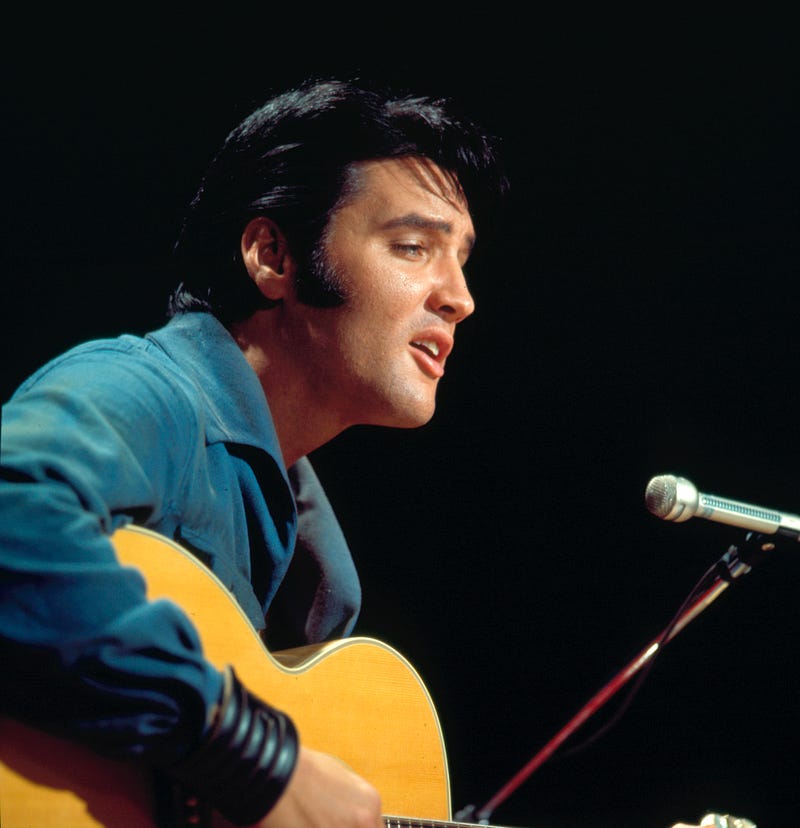
Elvis Presley-inspired singer-guitarist Terry Mike Jeffrey exclusively divulges his deep-rooted admiration for hit-making session cats Chips Moman and the Memphis Boys, who racked up hundreds of enduring soul-pop records inside the ghetto-based American Sound Studio during the ’60s and ’70s. In blue denim and playing his prized 1960 Gibson J-200 acoustic guitar, Presley conducts a warm-up band rehearsal hours before his first appearance in front of a live audience in seven years on June 27, 1968 for the iconic “’68 Comeback Special.” Photography by Gary Null or Frank Carroll / NBC / Getty Images

“They struck me, from the beginning, as a bunch of smart musicians with an incredible history of hit-making that didn’t take themselves too seriously. None of them had an attitude of grandiose or ‘better than anyone else,’” Elvis Presley-inspired singer-guitarist Terry Mike Jeffrey declares in an exclusive interview for “Jeremy’s Elvis Presley Notes” regarding his admiration for the Memphis Boys, an uber-talented six-member team of session musicians guided by late production wiz Chips Moman at the funky American Sound Studios in Memphis between 1967 and 1971. They later relocated to Nashville and dominated the country charts, a prime illustration being Waylon Jennings’ classic “Luckenbach Texas.”

The chart accomplishments of guitarist Reggie Young, pianist Bobby Wood, drummer Gene Chrisman, and deceased bassist-arranger Tommy Cogbill, organist Bobby Emmons, and bassist Mike Leech have been unfairly swept under the proverbial rug while contemporaneous studio groups such as the Wrecking Crew, Motown’s Funk Brothers, and Stax’s Booker T. and the MG’s receive the lion’s share of accolades. During one mind blowing week on late ’60s pop radio the Memphis Boys played on over one quarter of Billboard’s Hot 100 hits.

And without Moman and the Memphis Boys, there would have been no sustained record comeback for Presley with “In the Ghetto,” “Suspicious Minds,” “Don’t Cry Daddy,” and “Kentucky Rain.” The 20th anniversary of Presley’s tragic demise prompted Graceland to book the 827 Thomas Street Band for a three-night residency at the now defunct Elvis Presley’s Memphis restaurant. Jeffrey, who wisely refuses to don a jumpsuit or imitate Presley’s mannerisms, assumed front man duties with typical poise.

Their collaboration, while only an occasional happening during the subsequent two decades, experienced record sell-out crowds. But maybe that should come as no surprise when one considers the musical catalogues represented during any given night: Aretha Franklin, Wilson Pickett, Dusty Springfield, Neil Diamond, B.J. Thomas, the Box Tops, Willie Nelson, and of course, the King of Rock ’n’ Roll.
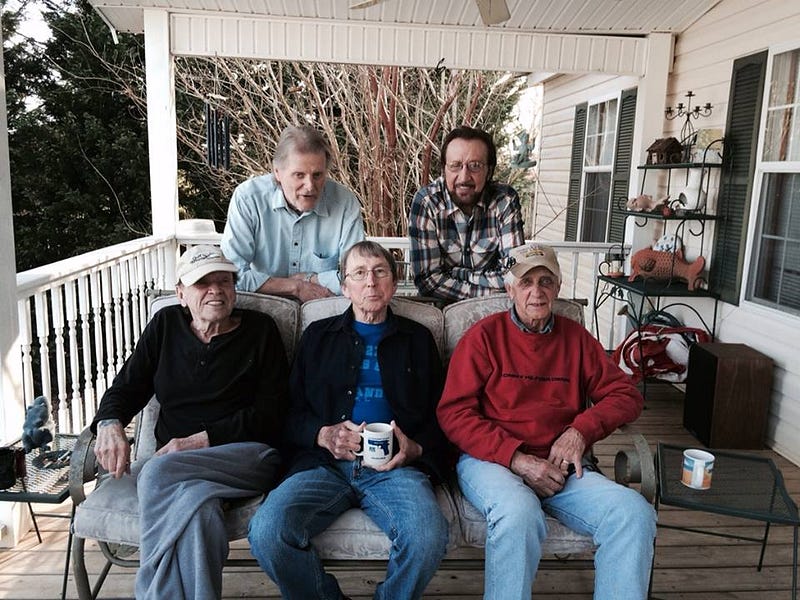
Producer extraordinaire Chips Moman and the Memphis Boys — Reggie Young, the late Bobby Emmons, Bobby Wood, and Gene Chrisman — are captured on the front porch of dear friend and former Sheriff Donny Turner’s lake house. The group convened circa March 22, 2014, at Turner’s LaGrange, Georgia, home to visit and go out for dinner. LaGrange was incidentally Moman’s hometown, and the trailblazing producer would succumb to emphysema in a hospice facility there on June 13, 2016. Photography by Jenny Lynn Young

The Terry Mike Jeffrey Interview, Part One

When did you connect the dots and first become aware of the Memphis Boys’ incredible body of work?

Actually, a long time ago. I was not only a fan of their Elvis sessions, but I really do love their work with Neil Diamond, B.J. Thomas, and Dusty Springfield. Very talented crew.

How did your business relationship with Elvis Presley Enterprises manifest itself?

Actually, a really long time ago, in a way. I became friends with Charlie Hodge in ‘71-’72 and later friends with Jerry Schilling, George Klein, Dick Grob — most of the guys. They would come to see my band in Memphis when Elvis was in town.

Charlie would get on stage with us and sing, tell jokes, etc. So we were friendly back before Elvis died. After Elvis was gone, Charlie and I remained friends and did some shows together for a while.

Then after a few years of no real contact [1981–1987], I auditioned to be musical director for the Broadway touring show Elvis — An American Musical. I was hired and my band was, too. During the auditions for the guys to portray Elvis [they wanted three — young, middle, older], I would play piano and guitar for the guys auditioning.

Graceland-EPE was very hands-on for this show, and Jerry Schilling was present at all of those auditions. The producers-director and Jerry chose the second and third guys pretty quickly, but they were not satisfied with anyone that was auditioning for the early Elvis spot.

In New York City at one of the final auditions Jerry called everyone into a meeting and said, “I used to hear the guy that is the musical director sing Elvis back when Elvis was alive, and I always liked his voice. Let’s get him to sing.”

So, they auditioned me for the part, and I got it. I was musical director and the young Elvis. I was thrilled! It was not an Elvis “impersonator” show — it was an acting and performing role. I had this job for two years [1988–1989].

It played the Beacon Theater on Broadway in New York City, but it also toured the country playing places like the Fox Theaters in St. Louis, Detroit, Atlanta, and the Showroom at the Las Vegas Hilton for two complete summers.

That was awesome — playing the same stage as Elvis — and my dressing room was right there where I met him in Aug. 1969. This began a long working relationship with everyone at Graceland/EPE. Still cookin’.
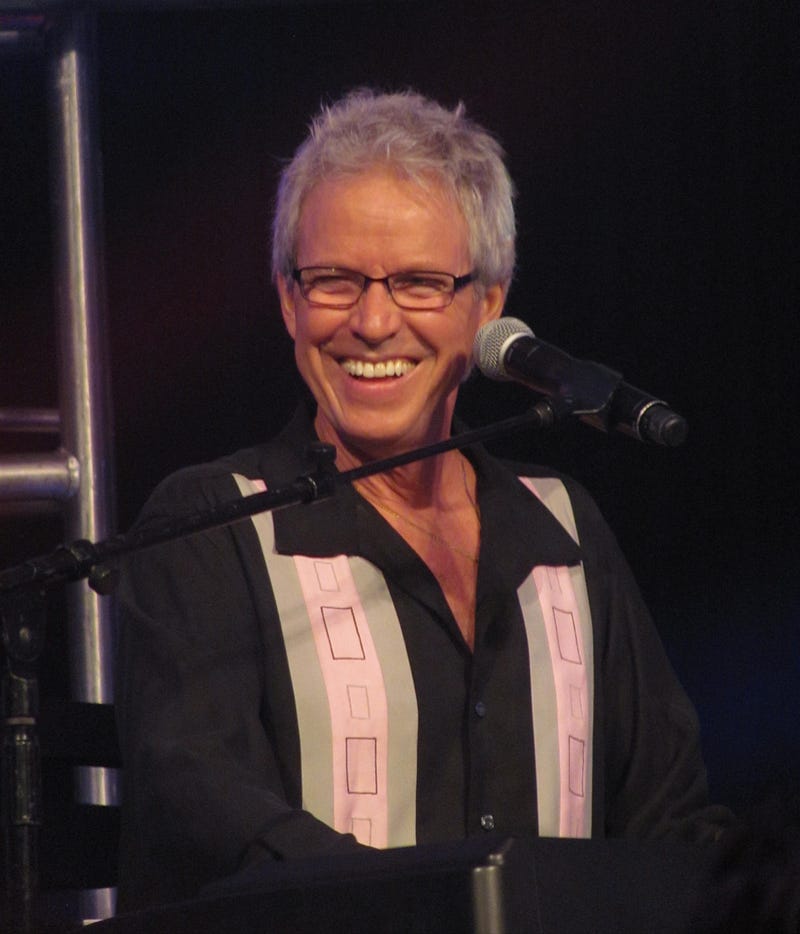
Terry Mike Jeffrey tickles the ivories with aplomb during a co-headlining, well-attended “Elvis Sunday Morning Gospel Celebration” concert with the Stamps Quartet on August 16, 2015, during Elvis Week at Graceland. Photography by Jeremy Roberts

Where did you encounter the Memphis Boys and exactly how did your name come up as a potential front man?

I met them all together in Nashville at a 1997 rehearsal when Elvis Presley’s Memphis restaurant first opened on Beale Street. There was a week-long celebration, and we were contracted to do three nightly shows.

My name came up because I was working very closely at that time with Graceland on all Elvis Presley’s Memphis projects. They wanted to use the Memphis Boys. I didn’t know them very well, so EPE suggested to them that I sing with them, as well as my background singers.

The Memphis Boys were cordial, having fun, easy to work with, and very talented. And, it was at this time they first started performing, so I got to be with them when the whole idea came together at the beginning. I’ve performed only about 12 shows with them. I think they did a few others that I wasn’t involved in, but not many.

To what extent did the shows evolve during the years that you performed with the group?

Not really much at all. One thing — in 1997 at Elvis Presley’s Memphis the bass player was Mike Leech, which was the only time I got to work with him [Author’s Note: The fantastic Tommy Cogbill, who alternated with Leech on bass, arrangement, and production duties, passed away in 1982]. Mike was replaced by David Hood of the Muscle Shoals Rhythm Section for all shows I did with them after 1997.

Did any of the Memphis Boys express concerns about performing in front of a live audience again?

They did. I recall that they were very concerned, particularly when we reconvened six years later to perform in Belgium and Holland, about such a big show and big audience.

Did you detect any differences between the responses of the American audiences versus their international counterparts?

Well, yes, but just in general, European audiences always typically react in a big way. But all reactions were good over there and over here.

Did it take awhile for them to get comfortable around you, and how would you characterize their respective personalities?

Not at all. All of them are pretty much the same — fun-loving, dedicated, and laid back.

Who has the best sense of humor?

I’d have to say Hammond B-3 organist Bobby Emmons. He was a really funny guy with always something funny to say. I can’t recall any specific examples, mostly just little spurts of comic behavior.
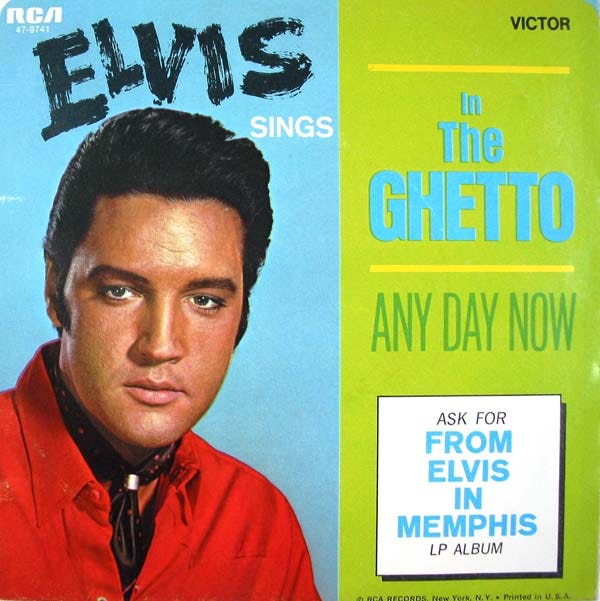
The 45 cover of Elvis Presley’s “In the Ghetto” b/w “Any Day Now.” Produced by Chips Moman, recorded at American Sound Studio, and featuring the Memphis Boys on instrumentation, the single vaulted to No. 3 Pop on Billboard when released on April 14, 1969. Image Credit: Sony Music Entertainment / Joel Whitburn’s Record Research

Are there any guitar licks that Reggie Young has taught you?

Yes, many. Perhaps not directly, but over the years, I would sit and figure out how he would play certain things, like the intro to “In the Ghetto” and “Drift Away.” Very unique player, really smart.

From one piano player to another, how would you quantify Bobby Wood’s prowess?

He is a fabulous “feel” player — more “feel” than technique — which I really like a lot.

Have you witnessed any pre-show rituals or superstitions that the Memphis Boys follow?

None.

Was improvisation encouraged during your sets with the Memphis Boys or did they prefer to play the songs exactly like the original records?

They liked to stick to the exact arrangements with no variation.

Are there any songs that you have rehearsed with the Memphis Boys that for one reason or another haven’t been performed onstage?

No. Everything we rehearsed, we did perform on stage. I did suggest why they did not include “And the Grass Won’t Pay No Mind” [written by Neil Diamond and recorded by Presley for his first double album, From Memphis to Vegas / From Vegas to Memphis] a couple of times. They never really gave me a reason, and we never did rehearse or play it. I love that song.

My first Memphis Boys concert occurred at Graceland during the 35th anniversary of Presley’s passing. One of my most special memories of that evening was hearing “Wearin’ That Loved on Look” performed live for the first time. Whose idea was it to feature this song as the show opener, and what do you admire about Presley and the Memphis Boys’ original rendition?

I love this question — it was my idea! I told Bobby Wood, who is in charge of dictating the setlists, a long time ago that it was such a great album opener — with that organ chord opening — that it would be nice to have that organ chord opening the show and just hold it longer before my vocal came in. We did it at that show in Belgium, and they loved it.

It’s one of my favorite recordings from those January-February 1969 sessions. I loved putting the From Elvis in Memphis album on for the first time and hearing “Wearin’ That Loved on Look” ignite the proceedings. It screamed, “Elvis Has Returned!”
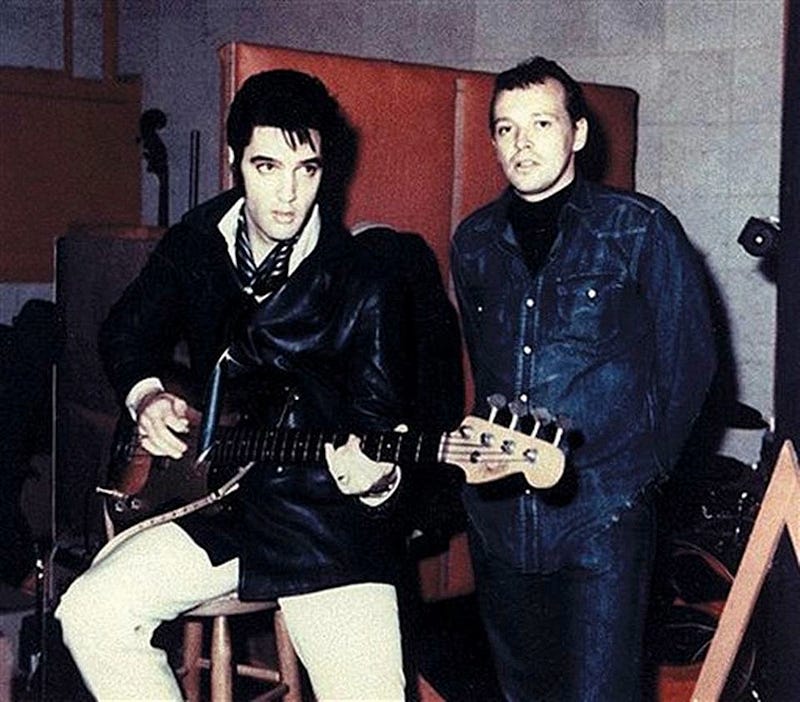
Elvis Presley, clutching a 1959 Fender Precision bass used by session ace Tommy Cogbill, and producer Chips Moman are seen inside American Sound Studios on January 13, 1969. Moman notched four seismic hits with Elvis — “In the Ghetto,” “Suspicious Minds,” “Don’t Cry Daddy,” and “Kentucky Rain.” Photography by Dan Penn / For Elvis CD Collectors Forum

Was it a mistake for Presley not to reunite with Chips Moman after the two legendary 1969 sessions?

I do think so. Chips was that rare creature who would push Elvis, tell him if he was singing flat and sharp, or tell him he could do a take a little better. I actually get the sense that Elvis wanted and needed that type of leadership in his sessions. But most people were afraid to take that step with Elvis.

Which is sad, because a lot of artists thrive on that type of help. They know they’re not perfect. Chips was a sharp thinker, innovative, and not afraid to say what he thought — to anyone. Elvis certainly knew what he wanted and was innovative as well, but sometimes even a superstar needs clear direction and motivation.

Tommy Cogbill, Bobby Emmons, Bobby Wood, and Reggie Young did reunite with Presley during his initial July 1973 session at Stax Studios. What songs from that Memphis session are particularly ripe for rediscovery?

There are several, but in particular “Promised Land” and “My Boy.”

Have you had any conversations with Moman that especially stick out in your mind?

Funny you should ask. Yes! When I played with the Memphis Boys in Belgium, Chips was there, too, playing rhythm guitar with the group. He came up to me and said, “Man, you’re good. I wish I’d had the opportunity to produce you 25 years ago.” I quickly replied, “You did have the opportunity. You just don’t remember.” Now, I said this in a kind way.

But the story is, around 1993 I did go his office in Nashville, introduced myself, told him I was a writer, singer, and currently was appearing on a Crook and Chase-hosted TNN television show called Music City Tonight and that he could catch me on there sometime. I was a regular on the series for about 18 months.

I left him a CD of some songs and I’d follow up every few weeks with a phone call or a visit, but he was always so wrapped up in so many other artists. He didn’t recall any of this, but that’s okay, he was always a very busy guy.

Have you had the opportunity to record any songs with the Memphis Boys in the studio?

I have not, sad to say. I did have a songwriting session with Bobby Wood one time in Nashville, but we never came up with anything that either of us felt was worthy.

What do you recall about your final conversation with Bobby Emmons? He seemed so full of vitality during the sold out August 13, 2014, Elvis Week show held at Graceland that it’s difficult to reconcile the fact that he was seriously ill.

I did know that he was sick. I’m really not exactly certain what type illness Bobby was suffering from, but I know it was blood-related. I tried not to be too nosy about it. He did talk to me himself about it, in terms of treatments, hospital stays, etc., but he never really nailed a “title” down for me, and I never asked. And that in itself was my last conversation with him [Emmons passed away in a Nashville hospital on February 23, 2015].
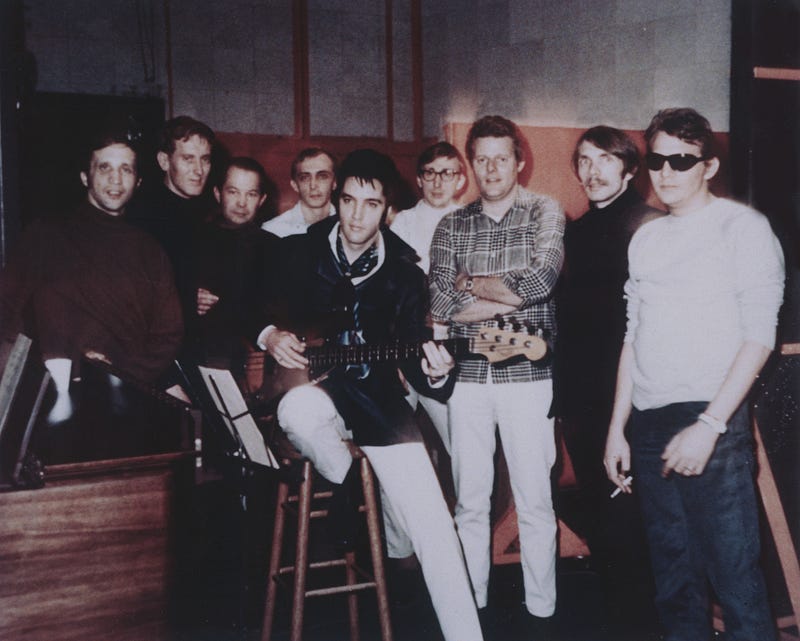
Bobby Wood, Mike Leech, Tommy Cogbill, Gene Chrisman, Elvis Presley, Bobby Emmons, Reggie Young, American Sound engineer — harmonica player Ed Kollis, and songwriter Dan Penn pose together on January 13, 1969, inside American Sound Studio during the historic sessions that yielded Presley’s “Suspicious Minds” and “Kentucky Rain.” Photography possibly by Marty Lacker using Dan Penn’s Polaroid camera / For Elvis CD Collectors Forum

If August 13, 2014, proves to be your final performance with the Memphis Boys, what stands out in your memory regarding that show?

Just a nice strong energy from everyone. I haven’t heard anything yet regarding discussions about them continuing on [Author’s Note: Wood and Chrisman have since played a handful of shows with the Band of Legends, a super group featuring members of Elvis’s TCB Band and the Muscle Shoals Rhythm Section].

Should the Memphis Boys be inducted into the Rock & Roll Hall of Fame?

I’d say yes. Perhaps as a group together, rather than individually.

Let’s say you’re in a conversation with somebody who knows absolutely nothing about the Memphis Boys’ vast oeuvre. What records would you suggest they investigate to gain further insight?

Wow, there are so many. But I would probably tell them Neil Diamond’s “Sweet Caroline,” B.J. Thomas’s “Hooked on a Feeling,” Dusty Springfield’s “Son of a Preacher Man,” “In the Ghetto,” or “Suspicious Minds.” And while never released as singles by Elvis, the forever cool “Wearin’ That Loved on Look,” “And the Grass Won’t Pay No Mind,” and “Without Love” deserve mention.

Is there anything else that you would like to address pertaining to the Memphis Boys that I neglected to ask you?

Yes — they struck me, from the beginning, as a bunch of smart musicians with an incredible history of hit-making that didn’t take themselves too seriously. None of them had an attitude of grandiose or “better than anyone else.” Just very down to earth.

You can tell, then and now, that they just enjoy each other’s company and musicianship, very laid back and informal with a great respect for each other’s abilities and history. And they always treated me the same as themselves, very respectful and willing to work with me. It has always been a great honor to get to work with all of them.

DON’T GO ANYWHERE YET! IN PART TWO of the interview Jeffrey regales readers with seeing “Blue Hawaii” 17 times in one week, soundtrack atrocity “Queenie Wahine’s Papaya,” who he wishes he could have worked with in the Elvis world, doing a session with Scotty Moore swapping guitar for an engineer’s perch, cutting TCB Band bassist Jerry Scheff’s Jungle Room outtake “Fire Down Below,” the Memphis Boy he recently acknowledged from the stage, the “Elvis Now” track request that completely stumped him, and more.
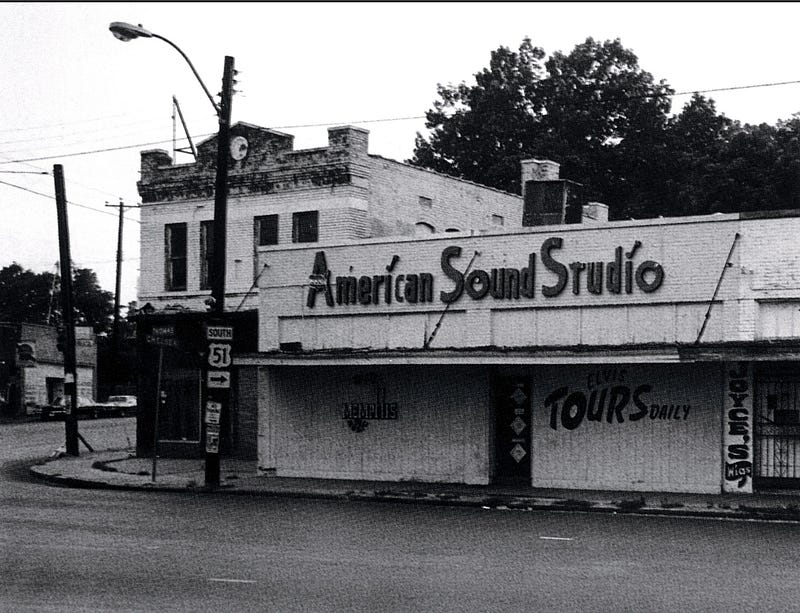
American Sound Studio, located at 827 Thomas Street before it was inexplicably demolished in 1990. Producer Chips Moman and the Memphis Boys session cats yielded career-defining hits for Elvis Presley, B.J. Thomas, Neil Diamond, Dusty Springfield and the Box Tops. Image Credit: Elvis Presley Enterprises
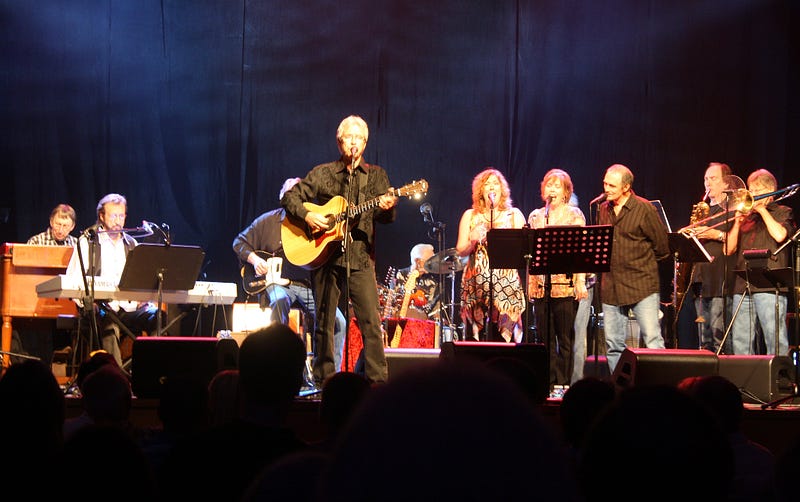
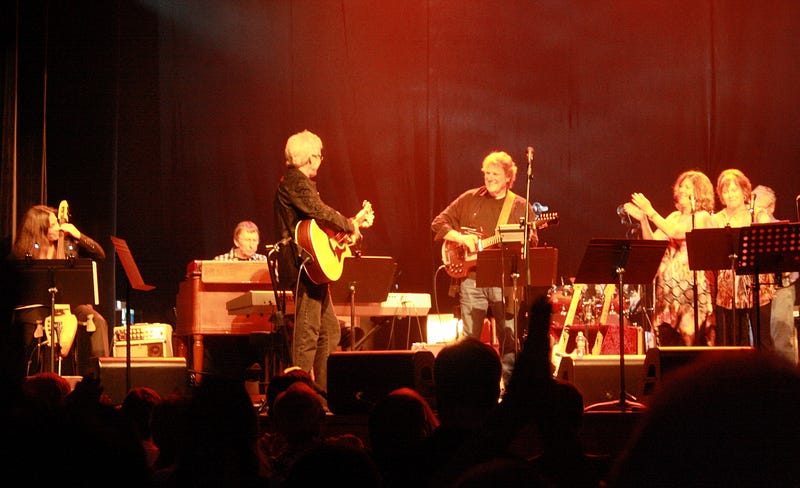
Elvis tribute artist Terry Mike Jeffrey and the Memphis Boys during a show on June 25, 2011 at the Franklin Theater in Franklin, Tennessee. L to R are cellist Jenny Young (Reggie Young’s wife), organist Bobby Emmons, TMJ, guitarist Reggie Young, Ginger Holladay, and Mary Holladay. Image Credit: Courtesy of Bobby Wood and Terry Mike Jeffrey
Memphis Boys Bobby Emmons, Bobby Wood, Reggie Young, Terry Mike Jeffrey, Gene Chrisman, Ginger Holladay, Mary Holladay, Box Tops guitarist Gary Talley, Jim Horn and an unidentified trombonist collide on June 25, 2011 at the Franklin Theater in Franklin, Tennessee. Image Credit: Courtesy of Bobby Wood and Terry Mike Jeffrey

© Jeremy Roberts, 2015, 2018. All rights reserved. To touch base, email [email protected] and mention which story led you my way. I appreciate it sincerely.

Music
Elvis Presley
Memphis
Music Producer
Songs
Recommended from ReadMedium