
Straight shooter Roben Jones rights an unjustly neglected Memphis music saga
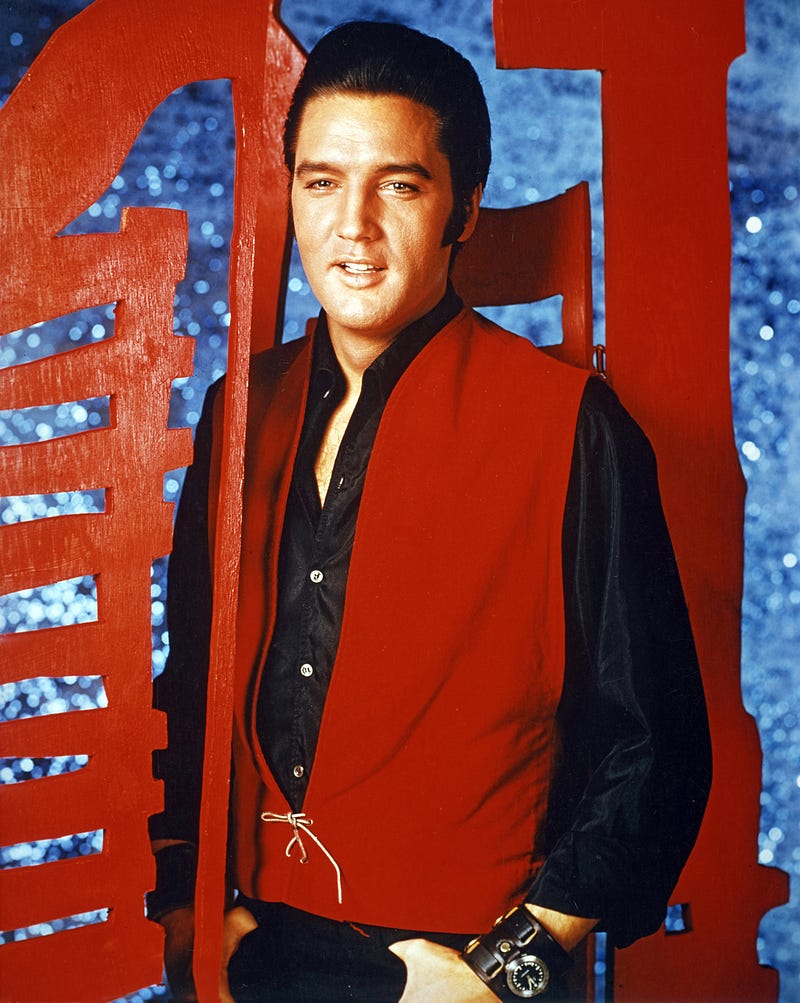
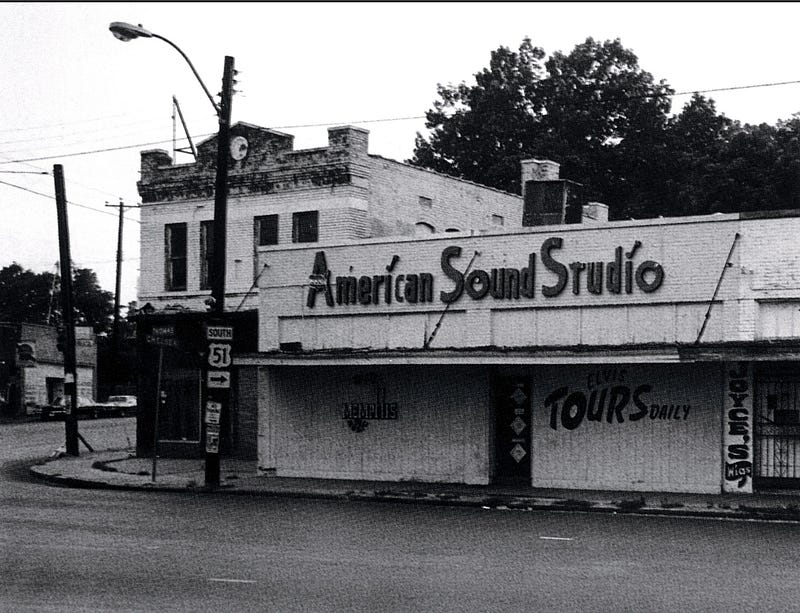
“Chips Moman could paint the most beautiful pictures with sound and sum up feelings of hard times, despair, and sorrow like nobody else ever could.” Despite the late producer-engineer-songwriter’s American Sound Studio in Memphis being shamefully torn down and currently the home of a Family Dollar store, his legacy is firmly intact. Along with the 827 Thomas Street band, widely known as the Memphis Boys, Moman was behind the console for career-defining hits like Elvis Presley’s “Suspicious Minds,” Dusty Springfield’s “Son of a Preacher Man,” Neil Diamond’s “Sweet Caroline,” B.J. Thomas’s “Hooked on a Feeling,” Waylon Jennings’ “Luckenbach, Texas,” and Willie Nelson’s “Always on My Mind.”
If you missed Part One — “A Primer ‘60s Soul Playlist…” — tap the link. Otherwise, hang tight for chapter two as Roben Jones, author of the 409-page Memphis Boys tome, unflinchingly documents the “topnotch talents who never got the credit they deserved” when compared to the Wrecking Crew, Motown’s Funk Brothers, Muscle Shoals’ Swampers, or Nashville’s A-Team.
The Roben Jones Interview, Part Two
Your writing trajectory started where?
How I became a writer is a long story, but I’ll condense as well as I can. My mother, Natalie Cantley Jones, and one of her older sisters, Sarah Cantley Jones [they married into the same family], had always wanted to write. Sarah died in childbirth, and my mother was the proverbial trapped housewife. They were born at the wrong time and in the wrong part of the country. Mom knew it, and it ate at her.
They were the reason I became a writer and the reason I didn’t marry until I was 63 years old. A couple of my older cousins had also tried their hands at short stories and poetry. Writing was like the family business.
When I was 10, I was inspired to write a poem about wishing I had a beautiful blue velvet dress with gold lace trim like that of another girl in school. My fifth grade teacher was my godmother, and I showed the poem to her.
The next day I found the collected works of Eleanor Farjeon — the lady who did the 1931 lyric for the hymn “Morning Has Broken” which Cat Stevens took to the Top Ten decades later — in my desk. My path was set.
All through school I wrote poetry and when I was 16 I published a chapbook of my poems locally. From there I did publications in small magazines, gave readings, and finally was published in a poetry anthology of West Virginia writers, Wild Sweet Notes [2000]. That was my biggest publication prior to Memphis Boys.
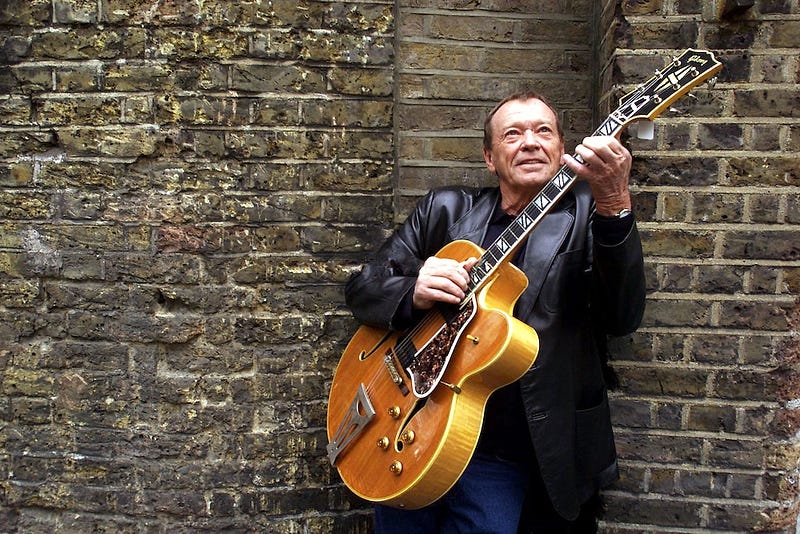
How did you become aware of Chips Moman and the Memphis Boys’ astounding achievements — e.g. 120 songs cut between 1967 and 1971 that entered the Billboard Hot 100?
I tell the story in the book’s preface — but to edit it down a bit — I heard the Box Tops’ version of “I Shall Be Released” on the radio [No. 67 POP April 1969]. The arrangement and production were stunning — it took a Bob Dylan song to an entire other place.
I bought the single later that day, along with Merrilee Rush’s album [i.e. Angel of the Morning, October 1968], not knowing until I got the records home that the same people — Tommy Cogbill and Chips Moman — had produced both! And the work was just so good, innovative, and unique. I just had to hear more, and so I started collecting every American Group record I could find when I was 14 years old [the session cats were also originally nicknamed the 827 Thomas Street Band].
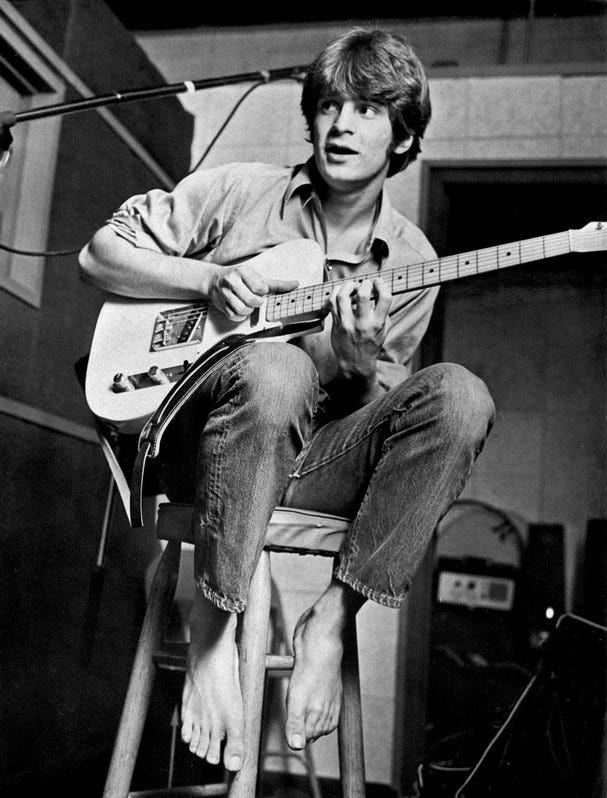
Did you try to reach idiosyncratic Box Tops frontman Alex Chilton for an interview?
As for Alex Chilton, Box Tops lead guitarist Gary Talley attempted to put me in touch with him, but Alex didn’t want to talk about those days. He hadn’t ever liked being what he was in the Box Tops and was only 16 years old when their debut A-side “The Letter” shot to number one in 1967 [four years later Chilton founded Big Star, the best rock band you’ve never heard, at Memphis’s Ardent Studios with co-conspirator Chris Bell]. Alex died of a heart attack just as the book was published [1950–2010], so that brought the circle to a close.
How did you get the idea to chronicle the Memphis Boys saga?
It actually wasn’t my idea — I would have never presumed I could competently do a book like that! But Mike Leech [1941–2017] had a website then, and I found it and began asking him questions about the songs and sessions. When Mike found out I was a poet and devotee of the studio’s output, he thought I’d be a good choice to do the story.
He’d been looking for someone to document American’s history for a long time. By then, he had become my best friend, and when he first suggested the idea to me I was overwhelmed that he thought I could do it. I told him I’d give it a try. He believed in me far more than I believed in myself, and so with him behind me every step of the way, I began.
Any encounters with the Memphis Boys prior to befriending Mike Leech?
I never had met or known any of them, although I found out in the course of the book work that Bobby Wood was married to a girl from near Gallipolis, Ohio — where I am — and that he had sometimes visited here with her to see her family! Small world, isn’t it.
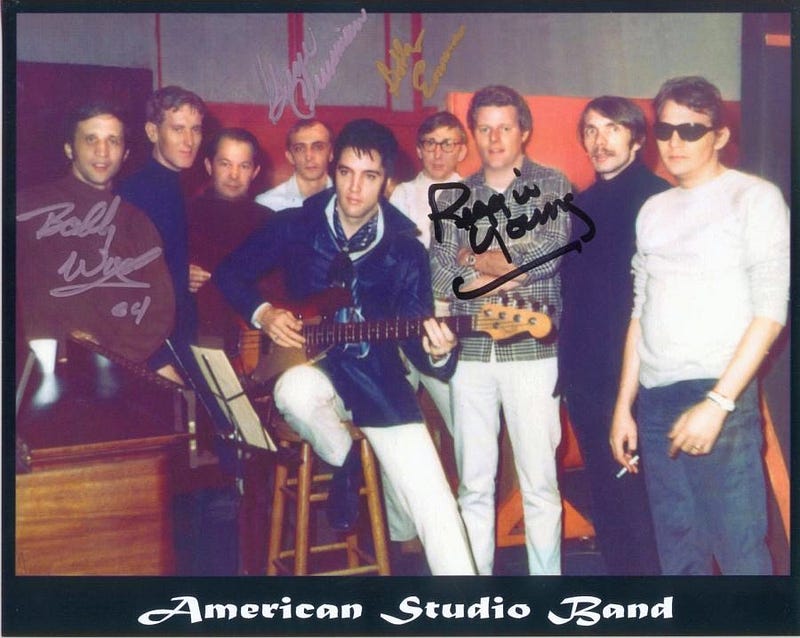
Were they suspicious about talking with you on the record?
Mike paved the way for me with the rest of the Memphis Boys. If anybody was a little doubtful about talking to me, it probably would have been Chips. The others seemed to be just glad somebody was attempting to tell their story from their point of view. They’d always felt neglected by historians, and they had been.
“Suspicious Minds” songwriter Mark James did not participate in the book. Has he read it?
I met Mark in Memphis, actually, post-publication. He had originally said over the phone that he would think about speaking for the book, but he never did. When we saw each other he told me, “If I’d known the book was going to be like that, I’d have talked to you.” I am not sure if that was a compliment or not.
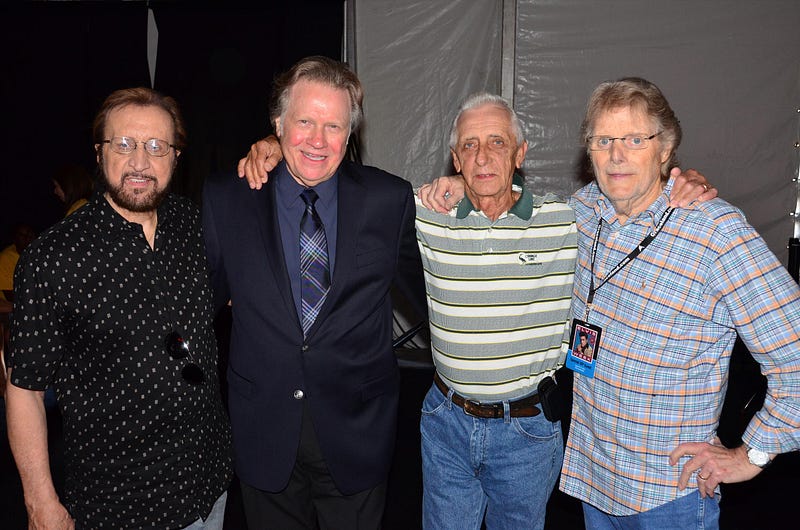
When you interviewed pianist Bobby Wood, were you aware of his impending autobiography, Walking Among Giants: From Elvis to Garth [2012]? So far he’s the only Memphis Boy to document his life and career.
Bobby was a great source for my book. He’s an extremely bright and articulate man, and his memory for events always has a good slant to it. I knew he was writing his memoirs, in fact I was very glad he was. His book would help publicize mine, and mine would help his. I bought a copy of his book, and he autographed it to me. Of course, everyone in the American group, and in Muscle Shoals, got autographed copies of my book.
Bobby had an interesting solo career, with one self-titled album [1964] on Joy Records and various singles to his credit. They’re all released on an album called If I’m a Fool for Loving You: The Complete 1960s Recordings [2019, RPM Records]. Penned by Stan Kesler, “If I’m a Fool” was Bobby’s highest charting A-side [No. 74 POP]. Elvis covered it with Bobby supplying piano at American.
Are there any American Sound recordings that are a chore to hear all the way through?
No, because Chips and the Memphis Boys didn’t do filler. There isn’t a record the group did that doesn’t yield some musical delight, truth, or revelation somewhere. That’s because they were so strong for songs. I think that came from Chips. Being a writer himself he knew a good song when he heard it. The same with Dan Penn.
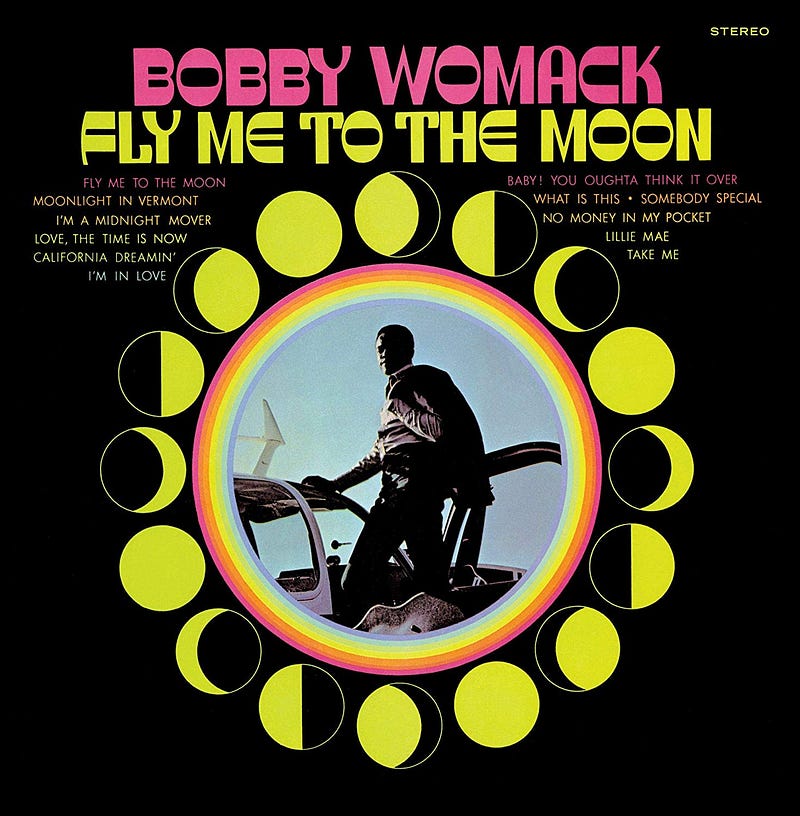
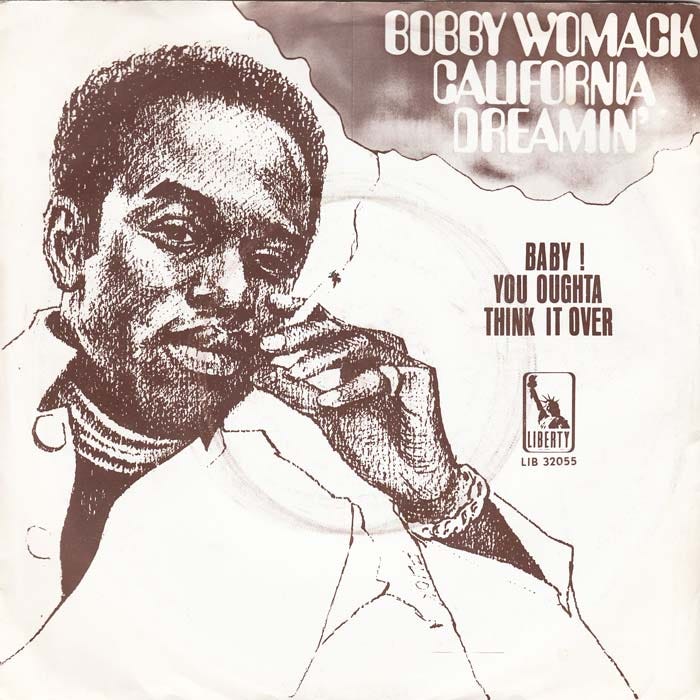
Let’s address Bobby Womack and his session guitar work with the Memphis Boys. Eventually he cut his debut album at American — 1969’s Fly Me to the Moon. Besides the flabbergasting soul contained in the title cut, Womack put his stamp on “California Dreamin’” and contributed “Baby! You Oughta Think It Over” and “I’m in Love” among others.
Bobby Womack was a great contributor at American, both as an artist and session musician for about a year and a half. His guitar playing was one of a kind, and his songs fit right in with the American philosophy. I always cite his “People Make the World”, which appeared on the Box Tops’ first album [The Letter / Neon Rainbow, 1967], as a great example of his profound, soulful writing.
Chips and the Memphis Boys likely knew they’d be recording Bobby as an artist from the get-go as well as having him around doing sessions and writing. From all accounts including his own, Bobby was very happy at American. Perhaps he wouldn’t have had the problems he did later in life [e.g. bad record deals, cocaine and alcohol addictions] if he’d stayed.
Were there any artists that Chips and the Memphis Boys revealed unpleasant memories about working with?
A few of them didn’t care for Neil Diamond [e.g. Tommy Cogbill], although Chips liked him.
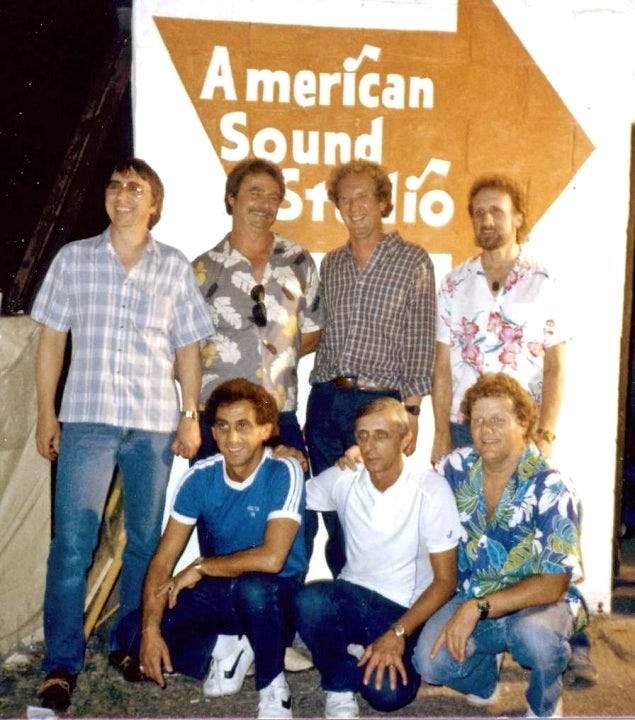
On his intimate 2004–2017 SiriusXM Elvis program and Elvis: My Best Man autobiography, Memphis Mafia member George Klein repeatedly told folks that he was responsible for convincing Elvis to go to American Sound.
Memphis Mafia foreman and American promotion man–eventual studio manager Marty Lacker was the one who really influenced Elvis to go to American. He thought American worked in a more modern style than the Nashville people were doing at that time, and he was right.
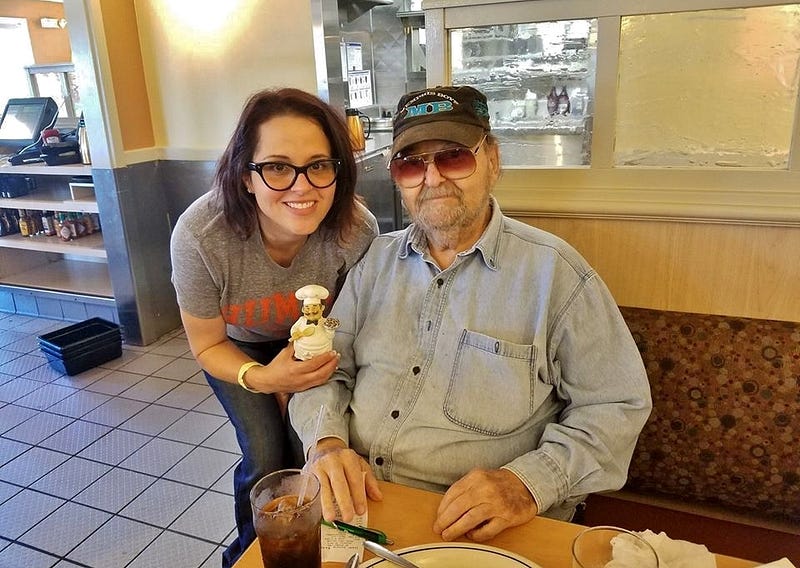
Marty Lacker was notorious for being cantankerous and not suffering fools gladly. Exiled to the Island of Misfit Toys by Graceland, how on earth did you convince him that you were on the level and had the best of intentions with your book?
I think Mike Leech referred me to him. I liked Marty because I am that way, too. He said he had an instinct about people and could tell right away if you were on the level. I guess I passed muster. He was a complete straight shooter with me. How he told it was how it was, and you could take it to the bank.
Marty eventually got me to Red West [1936–2017], whom I also liked. Red was great — a tough guy — but down to earth, warm, and friendly. Very smart, talented man. I was so saddened at how ill Marty fell in his last year [1937–2017]. He was just the opposite of what he had been, espousing things that if he had been well he’d never have said for one minute.
Along with Steve Binder and his innovative vision for the ’68 Comeback Special on NBC, how crucial were Chips and the Memphis Boys to Elvis’s then-flagging recording career?
The influence of Chips and the Memphis Boys on Elvis’s comeback cannot be overstated. Elvis chose the perfect place to launch a serious comeback and prove he could do more than those lightweight movies had asked of him. The American material was grown-up music and full of soul and feeling. They put Elvis back on the map, and he in turn put them on the map.
I firmly believe that the opening cut on From Elvis in Memphis, Dallas Frazier and A.L. Owens’ up-tempo, soulful “Wearin’ That Loved on Look,” had single potential. Gene Chrisman’s drums are like a locomotive.
It could have been a great single. There was just so much to choose from on that album. All the Memphis stuff was just so superb!
Is there any way to identify Mike Leech’s bass playing vs. Tommy Cogbill’s?
Most of the time, yes. Mike usually played straight 1–2–3–4 rhythm, like a rock and roll player, and nobody could hold that beat down better than he. Tommy played much more intricately. If it sounds like a lead bass, it’s probably Tommy. Using the Elvis sessions as an example, “Stranger in My Own Home Town,” “I’m Movin’ On,” and “Gentle on My Mind” feature Tommy’s work.
Of course, Mike could do the intricate stuff too — that’s him on “Suspicious Minds.” Mike was out sick for Elvis’s February sessions, so it’s mostly Tommy then [i.e. “Kentucky Rain,” “Only the Strong Survive,” and “Any Day Now”].
“I’m Movin’ On” is owned by Cogbill.
Yep! That’s Dan Penn’s arrangement, from the earlier version he cut on the Box Tops [Non-Stop, July 1968].
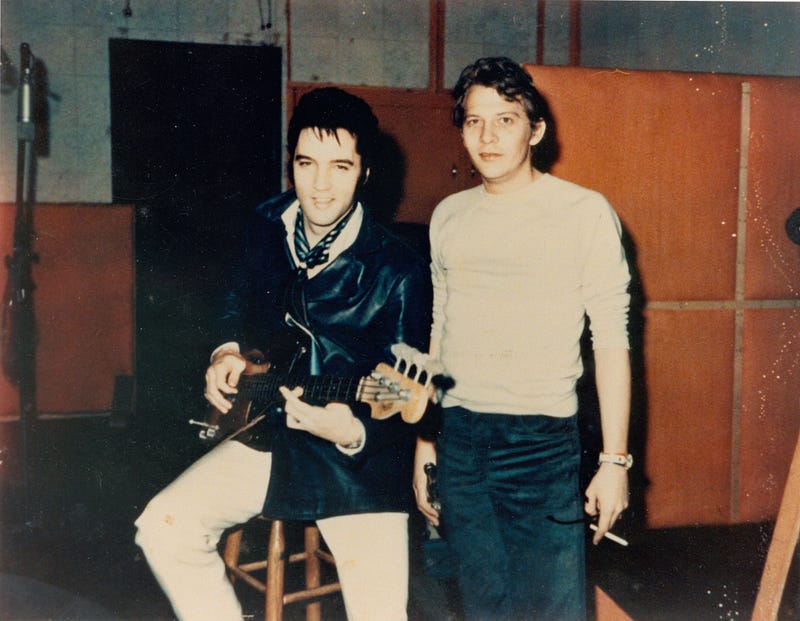
Seems like a no-brainer that Graceland should add Dan Penn to their Elvis Week guest schedule each August. I’d love to do an interview — Penn seems like a mysterious incarnation of Forrest Gump who rubbed elbows with all these musical giants.
The Graceland administrative people don’t seem to realize that Dan was there for the Elvis sessions. He was like the official photographer. All the photos of the session and of Elvis and Chips with Roy Hamilton were taken by Dan. He wasn’t interested in Elvis’s celebrity. All the Elvis hanger–ons turned a lot of people off, including Dan, so they never had a real conversation.
Elvis did carry around a demo of “Nobody’s Fool” [the title cut of Penn’s debut 1973 album co-written by Bobby Emmons] in his briefcase but never got around to doing it [Organized by Penn’s friend Marty Lacker, Elvis’s two sessions at Stax in July and December of that same year would have been the most plausible opportunities to wax “Nobody’s Fool”]. Elvis would have sung the tar out of it. Dan never got the credit as producer that he should. I hope the book alleviated that a little.
When did Elvis last speak with Chips and the Memphis Boys? Reggie Young, Tommy Cogbill, Bobby Wood, and Bobby Emmons reunited with Elvis in July 1973 at Stax Records. Mike Leech kept doing bass overdubs and string arrangements with Glen Spreen at producer Felton Jarvis’s behest in Nashville until Elvis’s death.
The last time Chips and Elvis spoke would have probably been at Elvis’s 1969 New Year’s Eve party inside T.J’s nightclub in Memphis. Elvis invited all of the group as well as Mark James and Ronnie Milsap as a way of saying thanks.
Elvis was undoubtedly grateful to Chips and probably would have worked with him again if it hadn’t been for the nasty rumors spread by the Nashville people that Chips had tried to steal “In the Ghetto” and release it on another artist before Elvis’s record came out. They wanted him back in their studios where they had the control.
To my knowledge Mike never saw Elvis after that New Year’s Eve party as Elvis never attended overdub sessions in Nashville. I don’t think Elvis saw Gene Chrisman after 1969 either, and his connection with Reggie, Tommy, and both Bobby’s ended with the July 1973 Stax session [picks of the litter include Mark James’s “Raised on Rock” and Tony Joe White’s “I’ve Got a Thing About You Baby” and “For Ol’ Times Sake”].
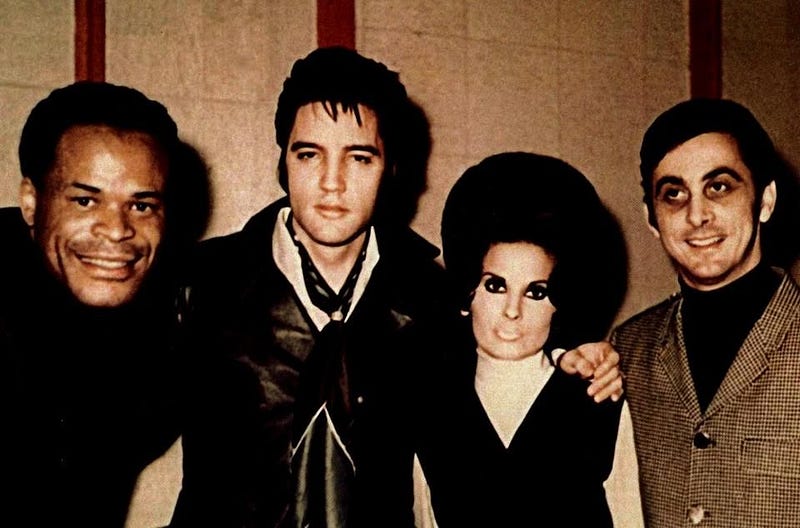
Do you concur with Bobby Wood’s assessment that the Memphis Boys never found the proper material for Roy Hamilton? Even though none charted, the African American entertainer delivered powerhouse baritone versions of “The Dark End of the Street,” Conway Twitty’s “It’s Only Make Believe,” and “Angelica” during the same week Elvis first visited the studio in January 1969. Elvis refused to record the latter and insisted his idol cut it instead.
Bobby was talking from the perspective of someone who had heard all of Roy’s work at American. They did enough for an album, but after Roy died there were so many claimants on his estate, like what happened to Frankie Lymon, that Chips just let it go. He didn’t want the hassle of putting it out.
Maybe the material in the vaults was not deemed good enough to let go anyway because Chips was a perfectionist about his work…and we listeners were the winners there. The five available songs [“100 Years” and “Hang–Ups” are the remaining B-sides] we have heard on Roy are good — and fitted his voice — but I’d put the fault more with Bell’s lack of promotion for those singles.
Chips’ custom label AGP was distributed by Bell, who didn’t often know how or where best to market American’s work. Also, they probably didn’t want to build up a label whose success might rival theirs. Understandable, if you’re a record executive like Larry Uttal. AGP was over when their contract with Bell ended in 1970, and Uttal went elsewhere for other deals.
Roy’s American singles have been re-released on CD [but never in the USA], and presumably they’re in the vaults of the company who succeeded Bell — Arista — who would presumably own the rights.
Chips’ perfectionist streak reminds me of his 21st century interviews where he expressed dismay that a second album [the 22-track live-studio From Memphis to Vegas / From Vegas to Memphis] was compiled without his consent. His feelings seem naive since RCA Victor, with Colonel Tom Parker’s approval, always released every master from an Elvis session. For their star’s 10 year anniversary with the label, they audaciously distributed the barrel-scraping Elvis for Everyone featuring Elvis standing behind a cash register. Money was always the bottom line.
Chips was a very naive man about business. Always. He didn’t have a businessman’s way of thinking. He really should have known that once a recording left his hands, it also left his control, but I’ve talked to other producers since who didn’t completely realize this.
One reason Chips had trouble with Elvis’s camp is that they were about money — they wanted Elvis to do songs they could get the publishing kickback on — and Chips didn’t go along with that kind of thing.
Don’t go anywhere yet! “A Beautiful Mess with ‘Memphis Boys: The Story of American Studios’ Wordsmith Roben Jones” is the finale installment of the interview. Tap the link below.


© Jeremy Roberts, 2019. All rights reserved. To touch base, email [email protected] and mention which story led you my way. I appreciate it sincerely.


