
Scrapping the setlist with electrifying Elvis crusader Terry Mike Jeffrey
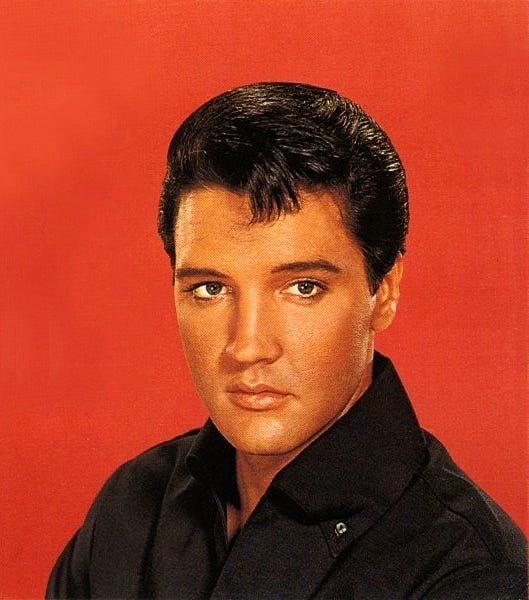
Singer, pianist, and guitarist Terry Mike Jeffrey gladly flies by the seat of his pants whenever an Elvis request show occupies his calendar. This “Elvis Presley: The Truck Driver Who Dared to Rock” beat column has some burning questions for the Paducah, Kentucky, native who bravely goes where few artists journey — tearing up the setlist.
Cinching his Elvis fandom by seeing Blue Hawaii 17 times in one week, soundtrack atrocity “Queenie Wahine’s Papaya,” who he wishes he could have worked with in the Elvis world, doing a session with Scotty Moore swapping guitar for an engineer’s perch, cutting TCB Band bassist Jerry Scheff’s Jungle Room outtake “Fire Down Below,” the Memphis Boy he acknowledged from the stage, to the Elvis Now song request that completely stumped him, there’s something for everybody.
The Terry Mike Jeffrey Interview, Part Two
The last time we spoke was in tribute to Chips Moman and the Memphis Boys and their pivotal instrumental contributions to Elvis’ comeback recordings at American Sound Studios in 1969. Are you still in touch with surviving drummer Gene Chrisman and pianist Bobby Wood?
I did an Aug. 4 concert in Bowling Green, Kentucky, and Gene was in the audience. He called me a couple of days prior to let me know he’d be there. I made a big splash about it to the audience and introduced Gene and had him stand up. I told the story of all the major songs and artists he’s played drums for [e.g. Dusty Springfield, Bobby Womack, Neil Diamond, Aretha Franklin, the Box Tops, and B.J. Thomas]. It went over really big with the audience.
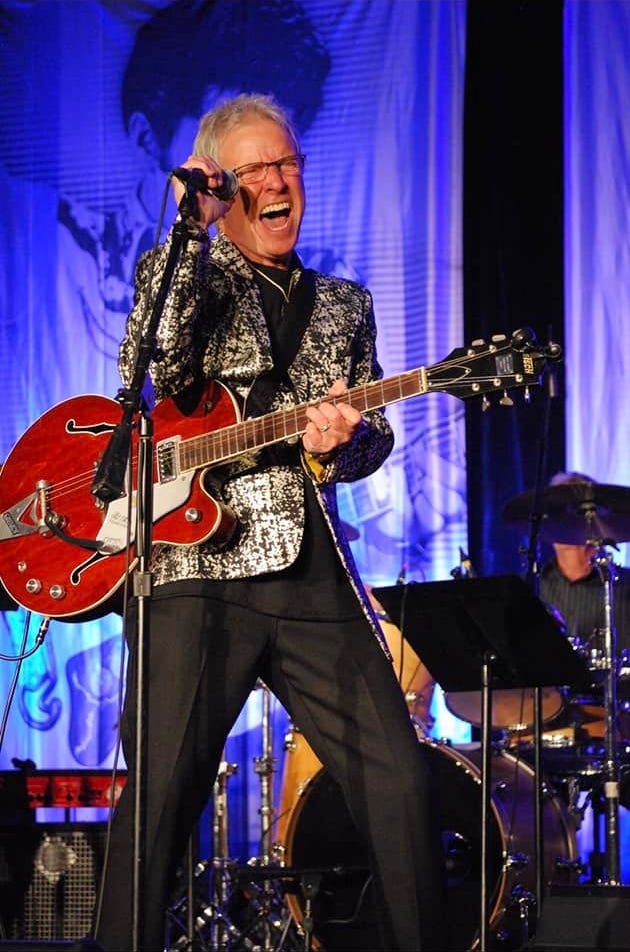
Who’s somebody in the Elvis world that you’ve always wanted to collaborate with but the opportunity to do so never materialized?
Bill Black, hands down. I would love to have worked with him [Elvis’ first bass player, whose comical antics kept button-downed audience members in stitches who otherwise might have revolted at the sight of Elvis’ suggestive gyrations, was felled by a brain tumor at age 39 on Oct. 21, 1965].
When I was 18 years old in June 1972, Scotty Moore engineered a session for me at his Music City Recorders studio in Nashville. I was doing sessions to develop some demos for my manager to promote my career in music. My manager booked the Music City session through an acquaintance of his that was an arranger. That guy wrote arrangements for the songs I chose, none of them Elvis songs since I was trying to find my own thing in country pop.
We arrived at the studio, walked in, and started meeting the hired musicians, including Norbert Putnam on bass, Jerry Carrigan on drums, and Chip Young on guitar. I didn’t know who these guys were, but they’d all been in the studio with Elvis. Not long after I realized the body of work they’d done with him [e.g. That’s the Way It Is, Elvis Country, He Touched Me, and “Merry Christmas Baby”].
Then we met the engineer — the guy running the board. We shook hands and he said, “Glad to have you here. I’m Scotty Moore.” I didn’t recognize him at first, but when he said that, I knew his face right away. “Wow…the Scotty Moore? That played for Elvis?” Scotty replied, “I’m guilty,” and all the guys had a laugh over that.
We started working on the music tracks, and then about an hour and a half later the background singers came in — Ginger and Mary Holladay — plus one other girl that unfortunately I don’t recall her name. I would end up working a few more times over the years with the Holladay Sisters.
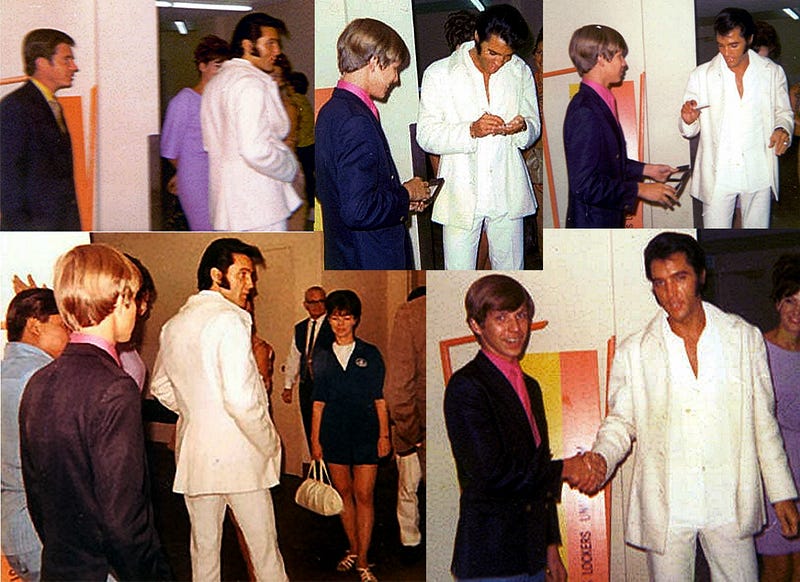
During a break I talked to Scotty some more, just about being a huge fan, not only of Elvis but of Scotty and Bill and D.J. Fontana. I talked to him about me meeting Elvis in 1969 in Vegas. Scotty was friendly, did a great job at the board, and all went well.
When my session was complete, we had about 45 minutes left that was already paid for. Just for fun, we did “See See Rider.” I asked Scotty if he’d play on it, but he said, “No, my job is engineer.” But it was still fun, and I had a ball. I didn’t realize at the time that the studio belonged to Scotty, and he ended up owning that place for a very long time.
I was around Scotty several times throughout the ’80s and ’90s for one reason or another. The only time I actually got to sing with him was on Aug. 16, 1997, in Memphis at the Mid-South Coliseum [in front of 10,000 fans during the prototypal launch of the “Elvis: The Concert” multimedia experience syncing Elvis’ vintage vocals and image with live accompaniment]. For the “Can’t Help Falling in Love” grand finale, the whole cast came out— Scotty, D.J., Millie Kirkham, the TCB Band, the Jordanaires, J.D. Sumner and the Stamps Quartet, the Imperials, the Memphis Symphony Orchestra, Charlie Hodge, the Sweet Inspirations, and Priscilla and Lisa Marie Presley. It was a very full stage!
I’ve worked with the vast majority of Elvis’ musicians over the decades. Not until August 2021 did I get to share a stage with harmonica extraordinaire Charlie McCoy [“The Nashville Marathon Sessions 50th Anniversary Concert” at Graceland], and that was a treat.
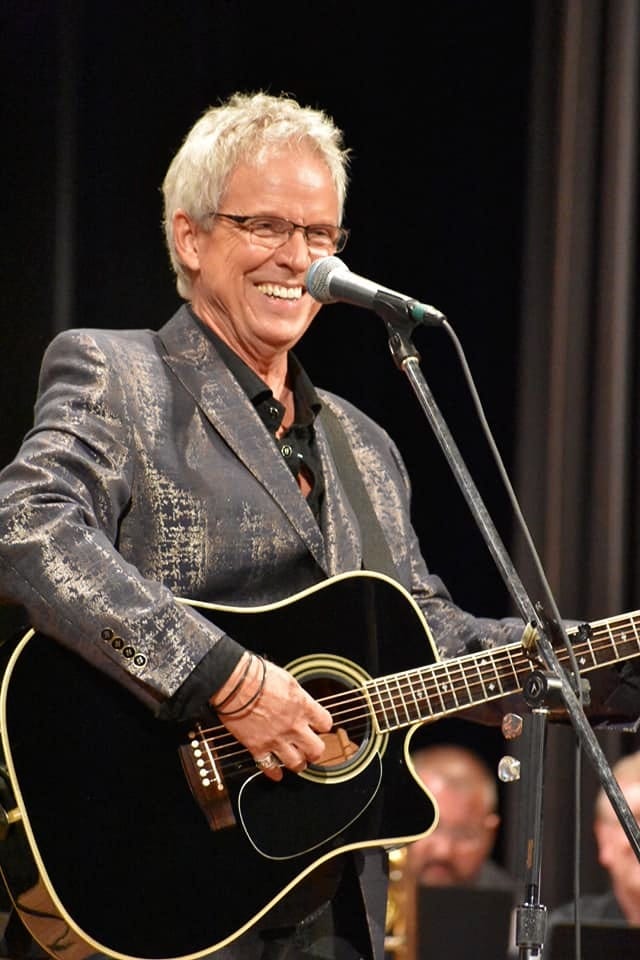
What’s the quintessential Elvis setlist opener and closer?
It varies. I try to open with something up-tempo and happy, like “I Want You With Me” [Something for Everybody, 1961], but that always changes. I like to close with something with some meat to it, like “Unchained Melody” or “How Great Thou Art.”
What factors determine the instrument you will play for each selection?
Piano tends to be the one I lean on for most songs, but certain songs really need the guitar, like “Mystery Train,” “In My Way” [Wild in the Country, 1961], and “Cotton Candy Land” [It Happened at the World’s Fair, 1963].
How much experience in front of crowds did you have to accumulate before you were comfortable ditching a setlist?
I’ve been doing Elvis request shows for a long time. They’re one of my favorite events because of my extreme love of performing Elvis’ music. Back in the ‘70s, my band Flight 602 and I used to include a “Stump the Band on Elvis” one-hour show, and it was always fun. I got away from doing request shows for awhile but started them back up in 2016.
How do you deal with somebody shouting out an Elvis song that escapes your memory?
If there’s one that I simply can’t take a stab at, I throw up the white flag. But that has happened so few times that it surprises me. Once in the ’70s someone asked for “Sylvia” [Elvis Now, 1972], and I could not come up with even a short portion of it. I went home and learned it right away.
A few months ago a patron asked for “Girl of Mine” [Raised on Rock, 1973]. I knew at least a verse and chorus of it, but for some reason my mind just drew a blank. I was able to pull it off a bit later in the same show when it finally came to me how to start it. I love that kinda challenge.
In general, the soundtracks come easy for me. As a kid I couldn’t wait for the next new Elvis movie to come out. I’d go to the theater and watch the movie multiple times. In 1961 I was seven years old, and I saw Blue Hawaii 17 times in one week and just loved the soundtrack. By the time I was eight, I could sing every note and every word of those songs at the drop of a hat, and that has stuck with me all these years. Elvis’ soundtracks have taken a beating for decades from many critics, but I tend to love rarely heard songs like Sound Advice” [Elvis for Everyone, although actually tracked during the 1961 Follow That Dream soundtrack sessions], “Home Is Where the Heart Is” [Kid Galahad, 1962], “Song of the Shrimp” [Girls! Girls! Girls!, 1962], “I’m a Roustabout” [Otis Blackwell’s rejected soundtrack title cut, lost for nearly 40 years until the Elvis: 2nd to None hits compilation included it as a bonus track], “Come Along” [Frankie and Johnny, 1966], and “Queenie Wahine’s Papaya” [Paradise, Hawaiian Style, 1966].
So there’s not even one Elvis performance that you’re unfamiliar with?
I’m very familiar with all of them. Should a song not come to me, I’ve noticed that if I move on to another request and ignore the first one for a few minutes, it’ll come to me later in the show.
In spite of Elvis being in a dark place emotionally, the Jungle Room sessions that furnished us with From Elvis Presley Boulevard, Memphis, Tennessee, and Moody Blue found that he could still compellingly summon his creative muse. Bassist Jerry Scheff wrote a funky rocker called “Fire Down Below,” which would have been a left turn from Elvis’ dependence on sad love songs. The TCB Band cut an accompaniment track at Graceland, but Elvis never did overdub his vocal. Almost 25 years later you took a turn at the mic alongside Glen D. Hardin, James Burton, Ronnie Tutt, Scheff, and the Sweet Inspirations. I’ve always been fascinated by this what-if Elvis song.
Jerry asked me to record “Fire Down Below” as close to what Elvis’ vocal might have sounded like. After a few takes, he changed his mind and then asked me to sing it more like myself. That’s the take that Jerry used. I think it was because he decided spur of the moment to try to make it more current sounding. I liked it either way. I thought “Fire Down Below” could have been Elvis’ next “Burning Love,” and it’s a shame he didn’t get around to cutting it.
© Jeremy Roberts, 2023. All rights reserved. The Terry Mike Jeffrey interview was sequenced cohesively. To touch base, email [email protected] and mention which story led you my way. I appreciate it sincerely.


