
We Should Counter Microaggressions
Assessing the role of social norms in perpetuating racism
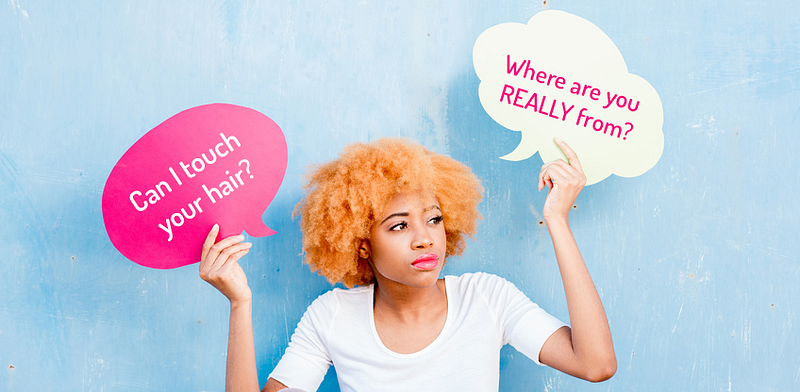
It is the sum total of multiple micro-aggressions by whites to blacks that has pervasive effect to the stability and peace of this world (Desmond-Harris, 2015).
Sometimes, it is not size, but rather the strength and consistency of an assault that slays an opponent. Micro-aggressions aim to cut at the Black psyche one offense at a time. While hurting people usually violates social norms, Black people are not subject to such normative protections. Because the descendants of African slaves want to address the inequities driven by the nation’s treacherous beginnings, we are considered the American tale’s antagonists.
Even if young Civil Rights Activists achieve the systemic reforms necessary to create a more just union, Black people will still experience micro-aggressions in their daily lives. These behaviors reflect an inherent tension between white and Black people in America. While the country is called the United States, genuine unity rarely extends past homogenous groups. Our brains are hardwired to recognize differences. However, racism, a hierarchal system of control, produce dangerous results for Black people.
People who routinely experience micro-aggressions suffer from a range of negative emotions, according to Swart. Their brains are flooded with the stress hormone cortisol. As a result, life can feel more like a fight than a journey. They may become always on guard and more risk-averse, which can impact their performance at work and in other areas of life, she said (Compton, 2020).
Life for Black people often feels combative because we often have to defend ourselves against macro and micro-aggressive behaviors. Essentially, racism forces Black people into a defensive stance, which negatively impacts the body. Increased cortisol levels can increase an individual’s chances of developing cardiovascular disease, insulin resistance, diabetes, and osteoporosis. Thus, even white people who have never raised a hand to hurt Black people may have inadvertently damaged the health of those around them.
Black women, in particular, experience the stress of trying to adhere to European beauty standards that are impossible to accomplish. Colleagues remind them that their hair is not straight enough, their skin is not fair enough, and that their bodies do not conform to rigid European Body standards.
Micro-aggressions are not harmless acts of teasing; they are detrimental to Black people’s health and longevity. We should take a closer look at some examples of micro-aggressions as well as how to counter them.
Micro-aggressions are Social Norms
Micro-aggressions: Brief and commonplace daily verbal, behavioral, or environmental indignities, whether intentional or unintentional, that communicate hostile, derogatory, or negative racial slights and insults toward people of color(Jaluch, 2019).
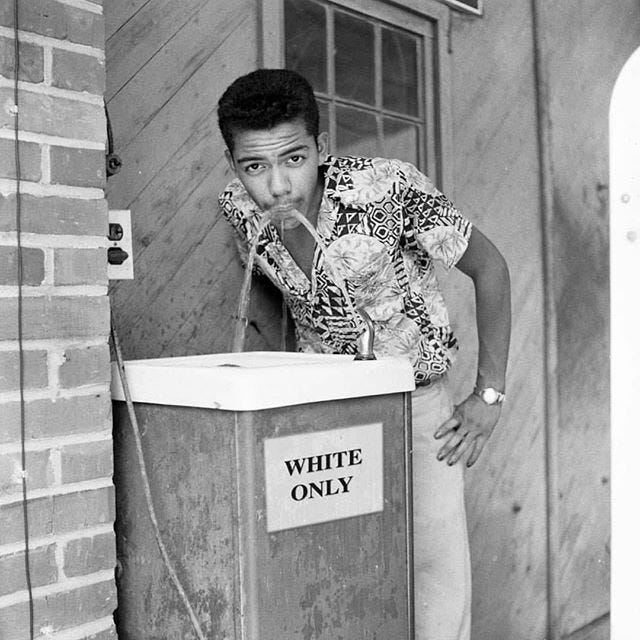
In America, racism is a social norm in that overt and covert acts of bigotry are acceptable behaviors. Only once these behaviors are socially unacceptable will the public support structural changes. As seen in the aftermath of the Civil Rights Movement, the structural change helped redefine cultural norms. State and local governments no longer force Black people to sit in the back of the bus, nor are we forced to drink from blacks-only fountains. While young Black Civil Rights Advocates value the progress made in defying social norms, it is once again time for us to push the narrative forward.
Just as Socrates felt that it was necessary to create a tension in the mind so that individuals could rise from the bondage of myths and half truths to the unfettered realm of creative analysis and objective appraisal, so must we see the need for nonviolent gadflies to create the kind of tension in society that will help men rise from the dark depths of prejudice and racism to the majestic heights of understanding and brotherhood (Martin Luther King Jr 1963).
Through persistent advocacy for equal rights and justice, tension will arise. The Black Lives Matter protests create pressure, willing Americans into abandoning prejudice while embracing an inclusive culture. The goal of said movement is to create new social norms to challenge the existing ones that permit extrajudicial attacks on Black people. However, the movement must also confront the micro-aggressions Black people experience by normalizing a response in kind. Only then can we feel free from denigration in America.
There is a multitude of micro-aggressive behaviors. These interactions vary by the setting, the aggressor’s intent, and the Black person’s interpersonal or professional relationship. Uniquely, Black women, in particular, experience misogynoir, an intersection between sexism and racism.
These slights are effective methods of hurting someone in a way that startles and thus silences dissent. This is the destructive power of micro-aggressions. The compounded impact of micro-aggressions is dehumanizing. Constant chastisement attempts to condition Black people to self-loathing, accepting a lower social status.
My Experiences
I am guilty of letting a white woman smell my hair. She did it without asking, and before that moment, I thought we were friends.
I did not know what to think until she said, “Your dreadlocks smell so good. I’m surprised”. She commented that most people have stinky dreadlocks, though as my face strained, she tried to make a distinction suggesting that white people’s dreadlocks were the ones that smelled. Why did she pretend that this was about dreadlocks in general?
As a young Black woman trying to rise through my company’s ranks and gain the respect of my peers, I nervously laughed. In part, I was happy that I smelled good so that I would not get mocked or fulfill a dangerous stereotype about other Black women who wear natural hairstyles. It felt both degrading and validating — like a quick stab, you are both hurt by the pain and joyful that it was only a momentary injury.
She was a liberal white woman, and I thought of her as a political ally. We were the same age. However, I was born in Louisiana, and she was born in a northeastern state. I knew that she represented hope that one day, with enough young liberals, Louisiana could support progressive legislation. That inclination to seek allies made it difficult for me to defend myself at that moment. After all, she protested with us in the aftermath of Trayvon Martin. She fought against racism in the New Orleans Punk Rock community after Katrina. I was not part of this community, but it felt almost reassuring that while their clique of friends was mostly white, someone would stand up to racist behavior.
While she did not intend to, her statement hurt me. I already felt insecure about my hair because of past discrimination at a previous job, so I was anxious and timid about belonging there. Only distance and freedom from needing that position freed me from the constant intentional, unintentional micro-aggressive behaviors at work.
The normalization of micro-aggressions is antithetical to a well-rounded society with equal opportunities for marginalized individuals (Yoon, 2020).
If young Black women read this, please learn from my error. The best way to deal with these insults is to confront them. Running from confrontation only caused me more pain. Trust in yourself to address the issue with respect and dignity. If these aggressions occur frequently, do anything in your power to leave these environments.
Almost all black±white racial interactions are characterized by white put-downs, done in automatic, preconscious, or unconscious fashion. These mini disasters accumulate (Desmond-Harris, 2015).
Common Micro-aggressions:
“Is that your real hair?”
Studies show that many women of color, especially black women, experience bias in the workplace related to the style and texture of their hair (Connley, 2018)
A Black woman’s hair gets a lot of attention, even when she never asked for it. In the workplace, white people judge Black women for wearing natural hairstyles. When they use a relaxer to straighten their hair or wear extensions, white people often ask if the hair is theirs. There is no way to escape their hair judgment.
Similarly, white people judge Black men in the same light. If their hair is long, in dreadlocks, they are often considered unprofessional. This perception is just another excuse to dismiss Black people as inherently unprofessional. If Obama had long hair, he might have never been considered for the Democratic nomination. There is a reason why many Black men ditched the afros synonymous with the civil rights movement in favor of short hair, closely tapered hair cuts. However, compliance will not save Black people from microaggressive behaviors.
Gaining wealth or even sociopolitical status will not change the discrimination Black people experience. President Barack Obama spoke about his experiences with racism.
He said that sense of being feared as a black man continued as he grew older.
“Over time you start learning as you’re crossing the street, suddenly the locks start going on doors”, President Barack Obama said (BBC News, 2016).
The farce of a post-racist America interfered with our ability to have an honest conversation about race, which is, in part, why we are having the conversation now. If a Black man can rise to our government’s upper echelons and still frighten white people, we are not living in a post-racial America.
“You are so articulate.”
As a Black woman, Orbé-Austin says she has experienced countless micro-aggressions in the workplace, from white colleagues who tell her she is “particularly articulate,” to a former male boss who routinely made slights aimed at women. (Compton, 2020)
Upon arrival, speaking our original dialect was forbidden, and thus, we lost our original languages. Slave owners forced my ancestors to learn English and speak clearly. Yet, they have always treated us an intellectually inferior. Even when we communicate using the King’s English, many white people accuse us of defaming English using slang, colloquial dialect.
When Black people use slang, scholars treat our dialect as atrocities instead of modification or colloquial differences. In America, Black people do not get in say in developing dialect. In essence, America treats Black people as unwelcome and ungrateful guests in our country.
Black women receive extra scrutiny. In particular, white men try to either explain things to us that we already understand or try to speak for us. Both are demeaning experiences.
If you are a woman and/or racial minority, chances are you have been interrupted or talked over by a colleague in a meeting (a circumstance often referred to as “mansplaining”) (Connley, 2018).
When expressing our ideals, white people often try to explain or translate to other white people what we mean. This explanation is slight at our intelligence and ability to communicate effectively. Black women don’t need someone to mansplain anything for them. Nor do we need someone to translate our ideas to other white people or colleagues. I said what I said.
“There is only one race, the human race.”
Colorblind ideology leads to “denying the individual as a racial /cultural being.” (Esquilin et al., 2007).
Many white people do not want to be racist and try to get distance from those who are. That is understandable and even admirable. However, many are going about it in an inherently bigoted way. While it is true that we are all human beings, race is a social construct. Our race profoundly impacts our lives. So it is deeply troubling to state there is only one race as if saying so erases the inequities we experience in our society.
Just because your Black colleague does not tell you how offended they are or how much they disagree with your statement does not give you the green light. Micro-aggressions are impactful because they are often rhetorical. In that sense, if a white person says they do not see race, it can seem aggressive to say otherwise.
Second Class Citizenship
The notion of second-class citizenship was further exemplified by a 25-year-old female participant who reported the following experience: “I put money in someone’s hand, and they won’t put the money back in my hand. They’ll make sure that they put the money on the counter as if I’m toxic.” (Sue et al., 2008)
While many Americans thought we lived in a post-racial society, Black people experience bigoted slights at every turn. Often, white cashiers refuse to put money back into a Black person’s hand because of the micro-aggressor’s perception of the Black person as inherently dirty.
I experienced this before, and I also saw Black cashiers surprised by white customers who refused to place money into their hands. As much as it pains us to admit it, America treats Black people like second class citizens. Even if we strengthen Civil Rights laws, Black people will still experience the denigration of their humanity. While the same cashier may never slap, kick, or punch a Black person, their actions chip away at Black people one a cut at a time.
How to counter Micro-aggressions
Micro-aggressions are difficult to counter because people intend them to be subtle, dismissive, often rhetorical statements. Because they occur quickly, they catch you off guard.
Micro-aggressions can be difficult to expose because they often come cloaked in supposed compliments or jokes, but are actually quite harmful and derogatory(Compton, 2020)
Micro-aggressions happen all the time, and we have no control over what people decide to say to us or about us. Because of the long-term health impact that micro-aggressions can have, it is essential to address them.
Black people should stop playing to the needs of the micro aggressor and address our discomfort with these microaggressive behaviors.
To help, Dr. Nadal developed a tool kit called the Guide to Responding to Microaggressions. It lists five questions to ask yourself when weighing the consequences of responding to a micro-aggression (Yoon, 2020)
Micro-aggression requires an active response. Ultimately, Black people must counter micro-aggressions as soon as they occur. If you feel uncomfortable in a crowded setting, try talking to the individual one-on-one. Dr. Nadal provided some excellent advice on responding to micro-aggressions. Within the text, he describes different responses based on other circumstances. Also, he presented resources for micro-aggressors to confront their previous indiscretions and prevent future incidents.
As we advance
According to Swart, the best way to shield your brain from a micro-aggression is to counter it” immediately.(Compton, 2020)
Black people experience microaggressions in their daily lives because American culture accepts racism as a social norm. Our pain is inconsequential. However, when left unchecked, micro-aggressions can cause lasting harm to the body.
For too long, white people used micro-aggressions to disrespect Black people in plain sight. While they are entitled to freedom of speech, disrespecting people violates the social norms that bind our society together. If Black Lives Matter, hurting us physically or psychologically must stop being socially acceptable. It is time to confront these micro-aggressions, challenging the social norms that fail to serve Black people’s interests.
Black people want the micro-aggressions to stop. Although we should not shrink like violets from confronting these indiscretions, the responsibility is ultimately on microaggressors to stop their harmful behaviors. We must continue to challenge social norms that dismiss Black voices of dissent because our health and well being depend on it.
Articles Curated in Race, Equality, Feminism, Women, and Beauty:
Author’s Note:
*While this paper focuses on some micro-aggressions that Black people experience, all marginalized groups experience micro-aggressions.
*The next article about micro-aggressions will explore Martin Luther King Jr.’s experiences with micro and macro aggressive behavior in the campaign for equal rights and justice.
References:
BBC News (Ed.). (2016, July 15). Obama talks about experiencing racism as a child. Retrieved September 27, 2020, from https://www.bbc.com/news/av/world-us-canada-36801157
Brook, G. L. (2020). The Language of Dickens. Retrieved September 27, 2020, from https://www.escholar.manchester.ac.uk/api/datastream?publicationPid=uk-ac-man-scw%3A1m2876
Connley, C. (2018, April 25). 4 workplace microaggressions that can kill your confidence-and what to do about them. Retrieved September 27, 2020, from https://www.cnbc.com/2018/04/25/workplace-microaggressions-can-kill-your-confidence-heres-what-to-do.html
Desmond-Harris, J. (2015, February 16). What exactly is a microaggression? Retrieved September 18, 2020, from https://www.vox.com/2015/2/16/8031073/what-are-microaggressions
Esquilin, Nadal, Holder, Bucceri, Torino, Capodilupo, & Wing. (2007). Racial Microaggressions in Everyday Life: Implications for Clinical Practice. American Psychologist, 64(4), 271–286. Retrieved September 26, 2020, from https://sph.umn.edu/site/docs/hewg/microaggressions.pdf
Sue, D. W., Nadal, K. L., Capodilupo, C. M., Lin, A. I., Torino, G. C., & Rivera, D. P. (2008). Racial Microaggressions Against Black Americans: Implications for Counseling. Journal of Counseling & Development, 86(3), 330–338. doi:10.1002/j.1556–6678.2008.tb00517.x
Yoon, H. (2020, March 03). How to Respond to Microaggressions. Retrieved September 27, 2020, from https://www.nytimes.com/2020/03/03/smarter-living/how-to-respond-to-microaggressions.html


