
avatarThe Matadore

Free AI web copilot to create summaries, insights and extended knowledge, download it at here

2147

Abstract

/v2/resize:fit:800/1*6Ts3XmVyU6SRG5oFA4h0Zw.png"><figcaption></figcaption></figure><p id="1bb6">Even if you could save 15% of your gross income as Dave Ramsey recommends, what if you have a family of four and bring home a combined 120,000?</p><p id="19e8">That’s <a href="https://readmedium.com/how-saving-18-000-a-year-can-make-you-a-millionaire-many-times-over-6ca07ae355d0">18,000</a> you need to come up with every year.</p><p id="7a3a">I don’t know about you, but if you own a home, have kids, enjoy some leisure, have to buy food, and pay utility bills, that might be a stretch for a 120,000-a-year family of four.</p><p id="cd20">Just look at this chart. 1989 to 2013 is a large sample size. Even households making over 150,000 a year are historically failing to achieve significant savings rates. I highly doubt much has changed in the last decade.</p><figure id="ac15"><img src="https://cdn-images-1.readmedium.com/v2/resize:fit:800/1*8LDmvQNvbL6-icfN-66Y5A.jpeg"><figcaption></figcaption></figure><p id="c08a">Is this because Americans are <a href="https://readmedium.com/making-ends-meet-on-250k-a-year-84b048f5a1b2">terrible </a>with their money? Maybe to a large degree.</p><p id="79a1">But there is no doubt the cost of life and the recent <a href="https://nypost.com/2023/08/14/inflation-forcing-americans-to-spend-709-more-per-month-versus-2-years-ago/">sting of inflation</a> is making it very difficult for a lot of Americans to think much about tomorrow.</p><p id="bcee">So what can you do?</p><p id="4f57">Sure, you can <a href="https://empowerreferral.link/tmatta">track your spending</a> on a monthly basis and aggressively eliminate wasteful spending, make sure you aren’t overpaying for things like <a href="https://readmedium.com/adjusting-to-and-surviving-sticky-inflation-a6d843b9c699">insurance </a>and mobile service, but you can only scrimp, save, cut, and sacrifice so much before you turn into a miser and live like a pleb.</p><p id="b8cf">Make More Money!</p><p id="f67a">Do hard jobs that other people don’t want to or can’t. Develop special skills and get paid for them. Offer your knowledge in specific area

Options

s to others for a fee. Start and monetize a <a href="https://medium.com/@TheMatadore">blog</a>, create a <a href="https://www.youtube.com/@TheMatadore/featured">YouTube </a>channel, and work a side hustle. Build a business.</p><p id="d730">Just start working on something and see where it goes.</p><p id="f997">If you want to earn more, you have to do more. It’s that simple at the end of the day.</p><p id="4fbb">Thanks for reading.</p><p id="5cc5">Some of my other, recent popular stories on money and finance.</p><p id="e000"><a href="/@TheMatadore/are-you-still-ignoring-bitcoin-815454c9155f">Are You Still Ignoring Bitcoin?</a></p><p id="1c50"><a href="/@TheMatadore/is-celsius-holdings-celh-the-next-monster-mnst-for-outsized-returns-97998e9fc0fa">Celsius Holdings (CELH): The New Monster Beverage (MNST)? Explosive Growth Potential Revealed!</a></p><p id="52ad"><a href="/@TheMatadore/is-paying-off-your-mortgage-early-financial-suicide-b4d9d5b4d2b1">Is Paying Off Your Mortgage Early Financial Suicide?</a></p><p id="5246"><a href="/@TheMatadore/i-asked-four-old-wealthy-guys-five-questions-about-money-6f0ef3dfe6ff">I Asked Four, Old, Wealthy Guys Five Questions About Money</a></p><p id="be5e">If you are looking for more help getting out of debt and building wealth, you can get my newly published <b>Zero To Wealth</b> <b>Workbook</b> <a href="https://www.amazon.com/dp/B0CK411QRG">here</a>! This is the exact method I used to pay off debt and build wealth and will help guide you along. <b>Subscribe to get my stories via email and I will send you a digital workbook version FOR FREE.</b></p><p id="0963"><i>Disclaimer: The information provided herein is for educational and informational purposes only and should not be construed as financial advice. Any investment decisions should be made after consulting with a qualified financial advisor and considering individual risk tolerance and financial goals. Past performance is not indicative of future results. All investments carry inherent risks, and individuals should carefully evaluate their own financial situation before making any investment decisions.</i></p></article></body>

Photo by Juan Marin on Unsplash

Want To Be Wealthy (but not have to live like a miser)? You Need To Make More Money!

Can the average American “get rich”?

We hear all the time about “living below our means”, “spending less than you make” and “saving for retirement”.

But are those sound pieces of advice really possible for most people in America?

I have covered this before on this blog, but the reality is that for most people, the gap between what they earn and what it costs to live is negative.

For example:
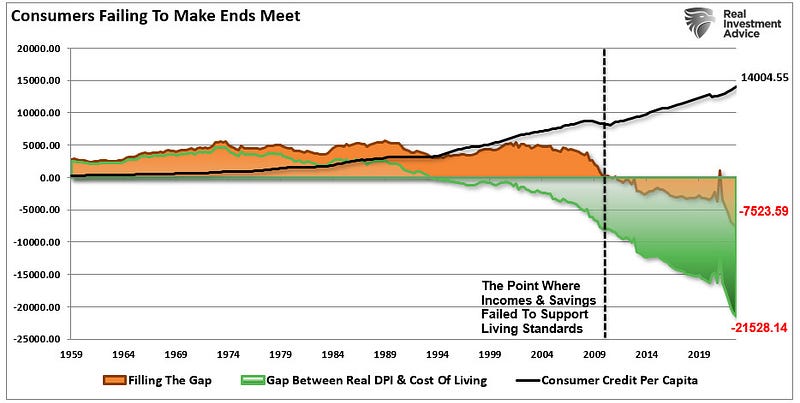
This is pretty apparent when we look at outstanding credit card debt. People are clearly borrowing to consume.
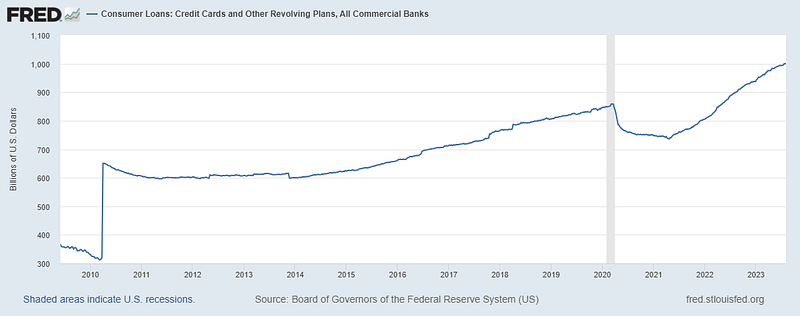
$1T outstanding!

As my income my entire professional life has been irregular, I can attest to the more money you make, the more realistic it is to be able to save, invest, and grow your net worth.

I have had many years where saving much outside the 401(k) wasn’t even a consideration. The last few years have been very good to me, and my wife I have made great strides in our financial well-being and broadened our investments.

This seems obvious, and not something you should need to read about, but the financial media is filled with pie-in-the-sky stories about “saving for tomorrow”.

According to the Federal Reserve, Real Median Income in the USA is just about $72,0000.
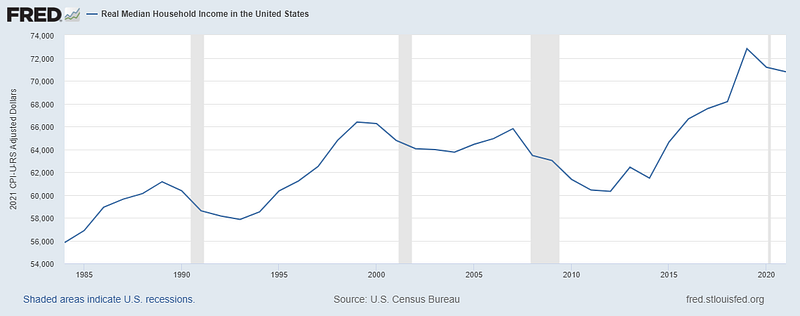
Even if you could save 15% of your gross income as Dave Ramsey recommends, what if you have a family of four and bring home a combined $120,000?

That’s $18,000 you need to come up with every year.

I don’t know about you, but if you own a home, have kids, enjoy some leisure, have to buy food, and pay utility bills, that might be a stretch for a $120,000-a-year family of four.

Just look at this chart. 1989 to 2013 is a large sample size. Even households making over $150,000 a year are historically failing to achieve significant savings rates. I highly doubt much has changed in the last decade.
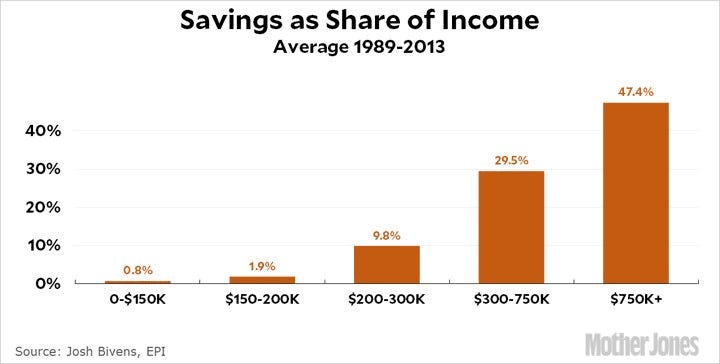
Is this because Americans are terrible with their money? Maybe to a large degree.

But there is no doubt the cost of life and the recent sting of inflation is making it very difficult for a lot of Americans to think much about tomorrow.

So what can you do?

Sure, you can track your spending on a monthly basis and aggressively eliminate wasteful spending, make sure you aren’t overpaying for things like insurance and mobile service, but you can only scrimp, save, cut, and sacrifice so much before you turn into a miser and live like a pleb.

Make More Money!

Do hard jobs that other people don’t want to or can’t. Develop special skills and get paid for them. Offer your knowledge in specific areas to others for a fee. Start and monetize a blog, create a YouTube channel, and work a side hustle. Build a business.

Just start working on something and see where it goes.

If you want to earn more, you have to do more. It’s that simple at the end of the day.

Thanks for reading.

Some of my other, recent popular stories on money and finance.

Are You Still Ignoring Bitcoin?

Celsius Holdings (CELH): The New Monster Beverage (MNST)? Explosive Growth Potential Revealed!

Is Paying Off Your Mortgage Early Financial Suicide?

I Asked Four, Old, Wealthy Guys Five Questions About Money

If you are looking for more help getting out of debt and building wealth, you can get my newly published Zero To Wealth Workbook here! This is the exact method I used to pay off debt and build wealth and will help guide you along. Subscribe to get my stories via email and I will send you a digital workbook version FOR FREE.

Disclaimer: The information provided herein is for educational and informational purposes only and should not be construed as financial advice. Any investment decisions should be made after consulting with a qualified financial advisor and considering individual risk tolerance and financial goals. Past performance is not indicative of future results. All investments carry inherent risks, and individuals should carefully evaluate their own financial situation before making any investment decisions.

Money
Investing
Personal Finance
Budget
Wealth
Recommended from ReadMedium