Wal-Mart & McDonald’s With Arms Wide Open Toward New Markets of Tech, Accessibility and Sustainability
The Weekend Brief (TWB) is inspired by the late ’90s rock band Creed. I suggest listening to their song With Arms Wide Open as you read TWB. You can also check out an interview with Creed’s lead singer Scott Stapp who discusses the song’s origins and writing process with The Ringer.
Press play: https://www.youtube.com/watch?v=99j0zLuNhi8
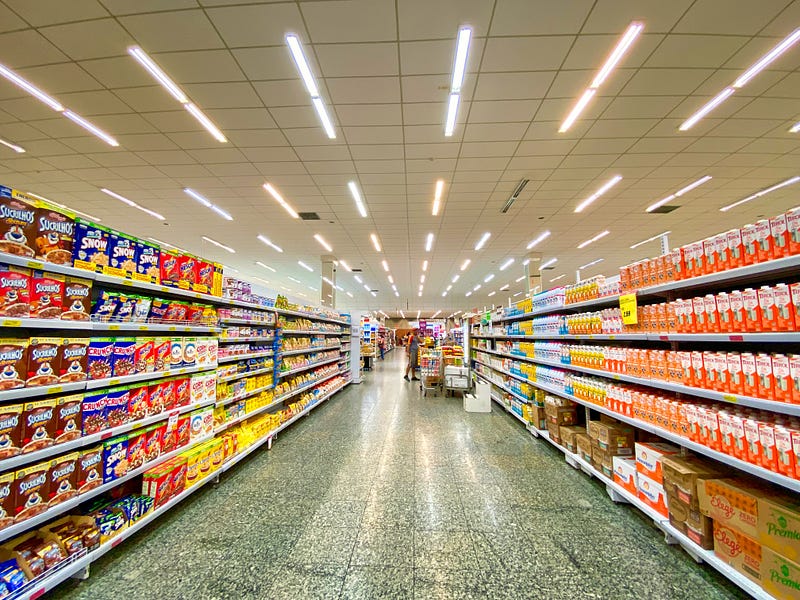
Wal-Mart & McDonald’s have both been hot topics on CNBC in the first month of the new year. McDonald’s reported stronger earnings than Wall Street expectations for Q4 2022 and Wal-Mart announced it was raising its minimum wage payroll to $14/hour for in-store associates.
First, let’s take a closer look at Wal-Mart and how the supermarket behemoth intends to compete with a technologically superior competitior in Amazon.
In the aftermath of Black Friday in 2022 CNBC reported that Wal-Mart defeated Amazon to take the top spot among consumers for Black Friday shopping and discounts, including for online searches and purchases — an area where Amazon generally has dominated the retail marketplace.
According to the data, Walmart’s search traffic went up by 386% year-over-year to top Amazon’s previous number one ranking in 2021. It was also reported that as of June 2022 Wal-Mart had 10,585 stores in operation globally with a total of 2.3 million associates worldwide.
Notwithstanding consumer spendings risks due to rising inflation on consumer goods throughout 2022, Wal-Mart has been keen to invest in technological innovation and spread its wings to new global markets such as South Africa.
It was reported on 21 October 2022 that Wal-Mart had plans to purchase a full stake in South Africa’s Massmart to increase its presence in the retail market there. This story traces back to 2011 when Wal-Mart initially bought a stake in the Massmart, which yielded unimpressive results.
But with Amazon increasing it global presence, Wal-Mart sees Massmart as a new opportunity to compete for market share globally. According Wal-Mart International President Judith McKenna:
We continue to see opportunity in Massmart and the impact the business can have, providing people across the region with greater access to goods and services they want.
In fact, since assuming the leadership position of Wal-Mart Interational, Judith McKenna has been pushing an internatonal strategy by giving the company’s internatonal porfolio more exposure to e-commerce sales and purchases through omnichannel marketing experiences and local business sales across Africa, Asia, Central America and Europe, including a $1.2 billion investment in China distribution centers, the sale of British supermarket Asda for $8.8 billion and expanding portfolio interests in India’s Flipkart and PhonPe. Forbes
It’s no surprise that she was selected as one of Forbes The World’s Most Powerful Women in 2021.

The real showdown between Wal-Mart and Amazon takes place in the markets for China and India. It has been concluded that the digital transformation has taken the retail consumer by storm in China and India, revealing shopping trends that would take innovation to a whole new level.
For these reasons Wal-Mart has picked up the momentum in its technology investments vis-a-vis Amazon. Wal-Mart purchased a robotics automation company — Alert Innovation — giving the company an edge over Amazon in the space of fulfilling orders and products delivery. After the aqcuisiton, Wal-Mart released this statement:
Further investing in this technology will enable us to leverage our store footprint — 4,700 stores located within 10 miles of 90% of the U.S. population — for storage and fulfillment. For customers, this means orders can be fulfilled quickly and conveniently through pickup and delivery, giving them the items they want, when and where they want them. This system also enhances the experience for associates, who are integral to helping us perfect the system.
Even as some of biggest retailers in the United States seek to cut costs going into an uncertain retail environment for 2023, investments in technology and data have continued to rise throughout 2022. In the case of Wal-Mart and Amazon, in particular, competition for markets in India and China are a key battleground to the technology investment landscape.
By increasing exposure to its India businesses, Wal-Mart proposed it would expand its “Made in India” export-driven retail segement with an aim to reach $10 billion by 2027. This includes the global tech team based in India called Element which ecompasses Artifical Intelligence (AI) and Machine-Learning (ML) for the company’s research and development (R&D) investments.
It’s no wonder that this is happening so vigorously. Amazon is supposed to top Wal-Mart to become the largest retailer in the United States by 2024.
Wal-Mart has even went as far as establishing a presence in streaming with a new partnership with Paramount+ in light of the failure of its own streaming platform.
It appears to me that Wal-Mart is competing in the long-game against Amazon. Who would’ve known that the digital transformation would pit these two against each other for global supremacy in the retail marketplace. Though the consumer market in China remains a big question mark for Wal-Mart, I think its newly enchanced positions across Africa, as well as increased portfolio exposure to the Indian market, give the company the biggest advantages going into 2023.
In a memo sent to McDonald’s corporate offices around the globe, CEO Chris Kempczinski and the executive team will review corporate staffing and evaluate measures to cut down on an “outdated and self-limiting” corporate structure.
According to BBC, there’s about 200,000 corporate roles, with 75% of them located outside of the US, that are at stake during this reorganization process. Jobs cuts are to be announced by April.
While there’s been a massive amount of layoffs in the tech sector, multi national companies like McDonald’s have went under the radar during this tumultous time for the global economy.
Writing for FranchiseWire, Mary Vinnedge explains the rationale for McDonald’s reorganization plan according to three main points:
- capturing increased demand in global markets
- adapting to disruptions in the food & beverage industry with digital programs and offerings
- investing in local consumer market preferences across U.S., Europe and Asia.
These main points are critical for McDonald’s investment portfolio. That’s why shareholders and other investors should be carefully paying attention to how the company’s strategy for expansion unfolds in the near-term.
On the New York Stock Exchange (NYSE), McDonald’s stock (MCD) responded to the news about this reorganization plan on 6 January 2022.
The MCD stock price was at $262.16 on January 5 and then increased to $269.47 on the January 6. It took a few bumps and slides from January 6–12, but regained its momentum by jumping from $266.69 on January 12 to $274.11 on January 17. It then dropped fiercly to $263.58 by January 19.
Since then, the MCD stock has been increasing toward a one-month high. It sold for $274.11 on January 17 and $274.72 on January 26. The highest price it has sold for in the last three months was $278.40 on November 8, 2022.
Even though McDonald’s reorganization plan isn’t the most popular topic in business and stock investor’s news — Tesla (cough, cough) — the existence of the golden arches have been the close attention of some of the latest geopolitical scenarios in Russia, Ukraine and Kazkahstan.

Sanctions on Russia have taken its toll on several American and European companies operating in Russian markets. Anton Krutikov covered the story about Russia sanctions and its impact on the golden arch’s post-Cold War legacy in McDonald’s in Russia is Back. Now it’s Even Better.
At the beginning of the year, McDonald’s also announced that it would be leaving Kazakstan due to supply shortages during the Russia-Ukraine conflict.
These geopolitical events reveal how McDonald’s must re-focus on a new corporate expansion into global markets. As they wish to open new offices and restaurants, thus expanding their brand to new consumers; this is the ultimate strategy to successfully capture wider audience engagement through global footprint. I have already written about these similiar investment themes for Nestle & Starbucks.
For McDonald’s, however, international marketing is a key feature of the company’s success. McDonald’s launched its original “Accelerating the Arches” strategy in 2020. The first pillar of this strategy is to “Maximize our Marketing” followed by “Commit to the Core” and “Double Down on the Three D’s” — Digital, Delivery and Drive-Thru.
In order to accelerate international business growth and consumer acquisition, the Accelerating the Arches 2.0 strategic plan unveils how McDonald’s intends to carry out this acceleration through “Development” — the fourth D — by which the reorganization plan comes back into the discussion. By cutting jobs, the company can invest more in technology and digital marketing opportunities. This is essential to keep up with its international competitors, of which they could easily lose an advantage over the local consumer market preferences.
In the lead up to the reorganization plan, there was also a shift in corporate leadership. Morgan Flatley was named as McDonald’s new Chief Marketing Officer (CMO) in August 2021. Flatley famously oversaw the “Famous Orders” campaign featuring musicians Travis Scott and BTS in 2020.
At an investors presentation on 27 October 2022 McDonald’s CEO Kempczinski attributed the success of the company’s Q3 2022 earnings to the marketing campaign, saying it was “an important growth driver.” He shared a story about the McRib Farewell Tour and Happy Meals to share how important marketing was for the future of the company’s growth story.
Technology investments in the UK were also paying off, as more and more customers in UK are seeking digital channels for their McDonald’s purchases. In fact, McDonald’s went viral on TikTok when a customer posted that he had been given $5,000 in cash along with a breakfast order. This digital channel is a big part of the upcoming generations’ engagement with brands and consumption. Just look at the responses on TikTok provided by FoodBeast.
The TikToker, named Josiah Vargas, had this post put into the Good Samaritan Handyman category on TikTok. If you upload the videos from this category, you will see a variety of hashtags, but some of the hashtags include relgious themes such as #christian. McDonald’s not only is committed to its digital marketing channels, but also continues to find ways to compete with customers in the U.S. markets. Chick-fil-A, eat your heart out!

I’ll be publishing The Weekend Brief (TWB) regularly touching on aspects of the global markets (including stock markets) which are at the nexus of tech, industrials and global commodities. Please follow the publication Areas & Producers to read more content about the future of core areas and critical producers of the global economy.
Sign up for TWB newsletter here to read about how publicly-traded companies, like Tesla & Stellantis, are competing in the long game for global markets.