McDonald’s in Russia is Back. Now it’s Even Better
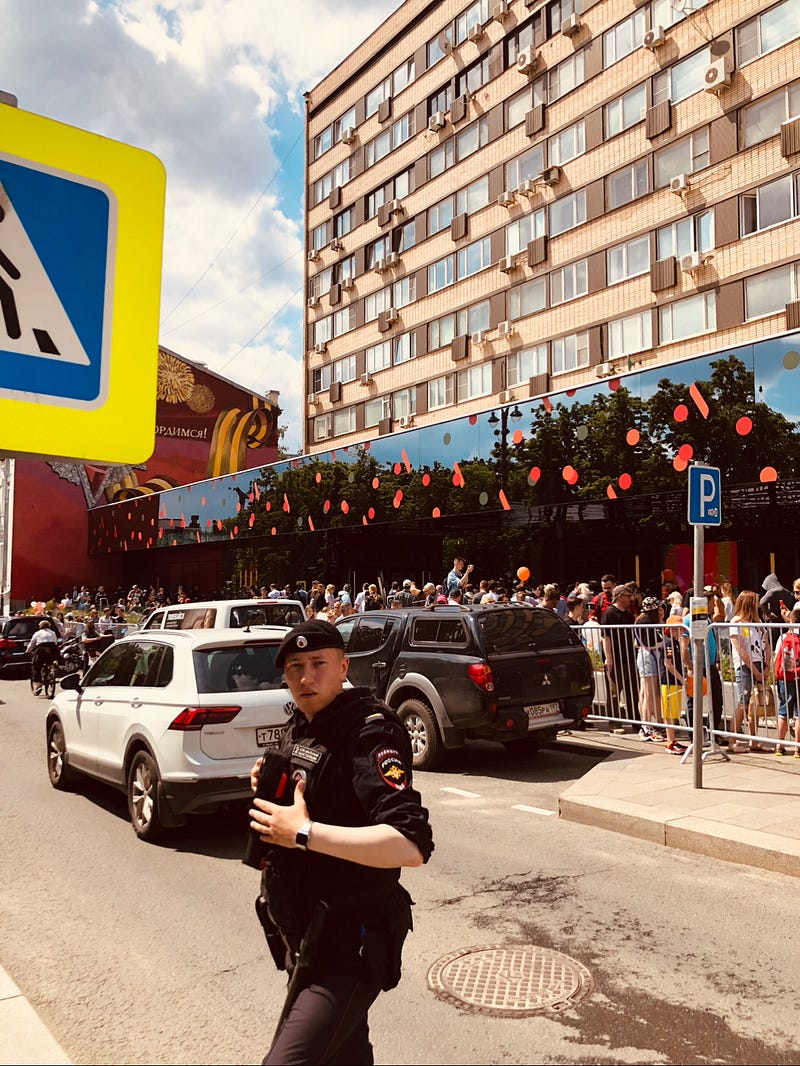
How are the world’s largest corporations reacting or not reacting to Russia’s invasion of Ukraine? We will focus on this issue and try to explore the McDonald’s case. It’s clear that boycotting business in Russia isn’t black and white. If you deal with the Russian authorities and work in the Russian market, different shades are always possible. Taking every opportunity to preserve profits, Western companies are also playing games in ‘shades of red’. Many of them claim they have cut ties with the Russian Federation but, in fact, continue with some activities or with promises to exit. Moreover, some companies are waiting to see if they will be forced by their governments to exit Russia and, if so, they may pretend they behave morally. On the contrary, the others do the same of their own accord.
McDonald’s suspended operations in Russia and closed its restaurants on March 14, but some franchised establishments continued to operate for the past three months. Russian authorities have already repeatedly stated that McDonald’s will be replaced by domestic fast food restaurants that will open under the new brand. In turn, the pragmatically-minded management of the American fast food company said it was looking for a buyer for its Russian business. And such a “lucky buyer” was quickly found.
From the news supported by McDonald’s corporation:
“The humanitarian crisis caused by the war in Ukraine, and the precipitating unpredictable operating environment, have led McDonald’s to conclude that continued ownership of the business in Russia is no longer tenable, nor is it consistent with McDonald’s values.
As part of McDonald’s decision to exit, the Company is pursuing the sale of its entire portfolio of McDonald’s restaurants in Russia to a local buyer. The Company intends to initiate the process of “de-Arching” those restaurants, which entails no longer using the McDonald’s name, logo, branding, and menu, though the Company will continue to retain its trademarks in Russia.
McDonald’s priorities include seeking to ensure the employees of McDonald’s Russia continue to be paid until the close of any transaction and that employees have future employment with any potential buyer.”
On May 19, the company announced that it was selling its business in Russia. The new owner of the Russian division was businessman Alexander Govor, existing licensee, who had previously operated a number of McDonald’s franchised restaurants in Siberia. On June 10 his company Club-Hotel became the owner of the assets of McDonald’s in Russia. Under this agreement, Mr. Govor will acquire McDonald’s entire restaurant portfolio and operate the restaurants under a new brand. Nothing was disclosed about the amount of the deal.
As follows from the financial report of the company, the losses of McDonald’s due to withdrawal from the Russian Federation amounted to $ 127 million. In comparison, McDonald’s annual revenue for 2021 was $23.223B, a 20.9% increase from 2020. The fast food chain had 850 restaurants in Russia, of which 130 were operated by franchises.
Alexander Govor, a well-known Russian entrepreneur, has been a business partner of Russian oligarch Roman Abramovich since 2000. Importantly, Roman Abramovich himself is now on the sanctions list and is seen in the West as a relatively toxic figure. Govor and Abramovich were jointly involved in the coal business in the Kemerovo region, which was very profitable. All was going well until 2007 when two coal mines owned by their company had accidents that killed 148 people. The authorities demanded that Govor sell his business, which he did, selling his stake to Roman Abramovich and his Evraz group. According to media reports, the deal brought in $500 million, and Govor was able to invest the proceeds in other businesses. In September 2015, Alexander Govor opened his first McDonald’s restaurant in Siberia. Subsequently, he managed 25 McDonald’s restaurants operating under franchises. On the eve of Putin’s invasion of Ukraine and the Western sanctions that followed, his business was unprofitable.
It should be noted that all the restaurants owned by Alexander Govor in Siberia continued to operate under the McDonald’s brand even after the company announced its withdrawal from Russia. On June 10, the restaurants simply changed their signage and continued operating under the new brand as of June 12. All McDonald’s menus and traditional recipes remained unchanged. This is in direct violation of the company’s original plans announced in a May 16, 2022 press release. In fact, the company in Russia has just changed its name and owner and continued to operate. All company employees continued to work. Now McDonald’s in Russia is even in a better position as it belongs to Russian oligarchy and its interests are protected by the Russian government. By the way, the new name was chosen as the most unremarkable and uncreative, “Vkusno — i tochka” (Just Tasty). For many experts this has already caused at least astonishment. Why was such a strange name chosen for a legendary American fast food chain in every sense? I think one comment from someone who was at the opening in Moscow explains it all.
“I think the name and design of the restaurant were chosen so that it could not become an independent brand and then it would be easier for McDonald’s to come back when they decide to resume their business [in Russia].”
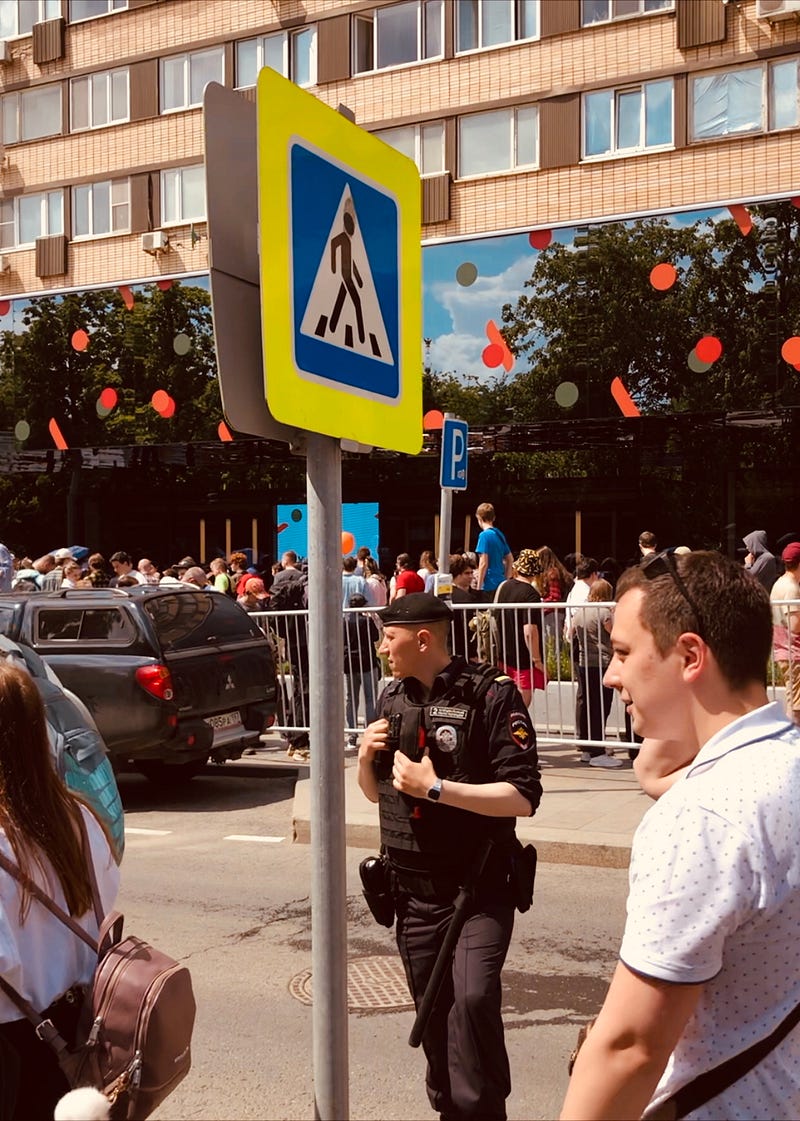
Pushkin Square on June 12 was crowded. The police, who until recently were constantly detaining anti-war activists and demonstrators, now did not interfere and guarded the perimeter. Hundreds of people stood in huge lines to try the “new” McDonald’s menu, which they had apparently been missing for the past three months. Seriously, I have never seen such queues outside banks and currency exchange offices when the Russian government banned the free exchange of dollars and euros for rubles. It seems that the West missed a unique opportunity to use its secret weapon against Russia. The Big Mac, which as a symbol of modern globalization is now inseparable from the daily life of the average Russian consumer. Left without their favorite fast food, frustrated Russians will be much quicker to end the war in Ukraine, and perhaps even the Putin’s regime itself. It’s not necessary to thank me, however, for this free idea. I am pretty sure that it will never come to fruition.
Thank you for reading. If you want to get unlimited access to everything on Medium then click here to become a member. You will directly support my writing signing up through my link.


