
To Seek Truth, I Had to Abandon Christianity
If the church cares about what truth is, I fail to see it

My journey of faith and ministry
When I was a teenager, someone told me about the gospel and invited me to church. Being young and impressionable, I became a Christian even though no one else in my family was at the time.
I believed that by becoming a Christian, I was seeking the truth. I was taught that the Bible was a special revelation from God, so I devoted myself to studying it. I believed that by studying the Bible, I could find answers to important questions like where I came from, why I’m here, what the world is like, and what God wants from me.
As mentioned in the article linked above, I had the opportunity to teach Sunday School for some time. However, my involvement in church ministry extended beyond that role. After attending a Christian college, I felt called to become a missionary, and I served in this capacity for a few years.
During my time as a missionary, I encountered a challenging situation in one particular country. This country was not open to missionaries, but I was undeterred by the potential risks. I vividly recall one incident where I was teaching at an underground Bible school and narrowly escaped the attention of the local police.
Afterward, I pursued further studies in theology at a Christian graduate school in Canada. It was an exciting opportunity for me, and I eagerly delved into the coursework. Learning both Greek and Hebrew was a natural choice for me as a serious student of the Bible.
In due course, I had the privilege of teaching introductory and intermediate Greek classes. I even undertook the task of translating a Hebrew theological dictionary into Chinese with other eager translators.
I share this journey so readers can understand that I was a true believer by any reasonable standard, and I was sincere in pursuing what I considered to be the ultimate truth.
The path to doubts and deconstruction

Some conservative Christians approach theological education with caution, expressing concerns that extensive study in theology can potentially distance individuals from their faith. I used to think it was a narrow-minded view. Now I fully understand their concern. However, the cause of doubt among theology students is not necessarily the act of researching and learning itself, but rather the often brutal realities they uncover through their diligent studies and processing of facts.
That’s exactly what happened to me. I realized that most Christians are either not primarily focused on seeking the truth or are discouraged from doing so.
In the rest of this article, I outline three general trends within Christianity that deter believers from pursuing truth.
It’s important to note that I am not describing every single Christian, but rather highlighting a general trend. I’m weary of readers dismissing my perspective by pointing out exceptions that don’t align with my description.
Pragmatism
If there is just one chance in a million that this is true it’s worth believing. -William Lane Craig
Why should I bet my eternal fate? -KinSun Lau, July 6, 2023
The primary motivation for individuals to embrace belief in Jesus stems from pragmatic considerations. Few people engage in extensive studies of various major religions before arriving at the conclusion that Christianity is the most rational choice. Instead, the majority are drawn to Christianity because it provides relief from guilt, offers comfort, and presents a straightforward and seemingly attainable path toward eternal life while avoiding damnation.
This explains why Christian evangelism typically focuses on addressing people’s needs, such as their desire for love, emotional security, a sense of meaning and purpose, longing for an afterlife, and the assurance of salvation.
For most Christians, having those needs met is more important than making sure their faith is coherent and grounded on verifiable facts.
As a result, they are willing to engage in all sorts of mental gymnastics to rationalize the absurdities inherent in their faith. Arguments such as the presence of eyewitnesses to Jesus’ resurrection serve as a mere smokescreen, creating a sense of rationality as the foundation of their beliefs. However, when faced with a situation like the existence of eleven signatures attesting to the golden plates from which Joseph Smith supposedly translated the Book of Mormon, they readily dismiss and (rightly!) conclude that the Book of Mormon remains a fabrication.
After discovering this phenomenon among Christians, I made a conscious decision not to adopt a similar approach. My objective was to search for genuine, evidence-based truths, irrespective of any potential discomfort that may arise from it. I refused to settle for anything less than a rigorous standard in confirming the veracity of the Christian faith.
If I were to continue believing, it would only be because there are compelling, rational justifications for doing so, rather than basing it on emotional appeal. After all, we are discussing matters far weightier than personal preferences for ice cream flavors.
Dogmatism
During my time as a graduate student in theology, I found a troubling trend within various theological schools and seminaries. Given my aspirations to potentially become a scholar, these trends raised significant concerns for me.
In many theological schools, it is common for the governing board to suspend or terminate professors when their theological perspectives are seen as conflicting with the institution’s explicit or implicit doctrinal position.
In 2008, Peter Enns was suspended from his teaching post at Westminster Theological Seminary due to the contents of his book Inspiration and Incarnation. The school’s governing body decided that his perspectives regarding the divine inspiration of the Bible did not align with the institution’s confessional statement.
In 2010, Bruce Waltke, a renowned Old Testament scholar, was forced to resign after the Reformed Theological Seminary, where he taught at that time, found that he supported theistic evolution.
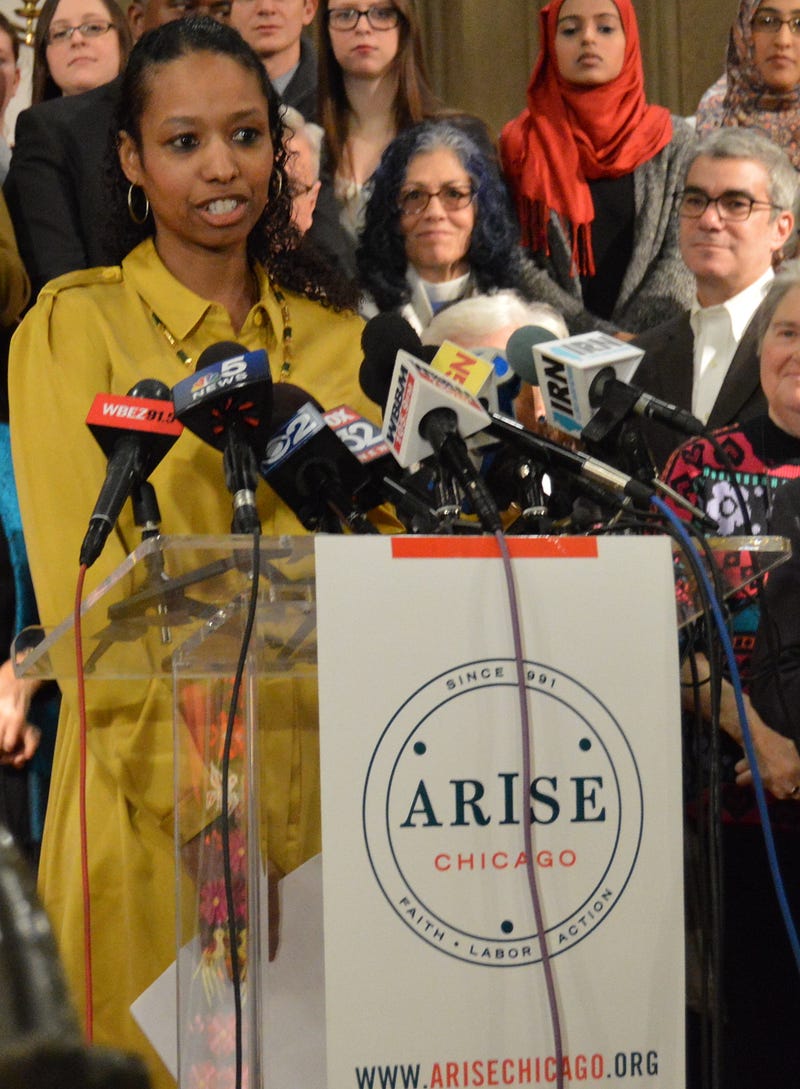
In 2016, Larycia Hawkins, a tenured professor of political science at Wheaton College (a distinguished theological institution, especially among evangelicals) was placed on administrative leave after expressing her solidarity with the Muslim community and wearing hijab to work.
This phenomenon is not limited to theological schools alone; it extends to denominations as well. In 2022, Southern Baptist Convention garnered attention for expelling Rick Warren’s Saddleback Church from the denomination. Why? Because Rick Warren ordained women as pastors.
If Christians genuinely seek truth, there should be no pre-determined set of viewpoints they are required to adhere to, except for what aligns with truth. If it becomes evident that a portion of a confessional statement is incorrect, it is the confessional statement itself that should be revised, rather than expecting the person who uncovers its flaws to conform to it. This should be a matter of common sense.
If Bible and theology professors are compelled to uphold a set of predetermined propositions about their faith, how can we expect them to maintain academic integrity in their research endeavors?
Let’s consider an analogy: If a company hires a team of scientists to conduct research on their products, but sets a rule that prohibits them from reaching any conclusions that differ from the company’s marketing claims, would you have confidence in the scientific papers published by those scientists?
Do you think those scientists are encouraged to be proponents of truth when working in that setup?
I don’t.
To put it simply, the systems in many churches are set up in a way that prioritizes the protection and preservation of dogma rather than the genuine pursuit of truth. It was disheartening for me when I came to this realization. This is one of the reasons why I did not continue pursuing a Ph.D. in theology (though I remained a Christian for a few more years.)
Faith (as opposed to reason)
I can’t recall the number of times I’ve been advised to stop overthinking and simply have faith, with the promise that all my questions will be answered in heaven.
I’ve been told that faith in Jesus transcends reason, that it’s not a matter of intellectual analysis. According to this perspective, reason and evidence have their limitations, while faith offers an alternative path to truth, connecting us with God.
Now faith is the substance of things hoped for, the evidence of things not seen. (Hebrews 11:1, KJV)
Blessed are those who have not seen and yet have believed. (John 20:29, NIV)
It’s all bull!
Faith has no business in a person’s quest for truth. If something is known, you don’t need faith to accept it. If it is not known, it simply remains unknown. People should not appeal to faith to create a false sense of certainty.
Don’t overthink? That’s exactly what con artists want, so you won’t critically analyze their schemes.
In fact, I am fully convinced the emphasis on faith is the main reason why many Christians are conned by faith healers and prosperity gospel preachers.
Think of Kenneth Copeland.
Do you think he is insane? He has an estimated net worth of 760 million dollars as of 2021! How did he accumulate that amount of wealth? Contributions from Christians who have faith that he is doing the ministry of God!
When I was a Christian, it made me feel nauseated to think about Christians being manipulated into donating money to these deceivers who falsely claimed to be ministers of the Word. Now I don’t have that strong of a reaction, though I still feel a sense of pity for those who have been conned into paying for his second or fifth private jet.
When Christians tell me that reason, logic, and scientific methods are not the only ways to attain truth, I always ask, “What better alternatives do you have? Show me how you know they are reliable.”
I never get a straight answer. Not a single time.
Let me clarify that I do not think reason, logic, and scientific methods are flawless. Quite the contrary, they have their limitations. However, in my view, they currently represent the most reliable tools we possess. Perhaps in the future, AI could evolve into a more dependable tool, but only time will tell.
Do I have faith in anything? Of course! However, I recognize that my faith may be misguided as new information emerges. For me, faith is a provisional stance, constantly open to revision. I have faith in the fidelity of my spouse, grounded in actual evidence. Nevertheless, this faith is not absolute and remains subject to change.
I am under no illusion that faith is always good or inherently virtuous. Faith can be misplaced. If I were to stop evaluating the objects of my faith, it would mean losing the mental acuity to detect when something starts to make no sense. In such a state, I would resemble cult members who are oblivious to damning facts that are evident to outsiders.
Nobody should be required to stop exercising their critical thinking once they join a group. In ordinary circumstances, only those with ulterior motives would demand unwavering trust without question. Why should religion be exempt from this principle?
To ask people to have absolute faith is to ask them to stop discerning what is true, which is the opposite of what I am trying to do.
I had no choice but to pack up and leave Christianity.

Takeaway
It’s a long story, longer than I initially intended. If you are a Christian (or a follower of any religion) and have reached this point, I genuinely appreciate your willingness to invest your time. I only have one question for you to think about: If Christianity (or your religion) turns out to be untrue, how would you be able to tell it? Do you have the mental capacity to detect you have been wrong and be able to withdraw from it?


