
Most Christians Confuse Guesses with Facts
Virtually all miracle claims are merely unverified hypotheses
How do scientists carry out experiments? They first develop hypotheses, and then find ways to test if they are true. The hypotheses formulated by scientists usually make intuitive sense, but without explicit evidence to back them up, they remain hypotheses.
Jean-Baptiste Lamarck was a French naturalist in the 19th century. He proposed that physical traits developed during the lifetime of organisms can be passed down to their offspring. This theory is called Lamarckism. Lamarckism made sense to people at that time and was widely accepted as the mechanism of biological evolution. There is just one problem.
The evidence does not support it.
In fact, after DNA was discovered, Lamarckism was largely dismissed, replaced by the theory of random mutation and natural selection.
Why am I explaining this seemingly basic idea of the scientific method?
Because many Christians seem to leave that concept behind when it comes to their religion (other religions as well, but I focus on Christianity in this article).
First example: philosophical arguments for the existence of God
Many Christians like to say, “The universe cannot come from nothing, so there must be a God who created everything.” or “Infinite regress is impossible, so there must be a First Cause, which itself is uncaused, and that First Cause is God.”
Well, it makes sense that the universe could not have come from nothing, so it is possible that God created it. That makes a good hypothesis.
Now Christians just have to find evidence to prove it.
Many Christians would be baffled by the last statement. They think they already made a case for God’s existence by using the cosmological argument (or teleological argument, ontological argument, etc.).
No, they have not. They just formulated a hypothesis, which is not qualitatively different from a guess, at most an educated guess.
But they take that guess and dress it as a fact. Not just fact, but TRUTH.
This is where they get confused. They consider their guess at the same level as objective fact/reality/truth. But that’s not how it works.
When something intuitively makes sense, it does not mean that it is fact. Why? Because reality can be something else that also makes sense in its own way. In other words, when people try to make sense of something, they most likely will concentrate only on the interpretations that their limited (and biased) minds could formulate, and miss other legitimate possibilities.
In the case of the origin of the universe, Christians could only come up with the idea of a sentient supernatural Creator, but often refuse to consider the possibility of other more fundamental natural mechanisms behind or before the Big Bang.
Many Christians insist that whatever natural mechanism is behind the Big Bang, it itself must require a creator. But they don’t use the same reasoning to question their uncreated Creator. They just say that “by definition” God is uncreated. But mere definition proves nothing.
Sure, it is conceivable that there is an ultimate uncaused first cause, but Christians cannot appeal to mere definition to equate that first cause to their supernatural sentient God. That first cause could also be mindless quantum fluctuations (or other natural phenomena that we can never fathom) that have existed eternally.
In the case of the origin of life on Earth, Christians could only come up with the idea of God intervening to make life happen on the Earth, but refuse to entertain the possibility that it could have been aliens who seeded the Earth with primitive life forms.

Again, Christians would say that even if aliens exist, they must have been created by God as well. But that is a separate question. The fact remains that the “supernatural” theory for the origin of life on this Earth is not the only possibility. “Extraterrestrial” origin also makes the same level of sense.
Is the alien theory far-fetched? Of course, it is, but not more far-fetched than the supernatural theory.
Without hard evidence, hypotheses remain hypotheses, and should not be construed as facts.
Second example: Jesus’ resurrection
At this point, Christian readers might object. They might say that there is ample objective evidence for the resurrection of Jesus of Nazareth.
I am not going to name every piece of “evidence” ever presented for Jesus’ resurrection, but here are some of the main ones that are often brought up.
- Disciples’ testimonies and their changed lives
- The empty tomb and the opponents’ failure to produce the body of Jesus
- Ancient Judaism not a fertile soil for belief in the physical resurrection before the end of time
- Multiple textual sources such as the four gospel accounts and a few extra-biblical sources like Pliny the Younger.
Not a single piece would be deemed valid evidence in the field of science or the justice system today.
Testimonies in the gospels? We can’t even be sure who the authors are as they are anonymous writings, plus the fact that they were composed decades after the events, and we only have copies of copies of copies of the original. I am not even going to get into the contradictions between the four gospels.
Empty tomb? If you dig up the grave of a recently deceased Indian guru and find it empty, is resurrection the ONLY explanation you can come up with? How about the body was removed purposefully or, for some reason, was never put in the grave in the first place? Even if those other options fail, you still don’t have any evidence of a resurrection unless that person shows up and is examined by experts. Without actual evidence, resurrection is just one of the many possibilities, and definitely not the least far-fetched option.
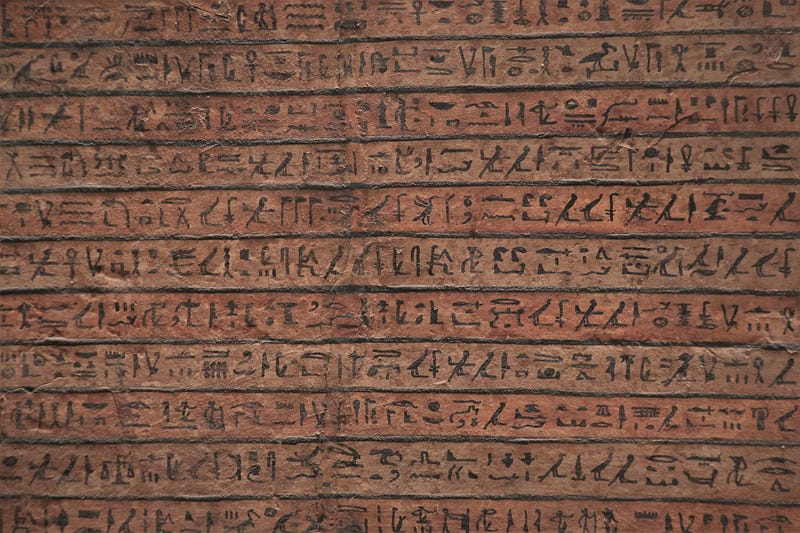
Yes, we have some ancient texts that talk about testimonies of Jesus’ resurrection. That is a fact. But it does not mean that the events narrated in the accounts actually happened in real history in exactly the ways they are described.
Yes, it makes sense that something extraordinary happened to prompt some people to write those accounts, but that is still a hypothesis. When we have formulated a hypothesis, the next step is to test it or verify it. Without the subsequent steps, a hypothesis remains a hypothesis.
Some Christian readers may say that I am being too strict and that I probably would not use the same standard to evaluate other historical facts such as a list of Roman emperors and when they ruled.
In other words, some Christians may think that I should not employ such a high standard that is usually required in the field of hard science.
But the resurrection of Jesus is not just about what happened in the past. It is also about breaking the laws of nature. Modern science has firmly established that dead people don’t come back to life. As far as we observe, 100% of dead people stay dead. We also have lots of relevant scientific facts to explain why dead people don’t come back to life (observable and irreversible degeneration of organs, etc.). So if Christians want to claim that someone rose from the dead 2,000 years ago, it is not just about history, it is also about challenging modern science.
This part is what most Christians miss.
“Tiberius was a Roman emperor” is a claim that does not contradict any scientific theory, so we don’t need to set the standard that high.
But “Jesus came back to life after being dead for three days” is not just any ordinary historical event, but one that contradicts modern science.
I am not saying that whatever contradicts modern science must be false. I am saying that if you make a claim that goes against science, you should have at least the same level of evidence in order to overturn the well-established FACTS.

If what you have is a bunch of hypotheses or inferences, how do you expect to compete against science?
Saying “if God exists, miracles can happen” does not work. “Dead people do not come back to life” is an empirical observation that remains valid whether God exists or not.
In other words, even if God exists, the fact remains that billions of people died and remain dead. Every single one of them. So what are the odds that Jesus could be an exception? The odds do not increase when we accept the premise that God exists because all other dead people are still dead even if we grant that God exists. (I know I am repeating myself, but I bet some Christians would still find it hard to digest what I am talking about here.)
Suppose a magician comes along and takes out 20 doves from his hat alive and well. You say, “Great trick.” He responds, “No, it is real magic, a kind of sorcery. I have special power granted to me so I can defy the laws of physics.” What is your reaction? Do you say, “Well, if sorcery really exists, it is possible that this person may indeed be performing sorcery”?
Get my point?
Once you take the extraordinary nature of Jesus’ resurrection seriously, you can understand why all those arguments put forward by Christians just don’t measure up.
They are not valid evidence for the claim of resurrection.
And most Christians would agree with me if the miracle claim comes from other religions.
Islam teaches that Muhammad rode a horse to space and sliced the moon into halves. (See Richard Dawkins’ reaction to this claim in this YouTube video clip.)
Would the amount of evidence it takes for you to believe in such a fantastic claim be the same as for you to accept that Muhammad was a historical person, who lived in the 6th and 7th centuries?
Going back to Christianity, Matthew 27 narrates the following event that supposedly happened in the midst of Jesus’ resurrection:
[A]nd the tombs broke open. The bodies of many holy people who had died were raised to life. They came out of the tombs after Jesus’ resurrection and went into the holy city and appeared to many people. (Matt. 27:52–53)
Christians, please tell me, how much evidence should be needed to reasonably expect an average person to accept that narrative to be historical? How much weirder do the accounts in the Bible have to get before you start to question their historicity?
Ordinary claim requires ordinary evidence; extraordinary claim requires extraordinary evidence.
“I have faith”
Many Christians try to justify their Christian belief by appealing to their trump card: faith.
As if faith is itself a virtue, something that is desirable to have.
No, it is not.
When the word “faith” is mentioned, the conversation is no longer about reasoning or objective evidence. It is about the subjective decision that reveals only the inclination of the person rather than what is real.
Which only confirms the title of my article. Most Christians confuse guesses with facts.
Perhaps it’s not their fault. After all, faith is understood as evidence in the Bible.
Now faith is the substance of things hoped for, the evidence of things not seen. (Hebrews 11:1, KJV)
But that’s plainly wrong! And Christians would gladly agree with me if people from other religions claim the same thing. Suppose a Muslim comes along and says, “I know Muhammad rode a horse to space. How? I have faith. Faith makes me see that as true.” Christians would be the first to point out the absurdity of that statement.
If you have all the evidence to support your claim, you don’t need to have faith. If a scientist says he has faith in the scientific theory he proposes, does that make the theory more credible? I would argue the opposite. The fact that the scientist appeals to his subjective proclivity only makes his theory more suspicious!
Having faith only means you accept the hypothesis as true even though there is insufficient evidence. It does not transform a hypothesis into a fact.
In short, when Christians appeal to faith, it is an indirect admission that they have insufficient evidence for their religion.
Conclusion
Scientific methods do not just apply to scientific research and theories. They also help us process information we get in everyday life. This is especially important in the digital age today, where misinformation abounds. A discerning person can differentiate guess/hunch/estimate from fact, and know how to verify propositions that are claimed to be factual.
If you are not a Medium member yet, please consider signing up using my referral link. I will get a small commission at no extra cost to you.


