avatarSheng-Ta Tsai

Free AI web copilot to create summaries, insights and extended knowledge, download it at here

4191

Abstract

="47c2">In other words, many Christians’ faith in Jesus was spoon-fed to them when they were young, and, apparently, that was enough for God to deem them righteous.</p><figure id="1bb8"><img src="https://cdn-images-1.readmedium.com/v2/resize:fit:800/1*i2yQDAmrqsFFFiEQpwPnOQ.jpeg"><figcaption>Photo by <a href="https://unsplash.com/@davidbeale?utm_source=unsplash&amp;utm_medium=referral&amp;utm_content=creditCopyText">David Beale</a> on <a href="https://unsplash.com/s/photos/children-in-church?utm_source=unsplash&amp;utm_medium=referral&amp;utm_content=creditCopyText">Unsplash</a></figcaption></figure><p id="9610">On the other hand, people who were born in other types of households have disadvantages. If they are lucky, they will know some Christian friends who would invite them to church at some point in their lives. By then, some of them still have to struggle with disapproval from their parents should they decide to be converted. If they live in Hindu- or Muslim-dominated countries, it’s even harder for them to convert to Christianity. Can you blame them if some of them decide not to become Christians because of all those sources of pressure?</p><p id="d401">Christians, tell me, if you were born in a Hindu household in India, would you still become a Christian after you grow up? Yet, for some reason, God of the Bible thinks that their unbelief warrants eternal damnation. It seems absurd, and definitely not fair.</p><h2 id="3328">2. Personal temperaments</h2><p id="e41c">Christianity is more appealing to certain types of people, but not to others. No, I am not talking about morality-related traits such as conscientiousness, integrity, or altruism.</p><p id="c88b">People who are more affected by their emotions in decision-making tend to be more religious. They can be moved by hearing Christmas carols and conclude that God is talking to them. People who are more coolheaded, analytical, and inquisitive often do not have the same ‘blessing’ of being visited by angels or filled with Holy Spirit. That’s one of the reasons why there is usually a gender imbalance in church attendance.</p><figure id="b62e"><img src="https://cdn-images-1.readmedium.com/v2/resize:fit:800/1*6TKXtslqDUAEqVkB7Y2F2g.jpeg"><figcaption>Photo by <a href="https://unsplash.com/@mattbotsford?utm_source=unsplash&amp;utm_medium=referral&amp;utm_content=creditCopyText">Matt Botsford</a> on <a href="https://unsplash.com/s/photos/worship-in-church?utm_source=unsplash&amp;utm_medium=referral&amp;utm_content=creditCopyText">Unsplash</a></figcaption></figure><p id="70ea">But is having a more skeptical mind a bad thing? Is it immoral? It makes no sense to claim that a person deserves to be eternally punished for not being convinced that God of the Bible exists, or that Jesus miraculously rose from the dead.</p><p id="c691">On the other hand, is being emotionally sensitive necessarily commendable, a virtuous thing, even? No.</p><h2 id="5620">3. Biological limitations</h2><p id="ac15"><a href="https://journals.plos.org/plosone/article/file?id=10.1371/journal.pone.0036880&amp;type=printable">Some studies</a> show that people with autism spectrum disorder express less belief in God than do their neuro-typical counterparts. It’s because the former is less capable of conceptualizing deities as intentional agents.</p><p id="4585">Does God hate people with autism, so He gave them a mind that makes it harder to be convinced that God exists, so they won’t get the benefit of salvation in Jesus? Is that it?</p><p id="6d14">What about those who are not capable of exercising the function of believing? Babies and toddlers, and those who are mentally challenged. If they die, do they go to heaven or not? If they are automatically eligible to go to heaven (as many Christians claim), then tell me why parents should not kill their youngsters before they grow up to have a mind of their own?</p><p id="ef0c">Why are Christians against abortion anyway?</p><p id="b683">How about people with dementia, who lost their memory of belief in Jesus? How about people who are Christians for 20 years, and then become atheists, and when they develop Alzheimer's disease, they revert back to the st

Options

ate of belief, singing praise songs and praying to the God they ditched when they were still sane?</p><figure id="db9f"><img src="https://cdn-images-1.readmedium.com/v2/resize:fit:800/1*fGoYK-TkYWcsD2GAb-RMRw.jpeg"><figcaption>Photo by <a href="https://unsplash.com/@rebelvisual?utm_source=unsplash&amp;utm_medium=referral&amp;utm_content=creditCopyText">Steven HWG</a> on <a href="https://unsplash.com/s/photos/dementia?utm_source=unsplash&amp;utm_medium=referral&amp;utm_content=creditCopyText">Unsplash</a></figcaption></figure><p id="0dc3">Bible has no answers to these questions. Believers are left to wonder.</p><p id="8e08">The point is: not all acts of belief are equal.</p><h1 id="c5f5">Faith has nothing to do with morality or virtue in the first place</h1><p id="119a">Why do Christians believe in Jesus anyway? It’s because they believe that their faith in Jesus is a guarantee for a seat in heaven.</p><blockquote id="c69f"><p>‘For God so loved the world that he gave his one and only Son, that whoever believes in him shall not perish but <b>have eternal life</b>.’ (John 3:16)</p></blockquote><blockquote id="4677"><p>‘When you believed, you were marked in him with a seal, the promised Holy Spirit, who is a deposit <b>guaranteeing our inheritance</b> until the redemption of those who are God’s possession — to the praise of his glory.’ (Ephesians 1:13b-14)</p></blockquote><p id="4cb2">If there is a reward, how is faith praiseworthy as if it’s a virtue? It’s simple pragmaticism. It’s natural for people to do stuff that benefits them. Suppose someone tells me, if I work for him, he will give me 10,000 a month. Is my act of working for him noble or virtuous? If not, why is “faith” being held in high regard when they believe “faith” gets you something more precious than 10,000?</p><p id="ffa1">Suppose belief in Jesus has no bearing on people’s afterlife, how many Christians would still believe?</p><p id="acfb">Worse yet, the supposed Gospel also tells you that if you don’t believe, you are damned eternally. The result of such a declaration is that some will believe in Christianity because they fear going to hell. How is fear-induced action virtuous? Under normal circumstances, we would not say that it’s an exercise of free will, let alone give people credit for it.</p><p id="6322">In some cases, faith does have moral implications. If a person believes that it’s God’s will to kill their non-Christian neighbors, would strengthening their faith and following through with that idea be a good thing?</p><p id="5f6c">Consider Abraham. He is praised for having great faith because …</p><p id="5a64" type="7">He was willing to kill his own son!</p><p id="3b76">How is that kind of faith a good thing? If I were God, I would commend Abraham IF he did not follow through, not the other way around.</p><h1 id="afb1">Conclusion</h1><p id="a791">I hope by now you have realized that the idea of faith being a criterion to enter heaven or not is absurd. People believe or disbelieve for a variety of reasons, and some of those reasons are out of their control. Faith is also a kind of transaction. Those who are convinced that believing is beneficial to them will believe. Those who are not convinced will not believe. Simple. Giving people credit for believing is nonsense.</p><h1 id="9a0c">Further reading</h1><div id="a617" class="link-block"> <a href="https://readmedium.com/if-jesus-appears-to-me-this-is-what-i-will-do-4a2f46dffc9e"> <div> <div> <h2>If Jesus Appears to Me, This Is What I Will Do</h2> <div><h3>Nothing dramatic, just what a regular person would do</h3></div> <div><p>medium.com</p></div> </div> <div> <div style="background-image: url(https://miro.readmedium.com/v2/resize:fit:320/1*rvCX7lZnAx3fJTW1kFr2fw.jpeg)"></div> </div> </div> </a> </div><p id="82d5">If you are not a Medium member yet, please consider signing up using my <a href="https://medium.com/@sttsai/membership">referral link</a>. I will get a small commission at no extra cost to you.</p></article></body>

Christianity’s Focus on Faith Makes No Sense

Faith is a poor criterion for judging whether a person goes to heaven or not.
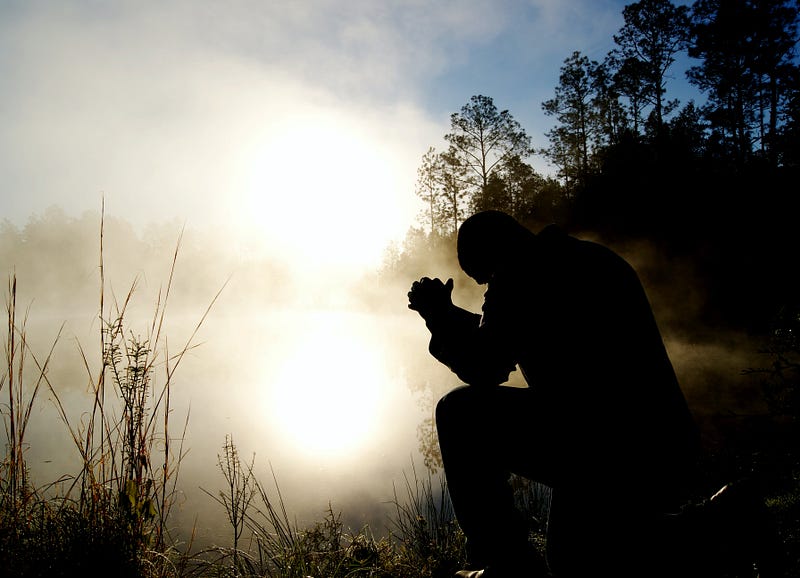
Photo by Aaron Burden on Unsplash

Christianity is one of the few religions that puts faith in the central place. Christian churches generally teach that good deeds, albeit desirable, cannot redeem a person’s sins, nor can they win favor from God. It’s faith in Jesus Christ that counts! When you believe in Jesus, you have access to the effect of his death and resurrection, namely redemption from your sins and becoming a child of God. For those who do not believe, Jesus’ atoning work has nothing to do with them; they remain sinners and will experience eternal separation from God upon physical death.

Image by Jeroným Pelikovský from Pixabay

What ‘faith’ means in the Bible

I know some Christians will say ‘faith’ is not just agreement with certain propositions, but an act of entrusting one’s life to God. In this understanding, ‘faith’ is closer to ‘faithfulness’.

While that is certainly part of what ‘faith’ means, there is no denying that believing that God exists and that He sends Jesus to atone for humanity’s sins is still crucial in one’s faith in Christianity.

‘And without faith it is impossible to please God, because anyone who comes to him must believe that he exists and that he rewards those who earnestly seek him. (Hebrews 11:6)

Earlier in the same chapter of the book of Hebrews, faith is defined as ‘confidence in what we hope for and assurance about what we do not see’ (11:1).

Why does one need confidence in what they hope for? It’s because sometimes people can have doubts about whether what they hope for is true. Romans chapter 4 explains how Abraham reacted to God’s promise: ‘he did not waver through unbelief regarding the promise of God, but was strengthened in his faith and gave glory to God’ (4:20).

So, believing in seemingly fantastic or extraordinary propositions is part of what ‘faith’ means. When one can’t see sufficient evidence for that proposition, they use faith as their assurance that it will happen or it is real.

External factors influencing a person’s decision to have faith

Using faith as the central criterion to decide who can enjoy eternal bliss and who must suffer eternal damnation is a strange idea, open to many problems. There are many external and biological factors that impact a person’s decision to have faith in God. Faith itself tells very little about the person. To congratulate a person for belief itself and to damn another for unbelief is not just superficial, but also absurd and unjust.

1. Upbringing

The best predictor of people’s religious affiliation is their parents’. It’s no surprise that Christian parents are usually able to pass on their religious beliefs to their children. When children are small, they have not learned to question things yet. They see what their parents do, listen to what they teach, and internalize it.

In other words, many Christians’ faith in Jesus was spoon-fed to them when they were young, and, apparently, that was enough for God to deem them righteous.

Photo by David Beale on Unsplash

On the other hand, people who were born in other types of households have disadvantages. If they are lucky, they will know some Christian friends who would invite them to church at some point in their lives. By then, some of them still have to struggle with disapproval from their parents should they decide to be converted. If they live in Hindu- or Muslim-dominated countries, it’s even harder for them to convert to Christianity. Can you blame them if some of them decide not to become Christians because of all those sources of pressure?

Christians, tell me, if you were born in a Hindu household in India, would you still become a Christian after you grow up? Yet, for some reason, God of the Bible thinks that their unbelief warrants eternal damnation. It seems absurd, and definitely not fair.

2. Personal temperaments

Christianity is more appealing to certain types of people, but not to others. No, I am not talking about morality-related traits such as conscientiousness, integrity, or altruism.

People who are more affected by their emotions in decision-making tend to be more religious. They can be moved by hearing Christmas carols and conclude that God is talking to them. People who are more coolheaded, analytical, and inquisitive often do not have the same ‘blessing’ of being visited by angels or filled with Holy Spirit. That’s one of the reasons why there is usually a gender imbalance in church attendance.

Photo by Matt Botsford on Unsplash

But is having a more skeptical mind a bad thing? Is it immoral? It makes no sense to claim that a person deserves to be eternally punished for not being convinced that God of the Bible exists, or that Jesus miraculously rose from the dead.

On the other hand, is being emotionally sensitive necessarily commendable, a virtuous thing, even? No.

3. Biological limitations

Some studies show that people with autism spectrum disorder express less belief in God than do their neuro-typical counterparts. It’s because the former is less capable of conceptualizing deities as intentional agents.

Does God hate people with autism, so He gave them a mind that makes it harder to be convinced that God exists, so they won’t get the benefit of salvation in Jesus? Is that it?

What about those who are not capable of exercising the function of believing? Babies and toddlers, and those who are mentally challenged. If they die, do they go to heaven or not? If they are automatically eligible to go to heaven (as many Christians claim), then tell me why parents should not kill their youngsters before they grow up to have a mind of their own?

Why are Christians against abortion anyway?

How about people with dementia, who lost their memory of belief in Jesus? How about people who are Christians for 20 years, and then become atheists, and when they develop Alzheimer's disease, they revert back to the state of belief, singing praise songs and praying to the God they ditched when they were still sane?

Photo by Steven HWG on Unsplash

Bible has no answers to these questions. Believers are left to wonder.

The point is: not all acts of belief are equal.

Faith has nothing to do with morality or virtue in the first place

Why do Christians believe in Jesus anyway? It’s because they believe that their faith in Jesus is a guarantee for a seat in heaven.

‘For God so loved the world that he gave his one and only Son, that whoever believes in him shall not perish but have eternal life.’ (John 3:16)

‘When you believed, you were marked in him with a seal, the promised Holy Spirit, who is a deposit guaranteeing our inheritance until the redemption of those who are God’s possession — to the praise of his glory.’ (Ephesians 1:13b-14)

If there is a reward, how is faith praiseworthy as if it’s a virtue? It’s simple pragmaticism. It’s natural for people to do stuff that benefits them. Suppose someone tells me, if I work for him, he will give me $10,000 a month. Is my act of working for him noble or virtuous? If not, why is “faith” being held in high regard when they believe “faith” gets you something more precious than $10,000?

Suppose belief in Jesus has no bearing on people’s afterlife, how many Christians would still believe?

Worse yet, the supposed Gospel also tells you that if you don’t believe, you are damned eternally. The result of such a declaration is that some will believe in Christianity because they fear going to hell. How is fear-induced action virtuous? Under normal circumstances, we would not say that it’s an exercise of free will, let alone give people credit for it.

In some cases, faith does have moral implications. If a person believes that it’s God’s will to kill their non-Christian neighbors, would strengthening their faith and following through with that idea be a good thing?

Consider Abraham. He is praised for having great faith because …

He was willing to kill his own son!

How is that kind of faith a good thing? If I were God, I would commend Abraham IF he did not follow through, not the other way around.

Conclusion

I hope by now you have realized that the idea of faith being a criterion to enter heaven or not is absurd. People believe or disbelieve for a variety of reasons, and some of those reasons are out of their control. Faith is also a kind of transaction. Those who are convinced that believing is beneficial to them will believe. Those who are not convinced will not believe. Simple. Giving people credit for believing is nonsense.

Further reading

If you are not a Medium member yet, please consider signing up using my referral link. I will get a small commission at no extra cost to you.

Christianity
Religion
Spirituality
Philosophy
Inspiration
Recommended from ReadMedium