Three Ways Rejection Can Propel You Forwards
I don’t know about you, but we’re conditioned by society to see rejection as bad. It supposedly happens to people who aren’t good, unattractive, unsuccessful, or sporty. It’s all nonsense. Anyone can get rejected; rejection is part of the growth equation. Without it, you won’t excel at the speed you need in today’s fast-changing world.
Once upon a time, I thought rejection was terrible when I worked in the shiny and glamorous Corporate World. I was surrounded by the best of the best, and everyone wanted to win at something, be it the ‘right’ job title, recognition or status associated with working in a prestigious environment.
In this shiny and glamorous world, one was expected to excel and thrive, not deal with the brutal reality of pain and shame synonymously associated with rejection. Each day allowed us to push forward, not get pushed backwards. Hence, competition was healthy, and the pressure was on.
Rejection has served me well since becoming an Executive Coach, especially when I co-founded a Start-Up. I learned a lot from daily rejection; the lessons still serve me today.
Therefore, rejection is a good camp because I think a healthy dose of rejection is good for you. Yes, you heard right. Rejection is good for you. How? I hear you ask. Before I answer the question, let me tell you about Jia Jiang.
Jia Jiang
Jia’s fear of rejection was rooted in his childhood experiences at school. He distinctively remembers one experience at school that dented his confidence for decades. His classmates were asked to complement one another, and the class was silent when it was his turn.
Even in his 30s, as a marketing manager, he dreamed of creating apps. However, he didn’t get the project off the ground because he didn’t want to deal with his pitches being rejected.
Jia decided to do something about it and researched online. He came across Jason Comely, a Canadian entrepreneur’s rejection therapy website. He chose to take the process one step further and created his path to healing and dealing with rejection. Jia decided to embark on 100 days of rejections.
What did he learn from this experience? He gained confidence and overcame the anxiety associated with being rejected. He also said that you will never know if you don’t ask.
On day three of his experiment, he walked into Krispy Kreme and requested a doughnut in the shape of the Olympic Rings. He was expecting an immediate rejection, but on this occasion, the Customer Service Representative, Jackie, decided to draw the doughnut and, within 15 minutes, had one made for Jia and gave it to him free of charge.
Jia shared this online; on the back of this, it was featured on Reddit and received millions of views. He got a lot of press, which led to a book and his TED talk. Watch it here
https://youtu.be/-vZXgApsPCQ?si=unz1-UwUglynufpY
Three Ways Rejection Can Propel You Forward
- Resilience Building
- Re Strategise
- New Opportunities
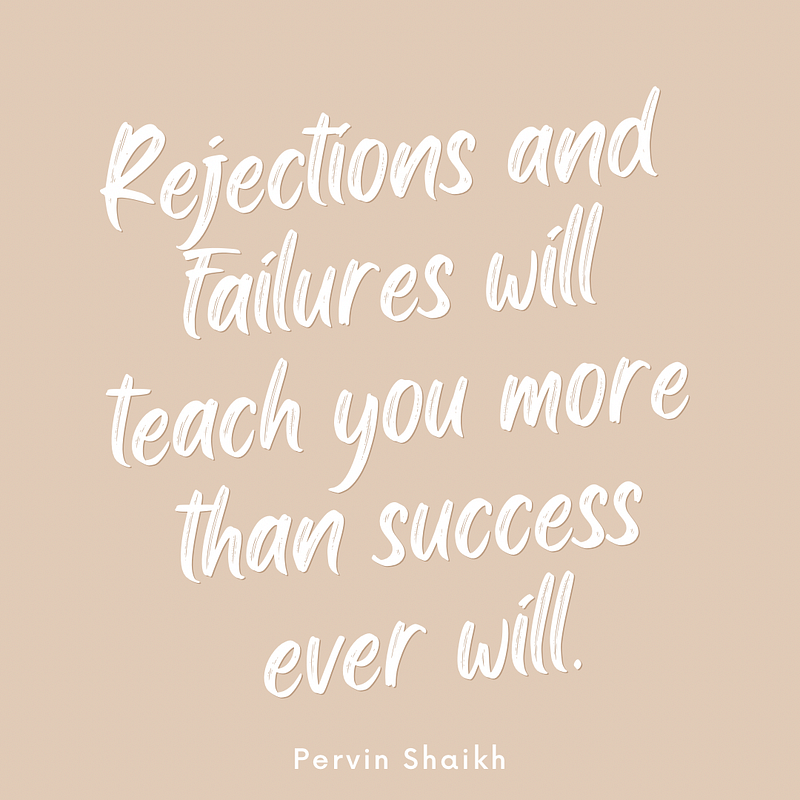
- Resilience Building
Resilience is a crucial trait when navigating life’s ups and downs. Remember that setbacks are temporary and don’t define your entire journey. Take a step back and reflect on the experience. What did you learn from this closed door? Every setback has valuable lessons hidden within. Analyse what worked and what didn’t, and use that knowledge to shape your plans
Learn to bounce back, adapt, and persevere. Believe in your ability to overcome obstacles and find new doors waiting to be opened.
Take calculated risks: Don’t be afraid to take risks and explore uncharted territory. Sometimes, trying something different is the key to finding a new opportunity. Be open to new experiences, challenge yourself, and don’t let fear hold you back. Extraordinary achievements often require stepping outside of your comfort zone.
2. Re Strategise
Getting rejected can be a boon for those who see the learning opportunity behind each one. It will help you revisit your strategy and refine your action plan, saving you a lot of mental and physical effort.
Learn to work with the emotions instead of trying to fight them. It’s natural to feel a range of emotions when a door closes. Allow yourself to acknowledge and process those feelings. Give yourself time to grieve the loss or disappointment, but remember that this is just one chapter in your life. Emotions can be powerful catalysts for change.
When you first experience it, you might feel the world is against you. However, it’s not. No one is against you, but if you’re not careful, you’ll be against yourself. Once you’re in this territory, it’s easy to play the victim game and put yourself in a mental jail.
3. New Opportunities
Sometimes, when one door closes, we become so fixated on that path that we overlook other opportunities. Step back and widen your perspective. Look for new possibilities and avenues you may not have considered before. You might be surprised by what you find.
When one door closes, your job is to find the key to another door and another until you manage to open a door. It’s the way you look at each rejection. If you see rejection as one door closing, and that’s it, you will operate from a fixed mindset. Instead, change your internal narrative and learn to think that another ten will open. How do you do this? You must be willing to be flexible and keep an open mind.
What happens if you still can’t open any doors? Or you find you’ve got a foot in, but that’s it? Perseverance is key. The process is long, so it’s essential to treat it like a marathon and not a sprint. Those who want fast results will find they’ll burn out quickly.
Tips
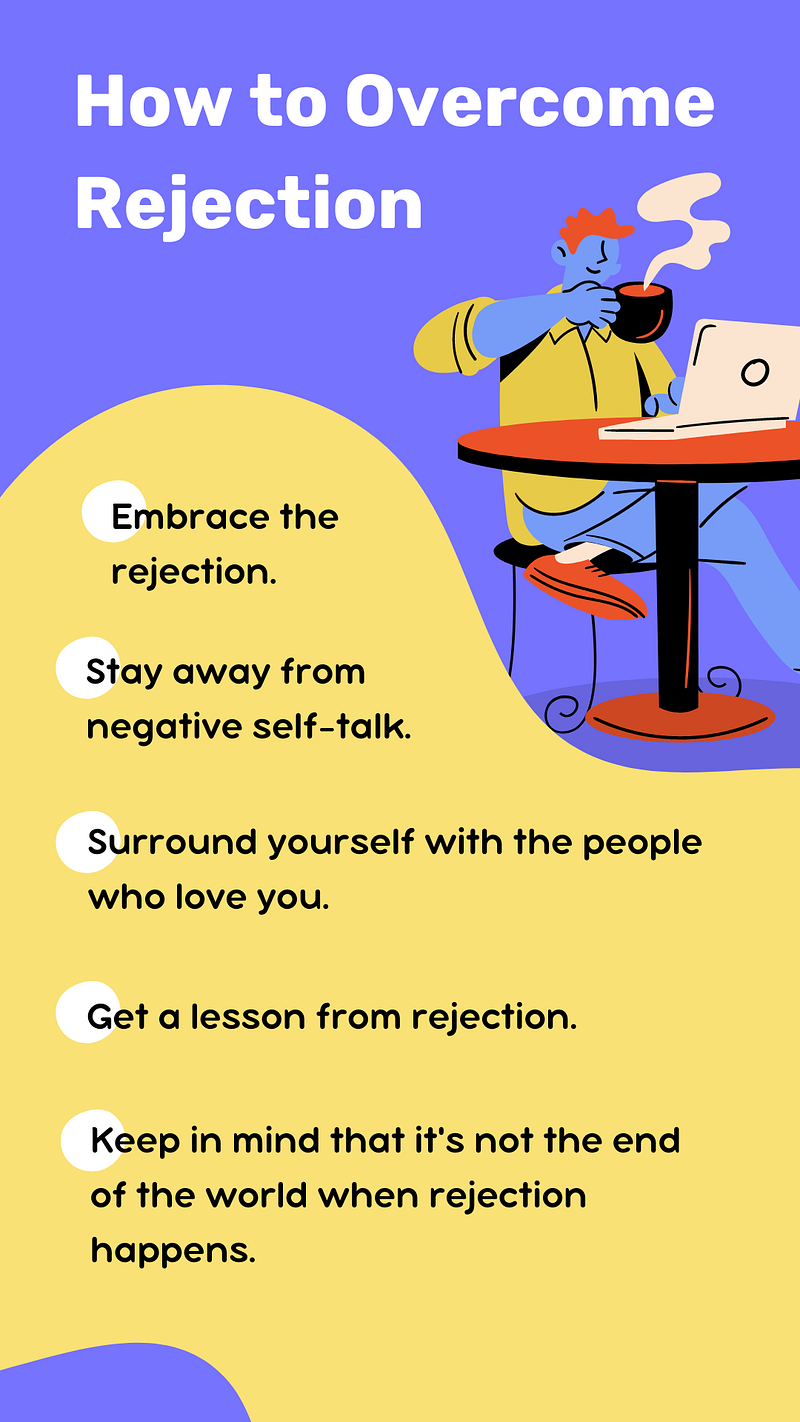
- Don’t overthink
- Work through the emotions because they have meant invaluable insights for you.
- Take your time
- Stay calm
- Write it out if that helps. Look for the learning in each setback.
- Adopt a positive outlook
- Think win/win
Call To Action Exercise
Take one recent rejection. Work through these questions:
- What was the rejection?
- How did this rejection make you feel?
- How did you handle it?
- What did you learn from this experience?
- If you were to experience this again, how would you handle it?
Parting Comments
You can’t control what happens to you, but you can control how you handle the situations you find yourself in. Rejections happen all the time in our personal and professional lives. It’s a way of life, but for the smart ones, each rejection is an opportunity to learn, grow and move on.
One thing to remember during this process is that the words you use are essential. Why? Words are powerful. There’s a big difference between ‘I don’t know what I should do’ and ‘I’ll figure this out. The first statement gives away power, and the second gives you energy.
However, when you adopt a solutions mindset, you will be more successful in dealing with the emotions and the potential impact.
Thank you for your attention.
Follow me for more valuable tips.
Pervin
linktr.ee/AimHighLtd