
The DNA of Rock and Roll
This Stuff May Bust Your Brains Out
“Stop Breakin’ Down” from Robert Johnson never runs out of gas
I first knew this song from The White Stripes. 1999. I mean, I’m a huge Blues fan. An Alt-Rock Dude. Classic Rock Dude. Of course, I knew the music of Robert Johnson — but I didn’t know he recorded the Original.
Stupid, me. I just ordered the Complete Collection of Robert Johnson on Amazon. When it comes to music, I don’t like being stupid. But I still buy CDs. What gives, man?
I started researching “Stop Breaking Down.” Many great covers. You will love this, man — or woman. I promise. Hang on to your Les Paul Gibson L1.
Robert Johnson “Stop Breakin’ Down Blues” (1937)
The Touchstone. The Cornerstone. The Rosetta Stone. The Original.
The “Grandfather of Rock and Roll.” “The King of Delta Blues Singers.”
From the Mississippi Delta, his sound will travel to Memphis, Chicago, New York, Toronto, London, and Liverpool.
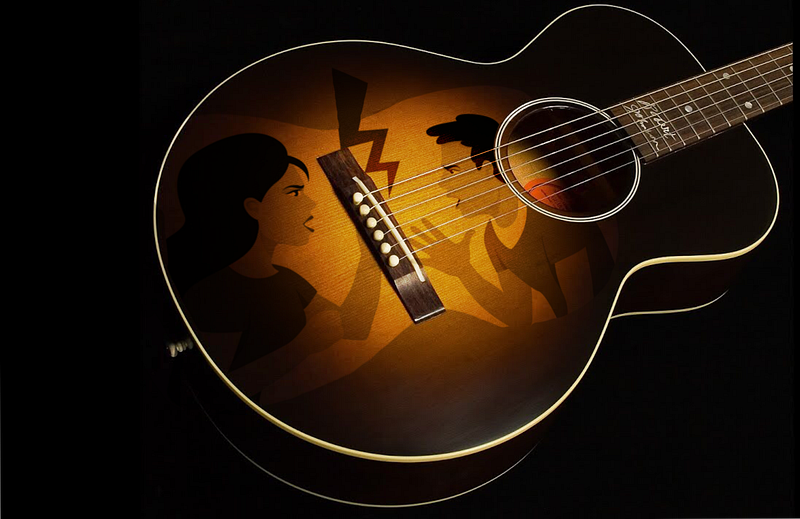
This song contains his Gibson Guitar Corporation model L-1 and his blues voice — full of woe, hollerin’, and sincerity. It was recorded on June 20th, 1937, in Dallas, Texas, and released in 1938.
There are two takes: Take 1 and Take 2.
What’s Johnson singin’ the Blues about? What else? A woman. Yeah — haven’t we all been there? A woman. A man. A love so intense that “it’ll make you lose your mind.”
And maybe they’re “breakin’ down” on us — giving us heat — whether deserved or not. It’s still all the Blues, man.
“Every time I’m walkin’ down the streets Some pretty mama start breakin’ down with me Stop breakin’ down, yes stop breakin’ down The stuff I got’ll bust your brains out, baby It’ll make you lose your mind.”
Sonny Boy Williamson “Stop Breaking Down” (1945)
From Dallas in the Depression before World War II, we head north to Chicago, home of Jake and Elwood Blues, for The Chicago Blues at the close of the war.
Like any great improvisational musician and lyricist, Sonny Boy Williamson will play with the lyrics — altering lines — like asking about his music. Yeah, man, I love the way your music sounds.
The recording studios from 1938 to 1945 greatly improved. The song still retains the soul and heart of Johnson. Like oral storytelling, a song travels and changes depending on the singer, audience, and time period. Well, the Zeitgeist, if you will, mates.
If you know “Bring It On Home” from Led Zeppelin II, you can thank Sonny Boy Williamson. Here is Zeppelin. Here is Williamson. So very close. Even Plant does his best to imitate Williamson’s vocals. John Paul Jones, of course, is great with that bass line.
Is this cultural appropriation or musical appreciation? Can it be both? Zeppelin does explode at 1:44 with a great Page riff — followed by Bonham’s avalanche of percussion.
The change in the lyrics was often repeated in the 1950s.
In 1954, Baby Boy Warren recorded it as a Chicago-style blues shuffle, but used most of Johnson’s lyrics. Forest City Joe recorded the song in 1959, which was released on a compilation album The Blues Roll On” (link).
These were Atlantic Record deals. It’s interesting that Atlantic Records signed so many top talents in jazz, soul, and R&B — including Aretha Franklin, Sam and Dave, and Ray Charles.
Is it a coincidence that Atlantic would sign such an act like Led Zeppelin, who has one giant foot in the Blues Magic? I knew the Atlantic logo from every Zeppelin LP almost as well as my own name.
Junior Wells — “Stop Breaking Down” (1969)
Junior Wells embellishes the song with a wild, whiskey-soaked piano, or gin — with percussion and a great horn segment. And what Blues song doesn’t have a mouth harp?
Junior Wells is joined here by Buddy Guy and Otis Spann.
I imagine Blanche DuBois from A Streetcar Named Desire passing The Three Deuces on Bourbon Street with this song playing. And boy, does she break down.
Wells is still in the deep Blues vein here — his voice more refined than Johnson’s but still raw and earnest. Do you really love me? Or do you just like the way my music sounds?
Doesn’t every musician feel this way? The first girl who kissed me, a southerner named Jennifer, liked my guitar playing. Was it me or my Fender acoustic at the campground in Virginia? Hey — does it matter?
A first kiss is amazing, man.
Eddie Taylor “Stop Breaking Down” (1972)
This song feels the antithesis of the passing of the Acid Rock phase, even though it’s solidly in the Blues and Motown tradition. After too much “White Rabbit” and “A Day in the Life,” this is refreshing.
The Rolling Stones “Stop Breaking Down” (1972)
This is probably the best-known version in rock. It comes from perhaps their best album — according to Rolling Stone magazine, anyway — Exile on Main Street. It’s track #16.
But that’s also like asking, what is the best flower in the garden? I happen to adore Let It Bleed, Sticky Fingers, and even Some Girls better.
Exile is easiest their most bluesy album — and that’s saying a lot because the Stones never really had to “Get Back” to Blues Basics as much as the Beatles had to (with one exception).
Lucinda Williams “Stop Breakin’ Down” (1979)
Okay — why does the Blues need to be Male Centered? This is a great folk cover from her Ramblings on My Mind record. Some call her sound “Heartland Rock,” but it’s a combination of country, Blues, folk, and rock.
So yes — “Heartland” is an apt appellation.
Her version is much more mellow — lots of acoustic work here. Guitar and vocals. That’s all. Like Robert Johnson. I love how men can break down, too. Maybe even more. In its elegant simplicity, it may be the most faithful to Johnson.
Jeff Healy Band — “Stop Breaking Down” (1995)
Okay — I never heard of this band or Jeffrey Healy. That’s okay; I didn’t know about BTS (K-Pop) until this morning. Here is Jeff Healy’s version of the classic Johnson song.
The Blues even made it to Toronto.
He was a Canadian folk, blues, and rock musician who died in 2008 at the young age of 41. Healey died of sarcoma (link). His top Billboard Hit was “Angel Eyes.” It peaked at #5 in 1989 (link).
He lost sight at age 1 due to sight due “to retinoblastoma, a rare cancer of the eyes” (link).
“Stop Breaking Down” appeared on his Cover to Cover album from 1995.
The White Stripes “Stop Breaking Down” (1999)
This is where Alt Rock Meets The Blues. Rock critic Chris Handyside for All Music gives mad props to Jack White for capturing the “desperation” in the Johnson original (link).
Off their stellar debut, self-titled album, this song is perhaps the fastest, raunchiest, punchiest, rocked-out version. At just over two minutes, you blink, and it’s almost over, but it was my gateway drug to The White Stripes.
And boy, I was so young in 1999.
Like Eminem, The White Stripes come from The Motor City — Detroit, or as kiss would sing, “Detroit Rock City.”
Thirty, married to Mary Jane, and with a baby girl, Madeline, then just two. But we did rock that house, right? I need to play The White Stripes so loud I almost never get to play the band with the wife present. She “breaks down.” I am annoying with the music and the sound. You can add The Clash into the Bands That Cannot be Listened to Together. But that’s okay — we have so many more bands in common.
“You Saturday night women, you love to ape and clown You won’t do nothing but tear a good man’s reputation down Stop breaking down, stop breaking down.”
Widespread Panic — “Stop Breaking Down Blues” (2005)
Like the legendary R.E.M and the B52s, Widespread Panic hails from the Peach State — Athens, Georgia — the home of the University of Georgia. My daughter Madeline is studying aerospace now at Georgia Tech in Atlanta, so I have no idea why I wrote that. It’s just that the South is much more than “Southern Rock,” — which I happen to like. No haters, man.
When it’s music, we’re all brothers and sisters.
From the shortest version to the longest version, I believe. And this is a complete jam. It was originally recorded live from ‘Live At Myrtle Beach,’ released on February 22, 2005.
Think of Widespread Panic-like Phish or The Grateful Dead — as a total jam band that mixes so many different styles — Blues, rock, rockabilly, country, Southern rock, folk — and a dose of improvisational jazz (but not ‘smooth jazz ‘— an oxymoron that’s moronic) — you know the music that really makes America great.
Does one ever hear the same song live from a jam band? Absolutely not. Why does the Dead have so many bootlegs and versions? Well — Smuckers, man. Smuckers. Total Jam.
Here is another, more intimate video from Memphis in 2014: