avatarWalter Bowne

Free AI web copilot to create summaries, insights and extended knowledge, download it at here

10702

Abstract

om%2Fvi%2FFE307ZO3AvM%2Fhqdefault.jpg&key=a19fcc184b9711e1b4764040d3dc5c07&type=text%2Fhtml&schema=youtube" allowfullscreen="" frameborder="0" height="480" width="640"> </div> </div> </figure></iframe></div></div></figure><h2 id="5eb6">Woody Guthrie’s “John Henry”</h2><p id="dd9f">Here we have, of course, a narrative. That’s just a fancy word for a story. All of America seems to want to claim ownership of John Henry.</p><blockquote id="9e31"><p>“Some say he’s born in Texas Some say he’s born up in Maine I just say he was a Louisiana man Leader of a steel-driving chain gang Leader on a steel-driving gang.”</p></blockquote><p id="3d8f">And every story needs conflict and dialogue, right? The captain says to John Henry, “I’m gonna bring my steam drill around.” That steam drill will “whup that steel on down down down.”</p><p id="4de0">Folk music generally repeats keywords — like “down.” And down, in the song, means many things — literally, it will place that steel down faster on the ground, and metaphorically, it will put you down — a euphemism for death — and it will bring laboring men down, too — spirits as well.</p><p id="7dec">Even though John Henry dies, his martyrdom remains: Thou has not died in vain.</p><blockquote id="b752"><p>“They took John Henry to the graveyard Laid him down in the sand Every locomotive comin’ a-rolling by by by Hollered “there lies a steel-drivin’ man man man There lies a steel-drivin’ man!”</p></blockquote><p id="7f2c">In the video, blind Sonny Terry blows a mighty country harp. Brownie McGee picks away with a glory reminiscent of a certain meeting at a Crossroads.</p><blockquote id="4585"><p>“Walter McGhee was born and raised in Knoxville TN and when he contracted polio, his brother Granville (or ‘<a href="https://www.allaboutbluesmusic.com/stick-mcghee/">Stick</a>‘) would push him round in a cart. When he was able to walk again, Brownie dropped out of school to play guitar with his father’s group, The Golden Voices Gospel Quartet.” (<a href="https://www.allaboutbluesmusic.com/sonny-terry-brownie-mcghee/">link</a>).</p></blockquote> <figure id="dd91"> <div> <div> <img class="ratio" src="http://placehold.it/16x9"> <iframe class="" src="https://cdn.embedly.com/widgets/media.html?src=https%3A%2F%2Fwww.youtube.com%2Fembed%2FZ_fluqc6eBM%3Ffeature%3Doembed&amp;display_name=YouTube&amp;url=https%3A%2F%2Fwww.youtube.com%2Fwatch%3Fv%3DZ_fluqc6eBM&amp;image=https%3A%2F%2Fi.ytimg.com%2Fvi%2FZ_fluqc6eBM%2Fhqdefault.jpg&amp;key=a19fcc184b9711e1b4764040d3dc5c07&amp;type=text%2Fhtml&amp;schema=youtube" allowfullscreen="" frameborder="0" height="480" width="640"> </div> </div> </figure></iframe></div></div></figure><h2 id="fd11">Johnny Cash: “The Legend of John Henry’s Hammer”</h2><p id="f83b">The Man in Black extends the narrative far beyond the eight-minute mark. Notice how he embellishes the song for tremendous effect. He even adds a different singer to sing the “captain’s” part.</p><p id="fd9d">Cash also gives John Henry a reason for working so hard. Well, the sheriff is coming — and if you can “learn to ball a jack, learn to lay a track,” you’ll avoid jail (<i>and Jim Crow</i>).</p><blockquote id="98d0"><p>“Well, John Henry hammered in the mountain, he’d give a grunt and he’d give groan with every swing, the women folks for miles around, heard him and come down, to watch him make the cold steel ring, Lord what a swinger, just listen to that cold steel ring.”</p></blockquote><p id="52d8">The ladies loved John Henry! He was a swinger — get it? Talk about motivation!</p><p id="0fb8">I love how Cash has John Henry address the steel drill as an example of apostrophe and personification.</p><blockquote id="2ee4"><p>“John Henry said to the steam drill how is you, pardon me mister steam drill, I suppose you didn’t hear me, I said how you, well can you turn a jack, can you lay a track, can you pick and shovel too, listen this hammer swingers talkin’ to you.”</p></blockquote><p id="d832">The great refrain in the song is “a man ain’t nothin' but a man.” This can both be approached as an excuse. “Listen, I’m just a man. Not a god or machine.” Or it can be used as a reason for failing — like an apology. Of course, you’ll fail. “You’re just a man.”</p><p id="828f">John Henry wonders: “do engines get rewarded for their steam?”</p><p id="5742">That is the great wonder of work and labor and sweat. We get rewarded more than money to pay the bills. We can get that <i>intrinsic value of work. </i>We feel as if we have made a difference and a lasting impact on the world and our community.</p><p id="4f38"><i>But does a drill get either?</i></p><p id="7c07">Cash changes the melody and direction of the song, much like switching trains at the border of France and Spain because of different gauges. <i>Oh, that morning at the border was glorious!</i></p><p id="3ade">And in the song, Cash has John Henry tell his wife, Polly Ann, to “go to that railroad, swing that hammer like you seen me do it, and when you’re swinging with the lead men, they’ll all know they’ll all know you’re John Henry’s woman.”</p><p id="ccc4">After all, he did beat the machine. “And that’s been proved to you.” Like a Black spiritual seeking redemption in the afterlife since there is no justice or freedom in America, there is an appeal to God:</p><blockquote id="9ca8"><p>“Down there lies a steel driven man oh Lord, down there lies a steel driven man, down there lies a steel driven man oh Lord, down there lies a steel driven man.”</p></blockquote> <figure id="77cc"> <div> <div> <img class="ratio" src="http://placehold.it/16x9"> <iframe class="" src="https://cdn.embedly.com/widgets/media.html?src=https%3A%2F%2Fwww.youtube.com%2Fembed%2FhIh74VC7oXc%3Ffeature%3Doembed&amp;display_name=YouTube&amp;url=https%3A%2F%2Fwww.youtube.com%2Fwatch%3Fv%3DhIh74VC7oXc&amp;image=https%3A%2F%2Fi.ytimg.com%2Fvi%2FhIh74VC7oXc%2Fhqdefault.jpg&amp;key=a19fcc184b9711e1b4764040d3dc5c07&amp;type=text%2Fhtml&amp;schema=youtube" allowfullscreen="" frameborder="0" height="480" width="854"> </div> </div> </figure></iframe></div></div></figure><h2 id="7a85">Bruce Springsteen’s “John Henry”</h2><p id="3fa0">As a huge Bruce fan, I’m surprised this got past me in 2006, but I was busy raising a family and working and grading essays (my wife reminds me). But this cover is tremendous. This concert in New Orleans is tremendous. One commentator said that Bruce might be “The Boss,” but he shares that stage equally with all.</p><p id="a886">It’s so true. Bruce has always been about the working man. I know that from his songs and his autobiography. His voice is perfect for this type of raw but danceable song. Even Leadbelly said if played right, John Henry should be a dance tune.</p><p id="3cfa">Like his song about Steinbeck's “working class hero” from <i>The Grapes of Wrath</i>, Tom Joad, Bruce brings the same passion for another working-class hero — John Henry.</p><blockquote id="53c7"><p>“Well every, every Monday morning When the blue bird he begin to sing You could hear John Henry from a mile or more You could hear John Henry’s hammer ring, Lord, Lord You can hear John Henry’s hammer ring I say, You can hear John Henry’s hammer ring, Lord, Lord You can hear John Henry’s hammer ring.”</p></blockquote> <figure id="de72"> <div> <div> <img class="ratio" src="http://placehold.it/16x9"> <iframe class="" src="https://cdn.embedly.com/widgets/media.html?src=https%3A%2F%2Fwww.youtube.com%2Fembed%2FU27NxXGZNZQ%3Ffeature%3Doembed&amp;display_name=YouTube&amp;url=https%3A%2F%2Fwww.youtube.com%2Fwatch%3Fv%3DU27NxXGZNZQ&amp;image=https%3A%2F%2Fi.ytimg.com%2Fvi%2FU27NxXGZNZQ%2Fhqdefault.jpg&amp;key=a19fcc184b9711e1b4764040d3dc5c07&amp;type=text%2Fhtml&amp;schema=youtube" allowfullscreen="" frameborder="0" height="480" width="854"> </div> </div> </figure></iframe></div></div></figure><h2 id="3fa4">Joe Bonamassa’s “The Ballad of John Henry”</h2><p id="8f4f">I first heard about Joe Bonamassa a year after teaching a delightful family member of the Bonamassa family. I didn’t even know. She was low-key about it all. And I’m rather dense.</p><p id="aadc">This song, registered under Blues and Folk, came out in 2009. But it’s the most “rock-like” of what I’ve heard so far.</p><p id="cc60">Bonamassa takes the story a step forward — asking rhetorically, “Who killed John Henry in the battle of sinners and saints?”</p><p id="ba73">Did the Machine? Did John Henry commit a type of suicide? Did the railroad tycoons? The capitalists? The crowds who sang his glories?</p><p id="991d"><i>Was John Henry a sinner or saint? Is the narrator a sinner or saint? Is such a binary world even realistic? We all have a hand in the mystical soup, right?</i></p><p id="a839">This recording is much more “rock” than Bluegrass, country, or folk. The video from The Royal Albert Hall is outstanding — and quite a long jam. The musicianship is exemplary, of course — especially the keyboard player, <a href="https://www.discogs.com/artist/2535151-Arlan-Schierbaum">Arlan Scheierbaum</a>.</p><p id="9e9a">The band’s improvisation seems straight outta a jazz club in the 1920s.</p><p id="71e0">Bonamassa’s lead around the nine-minute mark is stellar. Who could compete against him today? Okay — someone his age? Jack White? Dan Auerbach? Different styles, but I love those heavy licks.</p><p id="8767">Bonamassa sings:</p><blockquote id="ff46"><p>Take this hammer, carry it to the Captain Tell him why I’m gone Take this hammer carry it to the Captain Tell him I’m goin’ home.</p></blockquote><p id="ceb7">He relocates the story from the South to Colorado, too. That’s the glory of such a legend and a story. The location and the time period may be irrelevant. It’s like the modern stagings of Shakespeare.</p><blockquote id="ebe4"><p>“I don’t want your cold iron shackles ‘Round my leg I don’t want your cold iron shackles ‘Round my leg.”</p></blockquote><p id="a4aa">Who is shackled? John Henry? The killer? The common laborer? Does John Henry change his mind about his hammer? He says to give the hammer back to the captain. There is no mention of the machine or the contest. Are the shackles mere symbolic — work that will kill us?</p><p id="afc9">The narrator doesn’t want to fall victim like John Henry to hubris, perhaps. <i>Excessive pride.</i> All he seems to want to do is to go home.</p><blockquote id="5bd6"><p>

Options

“I’m a long way from Colorado A long way from my home.”</p></blockquote><p id="e769">And that great end line — who killed him? Perhaps we all killed him? After all, a legend has to keep the legend going, right? With all that applause and song about his power and strength, how could he step down from the fight without losing “face.”</p><p id="00e0">Those who achieve fame often get consumed in the public acclaim flame, right? The narrator finally admits —</p><blockquote id="5759"><p>“I killed John Henry In the battle of sinners and saints.”</p></blockquote><p id="13cb">What a jam! What a change, of course, in the ongoing saga of John Henry! And yeah — he wears sunglasses because, you know. It’s cool. Bonamassa. Not John Henry.</p> <figure id="f26d"> <div> <div> <img class="ratio" src="http://placehold.it/16x9"> <iframe class="" src="https://cdn.embedly.com/widgets/media.html?src=https%3A%2F%2Fwww.youtube.com%2Fembed%2FlGEkWJa68xU%3Ffeature%3Doembed&amp;display_name=YouTube&amp;url=https%3A%2F%2Fwww.youtube.com%2Fwatch%3Fv%3DlGEkWJa68xU&amp;image=https%3A%2F%2Fi.ytimg.com%2Fvi%2FlGEkWJa68xU%2Fhqdefault.jpg&amp;key=a19fcc184b9711e1b4764040d3dc5c07&amp;type=text%2Fhtml&amp;schema=youtube" allowfullscreen="" frameborder="0" height="480" width="640"> </div> </div> </figure></iframe></div></div></figure><h2 id="d9e8">Leadbelly’s “John Henry”</h2><p id="74d0">Okay, Led Zeppelin. I get it. I love you. I love that Blues sound, and many of those riffs come straight from legendary Black musicians from Muscle Shoals, the Bayou, the Mississippi Delta, and Memphis. Songs from the souls of the tortured and the enslaved — but do you even appropriate Leadbelly’s name?</p><p id="185e">Or was it accidental — the way Entwisle of The Who quipped that the band would go down like a “lead balloon?” Or is it more like a homage — like Def Leppard’s name to Zeppelin? Or Falstaff to Shakespeare? (<i>both are worth a few penis laughs from the groundlings, lol</i>).</p><p id="96ba">Okay — is this Ground Zero for the Blues? Alan Lomax recorded Leadbelly in 1938. Here is a great resource: <a href="https://folkways.si.edu/leadbelly"><i>Lead Belly: The Smithsonian Folkways Collection.</i></a><i> </i>American musician Sonny Terry (1911–1986) also joins again with that amazing jaw harp. He was born in Greensboro, Georgia.</p><p id="c86f"><i>“Saunders Terrell, known as Sonny Terry, was an American Piedmont blues and folk musician, who was known for his energetic blues harmonica style.” (<a href="https://en.wikipedia.org/wiki/Sonny_Terry">link</a>)</i></p><p id="a8ce">I love how Lead Belly, or Leadbelly — talks about the song — giving his street credentials — his ethos — about the Blues and a working man’s song. He knows. Here, there is no appropriation or “white man explaining.” (I am Caucasian, btw).</p><p id="9a50">Leadbelly sings/talks in the introduction:</p><blockquote id="be45"><p>“A work song is when you sing, that gives you a feeling, keep you from gettin’ tired. And when you get hungry, if you sing, you won’t — you forget about being hungry. And when you sing, you swing as you sing, and that’s what you call a work song, it’s a feeling. John Henry was a steel-driving man, well that’s mighty fine He was a double-jointed man, I don’t guess you don’t know that, did you? That’s what made him drive so much steel He drove steel from Newport News to Cincinnati, Ohio, and he drove that all by hisself So, I’ll tell you a story about it.”</p></blockquote><p id="46cb">Don’t we all love stories?</p><p id="91d4">Leadbelly mentions by concrete example, the “Big Bend Tunnel on C-and-O Road.” And he repeats in anaphora and epistrophe, all the while using an apostrophe, addressing someone not present:</p><blockquote id="02a7"><p>“It’s going to be the death of me, Lord, Lord It’s going be the death of me It’s going to be the death of me, Lord, Lord It’s going to be the death of me.”</p></blockquote><p id="6099">The harmonica sounds like a train. It’s amazing, Sonny Terry.</p><p id="00c2">Now Leadbelly gives John Henry two women now: Mary Magdalene and the Polly Ann of fame. Okay — is this really another woman, or his spiritual saint — the one who anointed the feet of Jesus and was reputed to be a prostitute. Current research finds that she was not a whore.</p><p id="710d">That’s what happens when oral tradition gets written down in Aramaic to Greek to Latin to Hebrew to English. Here, we have the oral tradition as well — parables getting handed down by word of mouth.</p><p id="cd44">Socrates, like Jesus, never wrote anything. They just talked and taught.</p><p id="4dd5">In Verse 6, Leadbelly has John Henry taken to</p><blockquote id="b71d"><p>“the White House And they bury him in the sand And every locomotive come rollin’ by, sayin “There lie that steel-drivin’ man” Lord, Lord “There lie that steel-drivin’ man” “There lie that steel-drivin’ man” Oh, Lord “There lie that steel-drivin’ man” (<a href="https://genius.com/Lead-belly-john-henry-radio-lyrics">link</a>)</p></blockquote><p id="feca">Is this House heaven? A tomb? The actual White House — where a Black man could finally be honored in the White House of “white” people? And white man’s laws?</p><p id="7a20">Not sure anyone that ever inhabited The White House ever labored like John Henry. Abe Lincoln, maybe. And a few others, but in the 20th Century? Kennedy? Nixon? Reagan? Bush? Clinton? Trump?</p><p id="ea28">Maybe Jimmy Carter on his farm. Or now, helping build houses.</p><p id="ab45">But I know we still need more “steel-drivin’ men and women” these days, right? <i>Can John Henry get an amen, brothers, and sisters? Let’s honor all those who labor.</i></p><p id="6609">Here is a great video for the Appalachian Blues:</p> <figure id="877c"> <div> <div> <img class="ratio" src="http://placehold.it/16x9"> <iframe class="" src="https://cdn.embedly.com/widgets/media.html?src=https%3A%2F%2Fwww.youtube.com%2Fembed%2Ff86huKCnKN0%3Ffeature%3Doembed&amp;display_name=YouTube&amp;url=https%3A%2F%2Fwww.youtube.com%2Fwatch%3Fv%3Df86huKCnKN0&amp;image=https%3A%2F%2Fi.ytimg.com%2Fvi%2Ff86huKCnKN0%2Fhqdefault.jpg&amp;key=a19fcc184b9711e1b4764040d3dc5c07&amp;type=text%2Fhtml&amp;schema=youtube" allowfullscreen="" frameborder="0" height="480" width="854"> </div> </div> </figure></iframe></div></div></figure><h2 id="403c">Here is a playlist of John Henry songs I compiled from Spotify:</h2> <figure id="1d60"> <div> <div> <img class="ratio" src="http://placehold.it/16x9"> <iframe class="" src="https://cdn.embedly.com/widgets/media.html?src=https%3A%2F%2Fopen.spotify.com%2Fembed%2Fplaylist%2F5CJNgNUc3ONqHZPx3B68AC%3Futm_source%3Doembed&amp;display_name=Spotify&amp;url=https%3A%2F%2Fopen.spotify.com%2Fplaylist%2F5CJNgNUc3ONqHZPx3B68AC&amp;image=https%3A%2F%2Fmosaic.scdn.co%2F300%2F2dfc512ed4cf51a2fcf43e6d634ce3223d48277aab67616d0000b2736d3bb1d0ff03c25720f74d17ab67616d0000b273c8f9434375ea01571d149eb2ab67616d0000b273cd31bf9e126ead779569d2d9&amp;key=a19fcc184b9711e1b4764040d3dc5c07&amp;type=text%2Fhtml&amp;schema=spotify" allowfullscreen="" frameborder="0" height="380" width="456"> </div> </div> </figure></iframe></div></div></figure><h2 id="8f84">Thank you for reading. Read more from Walter Bowne on The Riff:</h2><div id="8313" class="link-block"> <a href="https://readmedium.com/an-1895-murder-triggered-400-songs-769a2ae1d567"> <div> <div> <h2>An 1895 Murder Triggered 400 Songs</h2> <div><h3>For well over a century, this American folk story still inspires brilliant music</h3></div> <div><p>medium.com</p></div> </div> <div> <div style="background-image: url(https://miro.readmedium.com/v2/resize:fit:320/1*d89zOElsrAiWqh9szvIhjg.png)"></div> </div> </div> </a> </div><div id="109b" class="link-block"> <a href="https://readmedium.com/20-fabled-tracks-in-rock-and-roll-dd68f78a30c5"> <div> <div> <h2>31 Long Haul Tracks in Rock and Roll</h2> <div><h3>It doesn’t matter (Smuckers, Welches, or Bonne Maman) — let’s jam, man!</h3></div> <div><p>medium.com</p></div> </div> <div> <div style="background-image: url(https://miro.readmedium.com/v2/resize:fit:320/1*MvxZ8k_e0rmv1kYuU1aKOg.jpeg)"></div> </div> </div> </a> </div><div id="cd3f" class="link-block"> <a href="https://readmedium.com/on-thunder-road-with-mary-jane-3897a7d25827"> <div> <div> <h2>On “Thunder Road” with Mary Jane</h2> <div><h3>South Jersey was full of losers, but I was the one, pulling out to win</h3></div> <div><p>medium.com</p></div> </div> <div> <div style="background-image: url(https://miro.readmedium.com/v2/resize:fit:320/1*33uROjHOtj622YvoNHCEYg.jpeg)"></div> </div> </div> </a> </div><div id="baae" class="link-block"> <a href="https://readmedium.com/one-americans-invasion-on-brit-pop-89f3600755d4"> <div> <div> <h2>One American’s Invasion on Brit Pop</h2> <div><h3>My musical tastes changed dramatically when I touched down at Heathrow in 1989</h3></div> <div><p>medium.com</p></div> </div> <div> <div style="background-image: url(https://miro.readmedium.com/v2/resize:fit:320/1*v0wWnCy_qPaf1BGoj6WmEg.jpeg)"></div> </div> </div> </a> </div><div id="6089" class="link-block"> <a href="https://the4bownes.medium.com/membership"> <div> <div> <h2>Join Medium with my referral link — Walter Bowne</h2> <div><h3>As a Medium member, a portion of your membership fee goes to writers you read, and you get full access to every story…</h3></div> <div><p>the4bownes.medium.com</p></div> </div> <div> <div style="background-image: url(https://miro.readmedium.com/v2/resize:fit:320/0*RRbyx0skp3B1imqW)"></div> </div> </div> </a> </div></article></body>

“A man ain’t nothing but a man”

The John Henry Legend Has Inspired 200 Songs . . . and Counting

Country and the Blues largely originated in the South with this ‘Steel Drivin’ Man’
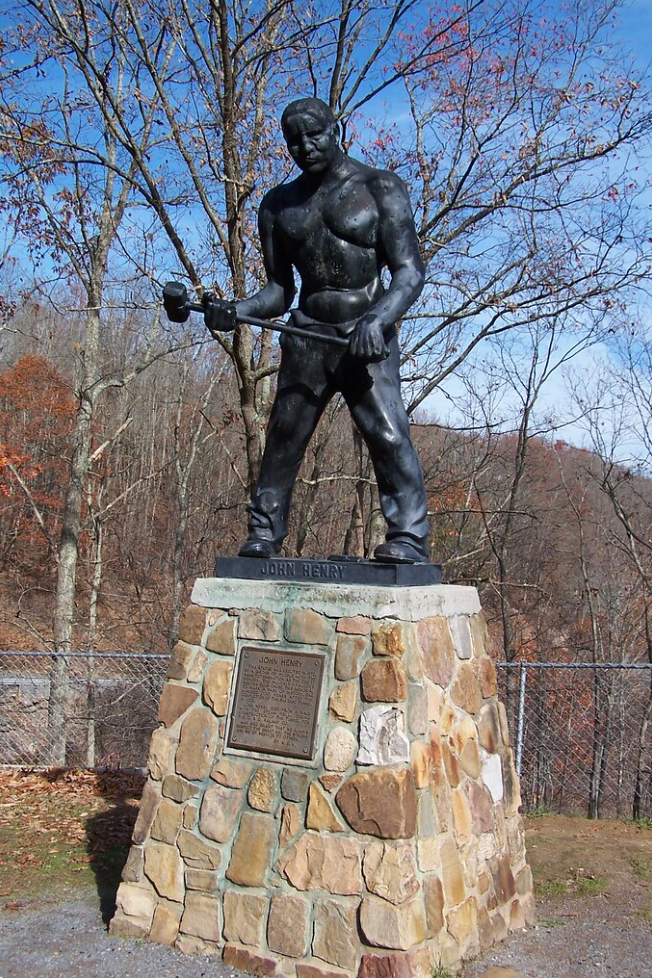
The statue of the famous folk hero John Henry stands in an overlook above the CSX Big Bend tunnel in West Virginia between routes 63, 12 and 3. Photo by jpmueller99. (link)

Is it possible that one person inspired both Blues and country music?

Yes.

His name is John Henry — of folklore legend, a legend that was forged in muscle and might in the Age of Reconstruction and the Golden Age of the Railroad, but recent research from Scott Nelson has revealed that John Henry was real —

“. . . a nineteen-year-old from New Jersey who was convicted of theft in a Virginia court in 1866, sentenced to ten years in the penitentiary, and put to work building the C&O Railroad. There, at the Lewis Tunnel, Henry and other prisoners worked alongside steam-powered drills” (Steel Drivin’ Man).

Here is a fascinating lecture from the Virginia Museum of History and Culture:

If Woody Guthrie Sings About You, You’ll Be Immortal

But there is also, before, Fiddlin’ John Carter — recording one of country music’s first songs. Then Leadbelly — with the Blues. And then, of course, Pete Seeger, Johnny Cash, Bruce Springsteen, Van Morrison, Willie Nelson, Joe Bonamassa, and even Hugh Laurie.

And you don’t know a fiddle from a banjo if you haven’t heard of John Henry in the Bluegrass music of Kentucky and the Appalachians.

Historians have found 200 music versions of the John Henry legend. Why was his story so well known? How could a Black man achieve such fame in the South — with people from Texas to Virginia knowing the song without any copyright or official recordings of the song?

Well, how did those in Ancient Greece know about Achilles, Odysseus, and Helen of Troy without Barnes and Noble and the Internet?

People know music — and love tales — and sing music — handed down from generation to generation, as if carried on the winds, rails, or in the Grecian sails. It’s why those with Alzheimer’s can sing a song from childhood but not know their spouse's name.

It’s the magic of music. It’s also the power of legends and myths. And who has not toiled against a Machine — fought against technology — struggled to keep current, and even Raged Against such Machines in a desperate attempt to maintain one’s humanity?

It’s why we can identify with John Henry.
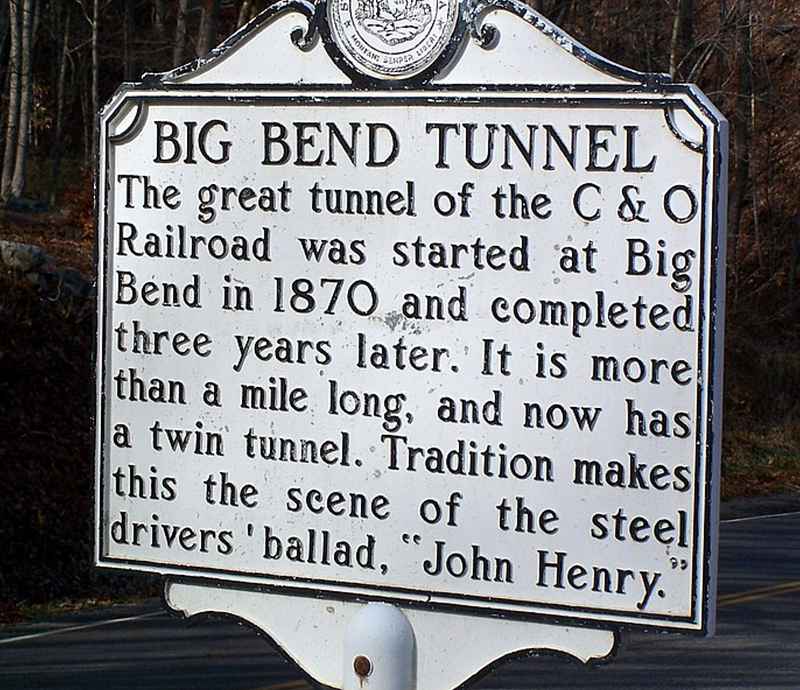
Photo by John Mueller. (link)

So who was John Henry? Well, he’s a folk legend, like Casey Jones— a real person, by the way — Casey Jones, who was not “high on cocaine” in Dead Legend — was also connected deeply connected to the railroads.

In the 19th century, wasn’t everything connected to the rails?

John Henry was a strong man — a Black man — now free after the Civil War, but not free owing to Jim Crow and Southern Reconstruction. One needed to prove one’s worth, and what better way than to make white men money by building railroads for railroad tycoons in The Gilded Age?

But railroad workers, driving stakes, laying down steel, and chipping through the granite to create tunnels, were soon competing against a new technology — the steam drill.
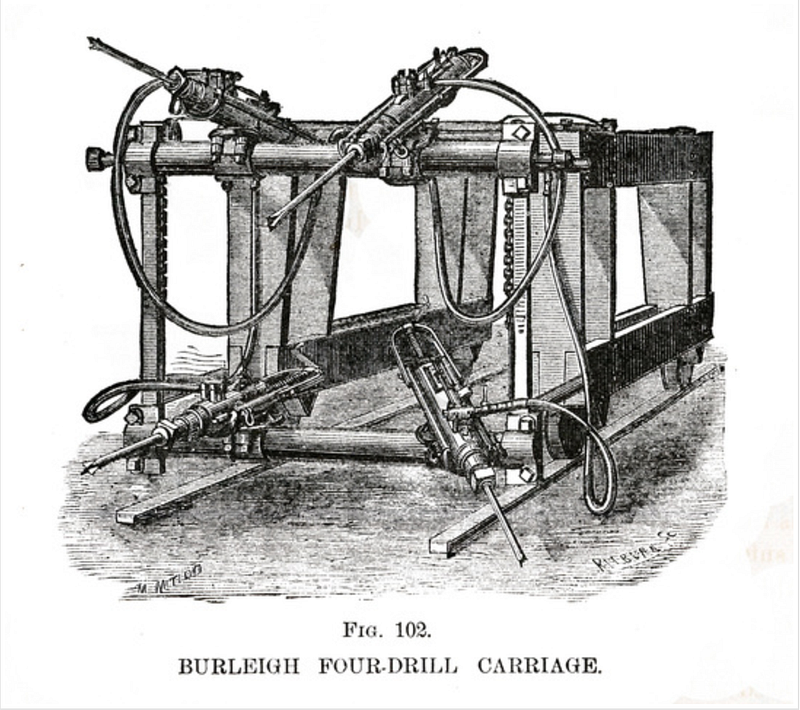
“Between 1850 and 1875, American inventors patented more than 100 mechanical drills. The Burleigh compressed air steam drill was among them, and possibly was the drill confronted by John Henry.” (link)

So We Have the Age Old Conflict — Man vs. Machine

John Henry says he will compete against the Machine — and he wins. But then, after asking for water, soon dies.

Who takes up his sledgehammer — well, Polly, his wife. Like a legendary Molly Pitcher. The human spirit continues against all odds and reason.

It’s a universal song — and changes that come to a society where machines displace workers — Did candlemakers foresee the dawn of electricity? Taxi drivers predict Uber and Lyft?

Resistance to change — the division of labor — workers no longer see the end result of their labor — at least a man like John Henry can pick through a mountain in West Virginia and see that train pass through — and feel that power and joy through work of what Churchill would call “blood, sweat, toil, and tears.”

Chesapeake & Ohio 614 4–8–4 steam locomotive at C&O Railway Heritage Center in Clifton Forge, Virginia.Photo by Jarek Tuszyński. (link).

The Chesapeake and Ohio Railroad — from Richmond, Virginia, to the Ohio River — was stiff competition with Southern.

Singing while working is as American as “Whistle While You Work” from Snow White and the Seven Dwarfs (1937) to Devo’s “Working in a Coal Mine” (1981). That’s what makes music so special — to alleviate the pain of working in the cotton fields by singing “Swing Low, Sweet Chariot” or of heartache in the Blues.

In 1908 and 1909, there was no copyright of the song. The first transcription came in 1915. Up until then, the song and the legend just traveled by mouth.

In fact, the birth of country music came from Fiddlin’ John Carson in 1924, with his song, John Henry Blues.

Folklorist Louis Chappell helped explore the legend of John Henry. He died in 1981 at the age of 91. He was “a leading authority on West Virginia folk music.” He was also an associate professor of English at West Virginia University.

“Chappell’s initial studies focused on the ballad ‘’John Henry’” (link).
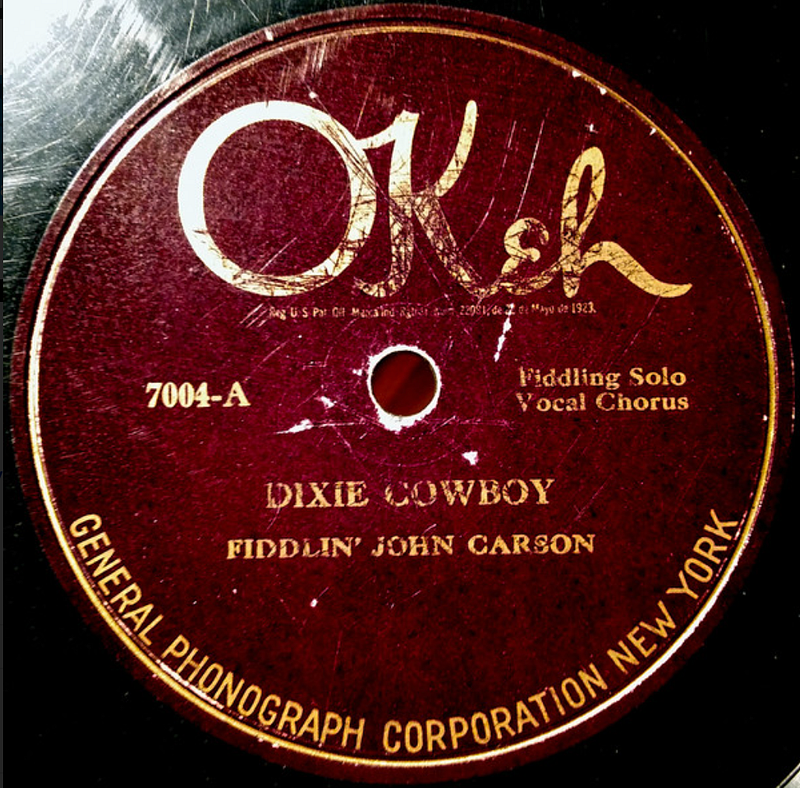
Link

It’s Interesting to Examine the Various Incarnations of the John Henry Legend through Music

The glory of folklore is that the story is passed down from generation to generation — orally. It travels. It changes. But once the tale is codified, like in the tales of Hans Christian Anderson and the Grimm Brothers, the tale has trouble changing. It’s as if the tale is now etched on two stone tablets to make the Ten Commandments.

The song then becomes copyrighted and not in the general public domain — in the public DNA.

John Henry is all about manual labor— the strength and resiliency of the human spirit — even in defeat. John Henry did beat the Machine, but he had to pay a price — his life.

Was it worth it? Did he work himself to death? How often does the worker work themselves to death? To prove what? To buy what? A soul? Americans and South Koreans, I’m asking you — those who work more hours than anyone!

How much is work a part of the American identity? In America, the first thing we ask, it seems, is, “what do you do?” And what you say marks you on the social hierarchy. It’s about status.

The song is about race. How could any laboring man, especially a laboring Black man, name his own price and get it? That sounds like one huge myth — but a story worth believing. Mythos does not mean “false,” just an archetypal tale that lingers forever.

Let’s get to five versions of the song.

Woody Guthrie’s “John Henry”

Here we have, of course, a narrative. That’s just a fancy word for a story. All of America seems to want to claim ownership of John Henry.

“Some say he’s born in Texas Some say he’s born up in Maine I just say he was a Louisiana man Leader of a steel-driving chain gang Leader on a steel-driving gang.”

And every story needs conflict and dialogue, right? The captain says to John Henry, “I’m gonna bring my steam drill around.” That steam drill will “whup that steel on down down down.”

Folk music generally repeats keywords — like “down.” And down, in the song, means many things — literally, it will place that steel down faster on the ground, and metaphorically, it will put you down — a euphemism for death — and it will bring laboring men down, too — spirits as well.

Even though John Henry dies, his martyrdom remains: Thou has not died in vain.

“They took John Henry to the graveyard Laid him down in the sand Every locomotive comin’ a-rolling by by by Hollered “there lies a steel-drivin’ man man man There lies a steel-drivin’ man!”

In the video, blind Sonny Terry blows a mighty country harp. Brownie McGee picks away with a glory reminiscent of a certain meeting at a Crossroads.

“Walter McGhee was born and raised in Knoxville TN and when he contracted polio, his brother Granville (or ‘Stick‘) would push him round in a cart. When he was able to walk again, Brownie dropped out of school to play guitar with his father’s group, The Golden Voices Gospel Quartet.” (link).

Johnny Cash: “The Legend of John Henry’s Hammer”

The Man in Black extends the narrative far beyond the eight-minute mark. Notice how he embellishes the song for tremendous effect. He even adds a different singer to sing the “captain’s” part.

Cash also gives John Henry a reason for working so hard. Well, the sheriff is coming — and if you can “learn to ball a jack, learn to lay a track,” you’ll avoid jail (and Jim Crow).

“Well, John Henry hammered in the mountain, he’d give a grunt and he’d give groan with every swing, the women folks for miles around, heard him and come down, to watch him make the cold steel ring, Lord what a swinger, just listen to that cold steel ring.”

The ladies loved John Henry! He was a swinger — get it? Talk about motivation!

I love how Cash has John Henry address the steel drill as an example of apostrophe and personification.

“John Henry said to the steam drill how is you, pardon me mister steam drill, I suppose you didn’t hear me, I said how you, well can you turn a jack, can you lay a track, can you pick and shovel too, listen this hammer swingers talkin’ to you.”

The great refrain in the song is “a man ain’t nothin' but a man.” This can both be approached as an excuse. “Listen, I’m just a man. Not a god or machine.” Or it can be used as a reason for failing — like an apology. Of course, you’ll fail. “You’re just a man.”

John Henry wonders: “do engines get rewarded for their steam?”

That is the great wonder of work and labor and sweat. We get rewarded more than money to pay the bills. We can get that intrinsic value of work. We feel as if we have made a difference and a lasting impact on the world and our community.

But does a drill get either?

Cash changes the melody and direction of the song, much like switching trains at the border of France and Spain because of different gauges. Oh, that morning at the border was glorious!

And in the song, Cash has John Henry tell his wife, Polly Ann, to “go to that railroad, swing that hammer like you seen me do it, and when you’re swinging with the lead men, they’ll all know they’ll all know you’re John Henry’s woman.”

After all, he did beat the machine. “And that’s been proved to you.” Like a Black spiritual seeking redemption in the afterlife since there is no justice or freedom in America, there is an appeal to God:

“Down there lies a steel driven man oh Lord, down there lies a steel driven man, down there lies a steel driven man oh Lord, down there lies a steel driven man.”

Bruce Springsteen’s “John Henry”

As a huge Bruce fan, I’m surprised this got past me in 2006, but I was busy raising a family and working and grading essays (my wife reminds me). But this cover is tremendous. This concert in New Orleans is tremendous. One commentator said that Bruce might be “The Boss,” but he shares that stage equally with all.

It’s so true. Bruce has always been about the working man. I know that from his songs and his autobiography. His voice is perfect for this type of raw but danceable song. Even Leadbelly said if played right, John Henry should be a dance tune.

Like his song about Steinbeck's “working class hero” from The Grapes of Wrath, Tom Joad, Bruce brings the same passion for another working-class hero — John Henry.

“Well every, every Monday morning When the blue bird he begin to sing You could hear John Henry from a mile or more You could hear John Henry’s hammer ring, Lord, Lord You can hear John Henry’s hammer ring I say, You can hear John Henry’s hammer ring, Lord, Lord You can hear John Henry’s hammer ring.”

Joe Bonamassa’s “The Ballad of John Henry”

I first heard about Joe Bonamassa a year after teaching a delightful family member of the Bonamassa family. I didn’t even know. She was low-key about it all. And I’m rather dense.

This song, registered under Blues and Folk, came out in 2009. But it’s the most “rock-like” of what I’ve heard so far.

Bonamassa takes the story a step forward — asking rhetorically, “Who killed John Henry in the battle of sinners and saints?”

Did the Machine? Did John Henry commit a type of suicide? Did the railroad tycoons? The capitalists? The crowds who sang his glories?

Was John Henry a sinner or saint? Is the narrator a sinner or saint? Is such a binary world even realistic? We all have a hand in the mystical soup, right?

This recording is much more “rock” than Bluegrass, country, or folk. The video from The Royal Albert Hall is outstanding — and quite a long jam. The musicianship is exemplary, of course — especially the keyboard player, Arlan Scheierbaum.

The band’s improvisation seems straight outta a jazz club in the 1920s.

Bonamassa’s lead around the nine-minute mark is stellar. Who could compete against him today? Okay — someone his age? Jack White? Dan Auerbach? Different styles, but I love those heavy licks.

Bonamassa sings:

Take this hammer, carry it to the Captain Tell him why I’m gone Take this hammer carry it to the Captain Tell him I’m goin’ home.

He relocates the story from the South to Colorado, too. That’s the glory of such a legend and a story. The location and the time period may be irrelevant. It’s like the modern stagings of Shakespeare.

“I don’t want your cold iron shackles ‘Round my leg I don’t want your cold iron shackles ‘Round my leg.”

Who is shackled? John Henry? The killer? The common laborer? Does John Henry change his mind about his hammer? He says to give the hammer back to the captain. There is no mention of the machine or the contest. Are the shackles mere symbolic — work that will kill us?

The narrator doesn’t want to fall victim like John Henry to hubris, perhaps. Excessive pride. All he seems to want to do is to go home.

“I’m a long way from Colorado A long way from my home.”

And that great end line — who killed him? Perhaps we all killed him? After all, a legend has to keep the legend going, right? With all that applause and song about his power and strength, how could he step down from the fight without losing “face.”

Those who achieve fame often get consumed in the public acclaim flame, right? The narrator finally admits —

“I killed John Henry In the battle of sinners and saints.”

What a jam! What a change, of course, in the ongoing saga of John Henry! And yeah — he wears sunglasses because, you know. It’s cool. Bonamassa. Not John Henry.

Leadbelly’s “John Henry”

Okay, Led Zeppelin. I get it. I love you. I love that Blues sound, and many of those riffs come straight from legendary Black musicians from Muscle Shoals, the Bayou, the Mississippi Delta, and Memphis. Songs from the souls of the tortured and the enslaved — but do you even appropriate Leadbelly’s name?

Or was it accidental — the way Entwisle of The Who quipped that the band would go down like a “lead balloon?” Or is it more like a homage — like Def Leppard’s name to Zeppelin? Or Falstaff to Shakespeare? (both are worth a few penis laughs from the groundlings, lol).

Okay — is this Ground Zero for the Blues? Alan Lomax recorded Leadbelly in 1938. Here is a great resource: Lead Belly: The Smithsonian Folkways Collection. American musician Sonny Terry (1911–1986) also joins again with that amazing jaw harp. He was born in Greensboro, Georgia.

“Saunders Terrell, known as Sonny Terry, was an American Piedmont blues and folk musician, who was known for his energetic blues harmonica style.” (link)

I love how Lead Belly, or Leadbelly — talks about the song — giving his street credentials — his ethos — about the Blues and a working man’s song. He knows. Here, there is no appropriation or “white man explaining.” (I am Caucasian, btw).

Leadbelly sings/talks in the introduction:

“A work song is when you sing, that gives you a feeling, keep you from gettin’ tired. And when you get hungry, if you sing, you won’t — you forget about being hungry. And when you sing, you swing as you sing, and that’s what you call a work song, it’s a feeling. John Henry was a steel-driving man, well that’s mighty fine He was a double-jointed man, I don’t guess you don’t know that, did you? That’s what made him drive so much steel He drove steel from Newport News to Cincinnati, Ohio, and he drove that all by hisself So, I’ll tell you a story about it.”

Don’t we all love stories?

Leadbelly mentions by concrete example, the “Big Bend Tunnel on C-and-O Road.” And he repeats in anaphora and epistrophe, all the while using an apostrophe, addressing someone not present:

“It’s going to be the death of me, Lord, Lord It’s going be the death of me It’s going to be the death of me, Lord, Lord It’s going to be the death of me.”

The harmonica sounds like a train. It’s amazing, Sonny Terry.

Now Leadbelly gives John Henry two women now: Mary Magdalene and the Polly Ann of fame. Okay — is this really another woman, or his spiritual saint — the one who anointed the feet of Jesus and was reputed to be a prostitute. Current research finds that she was not a whore.

That’s what happens when oral tradition gets written down in Aramaic to Greek to Latin to Hebrew to English. Here, we have the oral tradition as well — parables getting handed down by word of mouth.

Socrates, like Jesus, never wrote anything. They just talked and taught.

In Verse 6, Leadbelly has John Henry taken to

“the White House And they bury him in the sand And every locomotive come rollin’ by, sayin “There lie that steel-drivin’ man” Lord, Lord “There lie that steel-drivin’ man” “There lie that steel-drivin’ man” Oh, Lord “There lie that steel-drivin’ man” (link)

Is this House heaven? A tomb? The actual White House — where a Black man could finally be honored in the White House of “white” people? And white man’s laws?

Not sure anyone that ever inhabited The White House ever labored like John Henry. Abe Lincoln, maybe. And a few others, but in the 20th Century? Kennedy? Nixon? Reagan? Bush? Clinton? Trump?

Maybe Jimmy Carter on his farm. Or now, helping build houses.

But I know we still need more “steel-drivin’ men and women” these days, right? Can John Henry get an amen, brothers, and sisters? Let’s honor all those who labor.

Here is a great video for the Appalachian Blues:

Here is a playlist of John Henry songs I compiled from Spotify:

Thank you for reading. Read more from Walter Bowne on The Riff:

History
Art
Music
Culture
Storytelling
Recommended from ReadMedium