avatarWalter Bowne

Free AI web copilot to create summaries, insights and extended knowledge, download it at here

10848

Abstract

to fear math for all time.</p><p id="ca73"><i>Except when counting my tips.</i></p><p id="9b5a">My musicophile and college radio music producer daughter Nancy bought the 1973 LP <i>Goodbye Yellow Brick Road </i>on vinyl from a local shop, she was in love. I tried stealing it for my own system downstairs, but I didn’t keep it long.</p><p id="ce47">For those unversed in rhetoric, the album is an <i>allusion </i>to <i>The Wizard of Oz</i>. Duh, right? I wonder: Is Elton Dorothy or the Wizard or Glinda?</p><p id="b3ad">My daughter Nancy and I once had a debate about what was the Greatest Side of Music Of All Time. I claimed it was Side B of <i>Abbey Road</i>, and then she countered with this album. And then Ziggy Stardust. When you raise them right, well, sometimes you can’t win, right?</p><p id="ac43">Elton John doesn’t start singing until the 5:59 mark. The building of instrumentals is instrumental. I know that’s circular reasoning. But we have a Bach-like Requiem playing, organ — Baroque — and it seems like we’re entered the Haunted House at Disney. Where is the candelabra? That’s the opening to this two-part song.</p><p id="82ce">Then we get “<a href="https://open.spotify.com/track/5NERbS7923kF471NLKDZkB?si=5fa9432147fa4224">Love Lies Bleeding.</a></p><p id="0d9e">Bernie Taupin was writing his lyrics then. <i>(Thanks, David P., for the edit).</i> Taupin writes:</p><blockquote id="2d6f"><p>“I wonder if those changes Have left a scar on you All the burning hoops of fire That you and I passed through</p></blockquote><blockquote id="2773"><p>You’re a bluebird on a telegraph line I hope you’re happy now While if the wind of change comes down your way girl You’ll make it back somehow.”</p></blockquote><p id="ce45">It’s hard enough to be LGBTQ+ in 2022, but what about 1973? Talk about scars. And hoops of fire. And winds of change. And when John sings:</p><blockquote id="24fb"><p>“Oh it kills me to think of you with another man I was playing rock and roll and you were just a fan.”</p></blockquote><p id="7922">We get the point — and it doesn’t need to be a gay pride thing at all. Love lies bleeding — from broken hearts, guitar strings, broken homes, and the need to move on — being a “bluebird on a telegraph line.”</p><p id="5551">And so we get a slow “funeral” for a “friend” to introduce the rather rocking song about love and loss — and perhaps guilt.</p><figure id="20dd"><img src="https://cdn-images-1.readmedium.com/v2/resize:fit:800/1*R615JO_OENapJ1mKxkycWg.jpeg"><figcaption>The author (right) and his brother Dave (left) at Abbey Road in 1991.</figcaption></figure><h1 id="82ea">“I Want You (She’s so Heavy)” — The Beatles</h1><p id="f2c9">Speaking of Abbey Road, here is a jam song from my greatest band of all time. How cliche, right? My buddy Dan and I were trying to think of three songs that would help space aliens understand the dimensions of a band. The Beatles just may be the hardest.</p><p id="cf32">This song came up — “I Want You” (7:47) and Dan said it was his favorite from the band. To me, it’s like picking a favorite flower from my garden. But, in a pinch, I just may grab Abbey Road if I had to choose one.</p><p id="4063">With the exception of “Revolution #9” from The White Album, it’s also their longest track.</p><p id="316f">When thinking of this list, I had only a few long jams from The Beatles. It had to be long and it had to rock. “Hey Jude” (7:06) is a masterpiece, and while it does rock at the end, it just seemed too easy. And this is from the dude who placed “Free Bird” on the list? I wish I could place all of Side B after “Something” because it all goes together, but that’s cheating, and not all songs are a “jam.”</p><p id="0369">As an aside, “Hey Jude” was also the first song<i> that long </i>to Hit #1. “American Pie” also did it, and then Taylor Swift’s “All Too Well” (<a href="https://www.smithsonianmag.com/smart-news/taylor-swift-beats-out-american-pie-and-the-beatles-for-longest-run-time-of-a-no-1-hit-180979116/">link</a>).</p><p id="7a34">But “I Want You” (She’s So Heavy) is a jam fest. It’s not John at his most lyrical, as he comes close to “Why Don’t We Do It In the Road” here, but that doesn’t matter. It’s rock. There’s an urgency. It’s bluesy. Like Paul on “Oh Darling” where he would practice getting his voice as raw as possible, John does the same thing.</p><p id="f2d1">The rock is also full of hooks and tricks, and great bass lines. A jam is a music jam, like in jazz. One does not need lyrics. The feeling in the music conveys the emotion. And what does John Lennon mean by “she’s so heavy?”</p><p id="fb32">Well, the term back then meant “meaningful.” Like, “That’s heavy, man.” Or like heavy metal, right? It has weight. It has substance. Complications.</p><p id="6f0f">And that famous cut-out ending — where it just stops. Brilliant. Just the opposite of the fake-out ending on Side B. The end of “I Want You” can place you in a trance.</p> <figure id="16a1"> <div> <div> <img class="ratio" src="http://placehold.it/16x9"> <iframe class="" src="https://cdn.embedly.com/widgets/media.html?src=https%3A%2F%2Fwww.youtube.com%2Fembed%2FulDC1w1ydLI%3Ffeature%3Doembed&amp;display_name=YouTube&amp;url=https%3A%2F%2Fwww.youtube.com%2Fwatch%3Fv%3DulDC1w1ydLI&amp;image=https%3A%2F%2Fi.ytimg.com%2Fvi%2FulDC1w1ydLI%2Fhqdefault.jpg&amp;key=a19fcc184b9711e1b4764040d3dc5c07&amp;type=text%2Fhtml&amp;schema=youtube" allowfullscreen="" frameborder="0" height="480" width="640"> </div> </div> </figure></iframe></div></div></figure><h1 id="9390">“In-A-Gadda-Da-Vida” — Iron Butterfly (17:04)</h1><p id="6182">I must confess I have the single version on my 1960s Spotify Mix. So I may have fallen asleep at church, too. This is Art House Psychedelic Rock gone amuck, I think, like a 30-minute song from Yes on <i>Close to the Edge</i>. No, Yes — you went <i>over</i> the edge, man! That is one band, sorry, that has not held up to the test of time for me.</p><p id="a6a8">If you know The Simpsons, you know, like so many cultural references, iron Butterfly also makes the cut — along with Tom Jones. At the First Church of Springfield, Bart hands out new hymns at church, “I got hymns here. Get ‘em while they’re holy. Fresh from God’s brain to your mouth.” And then the organ plays a song from hot L. Ron Butterfly. The church lady organist then plays the song.</p><p id="4f88"><a href="https://www.youtube.com/watch?v=ulDC1w1ydLI">Here is a clip</a>. It’s from <a href="https://www.youtube.com/watch?v=RvOO9BId3ns">Simpsons Roasting On an Open Fire</a>.</p><p id="96ee">Really Homer? You used to make out with Marge to this song? Wait? This sounds like rock and/or roll? Such great satire!</p><p id="aec5">If you didn’t realize, the title of the song is a play on “In the Garden of Eden.” It came out in 1968. The single version is just under three minutes, and it has almost three times as many plays as the full version.</p><p id="ec6c"><i>Can we say one-hit wonder? Talk about a hit that hit the Zeitgeist!</i></p><figure id="338b"><img src="https://cdn-images-1.readmedium.com/v2/resize:fit:800/1*jTC84Ngyx_f195YtWnEt9Q.png"><figcaption>Promotional photo for the live video from 1972.</figcaption></figure><h1 id="3595">“Low Spark of High-Heeled Boys” — Traffic (11:41)</h1><p id="1946">Steve Winwood is rather a journeyman in rock and roll circles, like many rockers, especially the British variety, like Stephen Stills and Jimmy Page.</p><p id="4cc4">Over his fifty years, some of his hits include Gimme Some Lovin’,” “Back In The High Life Again,” “Can’t Find My Way Home,” “Arc Of A Diver,” “Higher Love,” “Roll With It,” “While You See A Chance,” “Dear Mr. Fantasy,” “Split Decision,” “The Finer Things,” “Valerie,” and “<a href="https://open.spotify.com/track/1yW6y8RufwB4WEAQeip0tx?si=e9b607666fe548c0">The Low Spark Of High Heeled Boys</a>.” (<a href="https://www.stevewinwood.com/biography">link</a>)</p><p id="6ad1">He started in music at 15 with the Spencer Davis Band — including the song “I’m a Man” (<i>yeah — see Chicago cover</i>). Then came the band Traffic. Then Blind Faith with Clapton. Then back into Traffic. Then a solo career. He’s also been an in-demand session player with almost every band and artist one can name, including The Who with Tommy, Van Morrison, Jimi Hendrix, Joe Cocker, Miranda Lambert, and Christina Aguilera (<a href="https://www.stevewinwood.com/biography">link</a>).</p><p id="43d4"><i>Does any one musician have this type of diverse and eclectic resume?</i></p><p id="9319"><i>Okay — so what about the jam? Well, the jam starts off with small berries — melodic horns, percussion (think African drums), and a building base of piano — and then that distinctive Winwood voice at 1:30 — almost like a woodwind, right?</i></p><p id="0587"><i>Then the song just builds from there — from low to high. The rhetorician in me loves antithesis in titles: the tug of war between contrasting styles and themes.</i></p><p id="b285">So what does the song mean? This isn’t English Lit 301, but that’s what I teach, so let’s take a quick look.</p><blockquote id="a66f"><p>“If you see something that looks like a star And it’s shooting up out of the ground And your head is spinning from a loud guitar And you just can’t escape from the sound Don’t worry too much, it’ll happen to you We were children once, playing with toys</p></blockquote><blockquote id="6d3a"><p>And that thing that you’re hearing is only the sound of The low spark of high-heeled boys.”</p></blockquote><p id="6d4b">So, what? A coming of age story? The toys that we once played with as children now are dangerous? Sparks — stars — shooting — and we can’t escape the changes of becoming “high.”</p><p id="59f1">And it could be the price, too, of being a star — a rock star — especially in the next stanza, where a man has made a profit from your talent — like so many of those shady agents The Who had. And you’re living beyond your means. And what happened to this man? This suit? Did the gun really kill him? Or the lifestyle of low sparks from high-heeled boys?</p><p id="30ba">And what about success? Being a star? Would you change if you could — with one final wish, since —</p><blockquote id="26d3"><p>“As your sorrows are joys And the thing that disturbs you is only the sound of The low spark of high-heeled boys.”</p></blockquote><p id="2da7">A paradox right? How could a low spark produce something high? But as Winwood reminds us, even stripped of everything at the end —even pride — the “spirit is something that no one destroys.”</p><figure id="6195"><img src="https://cdn-images-1.readmedium.com/v2/resize:fit:800/1*iqnarrlAAAkqzOsH6B5ogg.png"><figcaption><a href="https://www.rawpixel.com/image/5941999/free-public-domain-cc0-photo"

Options

Link</a></figcaption></figure><h1 id="b9d1">“Stormy Monday — Live” — Cream (8:09)</h1><p id="b56d">Pete Townsend in his brilliant autobiography, <i>Who I Am</i>, talked of many bands — especially the British ones — and Cream, especially his great friend Eric Clapton, came up a lot. In fact, Townsend was rather the “go-between” like Nick Carraway in <i>Gatsby</i> between the cousin Daisy and Jay Gatsby. But this time it was to keep another great friend, George Harrison, away from his wife, Patti while fellow mate Eric made moves.</p><p id="b320">So much drama. The song “Layla” is about Patti Harrison. The Patti Harrison Saga is long and complicated and interesting, and she has a book, in case you’re interested. But let’s get back to the kitchen and bake with some Heavy Cream.</p><p id="6838">Cream was one of those Super Bands — a mere threesome, like Muse, perhaps, today — with virtuoso musicians whose talent almost matched their competing egos: — Jack Bruce (bass), Ginger Baker (drums), and Eric “is God” Clapton — on, duh, guitar — primarily, his Fender Stratocaster (a model he actually endorses).</p><p id="ec5c">Cream, live, was infamously known for its jazz-like improvisational jams. Place three ego-driven virtuosos on stage and allow them to compete, eh?</p><p id="6f86">This song was recorded live from the Royal Albert Hall. Their last concert there was in 1969 — and there’s a documentary about that, but this song comes much later, in 2005, during a reunion concert for four nights — May 2–3–5–6, 2005.</p><p id="6577">I was there, but not on those nights. I was at The Royal Albert Hall at Christmas in 1990 to hear Handel’s Messiah.</p><p id="284c">It’s magic. It’s so bluesy, too, and you know how much I love blues-driven rock and roll. It’s in the DNA and swamps and sadness of Southern Black Musicians — like Robert Johnson and Elmore James and Howlin’ Wolf, and so many more.</p><blockquote id="11d5"><p>“The song “<b>Stormy Monday Blues</b>” is a jazz song first recorded in 1942 by <a href="https://en.wikipedia.org/wiki/Earl_Hines">Earl Hines</a> and His Orchestra with <a href="https://en.wikipedia.org/wiki/Billy_Eckstine">Billy Eckstine</a> on vocals” (<a href="https://en.wikipedia.org/wiki/Stormy_Monday_Blues">link</a>).</p></blockquote><p id="8c0b">T-Bone Walker recorded the song as we know it now in 1947. It’s Twelve-bar blues. In 1961, <a href="https://en.wikipedia.org/wiki/Bobby_Bland">Bobby “Blue” Bland</a> made the song popular, appearing on the pop charts. He is said to be second only in stature to B.B. King as the “Memphis Beale Street Blues scene.”</p><p id="adde">The Allman Brothers Band also recorded the song for their first live album in 1971.</p><p id="136c">The song builds — and Clapton really shows his chops. Like around 5:54, but really, you know, like the whole song. It’s as if he’s playing at the Church of the Holy Blues.</p><figure id="6568"><img src="https://cdn-images-1.readmedium.com/v2/resize:fit:800/1*azCvEDyFibT_ZxNlcBnBNg.jpeg"><figcaption>The author as a young engine driver, playing guitar. Why? Well, to impress the women, man.</figcaption></figure><h1 id="4b74">“Magic Bus — Live” — The Who (7:48)</h1><p id="1fe8">For some stupid reason, I didn’t have <i>Live at Leeds</i> — until a few months ago. Now I have a CD version and great LP pressing with the original liner notes and knickknacks. And I was a huge Who fan? Didn’t make sense, right?</p><p id="064a">The recording is one of the greatest live recordings of all time — right up there with <i>James Brown Live at the Apollo ’63.</i></p><p id="0adf">I have just finished reading and listening to three books on The Who. The autobiographies of Townshend and Daltrey, and a biography of Entwistle called The Ox. Highly recommend all three, man. Book reviews will be forthcoming, so hold on.</p><p id="da8a">So my mind has been rather preoccupied with the band. I have tried sleeping with <i>Quadrophenia</i> in my headphones as white noise. When that didn’t work, I tried <i>Tommy</i>. That didn’t work.</p><p id="9930">What did? Turning off the music and closing my eyes and forgetting about rock and roll saving my life. And <i>Live at Leeds</i> is one of those albums that prays at the altar of rock and roll.</p><p id="f274">It’s raw, powerful, surprising, and so much fun.</p><p id="4ad5">It was a toss-up which song from The Who to do as a “jam.” “<a href="https://www.youtube.com/watch?v=UDfAdHBtK_Q">Won’t Get Fooled Again,</a>” especially the recorded jam from Shepperton Studios 1978, before Keith Moon died, is stunning. The filming seems like it's 4K. This was to be the last of Moon’s performances. But didn’t CSI or one of those TV shows already use it? So many others, too.</p><p id="db9f">But this live version of “<a href="https://www.youtube.com/watch?v=fay1uk7wpnQ&amp;list=RDfay1uk7wpnQ&amp;start_radio=1&amp;rv=fay1uk7wpnQ&amp;t=44">Magic Bus</a>,” much like the fifteen-minute jam-medley of “My Generation,” is amazing. <i>Especially when played loud.</i> Like spouse and neighbors and kids away. There seems so much that’s improvised. John and Pete would play off each other — and they were competing, well, John Entwistle, anyway, to be as loud as Townsend, but the band gels so well in this jam.</p><p id="a1cb">And as the final song on the LP (the original has more songs from <i>Tommy</i>), it just makes such a statement: <i>Long Live Rock, right?</i></p><figure id="743f"><img src="https://cdn-images-1.readmedium.com/v2/resize:fit:800/1*59YHOhF01kMGhtZ6GPFLXw.jpeg"><figcaption>The author and music have always been tied together. Rocking with my grandfather, Dick Thomas, and my Uncle Ron. Dick Thomas wrote the hit “Sioux City Sue.” <a href="https://readmedium.com/ded348adee8">Here is an essay about the song.</a></figcaption></figure><h1 id="2184">“L.A. Woman” — The Doors</h1><p id="9952">I’ve already used “The End” for a <a href="https://readmedium.com/5797d6ff4804">1960s protest song essay </a>— so that was off the table. Still trying to get out of my bag with that one, man. But LA Woman is such a great song. No duh. I wonder what would have happened if Jim Morrison did not fly to Paris and then die in his bathtub to join the 27 Club?</p><p id="c124">The sound was changing, the band developing — and then — The Music’s Over. Turn off the light. Turn off the light.</p><p id="a1c5">My Uncle Ron had this album in the 1970s. I used to play it. It just infects the bloodstream somehow. And I know there are haters of The Doors. But “Riders on the Storm,” “The WASP,” “Love Her Madly,” and so many great songs from that last recorded album.</p><p id="665c"><a href="https://open.spotify.com/track/6DmfWj5kOa1fX8AwN9byOn?si=0d63dde8511d451b">Here is the song</a> from 1971. It’s my favorite album from the band.</p><p id="2866">My daughter Katherine* is a PhD engineering student in aerospace, and now working in LA now for a space start-up. My family asked me what she was probably doing, and I said, “Out with friends in Santa Monica, probably.” And I was right. She’s an L.A. Woman, now, for the summer, but coming back East to continue her Ph.D.</p><p id="43ed">My younger daughter Sarah* wanted the Doors film on DVD and we watched it two years ago during The Dark Days of Covid. She was a sophomore college student working from home, and as a benefit, we could jive and jam over music. It’s also one of our road trip songs.</p><blockquote id="29d9"><p>Well, I just got into town about an hour ago Took a look around, see which way the wind blow!</p></blockquote><p id="919a"><a href="https://www.youtube.com/watch?v=TMiAQPABgHA">This fan-made video is quite good.</a></p><p id="8b8e">When this song comes on, all I want to do is drive — drive West — drive anywhere —</p><blockquote id="3bbb"><p>L.A. woman Sunday afternoon Drive through your suburbs Into your blues, into your blues, yeah Into your blue-blue blues Into your blues, oh, yeah!</p></blockquote><p id="999f">Didn’t I tell you I loved the Blues, man? <i>And at 7:51 — what a long jam!</i></p><p id="6aae"><i>Like Jenny, who was only five, my life was also saved by rock and roll. And it was all right!</i></p><h2 id="9ff4">HERE IS PART II of III: Going Long With These Rock Tunes:</h2><div id="fd99" class="link-block"> <a href="https://readmedium.com/going-long-with-these-rock-tunes-c8475d38aa38"> <div> <div> <h2>Going Long With These Rock Tunes</h2> <div><h3>Would you ever want these ten jam sessions to end?</h3></div> <div><p>medium.com</p></div> </div> <div> <div style="background-image: url(https://miro.readmedium.com/v2/resize:fit:320/1*l3H6TF0PrTe1RMLZNj28fw.jpeg)"></div> </div> </div> </a> </div><h2 id="15de">Thanks for reading. Here is more from Walter Bowne on The Riff:</h2><div id="5ff2" class="link-block"> <a href="https://readmedium.com/25-socially-aware-songs-from-the-1960s-that-defined-a-generation-5797d6ff4804"> <div> <div> <h2>25 Socially-Aware Songs from the 1960s that Defined a Generation</h2> <div><h3>These first fifteen are in no way in order of importance</h3></div> <div><p>medium.com</p></div> </div> <div> <div style="background-image: url(https://miro.readmedium.com/v2/resize:fit:320/1*1Sq2Ab9d3Jzat833N0Dkdg.jpeg)"></div> </div> </div> </a> </div><div id="cd3f" class="link-block"> <a href="https://readmedium.com/on-thunder-road-with-mary-jane-3897a7d25827"> <div> <div> <h2>On “Thunder Road” with Mary Jane</h2> <div><h3>South Jersey was full of losers, but I was the one, pulling out to win</h3></div> <div><p>medium.com</p></div> </div> <div> <div style="background-image: url(https://miro.readmedium.com/v2/resize:fit:320/1*33uROjHOtj622YvoNHCEYg.jpeg)"></div> </div> </div> </a> </div><div id="baae" class="link-block"> <a href="https://readmedium.com/one-americans-invasion-on-brit-pop-89f3600755d4"> <div> <div> <h2>One American’s Invasion on Brit Pop</h2> <div><h3>My musical tastes changed dramatically when I touched down at Heathrow in 1989</h3></div> <div><p>medium.com</p></div> </div> <div> <div style="background-image: url(https://miro.readmedium.com/v2/resize:fit:320/1*v0wWnCy_qPaf1BGoj6WmEg.jpeg)"></div> </div> </div> </a> </div></article></body>

Part 1 of 3

31 Long Haul Tracks in Rock and Roll

It doesn’t matter (Smuckers, Welches, or Bonne Maman) — let’s jam, man!
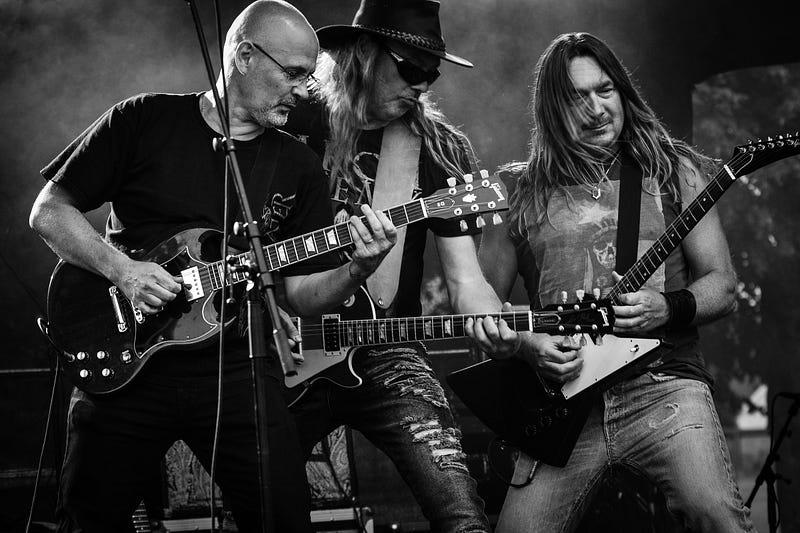
link

“Then one fine morning, she puts on a New York station You know, she don’t believe what she heard at all She started shaking to that fine, fine music You know, her life was saved by rock and roll.”

Rock and Roll” by Lou Reed/The Velvet Underground (1970)

“I’m a Man” by Chicago (7:42)

Oh, my God — that bass line. That groove. So much funk.

Those reading of a certain age, like me, being three and fifty, may think of the power ballads from Chicago 17 in 1984.

To me, however, there really is only The Chicago Transit Authority. This cover from the Spencer Davis Band comes from the 1969 release. I love it so much. In thinking of long rock jams, this one first came to mind — largely because my wife, my daughter, and I were listening to Chicago on CD, driving the long haul from vacation at Lake Anna in Virginia to New Jersey.

While I had fun dedicating each power ballad to my wife, Mary Jane, and telegraphing every song like SNL Bill Murray 70s lounge lizard at the Powder Room at Meatloaf Mountain this is real Chicago — a funk’d up, horn-fus’d, riff-laden’d, jazz ensembl’d — with so much potential for future killer albums.

Perhaps the only one who could equal Hendrix on guitar was Terry Kath — and Hendrix even said that once. Check out the live version of “25 or 6 to 4” of Chicago at Tanglewood in 1970. It’s also a long jam. Check out Kath at minute three. He gets more and more possessed on his Fender Telecaster.

Here is a live version of “I’m a Man,” also at Tanglewood in Lenox, Mass. Terry Kath on lead erupts around the minute mark.

And there is plenty of cowbell on this song. My older daughter, Katherine*, who played clarinet and percussion in high school, and loves Big Bad Voodoo Daddy since she was a baby, said a great genre of music would be Big Band Punk.

Mixing Chicago with The Clash. Brilliant. And no power ballads! RIP, Terry.
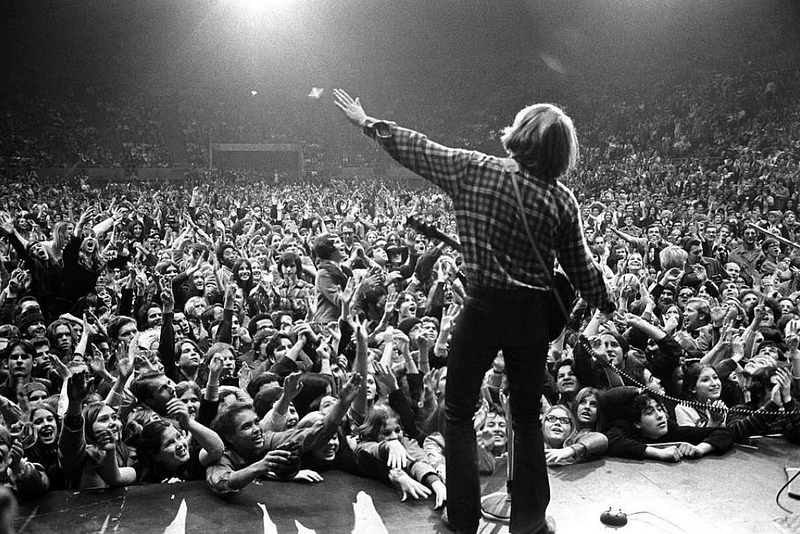
While on tour with Credence Clearwater Revival sometime between 1968 and 1972, John Fogerty wows the crowds at a concert. (link)

“I Heard It Through the Grapevine” — Creedence Clearwater Revival (11:02)

I promise no mention of singing and dancing raisins here.

Creedence was my first love. For that, I can thank my dad and my uncles. I have fond memories of listening to Cosmo’s Factory (1970) in my dad’s fire red Ford Torino, my head flat against the white vinyl seats in the back, grooving to this whole album on 8-track as we drove down to his boat on the Chesapeake Bay.

I just never wanted the album to end — as well as the song. I adore the Marvin Gaye version (1968), but Creedence totally reinterprets the song — especially on the album version. Plus, I’m a blues-oriented rocker. Unlike “Susie Q,” I much prefer the extended version of “Grapevine” to the single version.

To stop such a jam is a crime against Smuckers!

At 11:02, I even want it to go longer. I still have more tears that I’m too ashamed to cry, right? And boy, is love confusing, man.

Norman Whitfield and Barrett Strong composed the song for Motown Records in 1966. Smokey Robinson covered the song that year with the Miracles, and then Gladys Knight & the Pips released the song as a single in September 1967 (link).

I was slightly older when I realized the band hailed from San Francisco, not the bayous of the South. But that’s okay. Their sound has remained while the psychedelia craze came and went. It’s bluesy, urgent, driving, and an ultimate driving at night song. At night, people may not see the air guitar either.

As I got older, too, these lyrics hit home:

“Ooo I bet you’re wonderin’ how I knew ‘Bout your plans to make me blue With some other guy that you knew before Between the two of us guys You know I loved you more” (link)

The single version was a minor hit when released in 1976. Here is a live version of the song. (Official short version).
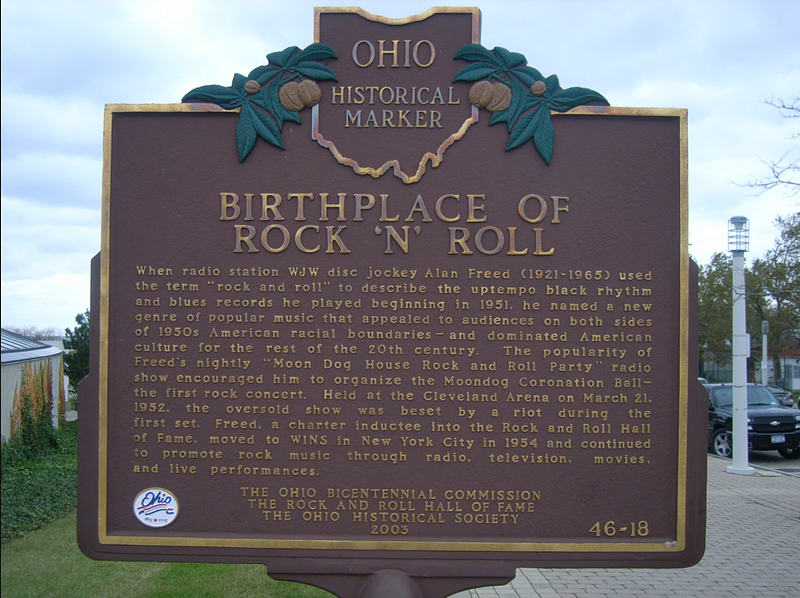
Didn’t rock and roll really begin when the first slaves landed on America’s shores? IDK. Link

“Free Bird” (9:07)

When I was the lead singer and songwriter for the clown-punk band, Molehill Man and the Two Aces, as a teenager, my Uncle Ron would shout out “Free Bird” for us to play. It’s the trope of tropes. It’s almost like a sign stating “No Stairway” in guitar shops.

Ten points if you get that film reference!

Just hold a lighter and shout “Free Bird” for any and all requests. Always.

This 1973 song brings back memories of camping with friends in the mid to late 1980s. I played acoustic, and I could play the beginning, like “Hotel California,” but then of course, when the song really jams, I leave that to Welch’s —

Lyrically, it’s basic but so many can relate. There is a time to move on. And caged birds do not sing.

“But if I stay here with you, girl Things just couldn’t be the same ’Cause I’m as free as a bird now And this bird you cannot change.”

It’s apropos that many of my camping friends were children of a group called The Free Wheelers — divorced and single parents with children who loved to camp. Every month, we would all camp together. And this song would be one jam by the campfire and the playground with the loud boom box.

Don’t ask us about Michael Jackson or Duran Duran back then. We were old-school rockers — but really, only ten years or so separated us as teens and the Classic Rock of the 1970s.

Is this the greatest Southern Rock Song of All Time? Perhaps. It charted to 19 in the USA and 21 in Britain. But do charts dictate classics? (link). I’m sure The Allman Brothers or The Band would have something to say about that.

Link

“Achilles Last Stand” — Led Zeppelin (10:32)

The 1976 LP “Presence” usually winds up behind “Coda” as one album that even Led Zeppelin fans do not own.

I am not simply a fan, I am an aficionado of all things Zeppelin. The seniors on the football team called me “Led Head.” In 8th grade, I wore a different Led Zep shirt every day. I didn’t read Oliver Twist for English, but Led Zeppelin in Their Own Words and The Hammer of the Gods.

The song is epic — a longer version of Nordic-Viking-Greek Conquerors of “Immigrant Song.” It reminds me of Muse’s “Knights of Cydonia” — also featured later on this long list.

But give Presence a listen — but start with “Achilles Last Stand.” The obvious choice for Zeppelin long-form jams are “Kashmir,” “Stairway to Heaven,” which eventually jams, and “How Many More Times.” But as a classics scholar, I love the allusion to Achilles — and I’m a huge fan of John Bonham on this track. He’s merciless — and he matches or surpasses some of his finest performances, like on “The Wanton Song,” “When the Levee Breaks,” and “Rock and Roll.”

Just track the drums — cascading while providing a driving beat for Page to weave his riffs. The movements in the song also make the ten minutes evaporate. Jimmy Page is a virtuoso on the track as well — as seen in the numerous “How to Play These Riffs” on websites. Here is my favorite. So many overdubs on this song.

It’s also Zep’s longest album track at 10:32 (I’m not counting “Dazed and Confused” from The Song Remains the Same).

To play this song is one of endurance. Here’s a young kid playing the drum part.
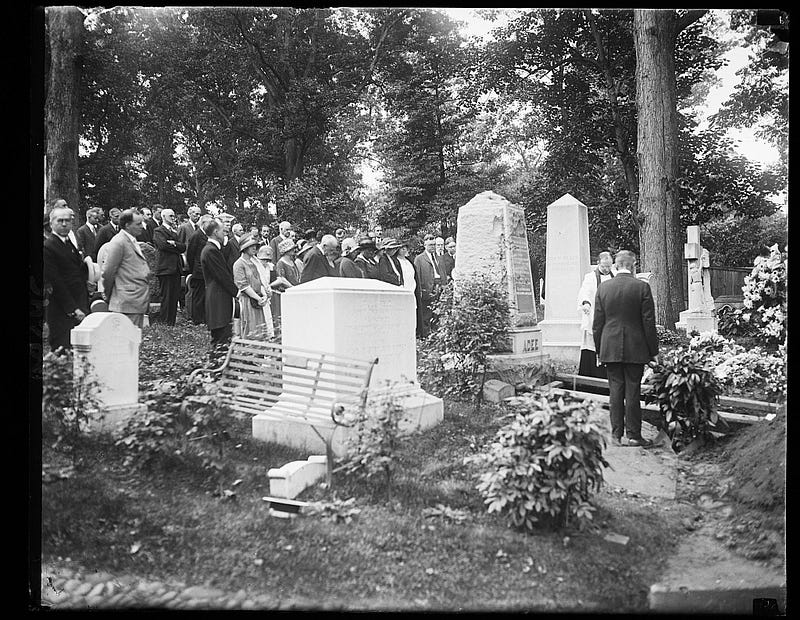
Link.

“Funeral for a Friend/Love Lies Bleeding” — Elton John (11:06)

My Uncle Ron would spook me out so many times with songs. “Iron Man” from Black Sabbath would scare the hell out of me. So did this song. It has such a gothic opening. Straight outta Poe. Hell, even the Count from Sesame scared the shit out of me, and I would run to mommy — and I think that The Count PTSD forced me to fear math for all time.

Except when counting my tips.

My musicophile and college radio music producer daughter Nancy bought the 1973 LP Goodbye Yellow Brick Road on vinyl from a local shop, she was in love. I tried stealing it for my own system downstairs, but I didn’t keep it long.

For those unversed in rhetoric, the album is an allusion to The Wizard of Oz. Duh, right? I wonder: Is Elton Dorothy or the Wizard or Glinda?

My daughter Nancy and I once had a debate about what was the Greatest Side of Music Of All Time. I claimed it was Side B of Abbey Road, and then she countered with this album. And then Ziggy Stardust. When you raise them right, well, sometimes you can’t win, right?

Elton John doesn’t start singing until the 5:59 mark. The building of instrumentals is instrumental. I know that’s circular reasoning. But we have a Bach-like Requiem playing, organ — Baroque — and it seems like we’re entered the Haunted House at Disney. Where is the candelabra? That’s the opening to this two-part song.

Then we get “Love Lies Bleeding.

Bernie Taupin was writing his lyrics then. (Thanks, David P., for the edit). Taupin writes:

“I wonder if those changes Have left a scar on you All the burning hoops of fire That you and I passed through

You’re a bluebird on a telegraph line I hope you’re happy now While if the wind of change comes down your way girl You’ll make it back somehow.”

It’s hard enough to be LGBTQ+ in 2022, but what about 1973? Talk about scars. And hoops of fire. And winds of change. And when John sings:

“Oh it kills me to think of you with another man I was playing rock and roll and you were just a fan.”

We get the point — and it doesn’t need to be a gay pride thing at all. Love lies bleeding — from broken hearts, guitar strings, broken homes, and the need to move on — being a “bluebird on a telegraph line.”

And so we get a slow “funeral” for a “friend” to introduce the rather rocking song about love and loss — and perhaps guilt.
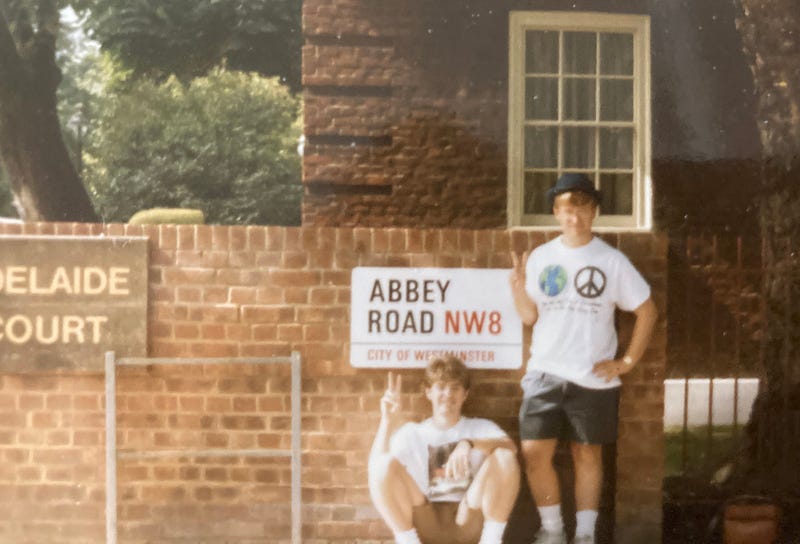
The author (right) and his brother Dave (left) at Abbey Road in 1991.

“I Want You (She’s so Heavy)” — The Beatles

Speaking of Abbey Road, here is a jam song from my greatest band of all time. How cliche, right? My buddy Dan and I were trying to think of three songs that would help space aliens understand the dimensions of a band. The Beatles just may be the hardest.

This song came up — “I Want You” (7:47) and Dan said it was his favorite from the band. To me, it’s like picking a favorite flower from my garden. But, in a pinch, I just may grab Abbey Road if I had to choose one.

With the exception of “Revolution #9” from The White Album, it’s also their longest track.

When thinking of this list, I had only a few long jams from The Beatles. It had to be long and it had to rock. “Hey Jude” (7:06) is a masterpiece, and while it does rock at the end, it just seemed too easy. And this is from the dude who placed “Free Bird” on the list? I wish I could place all of Side B after “Something” because it all goes together, but that’s cheating, and not all songs are a “jam.”

As an aside, “Hey Jude” was also the first song that long to Hit #1. “American Pie” also did it, and then Taylor Swift’s “All Too Well” (link).

But “I Want You” (She’s So Heavy) is a jam fest. It’s not John at his most lyrical, as he comes close to “Why Don’t We Do It In the Road” here, but that doesn’t matter. It’s rock. There’s an urgency. It’s bluesy. Like Paul on “Oh Darling” where he would practice getting his voice as raw as possible, John does the same thing.

The rock is also full of hooks and tricks, and great bass lines. A jam is a music jam, like in jazz. One does not need lyrics. The feeling in the music conveys the emotion. And what does John Lennon mean by “she’s so heavy?”

Well, the term back then meant “meaningful.” Like, “That’s heavy, man.” Or like heavy metal, right? It has weight. It has substance. Complications.

And that famous cut-out ending — where it just stops. Brilliant. Just the opposite of the fake-out ending on Side B. The end of “I Want You” can place you in a trance.

“In-A-Gadda-Da-Vida” — Iron Butterfly (17:04)

I must confess I have the single version on my 1960s Spotify Mix. So I may have fallen asleep at church, too. This is Art House Psychedelic Rock gone amuck, I think, like a 30-minute song from Yes on Close to the Edge. No, Yes — you went over the edge, man! That is one band, sorry, that has not held up to the test of time for me.

If you know The Simpsons, you know, like so many cultural references, iron Butterfly also makes the cut — along with Tom Jones. At the First Church of Springfield, Bart hands out new hymns at church, “I got hymns here. Get ‘em while they’re holy. Fresh from God’s brain to your mouth.” And then the organ plays a song from hot L. Ron Butterfly. The church lady organist then plays the song.

Here is a clip. It’s from Simpsons Roasting On an Open Fire.

Really Homer? You used to make out with Marge to this song? Wait? This sounds like rock and/or roll? Such great satire!

If you didn’t realize, the title of the song is a play on “In the Garden of Eden.” It came out in 1968. The single version is just under three minutes, and it has almost three times as many plays as the full version.

Can we say one-hit wonder? Talk about a hit that hit the Zeitgeist!
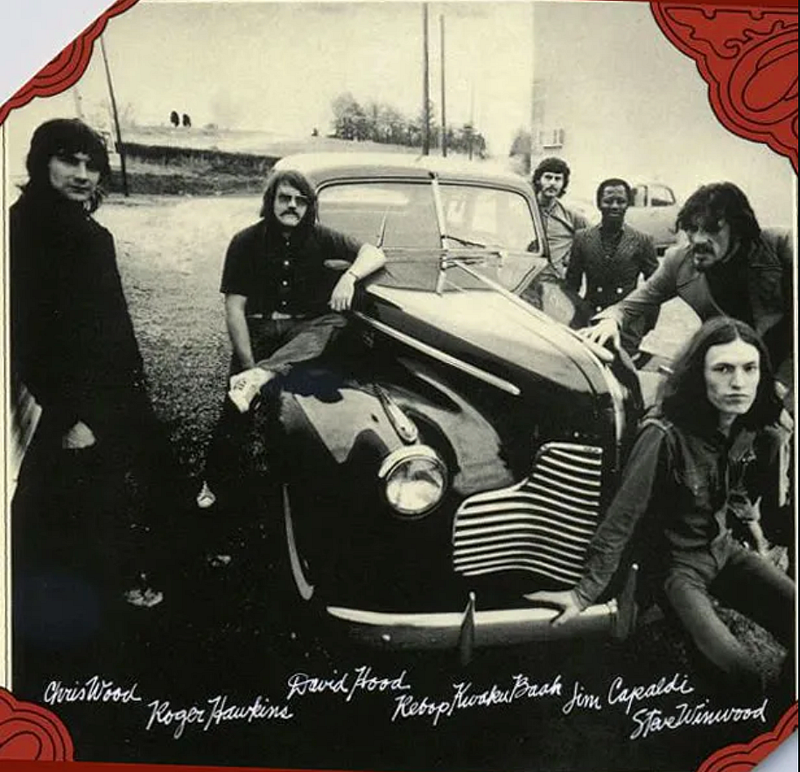
Promotional photo for the live video from 1972.

“Low Spark of High-Heeled Boys” — Traffic (11:41)

Steve Winwood is rather a journeyman in rock and roll circles, like many rockers, especially the British variety, like Stephen Stills and Jimmy Page.

Over his fifty years, some of his hits include Gimme Some Lovin’,” “Back In The High Life Again,” “Can’t Find My Way Home,” “Arc Of A Diver,” “Higher Love,” “Roll With It,” “While You See A Chance,” “Dear Mr. Fantasy,” “Split Decision,” “The Finer Things,” “Valerie,” and “The Low Spark Of High Heeled Boys.” (link)

He started in music at 15 with the Spencer Davis Band — including the song “I’m a Man” (yeah — see Chicago cover). Then came the band Traffic. Then Blind Faith with Clapton. Then back into Traffic. Then a solo career. He’s also been an in-demand session player with almost every band and artist one can name, including The Who with Tommy, Van Morrison, Jimi Hendrix, Joe Cocker, Miranda Lambert, and Christina Aguilera (link).

Does any one musician have this type of diverse and eclectic resume?

Okay — so what about the jam? Well, the jam starts off with small berries — melodic horns, percussion (think African drums), and a building base of piano — and then that distinctive Winwood voice at 1:30 — almost like a woodwind, right?

Then the song just builds from there — from low to high. The rhetorician in me loves antithesis in titles: the tug of war between contrasting styles and themes.

So what does the song mean? This isn’t English Lit 301, but that’s what I teach, so let’s take a quick look.

“If you see something that looks like a star And it’s shooting up out of the ground And your head is spinning from a loud guitar And you just can’t escape from the sound Don’t worry too much, it’ll happen to you We were children once, playing with toys

And that thing that you’re hearing is only the sound of The low spark of high-heeled boys.”

So, what? A coming of age story? The toys that we once played with as children now are dangerous? Sparks — stars — shooting — and we can’t escape the changes of becoming “high.”

And it could be the price, too, of being a star — a rock star — especially in the next stanza, where a man has made a profit from your talent — like so many of those shady agents The Who had. And you’re living beyond your means. And what happened to this man? This suit? Did the gun really kill him? Or the lifestyle of low sparks from high-heeled boys?

And what about success? Being a star? Would you change if you could — with one final wish, since —

“As your sorrows are joys And the thing that disturbs you is only the sound of The low spark of high-heeled boys.”

A paradox right? How could a low spark produce something high? But as Winwood reminds us, even stripped of everything at the end —even pride — the “spirit is something that no one destroys.”
Link

“Stormy Monday — Live” — Cream (8:09)

Pete Townsend in his brilliant autobiography, Who I Am, talked of many bands — especially the British ones — and Cream, especially his great friend Eric Clapton, came up a lot. In fact, Townsend was rather the “go-between” like Nick Carraway in Gatsby between the cousin Daisy and Jay Gatsby. But this time it was to keep another great friend, George Harrison, away from his wife, Patti while fellow mate Eric made moves.

So much drama. The song “Layla” is about Patti Harrison. The Patti Harrison Saga is long and complicated and interesting, and she has a book, in case you’re interested. But let’s get back to the kitchen and bake with some Heavy Cream.

Cream was one of those Super Bands — a mere threesome, like Muse, perhaps, today — with virtuoso musicians whose talent almost matched their competing egos: — Jack Bruce (bass), Ginger Baker (drums), and Eric “is God” Clapton — on, duh, guitar — primarily, his Fender Stratocaster (a model he actually endorses).

Cream, live, was infamously known for its jazz-like improvisational jams. Place three ego-driven virtuosos on stage and allow them to compete, eh?

This song was recorded live from the Royal Albert Hall. Their last concert there was in 1969 — and there’s a documentary about that, but this song comes much later, in 2005, during a reunion concert for four nights — May 2–3–5–6, 2005.

I was there, but not on those nights. I was at The Royal Albert Hall at Christmas in 1990 to hear Handel’s Messiah.

It’s magic. It’s so bluesy, too, and you know how much I love blues-driven rock and roll. It’s in the DNA and swamps and sadness of Southern Black Musicians — like Robert Johnson and Elmore James and Howlin’ Wolf, and so many more.

“The song “Stormy Monday Blues” is a jazz song first recorded in 1942 by Earl Hines and His Orchestra with Billy Eckstine on vocals” (link).

T-Bone Walker recorded the song as we know it now in 1947. It’s Twelve-bar blues. In 1961, Bobby “Blue” Bland made the song popular, appearing on the pop charts. He is said to be second only in stature to B.B. King as the “Memphis Beale Street Blues scene.”

The Allman Brothers Band also recorded the song for their first live album in 1971.

The song builds — and Clapton really shows his chops. Like around 5:54, but really, you know, like the whole song. It’s as if he’s playing at the Church of the Holy Blues.
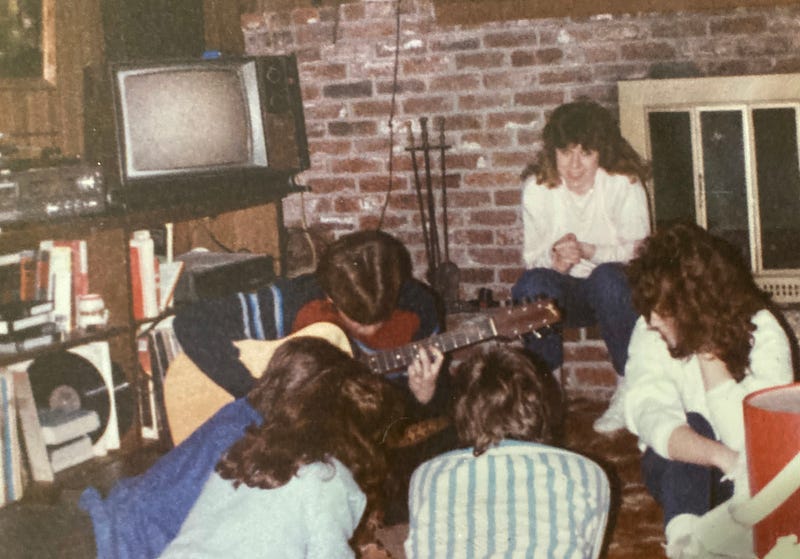
The author as a young engine driver, playing guitar. Why? Well, to impress the women, man.

“Magic Bus — Live” — The Who (7:48)

For some stupid reason, I didn’t have Live at Leeds — until a few months ago. Now I have a CD version and great LP pressing with the original liner notes and knickknacks. And I was a huge Who fan? Didn’t make sense, right?

The recording is one of the greatest live recordings of all time — right up there with James Brown Live at the Apollo ’63.

I have just finished reading and listening to three books on The Who. The autobiographies of Townshend and Daltrey, and a biography of Entwistle called The Ox. Highly recommend all three, man. Book reviews will be forthcoming, so hold on.

So my mind has been rather preoccupied with the band. I have tried sleeping with Quadrophenia in my headphones as white noise. When that didn’t work, I tried Tommy. That didn’t work.

What did? Turning off the music and closing my eyes and forgetting about rock and roll saving my life. And Live at Leeds is one of those albums that prays at the altar of rock and roll.

It’s raw, powerful, surprising, and so much fun.

It was a toss-up which song from The Who to do as a “jam.” “Won’t Get Fooled Again,” especially the recorded jam from Shepperton Studios 1978, before Keith Moon died, is stunning. The filming seems like it's 4K. This was to be the last of Moon’s performances. But didn’t CSI or one of those TV shows already use it? So many others, too.

But this live version of “Magic Bus,” much like the fifteen-minute jam-medley of “My Generation,” is amazing. Especially when played loud. Like spouse and neighbors and kids away. There seems so much that’s improvised. John and Pete would play off each other — and they were competing, well, John Entwistle, anyway, to be as loud as Townsend, but the band gels so well in this jam.

And as the final song on the LP (the original has more songs from Tommy), it just makes such a statement: Long Live Rock, right?
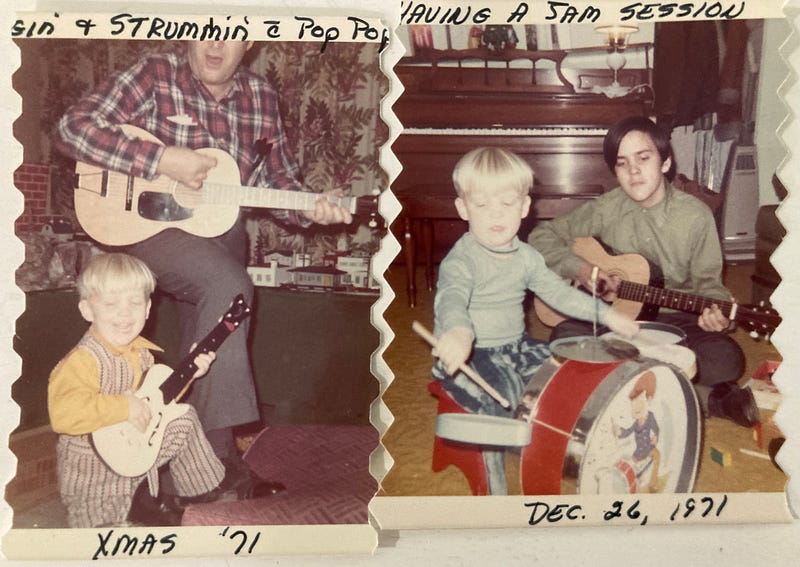
The author and music have always been tied together. Rocking with my grandfather, Dick Thomas, and my Uncle Ron. Dick Thomas wrote the hit “Sioux City Sue.” Here is an essay about the song.

“L.A. Woman” — The Doors

I’ve already used “The End” for a 1960s protest song essay — so that was off the table. Still trying to get out of my bag with that one, man. But LA Woman is such a great song. No duh. I wonder what would have happened if Jim Morrison did not fly to Paris and then die in his bathtub to join the 27 Club?

The sound was changing, the band developing — and then — The Music’s Over. Turn off the light. Turn off the light.

My Uncle Ron had this album in the 1970s. I used to play it. It just infects the bloodstream somehow. And I know there are haters of The Doors. But “Riders on the Storm,” “The WASP,” “Love Her Madly,” and so many great songs from that last recorded album.

Here is the song from 1971. It’s my favorite album from the band.

My daughter Katherine* is a PhD engineering student in aerospace, and now working in LA now for a space start-up. My family asked me what she was probably doing, and I said, “Out with friends in Santa Monica, probably.” And I was right. She’s an L.A. Woman, now, for the summer, but coming back East to continue her Ph.D.

My younger daughter Sarah* wanted the Doors film on DVD and we watched it two years ago during The Dark Days of Covid. She was a sophomore college student working from home, and as a benefit, we could jive and jam over music. It’s also one of our road trip songs.

Well, I just got into town about an hour ago Took a look around, see which way the wind blow!

This fan-made video is quite good.

When this song comes on, all I want to do is drive — drive West — drive anywhere —

L.A. woman Sunday afternoon Drive through your suburbs Into your blues, into your blues, yeah Into your blue-blue blues Into your blues, oh, yeah!

Didn’t I tell you I loved the Blues, man? And at 7:51 — what a long jam!

Like Jenny, who was only five, my life was also saved by rock and roll. And it was all right!

HERE IS PART II of III: Going Long With These Rock Tunes:

Thanks for reading. Here is more from Walter Bowne on The Riff:

Music
Rock
Rock And Roll
Review
Recommended from ReadMedium