
(Part 1 of 2)
25 Socially-Aware Songs from the 1960s that Defined a Generation
These first fifteen are in no way in order of importance
1. “Volunteers” - Jefferson Airplane
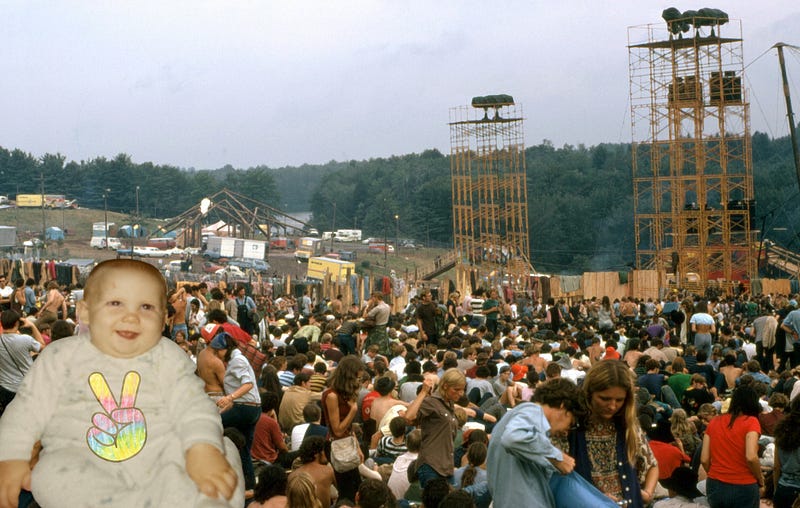
Some songs are direct attacks on the U.S. involvement in Vietnam. Like “War.” This one is one of them. Nothing too subtle here from 1969. “Counter the War” in just over a two minute protest song. Marty Balin rips the song apart, and Grace Slick does a fine job supporting. Paul Kantner co-wrote the song. Here’s the longer, live version from that little festival called Woodstock.
“Yeah, now it’s time for you and me Got to revolution, got to revolution Hey come on now, we’ll march to the sea Got a revolution, got to revolution.”
Guess Nixon was so paranoid about this Youth Revolution, he needed The Plumbers to fix elections to assure his re-election and to bomb Cambodia.
2. “For What It’s Worth” — Buffalo Springfield
This song is another anti — The Man — song, but it’s not as direct as “Volunteers.” It’s 1967 — just at the beginning of the Summer of Love. In many ways, that’s better as the song can be used when politicians and governments overreach into fascism.
And its citizens become raving jingoists. Not happening so much these days, right? You know — far right nationalism.
Stephen Stills composed the song — you know, Part Two of Crosby, Stills, Nash, and Young? It was recorded in 1966 on Atco Records. Stills said it was actually a reaction against the riots in LA.
Heck, I even use this song when teaching The Crucible and McCarthyism and the Salem Witch Trials:
“Paranoia strikes deep Into your life it will creep It starts when you’re always afraid You step out of line, The man come and take you away”
At least we don’t have to worry about this warning anymore:
“There’s a man with a gun over there Telling me I got to beware”
Hey — children. Duck in the darkened corner of the class. Don’t worry.
3. “Fortunate Son “— Creedence Clearwater Revival
Doesn’t every Vietnam movie use this song? Even Family Guy satirizes its “over use.”
To be honest, (no, lie to us, Walter), this is one of my favorite bands of all time. God, I love them. Blame that on my father’s 8-track tapes of Cosmo’s Factory, Green River, and Willy and the Poor Boys in his fire-engine red Ford Torino. My uncles were also huge Fogerty fans.
This song still applies today. Think of Mr. Bone Spurs. Or Clinton or Bush, Jr. Or any rich family — like those during the Civil War who could pay for a substitute (some poor family who could sacrifice his life at Antietam at Burnside Bridge). Poor lives are cheap.
So folks are born to raise the flag, right? But when Uncle Sam needs you — your blood and guts — well, what happened?
“Some folks are born silver spoon in hand Lord, don’t they help themselves, Lord? But when the taxman come to the door Lord, the house lookin’ like a rummage sale, yeah.”
Look at the poor schools in America and the wealthy schools? Look at the percentage who enlist. How many of Thomas Paine’s “sunshine patriots” still exist today?
Count the flags on the back of pickups.
4. “Time of the Season” — The Zombies
The band is still touring. Why not new protest music against so many new haters? Isn’t it always the time of the season? If you’re near Jim Thorpe, Pa in the Poconos (which I am in Jersey), you can hear the band live.
Such a great hook with this song. I used to sing it all the time in the ‘80s when I was mentally living in the 1960s. (Disgustingly, but truthfully, often still used while on the potty after making good toilet. “Ah…. Ah….Ah!”)
Rod Argent wrote and composed this mega hit in 1968 — hitting Billboard at #3. And a keyboard player, too. Wow. The Beatles didn’t even have a keyboardist!
“It’s the time of the season for loving.”
And is the girl’s father really rich like the singer? But those rich dudes won’t take the time to show you how to live, right?

5. “What’s Going On” — Marvin Gaye
Yes — the album is one of the greatest of all time. Critics agree to that, as I do, too. This was Gaye’s 11th release. It came out in 1971. Right at the time of the big change in music — away from that Summer of Psychedelia and now more into Stadium Rock — The Who, Led Zeppelin, and The Rolling Stones.
This song is appropriate today, especially with Black Lives Matter and kids being shot in schools and on the street.
“Mother, mother There’s too many of you crying Brother, brother, brother There’s far too many of you dying You know we’ve got to find a way To bring some lovin’ here today, yeah
Father, father We don’t need to escalate You see, war is not the answer For only love can conquer hate You know we’ve got to find a way To bring some lovin’ here today”
With Marvin Gaye’ exquisite voice, why don’t we listen?
And just how now is this lyric?
“Picket lines and picket signs Don’t punish me with brutality Come on talk to me So you can see”
6. “American Woman “— The Guess Who
Don’t get me started on the cover version from — who was that? Lenny Kravitz. Why did you have to mention it, man?
My Uncle Ron had this cool poster of The Guess Who in his bedroom. He was, perhaps, my greatest rock and roll influence. When I really got into The Who, I was confused. One’s from Canada, and the other — well — Britain.
I pair this song with “I’m So Bored with the U.S.A.” from The Clash. America talks a great game about liberty and freedom, but the world sees our “ghetto scenes” and our Hollywood stars can seen as Cultural Imperialism. And of course our “war machines.”
The song reached #1 on Billboard for three weeks in 1970.
So American Woman — is a new type of Statue of Liberty. Lou Reed would call her the Statue of Bigotry — reused by bigots for bigots.
So America — get away from me! Dazzle someone else’s eyes. Whoa. Wait! Didn’t America save the world in two World Wars? Just saying. And hey — with the notable exceptions of Iceland and Greenland and Ireland — every country has sucked at some point. Even Canada, eh?
7. “The Times They Are A-Changing” — Bob Dylan
Okay — probably “the” canary in the 1960s Social Change Coal Mine. When The Beatles came to America, they wanted to meet Elvis and Dylan. This song still resonates — and I wish haters would stop hating on his voice. It’s rock, man. Folk. It’s from the heart. This ain’t the Vienna Boys Choir.
And he’s a bloody Noble Prize winner for Literature, man. So let’s give Dylan all the credit he deserves for being in the Vanguard (not the mutual large cap index funds).
In class, we study the poetry of Dylan. It’s that good, man. It still resonates today: parents who do not understand children who are “different” or have different ideas about equity and fairness and selfhood. Just read:
“Come mothers and fathers Throughout the land And don’t criticize What you can’t understand Your sons and your daughters Are beyond your command Your old road is rapidly agin’ Please get out of the new one If you can’t lend your hand For the times they are a-changin’.”
The times have changed. It’s all a progress and a process — and change happens dropping slow, to paraphrase Frost. But to quote another great writer, old people often have lost more than they have gained.
Let’s trust the next generation to show the way. If not, get out of the way!
Here’s a video of the song released in 1964. It’s the title track from his 3rd album. Dylan deserves his own college literature course. I volunteer Professor Bowne to teach that one.
8. “Teach Your Children” — Crosby, Stills, and Nash
Okay — Stills is on here twice, which kinda goes against my “no repeat” of bands. But I’ll let that pass, for now. Both songs are vital, and this one was penned by Graham Nash — the English bloke. He wrote it when he was with The Hollies. Quite a polygamist group those British rockers from the 60s, eh?
It was released in 1970 on the album Déjà Vu.
I would play this rather simple song around the campfire to impress women. Did it work? Do you have to ask, mates?
The song contains so much pathos — emotion, as well as rhetorical logos — truth and logic. Just what are we teaching out children today? Have we left iPads as the defacto babysitter — as well as the tellie? Based on what I see at restaurants, and in cars, yes.
“And teach your parents well Their children’s hell will slowly go by And feed them on your dreams The one they pick’s the one you’ll know by
Don’t you ever ask them, “Why? If they told you, you will cry So just look at them and sigh And know they love you.”
Kids definitely need more love and hugs and emotional engagement. Parents, too. And less mad pursuit of material things that rust. Just saying.
Here’s the song played live from the film, Long Time Coming.
9. “Going Up the Country” — Canned Heat
Eventually, some songs sell out as commercials — even “Won’t Get Fooled Again” — even in a TV show. Where have I heard this song? Wait. Let me ask Uncle Google? I think it was a car commercial. Yeah, I was right. It was Geico motorcycle commercial.
It’s folksy-fun rock. With American youth threatening to leave, and avoid the draft, and drift into Canada, such a lyric makes sense:
“Now baby, pack your leaving trunk, you know we’ve got to leave today Just exactly where we’re going I cannot say But we might even leave the U.S.A. ’Cause there’s a brand new game that I wanna play.”
10. “San Francisco (Be Sure to Wear Some Flowers in Your Hair”
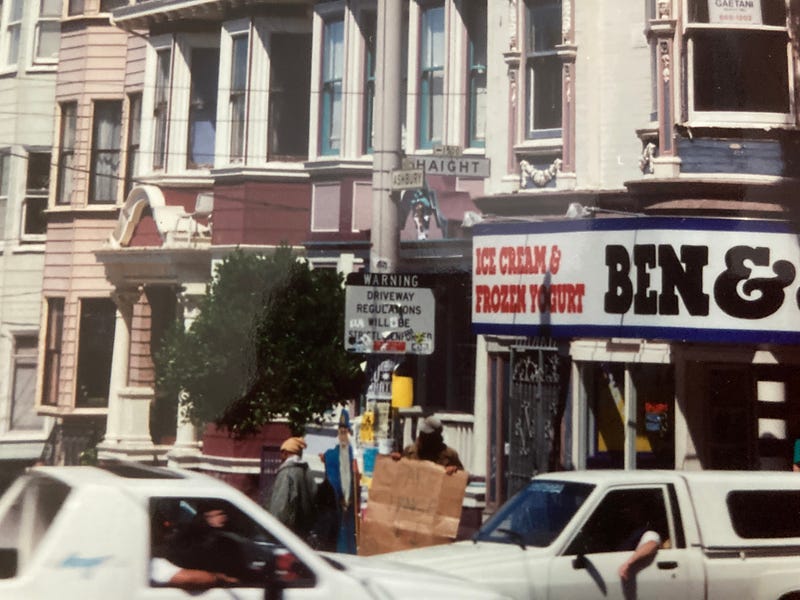
When I standing, alone with a black knapsack, staying at a hostel in China Town in San Fran, where no one spoke English, but we laughed over donuts, at the corner of Haight-Asbury and saw a Ben and Jerry’s, I knew the area had changed.
#1 — no hippie on LSD could afford to live anywhere near San Fran — except maybe nestled up to one of those huge seals in the harbor.
#2. Ben and Jerry’s is good, but even their Cherry Garcia Ice Cream is expensive — and doesn’t make it “flower power.”
#3. But at least San Francisco still retains its “acceptance” of all those who can afford to live there.
The gay pride band — the Village People — wanted to Go West and stay at a Y.M.C.A — much like I did (though I am, guess, what people call cisgendered).
The bridge of this song by Scott McKenzie means so much to the era:
“All across the nation such a strange vibration People in motion There’s a whole generation with a new explanation People in motion people in motion”
It’s rightly known as the anthem of the Summer of Love of 1967. But a One Hit Wonder? Yeah — unless you add “Like an Old Time Movie.”
11. “War” — Edwin Starr
This I vividly recall from Seinfeld. Elaine was with a Russian writer who loved Tolstoy. Seinfeld told her that Tolstoy’s original title for War and Peace (a great novel, btw, that I finished in January of 2022), was War: What is It Good For? (Absolutely Nothing).
The Russian writer is so angry he demands to leave the cab.
The 1970 R&B song leaves nothing to poetics and interpretation:
“War, I despise ’Cause it means destruction of innocent lives War means tears to thousands of mother’s eyes When their sons go off to fight And lose their lives.”
Okay — you get the message, Nixon and Robert McNamara?
12. “The End” — The Doors
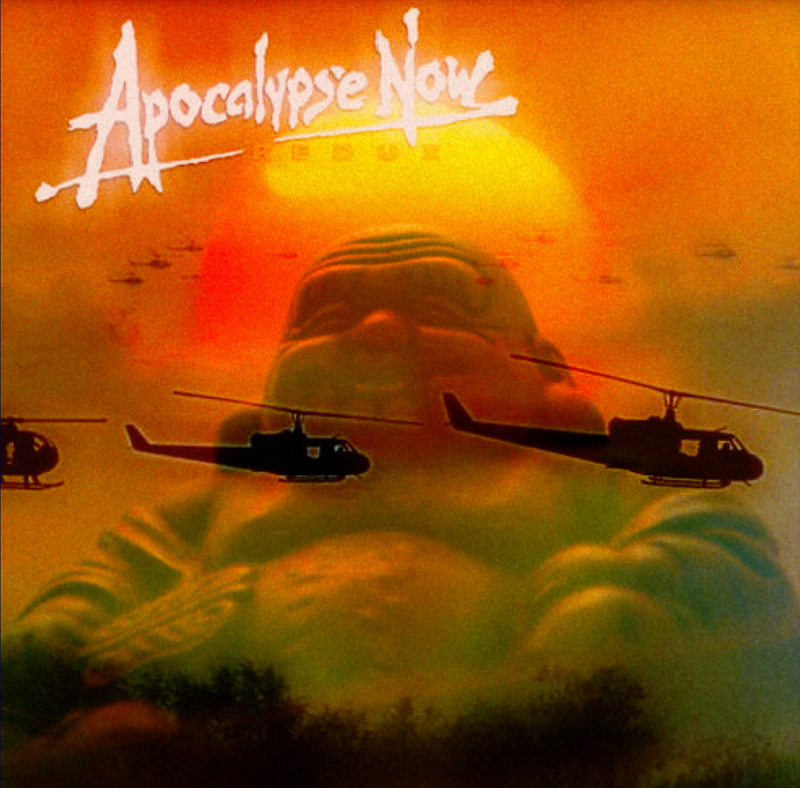
Thanks to Francis Ford Coppola’s Apocalypse Now (1979), this song still haunts me. It’s the perfect song for that perfect scene — Marlow making his way upstream to find the insane Kurtz who has gone rouge — not red — rogue! The song sounds like Conrad’s novella — The Heart of Darkness — another amazing book about the effects of colonialism on the human subconscious. Replace The Congo with Vietnam.
Like “Fortunate Son,” it’s so connected to the Vietnam War. I used to avoid the song when playing The Doors, wanting more upbeat blues, like “Roadhouse Blues” and “Touch Me” and “Break on Through,” but I’ve been listening again — especially after watching the film bio of The Doors with my music obsessed daughter, Nancy, 21, and a huge Doors fan (she even wears The Doors shirts to school).
To me, the song (1967) is like descending into the rings of Hell with Dante and Virgil. At almost 12 minutes, it’s long like The Inferno. Just not in Italian.
All the verses are chilling, especially Verse #3:
“Lost in a Roman wilderness of pain And all the children are insane All the children are insane Waiting for the summer rain, yeah.”
Whether having the power of God over The Congo or using Agent Orange against Vietnamese villages — burning children — and trees — and all living things — who wouldn’t go insane? And these soldiers were really just “children.” Right?
13. “Eve of Destruction “— Barry McGuire
1965. Is this the earliest protest song of the 1960s — not counting Bobby Dylan?
Barry McGuire is so straight forward about the “destruction” happening everywhere in the 60s — in America with the Civil Rights Movement in Selma, in Jordan in the Middle East, and in China.
Just dig these lyrics, man:
“Yeah, my blood’s so mad, feels like coagulatin’ I’m sittin’ here just contemplatin’ I can’t twist the truth, it knows no regulation Handful of senators don’t pass legislation And marches alone can’t bring integration.”
Sounds pretty much true for today, right? Gun violence on our street and elementary school students being slaughtered, and senators just shrug shoulders and say “that’s the price of freedom.”
And all those BLM marches can’t seem to halt police shootings. Is it always the Eve of Destruction? Hate to see the Midnight of Destruction, man.
Barry McGuire does have a “greatest hits” album, but this is THE SONG he is known by: a true canary in the Dupont Factory of Agent Orange.
14. “All Along the Watchtower” — Jimi Hendrix
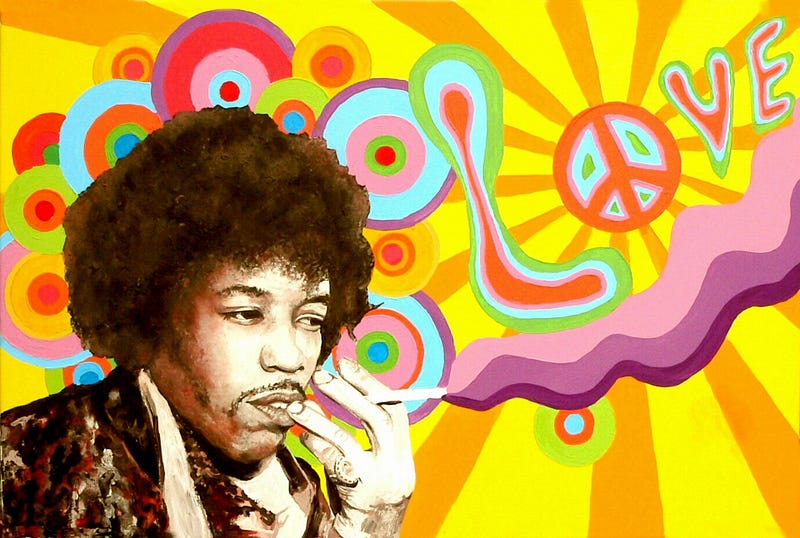
This was, crazy as it sounds, Hendrix only “big” hit — and one great cover from the Master of the Word — my boy Bobby Dylan. Haters of The Dylan can stop reading now, man.
“When Billboard recalculated the returns on the song in 2014 — counting licensing deals and classic-rock radio play since its release — it said that Jimi’s Dylan cover fared far better than its original 20th place. In fact, it said “Watchtower” was the biggest hit of ’68. (“Hey Jude” got bumped after the re-evaluation)” (Schall).
Hendrix makes this totally his own. Is there some way out of here? The jokers and the thieves seem to be the only ones sane enough to ask. Ironic, oui? So much confusion? Where is the relief? In the electric soul and searing riffs of Hendrix, there seems as if there is no relief.
That’s what separates the Dylan original from Hendrix. Both are great. How many over covers are as great? Okay — maybe “I Heard It Through the Grapevine” from Creedence covering Marvin Gaye.
Methinks I digress too much.
Dylan’s lyrics here remind of British Victorian poets writing about the Realm of King Arthur — like Alfred, Lord Tennyson. The “watchtower” is the archetypal symbol of the Castle Keep — a lighthouse — a place where even the Evil Eye of Mordor sees and knows all.
But who is keeping watch in America in the 1960s?
“All along the watchtower Princes kept the view While all the women came and went Barefoot servants, too Well, uh, outside in the cold distance A wildcat did growl Two riders were approaching And the wind began to howl, hey.”
Man, I’m sensing some Tolkien here, too. Who are those riders? Why are the Princes only viewing? Viewing from afar — like Robert McNamara back in Washington while our boys are knee deep in muck and death in ‘Nam.
It’s the raw, soulful voice of Hendrix with his wizardry on his 1968 Olympic White Fender Stratocaster — the one he played at Woodstock. He was the last musician to play at Woodstock — and most of the crowd had left, muddy and exhausted. But Hendrix’s Fender was okay — it was coated with a flame resistant coating.
(btw, The Who always worried about going on after Hendrix because they thought he stole their thunder by destroying his “Art” — the way The Who started doing way back).
At one venue, Hendrix and Townshend flipped a coin. Townshend won, and went first — much pleased with the results. His autobiography, and well as Daltrey’s is well worth reading, too. Oh — and the ‘Jimi Hendrix of the bass,’ according to Ronny Wood — The Ox — John Entwistle. (no h)
15. “Gimme Shelter” — The Rolling Stones
Once again, we go back to Apocalypse Now. To get an idea of the type of “shelter” that would really help the soldiers of Vietnam, watch the video at the end here. It’s haunting and full of horror — oh, “the horror, the horror.”
(“Tropic Thunder” will parody the film, and ‘Nam movies in general, and it is funny, but nothing funny here, man. But they don’t satirize — except “Method Acting).
The song came out in 1969 from their smash album Let It Bleed. What album wasn’t a smash from them, back then? Wow, let it bleed, huh? Harsh. But truth is harsh.
Rolling Stone Magazine ranked the song #13 on their list of 500 greatest rock tunes.
Noted rock critic, Greil Marcus, someone I was actually reading when twelve when I should have been reading those boring books for school, says it best:
“Gimme Shelter” is a song about fear; it probably serves better than anything else as a passageway straight into the next decade. The band builds on the best melody they’ve ever found, slowly adding instruments and sounds until explosions of bass and drums ride on over the first crest of the song into howls from Jagger and Merry Clayton, a black session singer from Los Angeles. It’s a full-faced meeting with all the terror the mind can summon, moving fast and never breaking, so that men and women have to beat the terror at its own pace. When Clayton sings alone, so loudly and with so much force you think her lungs are bursting, Richards frames her with measured, pressured riffs that blaze past her emotionalism and toss the song back to Jagger’s distanced judgment: “It’s just a shot away, it’s just a shot away… It’s just a kiss away, it’s just a kiss away.” You know a kiss won’t be enough.” (Marcus).
I was only a few months old when this song was released right after Christmas, but I think the tune was in the baptism water. That Holy Water didn’t take, but The Stones, did, man. The Stones did.

Here are the next 10, my friends. Peace.
Have a missed one? Of course! Let me know! I’ll include it, man.