
(Part 2 of 2)
10 More Songs from the 1960s that Defined the Protest Generation
With so much going on in 2022, where are such songs today?
16. “Revolution” — The Beatles
This was, I guess, the obvious song from my favorite band. How cliché, banal, commonplace, eh? The urge to rebel against the Establishment was surging in the States, with Civil Rights and Vietnam, but John Lennon was not going ‘gentle into that good night.’
“All You Need is Love,” is another good one. So is “Imagine” — a personal favorite. No, wait. “Woman,” too. Sorry. And there’s “Give Peace a Chance,” of course. Hey, Paul, where are you, man? Just triggering Charlie Manson? Or your “Honey Pie” doing the old “Oh-La-Di-Oh-La-Da” thing. And John parodies you with “Wild Honey Pie.”
Well — you were always the jar is half full Beatle (“we can work it out,” and John’s jar is less than empty, man (“life is very very short, and there is no time for fussing and fighting my friends.”)
Okay — so what about “Revolution?” Too much digression is givin’ me aggression. There are two versions, the Rocking Revolution and the Slower Revolution.
The “slow” version is on The White Album — one of my favs, A Grandparents Attic, full of treasures and curiosities and other freakish things. The “fast” version was released as a single. That’s my fav, unless I’m binging on The White Album on vinyl (with the original number pressings on the front). The slower version works better in that Attic with the other knickknacks. Here is that version.
John admitted he didn’t like the line about Chairman Mao — the Chinese leader. It’s not because he was a Born Again Communist — but it was just too specific of a cultural reference, I believe.
Here are some lyrics, for the uninitiated Beatle virgins:
“But if you want money for people with minds that hate All I can tell you is brother you have to wait.”
“You say you’ll change the constitution Well, you know We’d all love to change your head You tell me it’s the institution Well, you know You better free your mind instead.”
In typical John Lennon fashion, he writes this line:
“But when you talk about destruction Don’t you know that you can count me out (in)”
What’s up with the antithesis at the end, uh? Count him in? In an interview, he said something like, well, you never know. I could change my mind. So John. But he was a realist at times. That “in,” btw, only occurs on the album.
Here is the single version from 1968: “Revolution.” It’s in my Top 20 John Lennon Songs of All Time. (If you want to know, message me). The fast version is almost a full minute shorter, too. Why? Something called tempo. And John, usually on rhythm, gets his licks in, too, on lead. And Paul screams like a banshee. John does not add his “in” on this take.
This live version is so good. John stresses “head” at the end. In this version, he does add the “in.” He’s also playing his Epiphone Casino guitar. Harrison’s guitar, which he named “Lucy,” was a 1957 Gibson Les Paul.
Can I just write about The Beatles? Can you tell I’ve read too many books about The Beatles and have watched The Rutles more times than I can count?
17. “The Sound of Silence” — Simon and Garfunkel
After Bobby Dylan, if another songwriter would be nominated for the Nobel Prize for Literature, may I please nominate Paul Simon? His songs I use all the time in the classroom. Even without the music and the harmonies, we can scansion the lyrics as verse — like Wordsworth or Keats.
This is one of many.
It holds special significance because my buddy, Alec, with his incredible voice, joined me onstage for the school talent show in 1987. I was Garfunkel on vocal and Fender acoustic. Alec was Paul Simon. Alec also played the lead in the high school production of Oklahoma while I was the Father who sang “The Farmer and the Cowman.”
To call “Sounds of Silence” a masterpiece is understatement. It’s the opening song to one of my most influential films, The Graduate by Mike Nichols with Dustin Hoffman and Anne Bancroft (married to Mel Brooks).
The long, slow shot, with an innocent and naive Hoffman being carried forth to his destiny, not walking, on the airport conveyor, with everyone busy around him, reeks of pathos and ethos.
Here it is for the curious:
So what about the song? Is it really a protest song? I think so. But not political protest. The film and the song — like “Mrs. Robinson,” written for the film, came out during the Summer of Love — 1967.
Here are verses 2–4:
“And in the naked light, I saw Ten thousand people, maybe more People talking without speaking People hearing without listening People writing songs that voices never shared And no one dared Disturb the sound of silence
“Fools” said I, “You do not know Silence like a cancer grows Hear my words that I might teach you Take my arms that I might reach you” But my words, like silent raindrops fell And echoed in the wells of silence
And the people bowed and prayed To the neon god they made And the sign flashed out its warning In the words that it was forming Then the sign said, “The words on the prophets are written on the subway walls In tenement halls” And whispered in the sound of silence.”
We could take an entire class to dissect text as a masterwork of rhetoric, but I’ll save that for another essay. Consider the isolation. Think about the “Counter Culture” and the 1950 “squares” suggesting that Benjamin go into “plastics.” These people are “fools.” And the 1950s culture did worship materialism, praying before “neon gods.”
And the real prophets in 1967 were not from the past, but the new voices of youth, writing the new Truth on subway walls and tenement halls — like the graffiti I love down in Atlanta at Krog Street Tunnel.
Think about how many voices today are screaming about truth, justice, and equity, and what impact does it make? It is all just the sound of silence for so many people, caught in the conformity of capitalism.
Can anyone be an Individual anymore? Can anyone hear one’s desperate call for help — like “silent raindrops” and justice in these wells? Did the Summer of Love really stop the War? Did it end police shootings? Fascism?
“Sound of Silence” is beautiful, melancholic, and utterly realistic.
18. “I Feel Like I’m Fixing to Die Rag” — Country Joe and the Fish
“Hey, how can we stop this war if you guys can’t sing any better than that. There’s about 300,000 of you fuckers out there! I want you to start singing!”
One of the all time classic protest songs. Does Country Joe have another hit? Spotify — help! Okay — “Rock Coast Blues.” Yeah. Thought so. This was huge at Woodstock — a direct attack on the U.S. engagement in Vietnam.
“In 1995 Vietnam released its official estimate of the number of people killed during the Vietnam War: as many as 2,000,000 civilians on both sides and some 1,100,000 North Vietnamese and Viet Cong fighters. The U.S. military has estimated that between 200,000 and 250,000 South Vietnamese soldiers died.” (Britannica)
U.S Casualties:
The Vietnam Conflict Extract Data File of the Defense Casualty Analysis System (DCAS) Extract Files contains records of 58,220 U.S. military fatal casualties of the Vietnam War. These records were transferred into the custody of the National Archives and Records Administration in 2008. (Vietnam War U.S. Military Fatal Casualty Statistics)
When Country Joe sings, the lyrics full of joyful terror, irony, and sarcasm, we know why:
“And it’s one, two, three What are we fighting for? Don’t ask me, I don’t give a damn Next stop is Vietnam; And it’s five, six, seven Open up the pearly gates Well there ain’t no time to wonder why Whoopee! we’re all gonna die.”
“Well, come on generals, let’s move fast; Your big chance has come at last Now you can go out and get those reds ’Cause the only good commie is the one that’s dead And you know that peace can only be won When we’ve blown ’em all to kingdom come.”
Is dropping Agent Orange produced by DuPont and Carpet Bombing villages and using Napalm for an allegedly “Christian” nation “Under God” any way to act? Well, not the type of Christians I know and love anyway.
And by the way, the smell of Napalm does not smell good in the morning. Only to majors and generals or colonels, I guess, who also love surfing.
My mom dated a Vietnam Vet. He entered the police force in one of the most dangerous cities in America, Camden, New Jersey, my hometown. I really liked Bill, but man, did Bill have PTSD.
Sweet man, but troubled.
The Vietnam War lasted from: 1954–1975, but first with the French (damn Colonialism) and then the Americans during Kennedy’s administration. Like the sinking of the USS Maine in Havana Harbor on February 15, 1898 that led to the Spanish-American conflict, the similar Gulf of Tonkin Resolution also escalated the Vietnam tensions. Both were, most likely, “false.”
“In 1976, a team of American naval investigators concluded that the Maine explosion was likely caused by a fire that ignited its ammunition stocks, not by a Spanish mine or act of sabotage.” (“The USS Maine explodes in Cuba’s Havana Harbor”)
And in 2005 and 2006, classified documents suggest that the attack in the Gulf of Tonkin that led to U.S. involvement in the Vietnam War may have been fabricated. (“Gulf of Tonkin Resolution”)
19. “A Change is Gonna Come” — Sam Cooke
Okay — let us leave rock and psychedelia behind, and get some R&B. Sam Cooke — amazing voice. He said he was inspired by Dylan’s 1963 song, “Blowin’ in the Wind.” The song debuted in 1964.
“It’s been too hard living But I’m afraid to die ’Cause I don’t know what’s up there Beyond the sky.”
“Then I go to my brother And I say, brother, help me please But he winds up, knockin’ me Back down on my knees.”
I love how this gospel singer claims he doesn’t know what’s “beyond the sky.” If there is God, great. And Heaven, too. But what if it’s Nothing. And it’s like thinking about life before you were born. Nothing. Nothing at all. You just cease to Be.
His biggest Billboard hits were “Frankie and Johnny,” “Nothing Can Change This Love,” “We’re Having a Party,” and “Cousin of Mine” (Billboard).
His life was short, and his death, tragic:
“To date, no one is quite sure what happened that night on December 11, 1964, when Cooke was shot to death at the Hacienda Motel in a downtrodden section of Los Angeles” (“Behind the Song: Sam Cooke, “A Change Is Gonna Come”).
As foreshadowing, I guess a fellow human, a brother, if you will, did knock him down. With a gun? In America? Wow! That’s shocking.
Here is the song. So much talent. No auto-tune. Basic is better. Natural, too.
Sam Cooke, I’m still waiting:
“It’s been a long A long time coming But I know a change gonna come Oh, yes it will.”
Have you heard the Capitol Riot reports on NPR? Proud Boys?
20. “Get Together” — The Youngblooods
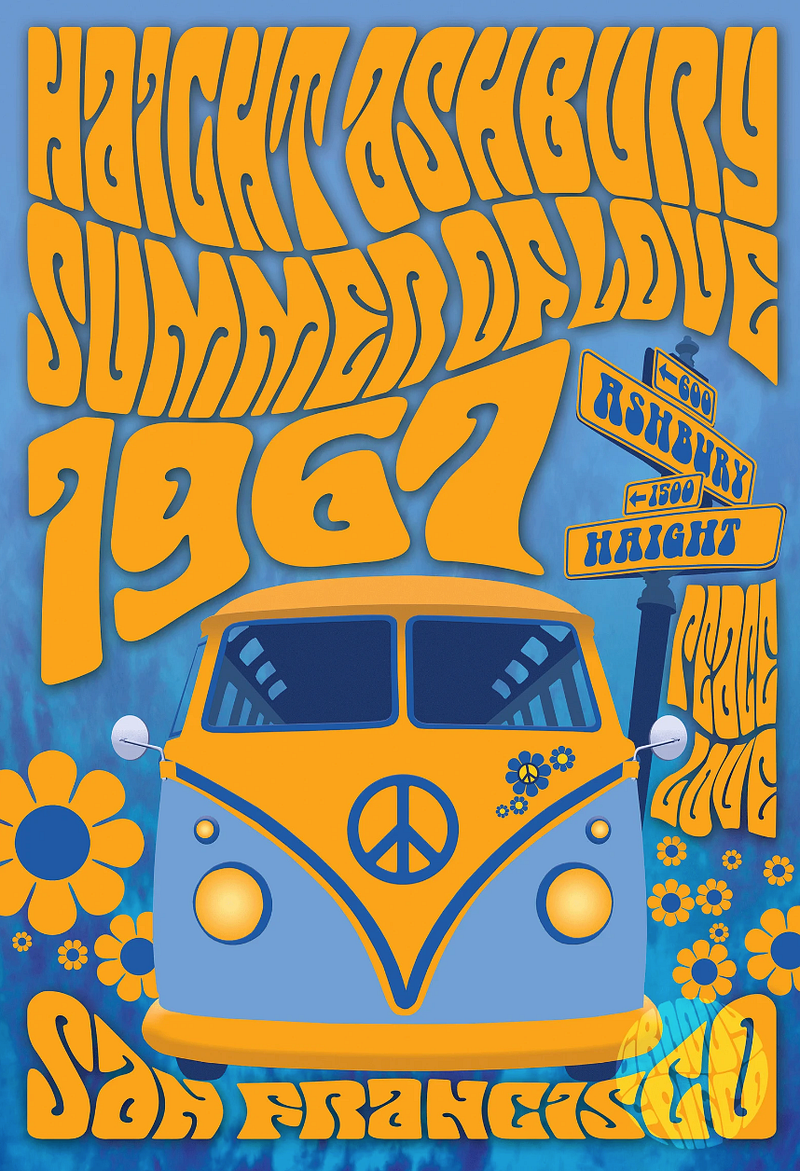
Released in July of 1967, and composed by American singer and songwriter, Chet Power, this song has the perfect refrain for the Summer of Love:
“Come on, people now Smile on your brother Everybody get together Try to love one another right now.”
Wouldn’t such a world be ideal?
I especially love this chorus. The American poet Walt Whitman writes something similar about what great miracle than to see the world through someone else’s eyes.
“If you hear the song I sing You will understand, listen You hold the key to love and fear All in your trembling hand Just one key unlocks them both It’s there at your command.”
Why do we refuse to listen to another person’s story? Believe their story? Do we lack such empathy? Because it runs counter to beliefs and values and politics? Is there just one way? Should everyone hold to One Party and One Belief?
How utterly boring. We do hold the love and fear. Some people, trembling, will unlock the fear — and that fear will protect them in a circle of hatred, a prison of one’s making. Isn’t it often people too wrapped up in a flag or religious dogma?
But the other key — to peace, love, and understanding — is also at our command. Guess which one is used the most? Which path is easier to take? If you know Star Wars Theology, well, it’s the Dark Side.
It was the band’s only Top 40 hit — peaking at #5 in 1969.
21. “What the World Needs Now “ — The Sweet Inspirations
Okay, Sweet Inspirations, I think the world needs that “love, sweet love” right away. Stop wishing about it or singing about it.
I have watched Russian tanks, one by one, like some World War II footage reel, explode into a million fragments of metal and flesh, while cruising in single file on a country road in the wide open — like “Sitting Ducks” in a country that they invaded and have laid to ruin.
Why? Well — one man wanted this. What year is this?
Burt Bacharach composed the song for the all-female R&B, gospel, and soul group. Atco Records released the song in 1968. It was recorded in February. It was the also the title of their third album (link).
While I would love the see the world preserve our meadows, mountains, and oceans, and rivers, as an environmentalist and organic farmer and worm composter, but I get it. We need that love.
What the world needs now is love, sweet love It’s the only thing that there’s just too little of What the world needs now is love, sweet love No, not just for some, oh, but just for every, every, everyone.
Everyone? Even the Putin? Proud Boys? Trump? Maybe — just maybe — they didn’t get enough love in their lives. That secret Christian that hides in me doesn’t want to hate anyone. So yeah, I get it.
22. “Itchycoo Park” — Small Faces
I may be stretching the “protest” theme with this song.
But it’s there, I hope. If not, let me hear it. The song is definitely emblematic of the 1960s counter culture, including such anthems as “My Generation” from The Who and “Lucy in the Sky with Diamonds” from The Beatles and “White Room” from Cream.
(Too many, actually, to list. You should see my Spotify 1960s mix).
I love the refrain here, with the call and response. In rhetoric, which I teach, it’s called hypophora. And then the rhetorical question at the end: Why go to learn the words of fools?
I‘ll tell you what I’ll do (what will you do?) I’d like to go there now with you You can miss out school (won’t that be cool?) why go to learn the words of fools?
That’s true. A great book to read is Lies My Teacher Told Me.
This is getting much too academic and high brow. My apologies. But “Itchycoo Park” is filled with so many drug references, but that was part of the protest. Cue: Timothy Leary, the East Coast LSD Dude and Ken Kesey, the West Coast “Magic Bus” Dude. Do try to read Thomas Wolfe’s The Electric Kool Aid Acid Test.
It’s a trip. My students who have read it, loved it.
“They all come out to groove about Be nice and have fun in the sun — “
But where?
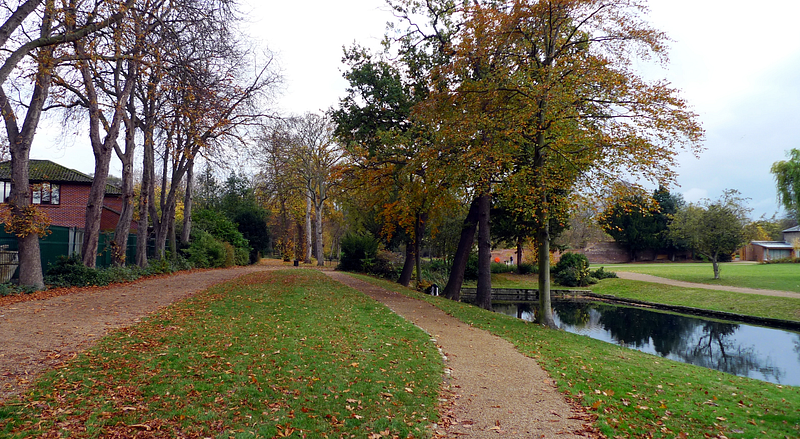
Some have speculated what was the actual park in London. Pick one of these three: Manor Park, East London, Valentine’s Park in Ilford or Wanstead Flats in Wanstead, East London. (link)
But does it matter? Itchycoo Park is symbolic of a Wonderland — all with hookah smoking caterpillars and mushrooms.
“Over bridge of sighs To rest my eyes in shades of green
Under dreaming spires To Itchycoo Park, that’s where I’ve been
I got high (What did you feel there?) well, I cried (But why the tears there?) tell you why It’s all too beautiful, it’s all too beautiful It’s all too beautiful, it’s all too beautiful.”
The song was written by Steve Marriott and Ronnie Lane of The Small Faces. It came out in 1967, of course. It was the band’s only hit in the U.S. (link)
I wonder if Lane was referring to the Bridge of Sighs in Venice? Or the Byron poem?
23. “U.S. Blues “ — The Grateful Dead
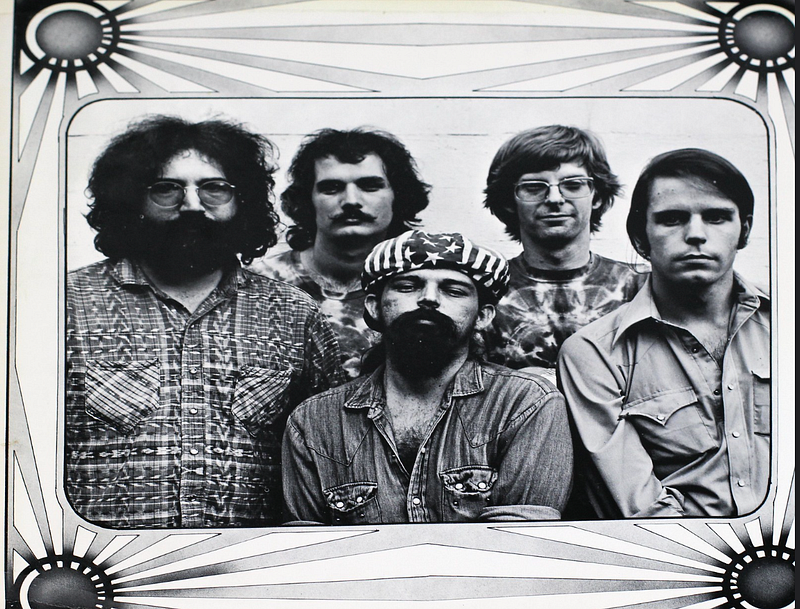
This is such a fun song. I can never be in a bad mood with this playing. The tempo and beat does rather cover up the Dark Side of the United States.
Only — this song debuted in 1974 under the specter of Watergate.
It doesn’t matter if I’m alone or in company, this song makes me dance Dead style. That means: any way I damn want to, man. Because I’m an Individualist. It’s also great exercise. I usually hit repeat three or four times if I hear this song once.
Speaking of Ken Kesey, the author of One Flew Over the Cuckoo’s Nest, and then wanted by the FBI on so many charges, he fled to Mexico with Mountain Girl, The Grateful Dead was like his “garage band.” You can read crazy LSD parties on his La Honda Ranch and various venues in California with the Dead and the Hell’s Angel’s in Wolfe’s book and Hunter S. Thompson’s riveting, Hell’s Angels: A Strange and Terrible Saga.
Both books may prompt you to become a Gonzo Journalist, too. Who would you get in bed with? In journalism, which I also teach, it’s actually “embed.”
So back to the Dead. Here’s the first verse:
Red and white, blue suede shoes, I’m Uncle Sam, how do you do? Gimme five, I’m still alive, ain’t no luck, I learned to duck. Check my pulse, it don’t change. Stay seventy-two come shine or rain. Wave the flag, pop the bag, rock the boat, skin the goat. Wave that flag, wave it wide and high.
So Garcia uses a rhetorical question and something called apostrophe — speaking to Uncle Sam who is not present. Wait. Sorry. Wrong audience.
I sure hope Trump and Far-Right-Conservatives don’t appropriate this song like “Born in the USA” from Bruce as a Pro-Right Nationalist-Jingoist Anthem of the Fourth Realm.
(Proud Boys, they are being sarcastic).
Okay, this is getting too long with my political digressions. Now the 3rd verse:
Summertime done, come and gone, my, oh, my. Back to back chicken shack. Son of a gun, better change your act. We’re all confused, what’s to lose? You can call this all the United States Blues. Wave that flag, wave it wide and high. Summertime done, come and gone, my, oh, my.
What I love about this song is the summertime is coming to a close vibe. Do the Dead also mean the United States is singing the blues too, and as Adams said, “All democracies eventually commit suicide?”
Shouldn’t we better change out act? Yes — we’re confused. We have lots to lose (like our lives to gun violence, etc, etc).
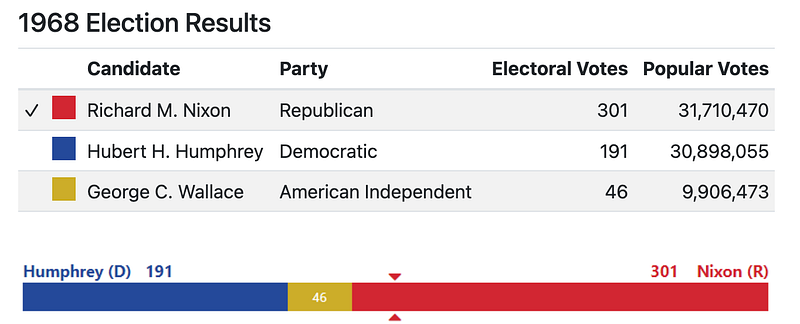
And just how big did Nixon win in 1968 and 1972? In 1968, it was close, with many right-wing Southern Democrats casting a vote for the segregationist, George Wallace.
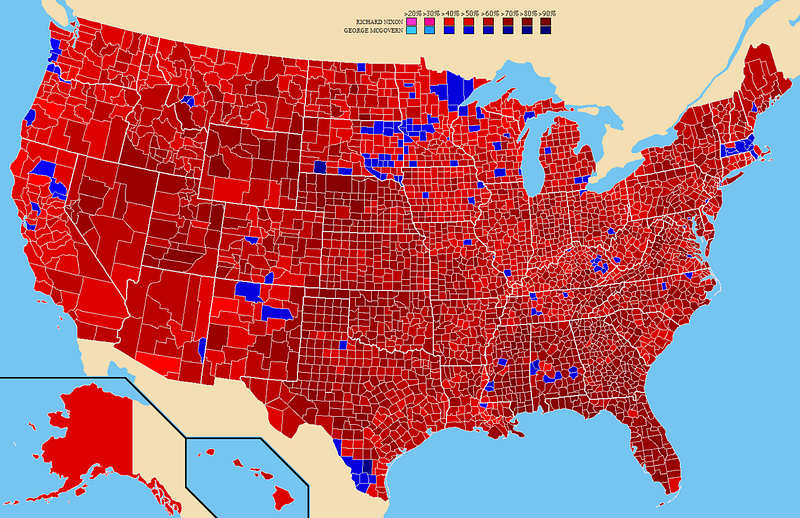
But in 1972, just after the Watergate scandal, it was no contest. McGovern only won Massachusetts. And I thought Republicans didn’t like Reds — “Better dead than Red.”
24. “I’d Love to Change the World” — Ten Years After
This one almost slipped by me. Stupid, recliner rock critic! I originally had “My Generation” here from The Who, which doesn’t really make sense, but I LOVE that band, but then a much smarter Medium reader and writer suggested this one. Duh. They totally rocked Woodstock, man.
It has 75,173,055 listens on Spotify. Wow.
The lyrics depict the Zeitgeist — a fancy German word meaning spirit of the times:
Everywhere is freaks and hairies Dykes and fairies, tell me, where is sanity? Tax the rich, feed the poor ’Til there are no rich no more
Tax the rich? What country are they from? Hello — Supply Side Economics and the Laffer Curve!
World pollution, there’s no solution Institution, electrocution Just black and white, rich or poor Them and us, stop the war
Paris Accords? Pollution? Climate change? Are you still smokin’ reefer, man? And we’re post racial, now? Right? There’s no worries now about race and inequality. And that 1% controlling so much is just the American Pravda Media, right?
Musically, the sound is complex; starting slow with just acoustic, and then increasing the volume, add drums, slow it down, and then speed it up. Mixing tempos and crazy riffs. My former AP Music Theory teacher is rolling his eyes in heaven. I lasted one month. The chorus is amazing, but a bit of a cop-out.
“I’d love to change the world But I don’t know what to do So I’ll leave it up to you.”
I don’t know what to do. So he’s passing the baton to someone else. How about be the change you wish to see in the world. Who said that? Gandhi?
Hey, Alvin Lee, British blues rocker, how about together we change the world? And then we find some friends. The song came out in 1971. It reached #40 on Billboard. It was the band’s only charting single.
25. “Aquarius (Let the Sunshine In) “ — 5th Dimension
One of the funniest endings of a film comes straight out of Bollywood in The 40-Year Old Virgin. It’s so fitting and surprising and full of fun and joy. It’s here if you’ve never seen it.
Okay — the song fits so well with that Zeitgeist thing. “Peace will guide the planets and love will steer the stars?” Hello, Einstein? Does that jive with the Laws of Physics?
The break at 2:22 is one of the best in music. That’s where the Sunshine part comes in. It just makes you so happy — like you have finally lost your virginity to the greatest love of all time — and you’re on Sunshine Love Dopamine Drugs.
The song is listed under psychedelic soul and sunshine pop. Makes sense. Like Donovan, maybe? “Sunshine Superman?” It was a smash hit. Billboard listed at 66 on its “Greatest Songs of All Time” (link).
The song, of course, appeared in the hit musical, Hair. Also, that magnificent bass line comes from bass sessionist, Joe Osborn, who can also be heard on “Bridge Over Troubled Water,” “California Dreaming,” and “Ventura Highway,” and many other hits. He died at 81 in 2019 (Kaufman).
It was released in March of 1969 — a month prior to my birth. So they were predicting My Coming! But that would make it The Age of Aries.
Too few syllables. And who wants an Aries ushering in The New Age?


