
These Books Make 80% of Sales on All Platforms
This is where the money is + how to get it.

Have you heard???
Amazon KDP is SATURATED!
So is Barnes & Noble, Audible, Spotify, and Google Play (apparently.)
“There are just too many books now — it’s IMPOSSIBLE to make money on these platforms.”
Some guy left me a comment the other day to let me know that I should stop publishing because “the world doesn’t need any more damn books!”
Man, I sure am glad I didn’t listen.
Because the little publishing experiments I’ve been running over the past three years have put a decent chunk of change in my business bank account.
In fact, I’m so bullish on publishing that I plan to dedicate most of my time to it in 2024.
When people say, “This or that thing doesn’t work,” what they really mean is,
THEY couldn’t figure out how to make it work.
The reality is — there are MANY people making A LOT of money on these platforms.
Here are just a few examples of self-published books (that any of us probably could have made) that are selling thousands of copies per month:
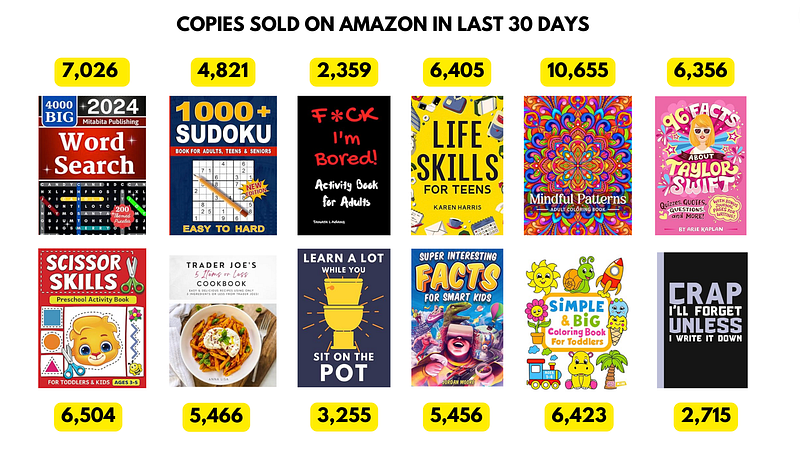
Assuming an average royalty of $2.50 per (paperback) copy sold, you’re looking at a profit of $6,787 to $26,637 per book, per month.
Now…
I’m showing you these examples to make the case that you don’t need to be famous, have a big email list, or do complicated launches to make money with books.
However…
Making THIS kind of money on Amazon is NOT AS EASY as making a similar book and just throwing it out there.
That’s not enough.
There’s a REASON why these simple books make so many sales.
The SECRET is that each one of them is RANKING on the FIRST PAGE for multiple KEYWORDS with a DECENT SALES VOLUME.
There are millions of profitable keywords.
The problem most people have is finding them.
Let’s Play a Game
Humor me here.
Pretend your 8-year-old nephew’s birthday is coming up, and you need to find him a gift.
You head over to Amazon and type in “books for 8-year-old boys.”

Here’s what you’ll see:
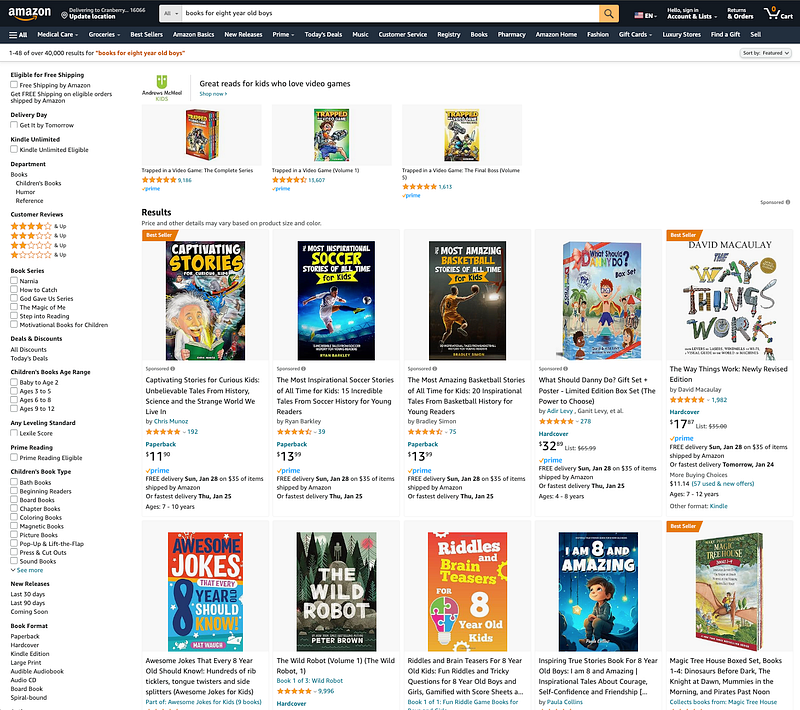
If you look closely, you’ll notice that there are over 40,000 results!
Whew! That’s a lot!
But how many of these books are YOU going to look at?
If you’re the average Amazon customer, you won’t look beyond the first HALF of the first page.
You’ll quickly skim for a book your nephew will like, maybe check out a few reviews, and then add it to your cart.
You certainly aren’t going to spend time sifting through the nether regions of the Amazon listings.
So, if you’re a publisher, why would you possibly care if a niche is “saturated?”
Studies have proven that books on the first page of a keyword search get 80% of all clicks and sales.
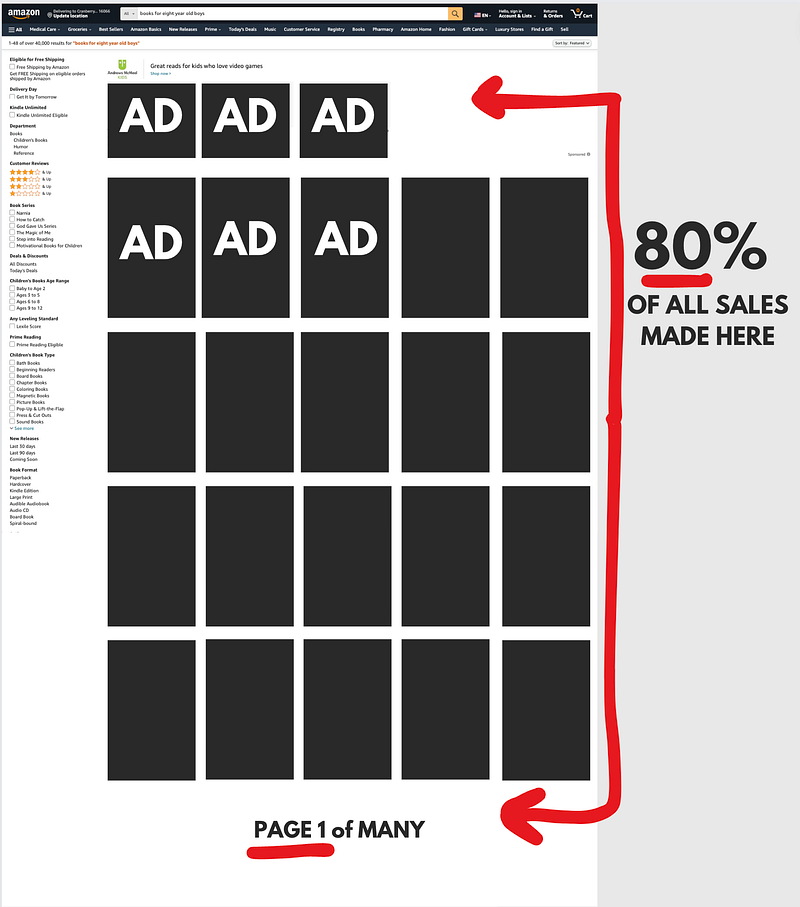
The first page has about 60 spots (including ad slots.)
Therefore, the books on the first page should be the ONLY competition you’re concerned with— because everything else ISN’T SELLING!
Can You Compete?
The question you need to ask yourself is,
Can I compete with the top 10–20 organic listings for a specific keyword?
For example, I would never try to rank a book for the keyword “celebrity autobiographies” because I can’t compete with Brittney Spears, Prince Harry, or Paris Hilton.
As cool as I am, it’s not going to happen!
But…
Maybe I CAN grab a spot on the first page for a different keyword.
This is the game.
If you can rank a book on the first page for keywords that Amazon customers are ACTUALLY searching for, you will (most likely) start to make organic sales.
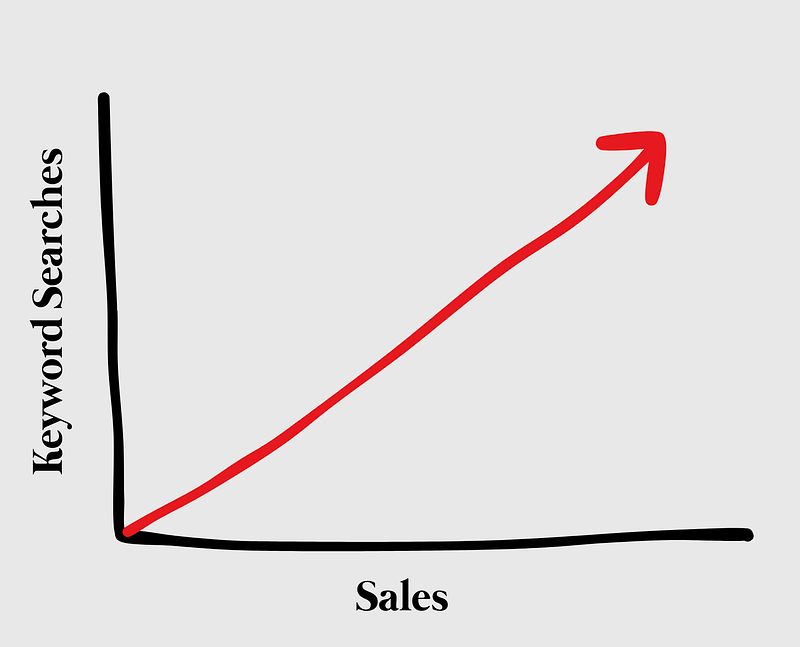
For example, if keyword #1 makes 3,000 sales a month, and keyword #2 makes 14…
YOU WILL MAKE SIGNIFICANTLY MORE $$$ IF YOU RANK ON THE FIRST PAGE FOR KEYWORD #1.
Sorry for text shouting, but this is important.
How I Find Keyword Sales Data
I use Helium 10 (the Diamond Plan.)
I wrote a detailed tutorial about how I use it to find trending books and profitable keywords here:
I know this tool is pricey — but it’s the best of the best, and it’s legitimately what I use every day.
There are alternatives like Publisher Rocket that will give you very basic info. You can use them.
But you can’t expect to get the same results.
You’ll see why in a moment.
The Game Has Changed
A few years ago, you could throw up just about any old thing on Amazon and make sales easily.
It’s not like that anymore.
The game has changed.
Today, you have to play the ranking game if you want to win.
Or, you can try to rely on “luck” and see how far that gets you.
Those who take the time to figure this out can make A LOT of money on these platforms.
Play to Win
Here’s the deal…
Once you find a keyword that has a decent sales volume, you need to assess whether you are WILLING to try to rank for it.
Some will be harder than others.
Hopefully, you are making this decision BEFORE you publish your book.
It is much easier to engineer books to rank for certain keywords than to try to rank an existing book that does not have the keyword in the title.
One of the major ranking factors on Amazon is how many copies a book has sold in the previous 8 days.
In fact, a book’s rank can change multiple times per day depending on how many sales it gets.
But there’s something about the 8-day mark that sends a strong signal to Amazon about how well your book is likely to perform moving forward, and this has an impact on keyword rank.
So, when making decisions about which keywords to target, consider how many sales you think you’ll be able to get.
Hold this in your mind for now.
How to Rank on Page 1
One of the very helpful pieces of information that Helium 10 gives you is the number of copies your book needs to sell over an 8-day period to have the best chance of ranking on the first half of page 1 for your chosen keyword.
This is found in the CPR column inside the Helium 10 “Magnet” keyword research tool.
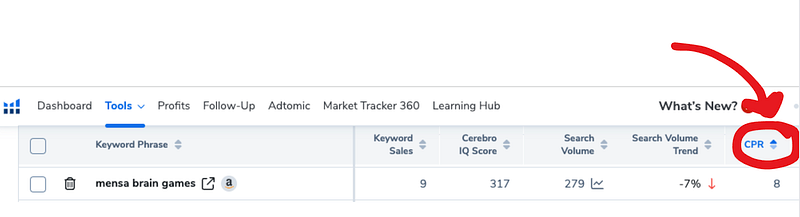
This confused me at first, so here’s an example.
Let’s say I want my new Sudoku Puzzle Book to rank for the keyword “sudoku books for adults easy.”
When I look at the CPR number for this keyword in Helium 10, it says “8.”
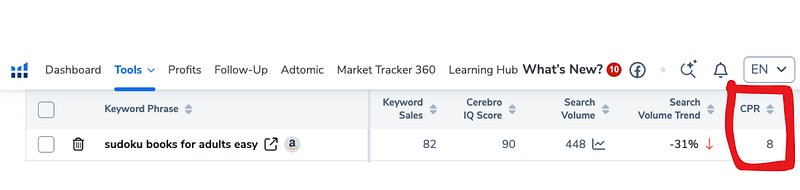
This lets me know that I will need to sell about 8 copies of my book over the next 8 days in order to have a good chance of ranking on page 1 for this keyword.
I do this using Amazon ads.
(You could also promote on social media if that’s your thing.)
I use a “Sponsored Product” ad to target my chosen keyword with a fairly aggressive bid.
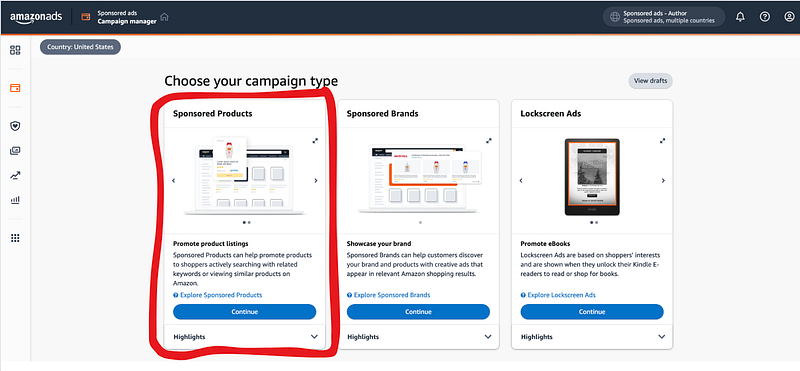
Note: In this case, I’m shooting for about 1–2 sales a day from ads for the next 8 days. I will adjust bid amounts during this time if needed.
I also set up tracking inside Helium 10 so I can monitor my book’s rank for the keyword.
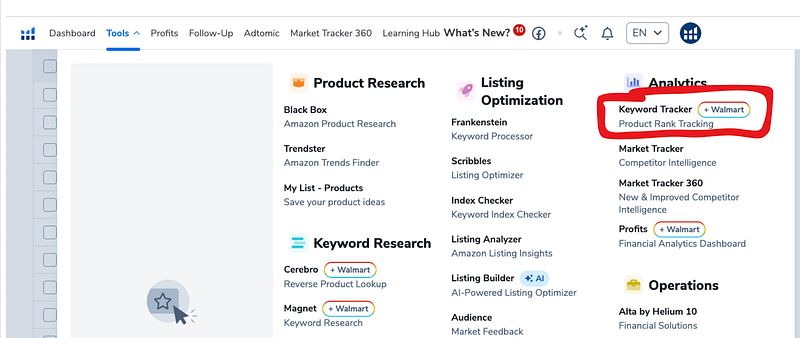
Note: You can track your own books AND competitors' books’ using this tool.
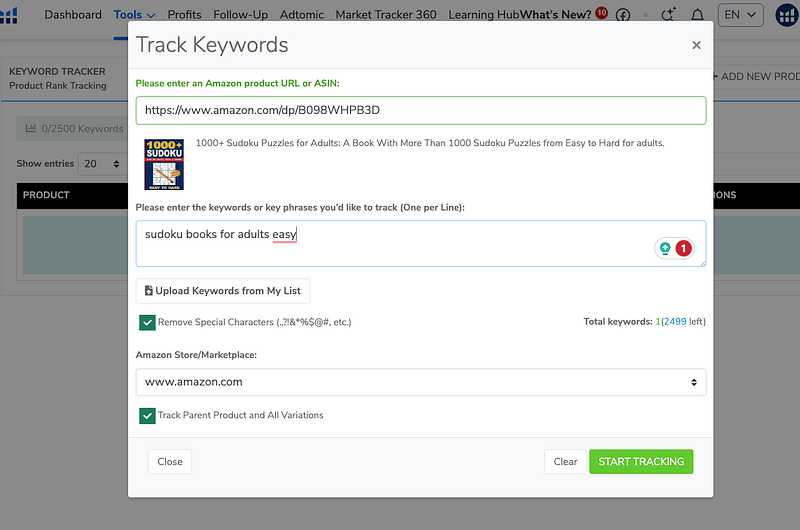
For example, I can see that this competitor’s book is currently ranked #19 for the keyword “sudoku books for adults easy,” which is on the top half of the first page.
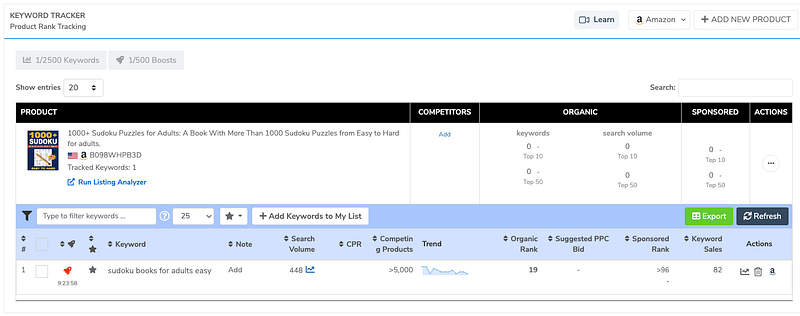
I can also see the book’s “sponsored rank.”
This lets me know how many people are bidding higher on this keyword with Amazon ads.
From here, it’s a process of monitoring the rank and adjusting ad bids up or down to get enough sales to hit the CPR number to rank on the first page.
Once the book ranks on the top half of page 1, it *should* start making organic sales.
These sales will take the place of ad generated sales in the ranking calculation, which means you can scale back on your ad spend.
Occasionally, if the organic rank starts to fall too much, I give an extra boost with ads to push it back up the page.
Realistic Expectations
While I’ve gotten great results with this method, it doesn’t always work perfectly 100% of the time.
A big piece of the puzzle is engineering a book to rank for certain keywords by including them in your book’s title, subtitle, description, and A+ content.
However, sometimes the Amazon algorithm still doesn’t think your book is relevant to the specific keywords you want to rank for.
And sometimes you just have to give it a little more time.
However, if you haven’t been able to get your book to rank after 2–3 months following a legitimate effort to meet the CPR recommendation, you may have a conversion problem.
That’s a topic for another day.
This article contains my referral link for Helium 10, which, along with Jasper AI and BookBolt, are some of my absolute favorite business tools for content creators.
If you purchase a subscription to one of these software tools through my link, I may receive a commission at no additional charge to you.


