
Climate Change is an Optimization Problem, Not an Emergency
A former alarmist’s explanation of why alarmism is the wrong response to climate change
“Our Final Warning: Six Degrees of Climate Emergency.”
You might be surprised to learn that this line of triple-distilled climate alarm forms the title of the book that finally convinced me there is no climate emergency. And it becomes even more surprising considering where this journey started.
Indeed, when I read the first edition of Six Degrees by Mark Lynas more than a decade ago, it fully succeeded in alarming me. But I must admit that I was quite willing to be alarmed, given my career in clean energy research. After all, if climate change is a true existential threat, I’m helping to save the world (and I can expect the world to shower me with research funding and respect for my efforts).
After reaching financial freedom four years ago, however, my perspective changed. Free from any financial bias, I took a long and hard look at the world’s problems, finding that climate change actually ranks pretty low down the list. More importantly, I now believe that desperate climate action will hurt far more than it helps.
At this point, I decided to read the new and improved version of Six Degrees. I approached it with an open mind and even tried to recall my former climate fears. But the case for climate alarmism could no longer stand up to the more balanced perspective I acquired in recent years.
In short, “Six Degrees of Climate Emergency” only strengthened my conviction that climate change is an optimization problem to be solved calmly and rationally, certainly not an emergency that deserves precedent above all else.
The following sections will explain my position.
Dangerous Levels of Warming are Highly Unlikely
Lynas presents compelling evidence that life above four degrees can get rather uncomfortable. Although four degrees of warming does not pose an existential threat, we can expect some serious problems:
- Sea levels could rise as much as 1 m by the end of the century, potentially displacing a billion people if no coastal protection is built.
- Millions of climate refugees will migrate from regions plagued by more frequent droughts and floods.
- We can expect the occasional category 6 hurricane, and warmer waters will allow major storms to develop further from the equator.
- 30x more people will be exposed to “dangerous heat” worldwide, and some of the hottest places will occasionally reach potentially lethal conditions where humans can no longer lose heat by sweating.
- Without adaptation, the likelihood of food exporters experiencing a disruptive 10% loss in output increases from virtually nothing to 86%.
- Without human intervention, one-sixth of all species may go extinct.
- A shifting Gulf Stream and more frequent El Niños and La Niñas could create large climactic changes around the world.
- Permafrost melt could drive an additional 0.2–1 °C of warming, pushing us toward a five-degrees world where things could start getting out of control.
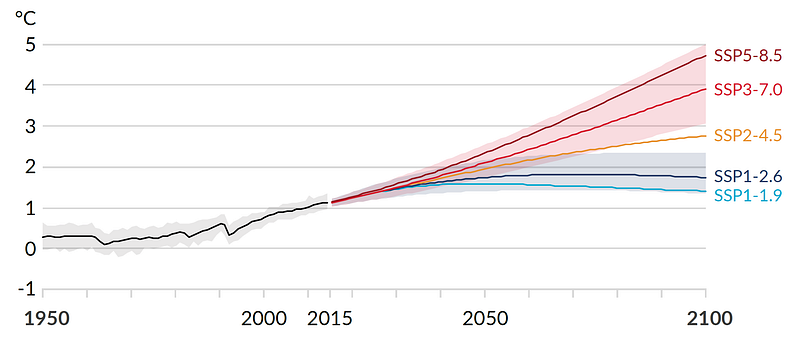
As scary as these threats are, the fact is that we’ll have to try very hard to achieve four degrees of anthropogenic global warming this century, e.g., the almost unthinkable SSP3–7.0 emissions trajectory shown below.
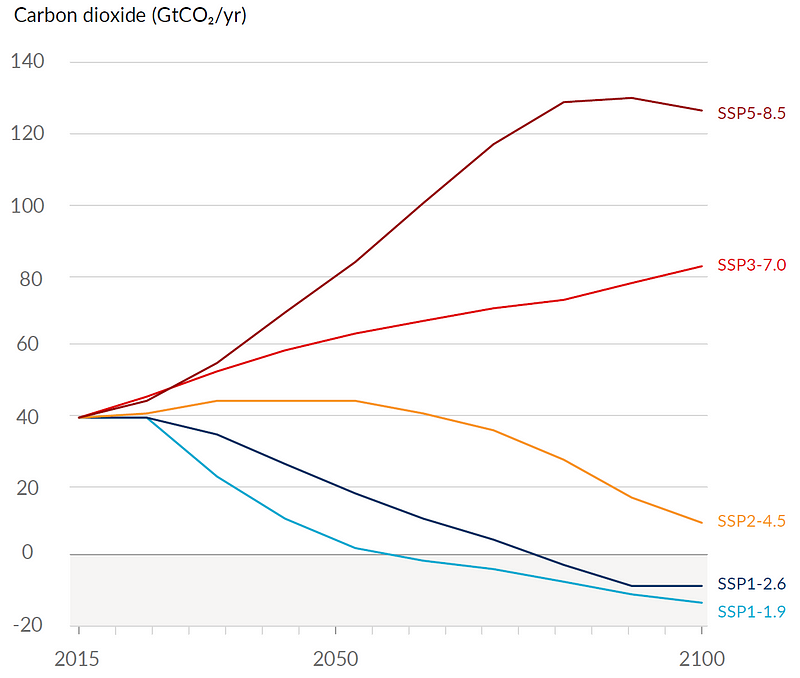
More likely scenarios like SSP2–4.5, although a far cry from “net zero by 2050,” will see a peak temperature rise of about 3 °C with very little chance of touching 4 °C (the error bars below show 90% confidence bounds).
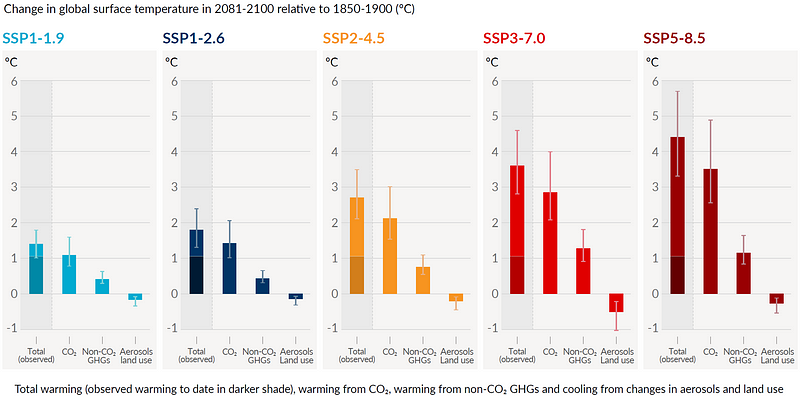
After fourteen years of work in clean energy R&D and thousands of free-time hours spent studying other sustainable development solutions, I’d be quite surprised (and disappointed) if we don’t manage to stay below SSP2–4.5, with 2.5 °C of peak warming appearing most likely. Other factors such as the finite supply of cheap oil and gas and the fact that pathways like SSP3–7.0 will reach CO2 concentrations exceeding indoor air quality requirements add further confidence that we will stay below the SSP2-4.5 trajectory.
Yes, Lynas is correct that complex feedback mechanisms may make the climate more sensitive to our greenhouse gas emissions than we currently believe. But the uncertainty band continues to narrow as our understanding grows. Currently, the 90% certainty band around 2.5 °C is ±0.7 °C. In other words, there’s a 5% likelihood that we eventually exceed 3.2 °C if we follow what we now believe to be a 2.5 °C pathway.
The very unlikely scenario of unexpectedly high climate sensitivity and negative surprises from tipping point cascades cannot be ignored due to the large potential impact. However, as this follow-up article explores, comparable risks emerge from the drastic decarbonization pathways advocated to mitigate these climate risks, so we will have to accept the possibility of low-likelihood, high-impact events either way.
Accordingly, the primary question is whether we can live comfortably with 2–3 °C of global temperature rise. The new version of Six Degrees has convinced me that we certainly can.
Life in a 2–3 °C Warmer World
Six Degrees gives an admirable overview of the available literature on the potential impacts of climate change. Below, I will summarize how the main impacts will play out over this century. In each case, I will strive to bring balance to the alarmist tone in Six Degrees using other reputable sources, largely the latest IPCC reports.
Sea level rise
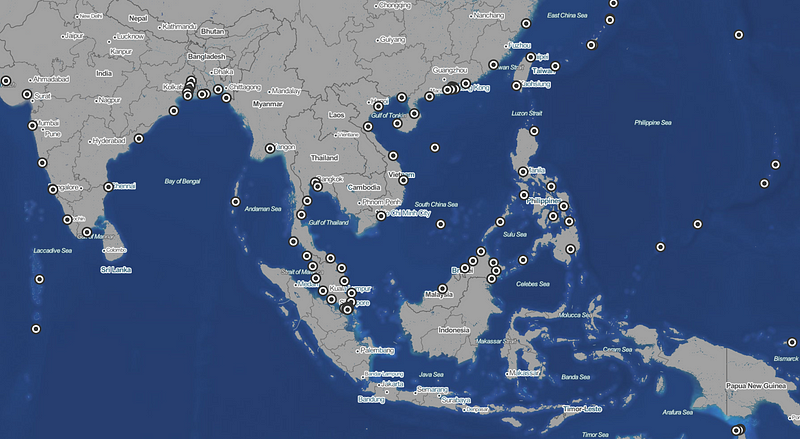
Next to extreme weather, rising oceans are probably the most recognized symbol of the climate crisis narrative. The effects are certainly significant, with about 100 million people (1% of the global population) being displaced by the end of the century in a 2–3 °C warmer world if we do not build coastal protection. Furthermore, some small island nations may need to be abandoned as rising seas salinate groundwater.
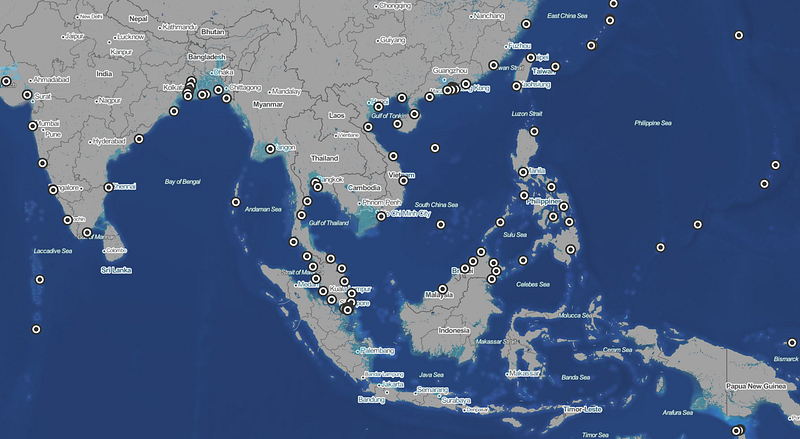
In the long run, 3 °C of warming could lead to about 10 m of sea level rise, driven largely by the melting of the Greenland and West Antarctic ice sheets. As shown below, 10 m of sea level rise will only consume a small fraction of available land. However, if the change happens rapidly, it would have a very large impact because so many people live near the ocean.
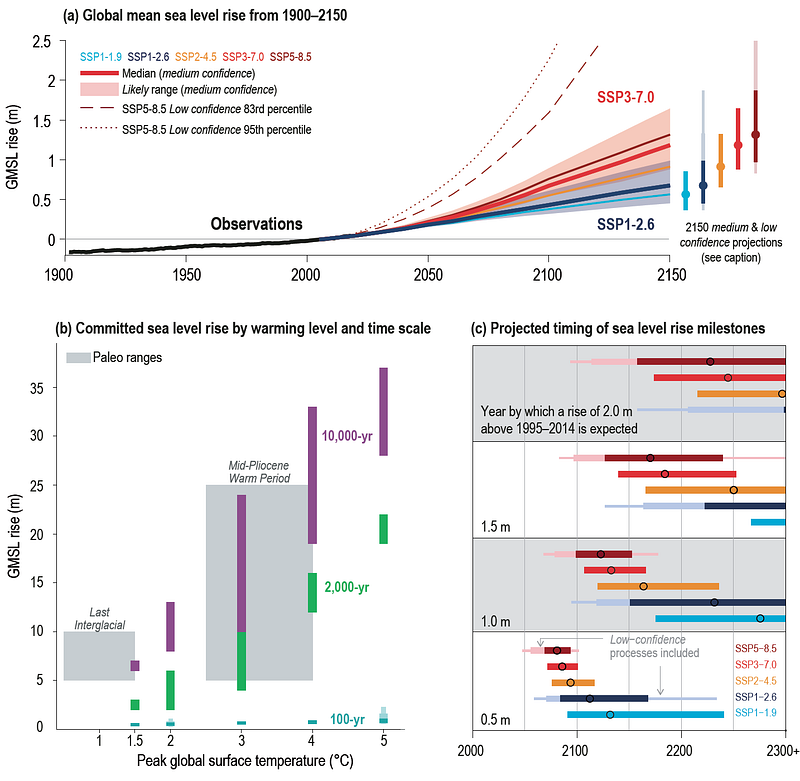
Luckily, sea level rise is a very slow process. As the IPCC shows below, a 3 °C scenario (SSP2) needs about 140 years for every meter of rising oceans. Surely, we can adapt to oceans rising less than 1 cm per year.
There are two main adaptation pathways: coastal protection and gradual retreat. In low-lying regions where a dyke can protect large areas of land, coastal protection would be preferable. Although Lynas correctly points out the catastrophic risk of dyke collapse in such a scenario, experience from the Netherlands shows that we can manage this risk.
If the amount of valuable land protected by dykes is insufficient, a gradual retreat presents a simple and low-cost alternative. The timescales involved in sea level rise are so long that they match reasonably well with building infrastructure lifetimes. Hence, intelligent planning can allow cities to retreat before slowly advancing coastlines without having to sacrifice infrastructure that still has economic value. It can even be beneficial if we are forced to constantly modernize our cities in this manner (e.g., rebuild cities for people, not for cars).
Yes, there are some outlier assessments projecting rapid rises caused by self-strengthening collapses of the Greenland and West-Antarctic ice sheets (see the dashed red lines in the figure above). We will know soon enough if these projections hold any water, and if they do, we will know that we will have to adapt faster at a higher cost. But these are low-likelihood cases, even on the crazy emissions pathway of the SSP5–8.5 scenario, so they certainly do not justify the enormous costs of desperate climate action.
Water cycles
Since hotter air can hold more water, a warmer planet intensifies hydrological cycles, driving changes in precipitation patterns. This will benefit some regions and hurt others, which can certainly be problematic if the change happens quickly.
South Europe may experience the greatest drought shock, with most other regions projected to experience greater drought already being dry, sparsely populated, and adapted for such a climate.
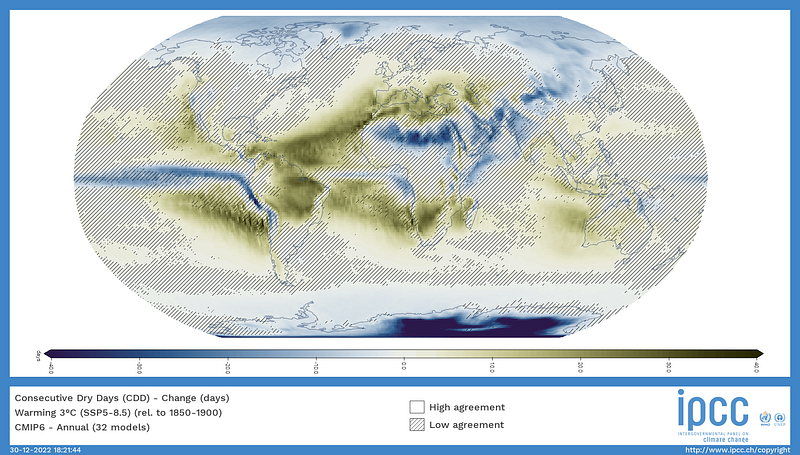
On the flip side, flood risk will increase in the monsoon region, with each degree of temperature rise causing about 10% greater rainfall intensity.
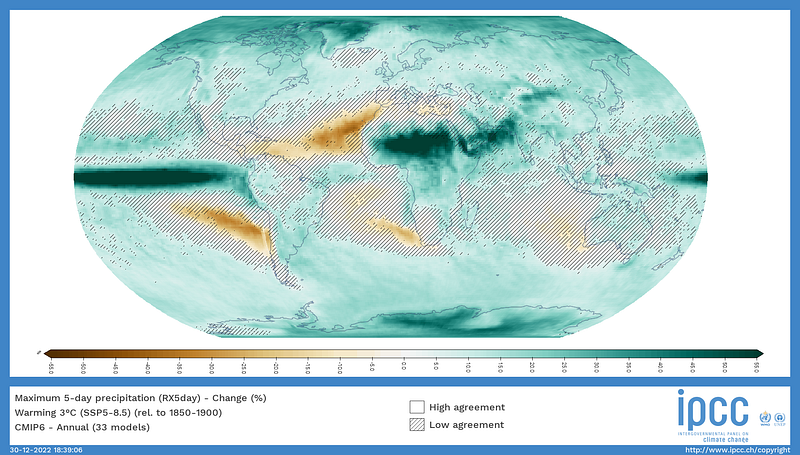
The projected changes in precipitation patterns are quite mild in a 2–3 °C warmer world, and well-adapted societies can certainly still thrive throughout the world. However, if adaptation happens too slowly, impacts in regions like South Europe and South Asia can be quite disruptive.
In this case, the rate of change is more important than the magnitude, a theme that will recur frequently in the sections below. The implication of this observation is that we should prioritize more practical partial decarbonization options over the impractical net-zero ideology — a critical point I will explore further in a follow-up article.
Regardless of the rate of change, proactive adaptation is key. For example, there are many millions of people already living under the more arid conditions projected for South Europe. Hence, the world has no shortage of practical experience to share, and the transition can be quite smooth if this experience is proactively implemented where needed.
Natural disasters
Lynas says little about extreme weather in the two-degrees and three-degrees chapters, except that changes from shifting jet streams and more frequent El Niños and La Niñas remain subtle at these levels.
Still, sensationalist reporting linking extreme weather events and other natural disasters to climate change spreads so much needless alarm that this section deserves a few additional paragraphs.
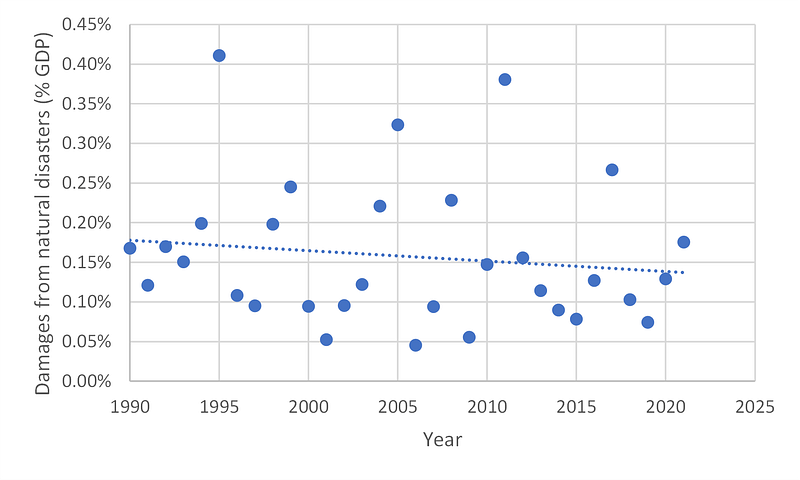
The most important concept that must be understood is the expanding bullseye effect. Because of the great economic expansion facilitated by fossil fuels, the mass of infrastructure available to be damaged by extreme weather has greatly increased. Thus, the highly touted rising economic costs of natural disasters should come as no surprise.
But absolute economic damages is the wrong metric. Instead, we should adjust damages with economic output, which is a reasonable proxy for the amount of valuable capital available to be damaged by extreme weather events. As shown below, this trend is actually slightly down, showing that our ability to insulate our economies against natural disasters is outpacing any exacerbating effects of climate change.
The efficacy of economic development as a climate adaptation mechanism is even more powerfully illustrated by the precipitous decline in deaths from natural disasters over the last century. As shown below, any negative effects from climate change have been totally overpowered by the positive effect of the climate resilience created by a growing economy.
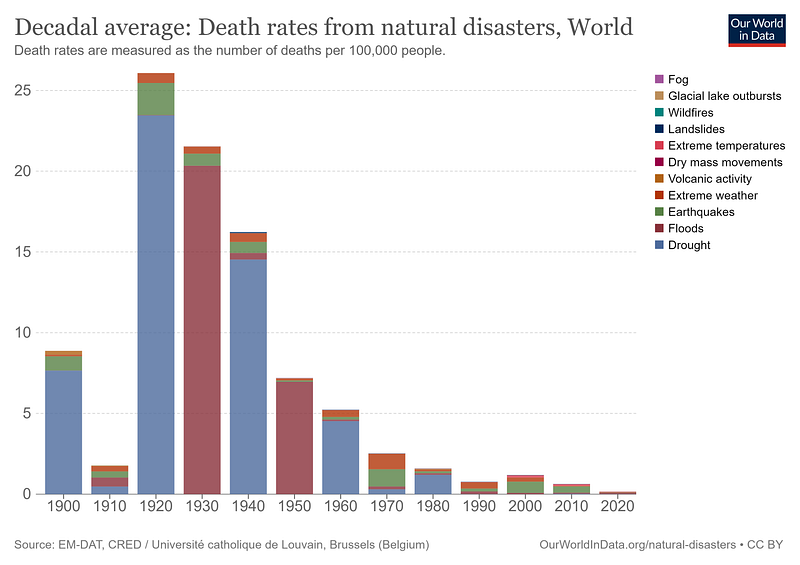
These simple graphs painfully expose the irresponsible sensationalist reporting around supposedly climate-induced natural disasters. It is a terrible journalistic practice that has to stop.
Extreme temperatures
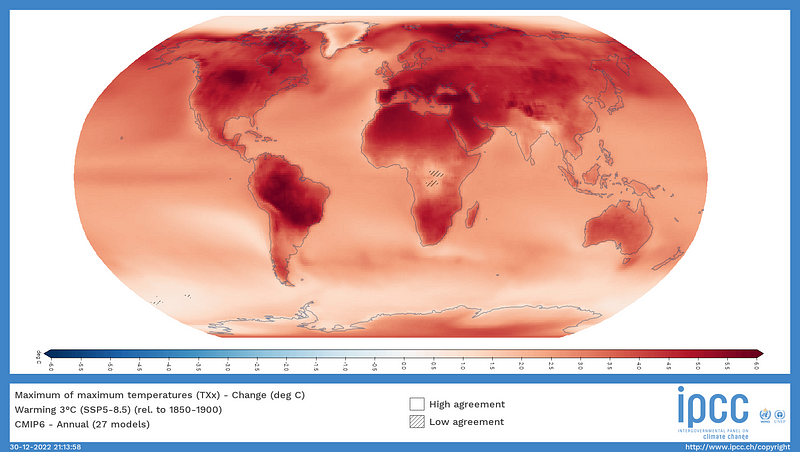
Extreme heat presents another example where the rate of change is more important than the magnitude. Climate zones are currently moving about 20 km toward the poles each year. Put another way, cities in a 3 °C world will be exposed to temperature conditions currently found about 1000 km toward the equator. Obviously, humans can live (and live well) under such conditions when communities are properly adapted to the local climate, but adaptation can become difficult if the rate of change is too large.
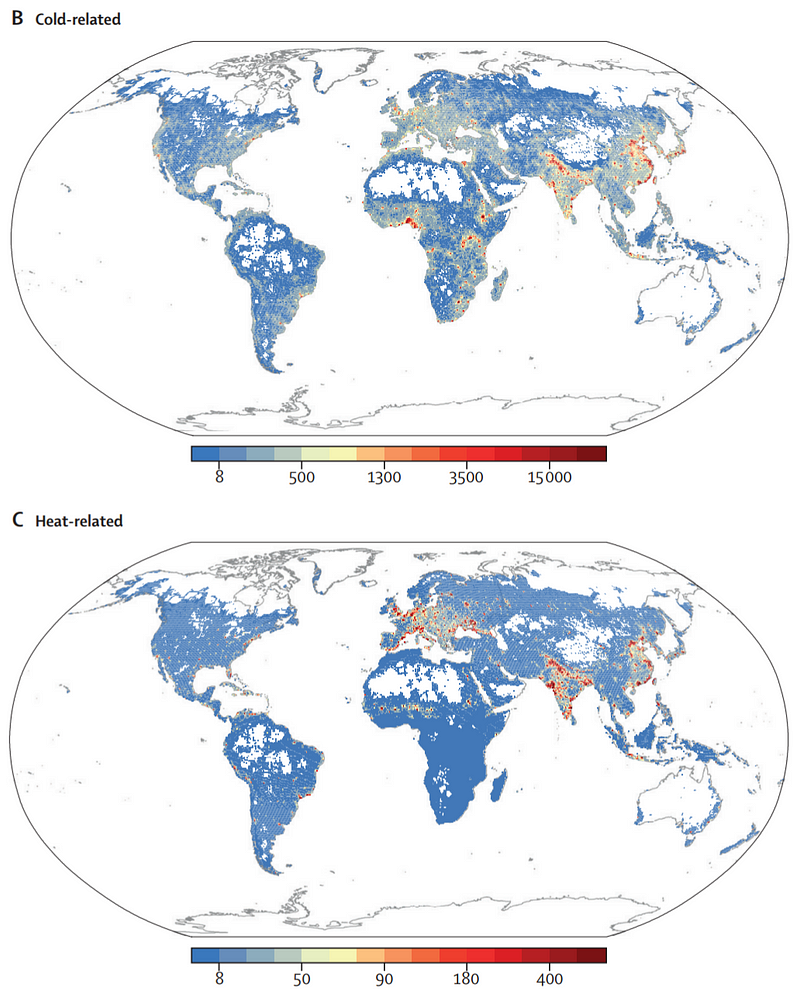
However, a critical element that climate alarmists (including Mark Lynas) regularly fail to mention is that global warming does a lot to alleviate suffering from cold. Humans are far better adapted to tolerate heat than cold (we can sweat across a large skin area for effective cooling but have no fur or blubber layer to keep us warm). Hence, it should come as no surprise that research finds that the warming climate has thus far saved about ten lives by reducing cold for every life it took through excessive heat, avoiding about half a million deaths each year.
Lynas also points out that air conditioning will become more important (and energy-hungry) as the number of people requiring this technology to remain healthy and productive increases. However, he again fails to mention the flip side: less space and water heating. Comparing the rise in cooling degree days to the fall in heating degree days on the IPCC Interactive Atlas once again shows that the benefit of generally warmer temperatures outweighs the costs.
Overall, a warmer planet stabilized 2–3 °C above pre-industrial levels could make a more comfortable home for Homo sapiens. The only concern is whether we can limit the rate of change and boost the rate of adaptation sufficiently to avoid serious problems in the transition phase.
Agricultural output
The changing climate is already causing problems for farmers. As climate zones continue their 20 km/year poleward march, farms that once occupied prime real estate are now becoming less productive. Thus far, the effect is small (in the order of a 1% yield reduction), but it seems clear that the negative effect of changing local climates outweighs the positive effect of CO2 fertilization for the global agricultural sector.
Due to its ongoing population boom and high poverty incidence, Africa is of particular concern. On this already hot and arid continent, the 5 °C warmer maximum temperatures projected for a three-degree world are expected to do considerable harm to agricultural output, potentially triggering mass migrations. It will also prevent subsistence farmers from working their fields on the hottest days.
That said, history has repeatedly proven predictions of food-related global calamities woefully wrong. In fact, food production per capita has increased by 25% over the last 50 years despite the population more than doubling. However, the stagnation in African food supply is concerning.
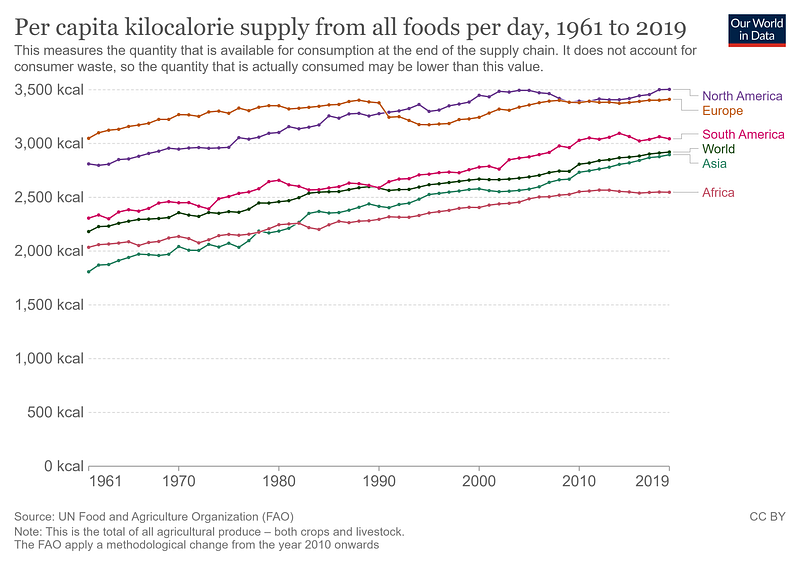
On a global level, it is unquestionable that too many calories cause vastly more death and suffering than too few. As shown below, obesity is currently linked to 8.5% of global deaths (5.7 million people). In contrast, protein-energy malnutrition causes 0.2 million annual deaths.
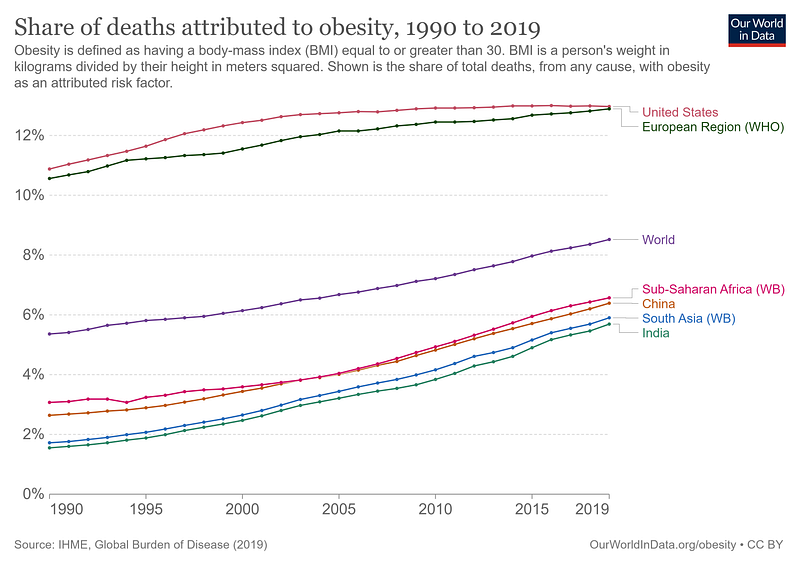
From this data, it is clear that a couple of percentage points of climate-related yield loss from the global agricultural sector may well save many more lives than it takes. Thus, the main risk is not one of total food supply, but one of immorally unequal food distribution. As an example of our terrible performance in this respect, the rich world currently spends as much trying to lose weight as would be needed to eradicate world hunger.
In simple terms, the best adaptation strategy to combat the projected population- and climate-related food shortages in Africa is for the rest of the world (the West especially) to simply grow a heart. A fraction of the food that ends up in waste bins and dangerously obese rich-world bodies can easily solve world hunger, even in a three-degree world.
Of course, the agricultural sector also has many climate adaptation mechanisms at its disposal. Most prominently, farmers can adapt their crops to the changing climate, and agricultural zones can slowly migrate poleward. Here, we again encounter the critical point that the rate of change is more important than the magnitude. A world fully adapted to 2–3 °C of warming with optimized agricultural zones established about 1000 km toward the poles can produce more than enough food (further boosted by CO2 fertilization), but there are clear limits to how rapidly this migration can take place, so the transition must be carefully managed.
Ecosystem losses
Lastly, we encounter perhaps the best example of how the rate of climate change is more important than the magnitude. While nature is highly adaptable and has flourished during times when the planet was much warmer than 2–3 °C above pre-industrial levels, it cannot keep up with the rate of anthropogenic climate change.
Studies suggest that 26% of insects, 19% of amphibians, 14% of reptiles, 12% of mammals, and 11% of birds will lose at least half their climate ranges on an emissions trajectory resulting in a 2 °C temperature rise by 2100. These numbers approximately double in a 3 °C scenario. In the oceans, each degree of temperature rise is projected to reduce total living biomass by about 5%.
Two highly diverse ecosystems are of particular concern: coral reefs and the Amazon rainforest. Shallow-water corals are particularly sensitive to rising temperatures and will see drastic declines in a 2–3 °C warmer world. The fate of the Amazon is still hotly debated, with some saying it should be safe well above 4 °C and others seeing tipping points below 3 °C. Reassuringly, the IPCC assigns a low probability to an Amazon dieback tipping point being crossed in the 21st century.
But once again, it is important to bring some balance to the discussion. As shown below, climate change is far from being the only (or even the most important) threat to ecosystems around the world.
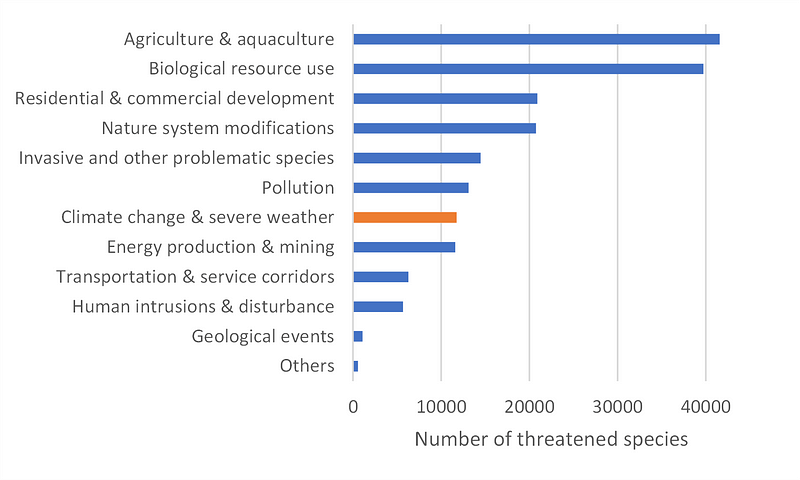
Furthermore, there is a lot that can be done to minimize climate impacts on biodiversity. Lynas discusses several of these in Six Degrees, including assisted migration, habitat restoration, reducing hunting and agricultural pressures, maintaining refuges, and keeping seeds, eggs, and DNA for resurrecting lost species.
It’s worth reiterating that, if we can keep ourselves to the SSP2–4.5 emissions trajectory (or even slightly below), we are currently navigating the most challenging decades due to the rapid rate of change. After 2050, the rate of temperature rise will slow down and approach stagnation by 2100. At that point, ecosystem pressures will be considerably lower than they are today because climate zones will no longer be shifting, allowing nature to catch up and settle down into a new equilibrium.
Our job is to limit the rate of change and manage the transition period as best we can. If we do this reasonably well, nature will thrive in the 22nd century and beyond.
Our Best Adaptation Strategy
As discussed above, the 2–3 °C warmer world we will leave our 22nd-century descendants is nothing to be afraid of, although some of the changes we would need to make on the way there will be uncomfortable. In fact, it would not surprise me one bit if the 22nd-century society decides to stay in a stabilized two-degree world instead of making another troublesome journey back to pre-industrial temperatures.
Underdeveloped nations, especially Africa, are the only real concern on our journey to this new and warmer steady state. I have written before about the gross injustice involved in climate change, where hypocritical rich-world citizens enjoy most of the benefits from our fossil fuel binge while the poor world faces almost all the negative consequences.
Hence, rapid economic upliftment of underdeveloped nations is by far the best thing we can do to mitigate climate change damages. And this is where climate alarmism does immeasurable damage by incentivizing desperate and deeply inefficient CO2 reduction measures like green technology-forcing and fossil fuel divestment.
The result of such unwarranted climate panic is high energy costs that only worsen the climate vulnerability of the billions of world citizens who were not as lucky at the lottery of birth as you and me. In fact, the world may have already set itself up for an extended period of high inflation and stagnating poverty alleviation as deeply unpragmatic energy policy fails to support the energy needs of 6.7 billion developing world citizens seeking to achieve decent living standards (here set to 1000 $/month).
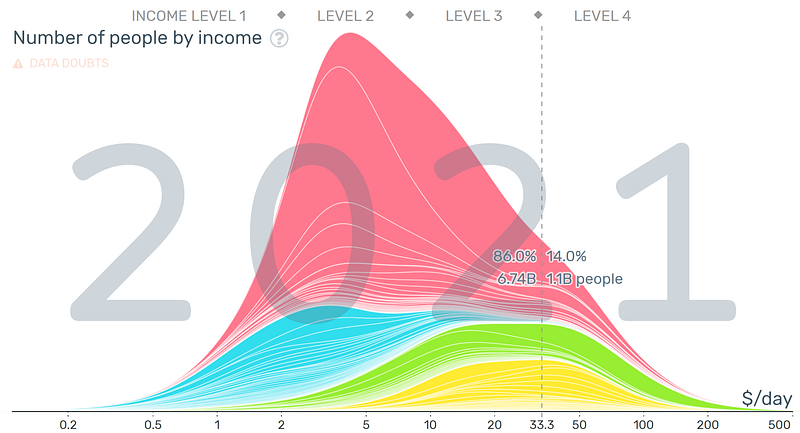
That is yet another reason why pragmatic energy policies seeking to reduce CO2 emissions at the lowest possible practical and economic penalty are so much more advantageous than the current obsession with net zero.
Final Thoughts
In summary, the new version of Six Degrees has convinced me that climate change does not deserve its most popular alarmist labels:
- Emergency (something dangerous or serious, such as an accident, that happens suddenly or unexpectedly and needs fast action in order to avoid harmful results). Climate change is not a sudden or unexpected threat that can be avoided by fast action. We have known it for decades, and mitigation actions taken today are complex cost-benefit trade-offs with climate effects that only become visible decades down the line.
- Crisis (a time of great disagreement, confusion, or suffering). Yes, there is considerable disagreement and confusion about climate change, but the term “climate crisis” is generally used to imply massive suffering and damage. As described above, climate damages (compensated by some positive effects) are far milder than the term “crisis” implies.
- Disaster (an event that results in great harm, damage, or death, or serious difficulty). Climate change is not an event. It is a gradual change in average weather patterns that can accumulate considerable damages over many decades if we handle these changes poorly.
Such sensationalist words imply that we must prioritize climate change mitigation above all else, no matter the cost — an approach that is as bad as doing nothing. In fact, it can be far worse due to the socio-economic inefficiencies caused by climate panic. For example, if drastic climate action harms economic upliftment, total climate damages may actually increase with more action because poor communities (where almost all future population growth will be concentrated) are subject to far greater climate vulnerability than rich communities.
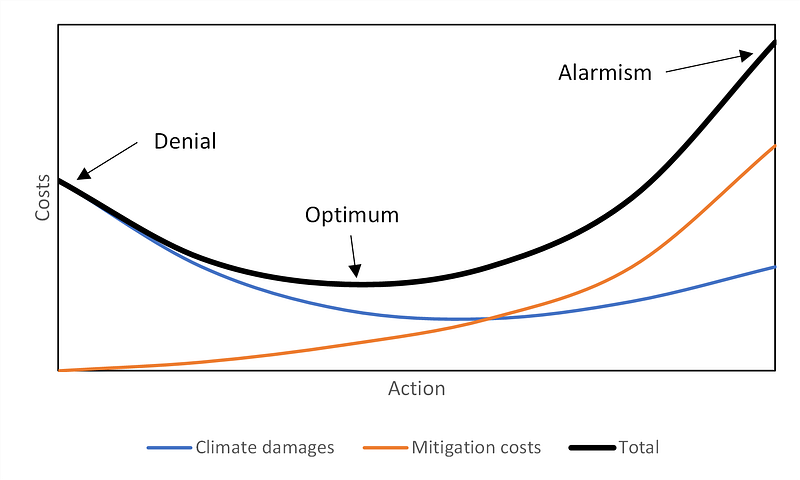
It’s time to take a collective deep breath and approach the climate optimization problem with a new sense of pragmatic calm. Denial is dangerous, alarmism is even more dangerous, and the gross inefficiency caused by these extreme groups screaming at each other only makes things worse. Instead, we should consciously target the wide and achievable optimal zone in the middle, probably between two and three degrees.
If we manage to stabilize the global climate in that optimal zone this century without hurting economic upliftment through climate panic, our 22nd-century descendants can have no complaints. In fact, they may even thank us for leaving them a moderately warmer planet with a more active carbon cycle and an economy granting high climate resilience to all.


