
Analyzing the Most Severe Risks of Climate Change and Climate Alarmism
Both are large. Both are unlikely. Both are routinely ignored or downplayed by advocates on different sides of the argument.

I recently wrote an article arguing that climate change is an optimization problem to be solved calmly and rationally, not an emergency that deserves precedence above all else. After a lively discussion, an important question emerged: How should we value “fat tail” risks in the optimization exercise?
Fat-tail risks are low-likelihood events that can have catastrophic effects if they actually happen. Many believe these risks, unlikely though they may be, already classify climate change as a global emergency that should be addressed immediately at any cost that may be required.
In this article, I want to balance this argument against the risks of demanding extreme action to prevent such low-likelihood high-impact risks. I will also consider risk mitigation measures and implementation feasibility.
Let’s start by understanding fat-tail climate risks.
Severe Risks of Climate Change
The global climate is very complex, and humans are currently creating changes at a rate that far exceeds natural cycles. Predicting the effects of our sudden impact on the Earth’s interconnected systems is a difficult task, leading to considerable variability in modeled climate futures.
Climate feedbacks
Feedback mechanisms are the most important contributor to uncertainty because they open the possibility to complex, non-linear responses to our greenhouse gas emissions. The following figure summarizes these feedback mechanisms.
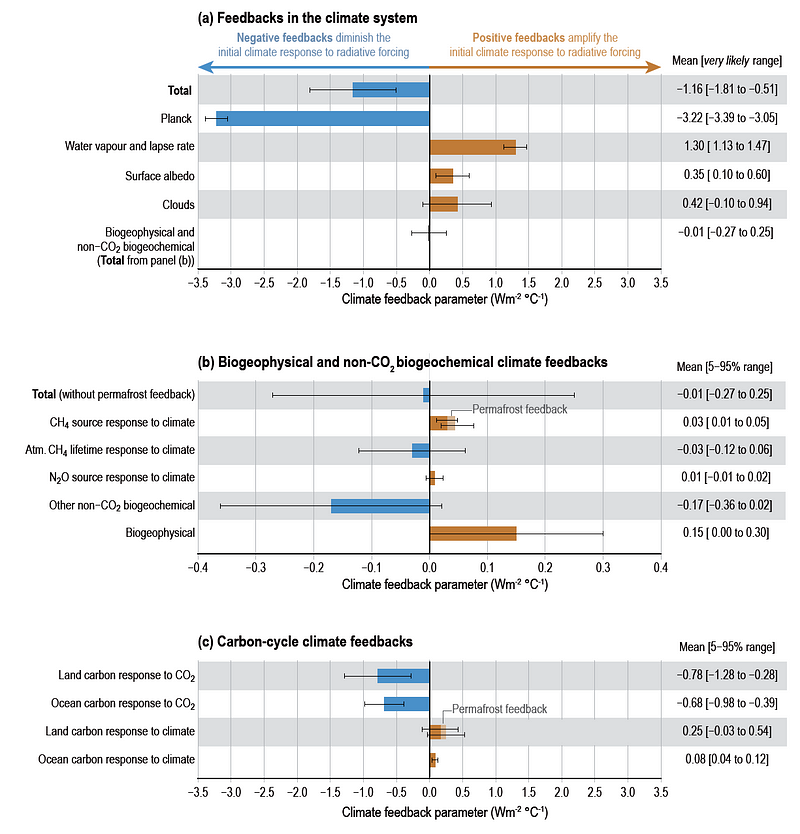
For example, the disaster scenario of self-strengthening global warming could theoretically occur in the vanishingly unlikely case where all feedbacks turn out to be above their 95th percentiles. In such a case, with a probability of 0.05¹⁴ = 6E-19, the combined feedback response would be above 0.9 W/m2/°C. For perspective, anthropogenic forcing is about 2.5 W/m2/°C.
Even though a net positive feedback response is vanishingly unlikely, milder (and far more likely) upward deviations from current best estimates can greatly increase projected climate change damages. Here, it is useful to assess climate sensitivity quantified in two ways:
- Equilibrium climate sensitivity: This is the eventual steady state global temperature that occurs in model runs centuries after a sudden doubling of the pre-industrial CO2 concentration (280 ppm to 560 ppm).
- Transient climate response: The temperature at the point when CO2 emissions reach double pre-industrial levels after increasing by 1% per year (similar to the human influence).
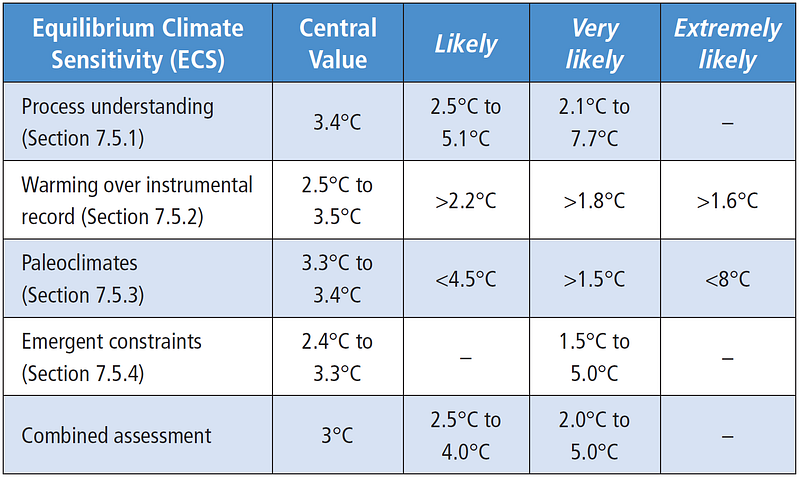
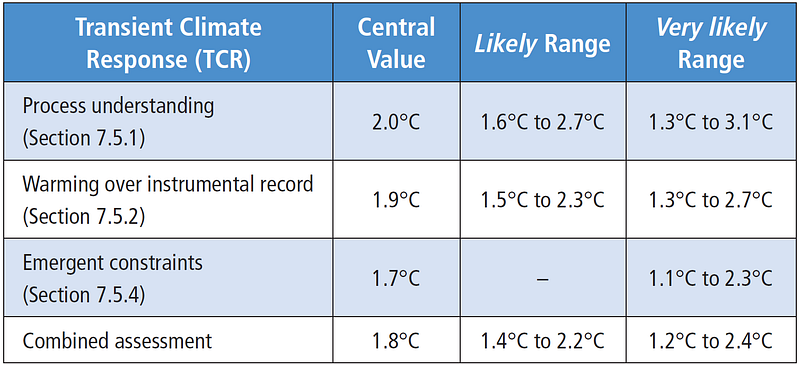
As shown above, there is a 5% likelihood that the long-term (centennial) temperature increase will exceed 5 °C and the medium-term (decadal) temperature will exceed 2.4 °C if we push atmospheric CO2 to 560 ppm.
Tipping points
Another important climate risk is the crossing of tipping points that may be irreversible on centennial or even millennial timescales. These tipping points may also interact, and the prospect of a tipping point cascade has gained considerable attention in recent years.
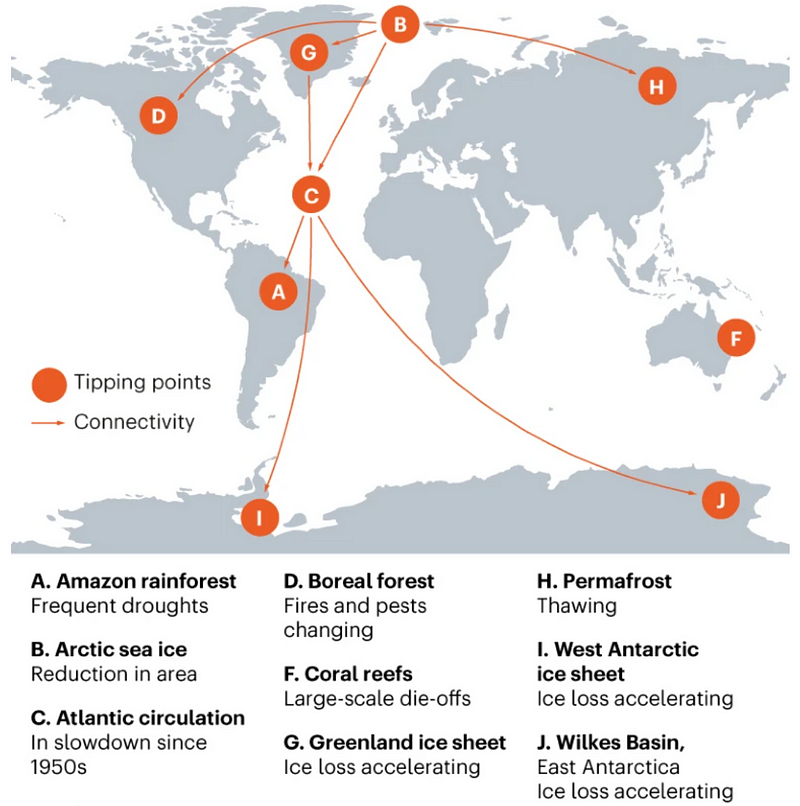
As an example of a tipping point cascade, the authors of the figure above sketch the following scenario: “Arctic sea-ice loss is amplifying regional warming, and Arctic warming and Greenland melting are driving an influx of fresh water into the North Atlantic. This could have contributed to a 15% slowdown since the mid-twentieth century of the Atlantic Meridional Overturning Circulation (AMOC), a key part of global heat and salt transport by the ocean. Rapid melting of the Greenland ice sheet and further slowdown of the AMOC could destabilize the West African monsoon, triggering drought in Africa’s Sahel region. A slowdown in the AMOC could also dry the Amazon, disrupt the East Asian monsoon and cause heat to build up in the Southern Ocean, which could accelerate Antarctic ice loss.”
But these possibilities remain speculative, and opinions differ as to how they should be interpreted. From the same paper: “Some scientists counter that the possibility of global tipping remains highly speculative. It is our position that, given its huge impact and irreversible nature, any serious risk assessment must consider the evidence, however limited our understanding might still be.”
What is the true risk?
Nobody knows, but it is easy to imagine how tipping point cascades and unexpectedly positive climate feedback mechanisms can cause large climate-related damages. The costs of climate change are related more to the rate of change than the absolute change, and cascading tipping points may accelerate the rate of change. As our understanding of the likelihood of these events remains limited, however, so does our understanding of the rate at which they may occur.
But these tipping point cascades do not pose existential threats that must shape policy even at very low confidence levels. Yes, local climates may change faster than expected, and sea levels may rise faster than expected, but the risk of runaway global warming remains vanishingly unlikely as described in the prior section on climate feedback mechanisms.
Thus, I conclude that climate change damages will not be infinite (extinction) even in worst-case scenarios. Hence, the likelihood must be considered in risk assessments, and climate change cannot automatically be propelled to the top of the global priority list simply because the potential for cascading tipping points exists.
Severe Risks of Climate Alarm
The world has all but ignored climate change for decades, and now many voices are sounding a clear climate alarm encouraging us to flip to the opposite extreme: drastic action. However, little attention has thus far been paid to the fat-tail risks that may arise from restricting ourselves to a budget of only seven years of current emissions to limit global warming to 1.5 °C. Considering these risks is as essential to a balanced risk assessment as considering the climate risks above.
What 1.5 °C means in practice
The 1.5 °C pathway requires us to achieve pandemic-like emissions reductions every year for the next 2–3 decades. Unsurprisingly, we’re missing the mark by a long way at present.
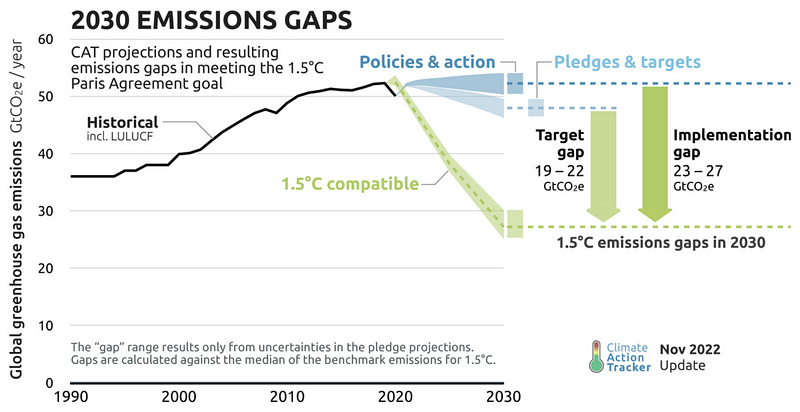
The only way to get anywhere close to such a trajectory is to push every commercially available low-carbon technology into the market at maximum speed, no matter the cost. At present, these technologies mainly comprise wind power, solar PV, and electric vehicles.
The aforementioned green technologies would create an energy-industrial system completely different from the one that forms the foundation of our present society. Here are the top five differences:
- Electricity will be the primary energy vector (today it accounts for only 20% of final energy). This will require a complete overhaul of the industrial, transportation, and heating sectors.
- Instead of converting fuels to electricity for applications that cannot be directly fueled, electricity will now be converted to hydrogen and other fuels for applications that cannot be electrified.
- The land footprint and overall visibility of the energy system would increase dramatically due to the diffuse nature of wind and solar and all the additional transmission infrastructure required, creating a different type of public resistance challenge.
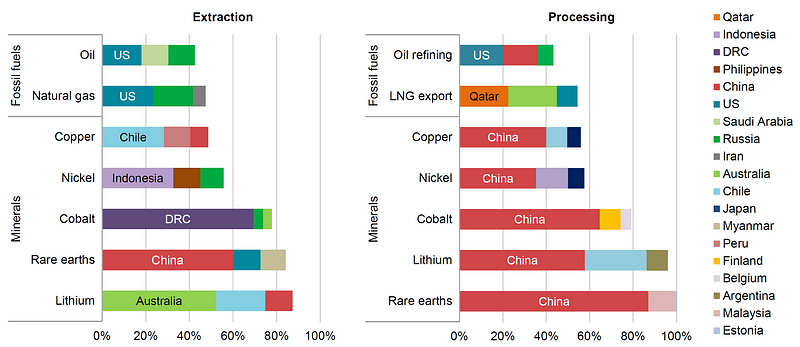
- The primary extraction industry will shift from fossil fuels to critical minerals that are more varied and geographically concentrated, and the primary energy production advantage will shift to regions with good wind and solar resources and plenty of available land area. The result will be a completely revamped geopolitical landscape.
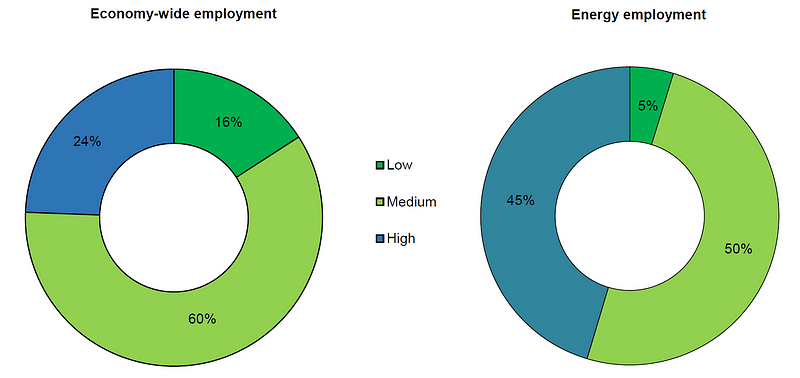
- The energy sector will absorb tens of millions of additional skilled workers, creating shortages in other sectors.
The following figure illustrates the magnitude of the challenge. Developing countries would be expected to increase their average investment in climate change mitigation by a factor of 4–8. Note that these are not demands for 2030 but average demands during the 2020s. For perspective, the required increase in mitigation spending equals about a quarter of the developing world’s gross fixed capital formation (all forms of investment).
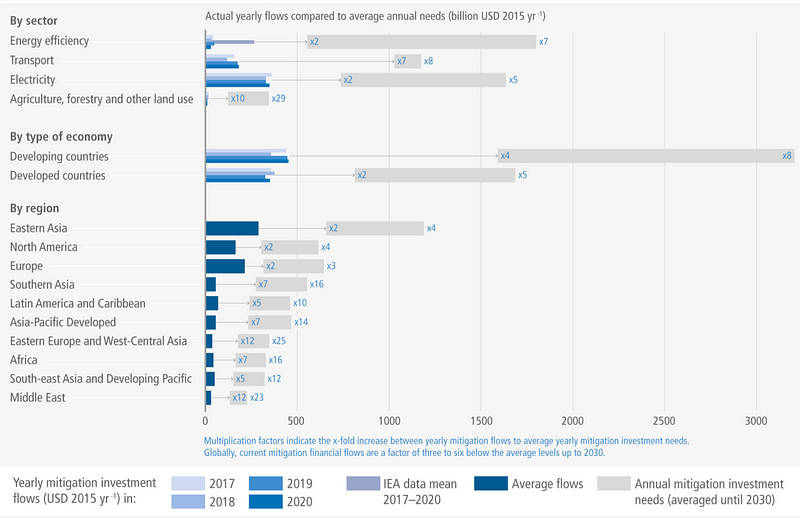
Overall, the rate of change communities around the world will have to handle in this extreme decarbonization scenario rivals the rate of change that may be expected from fat-tail climate change scenarios.
Risks involved in drastic transformation scenarios
It is important to recognize up front that the energy-industrial system literally keeps all of us alive. With 8+ billion people on the planet, we can no longer survive without the great productivity gains facilitated by cheap and practical energy, the machines it powers, and the products it creates.
If this foundation of our society sustains lasting damage, the consequences can be severe, especially for the poor. Here, we must recognize that most world citizens still reside well below decent living standards (here defined as 1000 $/month). This large portion of the population is also where almost all future population growth will take place. If a dysfunctional energy-industrial system dashes the hopes of a better life for these billions of people, multiple cascading risks emerge.
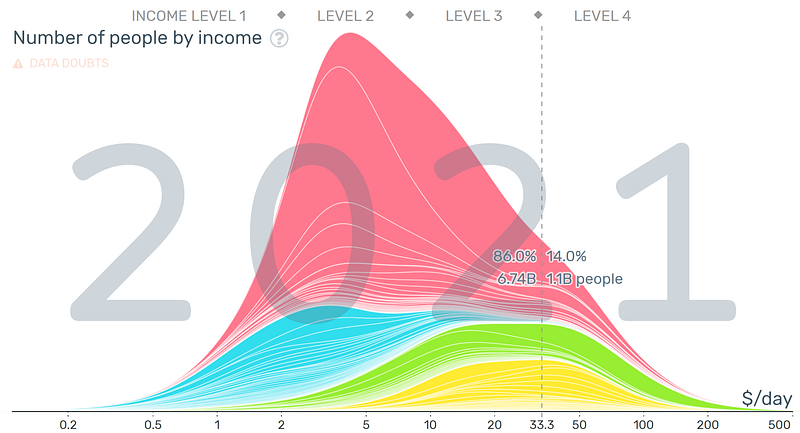
For example, sociopolitical unrest can break out, leading to the destruction of valuable infrastructure and a further decline in economic productivity. Exacerbated by high costs of energy and other industrial commodities, such a situation can quickly spiral into violent conflicts. As with cascading climate tipping points, such conflicts have the potential to spread around the world, raising the specter of another global war.
Overall, the scenario of 8+ billion mostly poor people competing over a shrinking pie presents a very dangerous prospect. The total transformation of the very foundation of our civilization within a single generation implicit in 1.5 °C pathways brings such risks into the realm of possibility. Like climate change, these are not existential risks, but they must be considered in a balanced climate-related risk assessment.
Climate alarm risks now or climate change risks later
Timing is another important element to consider in the assessment. As illustrated below, the effects of any kind of climate action currently within our power will be indistinguishable before 2040. On the other hand, negative effects that may originate from the rapid overhaul of our energy-industrial foundation will occur in the near term.
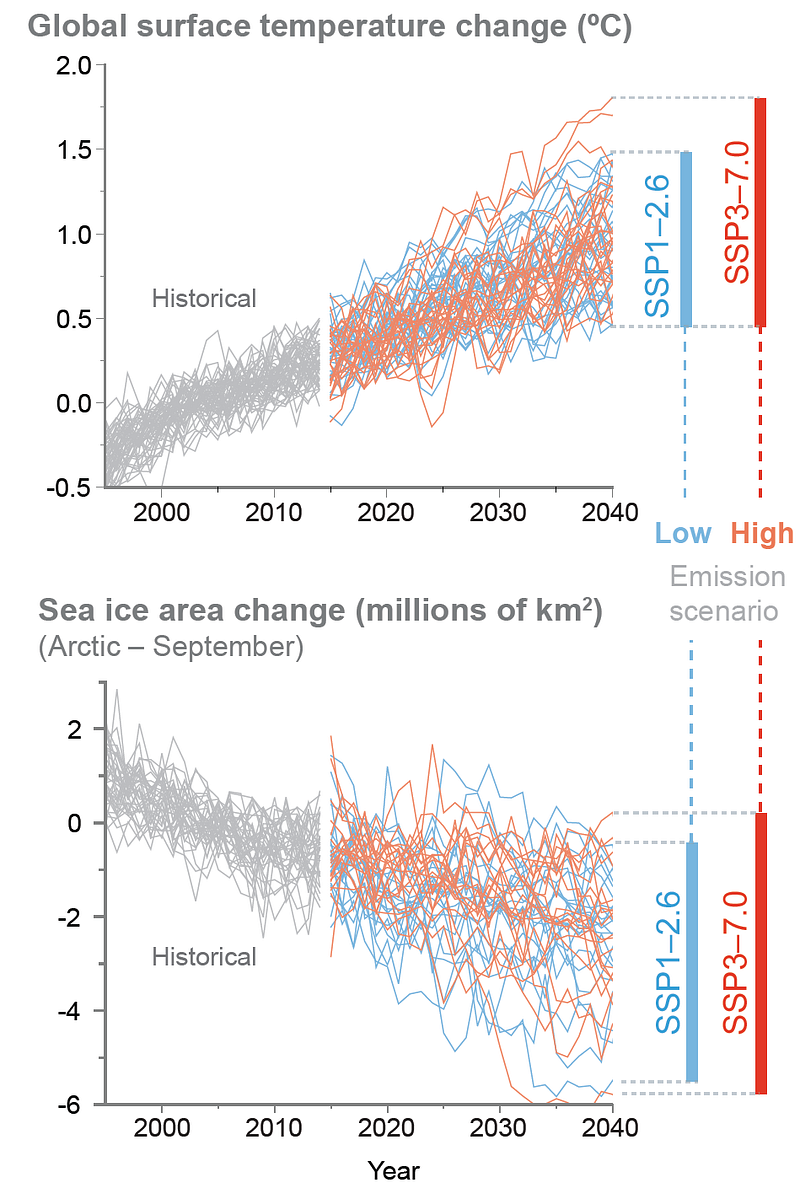
Thus, incurring the risks involved in climate alarm by pursuing a 1.5 °C decarbonization pathway will only start to significantly reduce the risks of climate change in the second half of the century. This reveals another risk of climate alarm: a reduced ability to cope with any unforeseen climate risks already baked into the system by our historical emissions. It is also possible that economic hardship resulting from drastic decarbonization pathways drives poorer nations back to unabated fossil fuels (especially abundant, locally available coal), eventually undoing any reductions in climate change risks that may have been achieved.
Overall, a solid case can be made that the risks involved in climate alarm are of a similar likelihood and severity to those involved in climate change.
Risk Mitigation Measures
No risk assessment would be complete without a discussion of risk mitigation measures. Let’s discuss the two opposing risk categories outlined in the prior sections.
Climate change risk mitigation
Here we will focus on mitigating additional risks involved in a conscious decision to target 2.5 °C of warming instead of 1.5 °C. This increases our available carbon budget by a factor of six, creating a much more feasible transition trajectory.
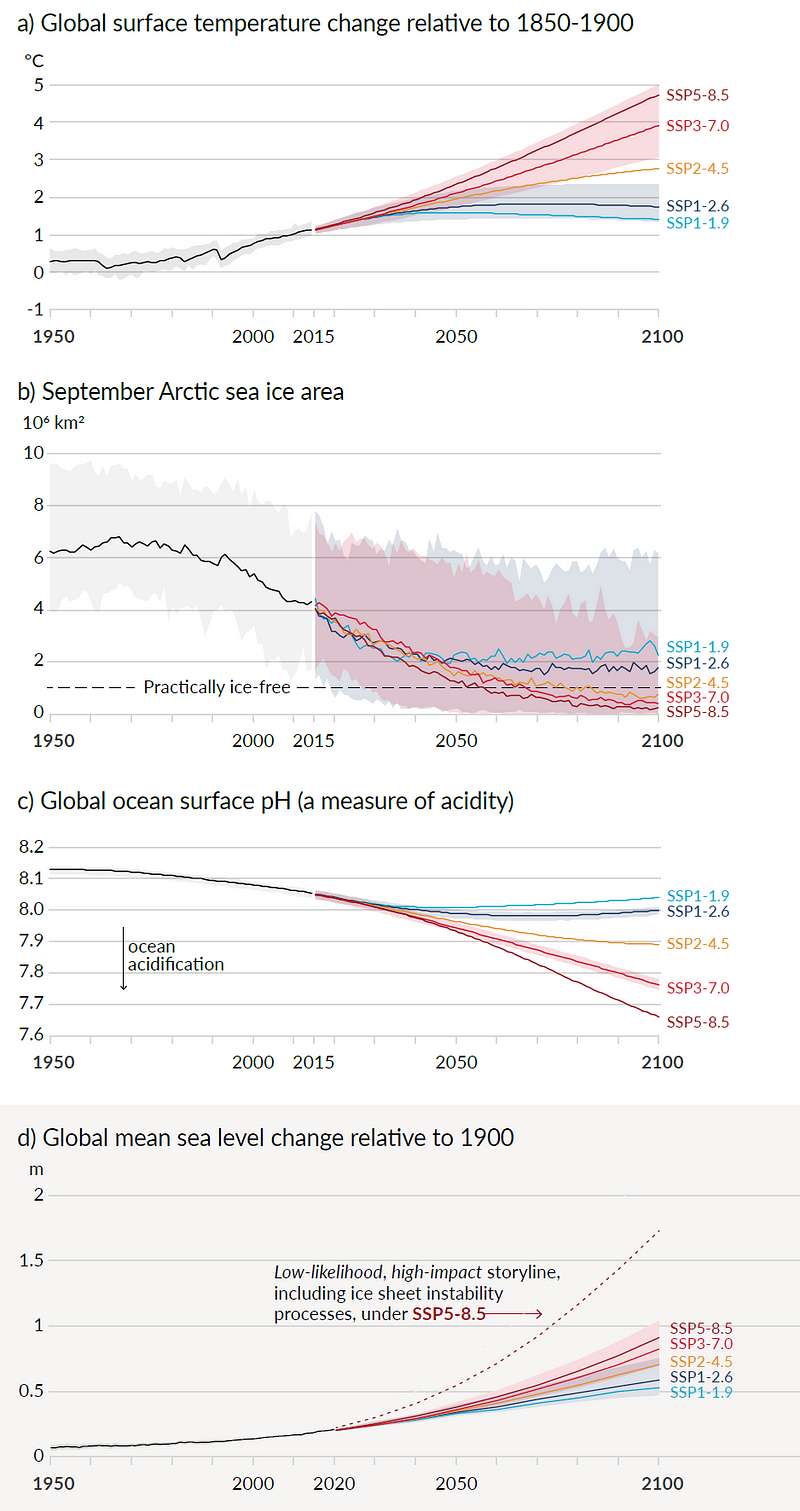
As described in the previous figure, the risks imposed by this decision will only start manifesting themselves around mid-century. The figure below gives a longer-term overview where the difference between a 1.5 °C and 2.5 °C pathway would be approximately represented by the difference between SSP1–2.6 and SSP2–4.5. As shown, the best-estimate temperature difference is about 0.2 °C by 2050 and 1 °C by 2100. Thus, we have 27 years to prepare for risks involved in 13% of additional warming and 77 years to prepare for risks involved in 67% of additional warming. The picture is similar for several other important climate change indicators.
The first and most obvious risk mitigation measure is to keep studying and monitoring climate change closely. If we better understand what we might expect, we can better prioritize and prepare, and if we can identify the manifestation of a fat-tail risk early, we can mitigate it more effectively.
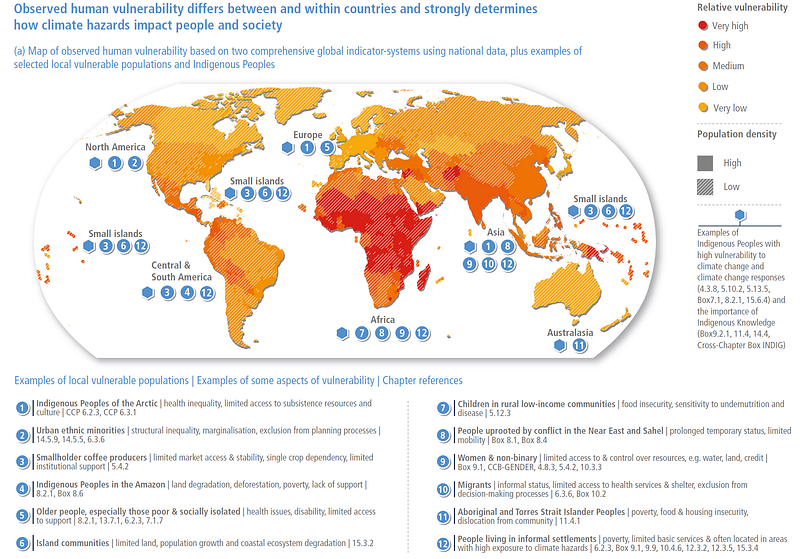
The second and arguably most important risk mitigation measure is to aid the developing world in uplifting its citizens as rapidly as possible. I do not know of a better way to mitigate climate risks than to eliminate poverty. A healthy economy can protect its citizens against extreme weather through decent housing and climate control technologies and against crop failures through well-connected markets. It can also spare plenty of productive capacity for ecosystem preservation efforts and any other adaptation or mitigation measures that may be required.
Third, we can develop and demonstrate technologies such as direct air capture and stratospheric aerosol injection. Ideally, we would not need to deploy such technologies on a massive scale, but the investments required to have them at commercial readiness would make a very cheap insurance policy against scenarios of unexpectedly large climate sensitivity.
Fourth, we can set the political frameworks for responsibility sharing and international aid in the event of fat-tail climate risks emerging. For example, countries could map out responsibilities for accepting climate refugees displaced by the crossing of tipping points that resulted in a rapid alteration of their local climate and maintain a stockpile of preserved food and other essentials to support such migrations.
Last (but not least), we must work continuously to prevent the 2.5 °C target from being pushed out further. Given that it is much more reasonably achievable than 1.5 °C, binding targets for gradual decarbonization of the biggest emitters should be feasible. These should be pursued relentlessly.
Climate alarm risk mitigation
The scope for mitigating climate alarm risks is more limited because they may start emerging at a much earlier stage, not affording time to prepare.
System-wide coordination will be central to the success of such a drastic and complex short-term overhaul of the global energy-industrial system. Free market principles cannot be relied upon because so many uneconomical investment choices would have to be made and so many chicken-and-egg conundrums will need to be solved in minimal time. Indeed, such a transition will have to be centrally planned by a group of extraordinarily competent and incorruptible people. Finding the right team is the first and most important risk mitigation measure I can identify.
Second, it will be essential to keep the support of the population and rapidly develop the required skills. Large groups of people will face large changes, and many of those changes could harm their livelihoods. Generous compensation schemes will be required to maintain the support of these citizens, and large reskilling initiatives will need to be well executed.
Lastly, objective targets must be set for various socioeconomic indicators, and contingency plans drawn up for scenarios when these targets cannot be met. In most cases, this would involve slackening the pace of the transition if the socioeconomic burden becomes too large.
Possible Crisis Responses
As the final step of the risk assessment, it can be useful to think through the scenario where an extreme risk has manifested itself and imagine what the societal response might look like.
Climate change crisis response
I’m reasonably optimistic that society will respond constructively if a clearly tangible climate emergency takes place. There are few things that unite people so effectively as a common enemy. A climate emergency may well have that effect, eliciting a global war-like effort to rapidly combat radiative forcing and generously support the battle victims.
Like any war, the costs will be great, but I’m confident that humanity will triumph in the end. The social cohesion from overcoming such a trial may even have a positive effect on humanity’s forward trajectory.
Climate alarm crisis response
A global depression caused by a malfunctioning energy-industrial system may elicit a much more divided response. There will be no unifying enemy to inspire humanity in this scenario. The more likely outcome is that everyone blames everyone else, further escalating already high tensions and reducing the efficacy of our response.
The Net-Zero Likelihood Scenario
Ultimately, this example of the world following a 1.5 °C pathway to reduce climate change risks in exchange for higher climate alarm risks is purely hypothetical because the likelihood of the world following such a pathway is practically zero. As I discussed previously, the rate at which all the complex value chains involved must be transformed is beyond the realm of possibility, and there is no way that 7 billion underdeveloped world citizens will reduce their energy consumption to make up for the shortfall.
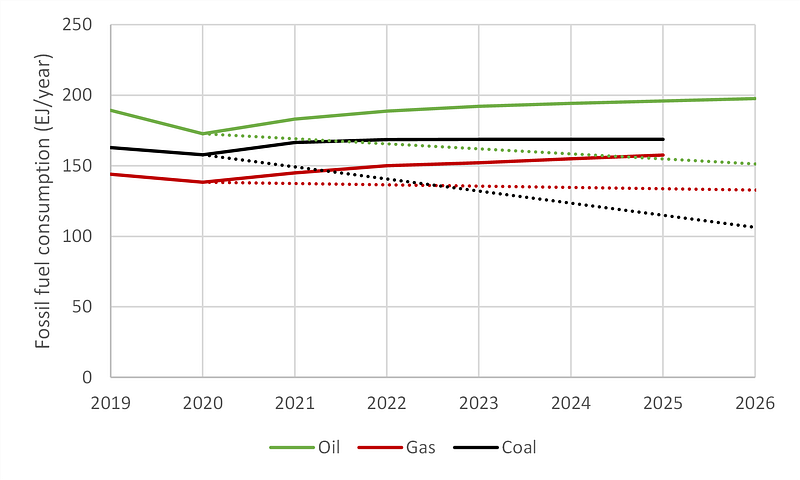
At this point, one could make the argument that the 1.5 °C pathway, although obviously impossible, still serves a purpose by maintaining decarbonization as an urgent (preferably the most urgent) global priority. But there are three big reasons why this argument is flawed.
Polarization
Any extreme big-topic argument based on highly complex and uncertain evidence must by its very nature be polarizing. If the evidence is complex and uncertain, any extreme group can cherry-pick the data required to galvanize its followers. One only needs a quick look over the climate reporting of CNN and Fox to see this in action.
As the saying goes: United we stand, divided we fall. In this case, a polarized society will only succeed in increasing climate change and climate alarm risks simultaneously. It’s the worst of both worlds.
Finding a middle ground is the only way to make real progress. That is why I recommend a 2.5 °C target as a reasonable compromise between the risks of climate change and the risks of climate alarm.
Neglected solutions
Even though the real world is rapidly diverging from the 1.5 °C pathway, the philosophy behind it is still driving climate action. Specifically, the emphasis remains on pushing currently available technologies at full speed in pursuit of a total system transformation based on wind, solar, and electrification. In parallel, fossil fuels must be rapidly phased out.
Nuclear is only now seeing glimmers of revival as the world slowly accepts that wind and solar cannot do everything. The possibility that fossil fuels can retain a major role via CO2 capture and storage is still broadly dismissed, mainly because fossil fuels are viewed as the enemy. And a vast array of demand-side solutions remain untapped because the technology-forcing policies driving green technology deployment cannot be practically applied to so many individual solutions.
We have so many tools at our disposal, and we must give all of them a fair opportunity to contribute if we are to accelerate decarbonization without incurring serious socioeconomic risks. That is why I advocate for a CO2 tax and the removal of all technology-forcing policies so that the full decarbonization potential of the economy can be accessed.
Carbon tunnel vision
If current trends continue, I fear the 2020s will go down as a lost decade where minor progress with greenhouse gas emissions comes at a great societal cost in terms of lost economic upliftment. Such a scenario looks increasingly likely as climate change is promoted as the world’s premier problem and the 1.5 °C philosophy as its premier solution.
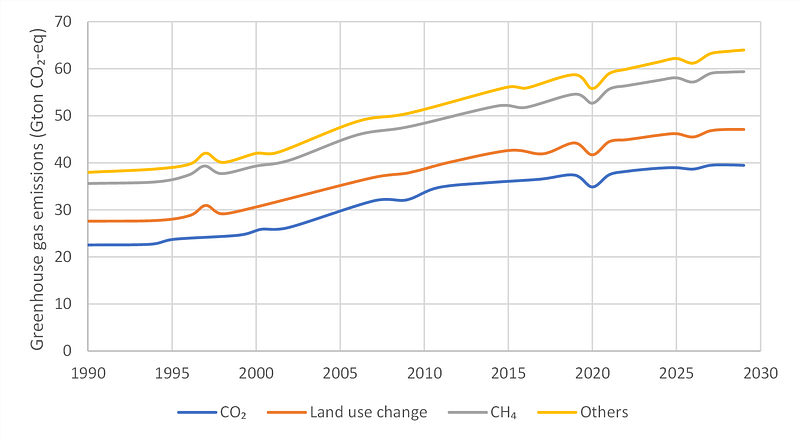
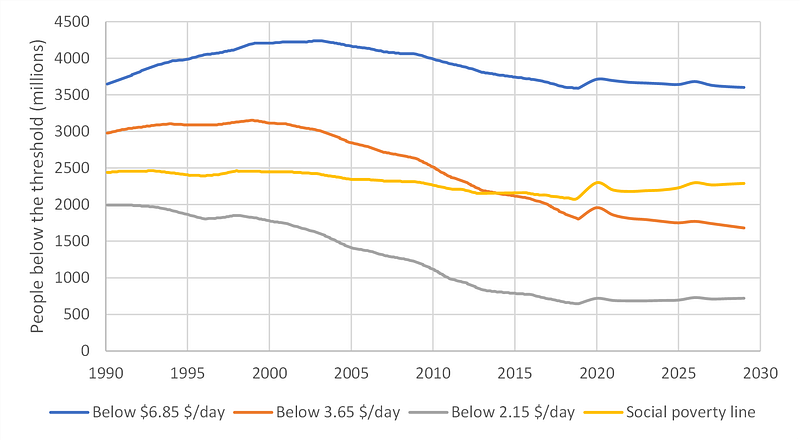
The fact is that climate change is just one of many serious global challenges before us. Promoting the climate problem above all else brings serious additional risks from neglecting or even exacerbating several other serious problems (another crisis-cascade-type risk). That is why I strive to build a complete and objective overview of our biggest global challenges and try to develop holistic solutions from an understanding of the complete picture.
Final Thoughts
In my opinion, a rational risk assessment based on the information currently at our disposal favors a moderate response targeting a global temperature rise around 2.5 °C rather than the sub-2 °C targets currently being pursued. The main reasons can be summarized as follows:
- Fat-tail risks involved in an additional 1 °C of warming are comparable to those involved in attempting a complete overhaul of the foundation of our society within a single generation.
- The risks of additional warming from a 2.5 °C pathway will only start emerging gradually after 2050, giving us several decades to put risk mitigation measures in place.
- If a fat-tail risk does manifest itself, our response may be decidedly more united in a climate crisis scenario than in an economic depression caused by a damaged energy-industrial system.
- A 2.5 °C target is actually achievable, whereas the 1.5 °C carbon budget may well already be exhausted by the time global emissions peak.
- The continued pursuit of extreme targets such as 1.5 °C increases polarization, excludes many potential solutions, and distracts from other important global problems.
So, that’s my opinion. What is yours?