avatarVictoria Ichizli-Bartels

Free AI web copilot to create summaries, insights and extended knowledge, download it at here

5007

Abstract

quote><blockquote id="768a"><p>— Jane McGonigal, Reality Is Broken: Why Games Make Us Better and How They Can Change the World</p></blockquote><p id="7f2e">So those limits to your project or activity put there either by yourself or someone else, are some of the factors that make your project a game.</p><h1 id="2721">Modifying the rules by altering the limits</h1><p id="3514"><i>A question:</i> What do game designers do with the rules they are keen about if they don’t contribute to the excitement and engagement of the game’s players?</p><p id="53fc">They improve the rules.</p><p id="fe2f">So instead of complaining about all the things we need to do in the project, we can choose to see how to improve the rules so that the players of that project game, who are ourselves, enjoy the process more.</p><p id="6621">There are no constraints to creativity here, and the easiest way to identify great and fun rules is to get inspired by other games.</p><p id="a0c9">Here is the story where I, among others, related how one of my chat partners had the idea of using figurines on a board to track the progress of a project:</p><div id="9ce4" class="link-block"> <a href="https://readmedium.com/how-to-see-what-we-do-as-games-dfe4668bcd81"> <div> <div> <h2>How To See What We Do As Games</h2> <div><h3>And how to get inspired by and draw similarities from games</h3></div> <div><p>medium.com</p></div> </div> <div> <div style="background-image: url(https://miro.readmedium.com/v2/resize:fit:320/0*KCewCcikaM44QIfw)"></div> </div> </div> </a> </div><p id="9903">So the rule would be to include the figurine movement on the board after each small step in the project. It could be considered silly and unnecessary, but with the element of fun it adds, it will increase motivation and promote further progress in the project.</p><p id="578b">Thus, think of games that come to your mind and consider how you could use their elements in your project games. Don’t judge the ideas that appear.</p><h1 id="8853">The sillier the limit, the better</h1><p id="1e58">Here’s a quick game scenario that came to my mind as I was writing this article.</p><p id="8144">Imagine you have an e-mail you need to write, which you have procrastinated about for some time. Every time you think of this e-mail, you cringe or at least frown, feeling deeply uneasy.</p><p id="dd3f">So you notice your discomfort and pick up the book containing this article in the hopes of getting an idea of what to do. Then you read the paragraphs above. And suddenly, you have this image of Super Mario hopping and running in your head.</p><p id="dc2e">How could you use that image? You could add a rule for this mini-game, to stand up and hop around your computer chair three times before you sit down and write the e-mail.</p><p id="c07e">What would this achieve?</p><p id="ed91">You will probably chuckle at the silliness of the idea. But the grin will reverse the frown you had when previously thinking about writing the e-mail. And the smile still lingering on your face might also positively affect the language with which you’ll formulate the e-mail. You might also observe yourself being more present and aware of the topic you need to address, and you will do so creatively.</p><h1 id="d7ce">You have all you need to set the right limits.</h1><p id="1685">You don’t have to develop rules too far ahead. If you need immediate help with something, then apply <a href="https://readmedium.com/how-to-turn-something-or-anything-into-games-7bd8746e5958">Self-Gamification</a> (= turn your life into fun games), that is, get interested in what is happening and how you are feeling, see what ideas come from your awareness of games, and identify how you could use them right now in your project, for its next smallest and effortless step.</p><p id="c971">Thus, the power of <a href="https://readmedium.com/what-is-the-ultimate-tool-to-see-your-business-as-a-game-aaf1272e50b9">awareness</a> and <a href="https://readmedium.com/how-to-turn-something-or-anything-into-games-7bd8746e5958">kaizen</a> will be enhanced with the power of fun that comes from <a href="https://readmedium.com/a-few-more-definitions-for-your-gameful-life-glossary-7b6917eadf80">game design</a>.</p><p id="e3b0"><b><i>Remember, you are the designer and have all the freedom you need.</i></b></p><p id="b889">But remember to use the rules and elements of your favorite games as an inspiration or idea for a recipe, not as a prescription. And don’t stop observing yourself non-judgmentally. If you notice yourself escaping by designing sophisticated — even if very fun — rules for your project games, then you know that you stopped playing the game you initially wanted to play and started playing another.</p><p id="2713">As with everything else, the following applies:</p><p id="f7a0">The simpler the rules

Options

, the better.</p><h1 id="7617">Considering the rules in your project game non-judgmentally</h1><p id="e6b1">Before I finish this article, I would like to share a lesson I learned from my son when he was developing his own card games.</p><p id="5892">Once, as he introduced his new game to me, he gave me an unbeatable card. He wanted to do me a favor and to make the game more fun for me. He assumed that if I kept on winning, then I would have more fun. We played the game with that unbeatable card, but it became clear to both of us very quickly that each component in a game (in this case, the playing cards) had to have a weak side for the game to remain engaging for all of its players.</p><blockquote id="2bb1"><p>[A side-note: <a href="undefined">Sarah Le-Fevre</a>, an expert in game-based learning design and delivery, and LEGO® SERIOUS PLAY® facilitator, who read a previous version of my book containing this article, pointed out that the “Jokulhaups” card in the game “Magic: The Gathering” was banned from tournament play for this very reason, for being invincible. The card has the following description: <a href="https://www.cardkingdom.com/mtg/5th-edition/jokulhaups">“Destroy all artifacts, creatures, and lands. They can’t be regenerated.”</a>]</p></blockquote><p id="fbb2">Even for the winning player, the lack of dynamic in a game is both boring and tiresome in the end.</p><p id="f3dd"><b><i>Every game needs tension and unexpected moments.</i></b></p><p id="fb2b">The same applies when you adjust the rules of your project and project management games.</p><p id="4fc5">If you have an activity that beats them all, in other words, to which you often escape, limit the number of points or even give yourself negative points or loss of virtual life or similar. But be careful with those negative points. You might start using them to punish yourself.</p><p id="ea77"><b><i>The self-motivational games are not there for punishment. You create them to uplift yourself.</i></b></p><h1 id="6c61">A note to this article:</h1><p id="2698"><i>It is a modified excerpt from <a href="https://www.amazon.com/dp/B07SV46VPP">Self-Gamification Happiness Formula: How to Turn Your Life into Fun Games</a>.</i></p><figure id="d8da"><img src="https://cdn-images-1.readmedium.com/v2/resize:fit:800/0*OPcMMHoBpBcdUGEz.png"><figcaption><a href="https://www.amazon.com/dp/B07SV46VPP">Self-Gamification Happiness Formula</a></figcaption></figure><h1 id="38ce">Thank you for reading!</h1><p id="df8c">I hope you enjoyed this article, and it gave you ideas on how you can modify the rules in your project games to secure your engagement and enjoyment of the project or activity at hand. If you liked what you have just read, then in addition to those quoted above, you might also enjoy these stories:</p><div id="84a5" class="link-block"> <a href="https://readmedium.com/what-is-the-setup-for-your-real-life-games-63d0cb777785"> <div> <div> <h2>What is the Setup for Your Real-Life Games?</h2> <div><h3>And how to study it</h3></div> <div><p>medium.com</p></div> </div> <div> <div style="background-image: url(https://miro.readmedium.com/v2/resize:fit:320/0*GSVUYXfrJqZyavHh)"></div> </div> </div> </a> </div><div id="cdba" class="link-block"> <a href="https://readmedium.com/turning-a-hated-assignment-into-fun-games-fe172f4d0545"> <div> <div> <h2>Turning a Hated Assignment into Fun Games</h2> <div><h3>And what I learned while assisting my son with it</h3></div> <div><p>medium.com</p></div> </div> <div> <div style="background-image: url(https://miro.readmedium.com/v2/resize:fit:320/1*qCsdYz6FBk95iSFm77i8tA.jpeg)"></div> </div> </div> </a> </div><div id="8746" class="link-block"> <a href="https://readmedium.com/if-you-think-your-reality-is-full-of-obstacles-add-some-more-774fbdb61dc1"> <div> <div> <h2>If You Think Your Reality Is Full of Obstacles, Add Some More</h2> <div><h3>Do as the game designers do — the sillier the obstacles, the better.</h3></div> <div><p>medium.com</p></div> </div> <div> <div style="background-image: url(https://miro.readmedium.com/v2/resize:fit:320/0*LGEIHqci84w7c3XD)"></div> </div> </div> </a> </div><p id="0296"><b>P.S.</b> To get an “awareness booster” that will help you disentangle any tough project and a short story that could provide for that first advice of taking time off your stagnating project, subscribe to my newsletter, <a href="https://www.victoriaichizlibartels.com/subscribe-to-victorias-blog/">Optimist Writer</a>.</p></article></body>

There Are No Limits in Setting Fun Limits

The rules in your project games
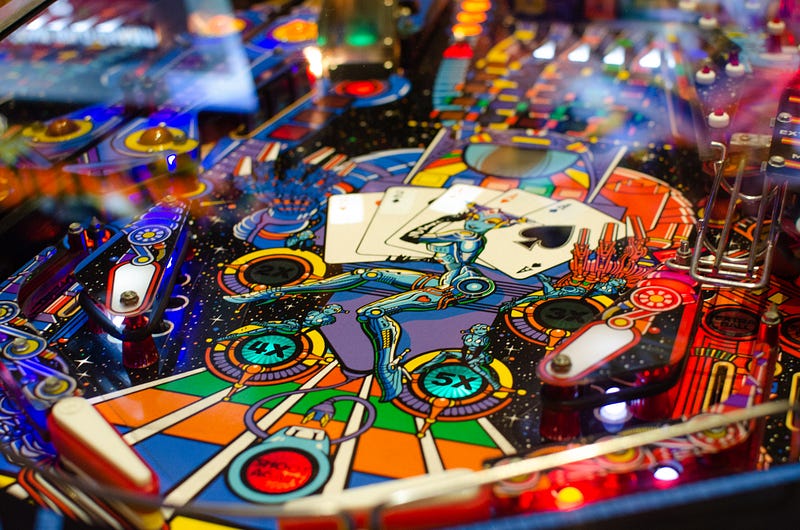
Photo by Heather McKean on Unsplash

“The rules place limitations on how players can achieve the goal. By removing or limiting the obvious ways of getting to the goal, the rules push players to explore previous uncharted possibility spaces. They unleash creativity and foster strategic thinking.”

— Jane McGonigal, Reality Is Broken: Why Games Make Us Better and How They Can Change the World

Resolving the misconception about the limits set up by rules

It’s worth repeating the quote above and savoring this bit:

The rules “unleash creativity and foster strategic thinking.”

Isn’t this awareness coming from games amazing? Have you ever complained about the rules set up in a project? I know I did!

Before I learned that rules in games promote creativity, and before I started taking an anthropological view of myself and the world around me, I felt that rules were wrong and limited creativity. But now I realize that they are not. They contribute to the fun factor in games. And if I view my projects as games, then the rules become fun in my projects too.

Simple limits, simple rules

If you have difficulty seeing the rules of what you do like those of a game, you could increase the fun factor by adding your own rules. Such as setting a timer as I did in my first self-motivational game framework, 5 Minute Perseverance Game.

The rules of the 5 Minute Perseverance Game are straightforward: you have to spend five minutes every day working on the project for one month.

If you manage to accomplish these five minutes in any one day, you get one point. If you work on it for a bit, but less than five minutes, you get half a point. If you work on it for more than five minutes, you still only get one point.

The points and half-points you haven’t earned go to your procrastinating self (who you are playing against). So yes, there are precise rules for this game, as well as for its possible variants.

Challenges coming from limitations

I suggest that you take a look at the project you either want or have committed to carrying out, and determine what the rules are: the deadlines, the way you should carry out the task, the format you need to deliver the results in, and so on.

And first, become aware that without those, you wouldn’t have a challenge.

In games, the challenges ignite fun and boost motivation. Here is another checkpoint where drawing parallels between real-life projects and games can be utterly supportive. Without those challenges, the task at hand might become more straightforward, but it would be boring, and you wouldn’t learn anything from it, which is the most valuable asset for us humans.

Unnecessary limits and their worth

The more I read about games and gamification, the more I encounter golf being used as an example of how rules contribute to the engagement and fun factor of the whole process:

“As a golfer, you have a clear goal: to get a ball in a series of very small holes, with fewer tries than anyone else. If you weren’t playing a game, you’d achieve this goal the most efficient way possible: you’d walk right up to each hole and drop the ball in with your hand. What makes golf a game is that you willingly agree to stand really far away from each hole and swing at the ball with a club. Golf is engaging exactly because you, along with all the other players, have agreed to make the work more challenging than it has any reasonable right to be.”

— Jane McGonigal, Reality Is Broken: Why Games Make Us Better and How They Can Change the World

So those limits to your project or activity put there either by yourself or someone else, are some of the factors that make your project a game.

Modifying the rules by altering the limits

A question: What do game designers do with the rules they are keen about if they don’t contribute to the excitement and engagement of the game’s players?

They improve the rules.

So instead of complaining about all the things we need to do in the project, we can choose to see how to improve the rules so that the players of that project game, who are ourselves, enjoy the process more.

There are no constraints to creativity here, and the easiest way to identify great and fun rules is to get inspired by other games.

Here is the story where I, among others, related how one of my chat partners had the idea of using figurines on a board to track the progress of a project:

So the rule would be to include the figurine movement on the board after each small step in the project. It could be considered silly and unnecessary, but with the element of fun it adds, it will increase motivation and promote further progress in the project.

Thus, think of games that come to your mind and consider how you could use their elements in your project games. Don’t judge the ideas that appear.

The sillier the limit, the better

Here’s a quick game scenario that came to my mind as I was writing this article.

Imagine you have an e-mail you need to write, which you have procrastinated about for some time. Every time you think of this e-mail, you cringe or at least frown, feeling deeply uneasy.

So you notice your discomfort and pick up the book containing this article in the hopes of getting an idea of what to do. Then you read the paragraphs above. And suddenly, you have this image of Super Mario hopping and running in your head.

How could you use that image? You could add a rule for this mini-game, to stand up and hop around your computer chair three times before you sit down and write the e-mail.

What would this achieve?

You will probably chuckle at the silliness of the idea. But the grin will reverse the frown you had when previously thinking about writing the e-mail. And the smile still lingering on your face might also positively affect the language with which you’ll formulate the e-mail. You might also observe yourself being more present and aware of the topic you need to address, and you will do so creatively.

You have all you need to set the right limits.

You don’t have to develop rules too far ahead. If you need immediate help with something, then apply Self-Gamification (= turn your life into fun games), that is, get interested in what is happening and how you are feeling, see what ideas come from your awareness of games, and identify how you could use them right now in your project, for its next smallest and effortless step.

Thus, the power of awareness and kaizen will be enhanced with the power of fun that comes from game design.

Remember, you are the designer and have all the freedom you need.

But remember to use the rules and elements of your favorite games as an inspiration or idea for a recipe, not as a prescription. And don’t stop observing yourself non-judgmentally. If you notice yourself escaping by designing sophisticated — even if very fun — rules for your project games, then you know that you stopped playing the game you initially wanted to play and started playing another.

As with everything else, the following applies:

The simpler the rules, the better.

Considering the rules in your project game non-judgmentally

Before I finish this article, I would like to share a lesson I learned from my son when he was developing his own card games.

Once, as he introduced his new game to me, he gave me an unbeatable card. He wanted to do me a favor and to make the game more fun for me. He assumed that if I kept on winning, then I would have more fun. We played the game with that unbeatable card, but it became clear to both of us very quickly that each component in a game (in this case, the playing cards) had to have a weak side for the game to remain engaging for all of its players.

[A side-note: Sarah Le-Fevre, an expert in game-based learning design and delivery, and LEGO® SERIOUS PLAY® facilitator, who read a previous version of my book containing this article, pointed out that the “Jokulhaups” card in the game “Magic: The Gathering” was banned from tournament play for this very reason, for being invincible. The card has the following description: “Destroy all artifacts, creatures, and lands. They can’t be regenerated.”]

Even for the winning player, the lack of dynamic in a game is both boring and tiresome in the end.

Every game needs tension and unexpected moments.

The same applies when you adjust the rules of your project and project management games.

If you have an activity that beats them all, in other words, to which you often escape, limit the number of points or even give yourself negative points or loss of virtual life or similar. But be careful with those negative points. You might start using them to punish yourself.

The self-motivational games are not there for punishment. You create them to uplift yourself.

A note to this article:

It is a modified excerpt from Self-Gamification Happiness Formula: How to Turn Your Life into Fun Games.
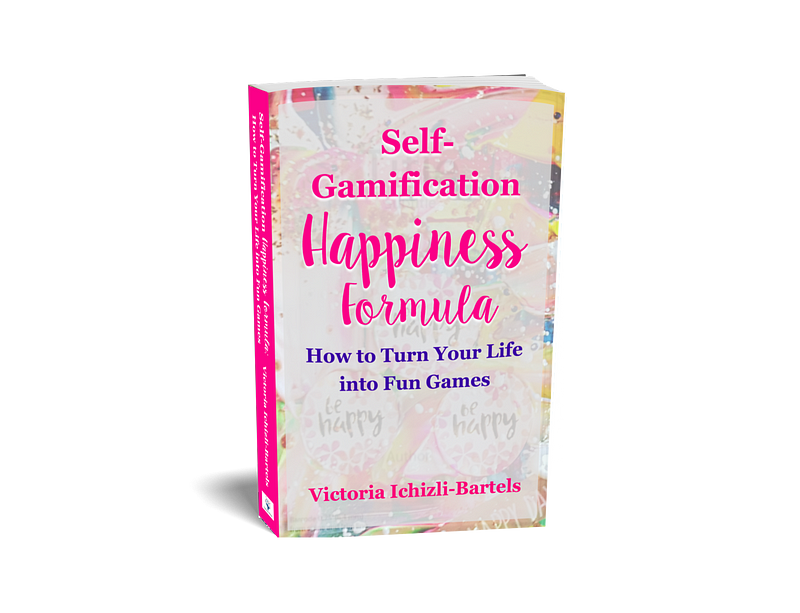
Self-Gamification Happiness Formula

Thank you for reading!

I hope you enjoyed this article, and it gave you ideas on how you can modify the rules in your project games to secure your engagement and enjoyment of the project or activity at hand. If you liked what you have just read, then in addition to those quoted above, you might also enjoy these stories:

P.S. To get an “awareness booster” that will help you disentangle any tough project and a short story that could provide for that first advice of taking time off your stagnating project, subscribe to my newsletter, Optimist Writer.

Game Design
Productivity
Self-awareness
Gaming
Ideas
Recommended from ReadMedium