
Photography, Gardening
The World of the Small
The wonders of macrophotography
Last summer I made the big switch to a mirrorless camera system. I loved my trusty old Nikon D500, but the weight of the camera and lenses was cumbersome when traveling, which I do a lot of. After a great deal of research (and vacillation — I, literally, made a 16-page spreadsheet comparing different cameras), I purchased a Nikon z7.
At the time, there were just a couple of lenses available for it. I bought the adapter, which allowed me to use my old lenses, but I was eagerly awaiting the launch of the new, lighter, lenses that would be made to go with the new camera body.
I already had a nifty little macro lens that attached to my iPhone. And it does take really nice “close-up” pictures of flowers and bugs and things. But I was excited for the arrival of Nikon’s macro lens to go with the new camera.
So, last month when they announced the launch of the 105mm 2.8 (that low number means it is letting in a lot of light, which is a good thing in photography) macro lens, I knew I just had to have it. It was for “pre-order” only, so I was expecting to have to wait a few months for it. Imagine my surprise when I returned from my trip to Alaska last week to find my new lens in its pretty little yellow and black Nikon box waiting for me!
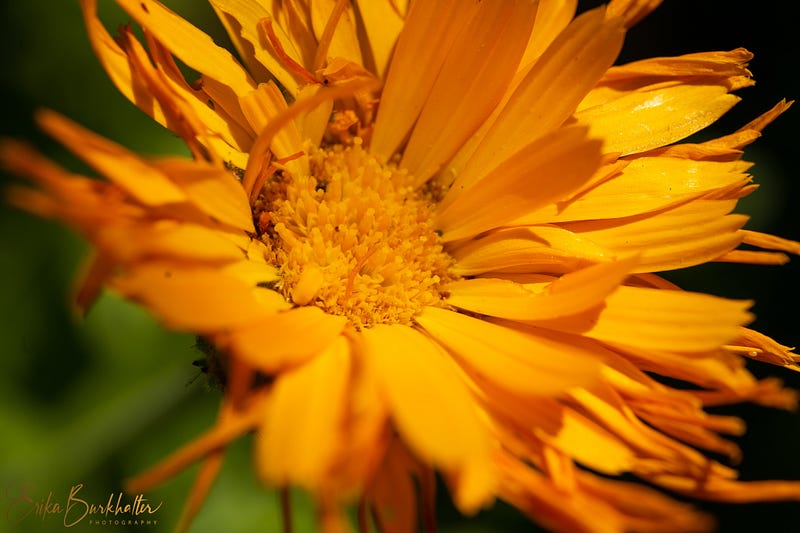
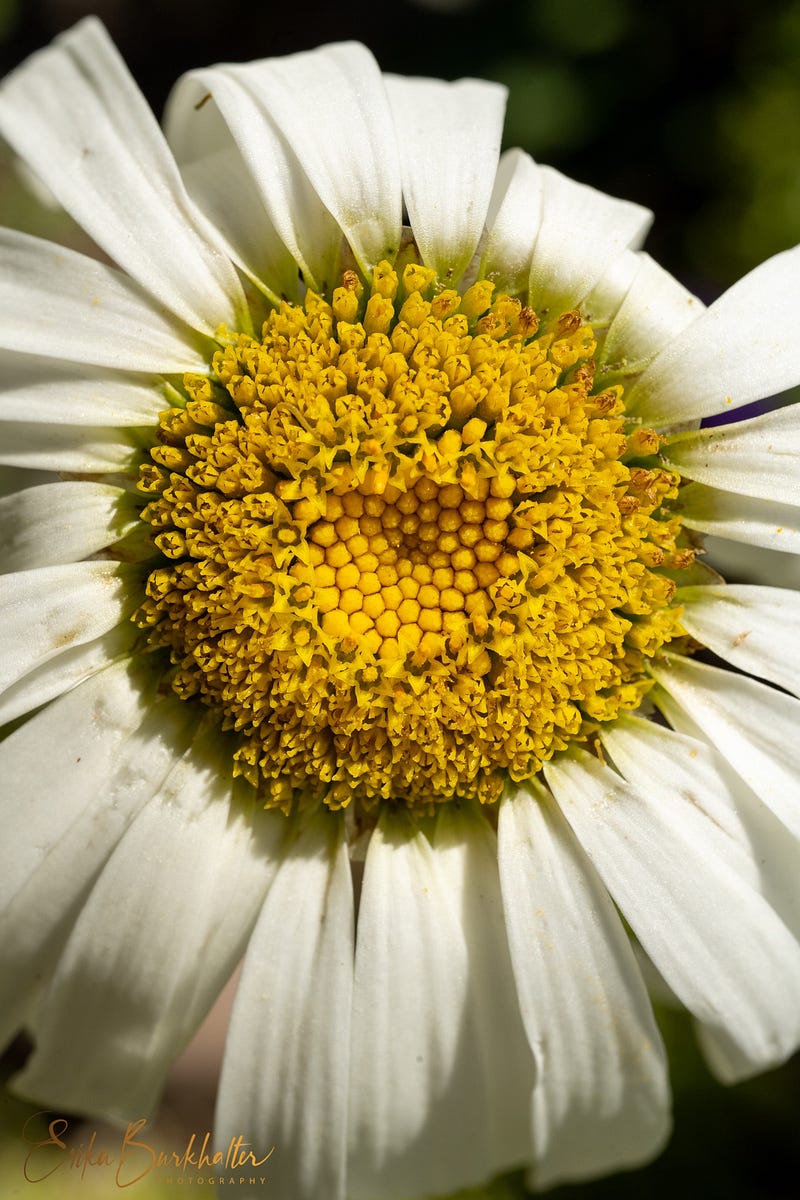
These photos are all from my garden. I am always amazed at what turns up in these macro photos, at how different the view is when you can get in so close to your subject. It’s like a whole new world opens up in front of you, one which was there all along, but which you couldn’t see with your naked eyes.
The first shot is of a dandelion flower. I know most people think that dandelions are just weeds, but, traditionally, in many cultures around the world, dandelions are known for their medicinal qualities. The name is derived from the french “dent-de-lion,” meaning “lion’s tooth.”
I have a patch of “renegade daisies” which pop up in the same spot in my garden each year — not where I have sowed the seeds, but, rather, right in the middle of things, where the light is just perfect for them. You can read about them here, if you like: Renegade Daisies. These flowers have shown me that Nature has a grander plan than we do. She doesn’t color “in the lines” and she knows how to thrive in unexpected niches.
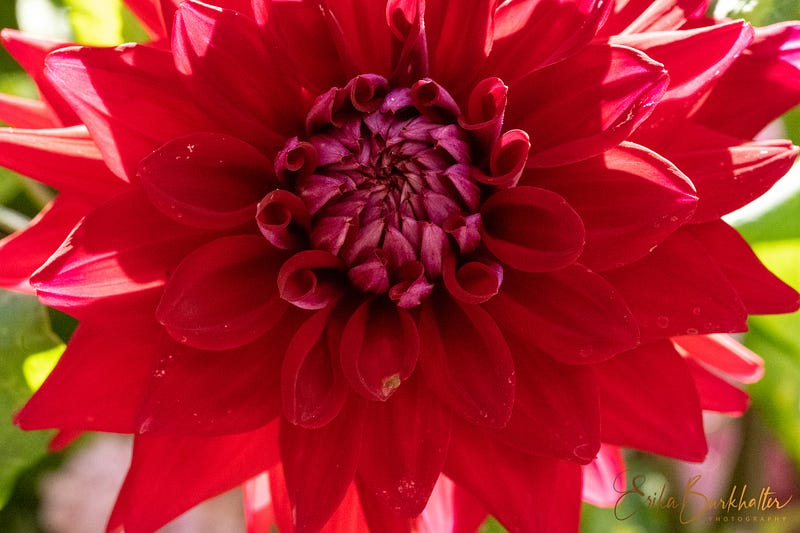
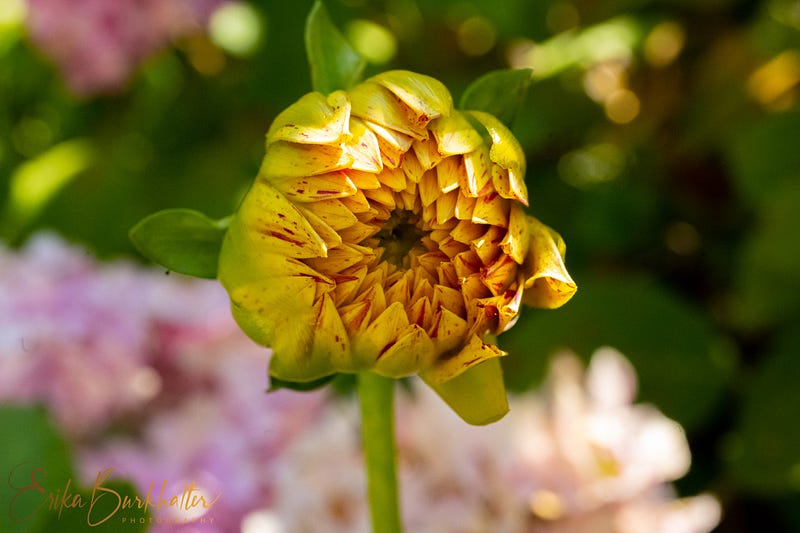
I have, also, always grown Dahlias. I have nicknamed my house “Casa de Dahlia” because they seem to just thrive here. Every year I add more bulbs to the mix and I am always delighted when they poke their little heads up each spring.
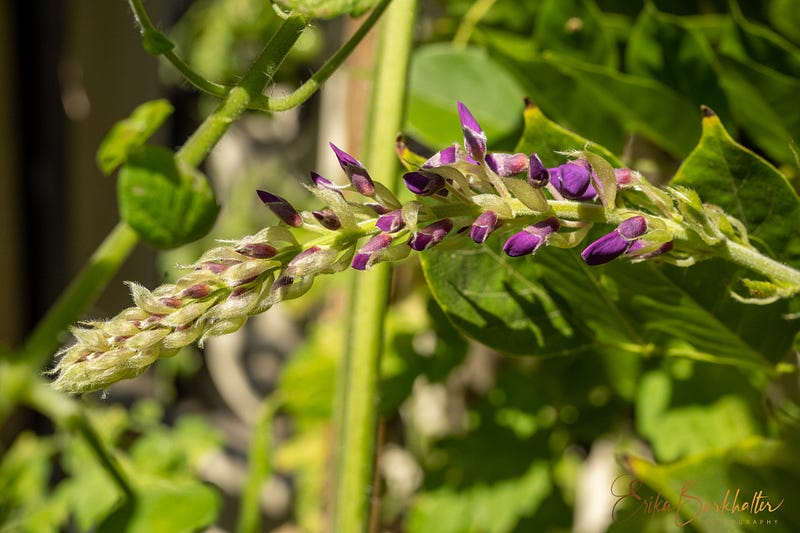
My wisteria bush seems to have had a moment of confusion this year and has begun to blossom again here and there. It normally puts on quite a show in the spring and then is done for the year. But it has decided to put on a small “second act” this time around.
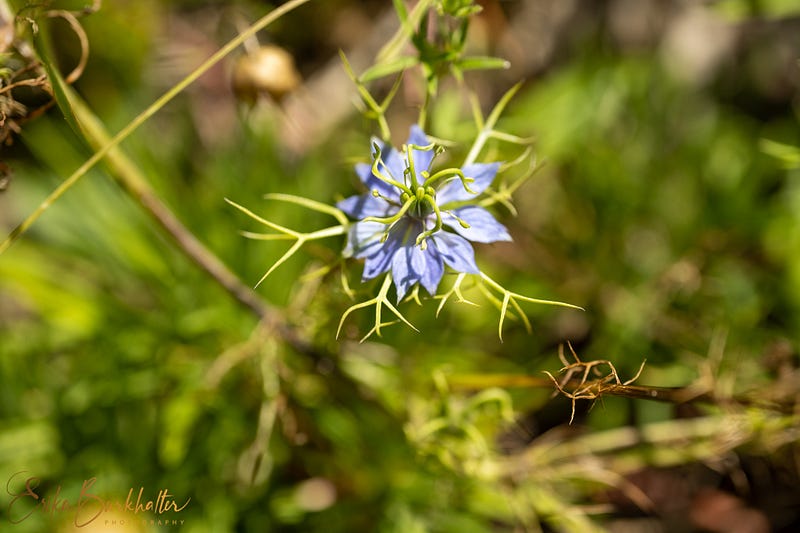
I also grow “Love in a Mist” by seed each year, and it also appears wherever it has a mind to.
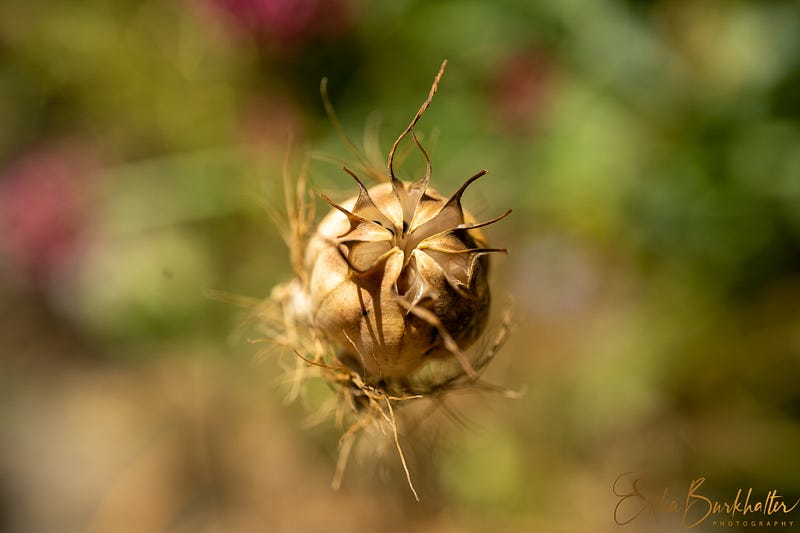
Once it is done blooming, the seed pods it produces are almost as interesting as the flowers themselves.
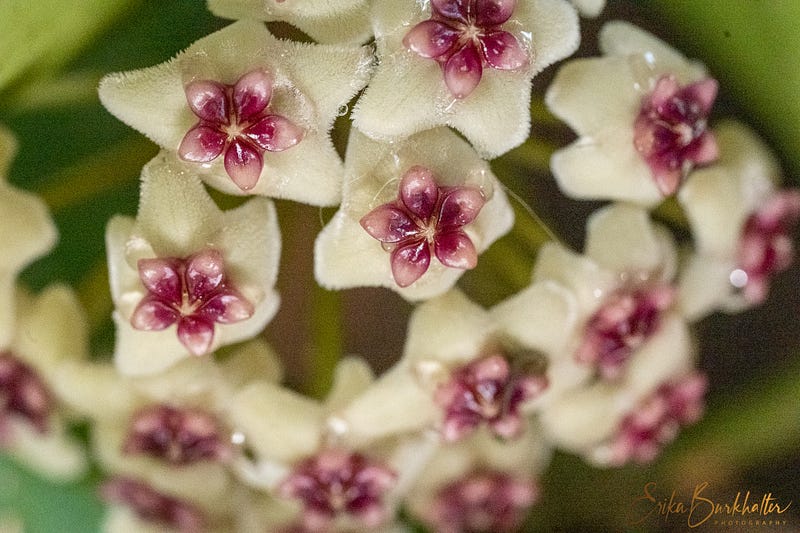
I also have a humble Hoya Carnosa, which produces a most unusual “upside-down flower.” I had this plant for years without ever noticing the waxy purple and white buds tucked under the leaves. You can read about it in “The Upside Down Flower: Learning to See with our Whole Being” if you’d like. It is not a flashy plant, and I had always thought of her as rather more of a “survivor” than a show-stopper. But you never know what you will find if you look closely enough.
Those of you who follow my stories know that I have dedicated my garden to the bees, butterflies and birds. I have certified it as a Wildlife Habitat with the National Wildlife Federation. Bees are such a critical part of the circle of life. They love lavender, and both the lavender and the bees were great subjects for my macrophotography session the other day.
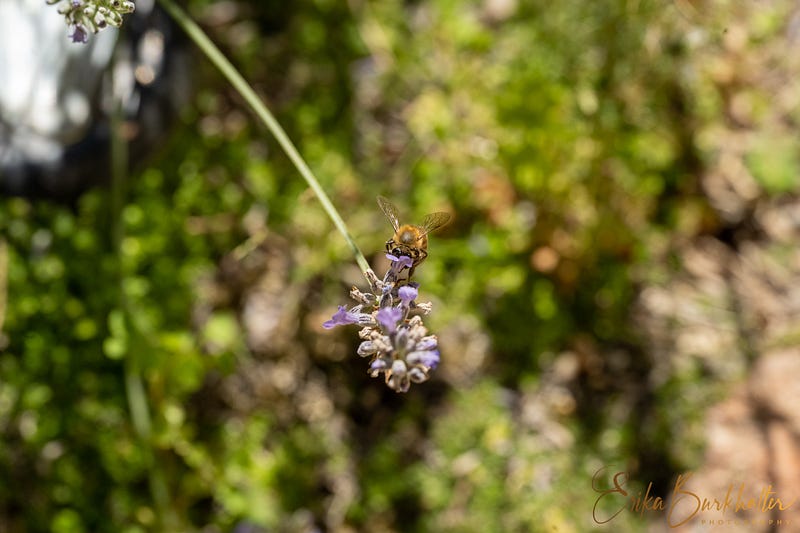
One of the things I am finding that I love about my new lens is that it is a “fixed” 105mm lens, meaning that it has no zoom feature. There seems to me to be a bit more artistry and challenge in composing a shot when you know that you have to move yourself around to get the photo you want, rather than zooming in and out to get the “shot.”
I had a lot of fun playing around in the garden with my new lens. I hope you enjoyed the photos too.
Do you take photos of your garden? Do you experiment with different lenses? This article was inspired, in part, by Ronald C. Flores-Gunkle’s wonderful “The Weeds Beneath my Feet” article published in SNAPSHOTS last week.
By the way, you might have noticed that this article was published in my new publication “Butterfly Dreams,” which I have created to house some of my photos, writings and musings about life. If you’re interested in reading more pieces like this, I’d be so honored if you’d like to follow my new publication.
Erika Burkhalter is a yogi, neurophilosopher, cat-mom, photographer, and lover of travel and nature, spreading her love and amazement for Mother Earth’s glories, one photo, poem or story at a time. (MS Neuropsychology, MA Yoga Studies).
You might also enjoy:
Photos and story ©Erika Burkhalter. All rights reserved.


