avatarRonald C. Flores-Gunkle

Free AI web copilot to create summaries, insights and extended knowledge, download it at here

2432

Abstract

PwU9DC1FJXcPRltSjag.jpeg"><figcaption>Emilia fosbergii (Red carnation)</figcaption></figure><p id="66a8">This tiny weed has the scientific (Latin) name <i>Emilia fosbergii. </i>My guide to the flowers of Puerto Rico calls it “red carnation,” probably from its (remote)<i> </i>resemblance and color to that comparatively mammoth flower. This one was growing around the same spot I concluded a dramatic fall recently (s<a href="https://rcfgunkle.medium.com/im-not-a-fall-guy-6b5ab07d150d">ee my account HERE</a>). The focus isn’t too bad considering its size: about 1/8 of an inch — and its perch on a wavering thin stem. You probably would not notice it if you were not looking for it.</p><figure id="9a13"><img src="https://cdn-images-1.readmedium.com/v2/resize:fit:800/1*t2h_sr6rx3DbDOyzYHVpNA.jpeg"><figcaption></figcaption></figure><figure id="e76b"><img src="https://cdn-images-1.readmedium.com/v2/resize:fit:800/1*YJlv6fHlk_fmntjL61Ngaw.jpeg"><figcaption>Centrosema virginiannum (Virginia’s conchita/Butterfly pea) • Arachis (Mani)</figcaption></figure><p id="cfc8">The Butterfly Pea (on the left) is “huge” at about an inch or so wide and, according to my sources, grows as an ornamental vine from the tropics to the lower half of the USA. Don’t ask me why it is called Virginia’s <i>conchita</i> here. Use your imagination. Unrelated to Conchita but closely related to the peanut (of peanut butter fame) is this Arachis. The plant is a common ground cover in Puerto Rico and right now hundreds glisten like gold along my entrance. Its common name in Spanish, <i>maní</i>, also means peanut.</p><figure id="9811"><img src="https://cdn-images-1.readmedium.com/v2/resize:fit:800/1*Q_gx8Y9ZDIn-kD-D0BSWvQ.jpeg"><figcaption></figcaption></figure><figure id="dd74"><img src="https://cdn-images-1.readmedium.com/v2/resize:fit:800/1*zRPsoRaXjMDQVKAFHKZbWg.jpeg"><figcaption>Stigmaphyllon (Amazonvine) • Tridax procumbens (Pancha/coatbuttons)</figcaption></figure><p id="4780">The stellar yellow trio on the left form part of a vine that appeared last week clinging to a Hibiscus hedge in our front yard. Neither my wife nor I had ever seen this plant before and we do not know how it got here. As the saying goes, sometimes Stigmaphyllon happens! It is native to the neotropics, according to Wiki, but that is all I know — other than that it is welcome to stay. Pancha (on the right) is ubiquitous. Until I zoomed in and revealed its

Options

complex beauty, I considered it just a midget daisy. Now I found out (Wiki) it is listed as a noxious weed and banned in several states. Poor little coatbuttons!</p><figure id="793a"><img src="https://cdn-images-1.readmedium.com/v2/resize:fit:800/1*JvlUkeLUCipDyWtEdaPL-g.jpeg"><figcaption>Rhynchospora nervosa (Star Grass / Coqui Blanco)</figcaption></figure><p id="ed32">I must have wondered more than once when cutting the grass why so many blades had white tips. Now I know. It’s Star grass — one of 5,500 species of sedges (grass-like flowering plants) that exist. If I neglect mowing too long, a whole constellation appears in my yard! Locally it is called <i>coqui blanco</i>, one of a dozen flora and fauna with <i>coqui</i> (including a noisy little tree frog) in its name.</p><figure id="f949"><img src="https://cdn-images-1.readmedium.com/v2/resize:fit:800/1*1JkiDW3JVgjpNlQGTwGYYw.jpeg"><figcaption></figcaption></figure><figure id="ecc2"><img src="https://cdn-images-1.readmedium.com/v2/resize:fit:800/1*-fmKgPVfYEYxhG3I2lltMA.jpeg"><figcaption>Commelina elegante (Cohitre azul) • Cuphea (Waxweed)</figcaption></figure><p id="e9df">I close with these two unique blossoms I had not noticed before Day 5 dragged on. I’m glad it did.</p><p id="d848">So here you have it: a really close look at 10 tiny flowers that had been growing anonymously near me for untold years! How many more of them have I not noticed? Looking closely has opened my eyes to the wee world under my feet.</p><p id="1403">What more have I missed in life?</p><p id="287c">Note: To identify the flowers for this essay, I searched <b>Flowers of Puerto Rico </b>by Edwin Miner Solá, sent photos to <a href="https://www.bing.com/visualsearch/Microsoft/FlowerIdentification">Name that plant | Bing Visual Search</a>, and consulted Wikipedia and links to its sources. Common names vary widely by area, country or region. Latin names are universal. I made every effort to confirm the accuracy of the genus and species of the ten flowers presented here, but may have erred (blame my bad eyeball)!</p><p id="a307">For more of my photo essays on Medium, <a href="https://rcfgunkle.medium.com/essays-and-other-writing-89ff2d892e85">please visit HERE</a>.</p><p id="33a8"><i>More shameless self-promotion</i>: <a href="https://rcfgunkle.medium.com/ronald-c-flores-gunkle-archive-8190c4962eb8">Here is a shortcut to all my work on Medium.</a></p></article></body>

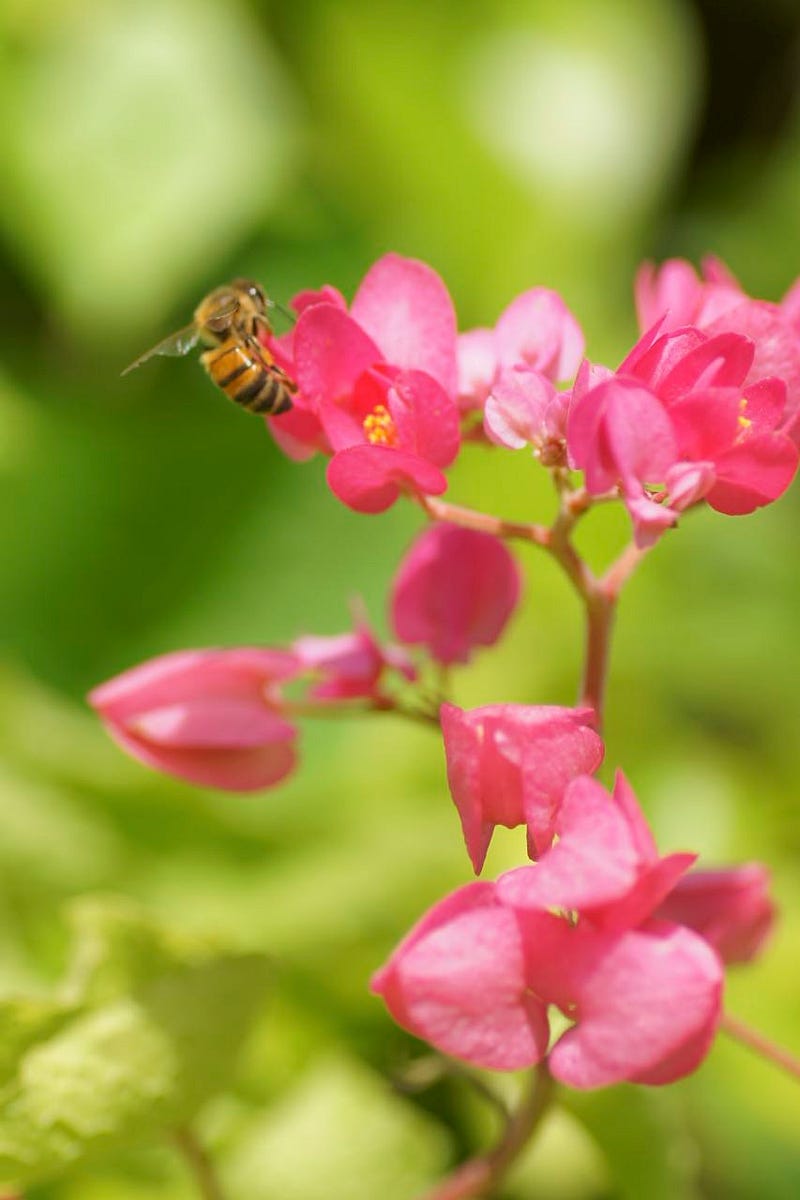
Antigonon leptopus • Bellisima Coral (and a busy bee)

The Weeds Beneath My Feet

Wonders in the grass

Please forgive my whimsical title. It is the best I can do after an exhausting photo shoot. It was supposed to be Day 5 of stalking fruit and flowers on my property in Puerto Rico. My final challenge was to get as close as possible to the smallest flowers I could find and capture them with a 90mm macro lens on my Sony SLT-A55 digital camera. However, with reshoots (I’ll explain) and research (I got compulsively involved in nomenclature), it took a lot more than a day.

All photos ©2021 R. C. Flores-Gunkle, Commercial rights reserved
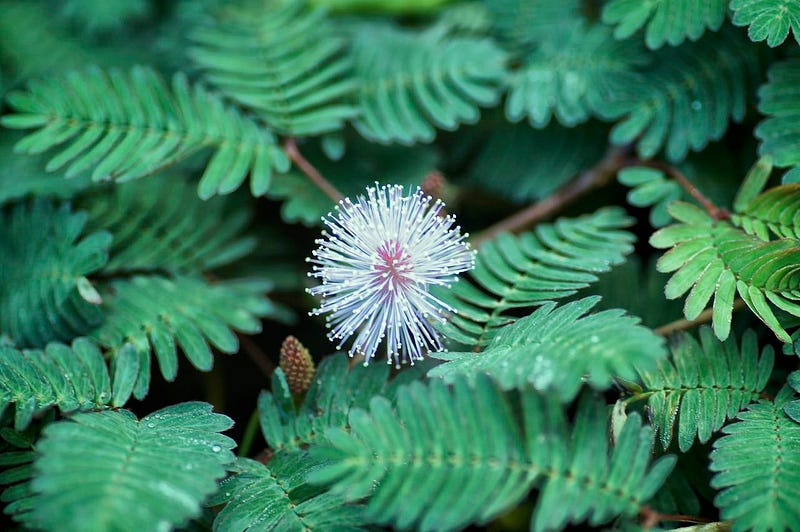
Mimosa pudica (Sensitive plant)

A problem was using that lens. It can capture subjects' actual size — and you need to get very, very close to do that. It has excellent resolution but infinitesimal depth of field. Now picture an 81-year-old man creeping through the grass, scrunched down, holding a heavy camera with a heavy lens an inch away from a tiny flower. The slightest movement of the flower or of the old man’s hands changes the minuscule portion of the flower that is in focus. Autofocus has a mind of its own, so that doesn’t work. You have to eyeball it, then move the camera a fraction until the part of the plant that you want is in focus. And I don’t have a good eyeball! The solution is squat, squint and shoot, again and again and again, then edit.

That’s my excuse for some of these captures to be slightly off. I tried and I tried. To make matters worse, the extraordinarily beautiful ball of a flower in the photo above crowns a plant that is sensitive to touch. Touch it and it cringes! I remember as a boy in Pennsylvania seeing ads for the seeds extolling the magic of a plant that shrinks when you touch it, then slowly revives. Now I live in a part of the world where it is a common weed. Above is my best shot. BTW the flower is less than 1/4 of an inch in diameter.
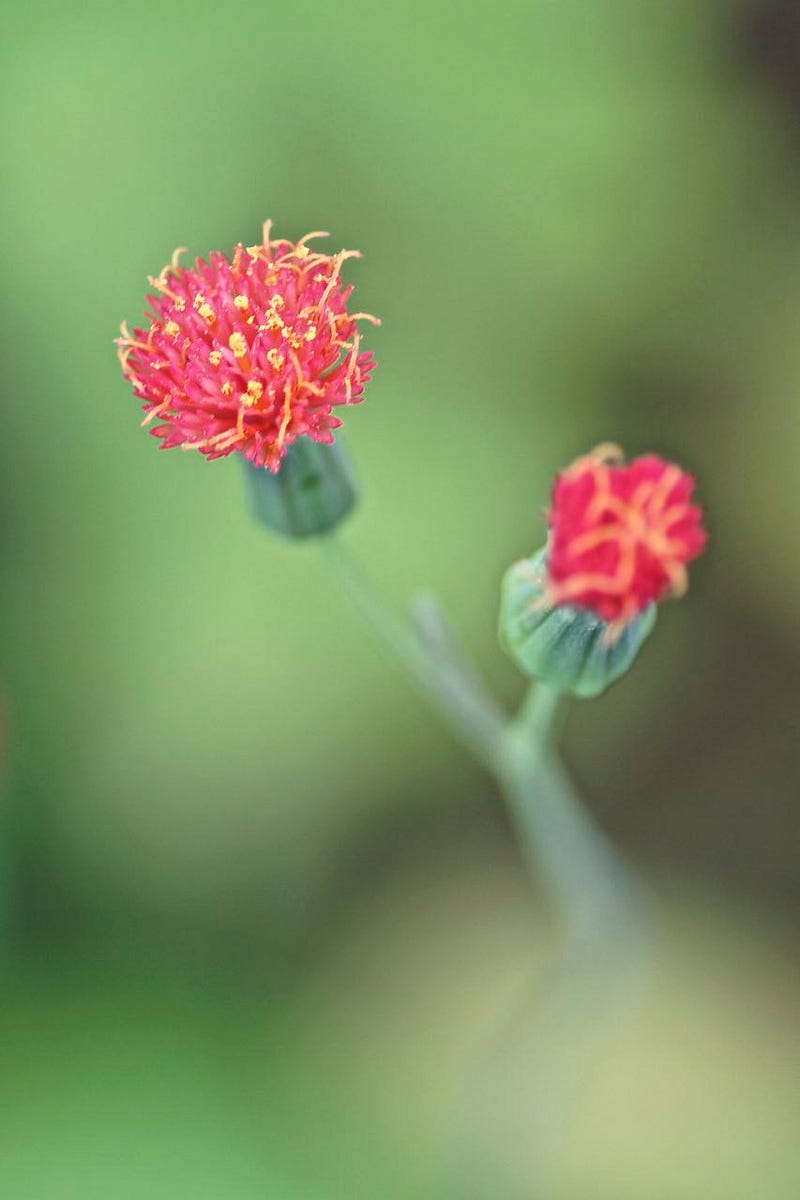
Emilia fosbergii (Red carnation)

This tiny weed has the scientific (Latin) name Emilia fosbergii. My guide to the flowers of Puerto Rico calls it “red carnation,” probably from its (remote) resemblance and color to that comparatively mammoth flower. This one was growing around the same spot I concluded a dramatic fall recently (see my account HERE). The focus isn’t too bad considering its size: about 1/8 of an inch — and its perch on a wavering thin stem. You probably would not notice it if you were not looking for it.
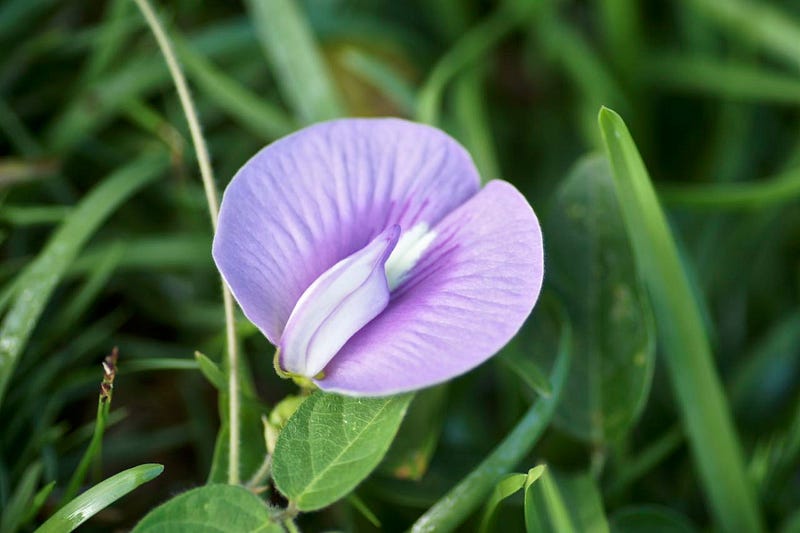
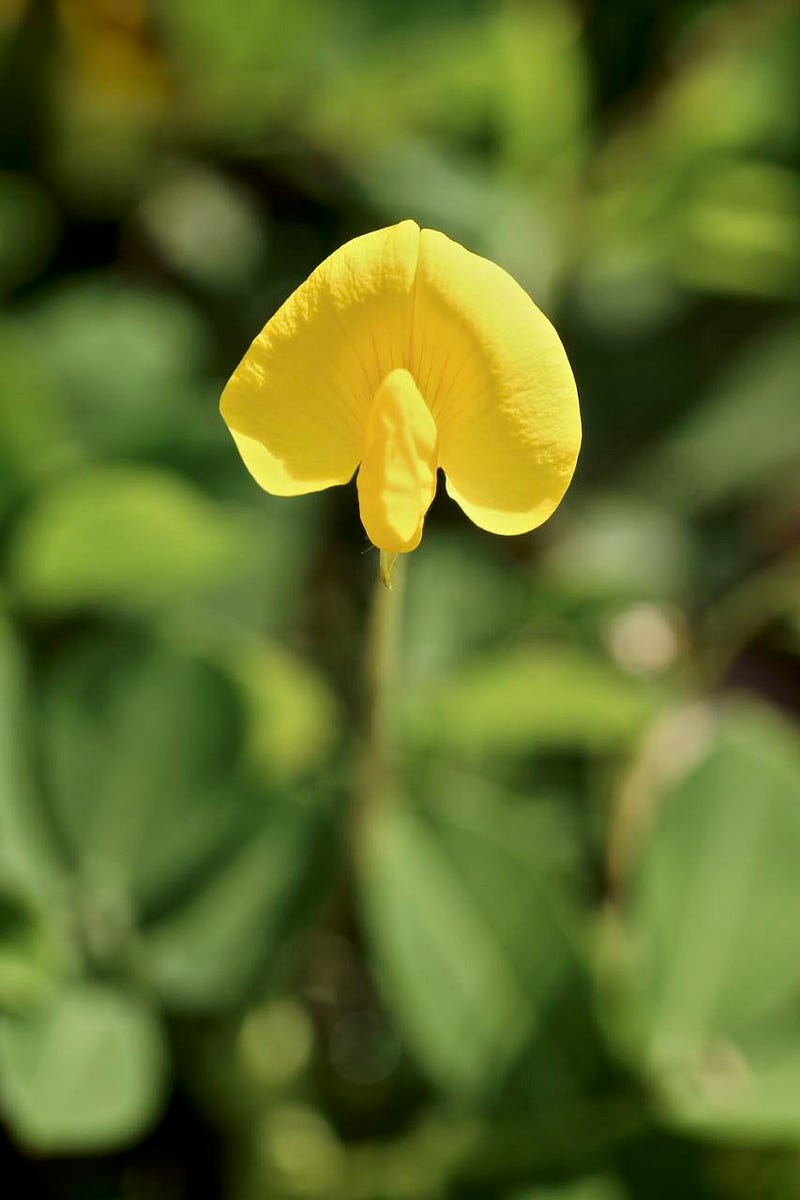
Centrosema virginiannum (Virginia’s conchita/Butterfly pea) • Arachis (Mani)

The Butterfly Pea (on the left) is “huge” at about an inch or so wide and, according to my sources, grows as an ornamental vine from the tropics to the lower half of the USA. Don’t ask me why it is called Virginia’s conchita here. Use your imagination. Unrelated to Conchita but closely related to the peanut (of peanut butter fame) is this Arachis. The plant is a common ground cover in Puerto Rico and right now hundreds glisten like gold along my entrance. Its common name in Spanish, maní, also means peanut.
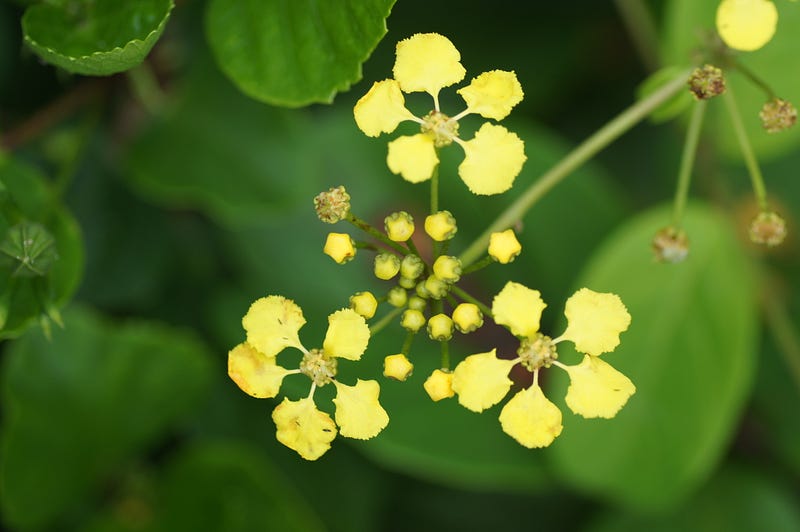
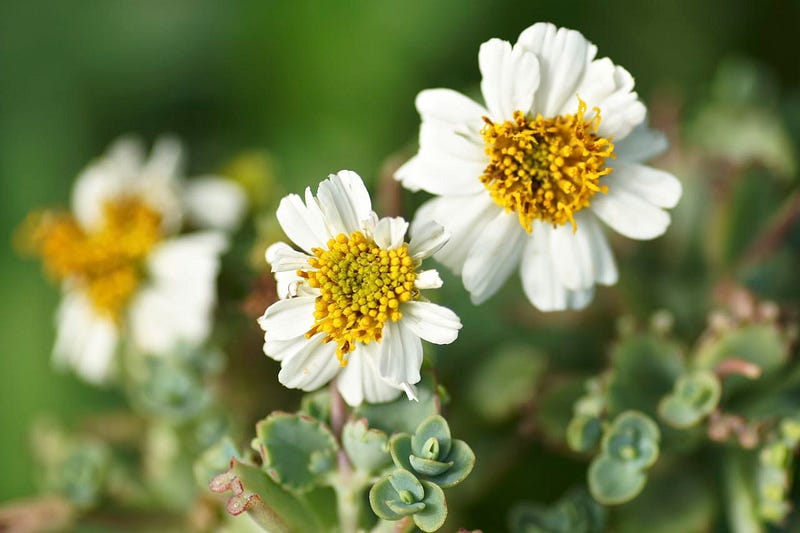
Stigmaphyllon (Amazonvine) • Tridax procumbens (Pancha/coatbuttons)

The stellar yellow trio on the left form part of a vine that appeared last week clinging to a Hibiscus hedge in our front yard. Neither my wife nor I had ever seen this plant before and we do not know how it got here. As the saying goes, sometimes Stigmaphyllon happens! It is native to the neotropics, according to Wiki, but that is all I know — other than that it is welcome to stay. Pancha (on the right) is ubiquitous. Until I zoomed in and revealed its complex beauty, I considered it just a midget daisy. Now I found out (Wiki) it is listed as a noxious weed and banned in several states. Poor little coatbuttons!
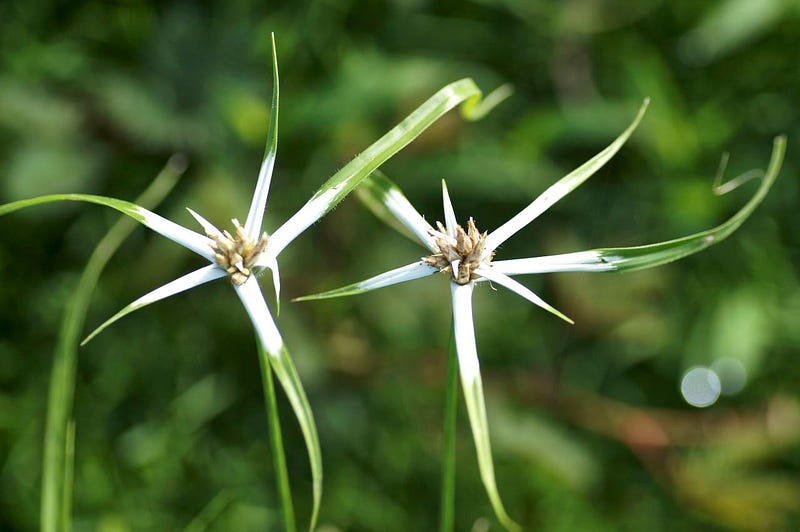
Rhynchospora nervosa (Star Grass / Coqui Blanco)

I must have wondered more than once when cutting the grass why so many blades had white tips. Now I know. It’s Star grass — one of 5,500 species of sedges (grass-like flowering plants) that exist. If I neglect mowing too long, a whole constellation appears in my yard! Locally it is called coqui blanco, one of a dozen flora and fauna with coqui (including a noisy little tree frog) in its name.
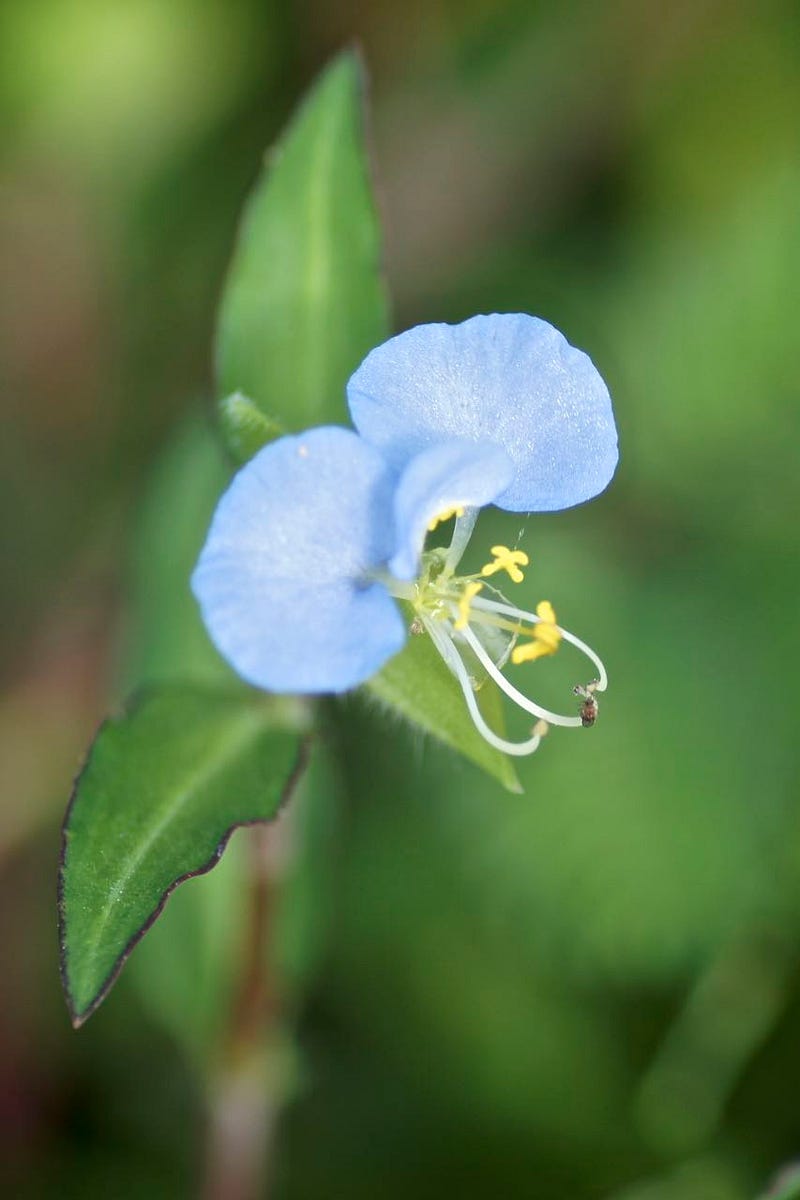
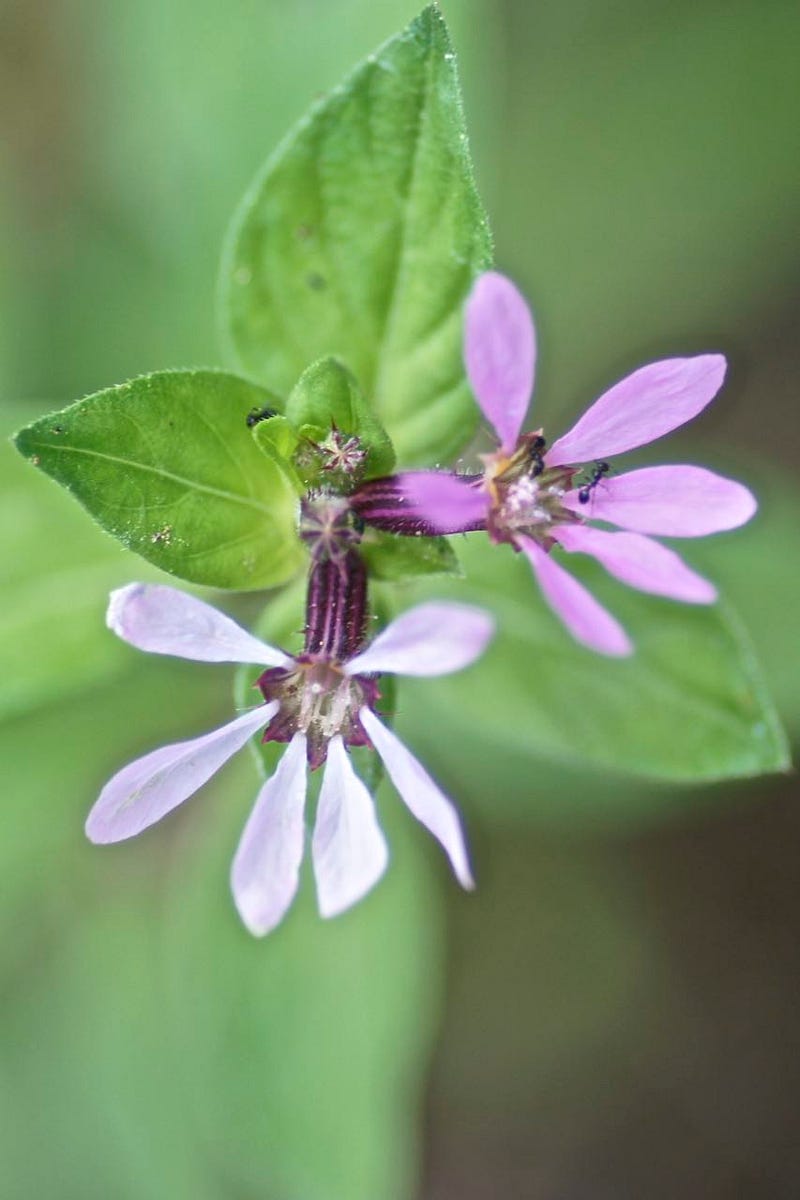
Commelina elegante (Cohitre azul) • Cuphea (Waxweed)

I close with these two unique blossoms I had not noticed before Day 5 dragged on. I’m glad it did.

So here you have it: a really close look at 10 tiny flowers that had been growing anonymously near me for untold years! How many more of them have I not noticed? Looking closely has opened my eyes to the wee world under my feet.

What more have I missed in life?

Note: To identify the flowers for this essay, I searched Flowers of Puerto Rico by Edwin Miner Solá, sent photos to Name that plant | Bing Visual Search, and consulted Wikipedia and links to its sources. Common names vary widely by area, country or region. Latin names are universal. I made every effort to confirm the accuracy of the genus and species of the ten flowers presented here, but may have erred (blame my bad eyeball)!

For more of my photo essays on Medium, please visit HERE.

More shameless self-promotion: Here is a shortcut to all my work on Medium.

Macro Photography
Wildflowers
Puerto Rico
Photo Essay
Lifestyle
Recommended from ReadMedium