avatarRandy Runtsch

Free AI web copilot to create summaries, insights and extended knowledge, download it at here

2019

Abstract

alf of the United States during the warmer months.</p><p id="8395">Green herons have a body length of about 17 inches (44 centimeters). When perched, they often hold their neck tight against their body. When they extend their neck, they appear twice as long.</p><p id="fa29">The birds prefer to live in wetlands. They eat fish, frogs, and aquatic arthropods. They eat various other invertebrates and vertebrates.</p><p id="284a">I see several green herons each year but have never seen more than one at a time. After a male bird puts on a display for a female of interest, if she likes him they will build a nest and mate. Their clutch usually consists of 2 to 6 eggs. Both parents incubate the eggs and feed the chicks after they hatch.</p><figure id="8fef"><img src="https://cdn-images-1.readmedium.com/v2/resize:fit:800/1*a8vfuqvhz85bMmb4LJ3aYQ.jpeg"><figcaption>Green heron. Photo by the author.</figcaption></figure><p id="4f34">Yesterday, I snapped photos of a specimen perched on the same log early in the morning and then at noon. As shown in the photos below, it moved forward about 15 inches (38 centimeters).</p><figure id="5fd2"><img src="https://cdn-images-1.readmedium.com/v2/resize:fit:800/0*4kTlReA435mtmXsn"><figcaption></figcaption></figure><figure id="d93e"><img src="https://cdn-images-1.readmedium.com/v2/resize:fit:800/0*V6bjsaeca_K5YQH6"><figcaption>Green heron. The first photo was taken at 7:24 am. The second photo was taken at 12:12 pm on the same day. The bird moved forward about 15 inches in nearly 4 hours. Photo by the author.</figcaption></figure><p id="0497">The green heron surprises me at every sight. Along with always-changing conditions, they bring challenges and joy to bird photography.</p><figure id="a3b6"><img src="https://cdn-images-1.readmedium.com/v2/resize:fit:800/0*Yw--QhzWBE6nwADM"><figcaption>Green heron. This is the same non-moving bird shown above. Photo by the author.</figcaption></figure><p id="944a">All photos of green herons included in this story were captu

Options

red somewhere between Rochester, Minnesota, and Trempealeau National Wildlife Refuge in western Wisconsin.</p><figure id="3af4"><img src="https://cdn-images-1.readmedium.com/v2/resize:fit:800/0*PWbHuZt26xTm6nWs"><figcaption>Turtles joined the green heron to bask in the midday sun. Green herons eat vertebrates. Could that include turtles? Photo by the author.</figcaption></figure><div id="51dc" class="link-block"> <a href="https://readmedium.com/the-birds-of-spring-part-i-62a62108991b"> <div> <div> <h2>The Birds of Spring — Part I</h2> <div><h3>undefined</h3></div> <div><p>undefined</p></div> </div> <div> <div style="background-image: url(https://miro.readmedium.com/v2/resize:fit:320/1*ynuFADg3AYtyj_m2zO7g9A.jpeg)"></div> </div> </div> </a> </div><div id="f712" class="link-block"> <a href="https://readmedium.com/the-birds-of-spring-part-ii-a47daee868e"> <div> <div> <h2>The Birds of Spring — Part II</h2> <div><h3>undefined</h3></div> <div><p>undefined</p></div> </div> <div> <div style="background-image: url(https://miro.readmedium.com/v2/resize:fit:320/0*dDw2SrVe2baJn2Dm)"></div> </div> </div> </a> </div><div id="0204" class="link-block"> <a href="https://readmedium.com/the-birds-of-spring-part-iii-1d767c612e97"> <div> <div> <h2>The Birds of Spring — Part III</h2> <div><h3>undefined</h3></div> <div><p>undefined</p></div> </div> <div> <div style="background-image: url(https://miro.readmedium.com/v2/resize:fit:320/0*QUBYOTKWAvQkyEeQ)"></div> </div> </div> </a> </div></article></body>

Birds, animals, nature, and photography

The Colorful Green Heron

Unusual birds like the green heron add excitement to the activities of bird photography and birdwatching
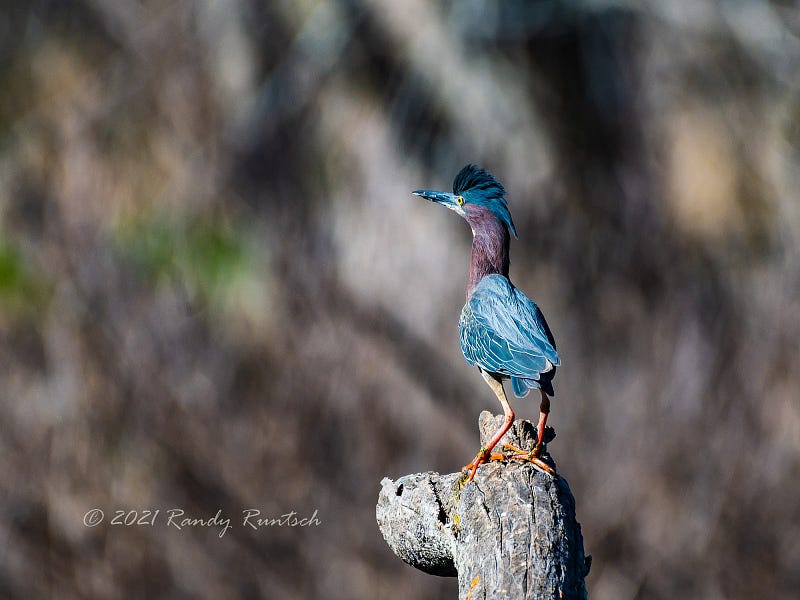
Green heron. Photo by the author.

Bird photography keeps me on my toes. Capturing a keeper photograph can involve many variables.

The weather, sky, and light fluctuate with every outing, sometimes by the minute. Birds are on the move and come and go.
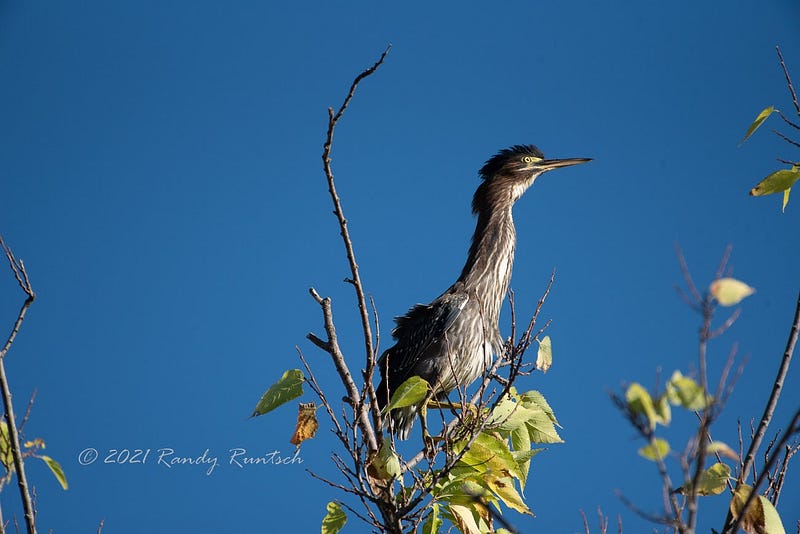
Green heron. Photo by the author.

Photographing the green heron (Butorides virescens) requires a balance of quick thinking. If I am lucky to see one, and it’s too far away for a good photo, I sneak up on it to avoid detection. Even with these precautions, it may flee.
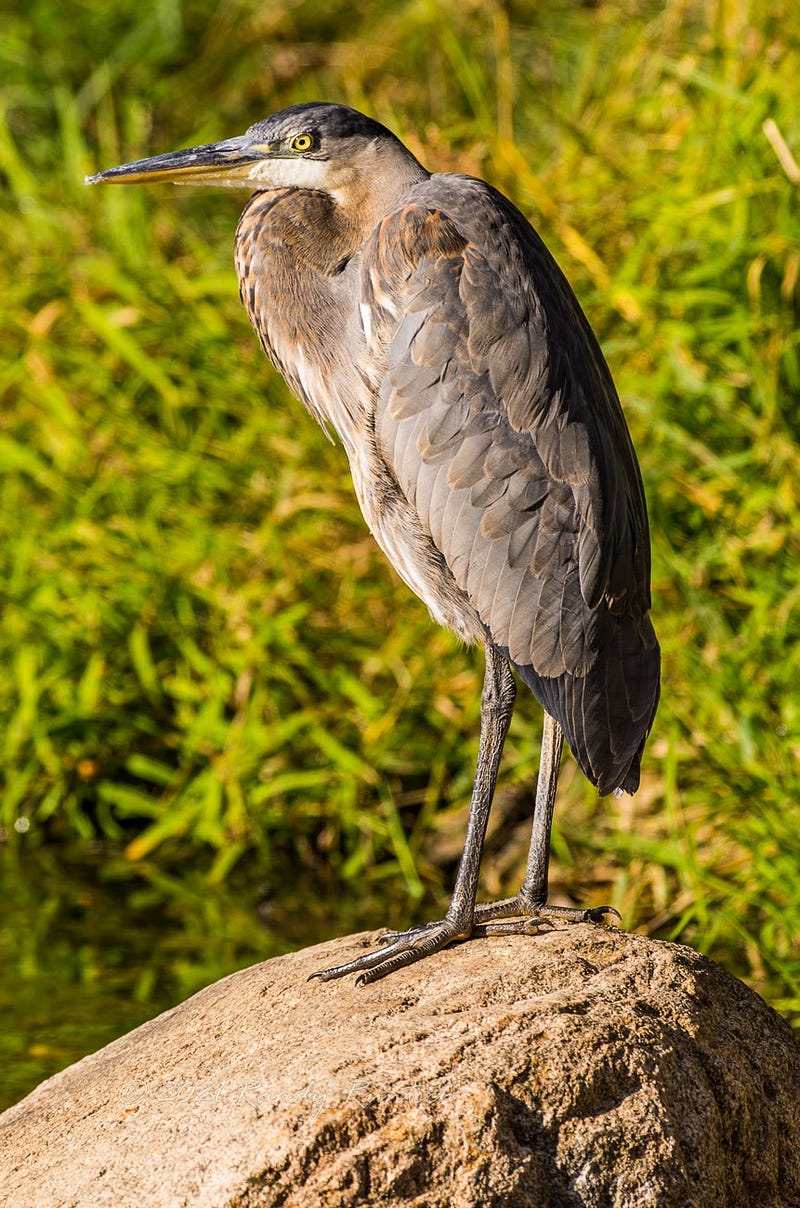
Green heron. Photo by the author.

The wing feathers of adults resemble a blue-green hue, such as teal. The feathers of juvenile green herons are grey or tan.
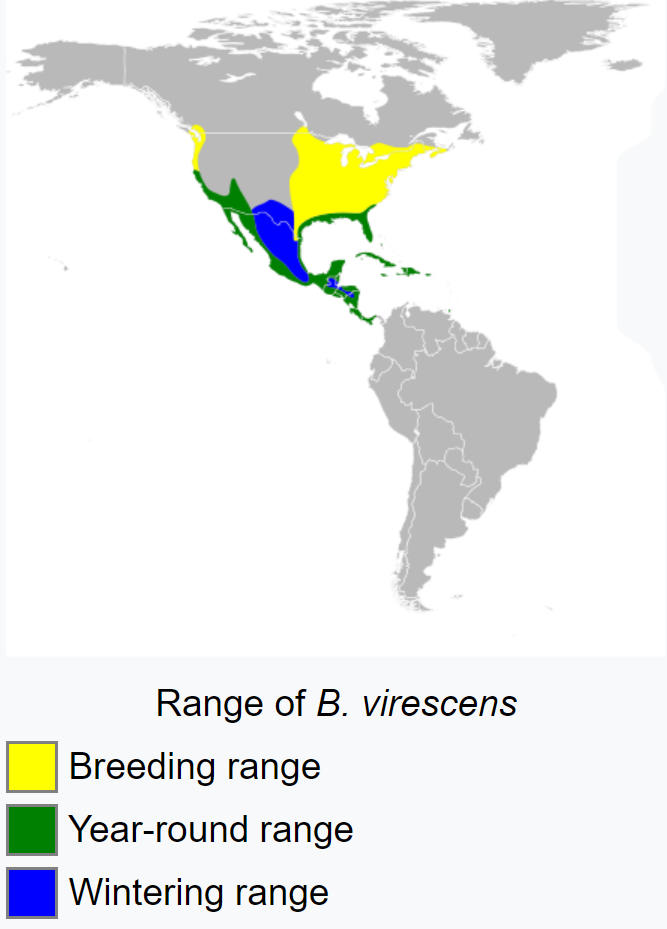
Range of the green heron. Adapted from: Kushlan, James A. and James A. Hancock, Herons, Oxford ; New York : Oxford University Press, 2005. Creative Commons license.

The green heron lives in North and Central America. It winters in the southern United States, Mexico, Central America, and the Caribbean Islands. I should be so bright. Winters are long here in Minnesota. Some green herons migrate to the eastern half of the United States during the warmer months.

Green herons have a body length of about 17 inches (44 centimeters). When perched, they often hold their neck tight against their body. When they extend their neck, they appear twice as long.

The birds prefer to live in wetlands. They eat fish, frogs, and aquatic arthropods. They eat various other invertebrates and vertebrates.

I see several green herons each year but have never seen more than one at a time. After a male bird puts on a display for a female of interest, if she likes him they will build a nest and mate. Their clutch usually consists of 2 to 6 eggs. Both parents incubate the eggs and feed the chicks after they hatch.
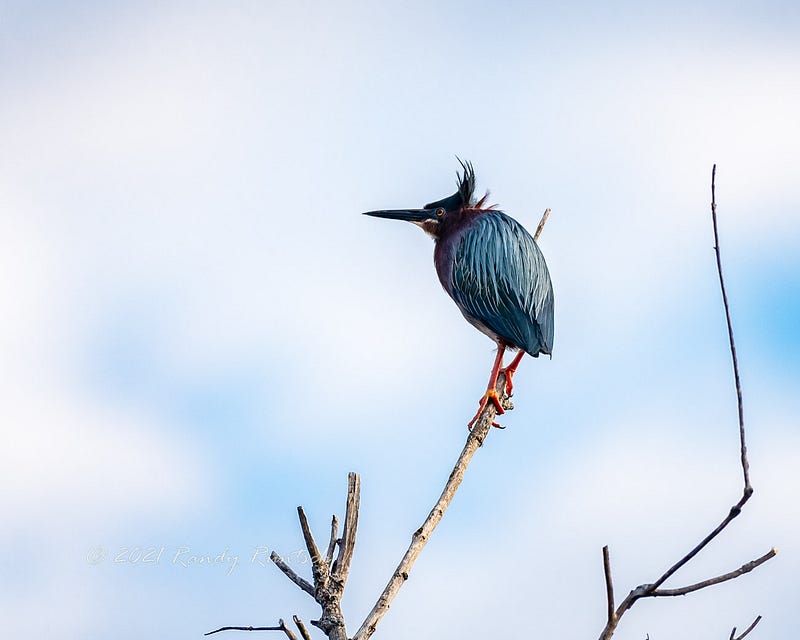
Green heron. Photo by the author.

Yesterday, I snapped photos of a specimen perched on the same log early in the morning and then at noon. As shown in the photos below, it moved forward about 15 inches (38 centimeters).
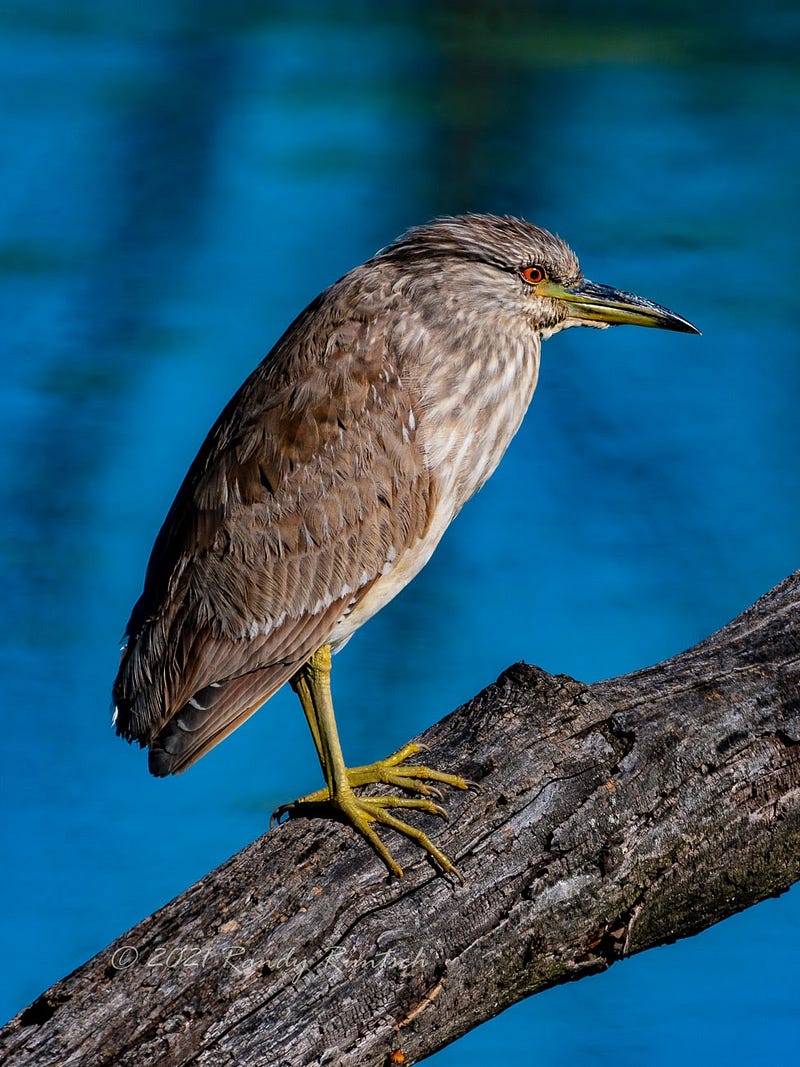
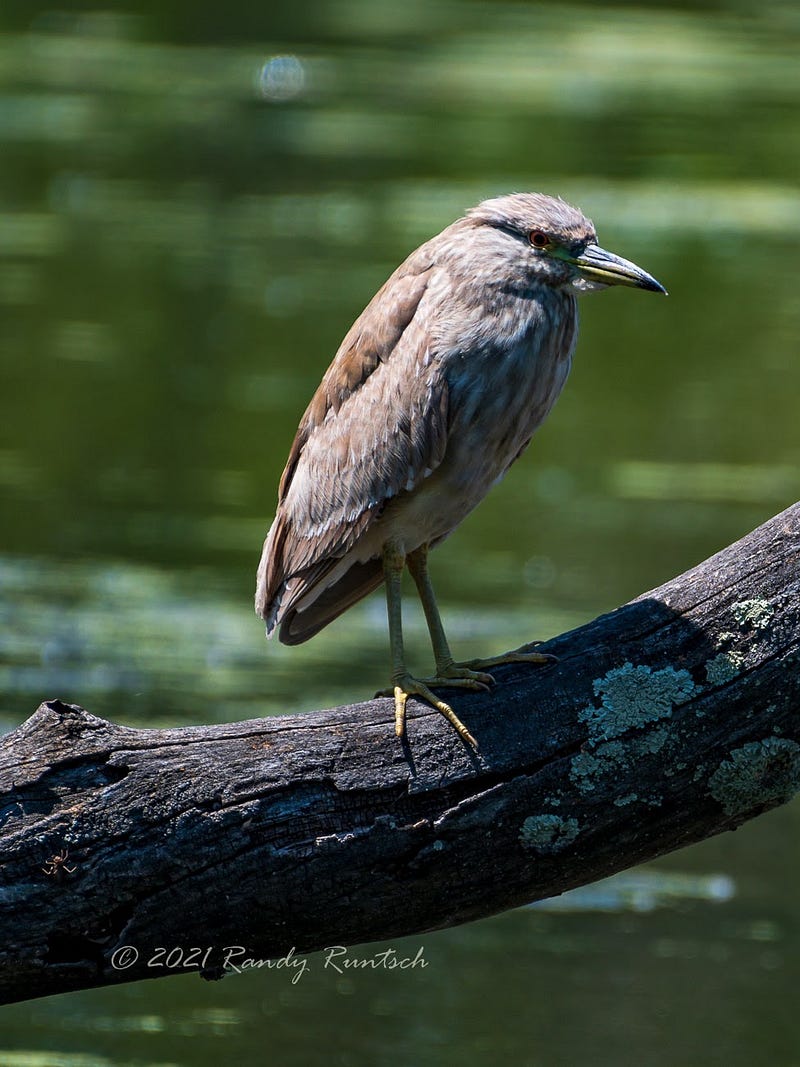
Green heron. The first photo was taken at 7:24 am. The second photo was taken at 12:12 pm on the same day. The bird moved forward about 15 inches in nearly 4 hours. Photo by the author.

The green heron surprises me at every sight. Along with always-changing conditions, they bring challenges and joy to bird photography.
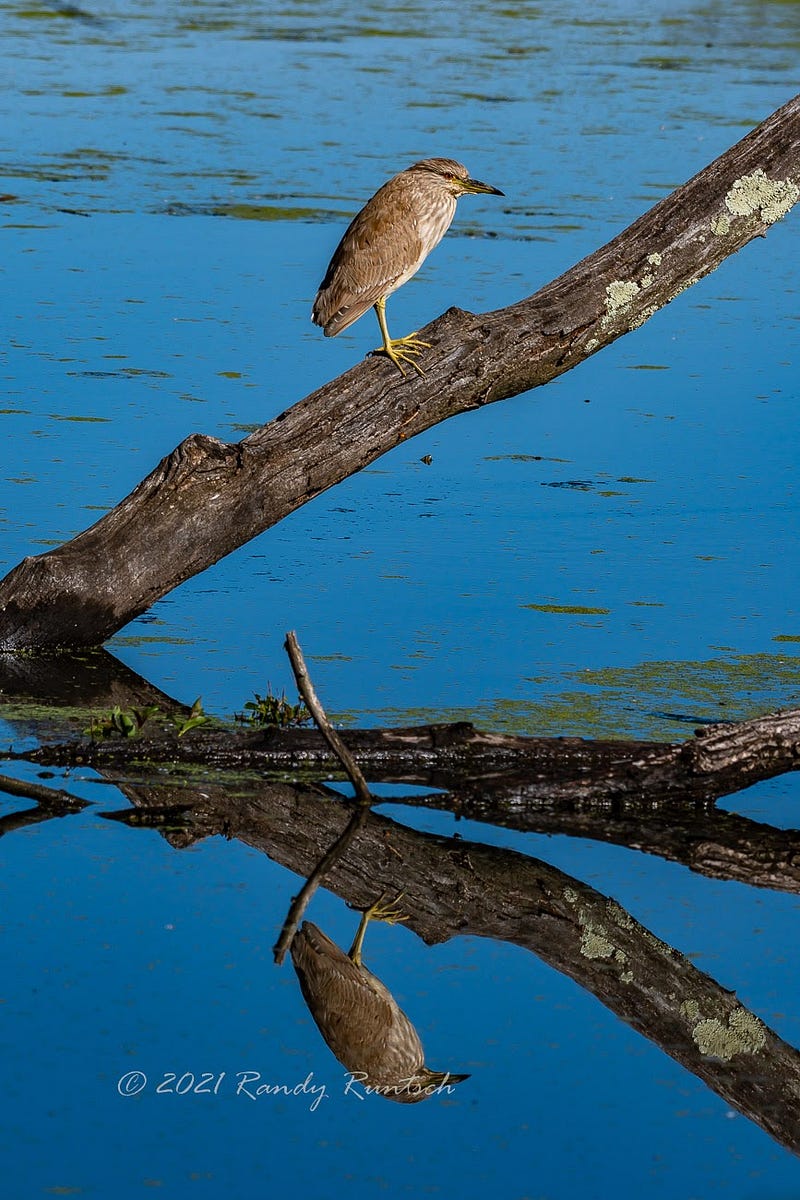
Green heron. This is the same non-moving bird shown above. Photo by the author.

All photos of green herons included in this story were captured somewhere between Rochester, Minnesota, and Trempealeau National Wildlife Refuge in western Wisconsin.
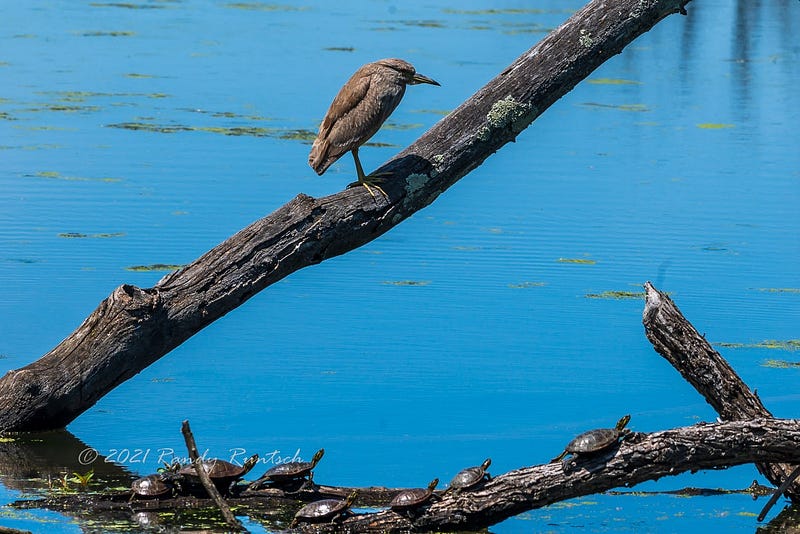
Turtles joined the green heron to bask in the midday sun. Green herons eat vertebrates. Could that include turtles? Photo by the author.
Birds
Wildlife
Photography
Recommended from ReadMedium